Okay, let’s be honest—we’ve all been there. You buy a pair of athletic pants that feel like a second skin during your workout… only to find them sagging after a few washes. Personally I think the secret—the real secret—behind that perfect fit, or the lack of it, boils down to one thing. Spandex. Or as some call it, elastane. That magic fiber giving stretch fabrics their ‘power’ and memory. But what does that actually mean for your designs, your production lines? Understanding spandex power and elastane percentage—it’s not just some technical detail. It’s literally the difference between a garment your customers love and one they return.
"Spandex power"—to put it simply—is the fabric’s built-in force snapping it back to its original shape after stretching. It’s the backbone. The support system. The percentage of elastane in the fabric? That’s your main control dial. Higher percentage usually means stronger compression, better recovery. Lower percentage gives you that lighter, everyday stretch. Getting this balance right… it’s everything.
So you’re sourcing fabrics. You need the stretch just right. You’ve heard the terms—"spandex power," "elastane percentage"—but how do they translate off the spec sheet into what people actually feel and wear? Let’s be clear about this. The science of stretch—it’s not as complicated as it seems. We’ll break down what spandex power really means. Demystify how elastane content dictates everything. And guide you—honestly—on specifying the perfect blend. This knowledge? It lets you make informed decisions. Avoid costly errors. And deliver apparel that truly fits.
What IS spandex power in fabric, really?
When we in the industry talk about "spandex power"—we’re not talking about electricity. We’re talking about force. Resilience. Think of it as the fabric’s muscle memory, honestly. It’s what lets a garment hug the body. Provide compression. And—this is the crucial part—bounce back after being stretched, worn, washed. Without sufficient spandex power? Fabrics go baggy. Lose their shape. And that means dissatisfied customers and more returns for you. Personally I think that’s a nightmare scenario.
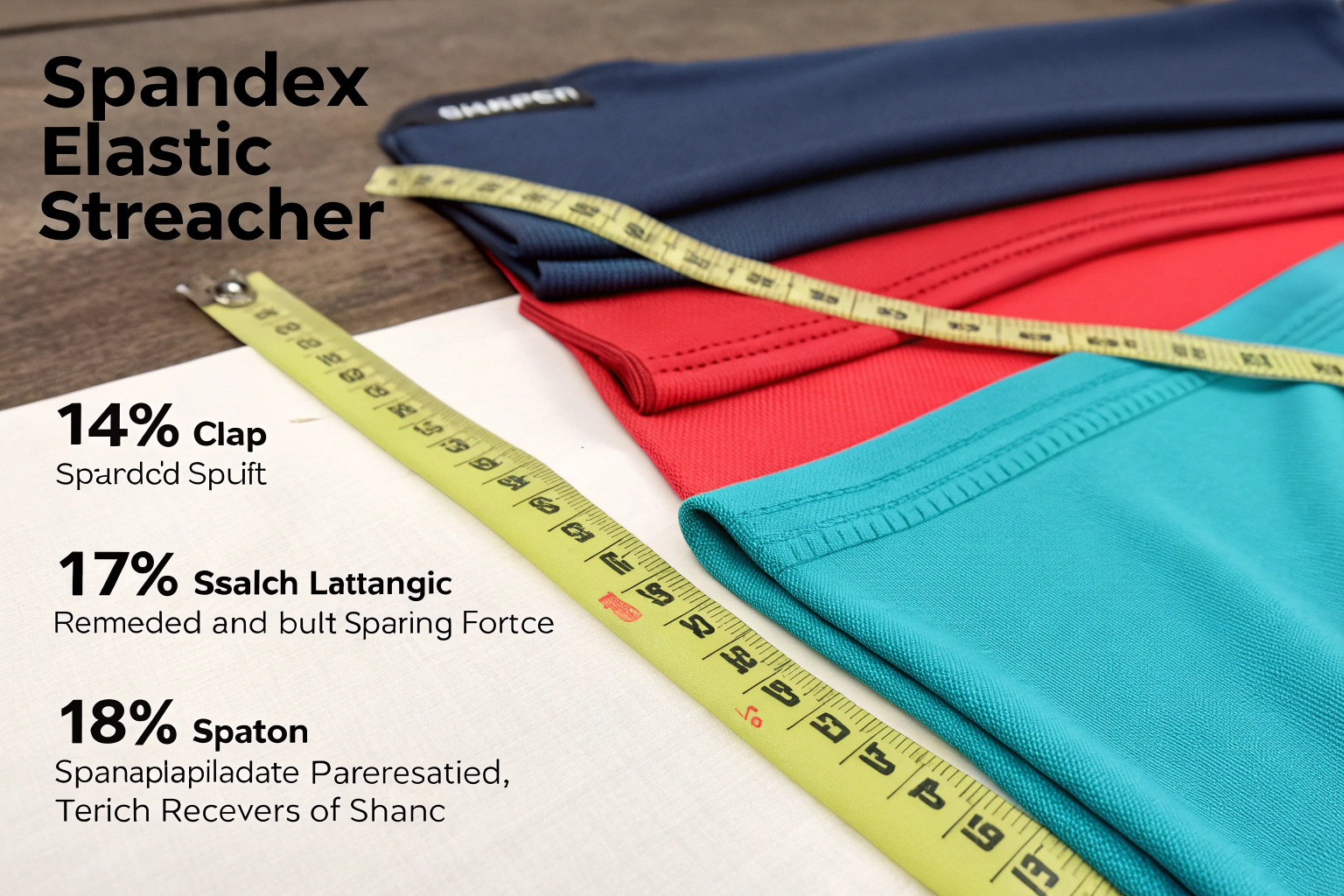
Spandex power is this measurable combo—stretch potential meets recovery strength. It tells you the force needed to stretch the material and how well it bounces back. We engineer this property. In our lab, we test it—growth, recovery, simulating real wear. It’s the core of creating durable apparel that actually lasts.

How do you even measure spandex power?
The real test—it happens in the lab. We don’t just pull fabric with our hands; we use instruments. Data. Key metrics? Elongation at break tells you how far it’ll stretch before giving way. Permanent growth shows what doesn’t bounce back. And we test tensile strength too. These tests—we often do them with SGS. It takes the guesswork out. Lets you pick a fabric with the exact power profile you need—yoga wear, tailored trousers, whatever.
Why should you even care about spandex power for durability?
Spandex power—it’s your number one weapon against "bagging out." High power means strong, resilient fibers fighting deformation. Every stretch—sitting, bending—the spandex pulls it back. Weak power? Weak recovery. You get knees, elbows, seats losing their shape. And that hits your brand’s reputation for quality. Hard. In our weaving—we use high-tenacity spandex. Specific techniques to lock it in. Maximize power and longevity. Our quality control team checks this—ensuring the garments you make keep their fit, wash after wash.
How does elastane percentage actually play with compression?
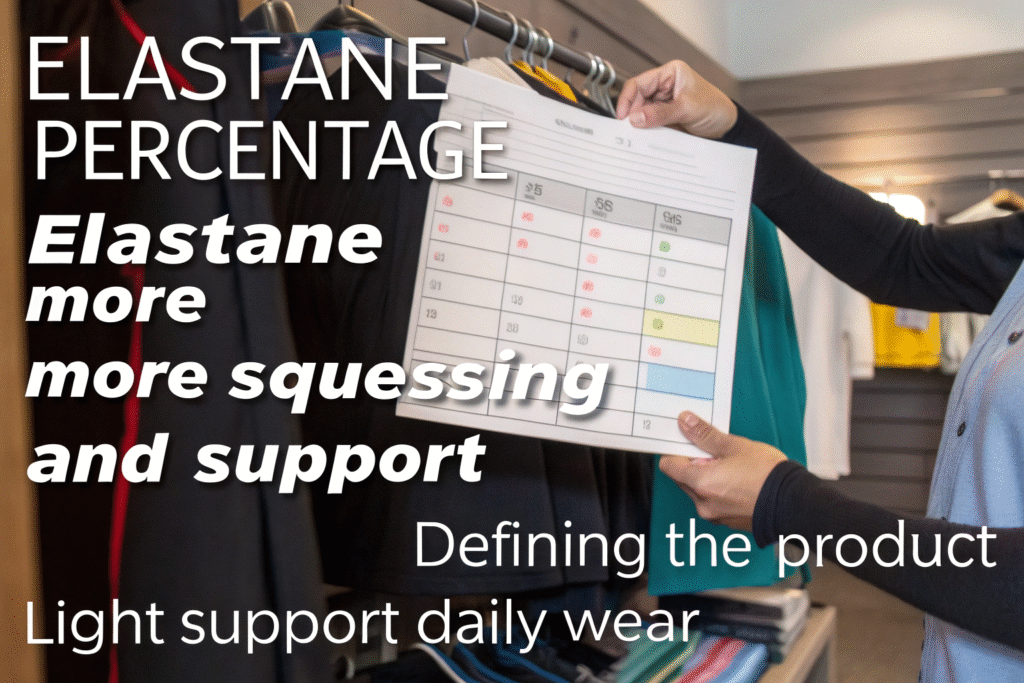
The elastane percentage—it’s your main recipe for compression. More elastane typically means more compression. Honestly, it’s that simple. A higher density of elastic fibers creates a stronger collective force—squeezing, supporting. For your brand, getting the compression level right defines the product’s function. From light-support daily wear to medical stockings and performance gear.
The percentage of elastane—it’s the key. 15-25% gives you firm, athletic-grade compression. 2-5%? That’s light, comfortable hold—denim, casual trousers. It’s a balancing act, to be honest. Too little—no support. Too much—restrictive, uncomfortable. Could even hinder movement.
What elastane percentage works best for athletic wear, actually?
It’s not one-size-fits-all. It depends on the sport. The support needed.
| Sport / Garment Type | Recommended Elastane % | Key Benefit |
|---|---|---|
| Yoga & Pilates | 10% – 15% | Extreme flexibility—full range. |
| Running & Cycling | 15% – 20% | Muscle support—reduces fatigue. |
| Compression Wear | 20% – 25%+ | Blood flow—faster recovery. |
Our moisture-wicking fabrics—they often sit in that 15-20% range. Gives the compression needed for running, training. But with breathability. This targeted approach—it ensures the product performs as expected. Meets athlete demands.
Can high elastane content actually cause discomfort?
Yes. Absolutely. High elastane gives powerful compression—but it’s a double-edged sword. The key to comfort lies in the other fibers. The construction. A 20% elastane fabric with coarse, non-breathable yarns? Stiff. Hot. Restrictive. That’s why we focus on blends. Pairing elastane with things like Tencel™ Lyocell. Creates compression with a soft hand-feel. Breathability. Our R&D finds that sweet spot—so even high-compression fabrics for Lululemon-tier brands stay comfortable for hours.
Is there an ‘ideal’ elastane percentage for fit?
The "ideal" percentage—it’s a myth, to be honest. The correct percentage depends entirely on the garment. The fit, style, function. A skinny jean, a blazer, a sports bra—all different. All need different elastane. The goal? Achieve the silhouette and feel without compromising integrity or comfort. This is where a good supplier—a capable one—becomes invaluable.
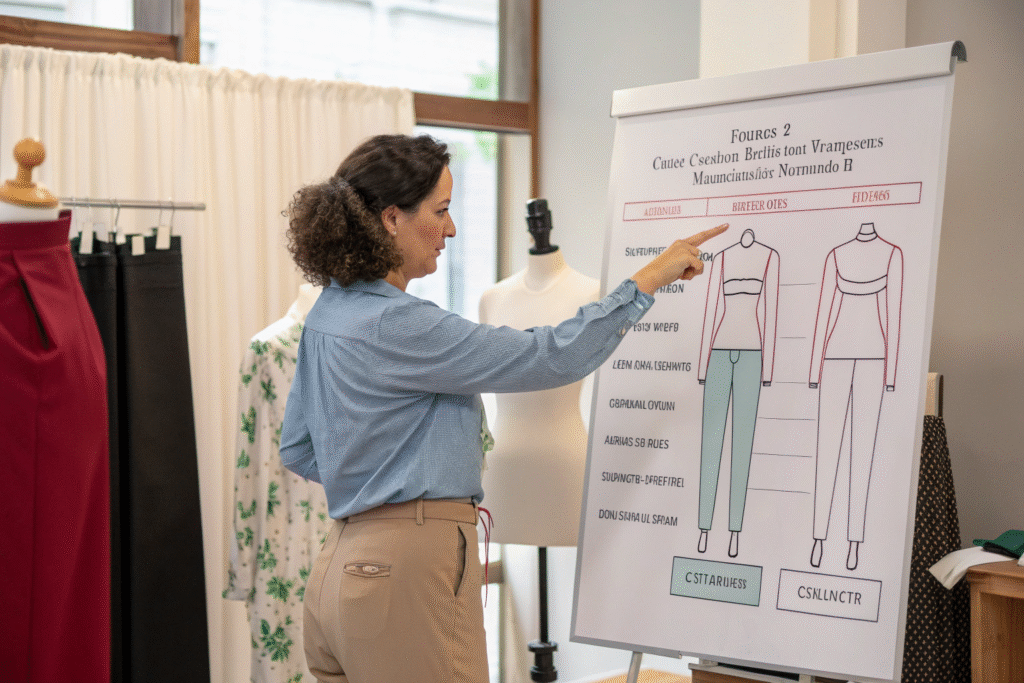
The ideal elastane percentage is the minimum needed for the target fit and recovery. It’s a balance—stretch, recovery, comfort, cost. A "second skin" feel—leggings, bodycon—might be 10-15%. "Comfort stretch"—chinos, shirts—2-5%. The key? Work with a supplier who prototypes fast. Lets you test the fit on real models before bulk.
How does elastane mess with different fabric types, anyway?
Elastane interacts differently with different bases. Woven fabrics—our denims, poplins—are rigid. Here, even 2-5% elastane introduces crucial give. Makes jeans comfortable to sit in. Shirts less restrictive. Knitted fabrics—jersey for t-shirts—are inherently stretchy. Here, elastane (5-10%) is added for recovery. Prevents bagging knees. Stretched necklines. Understanding this—it helps you forecast how a fabric will behave. Honestly, it’s essential.
What are the trade-offs—increasing elastane?
Increasing elastane isn’t a free pass to better fit. There are trade-offs. Cost, for one—elastane is pricier than many other fibers. Dyeing and finishing get more complex—elastane and cotton/polyester can absorb dyes differently. Needs expertise. And—over-relying on elastane in a poorly made fabric can lead to a "tired" look over time. Our end-to-end quality control watches these variables. Ensures the percentage we recommend gives the best balance—performance, aesthetics, value.
How do you even choose the right spandex blend?
Choosing the right spandex blend—it’s the final step. Pulling everything together. It’s a strategic decision aligning your design with technical reality, cost, and what the end-user actually wants. This choice goes beyond percentage—it’s picking the right partner fibers. A good fabric supplier acts as your consultant. Guiding you through the options to find the perfect blend for a successful product.
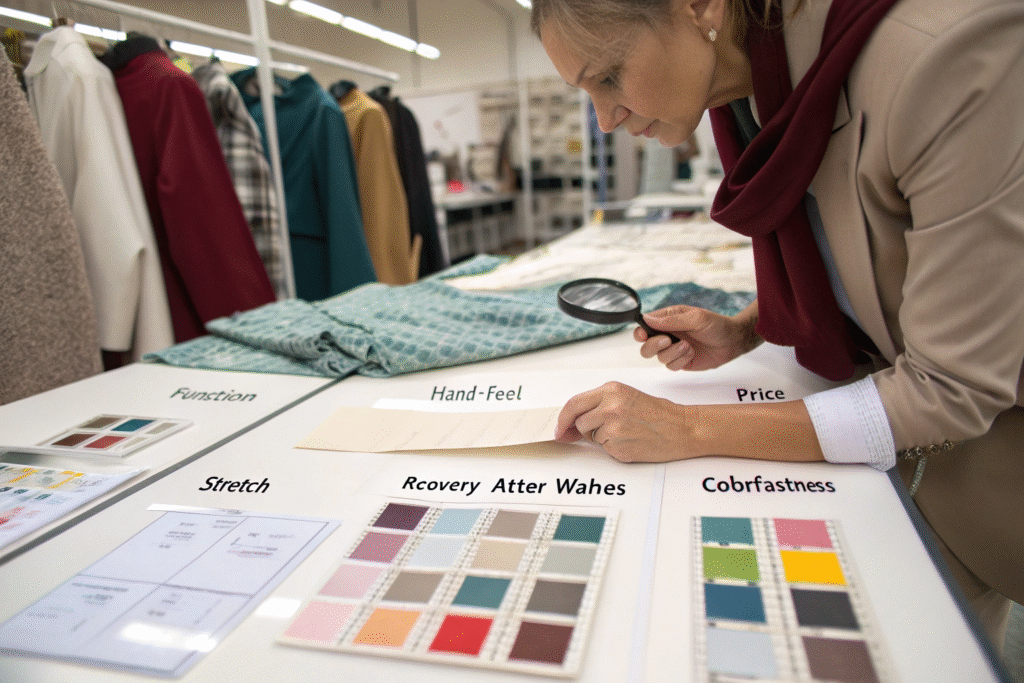
To choose the right spandex blend—start by defining the garment’s function, hand-feel, price. Then partner with a supplier offering agile R&D and swatches. Test those swatches—not just initial stretch, but recovery after washes, colorfastness, breathability. The best blend merges the base fibers with spandex—creating a material that performs. Beautifully.
What fiber blends actually work best with spandex?
The companion fiber gives the fabric its character. For comfort and breathability—cotton-spandex. For durability and moisture management—polyester-spandex. For a premium, luxurious drape—rayon-spandex or Tencel™-spandex. And eco-blends—like Recycled Polyester (rPET) with spandex—are growing fast. We present these options. With spec sheets. So you can make an informed choice. Honestly, it’s what we’re here for.
Why is supplier selection so critical for spandex fabric?
The most perfect blend is useless if your supplier can’t produce it consistently. Supplier selection is critical because not all spandex is equal. Not all factories have the expertise. Issues—inconsistent tension, improper heat setting—can cause defects. Streaks. Inconsistent power. Our advantage? Our integrated supply chain. Decades of experience with elastane. Ensuring every meter you get—from sample to bulk—has the same reliable power. Consistent color. Flawless performance. The kind you need to build a trusted brand. Personally I think that’s non-negotiable.
Conclusion
Navigating spandex power and elastane percentages—it’s fundamental. We’ve explored how spandex power is the engine of shape retention. How elastane percentage dictates compression and fit. And how the ideal blend is a careful balance. This knowledge lets you move beyond guesswork. Make precise fabric decisions. Remember—the right fabric is the foundation. And understanding stretch? It’s part of that foundation.
Ready to engineer the perfect stretch for your next line? Don’t leave fit to chance. Let’s collaborate to find the ideal spandex blend for your brand and your customers. For a direct conversation—and to see some swatches, honestly—reach out to our Business Director, Elaine. She and her team are ready to help. From development to delivery. Contact Elaine at elaine@fumaoclothing.com. And let’s start the conversation.