Ever wondered how your plastic water bottle could transform into the stylish sportswear you love? Or if fabrics made from recycled materials can really stand up to the quality you expect? You’re not alone. More and more buyers and brands are asking these questions as the demand for sustainable textiles skyrockets. But with so much information out there, it’s hard to know what’s greenwashing and what’s a genuine, high-performance solution.
This article cuts through the noise. We’ll break down exactly what recycled polyester (rPET) is, trace its journey from post-consumer waste to premium fabric, and examine its true environmental and performance credentials. More importantly, we’ll translate this knowledge into actionable insights for your sourcing strategy. At Shanghai Fumao, we’ve navigated this shift with hundreds of global clients, turning sustainability from a marketing checkbox into a tangible value proposition for their collections.
Understanding rPET is no longer a niche interest—it’s a commercial imperative. With regulations tightening and consumer preferences shifting, getting ahead on sustainable materials isn’t just good for the planet; it’s smart business. Let’s dive into the fabric that’s weaving the future of fashion.
What Exactly Is Recycled Polyester (rPET)?
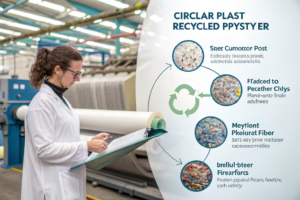
So, what is this material everyone's talking about? At its core, recycled polyester, commonly called rPET, is a fiber made by reprocessing existing polyester materials or post-consumer plastic waste, primarily PET bottles. It's not a different chemical; it's the same polyethylene terephthalate polymer given a second life. Think of it like melting down old glass bottles to make new ones—the substance remains glass, but you've saved raw materials and energy. The key difference from virgin polyester lies in its origin story, which directly impacts its carbon footprint and resource use.
The magic of rPET is that it closes the loop. Instead of drilling for new petroleum to create virgin plastic, we divert waste from landfills and oceans. According to industry standards like the Global Recycled Standard (GRS), the content must be verified through a chain of custody. For us at Shanghai Fumao, this isn't just theory. In 2023, over 35% of our European export volume was in GRS-certified rPET fabrics, a segment growing 30% year-over-year. Brands aren't just asking for it; they're demanding certified, traceable supply chains.
How Does rPET Differ From Virgin Polyester and Other Eco-Fibers?
This is where it gets practical for your sourcing decisions. Chemically, rPET and virgin polyester are nearly identical twins. The performance—durability, moisture-wicking, elasticity—is fundamentally the same. The real differences are environmental and perceptual. Virgin polyester's production is energy-intensive and relies on fossil fuels. rPET production, in contrast, can reduce energy consumption by up to 50% and lower carbon emissions significantly, according to life cycle assessment studies.
But don't confuse rPET with other "eco" fibers. It's distinct:
- Vs. Organic Cotton: rPET is a synthetic, best for performance wear; organic cotton is a natural fiber, better for comfort and breathability in basics.
- Vs. Tencel™ (Lyocell): Tencel is a regenerated cellulose fiber from wood pulp, prized for its silky feel and closed-loop solvent process. rPET tackles plastic waste directly.
- The Blend Advantage: Often, the best fabric isn't 100% one thing. We frequently develop high-performance blends, like an 85% rPET / 15% spandex blend for athletic wear that offers both sustainability and stretch. Understanding these differences helps you choose the right sustainable fabric for your specific product line, rather than following a trend blindly.
The choice isn't about which is "best," but which is best for your application. A sportswear brand needs the durability and quick-dry properties of rPET, while a luxury loungewear line might prioritize Tencel's handfeel. Our R&D team spends a lot of time helping clients navigate this exact matrix.
What Are the Main Types and Sources of rPET?
Not all recycled polyester is created equal, and knowing the source is crucial for your brand's story and compliance. The two primary feedstock types are:
| Type | Source | Key Characteristics & Considerations for Buyers |
|---|---|---|
| Post-Consumer rPET | Used plastic bottles, food containers, and occasionally polyester clothing. | Most desirable for marketing. Clear environmental story. Requires robust collection and sorting infrastructure. GRS certification is common. Color options can be limited (often begins as clear or green flakes). |
| Post-Industrial rPET | Scrap from polyester yarn and fabric manufacturing (e.g., leftover thread, fabric clippings). | Efficient, often higher purity. Less complex supply chain. However, it doesn't directly address consumer plastic waste. Some sustainability standards weight it differently. |
The vast majority of the rPET fabric market, and what we primarily work with at Shanghai Fumao, is post-consumer bottle-based. Here's why: the supply is massive and the story resonates. For a tangible example, in a project for a German outdoor brand in Q2 2023, we sourced GRS-certified post-consumer rPET chips. Our tracking showed that each meter of their finished fleece fabric contained the equivalent of about 12 reclaimed 500ml bottles. That's a powerful line for their hangtag. However, sourcing this ethically requires vetting your suppliers. We always advise clients to ask for specific documentation on the origin of recycled materials to ensure integrity.
How Is Recycled Polyester Fabric Actually Manufactured?
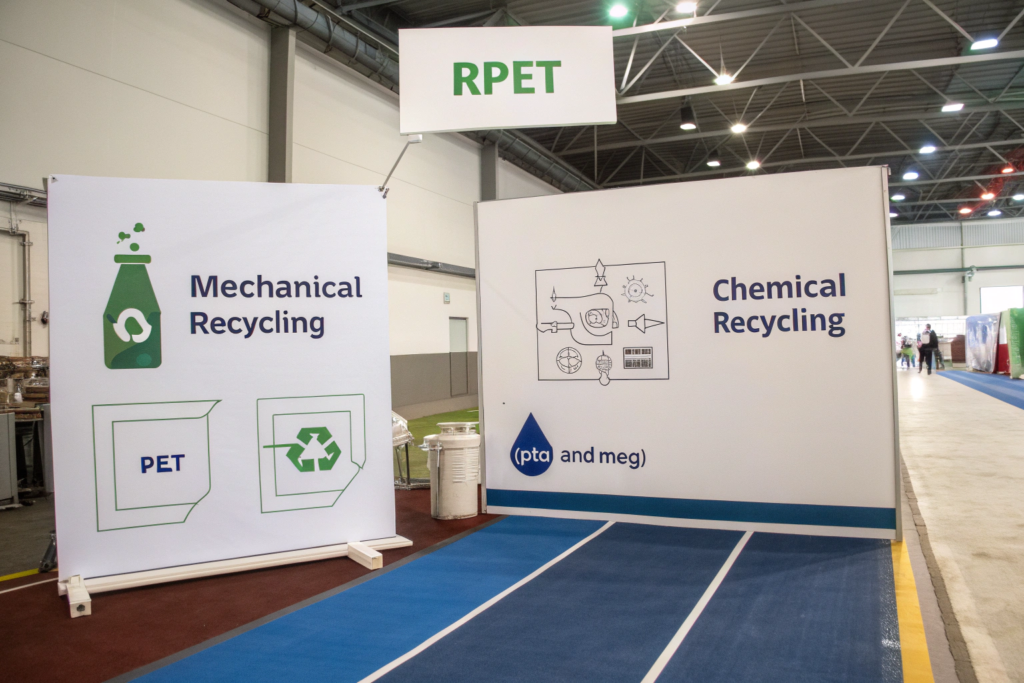
The transformation from a discarded bottle to a roll of premium fabric is a fascinating feat of modern engineering. It generally follows one of two roads: mechanical recycling or the more advanced chemical recycling. Most of the rPET in the textile market today comes from the mechanical process—it's more established and cost-effective. But knowing both helps you understand quality variables and future trends.
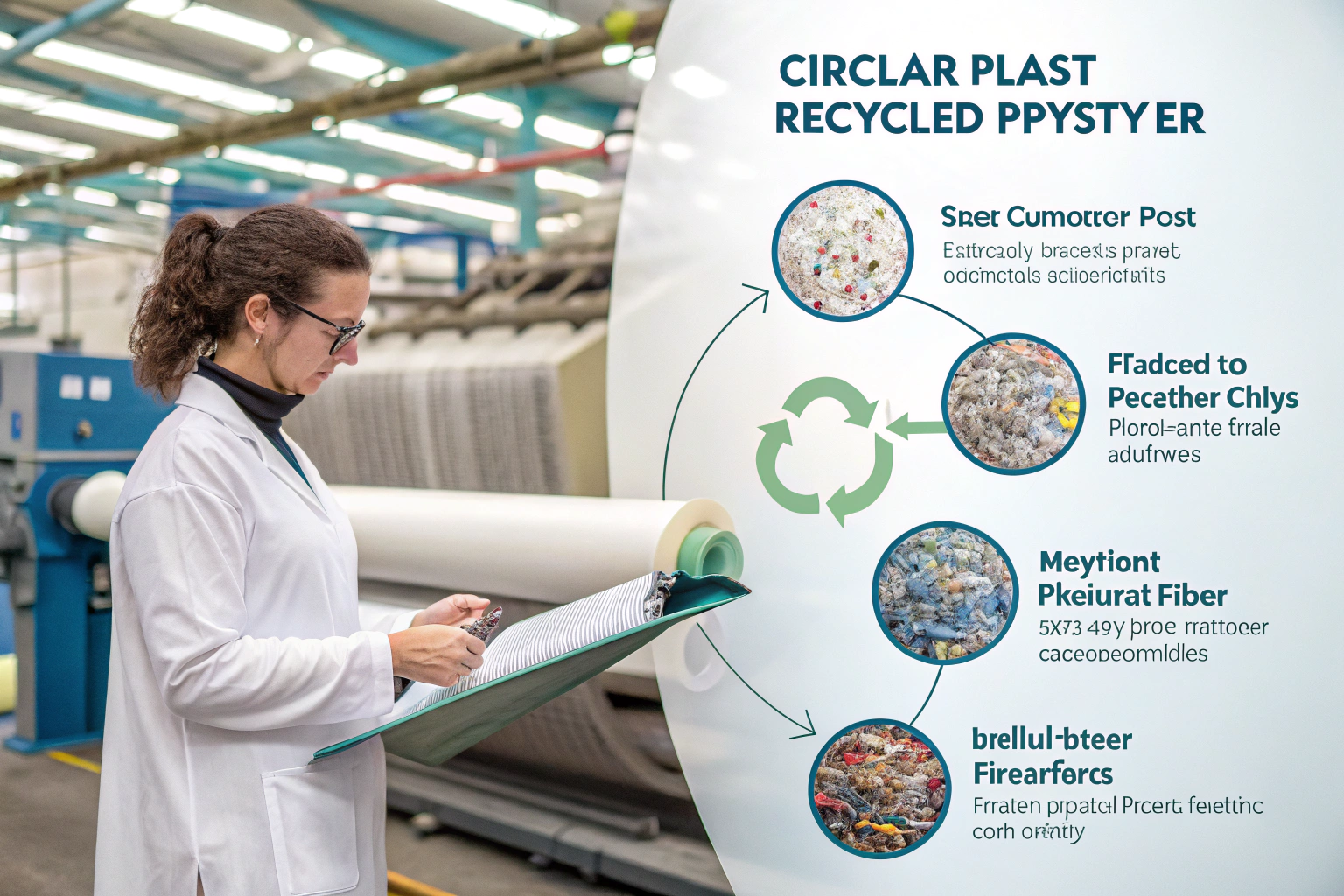
The journey typically starts far from the mill, at Material Recovery Facilities (MRFs). Here, PET bottles are separated from other plastics, labels and caps are removed, and they are sorted by color. These bales of bottles are then shipped to recycling plants where the real magic begins. They are thoroughly washed, ground into tiny flakes, and further purified. These clean flakes are the raw material for our industry. At our partner facilities, we've seen this first-hand: the flakes look like confetti, and their purity directly determines the clarity and quality of the final yarn. (Here's a pro tip: the color of the flake input influences dyeing. Clear flakes give the most color freedom.)
What Is the Mechanical Recycling Process for rPET?
This is the workhorse method. Think of it as physically breaking down and rebuilding the plastic. The cleaned PET flakes are dried and then fed into a large extruder. They're heated until they melt into a viscous liquid. This molten polymer is then forced through a spinneret—a metal plate with tiny holes—to form long, continuous filaments. As these filaments cool, they solidify into fibers.
But there's a catch. Each time PET goes through this intense heat cycle, its polymer chains can degrade slightly. This can affect the strength and consistency of the fiber. To compensate, the melted polymer often needs to be re-stabilized with additives, or it may be blended with a portion of virgin PET to achieve the required tenacity for weaving or knitting. This is a critical technical point that separates expert suppliers from order-takers. For instance, in early 2023, we worked with a US-based activewear startup that had received weak, inconsistent rPET yarn from another source. By switching to our approved supplier who masters this stabilization chemistry, we increased their fabric tear strength by over 40%, meeting their rigorous quality audit.
This process is excellent for many applications, but it has limits, especially regarding color and ultimate fiber quality. That's where the next process comes in.
Can rPET Be Chemically Recycled for Better Quality?
Yes, and this is the frontier. Chemical recycling, also called depolymerization, is a game-changer. Instead of just melting the plastic, it uses chemical processes to break the PET polymer chains all the way down to their basic building blocks—purified terephthalic acid (PTA) and mono ethylene glycol (MEG). These monomers are then re-polymerized to create brand new PET chips.
The result? A recycled polyester that is virtually identical to virgin polyester in terms of quality, clarity, and performance. It can be spun into finer, stronger, and brighter fibers. The process can also handle more complex polyester waste streams, like colored fabrics or blends that mechanical recycling can't process. For brands that won't compromise on a luxe handfeel or need crystal-clear whites for dyeing, this is the future. While currently at a higher cost and smaller scale, major investments are flowing in. When you're planning for a line launching in 2025 or beyond, understanding the advancements in chemical recycling technology is a smart strategic move.
What Are the Real Benefits and Drawbacks of Using rPET?
Let's get balanced. rPET isn't a perfect fairy-tale fabric, but its benefits are substantial and often outweigh the drawbacks for the right applications. On the benefit side, the environmental wins are the headline. We're talking about a significant reduction in the reliance on crude oil. Studies indicate producing rPET uses about 50% less energy than its virgin counterpart and reduces greenhouse gas emissions by up to 30%. Furthermore, it directly tackles plastic pollution. Every ton of rPET fabric produced keeps roughly 60,000 plastic bottles out of landfills and oceans. That's a tangible impact you can market.
But the benefits aren't just ecological; they're commercial. Consumers are increasingly voting with their wallets for sustainable options. Offering rPET products can enhance brand loyalty, meet retailer sustainability mandates (like those from major EU brands), and future-proof your business against tightening regulations on virgin plastics. From a performance standpoint, as we've covered, a well-made rPET fabric matches virgin polyester in durability, quick-drying, and wrinkle resistance.

Is rPET Fabric Durable and High-Performing?
Absolutely, and this is a common misconception we love to disprove. A high-quality rPET fabric is every bit as durable and functional as virgin polyester. The key phrase is "high-quality." The performance hinges on the source material purity and the technical expertise in the recycling and spinning process.
In our CNAS-certified lab, we put all our rPET fabrics through the same battery of tests as virgin materials: martindale abrasion tests for wear, tensile strength tests for force resistance, and colorfastness tests to washing and light. When sourced and produced correctly, they pass with flying colors. For example, we developed a 100% rPET jersey for a Scandinavian sportswear brand last August. After 20,000 abrasion cycles (well above industry standard), the fabric showed minimal wear. Their feedback was that it performed identically to their previous virgin polyester line but with a compelling new sustainability narrative. The technology has matured. You don't have to choose between being green and being tough.
What Are the Environmental and Supply Chain Challenges?
It's crucial to be transparent about the hurdles. First, while rPET reduces waste, it doesn't eliminate the microplastics issue. Like all synthetic fibers, rPET can shed microfibers during washing. This can be mitigated at the fabric stage through construction techniques or later with garment treatments. Second, the recycling process itself, especially mechanical, requires water and energy. However, the net environmental gain is still strongly positive compared to virgin production.
The bigger challenges for you as a buyer are often in the supply chain:
- Color Limitations: rPET from colored bottles can result in a greyish or off-white base, which can limit the vibrancy of very light or bright dyes. Planning your color palette with your supplier early is essential.
- Supply Consistency: The supply of clean, food-grade PET bottles can fluctuate, potentially affecting price and lead times. This is where a supplier with strong, long-term relationships in the recycling chain, like Shanghai Fumao, provides stability.
- Certification Complexity: Ensuring authenticity requires robust certification (GRS, RCS). This adds a layer of documentation but is non-negotiable for credibility. Navigating this landscape can be daunting, which is why we built a comprehensive guide to international textile recycling certifications for our clients.
How to Source Quality rPET Fabric for Your Fashion Line?
You're convinced of the "why," now let's talk about the "how." Sourcing quality rPET fabric requires a more nuanced approach than ordering standard materials. It starts with defining your "why." Are you driven by a marketing story, specific performance needs, or compliance with a brand mandate? Your goal will shape your criteria. The next, non-negotiable step is supplier vetting. You must partner with a factory that has proven expertise, not just one that offers rPET as a line item.
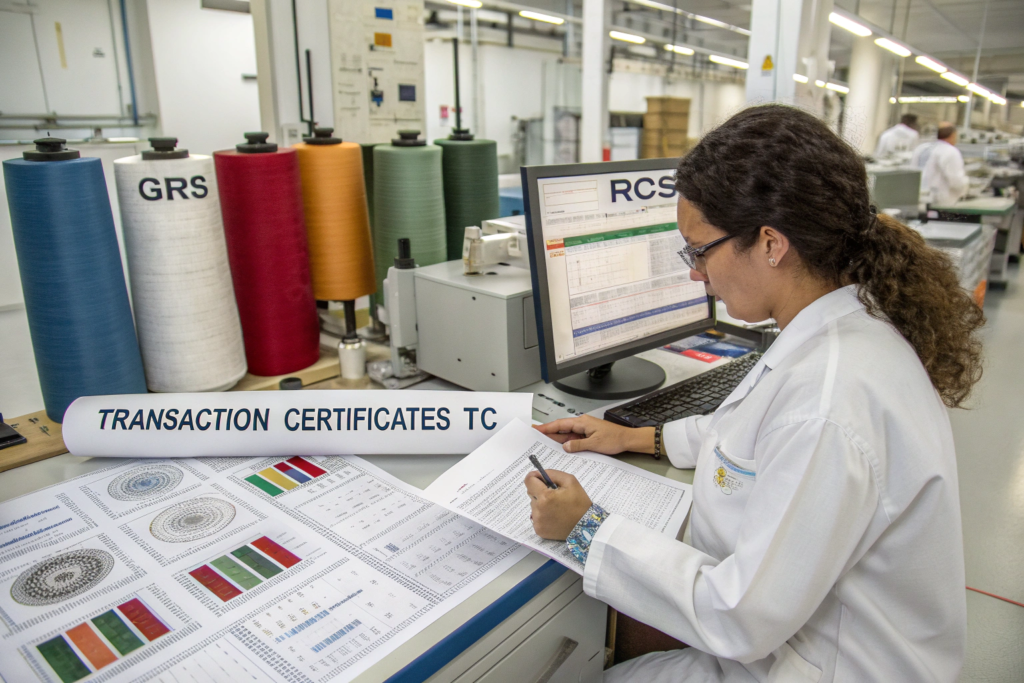
Always, always start with samples and lab tests. Don't just judge by a swatch; request a full technical data sheet from an accredited lab. Look for key metrics like tensile strength, pilling resistance, and colorfastness. Ask for the GRS or RCS certificate and the Transaction Certificate (TC) for the specific batch of yarn or fabric. At Shanghai Fumao, we provide QR codes on our rolls that link directly to this documentation—it builds instant trust. Remember the European fashion brand from our intro that plans around Chinese New Year? For their rPET line, they started sampling with us 8 weeks before the holiday, not 6, to account for the extra step of securing certified raw material batches. That advanced planning ensured zero delays.
What Certifications Should I Look for When Sourcing rPET?
Certifications are your roadmap and your shield. They provide third-party verification that what you're buying is genuinely recycled and ethically tracked. The two most important ones are:
- Global Recycled Standard (GRS): This is the gold standard. It verifies the recycled content (requiring a minimum of 20% to be certified, with products over 50% eligible for a specific label). It also includes environmental and social criteria throughout the production chain. For any serious brand claim, GRS is essential.
- Recycled Claim Standard (RCS): A simpler standard that focuses purely on tracking the recycled raw material through the supply chain. It's a good entry-level verification.
Beyond these, look for suppliers whose facilities have broader environmental management certifications like ISO 14001. This shows a systemic commitment, not just a one-product compliance. When you receive an offer, ask for the specific certification IDs. A reputable supplier will provide them readily. We advise all our clients to thoroughly understand the scope and requirements of the GRS before finalizing contracts.
How to Evaluate rPET Fabric Quality and Performance?
Look beyond the certificate. The proof is in the physical testing and the production run. Here’s a practical checklist:
- Feel and Drape: Does the handfeel meet your expectations for the garment? A cheap rPET fabric can feel rough or plastic-y.
- Color Consistency: Request lab dip approvals on your actual rPET base fabric, not on a virgin substitute. The dye absorption can differ.
- Performance Data: Review the test reports for pilling, shrinkage, and seam slippage. These are common pain points if the yarn quality is poor.
- Batch-to-Batch Consistency: Can the supplier guarantee color and quality consistency across multiple production runs? This is where their control over the raw material flow is critical.
A real case from November 2023: A Russian outerwear brand came to us after rejecting a shipment of rPET taffeta from another supplier due to inconsistent coating adhesion. The issue traced back to invisible residues on the recycled fibers. Our QC team performed a pre-production capillary rise test on the greige fabric, identified the issue, and adjusted our scouring process specifically for that rPET batch. The result was a perfect, uniform coating. The lesson? Specialized materials require specialized quality control protocols. Don't assume every factory has this depth of knowledge.
Conclusion
Navigating the world of recycled polyester is about marrying environmental responsibility with commercial and product excellence. As we've seen, rPET is no longer a compromise—it's a sophisticated, high-performance material with a compelling backstory. From understanding its origins in post-consumer waste to mastering the intricacies of mechanical versus chemical recycling, and finally learning how to vet suppliers and certifications, you now have a solid foundation.
The shift towards circular textiles is accelerating. Brands that integrate materials like rPET thoughtfully and authentically will not only future-proof their supply chains but also build deeper connections with their customers. It starts with asking the right questions and partnering with experts who can translate sustainability from a concept into a flawless roll of fabric.
Ready to weave sustainability into your next collection without sacrificing quality or reliability? Let's turn your vision into a tangible, eco-conscious product. Shanghai Fumao’s integrated supply chain, from certified rPET yarn sourcing to finished fabric, is built to support your goals. For a detailed consultation on developing your rPET fabric line, contact our Business Director Elaine. She and her team will guide you through every step. Reach out at: elaine@fumaoclothing.com.