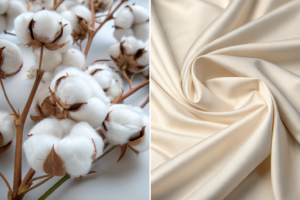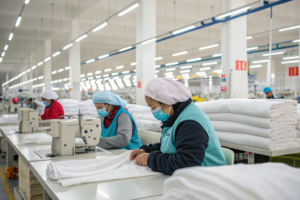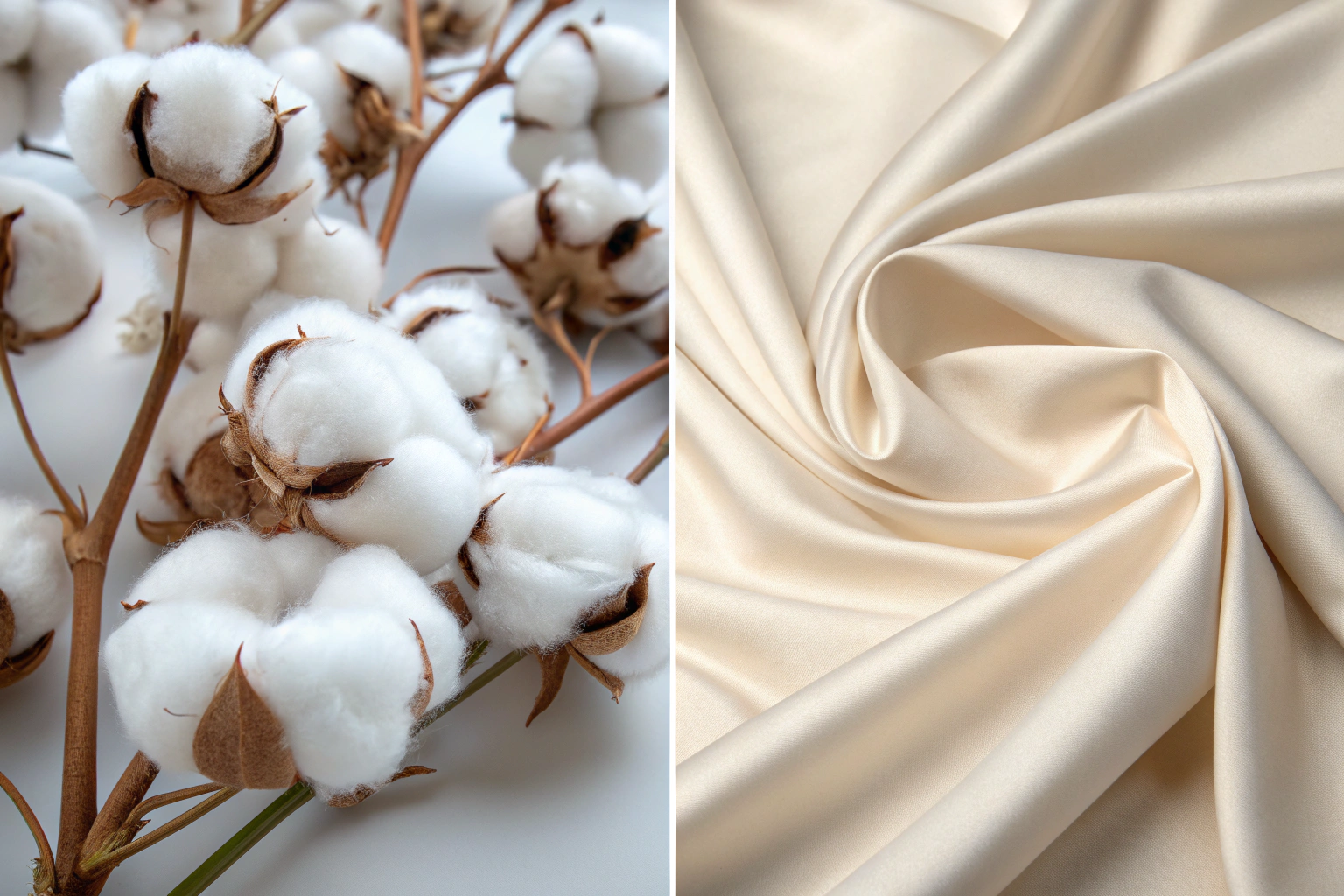
I'll never forget the email that landed in my inbox three years ago from a stressed-out fashion buyer in Sweden. She'd built an entire summer collection around "eco-friendly cotton," only to discover her supplier's organic certification was fake. She needed 15,000 meters of something sustainable, soft, and available immediately. That's when I introduced her to modal. She'd heard the word but couldn't explain what it actually was. Six months later, her collection sold out, and she's been a modal convert ever since.
Modal fabric is a type of semi-synthetic rayon made from beech tree cellulose, prized for its exceptional softness, breathability, and resistance to shrinkage and pilling. Compared to cotton, modal is generally stronger when wet, more absorbent, and has a silkier drape, though it often comes with a higher price tag and different care requirements. Understanding these differences isn't just academic—it directly impacts how your garments perform, feel, and last.
I've spent over two decades in Keqiao watching buyers struggle with this exact choice. They hold a swatch of premium cotton in one hand and a modal blend in the other, trying to decide which will make their customers happier. The truth is, there's no universal winner. The right choice depends entirely on your end use, your price point, and your sustainability story. Let me walk you through what modal actually is, how it's made, and exactly how it stacks up against cotton in the ways that matter most for your business.
How is modal fabric actually made from beech trees?
This question always comes up when I show clients our modal samples. They touch the fabric—it's incredibly soft, almost silky—and they can't connect it to a tree. The transformation from wood to wearable textile feels like magic, but it's actually a fascinating chemical process that's been refined over decades. Understanding this process helps you evaluate quality claims and sustainability credentials.
Modal production starts with harvesting beech trees, primarily from sustainably managed forests in Europe. The wood is chipped and then dissolved in a chemical solution to extract cellulose. This cellulose is pressed into sheets, aged, and then forced through spinnerets—imagine a really fancy showerhead—to create filaments that are stretched, washed, and cut into fibers. These fibers are then spun into yarns and woven or knitted into fabric.
The key innovation in modal versus earlier rayons is the "stretching" step. Modal fibers are stretched while wet, which aligns the cellulose molecules and makes the resulting fiber significantly stronger. This is why modal holds up better than viscose or regular rayon. At Shanghai Fumao, we source modal from Lenzing and other top producers who've invested heavily in closed-loop processes that recover and reuse chemicals, dramatically reducing environmental impact compared to older rayon production methods.

What makes Lenzing modal different from generic modal fabrics?
This is where quality really separates. Lenzing is the Austrian company that pioneered modern modal production, and their "TENCEL™ Modal" brand has become the gold standard. Generic modal, often produced in Asia, can vary wildly in quality. I learned this lesson painfully in 2018 when a client insisted on cheaper generic modal for a large order. The fabric pilled after three washes, and we ended up re-making the entire run with Lenzing at our expense.
Lenzing modal uses sustainably harvested European beechwood and operates a closed-loop production system that recovers over 99% of solvents and water. The fibers are also produced with strict quality controls that ensure consistent thickness, length, and strength. This consistency translates directly to fabric performance—better dye uptake, less pilling, and more predictable shrinkage. When you see "TENCEL™ Modal" on a hang tag, you're getting a product with traceable origins and verified environmental credentials. Generic modal might say "made from beechwood," but without third-party certification, how to verify modal fabric quality that claim is hard to verify. We always recommend Lenzing for clients building premium brands because the quality difference is visible and measurable.
Why is the closed-loop production process important for sustainability?
The dirty secret of early rayon production was chemical pollution. Older viscose processes released significant amounts of carbon disulfide and other toxins into waterways and air. Communities near rayon factories paid the price. Closed-loop production changes this fundamentally.
In a closed-loop system, the chemicals used to dissolve wood pulp are captured, purified, and reused continuously instead of being discharged. Lenzing's modal production recovers and reuses more than 99% of process chemicals. Water consumption is also dramatically lower than conventional viscose. For buyers facing increasing pressure to document environmental impact, this matters enormously.
We've had European clients request full lifecycle assessments for our modal fabrics. Because Lenzing provides detailed environmental data, we can offer environmental benefits of closed-loop modal production numbers that actually mean something: water consumption per kilogram, carbon footprint, and chemical recovery rates. Generic modal producers rarely provide this data because they can't. If sustainability is central to your brand story, the choice between Lenzing and generic modal isn't really a choice at all.
How does modal's softness compare to cotton in real-world wear?
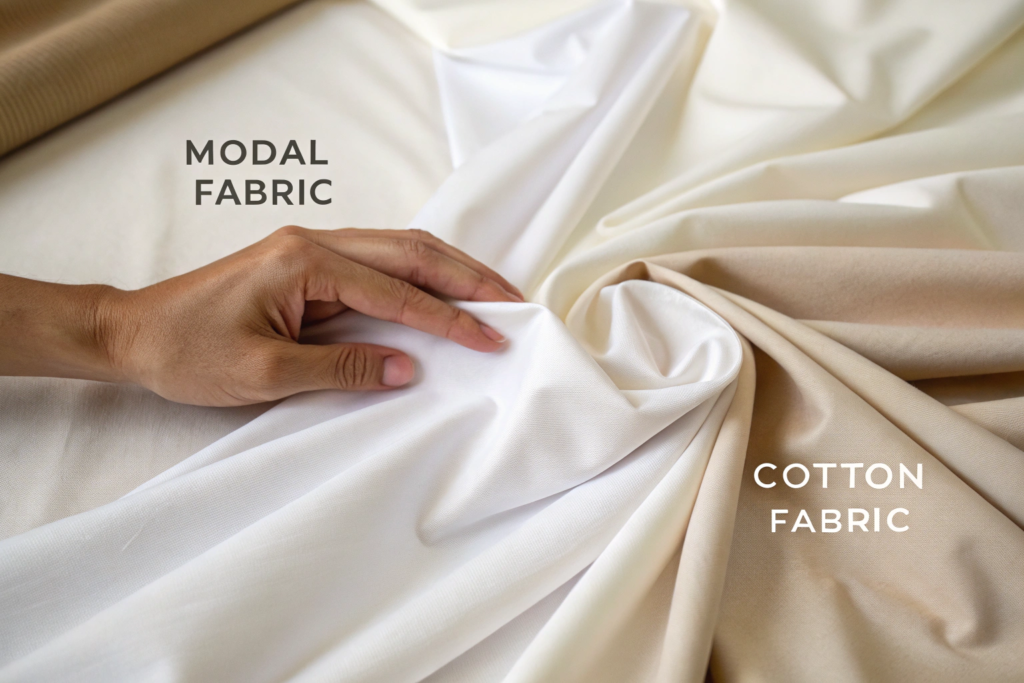
Let's be honest—softness sells. I've watched buyers at trade shows run their hands over fabric swatches, and you can see the moment they decide based purely on touch. Modal consistently wins this test against cotton, but "soft" means different things in different applications. You need to understand how that softness performs over time, not just on first day.
Modal is objectively softer than cotton in laboratory tests measuring hand feel, and this difference is immediately noticeable. The fiber surface of modal is smoother and more uniform than cotton's natural irregularities. Under a microscope, modal fibers look like smooth cylinders while cotton fibers resemble twisted ribbons with rougher edges. This structural difference means modal slides against skin with less friction—that's the "silky" feeling people describe.
But here's what testing doesn't capture: cotton softens with washing while modal starts soft and stays soft. A high-quality cotton fabric might feel slightly crisp when new, then relax into comfort after several washes. Modal feels luxurious immediately but doesn't change dramatically over time. For loungewear, underwear, and bedding, this consistent softness is ideal. For structured garments where you want some initial crispness, cotton might actually be preferable.
Which fabric pills less after repeated washing and wearing?
Pilling—those annoying little balls of fiber that form on fabric surfaces—plagues both cotton and modal, but they pill differently. Cotton pills when short fibers break and tangle on the surface. Modal, especially high-quality Lenzing modal, pills significantly less because the fibers are longer and stronger. They're less likely to break and migrate to the surface.
We test pilling resistance in our CNAS-accredited lab using the Martindale method, which rubs fabric samples in circles under controlled pressure. A typical cotton jersey might start showing pills after 5,000 to 10,000 rubs depending on quality. A good modal fabric often reaches 15,000 to 20,000 rubs before noticeable pilling appears. This difference matters for garments that see frequent wear and washing, like t-shirts, underwear, and activewear.
In 2022, a Canadian activewear brand switched from combed cotton to a modal-spandex blend for their base layer line. Returns for "fabric looking worn" dropped by 40% within six months. The pilling resistance comparison modal vs cotton laboratory data confirmed what their customers felt: modal simply looked newer longer. If longevity of appearance matters for your product, this is a significant advantage.
Does modal or cotton feel cooler against the skin in summer heat?
This depends entirely on fabric construction, not just fiber type. A lightweight, open-weave cotton can feel incredibly breathable. A dense modal jersey can feel warmer. But when comparing similar constructions, modal often has a slight edge in what textile engineers call "cool touch"—the initial sensation when fabric contacts skin.
Modal fibers conduct heat away from skin more efficiently than cotton because of their smoother surface and different moisture absorption characteristics. This creates that cool, almost refreshing feeling when you first put on a modal garment. Cotton feels warmer initially because it has higher friction and slower heat conduction.
For actual breathability, both fibers perform well. Modal absorbs more moisture than cotton—about 50% more by weight—which means it can pull sweat away from skin effectively. But modal also takes longer to dry than lightweight cotton because it holds more water. A thin cotton t-shirt might dry in an hour on a line while modal might take two hours. This tradeoff matters for activewear but might be irrelevant for office wear. The key is matching moisture management properties modal vs cotton fiber properties to your specific end use.
What are the cost differences between modal and cotton for manufacturers?
Money talks, and modal typically costs more than standard cotton but less than premium long-staple cottons like Supima or Egyptian. Understanding the price structure helps you make informed decisions about where modal fits in your product lineup and how to position it for your customers.
Right now, Lenzing modal commands a significant premium over generic modal, and both cost more than commodity cotton. But the gap narrows when you compare modal to premium cottons. A top-quality Supima cotton might actually cost more than Lenzing modal. This surprises many buyers who assume "natural" equals "cheaper." The reality is that fiber cost is only part of the equation—processing, dyeing, and finishing also affect final fabric price.
Modal dyes beautifully and consistently, which can actually reduce manufacturing costs compared to cotton. Cotton requires more water, more chemicals, and more careful temperature control during dyeing to achieve level results. Modal's uniform fiber structure accepts dye more readily, leading to fewer rejected yards and more consistent color across batches. When we calculate total landed cost for clients, this efficiency sometimes makes modal more economical than cotton despite higher raw material cost.
Why do some modal fabrics cost twice as much as others?
Price variation in modal is huge, and the reasons go beyond raw material costs. I've seen modal fabrics quoted at $3 per yard and $8 per yard, both from Chinese mills claiming similar specifications. The difference comes down to three factors: fiber source, yarn quality, and finishing.
Fiber source is the biggest driver. Lenzing modal costs more than generic Chinese modal because Lenzing invests in sustainable forestry, closed-loop production, and rigorous quality control. Generic modal producers often skip these investments, passing savings to buyers but also passing risks. We've tested generic modal that showed significant strength variation within the same roll—some sections weak enough to tear during cutting.
Yarn quality matters enormously. Modal spun on modern equipment with careful quality control produces smoother, stronger yarns. Cheap modal often uses lower twist levels or recycled fibers that compromise performance. And finishing—the last step in fabric production—can transform mediocre modal into something special or ruin premium modal. A good finishing process adds softness, controls shrinkage, and enhances appearance. A rushed process saves money but creates factors affecting modal fabric pricing fabric that disappoints.
How do minimum order quantities compare between modal and cotton?
This is where modal can be surprisingly accessible for smaller brands. Because modal is a manufactured fiber with consistent properties, mills can produce it year-round without the seasonal constraints that affect cotton. Cotton harvesting happens once or twice annually, and the best cotton sells out quickly. Modal production runs continuously.
At Shanghai Fumao, we stock over 30,000 fabric designs including dozens of modal and modal-blend options. A startup founder can order 500 meters of a stock modal fabric and have it shipped within days. For custom development, minimums might be 1,000 to 3,000 meters per color—similar to cotton but often easier to schedule because modal doesn't compete with seasonal cotton rushes.
The real MOQ advantage comes with blends. Modal blends well with other fibers—cotton, spandex, polyester, wool—and these blends often have lower minimums because they're produced for diverse markets. A cotton-modal blend might be available in smaller quantities than pure cotton because it appeals to both natural fiber purists and performance seekers. For small to medium brands, this flexibility is gold.
Which fabric is more environmentally sustainable: modal or cotton?
This question gets more complicated every year. Both fibers have environmental pros and cons, and the "winner" depends on which impacts you prioritize. Water use? Land use? Chemical pollution? Carbon footprint? Each tells a different story. Let me break down what the data actually shows.
Cotton's environmental reputation rests on being natural and biodegradable. But conventional cotton is incredibly thirsty—it takes about 10,000 liters of water to produce one kilogram of cotton fabric, mostly from irrigation in water-stressed regions. Cotton also uses significant pesticides unless it's organic. Organic cotton solves the pesticide problem but often yields less per acre, requiring more land.
Modal's story is different. Beech trees grow in temperate regions with ample rainfall, so modal production rarely requires irrigation. Land use per kilogram of fiber is lower than cotton because trees produce more cellulose per acre than cotton plants. But modal requires chemical processing, and even with closed-loop systems, some impacts remain. Transport also adds footprint since most beechwood comes from Europe and much modal production happens in Asia.
What certifications should you look for when sourcing sustainable modal?
Certifications cut through the marketing claims. For modal, the most important is FSC (Forest Stewardship Council) certification for wood sourcing. This ensures the beechwood comes from responsibly managed forests, not clearcut ancient woodlands. Lenzing modal carries FSC certification and provides chain-of-custody documentation.
For production, look for EU Ecolabel or similar certifications that verify low-impact manufacturing. Lenzing's Austrian and UK operations hold these certifications. Some Chinese modal producers are now pursuing ZDHC (Zero Discharge of Hazardous Chemicals) certification, which focuses on eliminating toxic chemicals from production. This is progress worth supporting.
Don't forget downstream certifications too. OEKO-TEX Standard 100 verifies that finished fabric contains no harmful substances—important for any fabric touching skin. And if you're making organic claims, GOTS (Global Organic Textile Standard) covers both fiber and processing, though certifications for sustainable modal fabric modal itself can't be "organic" since it's manufactured, not grown. We maintain binders of certification documents for every modal source we use, and we're happy to share them with clients who want to verify claims.
Does modal biodegrade like cotton at end of life?
This matters more as textile waste becomes a global crisis. Cotton biodegrades readily in soil or compost—it's plant fiber, after all. Modal also biodegrades because it's made from cellulose, but the chemical processing changes the fiber structure slightly. Tests show Lenzing modal achieves over 90% biodegradation in soil within six months, comparable to cotton.
The catch comes with blends and finishes. Pure modal or modal-cotton blends will biodegrade reasonably well. Modal-spandex blends introduce synthetic fibers that don't biodegrade, creating microplastic pollution. Finishes like antimicrobial treatments or water repellents can also slow biodegradation or introduce chemicals to soil.
For brands serious about circularity, we recommend modal fabric biodegradability and end of life specifying pure modal or blends with other cellulosic fibers, and avoiding permanent finishes. A simple modal jersey with no added treatments will break down much like cotton. A performance modal with spandex and durable water repellent creates end-of-life complications. The choice depends on your priorities—performance now or decomposition later.
Conclusion
Modal fabric occupies a sweet spot in the textile world—softer than cotton, stronger than viscose, and more sustainable than many synthetics. It's not a perfect replacement for cotton, but it's an excellent alternative for applications where softness, drape, and durability matter most. Understanding how modal is made, how it performs, and what it costs helps you make informed decisions that benefit your customers and your bottom line.
At Shanghai Fumao, we've been working with modal for over 15 years. We've seen the quality differences between premium and generic sources. We've helped clients navigate certification requirements for European and US markets. And we've built relationships with top modal producers like Lenzing to ensure our customers get consistent, traceable, high-performance fabrics. Whether you need stock modal fabrics for quick delivery or custom developments for exclusive collections, we have the experience and infrastructure to deliver.
If you're ready to explore what modal can do for your products, reach out to our Business Director, Elaine. She and her team can walk you through options, provide samples, and help you choose the right modal for your specific needs—whether that's Lenzing for premium positioning or a quality generic for value lines. Contact Elaine at [elaine@fumaoclothing.com]() to start the conversation. Let's find the perfect fabric for your next collection.