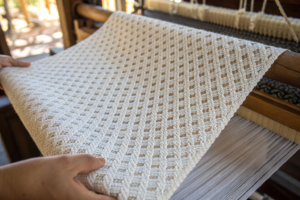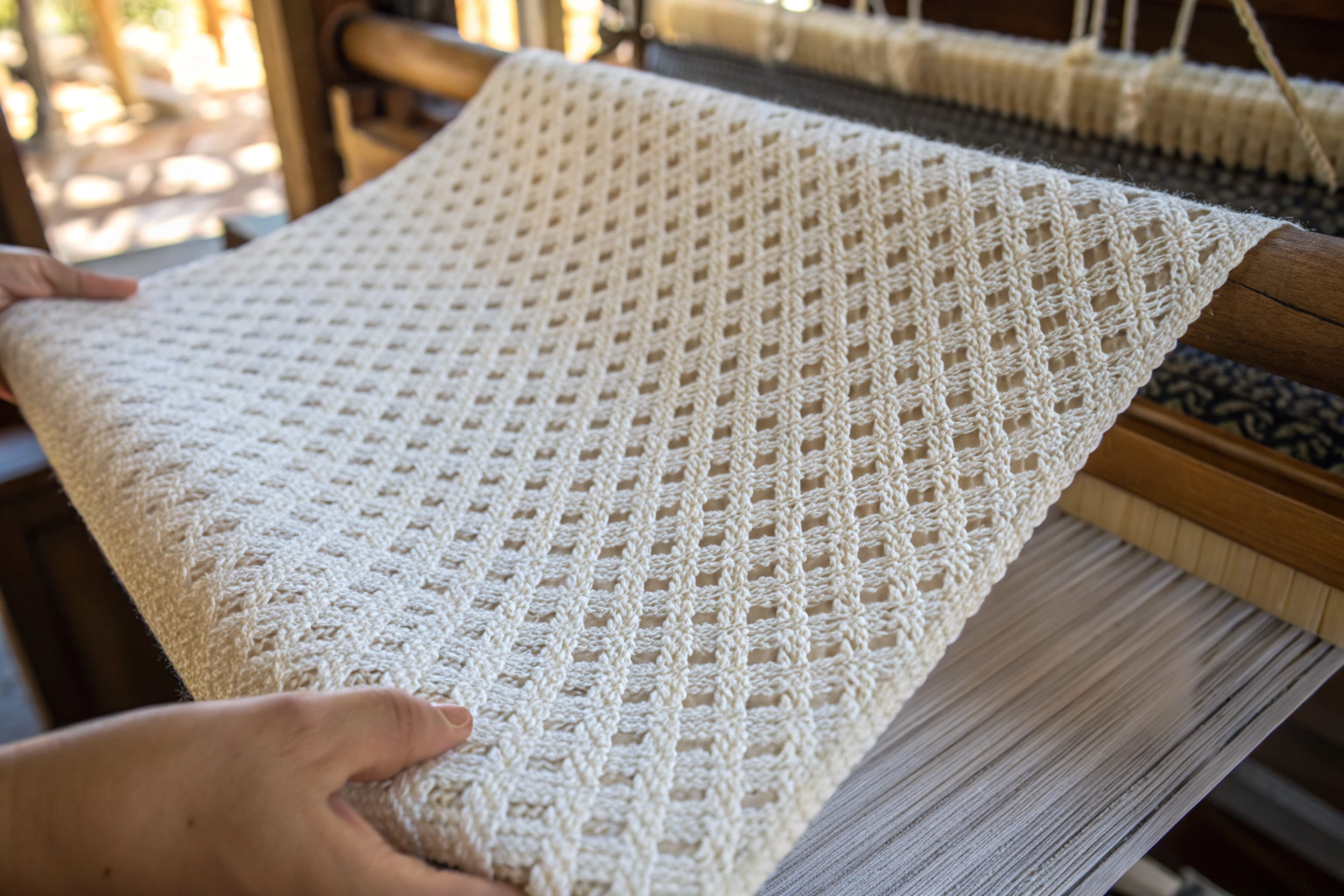
I still remember the confusion on a client’s face back in 2021. She was a designer from Paris, working on a shirt collection. She had a beautiful sample from a luxury brand—a fabric with a small, geometric texture that looked like tiny dots woven into the cloth. She asked me, “Is this a knit? It has some stretch.” I held it up to the light, showed her the weave structure, and explained that what she was looking at was a dobby weave. She had been searching for months under “textured knits” and finding nothing that matched.
That moment stuck with me. Dobby is one of those terms that gets thrown around, but many buyers don’t fully understand what it means. Is it woven? Is it knitted? What makes it different from a jacquard or a simple plain weave? The confusion is understandable. Dobby fabrics can look like they have some give. They often have a soft hand. But they are very much woven, and understanding how they’re made helps you use them correctly.
I’ve been weaving dobby fabrics in Keqiao for over 15 years. We have dobby looms running every day, producing everything from classic shirting to high-end fashion fabrics. Let me clear up the confusion and walk you through what dobby fabric actually is, how it’s made, and why it might be exactly what your next collection needs.
What Exactly Is Dobby Fabric?
Dobby fabric starts with a simple question: how do you create small, repeating geometric patterns in a woven fabric without the complexity of a jacquard loom? The answer is the dobby attachment. I explain it to clients as the middle ground between a basic plain weave and a full jacquard.
How Is Dobby Different from a Plain Weave?
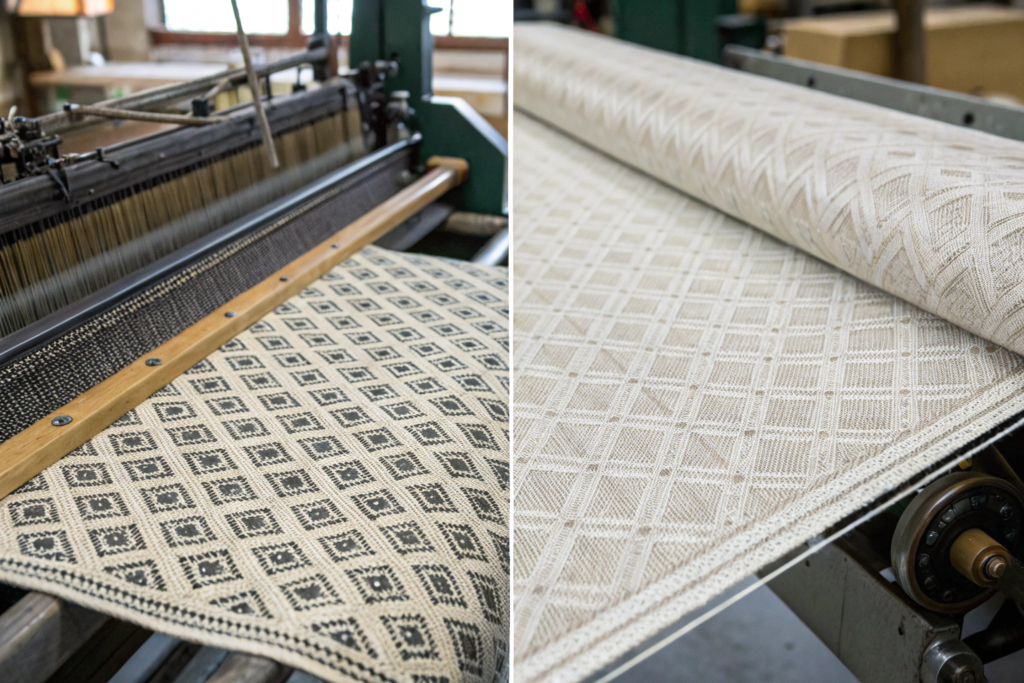
To understand dobby, you need to understand how a loom works. In a plain weave loom, there are two harnesses. One lifts the odd warp threads, the other lifts the even threads. The shuttle passes through, and you get that simple over-under structure. It’s reliable, but it’s limited.
A dobby loom has up to 32 harnesses. Each harness can lift independently. The dobby mechanism—it’s a mechanical or electronic attachment—controls which harnesses lift in which sequence. That sequence creates the pattern. A small geometric shape might use 8 harnesses. A more complex pattern might use 24.
I remember showing this to a client from New York in 2023. She was designing a shirt line and wanted something more interesting than plain poplin but not as heavy as a jacquard. I took her to our dobby looms. She watched the harnesses lift in sequence, creating a small honeycomb texture across the fabric. She said, “Now I get it. It’s like programming a pattern into the weave.”
The result is a fabric that has texture—sometimes subtle, sometimes pronounced—but is still stable and durable. Unlike a knit, it doesn’t stretch significantly. Unlike a jacquard, the pattern is small and repeating, not large and complex.
If you’re considering dobby for your collection, there’s a helpful resource on the difference between dobby and jacquard weaving for fashion fabrics . It explains the technical distinctions in plain language.
Is Dobby Fabric Knitted or Woven?
Let me state this clearly: dobby fabric is woven. Not knitted. The confusion comes from two places.
First, some dobby fabrics have a soft, almost stretchy hand feel. When you use fine yarns and a balanced weave, dobby can drape beautifully and feel like it has some give. But that’s the hand feel, not the structure. If you pull a dobby fabric, it won’t stretch and recover like a knit. It might have a little diagonal give, but it’s not elastic.
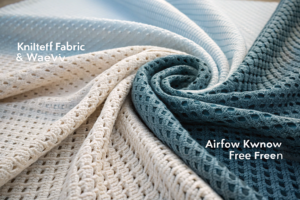
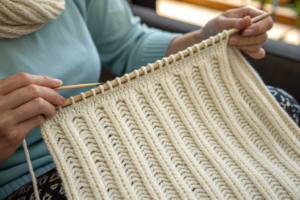
Second, some suppliers misuse the term. I’ve seen “dobby knit” used in marketing. That’s not a real category. It’s usually a knit fabric with a textured surface made by using different yarns or stitch structures. Real dobby is woven on a loom with harnesses.
In 2022, a client from Australia showed me a sample labeled “dobby knit” from another supplier. It was a textured jersey. She wanted to use it for a structured blazer. I explained that a knit wouldn’t hold the shape she needed. She switched to a woven dobby, and the blazer came out perfectly structured.
If you’re looking at a fabric and you’re not sure whether it’s a woven dobby or a textured knit, do the stretch test. Pull it horizontally. If it stretches significantly and springs back, it’s a knit. If it has minimal stretch or no recovery, it’s a woven dobby.
What Makes Dobby Different from Other Woven Fabrics?
Now that we’ve established that dobby is woven, let’s talk about where it fits in the woven family. I’ve worked with all the major weave structures, and each has its place. Dobby occupies a sweet spot between simplicity and complexity.
How Does Dobby Compare to Jacquard?
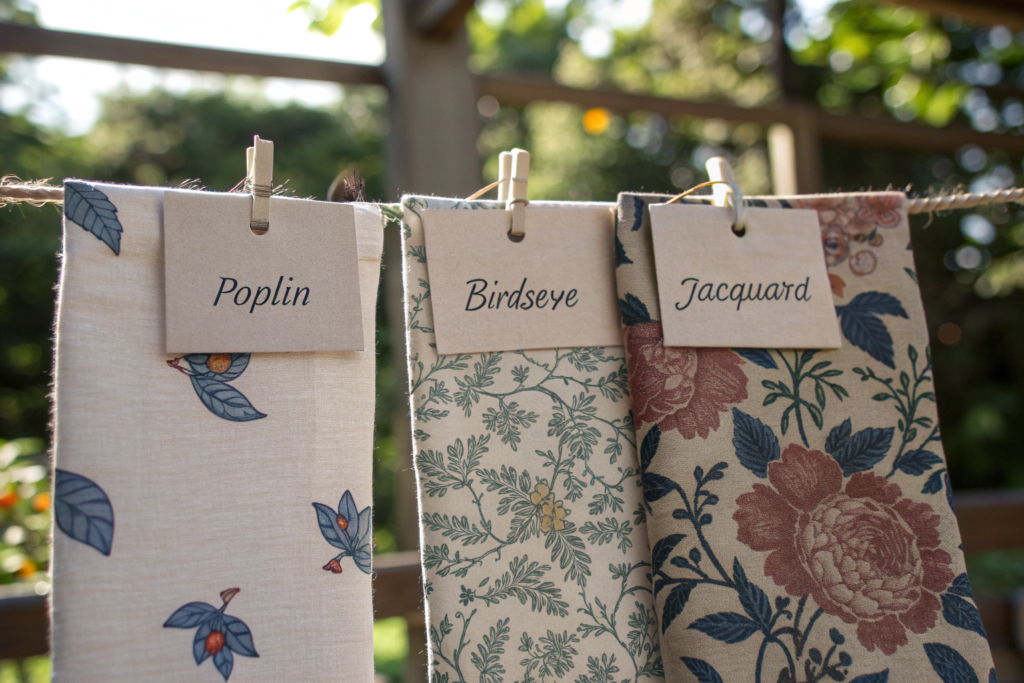
This is the question I get most often. Both create patterns in the weave. The difference is scale and complexity.
Jacquard looms can control every warp thread individually. That means you can weave large, complex patterns—think brocade, damask, or large floral designs. A jacquard pattern might repeat every 50 centimeters or more. The loom can have thousands of warp threads, each controlled independently.
Dobby looms control groups of threads through harnesses. Up to 32 harnesses means up to 32 distinct lifting patterns. The pattern repeats every few centimeters. That’s perfect for small geometric textures—birdseye, honeycomb, herringbone, small checks, and subtle textures.
In 2023, we worked with a European menswear brand on a shirt collection. They wanted a subtle texture that added interest without being flashy. We used a dobby weave with a small diamond pattern. The pattern was visible up close but read as a solid from a distance. It gave the shirts a premium feel without screaming “pattern.”
The client told me they had considered jacquard but the patterns were too bold for their market. Dobby gave them exactly what they needed.
If you’re deciding between dobby and jacquard, think about your pattern scale. If you want a large, complex design that tells a story, jacquard is your answer. If you want a subtle texture that adds depth without dominating, dobby is the better choice.
What’s the Difference Between Dobby and Twill?
This is a more subtle distinction. Twill is a specific weave structure—it creates a diagonal rib. Dobby is a capability. You can have a dobby fabric that uses a twill base. In fact, many dobby patterns are built on a twill foundation.
I think of it this way: twill describes the structure. Dobby describes the mechanism. A simple twill—like a 2x1 or 3x1—doesn’t need a dobby loom. You can weave it on a standard loom with a few harnesses. But if you want a twill with a broken pattern, or a twill that creates a small geometric texture, you need a dobby mechanism.
In 2024, we produced a dobby fabric for a US sportswear brand. The base was a 2x2 twill, but we used the dobby mechanism to break the twill line at regular intervals, creating a subtle herringbone effect. The fabric had the durability of a twill with the visual interest of a pattern.
For a technical explanation of weave structures, there’s a resource on how dobby mechanisms create complex weaves beyond basic twill . It’s detailed but accessible.
What Are the Most Common Uses for Dobby Fabric?
I’ve produced dobby fabrics for everything from high-end dress shirts to luxury bedding. The versatility comes from the range of possibilities. You can make a dobby fabric lightweight and crisp for shirting, or heavyweight and textured for outerwear.
Why Is Dobby So Popular for Dress Shirts?
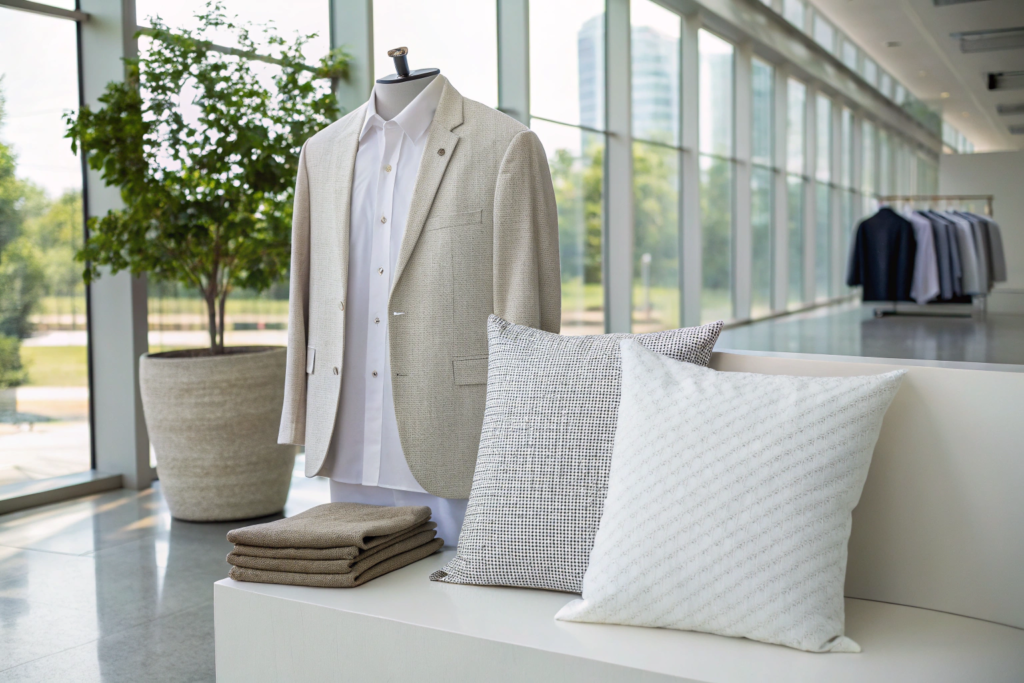
Dobby is a staple in premium shirting for a reason. It offers texture without bulk. A dobby shirt has visual interest—the pattern catches the light differently—but it doesn’t feel heavy or stiff.
In 2022, we produced a run of dobby shirting for a Japanese brand. The pattern was a small birdseye, woven with 80/2 combed cotton. The fabric was crisp enough for a structured collar but soft enough for all-day wear. The client told me their customers loved the subtle texture—it made the shirts feel special without being loud.
The key to good dobby shirting is yarn quality. Because the pattern comes from the weave, you want clean, consistent yarns. We use combed cotton for dobby shirting. The combing process removes short fibers, leaving only long, smooth fibers. That gives you a cleaner pattern and a softer hand.
If you’re sourcing dobby for shirting, ask about yarn count. For a crisp dress shirt, I recommend 60/2 or 80/2. For a more casual shirt, 40/1 or 50/1 works well.
How Is Dobby Used in Home Textiles and Outerwear?
Dobby isn’t just for shirts. I’ve produced dobby fabrics for:
- Bedding: Small geometric patterns add texture without being too busy
- Blazers and jackets: Heavier dobby weaves give structure with visual interest
- Skirts and dresses: Dobby adds texture to woven garments without adding weight
- Table linens: The pattern hides wear and adds a premium feel
In 2024, we produced a heavyweight dobby for a Scandinavian outerwear brand. They wanted a fabric for a collection of chore coats—structured, durable, but with a subtle texture that set them apart from standard twill. We used a 2x2 twill base with a broken pattern created by the dobby mechanism. The fabric was 280 GSM, heavy enough for a coat but not stiff. The client sold out their first run in three weeks.
If you’re using dobby for outerwear, pay attention to fabric weight. For a shirt, 120-150 GSM. For a blazer or jacket, 200-250 GSM. For a coat, 250-300 GSM.
How Do You Source Quality Dobby Fabric?
Not all dobby fabric is created equal. I’ve seen fabrics that look dobby from a distance but fall apart up close. The quality comes down to yarn, loom maintenance, and finishing.
What Yarn Quality Should You Look For?
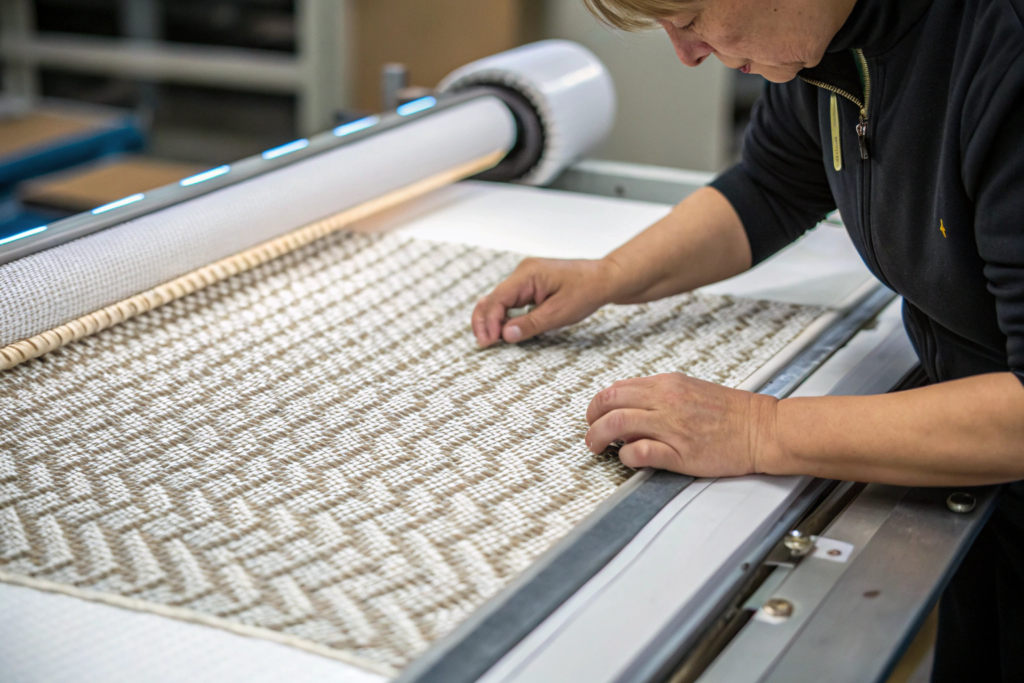
The pattern in a dobby fabric comes from the weave structure. If the yarns are inconsistent, the pattern will be inconsistent. I always recommend combed cotton for dobby shirting. The combing process removes short fibers, leaving only long, smooth fibers. The result is a cleaner pattern and a softer hand.
For synthetic dobby fabrics, look for textured yarns or high-tenacity yarns depending on the application. Textured yarns give a softer hand. High-tenacity yarns give durability.
In 2023, a client from the UK had been buying dobby shirting from another supplier. The fabric looked good on the roll, but after three washes, the pattern started to blur. I visited the factory. They were using carded cotton—cheaper, with short fibers that worked their way to the surface and distorted the pattern. We switched to combed cotton, and the pattern stayed crisp wash after wash.
If you’re sourcing dobby, ask your supplier about yarn type. Combed cotton costs more, but it’s worth it for a garment that needs to look good over time.
How Does Finishing Affect Dobby Performance?
Finishing is where a good dobby fabric becomes a great one. The weave creates the pattern. The finishing sets it.
I look for mechanical finishing on dobby fabrics. A calender machine uses heat and pressure to set the weave structure. The pattern stays crisp, and the fabric gets a subtle sheen. Chemical finishes can wash out or make the fabric feel stiff.
I also check for sanforization on cotton dobby fabrics. This pre-shrinking process stabilizes the fabric. Without it, your pattern can distort after washing.
In 2024, we produced a dobby shirting for a US client. We ran it through our sanforizer and then a light calendering. The pattern was crisp, the hand was soft, and the shrinkage tested at less than 2%. The client told me their pattern maker loved working with it because it stayed consistent across the cutting table.
For a guide to finishing dobby fabrics, there’s a resource on how finishing affects woven texture and pattern clarity . It covers mechanical versus chemical approaches.
Conclusion
Dobby fabric is woven. It’s made on a loom with a dobby mechanism that controls up to 32 harnesses, creating small, repeating geometric patterns. It sits between plain weave and jacquard—more texture than a poplin, less complexity than a jacquard. It’s the perfect choice for dress shirts that need subtle visual interest, for blazers that need texture without bulk, and for any application where you want the structure of a woven fabric with a pattern that’s interesting but not overwhelming.
At Shanghai Fumao , we’ve been weaving dobby fabrics for over 15 years. Our dobby looms run daily, producing everything from lightweight shirtings to heavyweight outerwear fabrics. We use combed cotton for crisp patterns, mechanical finishing for durability, and sanforization for shrinkage control. Every batch is inspected on our lightbox, and every pattern is checked for consistency.
I’ve helped designers understand the difference between dobby and jacquard, between dobby and knit, between good yarns and cheap ones. I’ve watched them light up when they see the pattern emerge on the loom for the first time. And I’ve seen the final garments sell out because the fabric added that extra something that customers noticed.
If you’re working on a collection and you think dobby might be the answer, or if you’re confused about the difference between woven textures, let’s talk. My business director, Elaine, handles all our custom weaving inquiries. She knows the weave structures, the yarn options, and the finishing techniques. She can look at your inspiration and recommend the dobby pattern that will make your collection stand out.
Contact Elaine directly: elaine@fumaoclothing.com
Tell her about your project. Let her show you what dobby can do.