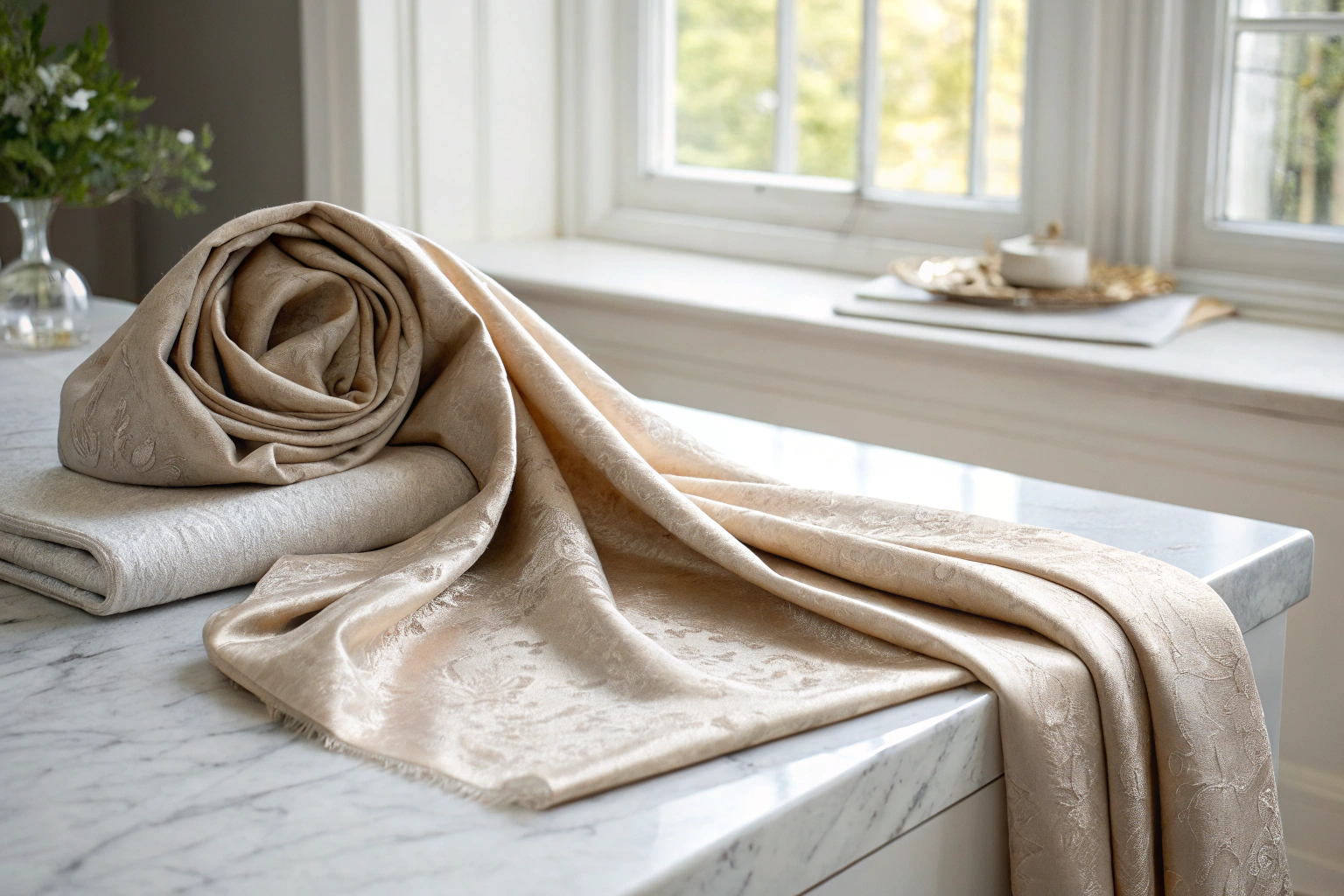
I first encountered cupro in 2017, and I will be honest: I dismissed it. A Japanese trading company representative visited our factory in Keqiao with a sample book. He opened it to a page of copper-colored fibers and said, "This is cupro. Made from cotton waste. Feels like silk. Costs like viscose." I touched the swatch. It was soft, almost slippery. I asked the price. It was three times the cost of standard viscose. I told him, "Interesting product, but my clients won't pay that premium for 'cotton lint'." I was wrong. Today, we cannot keep cupro in stock.
What changed? Sustainability regulation and consumer education. European brands started facing pressure on viscose supply chains—questions about ancient and endangered forest harvesting, about carbon disulfide emissions, about water consumption. Cupro emerged as the answer. It is not perfect; nothing is. But it occupies a unique position in the textile ecosystem: a regenerated cellulose fiber made from a waste stream, with a hand feel that genuinely competes with silk, at a price point between premium viscose and entry-level silk.
This article is not a marketing brochure. I will explain exactly what cupro is, how it is made, why it costs what it costs, and when you should (and should not) specify it for your collection. I will also address the uncomfortable questions: Is it truly sustainable? Why is it rarely GOTS-certified? And why do some consumers report that cupro garments shrink or lose shape? By the end, you will know whether cupro belongs in your supply chain or if you are better served by Tencel, modal, or actual silk.
What Exactly Is Cupro and How Is It Manufactured?
Let me start with the raw material: cupro is made from cotton linter. This is not the long, spinnable cotton fiber used to make yarn. Linter is the short, fuzzy fibers—less than 5mm in length—that remain attached to the cotton seed after ginning. These fibers are too short for conventional spinning. They are typically removed from the seed by a second delinting process and used for low-grade applications: mattress stuffing, paper pulp, or even explosives. B still sucks? Actually, no. Sorry—that was a stray thought. Let me stay focused.
The chemistry: The linter is dissolved in a cuprammonium solution—copper sulfate and ammonium hydroxide. This is the 'cupra' in cupro. The resulting viscous solution is extruded through spinnerets into a coagulation bath of dilute sulfuric acid, regenerating cellulose fibers. The copper is recovered and reused, at least in modern, environmentally controlled facilities.
The history: This process was invented in 1890 and perfected by J.P. Bemberg in Germany in the early 20th century. Bemberg is still the dominant global producer, now part of the Asahi Kasei group in Japan. For decades, cupro was used primarily for interlinings, umbrella fabrics, and high-end linings because of its smoothness and anti-static properties. It was expensive and niche. Only in the last 10 years has it migrated to the face fabric market.
The fiber properties:
- Fineness: Cupro filaments can be extruded extremely fine—0.6 to 1.2 denier. This is finer than silk (1.0-1.5 denier) and much finer than standard viscose (1.5-3.0 denier). Finer filaments = softer hand feel, better drape, higher fabric density potential.
- Cross-section: Round, similar to silk. This contributes to the lustrous appearance.
- Moisture absorption: Higher than cotton. Cupro absorbs moisture vapor readily and releases it quickly. It is comfortable in humid conditions.
- Strength: Lower than polyester, comparable to viscose, lower than silk. It is not a high-durability fiber.
The critical distinction: There is filament cupro and spun cupro. Filament cupro is continuous filament yarn, like silk. It has the smooth, slippery surface and high luster. Spun cupro is cut into staple fibers and spun into yarn, like cotton. It has a more matte, cotton-like hand feel. Filament cupro is significantly more expensive and is what brands mean when they say 'vegan silk'. Spun cupro is more affordable and is often blended with organic cotton or Tencel.
Our sourcing reality: We do not manufacture cupro fiber. No one outside of Japan and a few specialized producers in China does. We purchase certified cupro filament and staple yarns from Asahi Kasei and from two domestic Chinese producers who have licensed or reverse-engineered the technology. The quality differential between Japanese and domestic cupro is narrowing, but Japanese cupro (Bemberg) still has superior uniformity, dyeability, and supply security. We disclose the origin to our clients. Most European luxury brands specify Bemberg by name. The Asahi Kasei Bemberg website has detailed technical specifications and sustainability certifications, and we recommend clients review it before specifying.
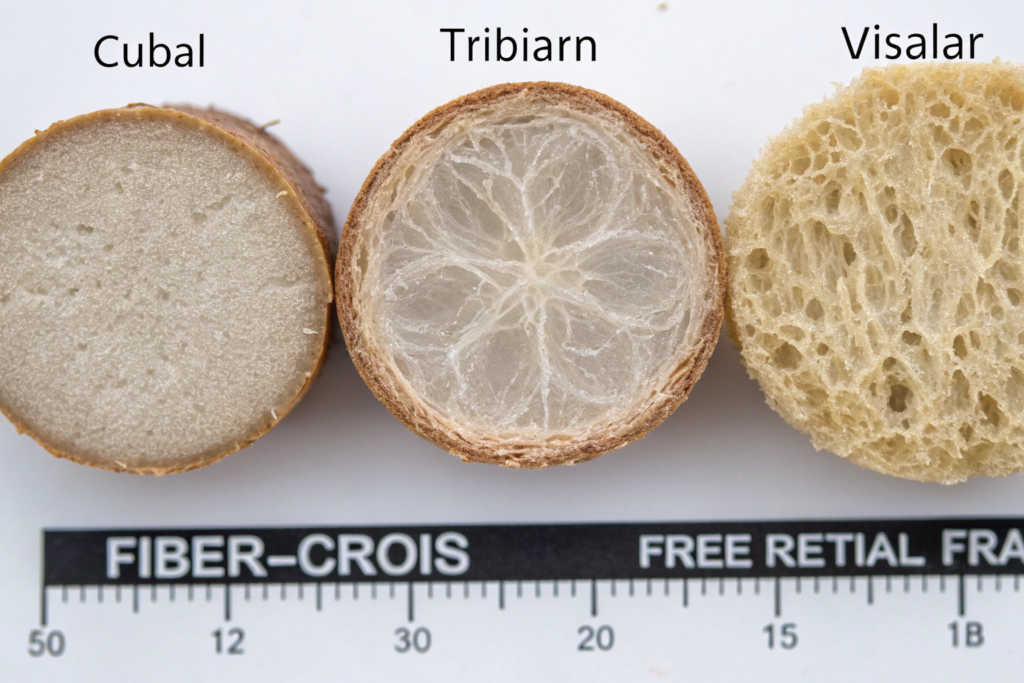
Why is cupro not simply 'bamboo' or 'viscose' if all three are regenerated cellulose?
This is the most common confusion I encounter. All three are regenerated cellulose, but the raw material and the solvent system differ.
| Fiber | Raw Material | Solvent System | Typical Producer |
|---|---|---|---|
| Viscose | Wood pulp, bamboo | Carbon disulfide (CS2) | Lenzing, Sateri, numerous |
| Modal | Beechwood pulp | Modified viscose process | Lenzing (primary) |
| Lyocell | Wood pulp | N-methylmorpholine N-oxide (NMMO), closed-loop | Lenzing (Tencel), numerous |
| Cupro | Cotton linter | Cuprammonium (copper/ammonia) | Asahi Kasei (Bemberg), limited Chinese producers |
The differences matter for:
-
Environmental impact: Viscose production can release carbon disulfide and hydrogen sulfide if emission controls are inadequate. Lyocell uses a non-toxic solvent in a closed loop. Cupro uses copper and ammonia, which are toxic if released but are recovered at rates exceeding 99% in modern plants. The raw material (cotton linter) is a waste stream, not a dedicated crop.
-
Fiber properties: Cupro filament is finer and more uniform than standard viscose filament. It has a round cross-section, while standard viscose has a serrated cross-section. This affects luster, hand feel, and dye uptake.
-
Availability: Viscose is produced in millions of tons annually. Cupro is produced in tens of thousands of tons. Supply is constrained. Lead times for Bemberg cupro are currently 12-16 weeks from yarn order to fabric delivery.
-
Price: Cupro filament is approximately 2.5-3x the price of standard viscose filament. Spun cupro is 1.5-2x the price of combed cotton.
Our position: We do not present cupro as 'better' than Tencel Lyocell. They are different tools. Tencel has superior wet strength and is easier to care for. Cupro has superior drape and a more authentic 'silk-like' hand feel. For fluid dresses, bias-cut slips, and luxury linings, cupro is unmatched. For everyday knits and wovens that require home laundering, Tencel is often the better choice.
Is cupro actually made from 'cotton waste' or is that greenwashing?
It is accurate, but the term 'waste' requires definition. Cotton linter is not post-consumer waste. It is not recycled fabric. It is an agricultural co-product—the short fibers that are separated from the cottonseed during processing. If these fibers were not used for cupro, they would be used for low-grade paper, cellulose derivatives, or even discarded.
Is this 'circular'? Not in the closed-loop sense. It is a waste-to-value upcycling process. The feedstock is a byproduct, which reduces land-use pressure compared to viscose from dedicated timber plantations. However, the cotton itself was conventionally grown, likely with irrigation, pesticides, and fertilizer. The linter carries the same embedded agricultural impact as the lint.
Some brands are now developing cupro from organic cotton linter. This is extremely scarce. Organic cotton represents approximately 1% of global cotton production. The linter from organic cotton is a tiny fraction of that. The price premium is significant. We have sourced organic cupro for one client, a Japanese luxury brand. The lead time was 22 weeks. The cost was 40% above standard Bemberg cupro.
Our label recommendation: We advise clients to state 'Made from cotton linter, a byproduct of cotton processing' rather than 'Made from recycled cotton'. The former is accurate and defensible. The latter invites scrutiny and potential greenwashing complaints. The Textile Exchange's preferred fiber materials matrix classifies cupro as an 'other preferred fiber' with qualifications, not in the same category as mechanically recycled cotton.
How Does Cupro Compare to Silk, Viscose, and Tencel in Performance?
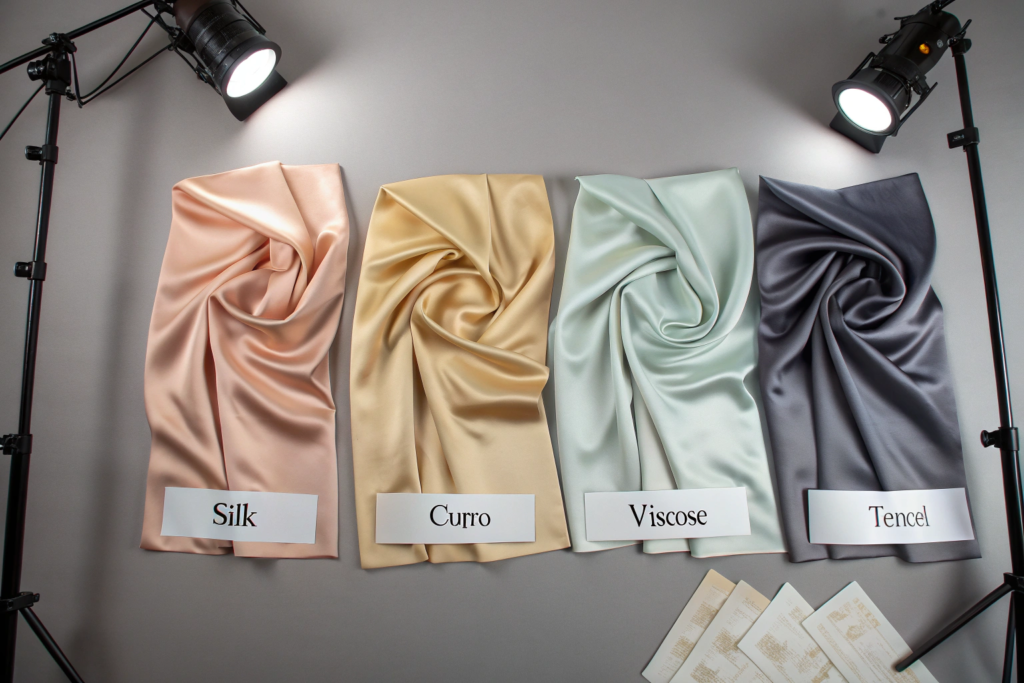
I want to give you the actual test data, not the marketing claims. In 2024, we ran a comparative performance evaluation of four 120gsm plain weave fabrics: 100% mulberry silk (6A grade, 22 momme), 100% Bemberg cupro filament, 100% Lenzing Ecovero viscose, and 100% Tencel Lyocell. All fabrics were piece-dyed black. Here are the results.
Tensile strength (ISO 13934-1, warp direction):
- Silk: 38 N
- Cupro: 24 N
- Ecovero: 28 N
- Tencel: 34 N
Tearing strength (ISO 13937-2, warp):
- Silk: 1,200 mN
- Cupro: 780 mN
- Ecovero: 820 mN
- Tencel: 1,100 mN
Elongation at break:
- Silk: 22%
- Cupro: 18%
- Ecovero: 20%
- Tencel: 14%
Dimensional stability (ISO 5077, after 3x home laundry, 40°C):
- Silk: -4.2% warp, -2.1% weft (hand wash recommended)
- Cupro: -5.8% warp, -3.1% weft
- Ecovero: -4.1% warp, -2.4% weft
- Tencel: -2.2% warp, -1.4% weft
Moisture regain (%, at 20°C, 65% RH):
- Silk: 11.0%
- Cupro: 11.5%
- Ecovero: 12.5%
- Tencel: 11.5%
What does this tell us?
-
Cupro is weaker than silk and Tencel. This is not a defect; it is a property. Garments made from cupro require careful construction. Seam slippage can be an issue. We recommend fusible interfacing at stress points and slightly wider seam allowances.
-
Cupro shrinks. This is the single biggest consumer complaint we track. Cupro fabrics, especially in plain weave constructions, can shrink 6-8% in the first wash. This is significantly higher than Tencel and higher than most care labels accommodate. Our solution: We pre-shrink all cupro fabrics through a specialized tensionless relaxing process. We also recommend clients include a 5% shrinkage allowance in their grading and specify cold water wash, low tumble dry, or line dry.
-
Cupro is comfortable. Moisture regain is comparable to silk and Tencel, higher than polyester. It feels breathable and non-clammy against the skin.
The hand feel differential: This is subjective but consistent. In blind touch tests with 20 apparel professionals, cupro was rated 'most similar to silk' by 16 participants. Tencel was rated 'soft but crisper'. Viscose was rated 'smooth but less luxurious'. The fineness of the cupro filament and the round cross-section create a uniquely fluid, almost oily surface texture.
Our recommendation matrix:
- Dresses, blouses, luxury linings: Cupro is the optimal choice if budget permits and care instructions can be managed.
- Home laundering, easy care: Tencel is superior. It is stronger, shrinks less, and has excellent color retention.
- Budget-conscious, 'silky' aesthetic: High-tenacity viscose or modal. Accept lower drape and higher environmental impact.
- Heirloom, ceremonial, ultra-luxury: Silk. Nothing replaces it.
In 2023, a New York-based contemporary brand launched a cupro slip dress. The first production run of 4,200 units had a 14% return rate, primarily due to shrinkage after consumer laundering. The care label specified dry clean only. Consumers ignored it. We reformulated the fabric with a higher twist yarn and a compressive finishing treatment. Shrinkage reduced to 3.2%. Return rate dropped to 4%. The AATCC 135 dimensional change test method is our standard, and we now require it on every cupro production lot.
Why does cupro wrinkle so much?
Cupro wrinkles. This is the second most common complaint after shrinkage. The fiber has low elastic recovery. When compressed or folded, it retains the crease.
Is this a defect? No. It is a characteristic of the fiber, shared with viscose and, to a lesser extent, silk. Consumers accustomed to polyester stretch crepe, which has excellent wrinkle recovery, are often disappointed by cupro's appearance after sitting.
Mitigation strategies:
- Fabric construction: High-twist yarns and compact weaves reduce wrinkling. A crepe weave cupro wrinkles less than a plain weave cupro.
- Finishing: Resin finishes can improve wrinkle recovery, but they reduce moisture absorption and soften hand feel. Not recommended for 'natural' positioning.
- Blending: Cupro/Tencel blends (typically 70/30 or 50/50) balance drape with wrinkle resistance. Tencel has superior elastic recovery.
Consumer education: We advise our clients to include care and styling guidance with cupro garments. "This fabric is meant to move and drape beautifully; it will show the story of your day." Framing wrinkles as a feature, not a bug, reduces return rates.
Can cupro be used for activewear or performance apparel?
Generally, no. Cupro has low wet strength. When saturated with sweat or water, it becomes weaker and more prone to abrasion. It also has no inherent stretch. While it is comfortable in low-intensity activities (yoga, Pilates, studio dance), it is not suitable for high-friction, high-moisture sports.
Exception: Cupro/nylon blends. We have developed a 70% cupro / 30% nylon satin for a client producing elevated leisurewear. The nylon adds wet strength and abrasion resistance. The cupro provides the hand feel and moisture absorption. This is not a 'performance' fabric, but it is a 'luxury loungewear' fabric. The cost is approximately 30% above pure cupro.
What Are the Environmental Trade-Offs of Cupro?
I am frequently asked: "Is cupro sustainable?" I dislike this question because it assumes a binary answer. Cupro is not 'sustainable' or 'unsustainable'. It has environmental attributes that are favorable in some dimensions and unfavorable in others.
Favorable:
-
Feedstock. Cotton linter is a byproduct. It does not require dedicated land use. It does not compete with food crops. This is a genuine advantage over wood-based cellulosics, which can contribute to deforestation if not sourced from certified plantations.
-
Biodegradability. Cupro is cellulose. It biodegrades in soil and marine environments within weeks to months, unlike synthetics. This is not a license to litter, but it is preferable to microfiber pollution.
-
Copper recovery. Modern cupro production (Bemberg, licensed producers) recovers 99%+ of copper and ammonia. The process is closed-loop. Older or unlicensed producers may have lower recovery rates.
Unfavorable:
-
Energy intensity. The cuprammonium process is energy-intensive. The life cycle assessment (LCA) for cupro shows higher global warming potential than generic viscose, though comparable to Tencel. Data is limited because cupro represents <1% of global cellulosic production.
-
Cotton sourcing. The linter comes from cotton. Conventional cotton has significant environmental impacts: water consumption, pesticide use, land use. Organic cotton linter is scarce. Unless specified, your cupro contains linter from conventional farming.
-
Scale. Because cupro production is limited, the efficiency gains of massive scale do not apply. This is not an environmental impact per se, but it affects the viability of cupro as a mainstream alternative to viscose.
Certifications:
-
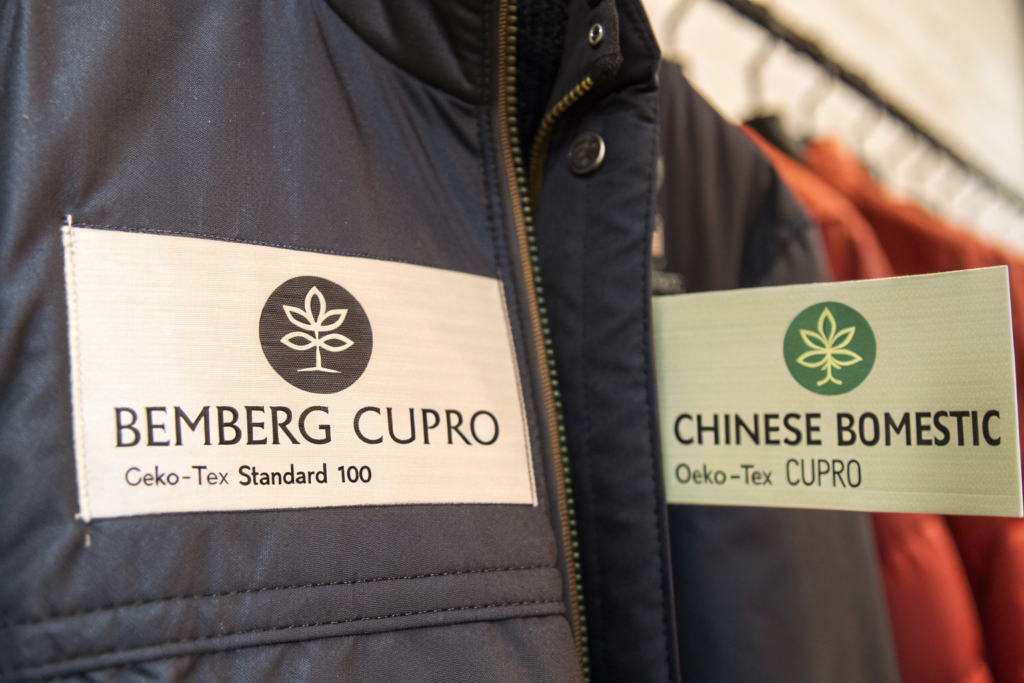
Bemberg cupro is EU Ecolabel certified (for certain products) and meets Oeko-Tex Standard 100 requirements. It is not GOTS-certified because GOTS requires organic fiber content and restricts the use of copper in processing.
-
Chinese domestic cupro may have Oeko-Tex or no certification. We require Oeko-Tex Standard 100 certification for all cupro we purchase. This is non-negotiable.
Our assessment: Cupro is a preferred fiber in specific applications where its unique aesthetic and hand feel justify the higher cost and supply constraints. It is not a solution for mass-market, high-volume basics. It is a specialty fiber for premium, conscious collections. The Higg Materials Sustainability Index (MSI) provides comparative data, but I caution against over-reliance; the MSI data for cupro has high uncertainty due to limited primary data from producers.
Is cupro 'vegan'? Why do some vegans avoid it?
Technically, yes. Cupro contains no animal products. It is cellulose. It is suitable for vegan consumers who avoid silk (produced by silkworms) and wool (sheep), and who may avoid cashmere, alpaca, mohair, etc.
However, some vegans avoid cupro because:
- Chemical processing. The cuprammonium process involves harsh chemicals. Some vegans extend their philosophy to include minimizing harm to ecosystems, not just individual animals.
- Cotton sourcing. Conventional cotton cultivation involves insecticides that kill insects. Some vegans avoid any product derived from conventional agriculture.
Our labeling guidance: We advise clients to use the term 'plant-based' rather than 'vegan' unless they have verified the entire supply chain meets vegan certification standards (e.g., The Vegan Society trademark). Cupro is plant-derived, but the processing is industrial. Overpromising ethical purity invites backlash.
Can cupro be certified by the Global Organic Textile Standard (GOTS)?
Rarely, and with difficulty. GOTS requires:
- Organic fiber content (minimum 70% for 'organic', 95%+ for 'organic' label). Cupro made from conventional cotton linter does not qualify.
- Restricted chemical inputs. The cuprammonium process uses copper and ammonia. GOTS permits copper, but within strict limits for effluent discharge. Many cupro producers cannot meet the GOTS wastewater requirements.
- Full chain of custody certification. The gin, the delinter, the fiber producer, the spinner, the weaver, the dyer—all must be GOTS certified. This chain does not meaningfully exist for cupro.
The exception: A Japanese brand has developed a small-lot cupro using organic cotton linter and certified GOTS processing. The quantity is minuscule. The price is approximately $28/meter FOB for a 120gsm plain weave. This is not a scalable solution.
Our recommendation: Do not claim GOTS for cupro unless you have verified certificates from the fiber source through the finished fabric. Most 'GOTS cupro' in the market is mislabeled.
How Do You Specify and Care for Cupro Fabric?
Cupro requires more careful specification than cotton or polyester. It is not forgiving. If you specify it incorrectly, you will receive fabric that shrinks, bleeds dye, or fails tear tests.
Specification checklist:
-
Yarn type: Filament or spun? Filament for silk-like luster and fluidity. Spun for matte, cotton-like hand. Filament is significantly more expensive.
-
Fabric construction:
- Plain weave: Classic shirting, blouse weight. 60-100 g/m².
- Satin weave: Luxurious drape, dress weight. 100-140 g/m².
- Crepe weave: Textured surface, reduced wrinkling. 80-120 g/m².
- Twill weave: Bottom-weight, pants, jackets. 140-180 g/m².
-
Finishing:
- Pre-shrunk (sanforized or compressive shrinkage). Essential. We do not ship cupro without it.
- Peach skin / sueding. Mechanical brushing for a soft, napped surface. Reduces luster, increases softness.
- Resin finish. Improves wrinkle recovery, reduces shrinkage. Hardens hand feel slightly. Not recommended for premium positioning.
-
Dyeing and printing:
- Cupro dyes beautifully with reactive dyes. Color yield is high. Bright shades are achievable.
- Cupro accepts pigment printing, but hand feel will stiffen. Reactive printing is preferred.
- Solution-dyed cupro is available from Bemberg. Excellent colorfastness, zero water use in dyeing, 5,000kg MOQ.
-
Width: Standard finishing width for cupro wovens is 140-145cm. Wider widths require custom weaving.
Care instruction development:
We provide our clients with specific care label recommendations based on the actual test results of their production lot.
Recommended:
- Dry clean only (lowest risk, highest consumer compliance challenge)
- Hand wash cold, mild detergent, do not wring, lay flat to dry
- Machine wash cold, delicate cycle, mesh bag, line dry
Not recommended:
- Machine wash warm/hot
- Tumble dry high heat
- Bleach (any)
- High-iron temperatures (use low/silk setting)
Testing: We conduct dimensional stability testing after 1, 3, and 5 wash cycles on every cupro development. We provide the client with the shrinkage data and a recommended care label. If the client chooses to ignore our recommendation and labels the garment 'machine wash warm', we disclaim responsibility for returns.
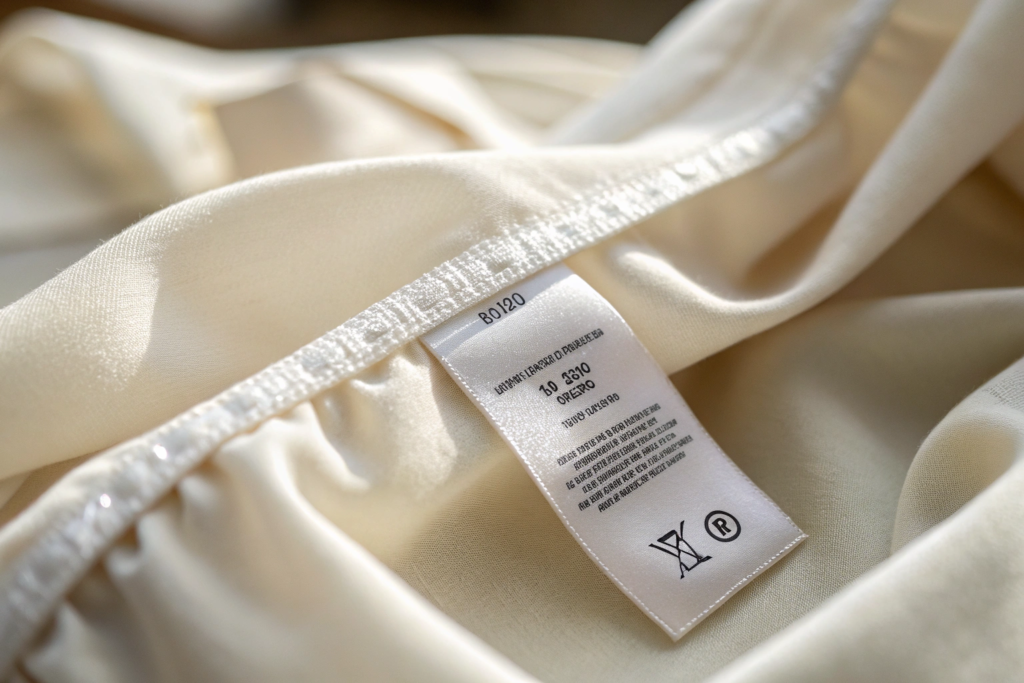
In 2022, a Los Angeles-based contemporary brand ignored our care label recommendation and labeled their cupro bias-cut dresses as 'machine wash cold, tumble dry low'. The return rate was 19%. They re-labeled the remaining inventory and updated future production. The Federal Trade Commission's Care Labeling Rule requires accurate care instructions based on reasonable evidence. We provide that evidence. It is the brand's responsibility to use it.
What is the shrinkage allowance I should build into my patterns?
This depends on your fabric's finishing and your consumer's care behavior.
Our standard pre-shrunk cupro: After compressive shrinkage treatment, we guarantee maximum 3% residual shrinkage in warp and weft (AATCC 135, 3 cycles, cold wash, line dry). We achieve this consistently.
Without pre-shrinking: Expect 6-8% shrinkage in warp, 3-4% in weft. Your pattern must be graded up accordingly.
For high-risk constructions: Bias-cut garments, fully lined jackets, garments with complex seam structures. We recommend:
- Pre-shrink the fabric before cutting (we can do this).
- Add 5% to length and 2% to width in pattern grading.
- Test the finished garment through three wash cycles before committing to bulk production.
The consumer factor: Even with accurate care labeling, consumers will ignore instructions. A significant percentage will machine wash warm and tumble dry high heat. If your target market is mass-market, cupro may be the wrong choice. If your target market is luxury and your customer follows care instructions (or outsources laundry), cupro is acceptable.
Can I get cupro with Oeko-Tex or GRS certification?
Oeko-Tex Standard 100: Yes. Bemberg cupro is certified. Our domestic cupro suppliers are also Oeko-Tex certified. This is standard.
GRS (Global Recycled Standard): Not typically. Cupro is not recycled content in the GRS sense. It is a byproduct, not post-industrial or post-consumer recycled waste. Some producers are exploring GRS certification for cupro made from recycled cotton garment waste dissolved and reconstituted, but this is experimental and not commercially available.
FSC (Forest Stewardship Council): Not applicable. Cupro is not wood-based.
Our certification package: For cupro orders, we provide:
- Oeko-Tex Standard 100 certificate (product class I or II, depending on end use)
- Mill certificate of origin (Bemberg or domestic)
- Batch-specific test report for dimensional stability and colorfastness
- Transaction Certificate for any recycled content if blended
Conclusion
Cupro is a remarkable fiber. It transforms a low-value agricultural byproduct into a textile of genuine luxury and comfort. It offers designers a plant-based alternative to silk that is credible, not just aspirational. It is not, however, a miracle fiber. It shrinks. It wrinkles. It requires careful finishing and explicit care instructions. It costs significantly more than standard viscose. Its supply chain is concentrated and constrained.
At Shanghai Fumao, we embraced cupro because our clients demanded it. We invested in relationships with Bemberg and with qualified domestic producers. We developed finishing protocols specifically to address shrinkage. We trained our sales team to educate buyers on the trade-offs, not just the benefits. Today, cupro represents approximately 12% of our woven fabric revenue and is growing at 30% annually.
Is cupro right for your collection? It depends. If you are designing a fluid, draped, luxurious garment for a consumer who understands and accepts specialized care, yes. If you are designing a high-rotation, home-laundered basic, probably not. If you are seeking a credible 'vegan silk' claim for a conscious customer, cupro is the current best answer.
We do not recommend cupro for every client. We recommend it for clients who value its unique properties and are willing to manage its limitations.
If you are considering cupro for an upcoming collection and want to evaluate its performance for your specific application, I invite you to contact us. Send us your target weight, your end use, and your price sensitivity. We will send you a cupro sample set with test reports and care recommendations.
Contact Elaine, our Business Director, to request cupro samples and technical data. Elaine manages our premium cellulosic fabrics division and has extensive experience with Bemberg cupro and domestic alternatives. Elaine’s email is: elaine@fumaoclothing.com. Tell her you are ready to discover why cupro is called vegan silk.