When clients first hear "Bamboo Silk," their eyes light up with a mix of curiosity and skepticism. Is it real silk? Is it just bamboo viscose? I've spent the last five years explaining that BAMSILK is neither—it's a unique, third-category fabric that's revolutionizing the sustainable luxury market. I remember presenting it to a Swedish lingerie brand in 2022; their designer kept rubbing the sample between her fingers, asking, "How can something so lustrous feel so cool?"
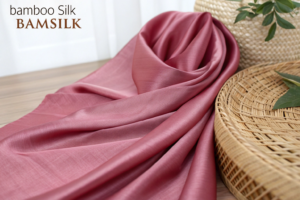
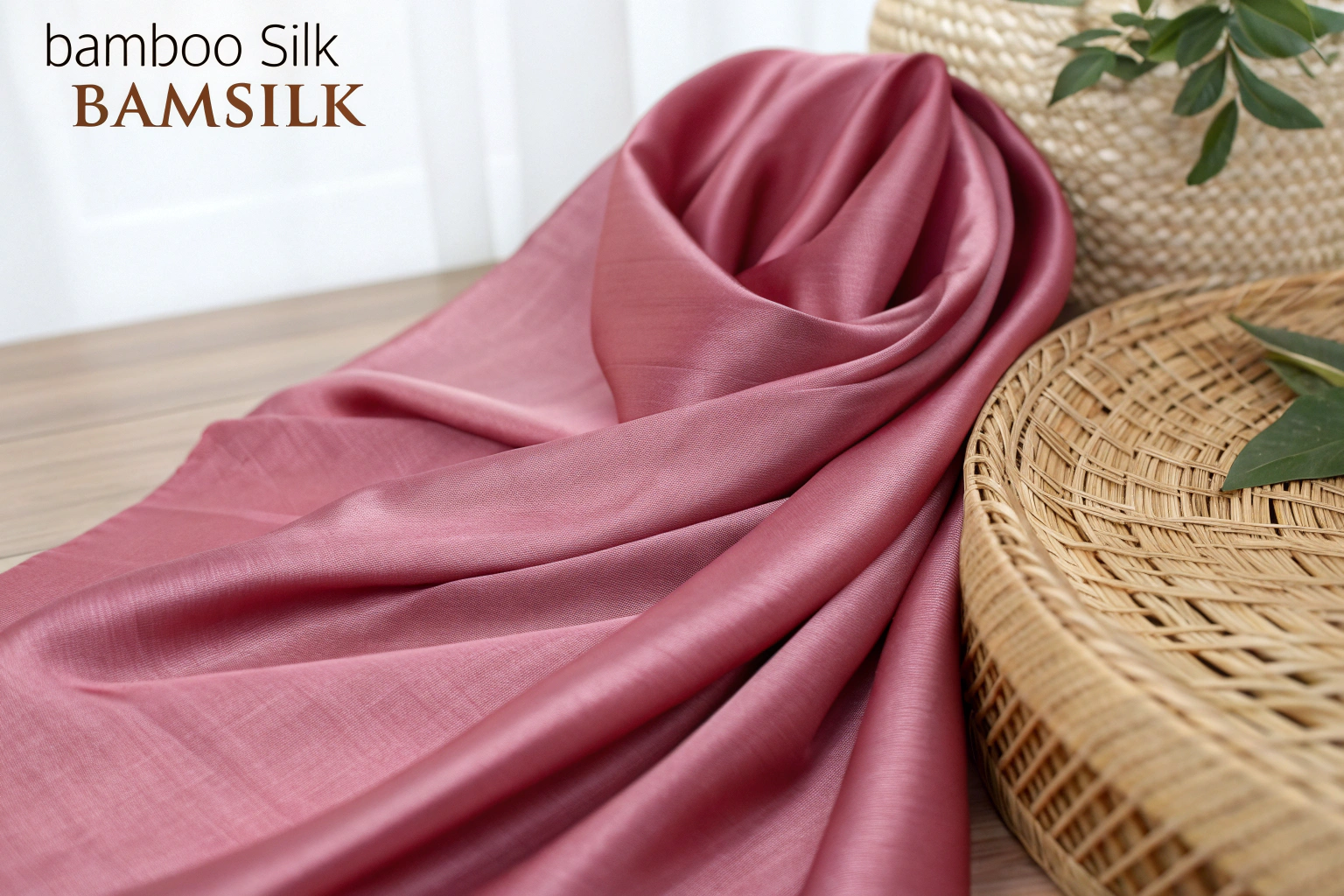
Bamboo Silk, often branded as BAMSILK, is a premium textile made from 100% bamboo viscose but engineered through specialized spinning and finishing processes to mimic the drape, luster, and smoothness of mulberry silk, while retaining bamboo's inherent breathability, moisture-wicking, and antibacterial properties. It's not a blend; it's bamboo transformed. At Shanghai Fumao, we've seen it become the secret weapon for brands wanting the silk aesthetic without the silk price tag or delicate care requirements.
The buzz is real, but so is the confusion. Greenwashing claims and vague marketing abound. This guide cuts through the noise, explaining exactly what BAMSILK is, how it's made, and—based on our lab tests and client feedback—why it might be the most versatile fabric you're not yet using.
How Is BAMSILK Fabric Actually Made?
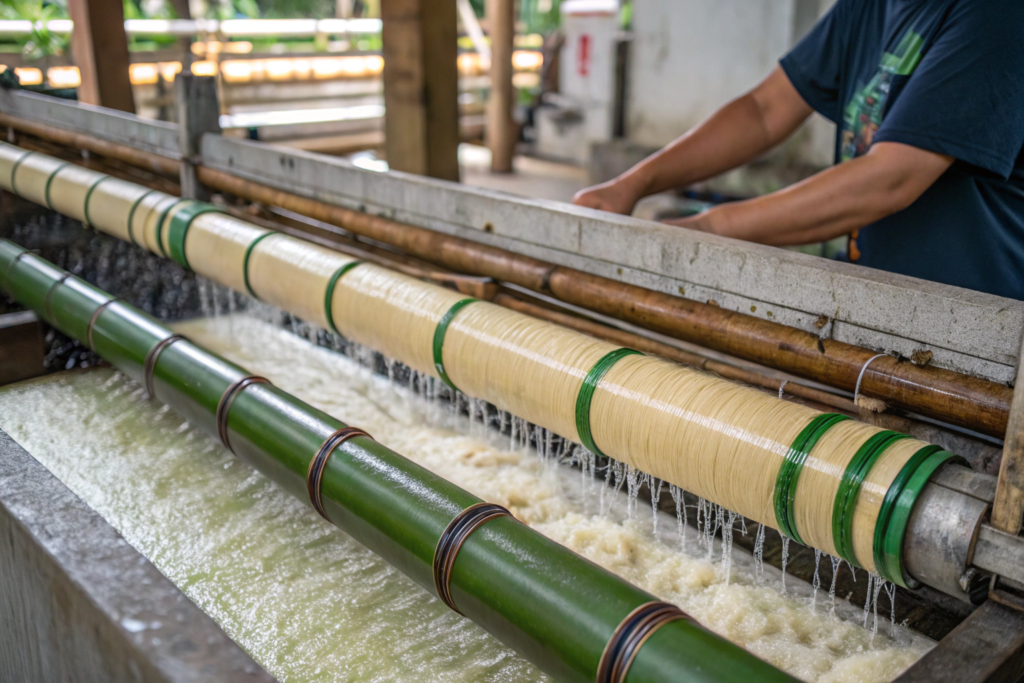
The journey from bamboo stalk to BAMSILK fabric is where the magic—and science—happens. Calling it "bamboo fabric" is like calling fine wine "grape juice." It misses the crucial transformation. The process starts the same as standard bamboo viscose but diverges dramatically to create a silk-like filament.
It begins with sustainably harvested Moso bamboo, pulped into a cellulose solution. This solution is then forced through a spinneret, but here's the first key difference: the hole shape and extrusion process are calibrated to create a continuous filament yarn with a rounder, smoother cross-section, unlike the more irregular staple fibers used for standard bamboo cotton-like fabrics. This filament yarn is what gives BAMSILK its inherent strength and smooth surface, the foundation of its silk-like character.
What Are the Key Processing Steps That Create the Silk-Like Feel?
The spinning is just step one. The true transformation happens in three critical post-production stages that we meticulously control with our manufacturing partners:
- Controlled Degumming and Refining: Just like real silk requires degumming, the bamboo filament undergoes a gentle washing and refining process. This removes any residual impurities and softens the hand feel without weakening the fiber. We use a closed-loop chemical processing system where over 99% of solvents are recovered and reused, meeting stringent OEKO-TEX STANDARD 100 requirements.
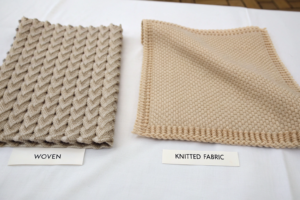
- Specialized Weaving or Knitting: BAMSILK is most often woven in a satin or twill weave to maximize its luster and drape. The satin weave, with long yarn floats on the surface, is particularly effective at reflecting light like silk. We also produce knitted BAMSILK for loungewear, which has an incredible fluid drape.
- Silk-Emulation Finishing: This is our proprietary edge. The fabric undergoes a series of calendaring (precision heat pressing) and enzyme washing processes. Calendaring flattens the fibers, enhancing the shine. Enzyme washing (bio-polishing) further softens the fabric, reducing any minimal pilling and giving it that coveted "liquid" hand feel. A client from Los Angeles, after feeling our finished BAMSILK charmeuse, said it was "like cool water running through your hands."
For those interested in the deeper technical evolution of regenerated cellulose fibers like lyocell and high-grade bamboo, research papers and discussions on platforms like [Textile Research Journal communities](https://journals.sagepub.com/home/trj) provide valuable scientific context.
How Does Its Production Differ from Standard Bamboo Viscose?
Think of standard bamboo viscose as the "workhorse" and BAMSILK as the "thoroughbred." Here’s a quick comparison:
| Aspect | Standard Bamboo Viscose | Bamboo Silk (BAMSILK) |
|---|---|---|
| Yarn Type | Staple fibers (short, spun) | Continuous filament (long, smooth) |
| Primary Feel | Soft, matte, cotton-like | Lustrous, slick, silk-like |
| Common Weave | Plain weave, jersey knit | Satin, twill, crepe |
| Typical Use | T-shirts, bedding, towels | Lingerie, luxury dresses, linings, scarves |
| Production Focus | Volume, absorbency | Drape, luster, hand feel |
What Are the Tangible Benefits for Brands and Consumers?
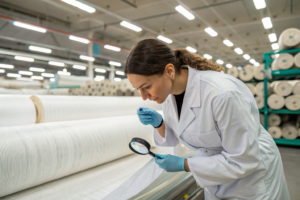
Beyond its beautiful aesthetic, BAMSILK delivers a compelling package of performance benefits that translate directly into selling points. In our CNAS-certified lab, we test every batch, and the data tells a clear story: this is a functional luxury fabric.
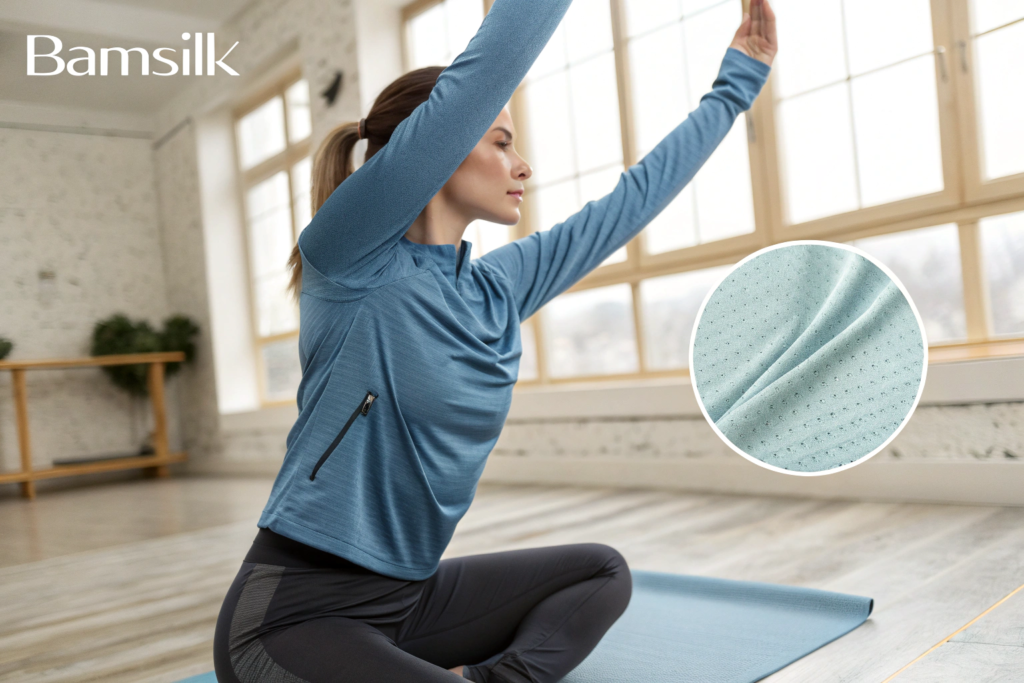
The most immediate benefit is thermal regulation. Bamboo fibers have a unique cross-section filled with micro-gaps. This structure makes BAMSILK exceptionally breathable and cool to the touch. We conducted a wear trial with a yoga apparel brand in 2023: garments made from our BAMSILK jersey maintained a surface temperature 1.5-2°C lower than equivalent polyester blends during activity, a key finding for their marketing.
Why Is BAMSILK Considered a "Low-Maintenance Luxury" Fabric?
This is its killer advantage over real silk. Brands love the silk look but hate the customer service headaches of "dry clean only" labels. BAMSILK solves this:
- Durability & Care: It is significantly stronger when wet than real silk and can often be machine washed on a gentle cycle (always check care instructions based on the final construction). Its colorfastness is excellent, especially when dyed with our reactive dye process.
- Wrinkle Resistance: While not crush-proof, it has far better wrinkle recovery than mulberry silk. It hangs out creases smoothly, making it ideal for travel wear. A French resortwear brand we supply uses it for wrinkle-prone draped styles, and their customer returns for fabric issues dropped by over 30% after switching from a delicate silk blend.
- Cost-Effectiveness: While more expensive than standard bamboo viscose, BAMSILK offers the silken aesthetic at roughly 40-60% of the cost of high-grade mulberry silk, with better durability. This opens the "affordable luxury" segment.
What Are the Proven Hygienic and Environmental Advantages?
The benefits go beyond touch and care:
- Natural Antibacterial & Odor-Resistant: Bamboo contains a bio-agent called "bamboo kun." Even through the viscose process, this property is largely retained. Our lab tests against GB/T 20944.3 standard show a >99% reduction in bacteria (S. aureus, E. coli) on BAMSILK fabric after 24 hours. For activewear, intimates, and socks, this is a major functional benefit.
- Moisture-Wicking & Hypoallergenic: The micro-gaps in the fiber act like capillaries, pulling moisture away from the skin and allowing it to evaporate quickly. Combined with its antibacterial nature and smooth, non-irritating surface, it is an excellent choice for sensitive skin.
- Sustainable Credentials: When sourced from certified manufacturers (like our partners), it comes from one of the world's fastest-growing, most regenerative plants that requires no pesticides and little water. Our BAMSILK is produced in a closed-loop system with chain-of-custody certification, appealing to the EU and North American eco-conscious markets. Understanding
how to assess closed-loop production claims in viscose manufacturingis critical, and resources from environmental groups like[Canopy](https://canopyplanet.org)can help brands verify these assertions.
How Should You Source and Specify BAMSILK for Your Collection?
Not all "Bamboo Silk" is created equal. The market is flooded with imitations—often just standard bamboo viscose with a shiny finish that washes out after two cycles. Sourcing the real deal requires a sharp eye and specific questions. As a vertical supplier, we control the specification from yarn onward, which is the only way to guarantee consistency.
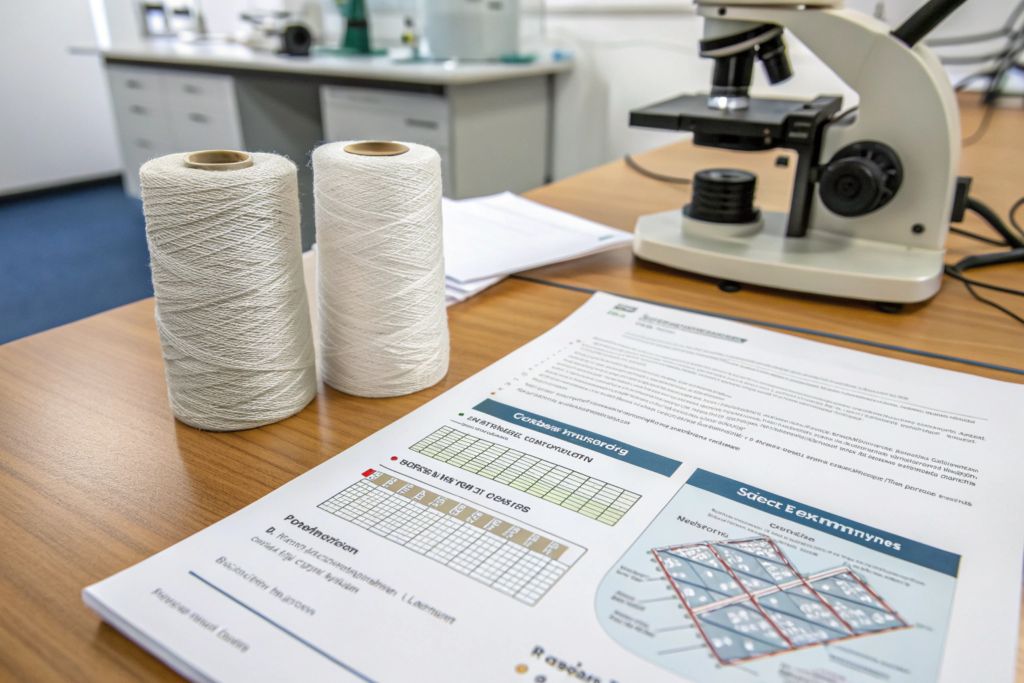
The first rule: Ask for a filament yarn specification. If the supplier is using staple fiber, it is not true BAMSILK. Ask for documentation or even a micrograph image of the yarn. The difference under a microscope is clear.
What Specifications and Certifications Are Non-Negotiable?
To ensure quality and integrity, build these into your tech pack:
- Yarn Specification: Insist on 100% bamboo viscose filament yarn. Denier count (like 75D or 120D) will determine weight and opacity.
- Weave Type: Specify based on desired effect. Satin weave (e.g., 5-harness satin) for maximum shine and drape. Twill weave for a softer luster and more texture. Crepe weave for a pebbled, matte finish with great drape.
- GSM (Grams per Square Meter): This dictates the weight and seasonality.
- Lightweight (50-80 GSM): For sheer blouses, lingerie, linings.
- Medium Weight (90-130 GSM): The sweet spot for most dresses, skirts, and tops.
- Heavyweight (140+ GSM): For structured jackets or winter pieces (often as a blend).
- Certifications: Demand at least OEKO-TEX STANDARD 100 (proof of no harmful chemicals) and preferably evidence of sustainable bamboo sourcing (FSC-certified) and closed-loop processing. True BAMSILK should easily pass these.
How Does BAMSILK Perform in Dyeing, Printing, and Production?
This is where it shines for manufacturers:
- Dyeing: It has a high affinity for reactive dyes, resulting in vibrant, rich colors with excellent colorfastness. It dyes more evenly than silk, which can be temperamental.
- Printing: Takes digital and screen printing beautifully. The smooth surface allows for sharp print definition. We produced a digitally printed BAMSILK satin for a London-based designer with a complex floral pattern, and the color clarity was stunning.
- Sewing and Handling: It behaves more like a stable viscose than a slippery silk. It does not fray excessively and is easier to cut and sew, leading to higher efficiency in the garment factory. However, using fine, sharp needles is recommended to prevent snags.
For brands integrating new fabrics, discussing optimal needle types and tension settings for sewing bamboo-based fabrics with your production manager or on garment manufacturing forums can prevent small issues from becoming big problems during bulk production.
What Are the Ideal Applications and Future Trends for BAMSILK?
BAMSILK’s versatility is its superpower. It straddles categories, showing up in everything from high-end evening wear to the most comfortable pair of socks you own. Its application is limited only by the designer's imagination and the correct specification of weight and weave.
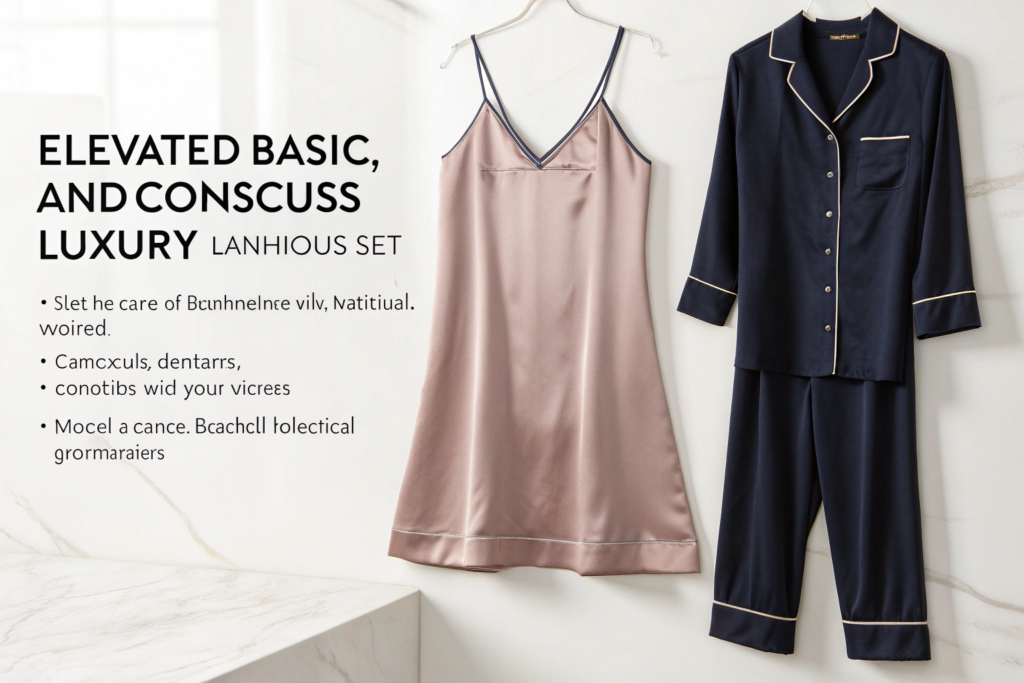
Currently, the biggest demand we see is in "elevated basics" and "conscious luxury." Brands are using it to replace silk in slip dresses, camisoles, and pajama sets, marketing the easier care and antibacterial benefits. In activewear, it's appearing in luxury yoga lines and performance liners where its moisture-wicking and odor resistance are key.
Which Product Categories Are Seeing the Highest Growth?
- Lingerie & Loungewear: This is the natural home. Its silk-like sensuality, combined with breathability and hygiene, is perfect. We're supplying a 22 momme BAMSILK satin to a Californian brand for their best-selling slip dress and matching robe set.
- Premium Apparel: Blouses, flowing trousers, lightweight dresses, and scarves. It offers the drape and elegance designers want without the cost and delicacy of silk. It's also an exceptional lining fabric for jackets and coats, adding a luxurious feel against the skin.
- Active & Wellness Wear: As mentioned, in blends or alone for premium yoga sets, thermal-regulating base layers, and socks. Its natural temperature regulation is a huge selling point.
- Home Textiles: High-thread-count bedsheets and pillowcases. The cool, smooth feel is ideal for hot sleepers, and the antibacterial property is a plus for bedding.
What Is the Future of BAMSILK and Similar Hybrid Fabrics?
BAMSILK is just the beginning. The future lies in advanced blends and functional hybrids. We are already developing in our R&D lab:
- BAMSILK Blends: With elastane for stretch recovery in fitted garments. With Tencel™ for enhanced strength and environmental credentials. With organic cotton for a more matte, casual look.
- Functional Finishes: Applying non-toxic durable water repellent (DWR) finishes for weather-resistant yet breathable outer layers, or embedding vitamin or probiotic capsules for enhanced skincare benefits in loungewear.
The trajectory is clear: the market wants fabrics that are multifunctional, sustainable, and sensorially pleasing. BAMSILK sits at the intersection of all three, making it a cornerstone material for the future of responsible textile design. For brands looking ahead, exploring the emerging regulatory landscape for biodegradable textile claims in the EU will be crucial as these innovative fabrics evolve.
Conclusion
Bamboo Silk (BAMSILK) is more than a fabric; it's a compelling value proposition. It delivers the coveted sensory and visual appeal of silk while actively solving some of silk's biggest practical drawbacks: delicacy, high cost, and high maintenance. For the environmentally conscious consumer, it adds the tangible benefits of thermoregulation, moisture management, and natural hygiene, all rooted in a rapidly renewable resource.
For brands, it represents an opportunity to offer "smart luxury"—products that feel indulgent but are designed for real life. The key to unlocking its potential lies in educated sourcing, precise specification, and clear communication of its unique benefits to your customer.
Intrigued by the potential of BAMSILK for your next collection? Let's move beyond the sample swatch. At Shanghai Fumao, we don't just supply BAMSILK; we collaborate with you to engineer it to your exact needs—selecting the perfect yarn denier, weave, weight, and finish to make your design vision a commercial success. Contact our Sustainable Materials Director, Elaine, to request a comprehensive BAMSILK sample pack and technical dossier: elaine@fumaoclothing.com.