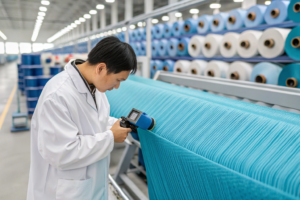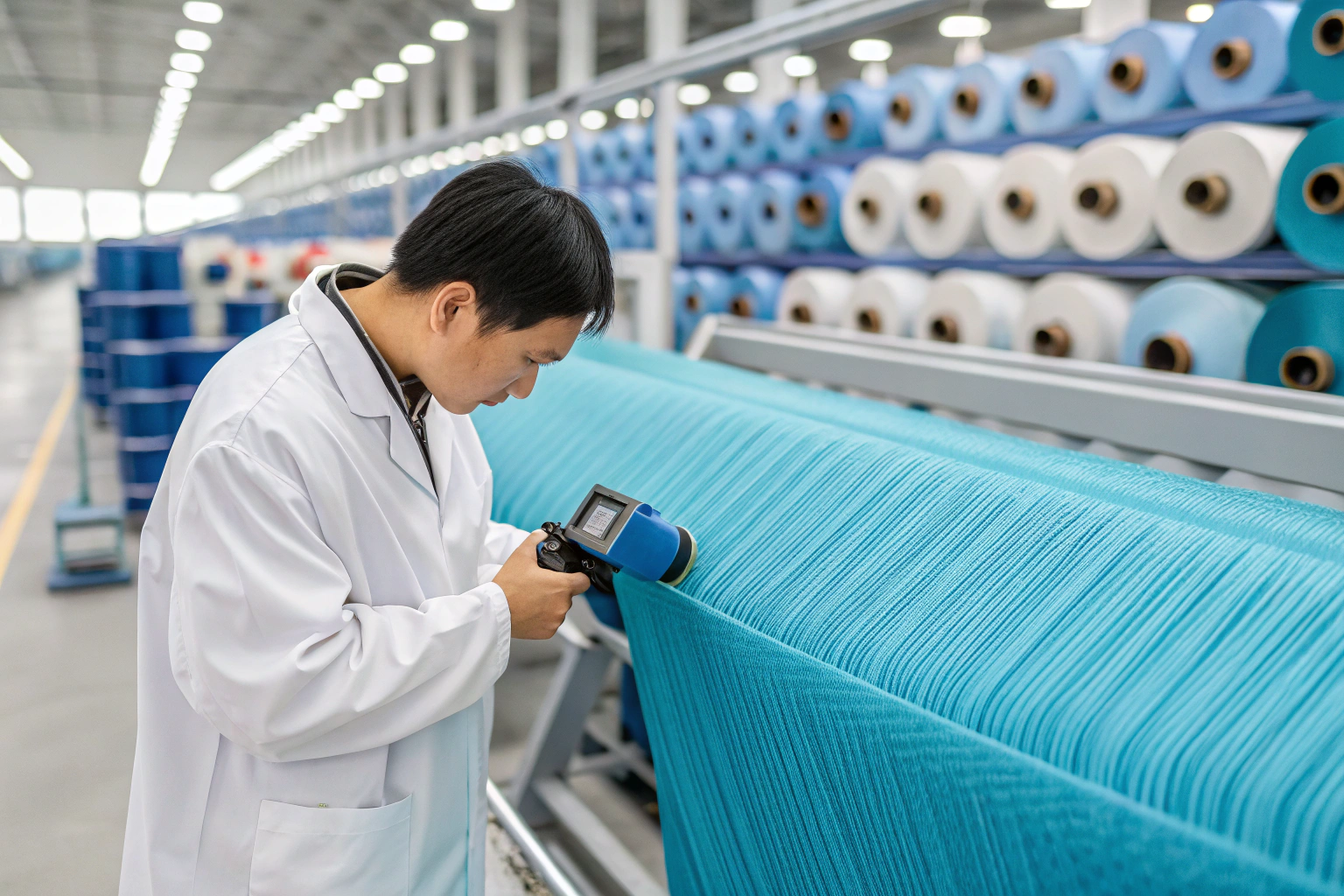
When you hear “made in China,” especially for fabric, what’s the first thing that comes to mind? For a lot of my clients, especially from the US and Europe, it used to be a gamble. You’d hear stories: the color wasn’t right, the shrinkage was a nightmare, or the shipment arrived a month late. That’s the old story. I’ve been in this industry for over two decades, right here in Keqiao, and I’ve seen the shift firsthand. The question isn’t about finding a good factory anymore; it’s about understanding what makes one Chinese fabric manufacturer stand head and shoulders above the rest. Let me tell you, “top quality” isn’t just a buzzword; it’s a system, a culture, and a lot of sleepless nights we put in to make sure your supply chain is bulletproof.
For us at Shanghai Fumao, top quality means delivering a fabric that not only looks and feels right but also performs consistently across tens of thousands of meters, arrives exactly when we promise, and comes with a digital trail that proves every single claim. It’s about transforming a transaction into a partnership where you can sleep easy, knowing your production line in Vietnam or your atelier in New York won’t hit a snag because of a faulty roll.
What Does Real Quality Control Look Like at a Chinese Factory?
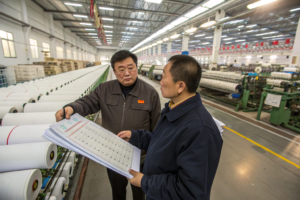
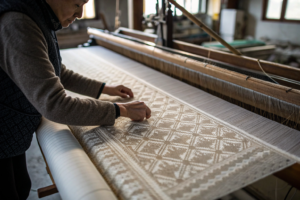
When you step into a facility that truly prioritizes quality, you see it in the air. It’s in the way the workers handle the fabric, the specific lighting used for inspection, and the sheer volume of testing equipment. It’s not about one person at the end of the line doing a quick look-over; it’s a system woven into every step of the process.
Why is “End-to-End” Testing More Than Just a Visual Check?
You might think quality control is just someone looking for a stain or a hole. It’s not. 。A real quality system starts long before the fabric is even woven. For us, it begins with testing the yarn. A visual check can’t tell you if a batch of polyester has the right tensile strength to withstand high-speed knitting, or if a natural cotton yarn has the perfect twist to prevent pilling after three washes.
That’s why we heavily rely on our CNAS-accredited lab. It’s a game-changer. We’re not sending samples to a third party and waiting weeks for results. We test everything in-house. Take a recent order from a sportswear brand in Germany, for instance. They needed a batch of our moisture-wicking fabric for a new line of yoga wear. Before we even touched a loom, our lab ran a series of tests. We found that one batch of the recycled polyester yarn had a slight variation in its filament denier. It looked fine, but our tests showed it would absorb moisture at a 15% slower rate than our standard. We flagged it, switched the yarn source immediately, and got the sample to the client for approval within 48 hours. That’s the difference between being a supplier and being a partner who prevents problems before they start.
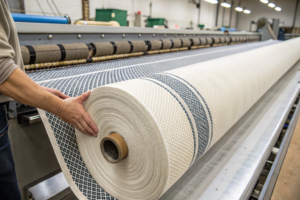
Beyond yarn, every finished roll goes through a 4-point inspection. We use an automated system that measures for flaws in length, width, weight, and shade variation. If a roll has a color variance that’s within 0.5 of a delta E, it gets flagged. For a high-end fashion client in Milan, that level of precision is non-negotiable; a slight shade difference between the front and back of a dress would be a catastrophe. We ensure that doesn’t happen. For a deeper dive into global textile testing standards, you can check out this discussion on the importance of lab accreditation for fabric sourcing.
Can I Really Track My Fabric’s Quality in Real-Time?
One of the biggest pain points we hear from clients like Ron, the 44-year-old buyer from America, is the lack of visibility. You place an order, and then it’s like the fabric enters a black box for 30 days. You’re left wondering: has it been produced? Is the color right? When is it actually going to ship? That’s a recipe for anxiety, especially when you’re dealing with tight production timelines.
We solved this by implementing QR code tracking. Every single roll we produce gets its own unique digital ID. It sounds like a small thing, but it changes everything. When we shipped a large order of organic cotton poplin for a children’s wear line in California, we gave the client access to our portal. From his desk in San Francisco, he could scan the QR code on a test roll we had sent him. It showed him the entire journey: the cotton certification, the exact date it was spun, the humidity conditions during weaving, and the lab test results for shrinkage (which was under 3%, by the way) and colorfastness.
This kind of transparency builds trust. It’s not just a “trust me, it’s good” statement; it’s data you can see and verify. If you’re curious about how different suppliers are integrating tech into their QC, this blog from a sourcing agency has a practical guide on using digital tools for fabric inspection. For us, it’s about making the client feel like they’re in the factory with us, even if they’re 8,000 miles away. That’s the kind of quality control that matters. And at Shanghai Fumao, we believe you should never have to guess about your order’s status.
How Do Chinese Manufacturers Balance Speed with Uncompromising Quality?
I’ll be honest with you: speed is the lifeblood of this industry. A fashion trend can appear and disappear in weeks. If your fabric is late, you miss the window. The old way of thinking was that fast production meant cutting corners on quality. But that’s a myth we’ve spent the last ten years busting.
What’s the Secret to 48-Hour Sample Development?
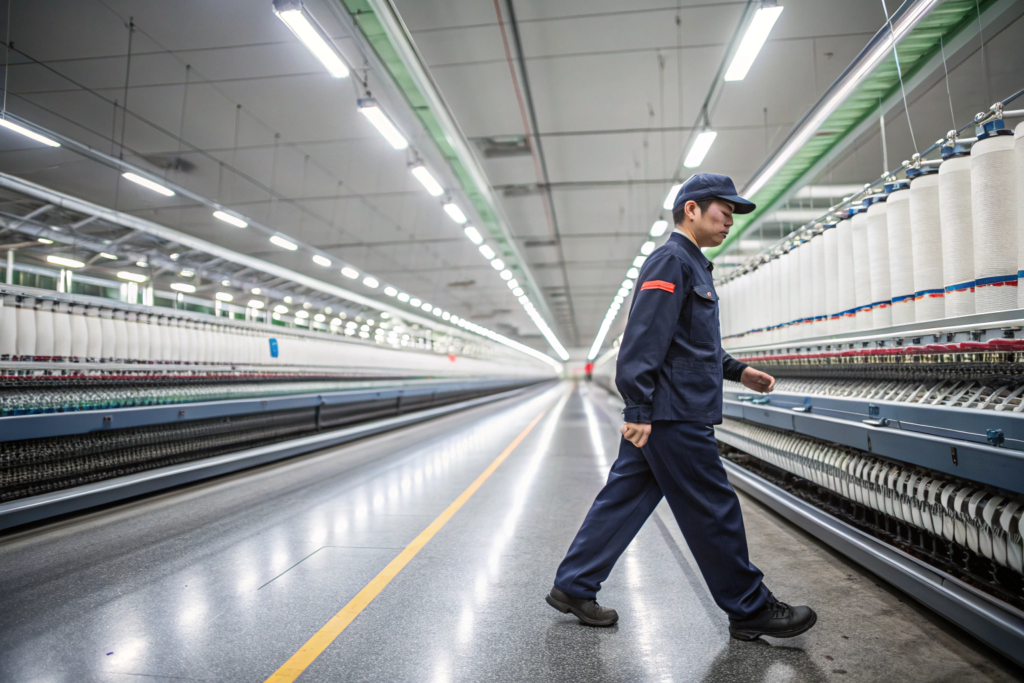
For me, the secret isn’t one thing—it’s a combination of three things: integrated partnerships, a skilled team, and AI. You see, we don’t own every single factory that touches our fabric. But we have deep, long-term partnerships with specialized mills for dyeing, printing, and finishing. This means when a client comes to us with a crazy request—like a 30% recycled polyester, 70% organic cotton blend with a specific water-repellent coating—we can act fast.
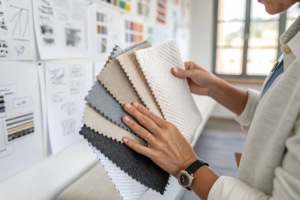
The process starts with our in-house R&D team, which has over 20 experts. They use AI-driven trend analysis to anticipate what’s coming. A client from a UK-based online startup reached out to us last year. They had a design concept for a summer dress but no tech pack, no fabric specs. Just a mood board. Within 24 hours, our team had analyzed the drape, weight, and color of the fabric in their inspiration photos. We proposed a specific Tencel™ lyocell blend with a touch of spandex for a soft yet structured feel.
Then, the magic of our supply chain kicks in. Because we work with our dyeing and weaving partners as an extension of our own company, we could get that fabric sampled in under 48 hours. That’s not a standard “sample” that’s close but not quite. That’s a true representation, ready for them to cut and sew into a prototype. This speed allows our clients to test multiple designs, iterate quickly, and get to market faster than their competitors. We turned a simple concept into a production-ready fabric in less than a week, helping that UK brand beat their Q3 launch target by a full month.
How Do You Scale Quality From a Sample to a 50,000-Meter Order?
This is where many sourcing relationships fall apart. The sample is perfect. The first production run is beautiful. But then the order scales up to tens of thousands of meters, and the quality starts to drift. The color shifts slightly, the hand feel changes, and suddenly you’re dealing with a massive problem. Why does this happen? It’s often because the small-batch process isn’t the same as the mass-production process.
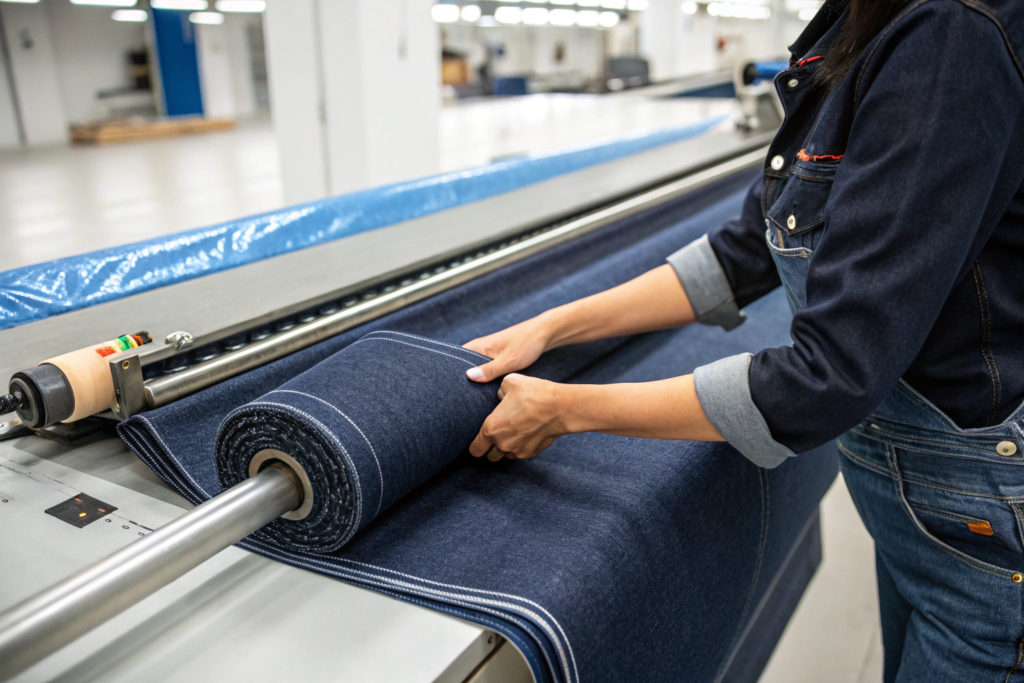
The way we prevent this is through a process we call “pre-production parameter locking.” Before a single meter of a large order is run, we do a full-scale trial on the actual production machines that will be used. Let’s look at a project we did for a denim brand in Australia earlier this year. They ordered 40,000 meters of a specialty stretch denim. We ran a full trial of 500 meters. During this trial, we documented everything: the exact yarn tension on the looms, the precise dye bath temperature, the speed of the finishing machine. Our QC team tested that 500-meter run for shrinkage, colorfastness, and tensile strength. We then created a “golden roll” standard, which became the benchmark for the entire 40,000-meter order.
Every subsequent batch was compared against that standard. If the dye bath temperature drifted by even 2 degrees, the system would flag it. This kind of rigorous process ensures consistency at scale. It’s the same principle used in the auto industry, and we’ve adapted it for fabric. The result? That Australian denim brand had zero quality complaints across their entire order. They used the fabric to produce 15,000 pairs of jeans with no material-related returns. For a detailed look at how to manage quality in bulk orders, here’s an article from a sourcing consultant that discusses best practices for factory audits and in-line inspections. This is the kind of reliability that turns a one-time order into a long-term partnership.
How Are Tariffs and Global Logistics Affecting Fabric Quality and Timelines?
I know this is a huge concern for our American clients. Tariffs, shipping delays, port security—it all adds cost and complexity. And when you’re already worried about tariffs, the last thing you want is a quality issue that forces you to pay for express shipping or, worse, scrap an entire order. We have to be smarter.
Can You Really Avoid Quality Issues When Navigating Tariffs?
Tariffs are a tax, but they can also be a trap. I’ve seen too many buyers try to save a few cents on the duty by switching to a cheaper supplier. They find a factory that can offer a lower FOB price, thinking they’ve beaten the system. But then the quality is subpar. The fabric arrives with pilling issues, or the color is inconsistent, and they end up spending way more on rework and delayed shipping than they ever saved on the tariff. It’s a false economy.
Our approach is to be transparent about the cost and to make our quality so reliable that the tariff becomes a secondary consideration. We offer value that justifies the total landed cost. One of our long-time clients, a furniture upholstery brand in North Carolina, was facing a 25% tariff on a specific type of woven polyester velvet they were buying from another supplier. They came to us, worried that the duty would kill their margin.
We didn’t just offer a similar product. We worked with our R&D team to develop a new fabric. It was a recycled polyester velvet with a higher rub count (over 50,000 Martindale cycles, compared to their old fabric’s 30,000) and a superior colorfastness rating. It cost a bit more upfront, but because it was higher quality and from a supply chain that we had meticulously documented, they could apply for a tariff exemption on the recycled content. We helped them navigate the documentation. The end result? They got a better fabric, a 15% lower total landed cost after the tariff exemption, and they significantly improved their sustainability profile. It’s not about dodging tariffs; it’s about building a supply chain strategy that makes the tariffs irrelevant.
How Does Overseas Warehousing Fix the “Sailing Schedule” Nightmare?
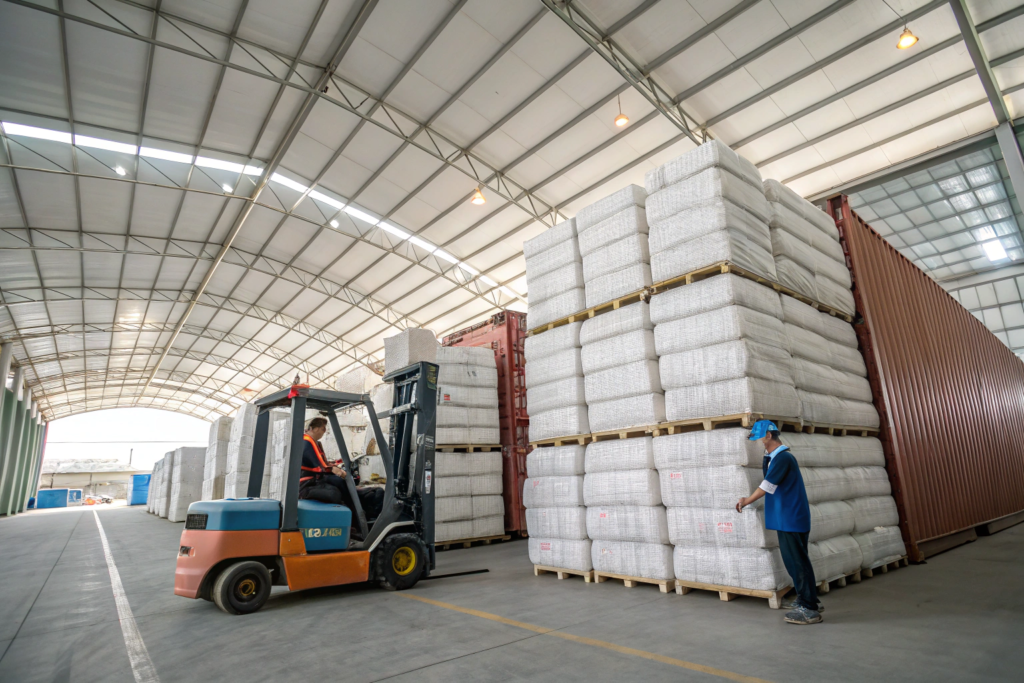
The shipping container is the most unpredictable part of the global supply chain. A vessel can get stuck in port, a customs inspection can hold things up for weeks. As a buyer, you feel helpless. Your fabric is on a boat somewhere, and you have no control. This is one of the biggest pain points for our clients. To solve this, we’ve invested heavily in overseas warehousing as part of the “Silk Road Keqiao” initiative.
What this means for you is that we now hold strategic inventory in key markets. For our European clients, we have warehousing in the Netherlands. For the US, we work with partners on both coasts. A client in New York, for example, needed a rush order of a custom-printed jacquard for a high-profile event. The normal sea freight time from Ningbo to New York is about 30 days. But they needed the fabric in 10 days. That would normally mean a massive air freight bill.
Because we had already pre-shipped a bulk quantity of the base fabric to our US warehouse as part of our forward-stocking program, we didn’t have to wait for a vessel from China. We simply pulled the base fabric from our US stock, sent it to a local finishing partner for the custom print, and had it delivered to their factory in New Jersey within the 10-day window. The cost? A fraction of air freight. It’s about moving from a reactive supply chain to a proactive one. This kind of agility is what we at Shanghai Fumao call modern quality—it’s not just the fabric, it’s the peace of mind that comes with a flexible, reliable logistics network.
What Innovations Are Redefining “Quality” in Sustainable Fabrics?
Sustainability used to be a niche marketing angle. Now, it’s a baseline requirement for many of our clients, especially in Europe. But the quality of sustainable fabrics has had its own journey. Early recycled polyester felt stiff and had a waxy hand. Organic cotton was prone to shrinking. Today, thanks to serious R&D investment, that’s all changed.
Is “Eco-Friendly” a Compromise on Performance?
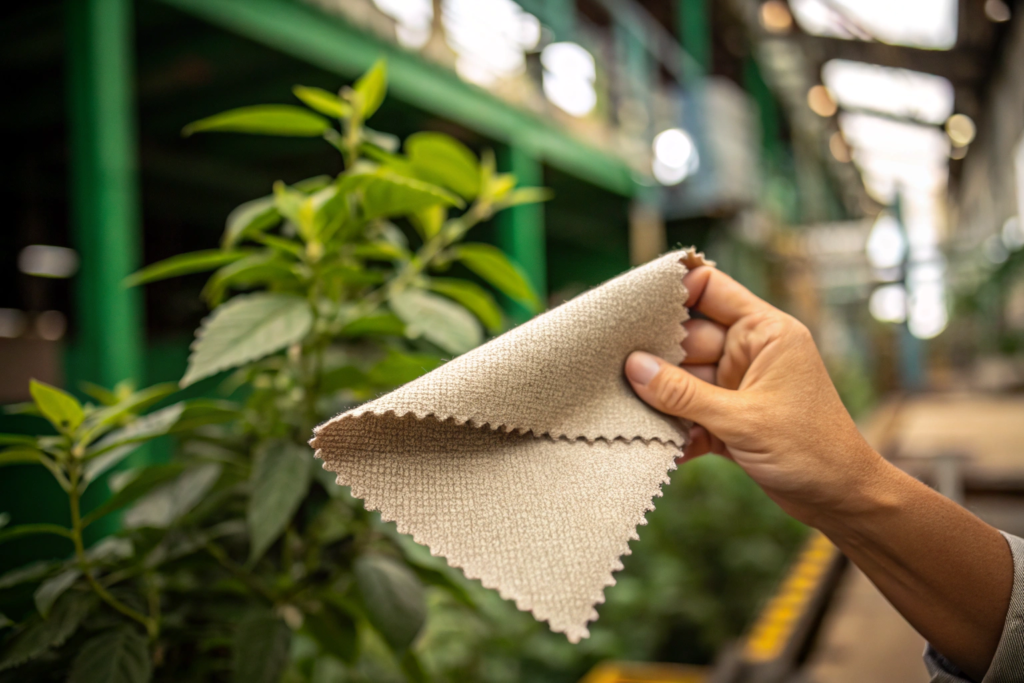
Absolutely not. In fact, some of the highest-performance fabrics we produce today are also the most eco-friendly. Let’s talk about our bamboo silk, which we call BAMSILK. It’s a lyocell process bamboo, not the old viscose method that used harsh chemicals. The result is a fabric that has the drape and luster of silk, but it’s stronger, more breathable, and naturally antibacterial.
We had a client in Sweden, a children’s wear brand, that was struggling with their organic cotton basics. The fabric was fine, but it was heavy and not as soft as they wanted for sensitive baby skin. They also needed a fabric that could stand up to multiple washes. We suggested our BAMSILK blended with a small amount of organic cotton. The result was a fabric that was 30% lighter than their old cotton, had a hand feel that was unbelievably soft, and tested for a 4.5 colorfastness rating after 50 industrial wash cycles.
They were able to market it as a sustainable, hypoallergenic option for babies, and the sales grew by 30% year-over-year in their European exports. This isn’t a compromise; it’s an upgrade. The “green” label isn’t just about the fiber; it’s about the performance that fiber enables. If you’re interested in how different sustainable fibers compare, this forum post from a textile designer’s community offers real-world experiences working with Tencel™ and recycled blends.
How Do You Verify That a “Sustainable” Fabric is Actually Sustainable?
This is a huge point of concern, and rightfully so. Greenwashing is rampant in our industry. A supplier can slap an “organic” label on a fabric, but without the documentation to back it up, it’s just words. We’ve invested heavily to make sure our claims are verifiable.
Our commitment to sustainability is backed by a ¥550 million green investment. This includes a low-carbon production facility that captures and reuses water and heat. But more importantly for our clients, it includes a rigorous certification chain. For a large order of recycled polyester for a US-based activewear brand last year, we provided a full digital dossier with every shipment. This dossier included the GRS (Global Recycled Standard) certificate for the yarn, tracking it back to the post-consumer plastic bottles it came from. It also included the OEKO-TEX Standard 100 certification, guaranteeing the finished fabric was free from harmful substances.
Our QR code tracking system we talked about earlier integrates all this. A client can scan a roll and see not just the physical test results, but also the entire chain of custody for the sustainable content. It’s all about verifiable, auditable data. This is particularly crucial for our European clients who face strict regulations on product claims. We’re not just saying it’s sustainable; we’re providing the keys for them to prove it to their own customers. This level of transparency is what the market now demands, and it’s what we deliver every single day.
Conclusion
So, what does “top quality” really mean for Chinese-made fabric today? It’s not a single attribute. It’s a holistic system. It starts with end-to-end control, from yarn testing in a CNAS lab to the final 4-point inspection of a finished roll. It means having a supply chain that’s so agile we can turn a concept into a 48-hour sample, yet so disciplined we can lock in the parameters to flawlessly scale that order to 50,000 meters. It’s about treating global logistics not as an afterthought, but as an integral part of our quality promise, using overseas warehousing to bypass the chaos of sailing schedules and tariffs. And finally, it’s about investing in the future—innovating with sustainable fibers that outperform their conventional counterparts and backing every eco-claim with a trail of verifiable certifications.
We’ve built our entire operation around this idea: that quality is a promise we keep, not just a claim we make. From our 40+ dedicated professionals in Keqiao to our extensive network of specialized partner factories, every day is about making that promise a reality for over 100 countries. We’ve learned that when you solve the quality problem—really solve it—everything else becomes easier. The lead times become more reliable, the costs become more predictable, and the partnership becomes more valuable. Our clients don’t have to worry about what’s in the container or whether the color will match; they can focus on what they do best: building their brands and delighting their customers.
Are you ready to build a supply chain you can truly rely on? We’d love to show you how our integrated approach to quality, speed, and sustainability can work for your next collection. Whether you’re a global buyer looking to streamline your sourcing, a designer with a new vision, or a startup ready to scale, we’re here to help you bring your ideas to life. Let’s co-create value.
Contact our Business Director, Elaine, directly to discuss your project. She’s the one who makes the complex simple.
Email: elaine@fumaoclothing.com
We’re not just another fabric supplier. We’re your partner in the heart of the world’s textile industry, ready to weave your success story.