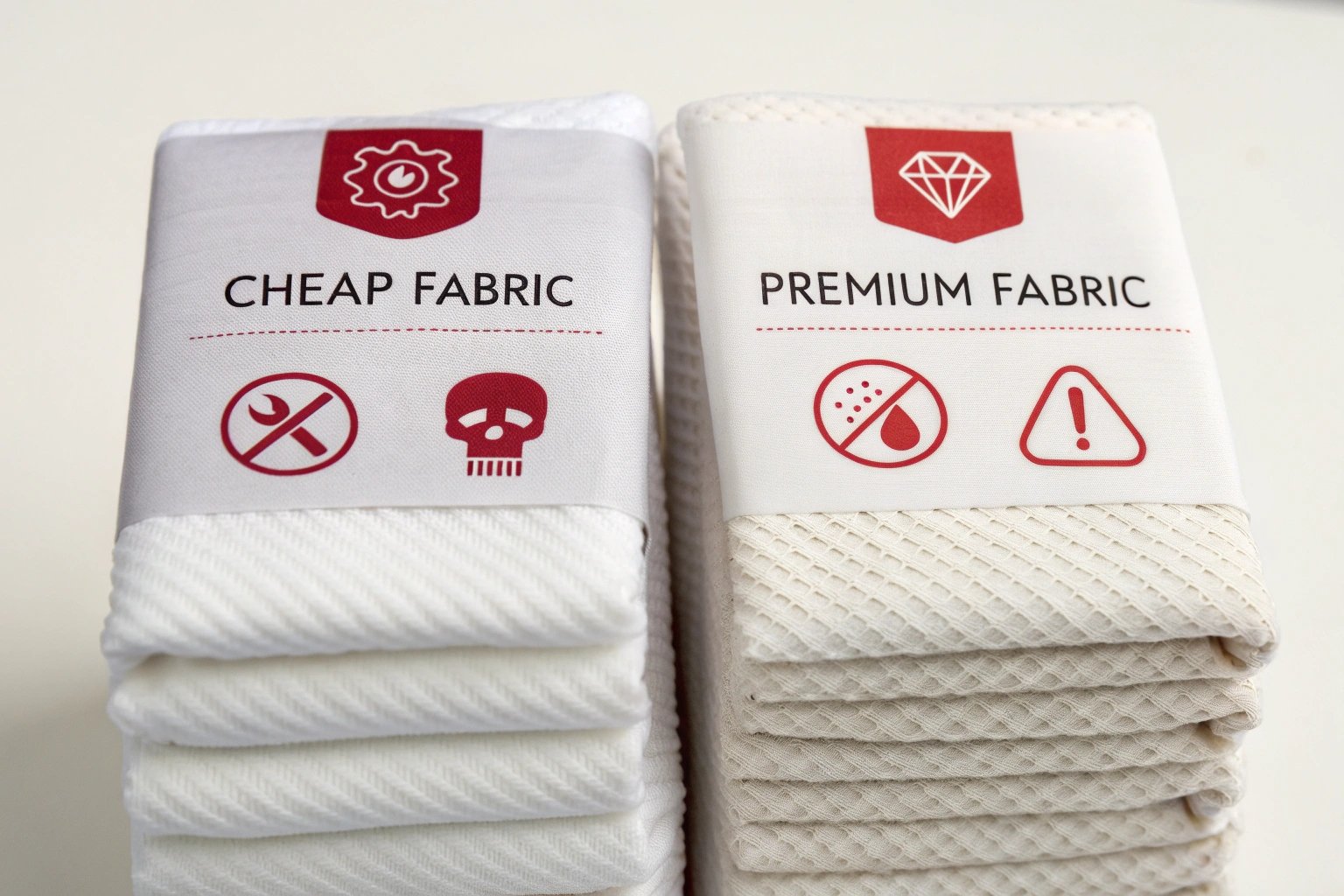
On paper, low-cost fabric looks like a win. But when you factor in production issues, customer returns, and brand damage—the numbers tell a different story.
The true cost of cheap fabric includes production errors, reworks, and customer dissatisfaction. Premium Chinese fabrics, while pricier upfront, often reduce waste, improve efficiency, and protect your brand in the long run.
As a fabric supplier in China for over 20 years, I’ve watched clients learn the hard way that “cheap” can be expensive. Whether you’re a small fashion brand or a major retailer, fabric choice will define your quality, pricing stability, and reputation. Let’s look at what really happens behind the invoice.
Is Buying Cheap Chinese Fabric Worth the Risk?
Low price often comes with hidden problems.
Buying cheap Chinese fabric may cut initial costs, but the risk of quality issues, shipment delays, and rejections often outweighs the savings. Inconsistent batches and weak QC are common problems with low-cost suppliers.
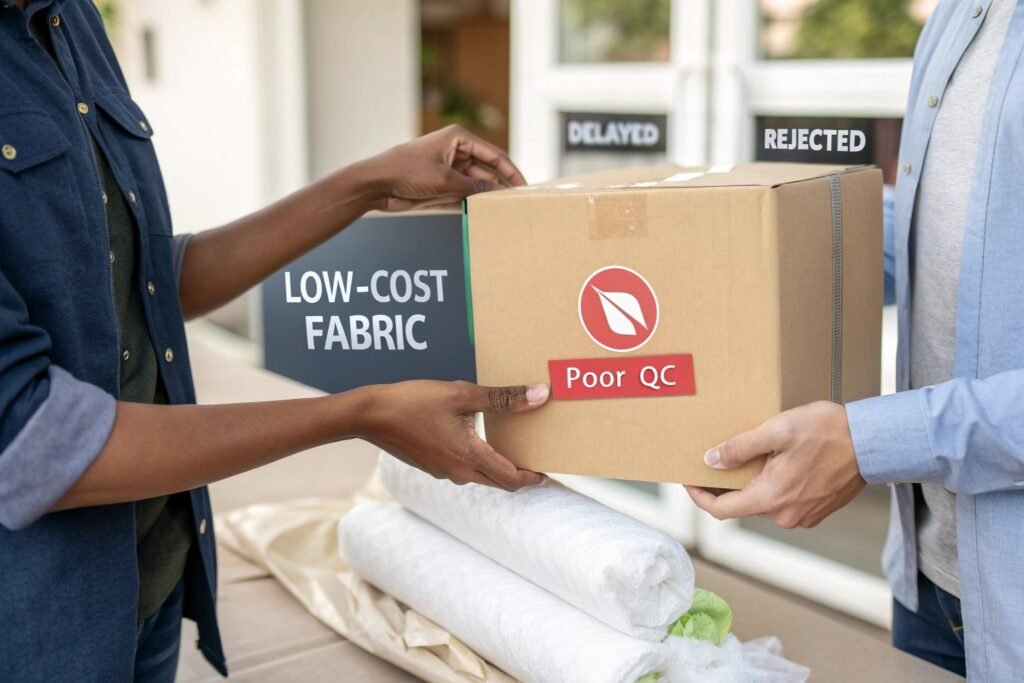
What kinds of problems arise from ultra-low-cost Chinese fabric?
Many buyers see only the upfront price—$0.80/meter vs. $1.20/meter. But they don’t calculate the downstream impact. Here’s what often happens with low-cost suppliers:
- Inconsistent dye lots: Each batch has a slightly different tone. That causes mismatch in final garments.
- Poor shrinkage control: Fabric shrinks unevenly after sewing, leading to sizing issues.
- Low yarn count: Thinner threads make the fabric feel flimsy and wear out fast.
- Delayed lead times: Cheaper suppliers often rely on unstable dye houses or subcontractors.
- Rejected goods: Without proper quality control, 10%–20% of rolls may be unusable.
Here’s a comparison:
| Factor | Cheap Fabric Supplier | Premium Chinese Supplier |
|---|---|---|
| Unit Price | Low | Moderate to High |
| Batch Consistency | Low | High |
| QC and Testing | Limited or none | Full in-house QC |
| After-Sale Support | Weak or unavailable | Proactive and ongoing |
| Long-Term Cost Predictability | Unstable | Reliable |
We had a client who bought $40,000 worth of cheap rayon challis for a U.S. summer dress brand. Half the rolls had off-grain weaves and failed the needle test. The re-cutting and delays cost them another $10,000. In the end, the "cheap" option wiped out their profit.
How Does Fabric Quality Impact Production Costs?
Poor inputs lead to higher output costs.
Fabric quality directly impacts production efficiency. Low-grade fabric increases cutting errors, slows down sewing lines, and raises rejection rates. Higher quality fabric reduces waste and improves throughput.

Why do manufacturers prefer better fabric even if it’s more expensive?
Production managers will tell you: if the fabric handles poorly, the whole factory suffers. Here’s how fabric affects key areas:
- Cutting Room: Low GSM or off-grain fabric distorts easily. That means slower laying and trimming.
- Sewing Lines: Uneven tension or fiber shedding leads to broken needles and seam slippage.
- Finishing: Low colorfastness means more defects after washing or pressing.
- QA Rejection: If more than 5% of garments fail final inspection, margins disappear.
Let’s put some numbers to it. Suppose your CMT (cut-make-trim) cost is $4.50 per piece. If cheap fabric increases your defect rate from 2% to 10%, on 10,000 units, you’re looking at:
- 200 rejects (with premium fabric)
- 1,000 rejects (with cheap fabric)
At $4.50 per garment, that's $3,600 lost just in production waste. Add logistics, returns, and labor? The total climbs fast.
How does Fumao ensure fabric doesn’t slow down your production?
We test every roll for shrinkage, stretch, GSM, and tension balance before it ships. Our QC team runs real-use simulations based on the buyer’s garment style. That means no surprises during cutting or sewing. Clients tell us their factories finish 8–15% faster using our pre-stabilized functional fabrics. That speed saves labor—and headaches.
Hidden Expenses of Low-Cost Chinese Textiles?
Cheap doesn’t always stay cheap.
Low-cost Chinese fabrics often carry hidden expenses like higher freight volumes, repackaging needs, import rejections, and poor brand perception. These indirect costs eat into margins and create long-term problems.

What costs do buyers overlook when chasing low prices?
Here’s a breakdown of hidden costs we’ve observed:
| Hidden Cost | Explanation | Impact Level |
|---|---|---|
| Extra Freight Volume | Lower density fabric means more cartons, higher freight cost | High |
| Returns & Replacements | Defective goods must be reshipped or credited | High |
| QC Sorting Labor | Buyers often need to hire staff to separate usable rolls | Medium |
| Import Delays | Fabric fails random customs inspections | Medium |
| Repackaging at Destination | Loose rolls or poor labeling requires extra prep work | Medium |
| Brand Reputation Damage | Inconsistent garment quality affects end-user trust | Very High |
One of our clients supplying uniforms to a large hotel chain in the U.S. tried a cheaper supplier. The fabric kept pilling after two washes. They had to refund the hotel, rebook production slots, and airfreight new fabric—at double the original cost. They came back to us. We fixed it with a poly-viscose twill that passed 50 wash cycles.
Why don’t most cheap suppliers offer post-shipment support?
Because their margins are razor thin, they can't afford after-sale service. If you raise an issue, they go silent or blame your sewing. At Fumao, we offer full transparency and live order tracking. Our QR-coded fabric batches let clients trace every roll’s performance metrics—so you don’t pay extra for someone else’s mistake.
Can Premium Chinese Fabrics Save Money Long-Term?
Yes—if you value time, brand, and scale.
Premium Chinese fabrics reduce long-term costs by improving production efficiency, minimizing returns, and protecting brand reputation. For export brands, this makes scaling easier and more profitable.

How do better fabrics lead to better ROI?
Here’s how smart buyers think:
- Fewer Defects = Lower Wastage
- Consistent Color = No Sorting Needed
- Better Handfeel = Happier End Customers
- Durability = Fewer Returns
- Compliance = Easier Imports
We helped an American kidswear brand shift from a $0.65/meter cotton to our OEKO-TEX certified $0.92/meter combed cotton. On paper, it looked more expensive. But after 6 months, their return rate dropped 78%, and customer reviews improved on every platform. They even raised prices slightly, citing “premium organic fabric.”
Here’s a cost breakdown:
| Cost Category | Cheap Fabric | Premium Fabric |
|---|---|---|
| Base Fabric Cost | $0.65 | $0.92 |
| Defect Rate | 10% | 2% |
| Return Rate | 5% | 1% |
| Production Delay | 2–3 days | 0–1 day |
| Net Profit Margin | 8% | 14% |
Over time, premium fabric lets you focus on growth—not damage control. With Fumao, buyers also get faster R&D support, fabric passports for compliance, and customized MOQ flexibility. These extras often reduce your product cycle time by 2–3 weeks.
How can buyers justify the cost to their finance teams?
Show the total cost—not just fabric price. Present a breakdown including waste, labor, returns, and customer impact. Use case studies and data from past orders. And if needed, let us at Fumao help. We can provide comparative test reports and real performance metrics so your sourcing decisions speak in numbers—not just promises.
Conclusion
Fabric price is only the beginning. What matters more is the full journey—from mill to market. Premium Chinese fabrics protect your time, budget, and reputation. And in this business, that’s what real value looks like.