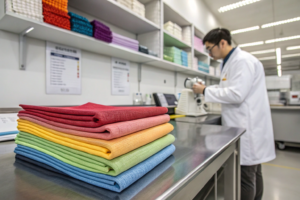
Every buyer I talk to—especially sharp operators like Ron—is hunting for the best price. It's smart business. But here's the hard truth from the factory floor: the price on the quote is often just the entry ticket. The real cost reveals itself later, in hidden fees, unexpected delays, and quality failures that drain your budget and sabotage your production. That "cheap" fabric can become the most expensive material you've ever bought.
The true cost of cheap fabric isn't just a higher number on an invoice. It's the total cost of ownership: purchase price + quality failure costs + logistical chaos costs + reputational risk costs. When you buy based on the lowest upfront quote, you're often buying a problem, not a solution. At Shanghai Fumao Fabric, we see clients come to us after learning this lesson the hard way. They're not just buying fabric; they're buying predictability, and that has a real, defensible value.
Let me break down where those hidden costs lurk. I've been in Keqiao for over 20 years, and I've seen every trick. This isn't theory; it's the daily reality of global textile sourcing. Understanding this is how you protect your margin and your sanity.
How Do Fabric Defects Directly Impact Your Garment Production Cost?
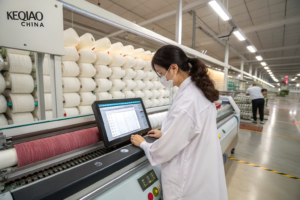
A fabric roll isn't a finished product; it's raw material for your factory. Defects in that raw material create a cascade of waste and rework in your cutting and sewing lines. The math is brutal and often ignored during sourcing. A 5% cheaper fabric with a 10% defect rate will bankrupt you compared to a 10% more expensive fabric with a 2% defect rate.
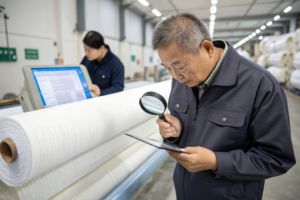
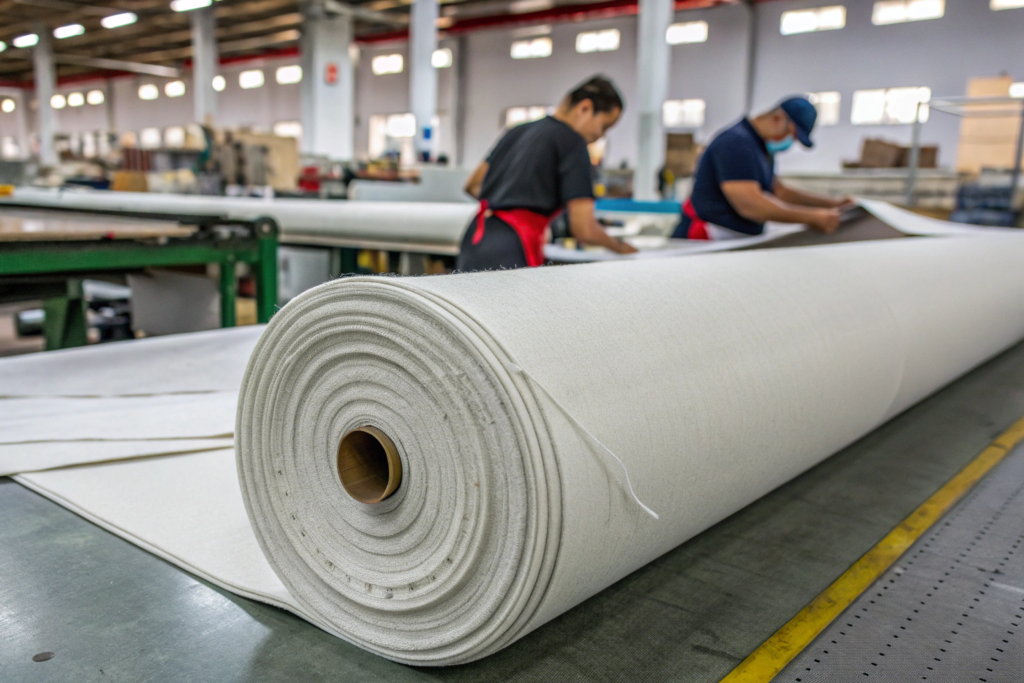
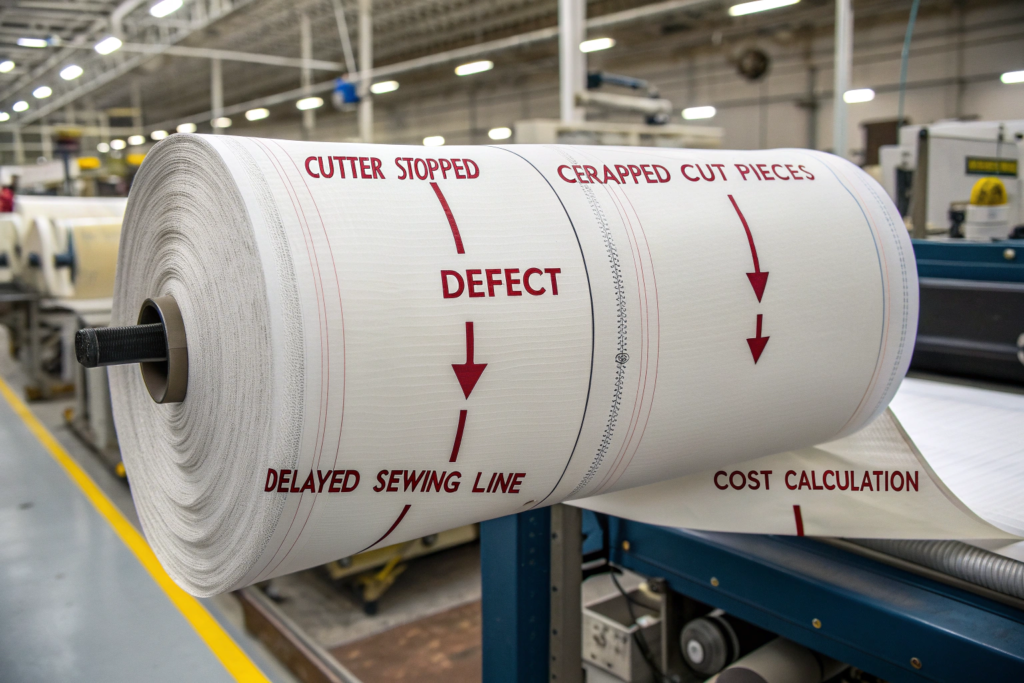
The hidden costs here are about yield. Your cutter plans marker layouts to maximize the number of garment pieces from each meter of fabric. Defects—like holes, stains, streaks, or uneven dyeing—force them to stop, cut around the flaw, or scrap entire panels. This increases fabric consumption, labor for re-cutting, and creates shortages that delay your whole line. I had a client from Seattle in 2023 who sourced a "great deal" on polyester fleece from a unknown supplier. The fabric had hidden knitting defects (drop stitches). Their cutting yield dropped by 15%. They had to emergency air-freight extra fabric, turning their "cheap" deal into a total cost overrun of 40%.
What are the most expensive hidden defects?
Not all defects are equal. Some are catastrophic:
- Shade Variation Within Roll/Between Rolls: This forces your factory to segregate fabric and color-match garments, killing assembly line efficiency. It can cause whole garment sets to be scrapped.
- Inconsistent Shrinkage: Even if it passes a lab test on a small swatch, uneven shrinkage across the width can make assembled panels misalign after the first wash. This leads to 100% customer returns. We solved this for a UK brand by implementing our end-to-end quality control with pre-shrinking calibration on every batch.
- Poor Colorfastness: Garments that bleed or fade in washing trigger refunds, recalls, and brand damage. The cost moves from production to legal and marketing.
For a deep dive into calculating true cost, industry analysts like Just-Style often publish studies on the total cost of quality failures in apparel manufacturing.
How do you quantify the real "cost per usable meter"?
You must calculate it. Don't look at price per meter. Look at:
(Total Fabric Cost + Cost of Cutting Rework + Cost of Production Delays) / (Number of Garments Produced x Fabric Consumption per Garment)
This gives you the true cost per garment for fabric. A transparent supplier will provide historical defect rate data (called "AQL" or first-pass yield) to help you model this. Our reports at Shanghai Fumao show an average 98% client pass rate, which directly translates to predictable yields for our partners. To master these calculations, resources like the Apparel Production Management Forum offer guides on fabric utilization and cost modeling.
What Logistical Nightmares Are Built into Low-Price Quotes?
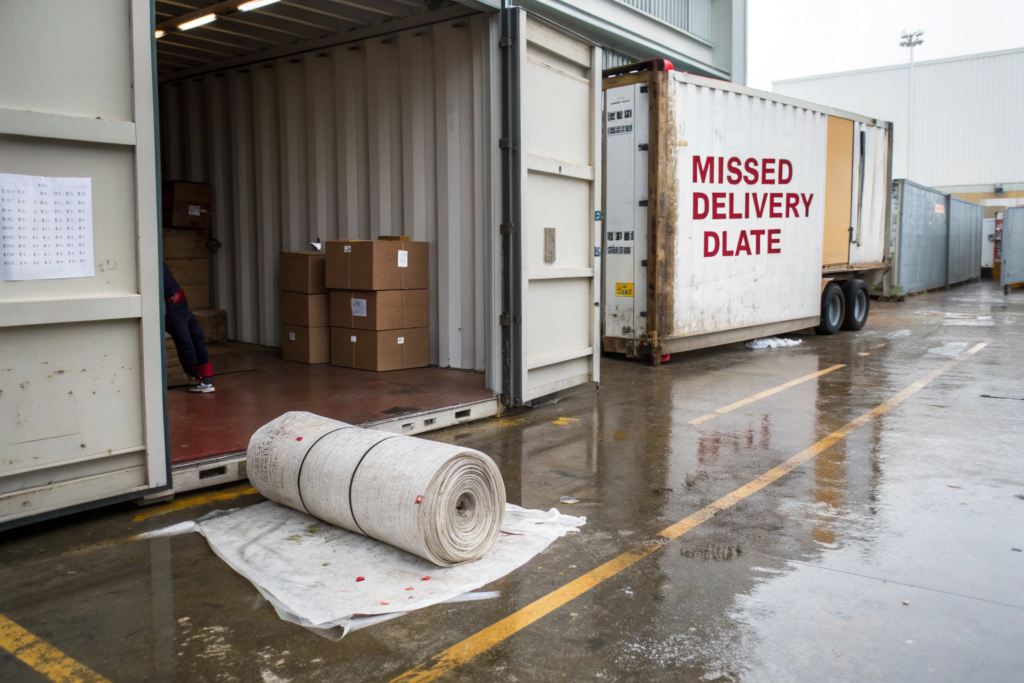
Cheap fabric often comes with a cheap, disorganized supply chain. The quote might be FOB Shanghai, but the hidden costs are in unreliable lead times, poor packaging, documentation errors, and shipping delays. Time is the most expensive currency in fashion, and a delayed fabric shipment can idle an entire garment factory costing thousands per day.
Low-cost suppliers frequently overpromise to get the order. They'll quote a standard 30-day production time but lack the raw material inventory or factory slot to honor it. When delays hit, communication blackouts follow. Suddenly, you're paying for expedited air freight—which can cost more than the fabric itself—or facing missed delivery windows for your own customers. In Q4 2023, a European client came to us after their original supplier missed a Chinese New Year shipping deadline. We had to execute a near-impossible turnaround using our agile R&D and supply chain network to produce and ship a replacement order in 4 weeks, saving their season. Their "cheap" fabric ended up costing them a premium rush fee and nearly a key retail partner.
How do payment terms and shipping terms hide risk?
The structure itself can be a trap.
- 100% Payment Before Shipment: Many small, "cheap" traders demand this. You lose all leverage. If quality is bad or shipment is late, you have no recourse.
- Vague Shipping Terms: "Ex-Works" (EXW) sounds cheap because the supplier's responsibility ends at their factory gate. But then you, the buyer, are responsible for arranging and paying for all inland China trucking, port fees, and customs clearance—a complex and expensive process you likely can't manage remotely. Mistakes here cause huge port demurrage fees.
- Consolidated Shipments: To save cost, a supplier may illegally consolidate your goods with other companies' under one bill of lading. This can cause customs seizures, tariff misclassification, and delivery chaos.
Understanding Incoterms is critical. The International Chamber of Commerce (ICC) provides the definitive guide on understanding and applying Incoterms® 2020 rules.
Can poor packaging really cost you money?
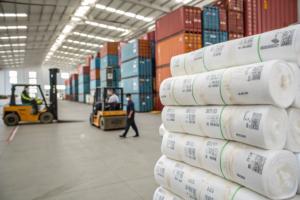
Absolutely. Fabric is heavy. Inadequate wrapping—flimsy plastic, weak cores—leads to damage in transit: crushed rolls, water stains, grease marks. We once received a distressed call from a Miami client whose "cheap" linen arrived with fork-lift holes punched through half the rolls. The supplier blamed the shipping line, and the client ate the loss. Our global logistics protocol uses steel-reinforced cores, heavy-duty waterproof wrapping, and corner protectors. It costs us more, but it ensures what we make arrives as you specified. That's part of the real cost.
How Does Supplier Instability Create Long-Term Business Risk?
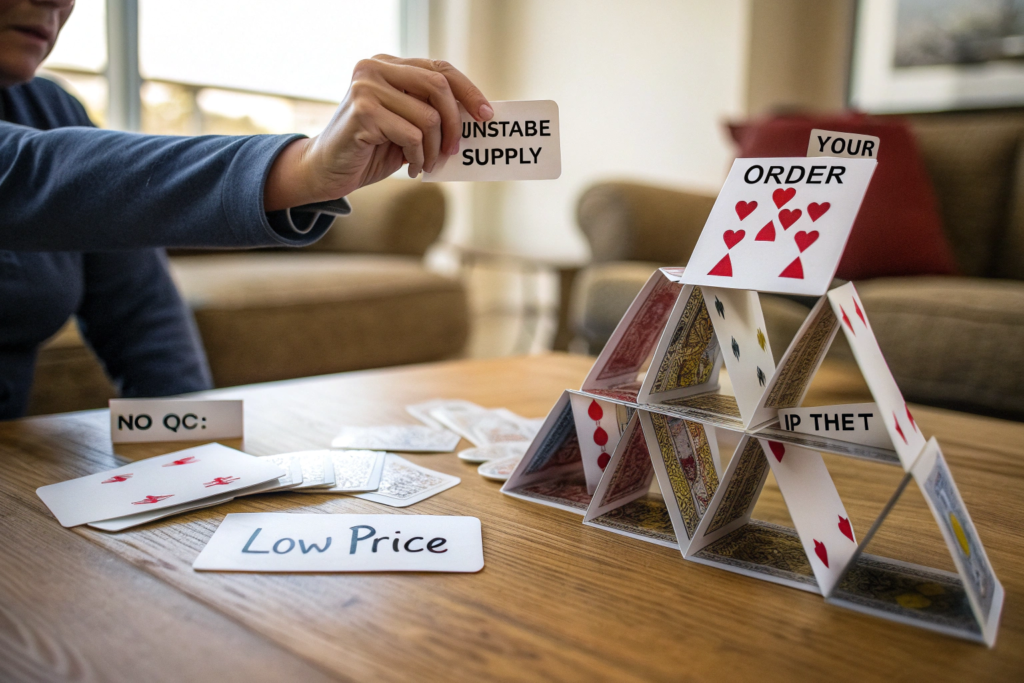
The lowest price often comes from the least stable operation: a small trading company with no assets, a factory operating on razor-thin margins, or a broker who will disappear after one order. This instability is a massive hidden cost. It's the cost of constantly re-sourcing, re-qualifying, and managing crises.
Your business relies on consistency. Season after season, you need the same color, the same hand-feel, the same performance. A supplier who can't maintain quality batch-to-batch, or who might suddenly go out of business, forces you back to square one. The cost of finding and vetting a new supplier—including sample costs, travel (even virtual), and trial orders—is enormous. One of our major clients, a performance wear brand from Canada, switched to us after their previous "low-cost" mill suddenly couldn't reproduce the exact moisture-wicking finish. They lost 3 months and a key product launch. Our financial stability and vertical control ensure we're here for the long run.
What are the signs of a high-risk "cheap" supplier?
Red flags we see all the time:
- No Physical Factory Ownership: They're just traders. Ask for a live video tour of the weaving/dyeing facilities they claim to own. If they hesitate, walk away.
- Unable or Unwilling to Provide Third-Party Certificates: Real tests from SGS, ITS, or BV cost money. Faking reports is common.
- No Dedicated QC Team or Process: If the salesperson is also the quality controller, conflict of interest is guaranteed.
- Extreme Pressure to Pay Upfront: This is often a cash flow crutch signaling financial trouble.
Vetting a supplier properly takes work. Platforms like Alibaba.com's Supplier Assessment Guides can be a starting point for due diligence on Chinese manufacturing partners, but nothing replaces a rigorous audit.
How does intellectual property (IP) risk factor in?
A desperate, low-margin supplier has incentive to cut corners, including stealing your designs. If you provide a unique jacquard or print design, they might sell the excess production or the design itself to your competitors. The cost is lost exclusivity and market advantage. We enforce strict NDA and IP protection protocols with all our clients because their innovation is their business. Protecting that has a value not reflected in a per-meter price.
What Does a "Total Cost" Analysis Look Like for Sourcing Fabric?
To make smart decisions, you must move from price comparison to total cost analysis (TCA). This is a spreadsheet exercise that forces you to account for all variables, both quantitative and qualitative. It's the difference between buying a commodity and investing in a supply chain partnership.
A basic TCA for fabric should include columns for: 1) Quoted Fabric Price, 2) Estimated Defect/Waste Cost, 3) Logistics & Insurance Cost, 4) Risk Mitigation Cost (e.g., cost of third-party inspection), 5) Cost of Time (delays), and 6) Value of Services (R&D support, reliability, communication ease). The supplier with the lowest "Total Landed Cost Per Good Garment" wins, not the one with the lowest line item. At Shanghai Fumao, we encourage clients to build this model with us. We provide the transparent data to fill it in.
How do you assign value to reliability and service?
These are not soft benefits; they are financial safeguards. Value them by asking:
- What is the cost of one missed delivery to my key retailer? (Chargebacks, lost future orders).
- What is the cost of my team spending 10 hours a week chasing updates vs. 2 hours? (Labor cost).
- What is the value of a supplier who proactively spots a trend and suggests a more cost-effective material? (Increased margin).
In 2024, a Danish client did a TCA comparing us to two other bidders. Our quoted price was 8% higher. But when they factored in our guaranteed 3-week lead time (vs. a risky 5-7 weeks), our included lab testing, and our 98% yield, our total cost was 12% lower. They placed the order and have been with us since.
Can better fabric actually reduce other costs?
Yes, fundamentally. Higher-quality, more consistent fabric can allow your factory to cut faster with less skilled labor, use less interfacing or lining, and reduce rejected finished garments. It’s the butterfly effect in manufacturing. A resource for building professional sourcing models is Supply Chain Dive's analysis on total landed cost frameworks for importers.
Conclusion
Chasing the cheapest fabric is the costliest mistake a brand can make. The true expense is hidden in the chaos it creates: in your factory, in your logistics, and in the constant fear of the next crisis. It erodes margins, delays launches, and damages brand equity—costs that far outweigh a few cents saved per meter.
The smart move is to source for value, not just price. Value is defined by total cost, reliability, partnership, and the peace of mind that comes from knowing your supply chain is an asset, not a liability. It's about buying predictability.
Your fabric supplier should be a pillar of your business, not its greatest risk. At Shanghai Fumao Fabric, we build our pricing around delivering that total value—exceptional quality, ironclad reliability, and transparent partnership. Don't let hidden costs eat your profit. Contact our Business Director, Elaine, for a consultation and a transparent quote that shows the real cost of doing business right. Make the profitable choice: elaine@fumaoclothing.com.