I remember a buyer from a fashion startup in London who called me about three years ago. She was excited. She had found a fabric supplier on Alibaba with beautiful photos, competitive prices, and a website that looked professional. She placed a $15,000 order for a custom-knit jersey. The supplier sent her tracking information. The package never arrived. The supplier stopped answering emails. The website was still up, but the phone number was disconnected. She had been scammed. The supplier had no inventory, no factory, no real presence. Just a website and some stolen photos.
That call stuck with me. I realized that for many buyers, especially those new to sourcing, the online presence of a supplier is the only thing they have to go on. And scammers know how to build a convincing facade. They use stock photos. They steal images from real factories. They create fake reviews. They look legitimate until you send them money.
At Shanghai Fumao, we've been building our online presence for over a decade. We have a real website with real photos of our real factory. We have videos of our machines running. We have testimonials from real clients. But I know that for every legitimate supplier like us, there are ten that are less than honest. In this article, I'm going to share the red flags I've learned to spot in a fabric supplier's online presence—the warning signs that should make you pause before you send a deposit.
What Are the Red Flags on a Supplier's Website?
A website is often the first point of contact. It should be a window into the supplier's real capabilities. But a beautiful website can hide a lot. You need to look beyond the design and dig into the content.
How Can You Tell If Photos Are Stolen or Stock Images?
This is the most common red flag. A supplier uses photos that aren't their own. Maybe they're stock photos. Maybe they're stolen from a real supplier's website. Maybe they're from a trade show years ago. The photos look professional, but they don't represent what the supplier actually has.
How do you spot stolen photos? First, use reverse image search. Google Images or TinEye can show you where else a photo appears online. If the same photo appears on multiple supplier websites, it's likely stolen. If it appears on a stock photo site, it's definitely stolen.
Second, look for inconsistencies. Does the factory in the photo match the supplier's claimed location? If a supplier says they're in Zhejiang but the photo shows a factory with palm trees, something is wrong. Are the workers in the photo wearing uniforms with a different company name? That's a red flag.
Third, look for generic photos. A real factory tour photo will have specific details—a particular machine model, a specific layout, a recognizable landmark. Generic photos of happy workers in hard hats are often stock images.
I had a client who was considering a supplier with beautiful photos of a modern factory. I did a reverse image search and found the same photos on a supplier's website in Pakistan. The Chinese supplier had stolen them. The client didn't place the order. A few months later, she heard from another buyer who had lost $20,000 to the same supplier. The stolen photos were the first clue.
For a guide to using reverse image search for supplier verification, this sourcing resource offers a step-by-step tutorial for checking supplier photos.
What Should a Legitimate "About Us" Page Include?
A legitimate "About Us" page tells a real story. It doesn't just say "we are a professional fabric supplier." It gives specific details. How long have they been in business? Where are they located? What is their factory address? How many employees do they have? What equipment do they have? Who are their major clients?
If the "About Us" page is generic, with no specific information, that's a red flag. If there's no "About Us" page at all, that's a bigger red flag. A legitimate company is proud of their history and wants to share it.
Look for specific details that you can verify. A factory address should be a real address, not just "Keqiao, Zhejiang." You can look up the address on Google Maps. Is there a factory there? If the address is a residential building or an empty lot, that's a problem.
I remember checking a supplier's website for a client. The "About Us" page said they had been in business for 15 years and had 200 employees. But the website was only six months old. The contact address was a PO box. The photos were stolen from another site. The client didn't order. A year later, the website was gone. The supplier had disappeared.
For a guide to what a legitimate supplier's website should include, this sourcing resource offers a checklist for evaluating supplier websites.
What Are the Red Flags on Alibaba and Other B2B Platforms?
Alibaba and other B2B platforms are where many buyers start. The platforms have verification systems, but they're not foolproof. A gold supplier badge or a verified badge doesn't guarantee that the supplier is legitimate. You still need to do your own due diligence.
How Reliable Are Platform Verification Badges?
Alibaba has different levels of verification. The simplest is the "Gold Supplier" badge, which means the supplier has paid for a membership. That's it. It doesn't mean they've been audited. It just means they paid.
The "Assessed Supplier" badge means Alibaba has sent a third-party auditor to visit the supplier's factory. That's better. But the audit is basic. It confirms that the factory exists and that the supplier has certain capabilities. It doesn't guarantee quality or reliability.
The "Verified Supplier" badge is the highest level. It means Alibaba has conducted a more thorough audit. But again, it's not a guarantee. A verified supplier can still be a poor partner. They can still send the wrong fabric. They can still miss deadlines.
I had a client who only worked with Gold Suppliers on Alibaba. He thought the badge meant they were trustworthy. He placed a $30,000 order with a Gold Supplier. The fabric arrived late, the quality was poor, and the supplier refused to take responsibility. The Gold badge didn't protect him.
The lesson is: badges are a starting point, not an ending point. You still need to do your own verification. Ask for references. Ask for samples. If possible, visit the factory. For a guide to Alibaba verification badges, this sourcing resource offers an explanation of what the badges actually mean.
What Does Transaction History Tell You?
Transaction history is one of the most useful pieces of information on B2B platforms. It shows how many transactions the supplier has completed, the average order value, and the countries they've shipped to. A supplier with a long transaction history and recent activity is more likely to be legitimate.
If a supplier has been on the platform for five years but has no transaction history, that's a red flag. It means they're not actually selling through the platform. Maybe they're taking orders off-platform. Maybe they're not selling at all.
If the transaction history shows only small orders, but they're claiming to be a large manufacturer, that's inconsistent. A factory that produces 50,000 meters a month should have a transaction history that reflects that volume.
I had a client who was considering a supplier with a Gold badge but zero transaction history. The supplier claimed they had been in business for ten years. I asked the client to send a message through the platform. The supplier responded, but they wanted to take the conversation off-platform immediately. That's another red flag. Legitimate suppliers will communicate through the platform, especially for initial contact.
For a guide to evaluating B2B platform profiles, this sourcing resource offers a checklist for Alibaba supplier evaluation.
What Are the Red Flags in Communication?
Once you've looked at the website and the platform profile, you'll start communicating with the supplier. The way they communicate tells you a lot. The red flags in communication are often the first signs of trouble.
What Does Poor Communication Indicate?
Poor communication is a red flag. If the supplier's emails are full of grammatical errors, that might not be a deal-breaker—English isn't everyone's first language. But if the errors make it hard to understand technical details, that's a problem. You need to be able to communicate clearly about specifications, timelines, and quality.
If the supplier is slow to respond, that's a red flag. A legitimate supplier will respond within 24 hours, usually much faster. If it takes three days to get a response to a simple question, imagine how long it will take when there's a real problem.
If the supplier is vague in their responses, that's a red flag. You ask for a specification sheet, and they send a photo. You ask for the weight in GSM, and they say "medium weight." You ask for the factory address, and they say "in Keqiao." Vague answers mean they either don't know the details or they're hiding something.
I had a client who was communicating with a supplier about a custom-jacquard fabric. The client asked detailed questions about the hook count, the yarn size, the finishing process. The supplier's answers were vague and inconsistent. The client asked for a sample. The sample never came. The client moved on. Six months later, he heard from another buyer that the same supplier had taken deposits and disappeared.
For a guide to evaluating supplier communication, this sourcing resource offers a list of red flags in supplier emails.
Why Is a Request to Move Off-Platform a Red Flag?
On B2B platforms like Alibaba, there's a reason to keep communication on the platform. The platform provides some protection. If you communicate off-platform—through WhatsApp, WeChat, or personal email—you lose that protection.
A legitimate supplier will be happy to communicate on the platform, especially for initial contact. If a supplier insists on moving off-platform immediately, that's a red flag. They might be trying to avoid the platform's monitoring. They might be planning to ask for payment outside the platform's secure system.
I had a client who was contacted by a supplier through Alibaba. The supplier had a Gold badge and a good profile. But after the first message, the supplier said, "Let's talk on WhatsApp." The client agreed. The supplier then asked for payment via Western Union. The client almost sent the money, but at the last minute, he checked the supplier's transaction history on Alibaba. It was zero. He didn't send the money. The supplier disappeared a week later.
If a supplier asks to move off-platform, you can do it, but be cautious. Keep the conversation professional. Don't share sensitive information. And never, ever pay outside the platform's secure payment system for the first order. For a guide to safe communication with suppliers, this trade compliance resource offers best practices for supplier communication.
What Are the Red Flags in Payment Terms?
The payment terms a supplier offers can tell you a lot about their legitimacy. There are standard terms in the industry, and there are terms that should make you pause.
Why Is 100% Prepayment a Red Flag?
As I've written before, the standard in the textile industry is 30-50% deposit, with the balance due before shipment. For a new supplier, even 30% deposit carries risk. But 100% prepayment is a huge red flag.
A legitimate supplier doesn't need 100% prepayment. They have their own capital. They have credit lines. They can buy raw materials with a deposit. If a supplier insists on 100% prepayment, it might mean they don't have the resources to fulfill the order. Or it might mean they're planning to take your money and disappear.
I had a client who was asked for 100% prepayment by a supplier he found online. The supplier said it was their company policy for new clients. The client was about to pay when he called me to ask my opinion. I told him not to do it. He didn't. A month later, he found a review from another buyer who had paid 100% upfront and never received the fabric. The supplier had taken the money and closed the account.
If a supplier asks for 100% prepayment, ask yourself why. Do they have other payment options? Can you use a letter of credit? Can you pay through the platform's secure payment system? If they're not willing to work with you on payment terms, consider it a red flag.
For a guide to safe payment terms for new suppliers, this sourcing resource offers a framework for payment term negotiation.
What Payment Methods Are Safest?
The safest payment method for a new supplier is a letter of credit (LC). With an LC, the supplier doesn't get paid until they present shipping documents that match the terms of the LC. Your bank verifies the documents. It's not foolproof, but it's much safer than a wire transfer.
The next safest is payment through the B2B platform's secure system. Alibaba Trade Assurance, for example, holds your payment until you confirm receipt of the goods. If the goods don't arrive, you can get your money back. It's not perfect, but it's a layer of protection.
The least safe is wire transfer, especially to a personal bank account. Once you wire money, it's gone. You have no recourse. If a supplier asks for payment to a personal account, that's a major red flag.
I had a client who insisted on paying via Alibaba Trade Assurance for a first order. The supplier agreed. The order went smoothly. After a few successful orders, they switched to wire transfer with a deposit. The relationship worked. The Trade Assurance protected the client in the beginning, and the trust grew over time.
For a guide to payment methods for textile sourcing, this trade finance resource offers a comparison of payment methods and their risks.
How Do You Verify a Supplier's Legitimacy?
Beyond the red flags, there are proactive steps you can take to verify a supplier's legitimacy. These steps take time, but they're worth it.
What Should You Ask for Beyond the Website?
The first thing to ask for is a sample. A legitimate supplier will send you a sample. It might cost you a few dollars, but it's worth it. If the supplier refuses to send a sample, that's a red flag. If they send a sample, you can test it. You can see the quality. You can compare it to the photos on their website.
The second thing to ask for is references. Ask for the names of other clients, preferably in your country. Contact them. Ask about their experience. A legitimate supplier will have satisfied clients who are willing to talk.
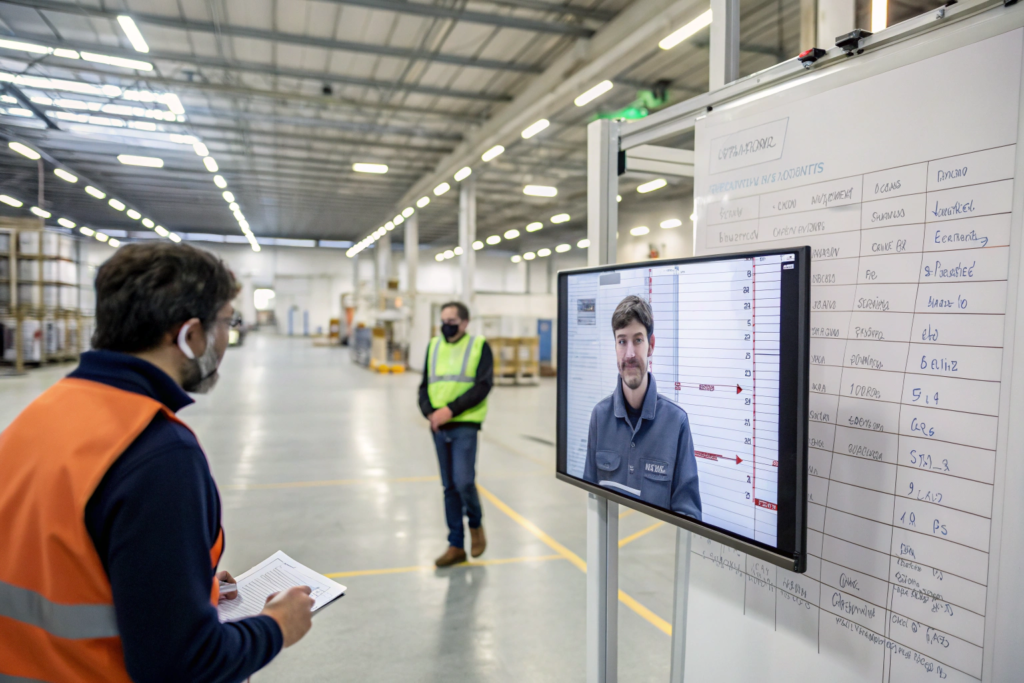
The third thing to ask for is a video call. Ask to see the factory. Ask to see the machines that will produce your fabric. A legitimate supplier will be happy to show you their operation. If they make excuses—the camera is broken, the manager is out—that's a red flag.
I had a client who asked for a video call with a potential supplier. The supplier said yes. On the call, the client asked to see the knitting machines. The supplier showed a room with a few old machines. Then the client asked to see the dyeing facility. The supplier hesitated. The camera moved quickly through a dirty, disorganized space. The client realized the supplier was a trader, not a manufacturer. He didn't place the order.
For a guide to verifying suppliers, this sourcing resource offers a step-by-step supplier verification checklist.
How Do You Use Third-Party Verification Services?
If you're placing a large order, consider using a third-party verification service. These services will visit the factory, verify the supplier's claims, and provide a report. Some will also conduct pre-shipment inspections.
Companies like QIMA, SGS, and Bureau Veritas offer these services. They're not cheap, but for a large order, they're worth the cost. They can save you from a much larger loss.
I had a client who used a verification service for a $100,000 order. The service visited the factory and found that the supplier had overstated their capacity. They had only half the machines they claimed. The client didn't place the order. The verification cost him $1,000. It saved him from a potential disaster.
For a guide to third-party verification services, this quality control resource offers a comparison of major inspection companies.
Conclusion
A fabric supplier's online presence can be deceiving. Beautiful websites, professional photos, and impressive badges don't always reflect reality. The red flags are there if you know where to look. Stolen photos, generic "About Us" pages, zero transaction history, vague communication, requests to move off-platform, 100% prepayment—these are warning signs that should make you pause.
But red flags are not proof of fraud. They're signals that you need to dig deeper. Ask for samples. Ask for references. Ask for a video call. Use third-party verification if the order is large. The time and money you spend on verification is insurance against a much larger loss.
At Shanghai Fumao, we've built our online presence to be transparent. Our website has real photos of our real factory. We have videos of our machines running. We have detailed specifications. We have testimonials from real clients. We respond to inquiries quickly and clearly. We send samples. We welcome video calls. We're happy to work through platform payment systems. We want you to be confident in us before you place an order.
If you're looking for a fabric supplier, take your time. Look for the red flags. Do your due diligence. And when you find a supplier who checks out, build that relationship. A trusted supplier is worth more than a cheap price.
Contact our Business Director, Elaine, to see what a transparent supplier looks like.
Email: elaine@fumaoclothing.com
Let's start with a sample.