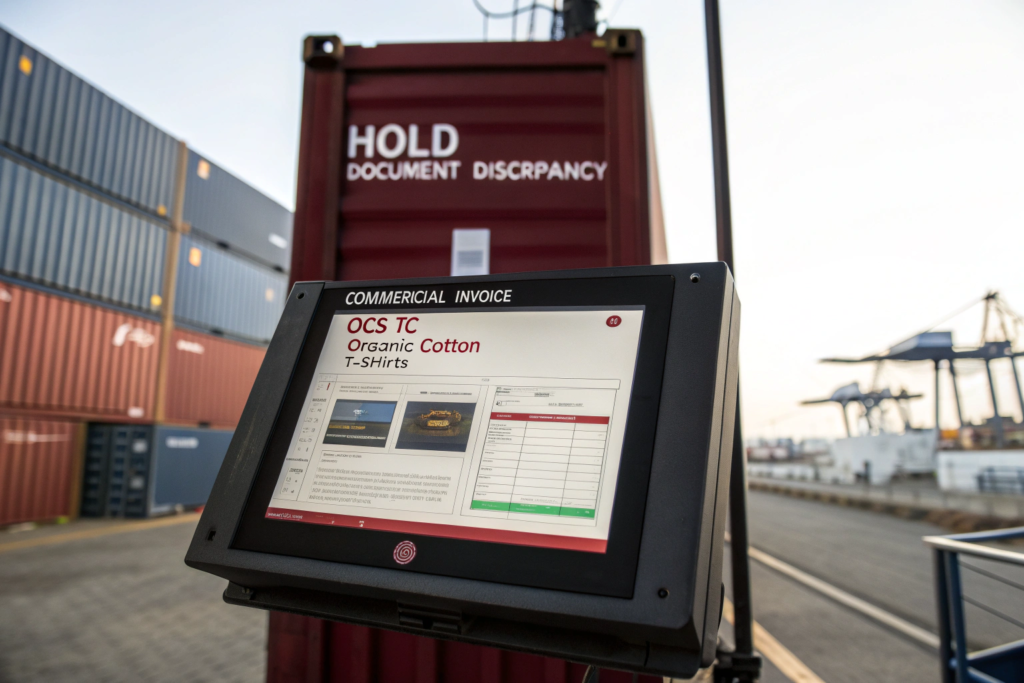
Here’s the brutal reality most brands discover too late: shipping OCS-certified clothing isn't just about moving boxes from point A to B. It's a high-stakes data integrity game where a single document error at customs can turn your "sustainable" shipment into seized, worthless inventory. I've watched containers of beautiful organic cotton garments sit for weeks at Rotterdam or LAX because the commercial invoice said "organic cotton" but the attached OCS certificate had a typo in the product description. The logistics of certified goods aren't an afterthought—they are the final, and most vulnerable, link in your chain of custody. Break it here, and everything before it was for nothing.
The logistics for shipping OCS-certified clothing require a dual-track process: managing the physical cargo flow (packing, freight, customs) and safeguarding the certification data flow (accurate documentation, correct HS codes, secure TC transfer). Success hinges on treating the Transaction Certificate (TC) with the same care as the container seal number, and ensuring every piece of paperwork tells the same, flawless story. This is where logistics meets compliance, and where most generic freight forwarders will fail you.
Let's map the entire journey, from the factory floor to your warehouse door, and identify the critical control points you must command.
Pre-Shipment Documentation: Building the "Golden Record"
Before a single carton is sealed, you must lock down what I call the "Golden Record"—the single, authoritative set of data that will populate every subsequent document. Any variance in product description, quantity, weight, or value between documents is a red flag for customs, potentially triggering an inspection that can delay your shipment for weeks.
This phase is about obsessive alignment between your Purchase Order, the factory's packing list, and the pending OCS TC. The factory and your freight forwarder must work from the same script.

What documents comprise the essential shipping packet?
For a smooth customs clearance, you need these five documents perfectly synchronized:
- Commercial Invoice: The king document. It must include:
- A detailed description: e.g., "Women's 100% Organic Cotton Knitted T-Shirts, OCS Certified (Certificate Ref: CU80542XYZ)."
- Correct Incoterm (e.g., FOB Shanghai, CIF Los Angeles, DDP Berlin).
- Accurate declared value.
- The HS Code for the destination country. This is critical and often wrong.
- Packing List: Details carton counts, dimensions, net/gross weights per carton, and a summary. The total quantity must match the invoice.
- Bill of Lading (B/L) or Air Waybill: The contract of carriage. The "Shipper" and "Consignee" info must be perfect. The description can be simpler but should not contradict the invoice.
- OCS Transaction Certificate (TC): The proof of certification. It must reference the commercial invoice number and match the product/quantity details.
- Certificate of Origin (CoO): Often required for duty calculation. It states the goods are of Chinese origin.
Pro Tip: Insist on reviewing DRAFT versions of the Commercial Invoice, Packing List, and the OCS TC before they are finalized. This is your last chance to catch errors. In 2023, we caught a major error for a client: the factory's draft invoice listed the HS code for "synthetic fiber garments," which would have invalidated the organic claim at EU customs. We corrected it to the code for "cotton garments."
How do you verify the OCS TC before shipping?
The TC isn't just a document; it's the output of your production audit. Before authorizing shipment, confirm:
- Issuance: Is it from an accredited body (Control Union, Ecocert, etc.)?
- Accuracy: Do the product details, weight, and your company name match the commercial invoice?
- Reference: Does it correctly reference the upstream TC from the fabric supplier?
- Timing: It should be issued before the goods sail/fly. A TC dated after the Bill of Lading date can raise questions.
If your supplier cannot provide the final TC at least in draft form before the container is gated in, consider it a major risk. The TC should be a condition for releasing payment.
Freight Forwarding & Customs Clearance: The Compliance Gauntlet
This is where your choice of logistics partner makes or breaks the shipment. A standard forwarder used to shipping generic goods will not understand the nuances of certified organic products. You need a forwarder—or a supplier whose in-house logistics team—understands that the paperwork is as delicate as the cargo.
The two biggest pitfalls are incorrect HS codes and mismatched documentation, both of which lead to customs holds, examinations, and demurrage fees that can erase your product margin.
What are the correct HS codes for OCS-certified clothing?
There is no unique HS code for "organic" clothing. The HS code is based on the garment type, construction (knit vs. woven), and fiber composition (e.g., cotton), not its certification.
- Example: A men's organic cotton knitted t-shirt falls under the same HS code as a conventional men's cotton knitted t-shirt (e.g., 6110.20 in the U.S., 6109.10 in the EU for cotton t-shirts).
- The Danger: Some inexperienced shippers or forwarders try to use "special" or "preferential" codes for organic goods, which do not exist. This creates a mismatch with the database and triggers an alert.
Action: You or your forwarder must verify the exact HS code required by the destination country's customs authority. Relying on the factory's "usual" code is a mistake. Resources like the US International Trade Commission's HS code database or the EU's TARIC are essential references.
How should the OCS TC be submitted to customs?
Submission methods vary by country:
- Electronic Submission (Most Common): Your customs broker will upload the TC along with the invoice, packing list, and B/L as part of the digital entry filing. It is assessed as supporting documentation for the "organic" claim on the invoice.
- On-Demand/Post-Clearance Audit: Customs may not ask for it initially but can request it up to 5 years later for audit purposes. You must retain it.
- Preferential Treatment: In some cases, a correct CoO combined with a TC might help in certain "Green Lane" initiatives, but this is not universal.
Critical: Ensure your customs broker has the TC before filing the entry. Providing it late causes delays. We operate a "document pack" system where our logistics team emails the complete set (Invoice, Packing List, B/L, TC, CoO) directly to the client's broker as soon as the vessel departs, ensuring no delays at arrival.
Risk Mitigation During Transit & Upon Arrival
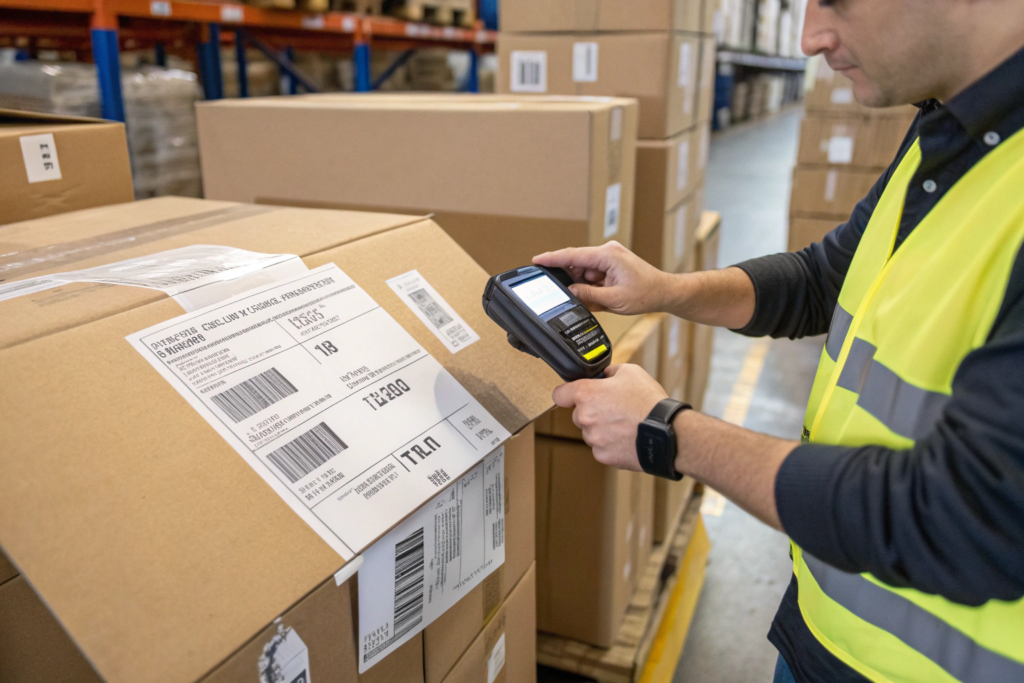
Even with perfect paperwork, physical risks exist. Contamination, damage, or pilferage can compromise the certified goods. Furthermore, the first physical inspection upon arrival is your final chance to verify that what left the factory is what arrived—both in quantity and certification integrity.
Your insurance and receiving protocols must account for the certified nature of the goods.
What special insurance considerations are there?
Certified organic goods often have a higher declared value due to material and certification premiums. Standard marine cargo insurance (e.g., "All Risk") covers physical loss or damage, but you should confirm:
- Coverage for Total Loss of Certification: If a container is contaminated (e.g., by a chemical spill), the garments may be physically intact but legally unsellable as organic. Does your policy cover the loss of the certified status and the resulting devaluation?
- Accurate Valuation: Ensure the insured value reflects the true cost (FOB + freight + insurance + certification costs), not just the base FOB price.
Discuss these scenarios with your insurer. The small extra cost for clarified coverage is worth it.
What is the arrival audit procedure for OCS shipments?
When goods hit your warehouse, conduct a targeted audit:
- Document Verification: Physically match a random sample of garments to the OCS TC and commercial invoice. Check the sewn-in label against the TC's product description.
- Condition Check: Look for signs of water damage, mold, or chemical odors that could contaminate the organic goods.
- Sample Testing (For High-Value Orders): As discussed in previous articles, pulling a random sample for independent composition or PCR testing provides ultimate peace of mind.
This audit closes the loop. If you discover an issue now (e.g., wrong labels), you have leverage with the supplier before final payment is fully released and can quarantine the affected goods.
Building a Scalable Logistics Framework
For brands scaling their OCS lines, ad-hoc logistics become a bottleneck. You need to build a repeatable, efficient framework with dedicated partners. This means selecting a freight forwarder and customs broker who become specialists in your certified supply chain, and potentially leveraging your supplier's integrated logistics if they offer that capability (like we do at Shanghai Fumao).
The goal is to turn the complex into the routine.

How to select a freight forwarder for certified goods?
Interview them with specific questions:
- "What is your experience with shipping OCS or GOTS-certified apparel? Can you provide references?"
- "How do you ensure HS code accuracy for our destination countries?"
- "What is your process for handling and submitting certification documents to customs?"
- "Can you provide real-time tracking and document access via a client portal?"
A good forwarder will ask you detailed questions about your certification and documentation needs. A bad one will just ask for the volume and give you a cheap rate.
What are the benefits of supplier-integrated logistics?
When your supplier controls or deeply manages the logistics, as we do for many clients, benefits include:
- Single Point of Accountability: One contact for production AND shipping issues.
- Seamless Document Flow: The factory that creates the OCS TC also handles its submission to the forwarder, eliminating handoff errors.
- Volume Leverage: A large supplier can negotiate better freight rates due to consolidated volume.
- Proactive Problem-Solving: They understand the production timeline and can book vessel/air space in advance, avoiding peak surcharges.
For example, we have a dedicated partnership with a top-tier forwarder. For our OCS clients, we manage the entire export process from our warehouse, providing a single DDP or CIF quote that includes all certified documentation handled in-house. This turnkey solution reduces the client's administrative burden and risk significantly.
Conclusion
The logistics for shipping OCS-certified clothing are a critical discipline that fuses traditional freight management with rigorous data compliance. It demands precision in documentation, expertise in customs regulations, and proactive risk mitigation. Failure in logistics isn't a shipping delay; it's the rupture of the carefully constructed chain of custody that defines your product's value and your brand's integrity.
For brands committed to organic apparel, mastering these logistics is not a backend task—it is a core competency that protects your investment and delivers on your promise to the market.
If you are looking to streamline the complex logistics of certified shipping with a partner that controls the process from loom to logistics, let's connect. At Shanghai Fumao, our integrated model is designed to ensure your OCS garments move through the world as smoothly as they move through our factory. Contact our Business Director, Elaine, to plan your next certified shipment: elaine@fumaoclothing.com. Let's deliver your values, on time and intact.