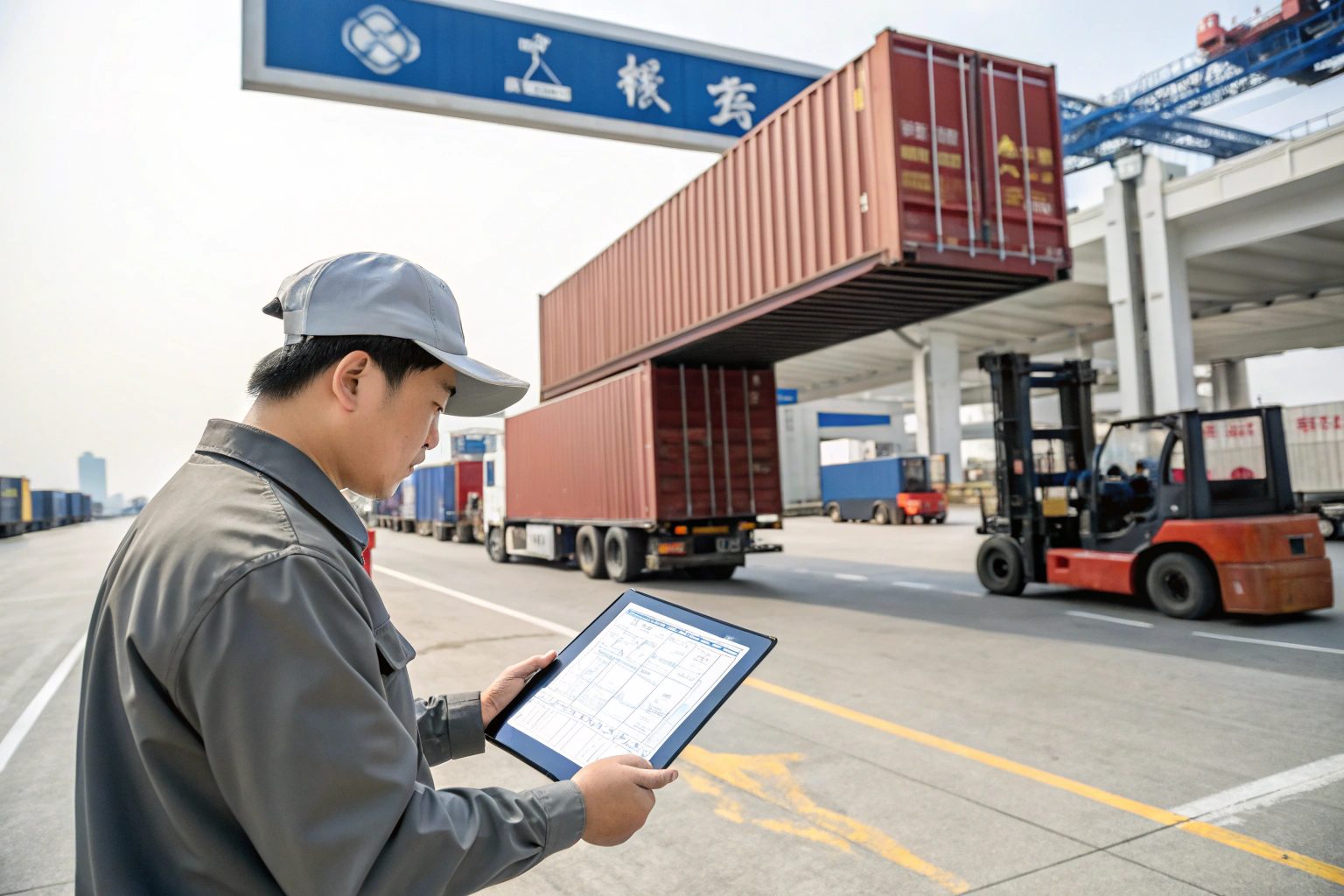
If you've been importing fabric from China for any length of time, you know that shipping is where good deals go to die. You negotiate a great price per meter, you approve the samples, you wait for production. Then comes the shipping conversation. Suddenly there are port charges, customs clearance fees, duty payments, and a dozen other costs that nobody mentioned upfront. By the time the fabric lands at your warehouse, your margins have evaporated.
Let me tell you something I've learned from shipping fabric to over 100 countries for the past 20 years. Delivered Duty Paid (DDP) shipping puts control back in your hands by consolidating all logistics costs—freight, customs clearance, duties, and final delivery—into a single, predictable price per unit. You know exactly what you're paying before the fabric leaves our factory. No surprises. No hidden fees. No scrambling to clear customs when your shipment arrives at the port.
At Shanghai Fumao, we've watched our clients struggle with complex shipping arrangements for years. The ones who switch to DDP never go back. This guide comes from our experience on the ground, managing thousands of shipments to the US, Europe, and beyond. I'll walk you through exactly how DDP works and why it might be the smartest logistics decision you make for your fabric sourcing.
What Exactly Is DDP and How Does It Differ from Other Incoterms?
Incoterms can feel like alphabet soup. But understanding them is the difference between a smooth shipping experience and a logistics nightmare. Let me break down what DDP actually means for your fabric orders.
Who Takes Responsibility for What Under DDP?
Under DDP, we take responsibility for everything. From the moment your fabric rolls come off our finishing line to the moment they land at your warehouse door, we manage it all.
Here's what DDP includes:
- Export packing and container loading at our facility in Keqiao
- Trucking to the port of departure (usually Ningbo or Shanghai)
- Export customs clearance in China
- Ocean freight or air freight to your country
- Import customs clearance in your country
- Payment of all duties, taxes, and fees
- Final delivery to your warehouse or distribution center
You receive one invoice. You pay one price per meter or per roll. And the fabric shows up at your door.
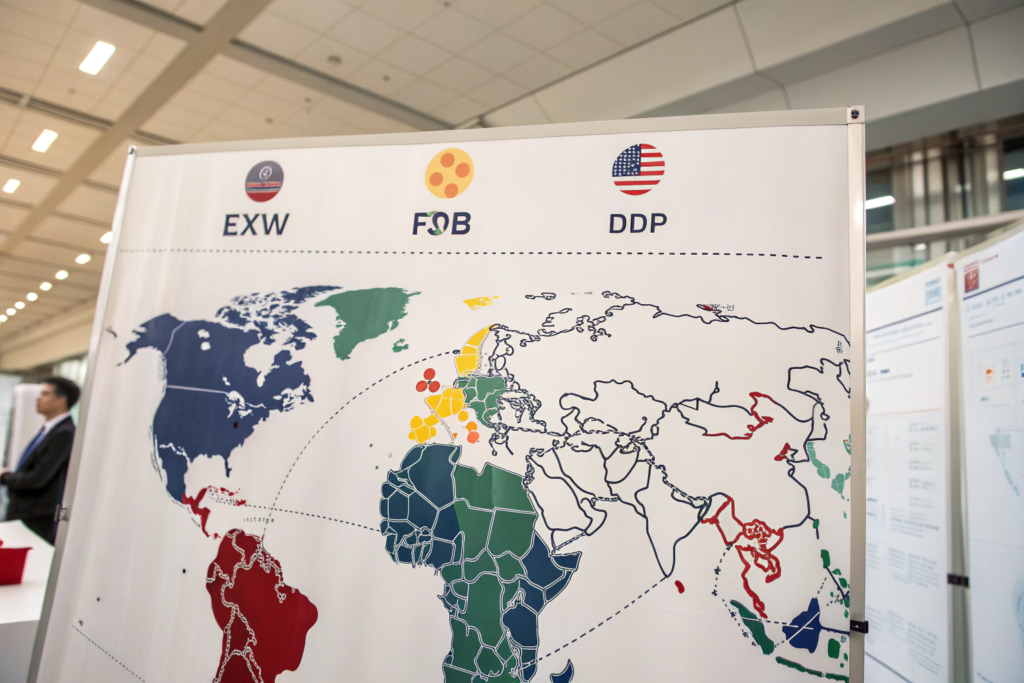
Compare that to EXW (Ex Works), where you're responsible for everything from our factory gate. Or FOB (Free On Board), where we get the fabric onto the ship, and then you take over from there. Under FOB, you're still handling customs clearance on your end, paying duties, and arranging final delivery.
A US client came to us in 2023 frustrated with their FOB arrangements. They were spending hours every week coordinating with freight forwarders, customs brokers, and trucking companies. They had no visibility into their landed costs until after the shipment arrived. We switched them to DDP, and their logistics team got back 10 hours a week. The cost per shipment actually went down because we consolidated their volume with other US-bound orders.
Why Do Most Buyers Start with FOB and Then Switch to DDP?
This is a pattern I've seen repeat over and over. New buyers start with FOB because it's what they know. Someone told them it's the standard. They think they're saving money by controlling the shipping themselves.
Then reality hits.
Their freight forwarder quotes them one price, but the final bill comes in 20% higher because of container detention fees or chassis charges they didn't anticipate. Their customs broker charges a separate fee for filing paperwork. Their trucking company charges a delivery appointment fee. And when something goes wrong—a customs hold, a missing document, a port strike—they're the one making phone calls at 3 AM their time trying to fix it.
Then they discover DDP.
One of our European clients switched from FOB to DDP after a shipment got held up at Rotterdam for three weeks because of a paperwork error. Their freight forwarder blamed the supplier. The supplier blamed the freight forwarder. No one took responsibility. Under DDP, we own the entire process. When something goes wrong, we fix it. We have relationships with carriers, customs brokers, and trucking companies that we've built over 20 years. We can solve problems faster than a buyer who's managing this once a quarter.
(Here's my observation: FOB makes sense when you're shipping massive volumes and have a dedicated logistics team. For most brands buying fabric in container quantities or less, DDP is simpler, more predictable, and often cheaper when you factor in all the hidden costs.)
What's the Real Cost Difference Between DDP and Other Terms?
People assume DDP is more expensive. And on paper, the line item for shipping looks higher. But when you add everything up, DDP is often the better deal.
Let me give you a real example from a US client we work with. They were paying $0.85 per meter for fabric on FOB terms. Shipping cost them about $0.40 per meter when you added ocean freight, trucking, and port fees. Customs duties at 16% added another $0.20. Customs broker fees, ISF filing, and other administrative costs added about $0.05. Their landed cost was around $1.50 per meter.
Under DDP, we quoted them $1.45 per meter delivered. Same fabric. Same quantity. The price was lower because we consolidated their shipment with other orders going to the same region, negotiated better freight rates, and managed the customs clearance without charging them for every separate service. They saved 5% on landed cost and eliminated the administrative headache.
A buyer from a Canadian outdoor brand told me she switched to DDP after calculating the hidden costs of her FOB shipments. She was spending an average of 12 hours per shipment on coordination, tracking, and problem-solving. At her hourly rate, that was more than the shipping cost itself. Now she spends 30 minutes per shipment. She reviews our quote, approves it, and waits for the fabric to arrive.
How Does DDP Simplify Customs Clearance for Fabric Imports?
Customs clearance is where most international buyers get nervous. And honestly, with good reason. Every country has different rules. Tariff classifications change. Documentation requirements shift. One mistake can mean days of delays, storage fees, and frustrated customers waiting for their product.
What Documentation Does DDP Handle for You?
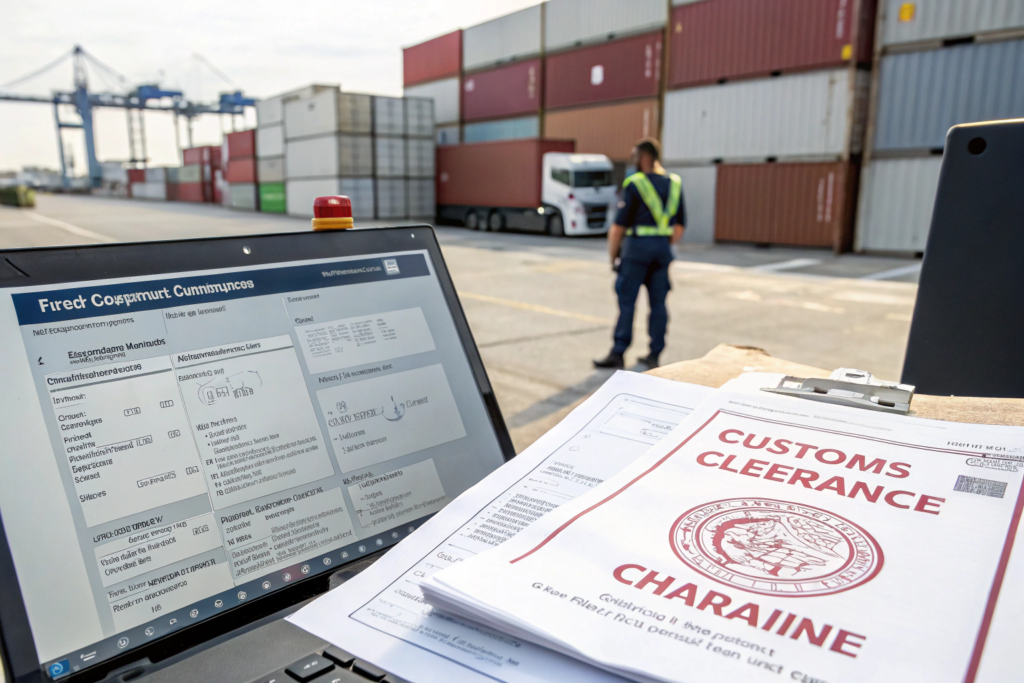
When we ship DDP, we handle the entire documentation package. This isn't just about filling out forms. It's about knowing exactly what each customs authority needs to see.
For fabric shipments, the key documents include:
- Commercial invoice with correct HTS codes
- Packing list with detailed weight and measurement information
- Bill of lading or airway bill
- Certificate of origin (for duty preference programs like USMCA or EU trade agreements)
- Any required certifications (OEKO-TEX, GOTS, etc.)
- Importer security filing (ISF) for US shipments
We have a dedicated logistics team that prepares these documents daily. We know that a missing ISF filing for a US-bound shipment triggers a $5,000 penalty. We know that the wrong HTS code can mean paying the wrong duty rate or getting your shipment held for inspection.
A Russian client learned this the hard way before switching to DDP with us. They had classified their polyester-spandex blend as a standard woven fabric when it should have been classified as a knit with an elastomer content over 5%. The duty rate difference was 8%. Their customs broker caught the error after the shipment arrived, but by then the goods were already held. They paid storage fees for 10 days while the paperwork was corrected. Now we handle their classification. That mistake hasn't happened again.
How Do Tariff Costs Get Managed Under DDP?
This is a huge concern for US buyers right now, with tariff costs on Chinese goods fluctuating and creating uncertainty. Under DDP, we quote you a delivered price that includes all applicable duties. You know your cost before the fabric is even woven.
What if tariffs change after we quote? We build flexibility into our pricing. For large orders, we often quote a window of validity—say, 30 days. If tariffs increase during that window, we discuss it with you. If tariffs decrease, we pass the savings along.
One of our US clients ships about 20 containers of fabric per year. Before switching to DDP, they were constantly surprised by tariff costs. A shipment that cost $5,000 in duties one quarter might cost $8,000 the next because of a policy change. Now we quote them a delivered price per unit that includes duties. They can price their collections confidently, knowing their landed cost is fixed.
We also help clients navigate tariff engineering. This is the practice of adjusting product specifications to qualify for lower duty rates. For example, a fabric that is 100% polyester might have a duty rate of 16%, but a fabric that is 85% polyester and 15% spandex might fall under a different classification with a lower rate. Our team understands these nuances and can recommend spec adjustments that reduce your duty burden without compromising quality.
What Happens When Customs Questions a Shipment?
When a customs authority flags a shipment, someone has to respond. Under FOB or EXW, that someone is you. Under DDP, that someone is us.
We have relationships with customs brokers in every major market. When a shipment gets held for inspection, we have boots on the ground to handle it. We provide additional documentation. We answer questions about the product. We work with the carrier to minimize storage fees.
A few years ago, we had a shipment to Germany that got flagged for a random inspection. The German customs authority wanted to verify that the fabric was actually GOTS-certified organic cotton. Our team had the certification documents ready within hours. We also provided photos of the production batch showing the certified yarn being used. The inspection took two days instead of two weeks. The client never even knew there was a delay until we told them.
That's the value of DDP. We absorb the complexity. You focus on your business.
What Are the Timeline and Cost Predictability Benefits of DDP?
One of the biggest frustrations I hear from clients is unpredictability. When is my shipment actually going to arrive? What's it going to cost? Why did I get a bill from the freight forwarder two months after the shipment?
DDP solves these problems by making shipping predictable.
How Does DDP Eliminate Hidden Fees?
Hidden fees are the silent killer of margins. Under FOB, you might get a freight quote for $5,000, but the final bill could be $7,000 or more. Here are some of the fees that show up after the fact:
- Container detention fees (if you don't return the empty container fast enough)
- Demurrage charges (if you don't pick up the container quickly)
- Chassis fees (for the trailer that moves the container)
- Documentation fees
- ISF filing fees
- Customs broker fees
- Delivery appointment fees
- Lift gate fees
- Residential delivery fees
Under DDP, we quote you one price. That's the price. No surprises.
A client from Texas told me about an FOB shipment where they received separate invoices from three different companies after the fabric arrived. The freight forwarder billed them. The customs broker billed them. The trucking company billed them. Each had their own payment terms and their own customer service number. They spent hours reconciling invoices and chasing down discrepancies.
Now with DDP from us, they get one invoice. They pay it. The fabric shows up. Their accounting team loves it.
What Is the Impact of Consolidated Shipping on Cost?
When you ship DDP with a supplier who manages volume, you benefit from economies of scale. We ship fabric every day. We have contracts with carriers that give us rates smaller buyers can't access on their own.
We consolidate our clients' shipments. If we have three clients shipping fabric to the same US port in the same week, we combine their orders into fewer containers. The freight cost is spread across more volume. Everyone pays less.
A European client was paying $3,200 for a 20-foot container of fabric under their own FOB arrangement. When we consolidated their order with another client's shipment, their share of the container cost dropped to $2,100. That's a 34% savings, just from consolidation.
We also use our volume to negotiate better terms. We don't pay premium rates for last-minute bookings. We have dedicated capacity on major shipping lines. When the market gets tight—and it always does during peak seasons like August-October—our clients still get their containers loaded.
How Does DDP Help with Production Planning?
Predictable shipping means predictable production planning. When you know exactly when fabric will arrive, you can schedule cutting, sewing, and finishing with confidence.
We had a client in the UK who was constantly running rush orders because their fabric shipments were unpredictable. Their FOB supplier would give them an estimated delivery date, but it was always off by weeks. They kept safety stock that tied up cash and warehouse space.
After switching to DDP with us, their delivery dates became reliable. We quote them a date, we hit it. Now they order fabric just in time for their production runs. Their inventory holding costs dropped by 25% in the first year.
We also help them plan around the Chinese New Year shutdown. For clients on DDP, we recommend completing pre-production 6 weeks before the holiday. We book shipping capacity in advance. Their fabric arrives on schedule, even when the factories are closed.
How Do You Choose a DDP Partner You Can Trust?
DDP is a powerful tool, but it only works if you choose the right partner. You're giving that supplier control over your logistics. You need to trust that they'll handle it properly.

What Should You Ask Before Agreeing to DDP?
Before you commit to a DDP arrangement, ask these questions:
"What is your experience shipping to my country?" A supplier who regularly ships to your market knows the customs requirements, the carrier options, and the potential pitfalls. At Shanghai Fumao, we ship to over 100 countries. We know that shipments to Brazil require different documentation than shipments to Canada. We know that air freight to Australia has different weight restrictions than ocean freight.
"What carriers do you use?" A good DDP partner has relationships with multiple carriers. They don't just default to one option. They can choose the right carrier for your timeline and budget.
"What happens if a shipment is delayed?" Ask about their contingency plans. Do they have backup carriers? Can they expedite if needed? Will they absorb some of the cost if the delay is their fault?
"Can you provide references from other DDP clients?" Talk to other buyers who use their DDP service. Ask about the experience. Were there hidden fees? Did shipments arrive on time? How were problems handled?
A Canadian buyer who found us through Google research asked for references from three US clients using our DDP service. We provided them. She called all three. Two of them had been with us for over five years. That was enough for her. She placed her first DDP order with us in 2023 and has shipped 12 containers with us since.
What Should You Look for in a DDP Provider's Infrastructure?
DDP requires more than just a shipping contract. It requires infrastructure.
We have dedicated logistics staff who manage nothing but shipping. They're not production planners who occasionally book freight. Their entire job is getting fabric from our warehouse to your door efficiently and cost-effectively.
We have relationships with customs brokers in every major market. We don't outsource this to a third-party logistics company that might be handling hundreds of other clients. We have designated brokers who know our products and our documentation.
We have systems for tracking and reporting. When we ship DDP, we provide tracking information at every stage. You know when the container loads, when it sails, when it arrives, and when it's scheduled for delivery.
A US streetwear brand told me they switched to us because our tracking system was better than their previous DDP provider. Their old supplier would give them a tracking number but no visibility into what was happening. They'd wait weeks with no updates. We provide updates at every milestone. They can see exactly where their fabric is without calling or emailing anyone.
Why Does Communication Matter More Under DDP?
Under DDP, we're responsible for your supply chain. That means we need to communicate proactively about anything that might affect delivery.
We tell clients when Chinese New Year is approaching and recommend cutoff dates. We tell them when peak shipping season (March-May and August-October) might add 1-2 weeks to timelines. We tell them when port congestion is affecting specific routes.
We had a client in New York who was planning a major collection launch. We knew that labor disputes at the Port of New York and New Jersey were causing delays. We advised them to ship two weeks earlier than planned. They listened. Their container arrived before the labor action escalated. Other brands who didn't get that advice were stuck waiting.
That's the value of a DDP partner who communicates. We're not just moving boxes. We're managing your business risk.
Conclusion
Shipping fabric from China doesn't have to be complicated. DDP transforms a complex, unpredictable process into a simple, reliable transaction. You get one price, one invoice, and one point of contact. We handle everything from our factory gate to your warehouse door.
The benefits are clear. You eliminate hidden fees and surprise costs. You get predictable timelines that support just-in-time production. You avoid the headache of managing customs clearance, duty payments, and carrier coordination. And you gain a partner who has a vested interest in getting your fabric to you on time and on budget.
At Shanghai Fumao, we've been shipping fabric to the US, Europe, and beyond for over 20 years. We've built our DDP service around the needs of our clients—fashion brands, clothing manufacturers, and fabric buyers who want simplicity and reliability. Our logistics team manages every detail. Our relationships with carriers and customs brokers mean we solve problems faster. And our commitment to transparency means you always know where your shipment stands.
If you're tired of shipping surprises eating into your margins, it's time to consider DDP. Let's talk about how we can make your next shipment the easiest one you've ever managed.
Contact our Business Director, Elaine, to discuss DDP shipping for your fabric orders.
Email: elaine@fumaoclothing.com