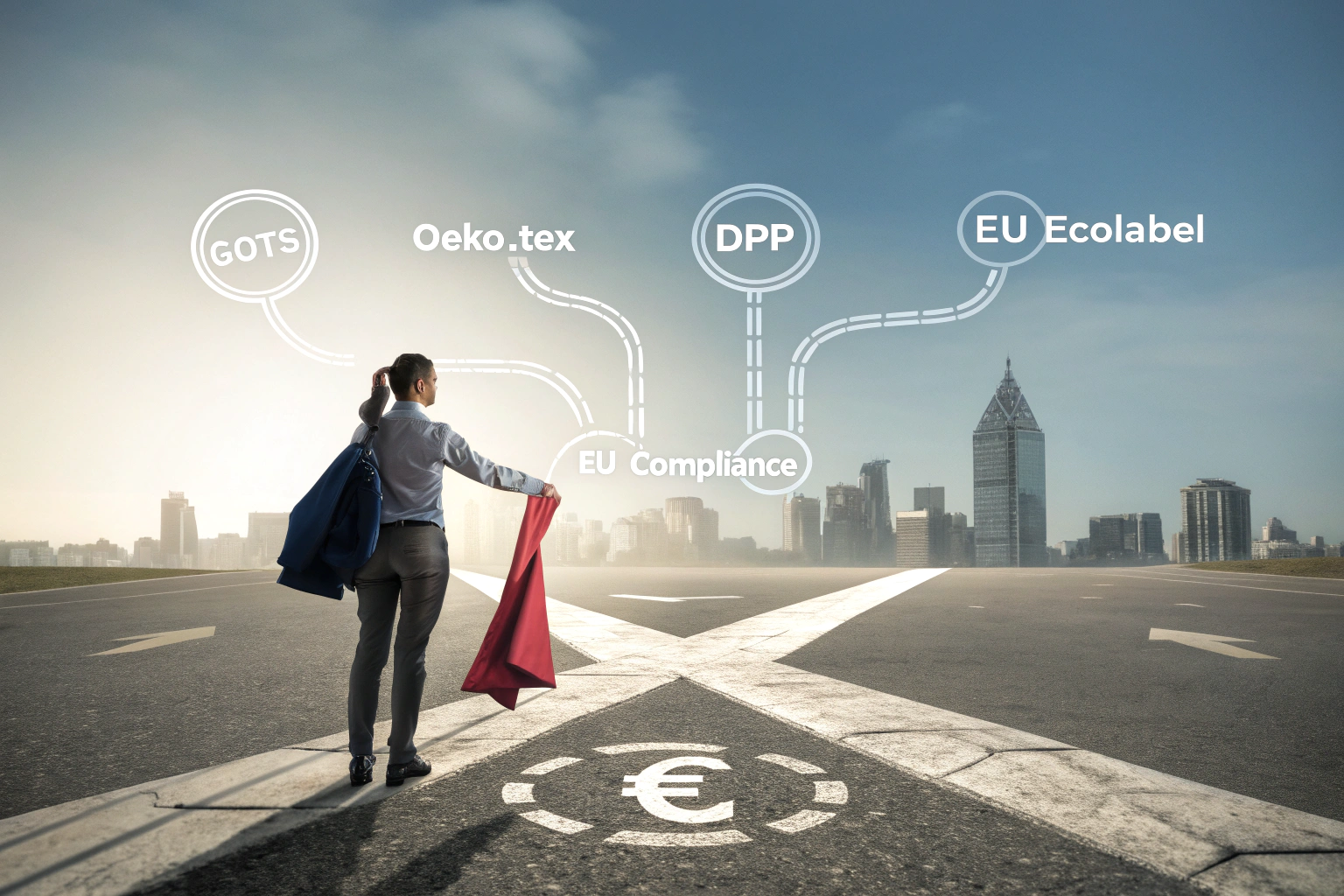
You've spent months perfecting your sustainable collection—organic cotton, recycled materials, low-impact dyes. But when you try to sell it in the EU market, retailers ask for certifications you've never heard of. Suddenly, your "eco-friendly" claim feels hollow, and market access is blocked. You're not alone. The EU's green regulations are evolving faster than ever, turning certifications from marketing badges into legal requirements. Which ones actually matter now, and which are coming next?
The latest EU eco-certifications for textiles extend far beyond material content to cover product durability, recyclability, chemical safety, and corporate due diligence. While established standards like GOTS and Oeko-Tex remain crucial, new EU-driven regulations like the Digital Product Passport (DPP), ESPR (Eco-design for Sustainable Products Regulation), and the EU Strategy for Sustainable and Circular Textiles are setting mandatory compliance frameworks. Understanding this shift from voluntary certification to regulated compliance is essential for market access.
As a fabric supplier deeply embedded in the EU export chain, I've watched clients transform from chasing certificates to building full traceability systems. The game has changed. Last quarter alone, three of our major European brand partners mandated that all new fabrics come with pre-registered DPP data fields. This isn't future talk—it's current business. Let me guide you through the certification landscape that will define the next decade of textile trade.
Which Foundational Certifications Are Now Non-Negotiable?
Before diving into the "latest," you must have the fundamentals locked down. These are the baseline expectations for any serious sustainable textile business targeting the EU. They address the core pillars of organic content, chemical safety, and recycled material verification.
The holy trinity remains: GOTS (Global Organic Textile Standard) for organic fibers, Oeko-Tex Standard 100 for chemical safety, and GRS (Global Recycled Standard) for recycled content. However, their application has deepened. It's no longer enough to have one certified final product; brands now expect these certifications to cover the entire supply chain—from the spinner to the dyer to the finisher. The 2024 update to Oeko-Tex STeP (for sustainable production sites) has seen a 40% increase in audit requests from our EU clients, as they need proof of ethical manufacturing beyond just product safety.
For example, a German children's wear brand we work with now requires not only GOTS-certified organic cotton but also that our dyeing partner holds a valid Oeko-Tex ECO PASSPORT certification for their dyes and chemicals. This level of granularity ensures compliance with the EU's strict REACH SVHC (Substances of Very High Concern) list, which is constantly expanding. In 2023, we had to reformulate a water-repellent finish for a Nordic outerwear brand because a specific PFAS (forever chemical) used fell under a new REACH restriction. Without proactive certification alignment, the entire shipment would have been non-compliant.
Is GOTS 7.0 the New Benchmark for Organic?
Absolutely. The recently released GOTS Version 7.0, effective March 2024, has significantly raised the bar. Key changes that affect fabric suppliers and brands include:
- Stricter Social Compliance: Enhanced requirements for living wages, gender equality, and prevention of harassment.
- Climate Action: Mandatory greenhouse gas emission tracking and reduction targets for certified entities.
- Input Chemical Assessment: All process chemicals must now be assessed for environmental and toxicological criteria, not just listed.
- Material Composition: New rules for material combinations and clearer labeling.
For a French linen brand sourcing from us, the new social criteria meant we had to provide audited proof of our workers' wage structures and working hours. While demanding, this pre-empts compliance with the incoming EU Corporate Sustainability Due Diligence Directive (CSDDD). GOTS 7.0 isn't just an organic standard anymore; it's a holistic sustainability framework. Resources like the official GOTS implementation guide are essential reading.
Why is GRS 4.0 Critical for Recycled Claims?
With the EU pushing for mandatory recycled content in textiles (as part of ESPR), the GRS 4.0 is your shield against greenwashing accusations. The key advancement is its strengthened Chain of Custody (CoC) and alignment with the EU's PEF (Product Environmental Footprint) methodology. It now requires more robust mass balance calculations and transparent transaction documentation.
For you, this means any claim of "30% recycled polyester" must be backed by a GRS Transaction Certificate that can be traced back to the recycler. We recently supplied rPET fleece to a Dutch sportswear brand. Their legal team required our GRS 4.0 certificates and a detailed mass flow chart before they could approve the "Made with Recycled Materials" hangtag for the EU market. This level of scrutiny is becoming the norm. Industry platforms like Textile Exchange's Learning Hub offer vital updates on these standards.
What New EU Regulations Are Becoming De Facto Certifications?
The EU is moving from encouraging voluntary standards to enforcing mandatory regulations. These legally binding frameworks will function as the ultimate "certification"—non-compliance means your product cannot be sold in the EU. They focus on the entire product lifecycle.
The three most impactful upcoming regulations are:
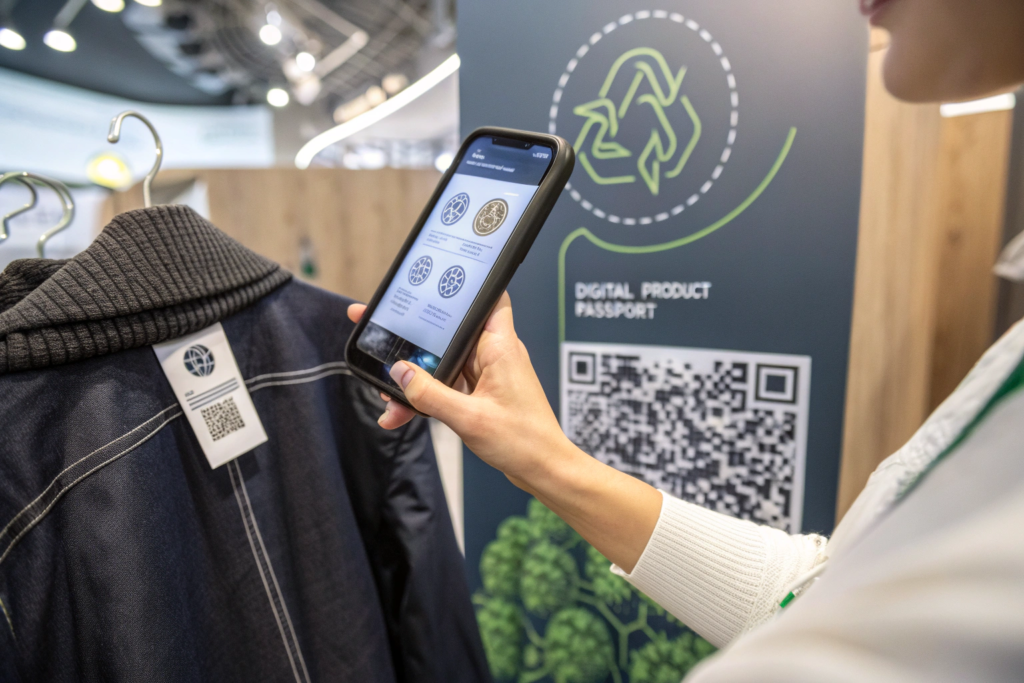
- Digital Product Passport (DPP): A mandatory QR code/ RFID tag on every textile product sold in the EU, containing data on composition, durability, recyclability, and supply chain actors.
- Eco-design for Sustainable Products Regulation (ESPR): Will set binding performance standards for textiles on durability, fiber-to-fiber recyclability, recycled content, and the presence of harmful substances.
- EU Strategy for Sustainable and Circular Textiles: A comprehensive policy forcing brands to take responsibility for textile waste (Extended Producer Responsibility - EPR) and curb microplastic pollution.
For fabric suppliers, this means our data management systems are as important as our looms. We are now tagging our fabric rolls with unique identifiers that feed into our clients' DPP systems. A Spanish fast-fashion group has already started trials, requiring us to provide data fields like "minimum recycled content %," "dye class toxicity rating," and "disassembly instructions" for each fabric SKU.
How Should You Prepare for the Digital Product Passport (DPP)?
Start mapping your supply chain data now. The DPP won't ask for a certificate PDF; it will require structured, machine-readable data points. You need to know:
- Full Material Breakdown: Not just "100% cotton," but the specific cotton variety and its origin country.
- Chemical Inventory: All dyes, finishes, and auxiliaries used, with their compliance status against restricted substance lists (RSL).
- Environmental Footprint Data: Water usage, carbon footprint (from credible LCAs), and energy consumption from production.
- Supply Chain Actors: Legal names and addresses of all entities from fiber to fabric.
We are investing in blockchain-linked traceability software to automate this data collection. For a Belgian workwear brand, we recently delivered a fabric batch where each roll had a QR code linking to a prototype DPP page showing its recycled nylon content, carbon footprint (from cradle-to-gate), and the Oeko-Tex certification of the dye house. This is the future. Following EU publications on DPP pilot projects is crucial for early insight.
What Does ESPR Mean for Fabric Design and Durability?
ESPR will legally mandate that textiles are "fit for purpose" and long-lasting. This directly targets fast fashion's disposability. For fabric developers, this means:
- Durability Testing Will Be Law: You'll need to provide test reports for colorfastness to washing, light, and rubbing; pilling resistance; seam strength; and dimensional stability—not just to a brand's standard, but to a new EU standard.
- Design for Recyclability: Fabrics made from mono-materials (e.g., 100% polyester, not poly-cotton blends) will be favored, as they are easier to recycle. Zippers, buttons, and even sewing threads will need disassembly considerations.
- Minimum Recycled Content: ESPR is expected to set minimum percentages of recycled fibers in new textile products.
We've already pivoted our R&D. Our new line of "ESPR-ready" fabrics includes a 100% recycled polyester twill with enhanced abrasion resistance and a single-fiber composition cotton velour designed for chemical recycling. Proactive adaptation is key. Communities like the European Sustainable Apparel Coalition are actively discussing ESPR's implications.
Which Emerging Labels Address Carbon and Circularity?
Beyond compliance, new certifications are emerging that address the full environmental footprint and end-of-life, helping brands communicate deeper sustainability stories.
Keep an eye on these:
- The EU Ecolabel: This official EU voluntary label is gaining immense prestige. It has strict criteria covering the entire lifecycle (raw materials, production, distribution, disposal). Achieving it is complex but offers high market recognition.
- Carbon Neutral/Carbon Footprint Certifications (e.g., based on ISO 14067): Brands are increasingly asking for Product Carbon Footprint (PCF) calculations. Certifications verifying carbon neutrality (through reduction and offsetting) are in demand.
- Cradle to Cradle Certified®: This holistic certification assesses material health, product circularity, renewable energy use, water stewardship, and social fairness. It's rigorous but represents the gold standard in circular design.
- Bluesign®: While not new, its importance has surged as a system for approved input chemicals and responsible manufacturing, effectively ensuring compliance with many EU chemical regulations from the start.
In practice, a UK luxury brand recently required us to pursue Cradle to Cradle Certified® Gold level for a new organic silk line. The audit forced us to redesign our dyeing process to use only their positive-list chemicals and to install water recycling loops—a significant investment that future-proofed the product. Similarly, to meet a Scandinavian brand's carbon target, we partnered with a verified carbon offset project for mangrove restoration and now provide a certified carbon-neutral option for our best-selling linen fabric.
How Do You Verify True Carbon Neutrality in Textiles?
Be wary of vague "carbon neutral" claims. True verification requires:
- A Verified PCF: A lifecycle assessment following ISO 14067 or similar, verified by a third party.
- Reduction Strategy: Evidence of active emissions reductions in the supply chain (e.g., using renewable energy, optimizing logistics).
- Credible Offsetting: Carbon credits from certified projects (like VCS or Gold Standard), not just any tree-planting scheme.
We work with a specialist consultancy to calculate the PCF for our key fabric lines. For instance, our BAMsilK (bamboo silk) has a 35% lower PCF than conventional viscose, a fact we can now document and certify. This data is invaluable for brands facing their own Scope 3 emissions reporting under the EU's CSRD (Corporate Sustainability Reporting Directive).
What Certifications Support "Circular" and "Recyclable" Claims?
"Circular" is the new buzzword, but substantiating it is tough. Look for:
- Recyclability Certifications: Schemes like RecycEl™ by QIMA or Texaid's recyclability assessments test and certify if a garment can be effectively sorted and recycled in existing systems.
- Material-Specific Recycling Certifications: For recycled materials, GRS is key. For chemical recycling, new standards are emerging.
- Take-Back & EPR Compliance: While not a fabric cert, brands will need proof of participation in EU member state EPR schemes. Your role as a supplier may be to provide material composition data to facilitate recycling.
We are collaborating with a French recycling innovator on a project where our mono-material polyester fabrics are designed to be chemically depolymerized. The goal is to achieve a third-party "Designed for Chemical Recycling" certification, creating a powerful market differentiator.
How to Build a Future-Proof Certification Strategy?
Navigating this complex landscape requires a strategic, phased approach. Don't try to get every certificate at once. Instead, align your efforts with your business goals and customer demands.
Step 1: Compliance First. Map your products against mandatory EU regulations: REACH, POPs, and soon, ESPR and DPP. This is non-negotiable risk management.
Step 2: Core Credibility. Obtain the foundational certificates relevant to your main materials and processes (GOTS for organics, GRS for recycled, Oeko-Tex 100 for safety).
Step 3: Strategic Differentiation. Choose 1-2 "aspirational" certifications that tell your unique story—like Cradle to Cradle for circular innovation or a verified Carbon Neutral claim for climate leadership.
Step 4: Integrate Digitally. Invest in systems to collect and manage the data required for DPP. This may be your most important long-term investment.
At Shanghai Fumao, we've created a "Certification Roadmap" service for our key clients. For a new client from Denmark, we analyzed their target market and product line, recommending they prioritize GRS 4.0 and Oeko-Tex STeP in Year 1, then pilot the EU Ecolabel for a flagship product in Year 2, while simultaneously building their DPP data template. This phased, investment-conscious plan was welcomed.
How to Audit Your Supplier's Certifications Effectively?
As a brand, your responsibility is to verify, not just collect certificates. Effective auditing involves:
- Check Validity: Ensure certificates are current and from accredited bodies.
- Verify Scope: Confirm the certificate covers the exact product and processes you are buying. A factory's GOTS certificate might not cover the specific dyeing unit they use for your order.
- Request Transaction Certificates (TCs): For GRS or RCS, the TC is proof that your specific order contains certified content.
- Conduct On-site/ Virtual Audits: Use questionnaires or audits aligned with standards like Higg FEM to assess environmental practices beyond paper certificates.
We encourage this. We provide clients with direct access to our certification portal and have conducted virtual factory tours focused on chemical management and wastewater treatment to build trust beyond paperwork.
When Should You Consider Partnering with a Specialist?
The complexity and cost of certification are real. Consider partnering with a sustainability consultancy or a supplier with in-house expertise when:
- You are entering a new, regulated market (like the EU).
- You are developing innovative materials with unclear certification pathways.
- The cost and time of navigating certifications internally are hindering product development.
Our in-house sustainability team at Shanghai Fumao was established precisely for this reason. We don't just sell certified fabrics; we guide clients through the labyrinth of compliance, from selecting the right standard to preparing for audit. This turns a cost center into a value-added partnership.
Conclusion
The world of EU eco-certifications has evolved from a marketing advantage to a complex ecosystem of voluntary standards and binding regulations. The future belongs to brands and suppliers who see compliance not as a checklist, but as an integrated part of product design, data management, and supply chain transparency. The latest wave—spearheaded by DPP and ESPR—is fundamentally changing the game, making digital traceability and lifecycle responsibility the new norms.
Staying ahead requires continuous learning, strategic investment, and choosing supply chain partners who are on the same journey. Your ability to provide verified, data-rich sustainability claims will soon be the primary key to unlocking the EU market.
If you feel overwhelmed by the evolving certification landscape and need a partner who can provide not just compliant fabrics but also a clear path through the regulatory maze, let's connect. At Shanghai Fumao, we combine certified material production with active regulatory monitoring and data management systems to future-proof your supply chain. Contact our Business Director, Elaine, to discuss how we can align your next collection with the latest EU requirements.
You can contact Elaine at: elaine@fumaoclothing.com.