I’ve been on both sides of this table. For 20 years in Keqiao, I’ve sat with buyers who showed me samples from other suppliers, and I’ve had to break the news: what you were promised isn’t what you’re going to get. Last year, a buyer from Italy walked into my office with a “silk” sample. She paid $18 per meter. I held it up to the light, burned a thread in my ashtray, and watched it melt into a hard plastic bead. It was 100% polyester. She had been paying silk prices for synthetic fabric for two years.
The fabric industry has its share of shortcuts. I hate admitting that, but it’s true. When a sales rep promises you something that sounds too good to be true, it usually is. I’ve watched brands lose thousands—sometimes tens of thousands—because they trusted a rep who told them what they wanted to hear.
This isn’t about bashing my industry. It’s about protecting you. I’m going to walk you through the most common lies I hear from other suppliers, and more importantly, how to spot them before you place that order. These are tricks I’ve seen used on my own clients before they came to us.
What’s the Lie About Fabric Composition and How Do I Verify It?
This is the oldest trick. A rep tells you the fabric is “100% cotton” but it’s actually a cotton-polyester blend. Or they call it “silk” when it’s really high-quality polyester satin. I had a client from Germany who was selling “bamboo silk” sheets. The rep told her it was 100% bamboo. When she sent me a sample, I burned it. It smelled like burning plastic. The fabric was actually 70% polyester and 30% viscose. She had to recall an entire container.
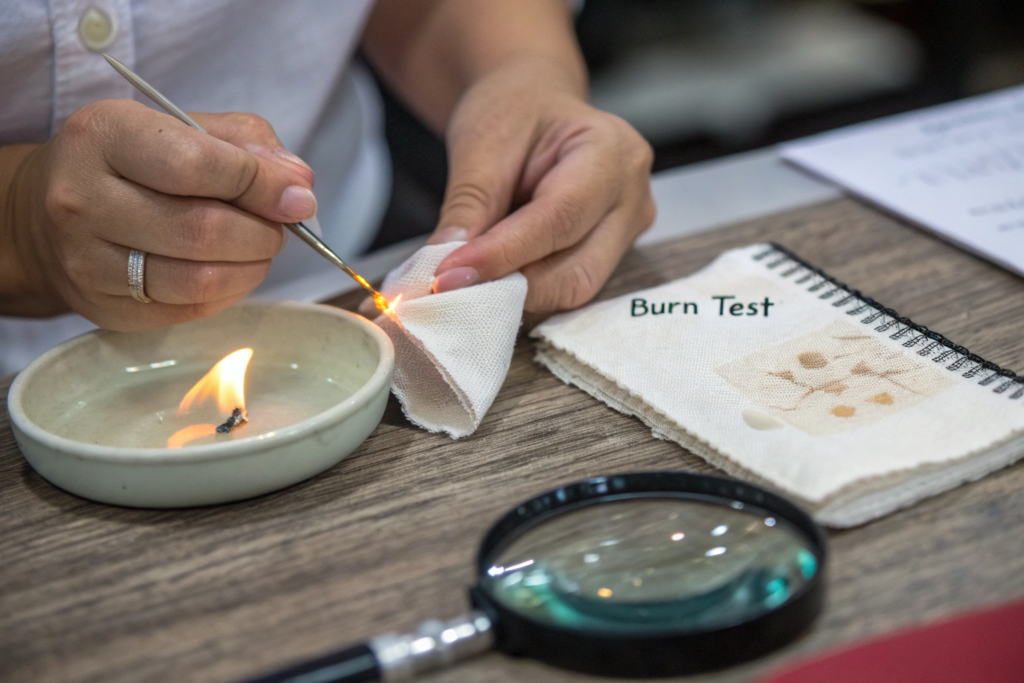
How Does a Simple Burn Test Reveal the Truth?
The burn test is my first tool. I’ve been doing this for 20 years and it still works. You don’t need a lab. You just need a lighter and a pair of tweezers.
I did this in front of a client from Australia last year. He brought me a sample of “linen” from another supplier. I pulled a few threads, held the lighter to them. The flame was steady and the fabric kept burning after I removed the lighter. The smoke was thick and black. The ash was a hard black bead. That’s polyester. Real linen burns quickly, smells like burning paper, and leaves a soft gray ash.
Here’s what I tell every buyer who visits my office. Natural fibers burn differently. Cotton smells like burning paper. Wool smells like burning hair. Silk smells like burning feathers. Synthetics melt and form hard beads. If a rep tells you a fabric is natural, do a burn test on a small thread. If they won’t let you, that’s your answer.
For a more detailed guide, there’s a good resource on how to identify fabric composition using burn and chemical tests . It covers the specific flame characteristics for each fiber type. I keep a laminated card in my office with this information.
What Should You Ask About Yarn Count and Fabric Weight?
Another common lie is about the quality of the yarn. A rep might tell you a fabric is made from “fine” yarn, but it’s actually a coarser yarn that will pill after a few washes. I had a client from the UK who ordered what she thought was a premium 80/1 cotton poplin. When we tested it in our lab, the yarn count was actually 40/1. The supplier had substituted cheaper yarns after the sample approval.
Now I tell all my clients to ask for certified test reports. We have a CNAS-accredited lab. When we produce a fabric, we can give you a report that shows the actual yarn count, the fabric weight, the shrinkage percentage, and the colorfastness results. If a supplier can’t provide these reports, ask yourself why.
I also recommend asking for a sealed sample. When you approve a sample, ask the supplier to seal it with both your signatures on the back. When the bulk production arrives, compare it to the sealed sample. I’ve seen suppliers send beautiful samples and then ship bulk goods that are 10% lighter in weight. A sealed sample gives you legal protection if the goods don’t match.
If you’re buying organic or sustainable fabrics, always ask for transaction certificates. In 2022, a client from Canada showed me a GOTS certificate from a supplier. I looked it up on the GOTS database. The certificate was valid, but the scope didn’t include weaving. The supplier was a trading company passing off non-certified fabric as certified. The client canceled the order and came to us.
How Do Sales Reps Lie About Production Capacity and Lead Times?
This one hurts me the most because it damages trust in the whole industry. A rep tells you they can deliver in 20 days, knowing full well their factory is already booked for 40 days. They take your deposit, and then you start getting excuses. “The dyeing machine broke.” “The fabric got stuck at customs.” The real story is that they never had the capacity to begin with.

What Questions Expose a Supplier’s Real Production Capacity?
I’ve learned to ask specific questions that most sales reps aren’t prepared to answer. First, I ask: “What’s your current load percentage?” A good supplier knows this number. In our factory, I can tell you that we’re running at 85% capacity in peak season and 60% in slow season. If a rep hesitates or gives a vague answer, they probably don’t know or they’re hiding something.
Second, I ask: “Which machines will run my order?” If a supplier has their own factory, they can tell you which looms or knitting machines they’ll use. In 2023, a client from the US asked me this. I showed him photos of the specific air-jet looms we reserved for his order. He later told me that three other suppliers couldn’t answer the question. He placed his order with us.
Third, I ask: “What happens if you miss the delivery date?” A reputable supplier will have a clear answer. We offer a discount for late deliveries. It’s in our contract. If a rep tells you “don’t worry, we’ve never missed a deadline,” that’s a red flag. Every factory has delays. The question is how they handle them.
If you want to verify a factory’s real capacity, there’s a useful forum discussion on how to check factory load and production schedules before ordering . Experienced buyers share their techniques for getting honest answers.
How Can You Verify a Supplier’s Peak Season Scheduling?
Peak seasons in China are predictable. March to May and August to October. A good supplier will tell you that your order will take longer during these months. A bad supplier will promise the same lead time year-round.
I remember a client from Spain who came to me in April 2023. She had placed an order with another supplier in March. The rep promised her 25 days. By mid-April, the supplier hadn’t even started production. They kept saying “next week.” When she finally demanded photos, they admitted the order hadn’t gone into the dyeing queue. She lost six weeks.
Now I tell clients to ask for a written production schedule with dates for each step: yarn procurement, knitting or weaving, dyeing, finishing, inspection, and packing. We provide this for every order. It’s not a guarantee, but it’s a roadmap. If a rep can’t or won’t give you a detailed schedule, they don’t have control over their production.
I also recommend asking for photos or videos of your fabric in production. We send clients weekly updates with photos of their yarn, their fabric on the looms, their fabric in the dye bath, and their finished rolls. If a supplier can’t do this, they’re likely not in control of the process. They might be outsourcing to other factories without telling you.
What Lies Do Reps Tell About Quality Control and Testing?
This is where I see the most dangerous lies. A rep tells you their fabric meets international standards, but they’ve never tested it. Or they say they have a lab, but it’s just a room with a lightbox and a pair of scissors. I had a client from Sweden who was selling baby clothes made from “certified” fabric. When her products were tested by a European retailer, they failed for lead content. The supplier had never done any testing.
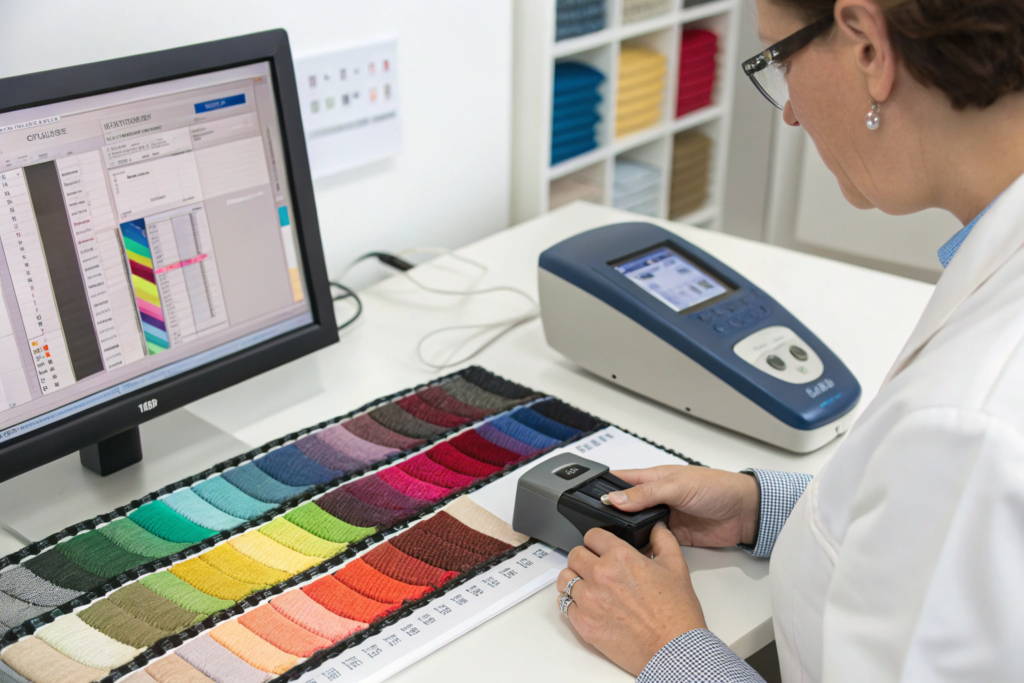
What Does a Real Quality Control Process Look Like?
Real quality control starts before production begins. In our factory, we test incoming yarns for tensile strength, evenness, and color. If the yarn fails, we send it back. A rep who doesn’t control their raw materials can’t control the final product.
In 2023, a client from the US ordered a large run of stretch denim. We tested the spandex yarn before we started weaving. Our tensile test showed that the yarn had inconsistent elasticity. We rejected the batch and sourced new spandex. The process added three days, but it saved us from weaving 10,000 meters of defective fabric.
During production, real QC happens on the machine. We use online inspection systems on our looms. If the weft density drops below the set standard, the machine stops automatically. If a rep tells you they do “100% inspection,” ask how. A human can’t inspect 100% of a running fabric. They’re looking at the surface. Real 100% inspection requires automated systems.
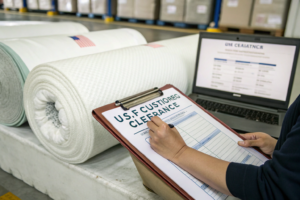
After production, we test every batch in our CNAS-accredited lab. We test for shrinkage, colorfastness to washing and light, pilling, tensile strength, and restricted substances. We provide a test report with every shipment. If a supplier says they have “in-house testing” but can’t show you a lab, visit it. If you can’t visit, ask for photos and a list of their testing equipment.
For a detailed breakdown of textile testing standards, there’s a helpful guide on what tests are required for different fabric applications . It explains the difference between AATCC, ISO, and ASTM standards.
How Do You Verify Certifications Like GOTS or OEKO-TEX?
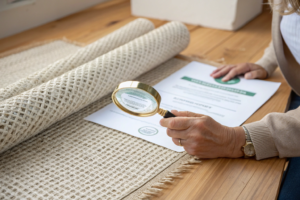
This is critical. A rep might show you a certificate, but you need to verify it. I’ve seen certificates that were expired, certificates that didn’t cover the actual production process, and certificates that were completely fake.
In 2022, a client from Australia sent me a GOTS certificate from a supplier she was considering. I went to the GOTS website and searched for the certificate number. It didn’t exist. I searched for the company name. Nothing. I called the client and told her. She later found out the supplier had photoshopped a certificate from another company. She almost lost a $200,000 order with a major retailer.
Here’s what I recommend. First, always verify certificates on the official database. For GOTS, it’s the public database on their website. For OEKO-TEX, it’s their online directory. If a certificate isn’t listed, it’s not valid.
Second, check the scope of the certificate. A GOTS certificate might cover only spinning, not weaving or dyeing. If your supplier claims to have GOTS fabric, their certificate must cover the actual processes they’re doing. If they’re a trading company, they need a certificate for their own operations plus certificates from all their subcontractors.
Third, ask for transaction certificates for past orders. A TC proves that a specific quantity of certified goods moved from one certified operator to another. If a supplier can’t produce TCs for similar products, they’re likely not actually producing certified goods.
For a practical guide on certification verification, there’s a useful resource from the textile sourcing community on how to validate sustainability claims . It includes step-by-step instructions for checking certificates.
What Lies Do Reps Tell About Pricing and Hidden Costs?
A rep gives you a low price per meter to win the order. Then the hidden costs start. “The yarn price went up.” “The dye cost is higher because you chose a dark color.” “Shipping has an extra fuel surcharge.” By the time the fabric ships, you’re paying 20% more than the quote.

What Hidden Costs Should You Ask About Upfront?
I’ve developed a list of questions I ask any new supplier before I get a price. I share this list with my clients.
First, ask: “Is this price FOB or EXW?” EXW means you’re responsible for all shipping costs from the factory. FOB means the supplier handles inland freight and export clearance. Many reps quote EXW but buyers assume it’s FOB. The difference can be $0.30 to $0.50 per meter.
Second, ask: “Does this price include testing?” Some suppliers quote a low price and then charge extra for test reports. We include basic testing in our price. If a client needs a full set of CNAS tests, we charge a small fee. But we tell them upfront.
Third, ask: “What’s the surcharge for small batches?” Some suppliers quote a price based on a 10,000-meter order, then when you order 2,000 meters, they add a 30% surcharge. We have a clear pricing structure for different order quantities. If a rep can’t tell you the surcharge upfront, they’ll add it after you’ve committed.
Fourth, ask: “What’s included in the price? Yarn, knitting or weaving, dyeing, finishing, packing, and inland freight?” I’ve seen suppliers quote a price that only covers the weaving. They add dyeing and finishing as “extra costs” after the order is placed.
In 2023, a client from the US came to me after a bad experience. She had received a quote for $4.50 per meter for a printed cotton. She placed the order. Then the supplier told her the printing cost was extra. Then they told her the fabric needed a softener finish, which was extra. Then they told her shipping from the factory to the port was extra. Her final price was $6.80 per meter. She had no leverage because she had already paid a deposit.
Now I tell clients to get everything in writing. Ask for a proforma invoice that lists every line item. Yarn cost, knitting cost, dyeing cost, finishing cost, testing cost, packing cost, inland freight. If a line item is missing, ask why.
How Can You Protect Yourself from Price Increases After the Order?
Price fluctuations are real in the textile industry. Yarn prices can go up 10% in a month. But a good supplier manages this risk. We buy yarn in bulk and hold inventory. That means we can lock in prices for our clients for a certain period.
A bad supplier takes your order, then waits until yarn prices drop before they buy. If prices go up, they come back to you asking for more money. I had a client from the UK who told me about a supplier who asked for a 15% price increase after the order was placed. The client had already sold the finished goods to a retailer. He had to pay the increase or cancel the order and breach his contract.
To protect yourself, ask about price validity. A reputable supplier will tell you how long their price is guaranteed. We guarantee our prices for 30 days from the quote. If you place the order within that window, the price is locked.
Also ask about force majeure clauses. A good contract will specify that price increases are only allowed in extreme circumstances like raw material shortages or government actions. If a rep says “prices might change,” they’re leaving the door open to charge you more later.
For a detailed discussion of fabric pricing pitfalls, there’s a good thread on how to structure contracts to avoid hidden costs . Experienced buyers share their contract templates and negotiation strategies.
Conclusion
I’ve been in this industry for two decades. I’ve watched good suppliers build long-term relationships based on trust. And I’ve watched bad suppliers burn bridges with short-term lies. The difference usually comes down to one thing: transparency.
At Shanghai Fumao , we don’t promise what we can’t deliver. If your timeline is tight, I’ll tell you. If the price needs to be higher for the quality you want, I’ll explain why. If we have a delay, you’ll know about it before your production line stops. This isn’t charity. It’s good business. My clients stay with me for years because they know they can trust what I tell them.
You can protect yourself. Ask the hard questions. Verify the certificates. Test the fabric. Get the production schedule in writing. A good supplier will welcome your questions. A bad supplier will get defensive or give you vague answers.
If you’re tired of dealing with reps who tell you what you want to hear, come to Keqiao. Visit our factory. Watch our QC team test your fabric. Meet the people who actually weave and dye your goods. Or let Elaine guide you through the process from your office.
My business director, Elaine, has been helping buyers navigate this industry for years. She knows the questions to ask and the red flags to spot. She can help you vet suppliers, verify certifications, and build a supply chain you can trust.
Contact Elaine directly: elaine@fumaoclothing.com
Tell her about your sourcing challenges. Let her show you what a transparent partnership looks like.