Struggling to find a fabric that keeps your customers dry from both rain and sweat? You're not alone. The holy grail of outerwear is a material that blocks external water while letting internal moisture vapor escape. It sounds simple, but achieving this balance involves complex chemistry and precise engineering. The wrong choice can lead to clammy, uncomfortable garments and a flood of customer returns.
The best waterproof and breathable fabrics for outerwear are those that combine a durable water-repellent (DWR) finish with a high-performance membrane or coating, such as those using ePTFE (like GORE-TEX), PU, or TPU technologies. The "best" fabric isn't a single name but a system tailored to your specific end-use, balancing key metrics like waterproofness (measured in mmH2O), breathability (measured in g/m²/24hrs), durability, and of course, cost. As a factory owner in Keqiao, I've seen brands succeed by matching the fabric technology to the garment's purpose, not just its marketing claims.
Let's move beyond the brand names and break down what actually makes these fabrics work. We'll explore the core technologies, decode the technical specifications, and show you how to choose and source the right fabric for your next line. Understanding this will save you from costly mistakes and help you build a superior product.
How Do Waterproof Breathable Fabrics Actually Work?
The magic of a waterproof breathable fabric isn't magic at all—it's physics and smart design. Think of it like a very advanced, microscopic sieve. The goal is to create pores small enough to block liquid water (rain) but large enough to allow water vapor (sweat) to pass through. Liquid water molecules are larger and tend to cluster together, while water vapor molecules are tiny and travel alone. The fabric exploits this size difference.
At its core, any waterproof breathable system has two main parts: 1) A membrane or coating that provides the waterproof barrier, and 2) A durable water repellent (DWR) finish on the outer fabric. The DWR is your first line of defense. It causes water to bead up and roll off the surface, preventing the outer fabric from becoming saturated or "wetting out." If the outer fabric gets soaked, breathability plummets because the moisture can't evaporate. The membrane underneath is the final barrier. It's a continuous, micro-porous or hydrophilic film laminated or coated onto the fabric. This is where the real science happens, and the type of membrane determines performance, feel, and price.
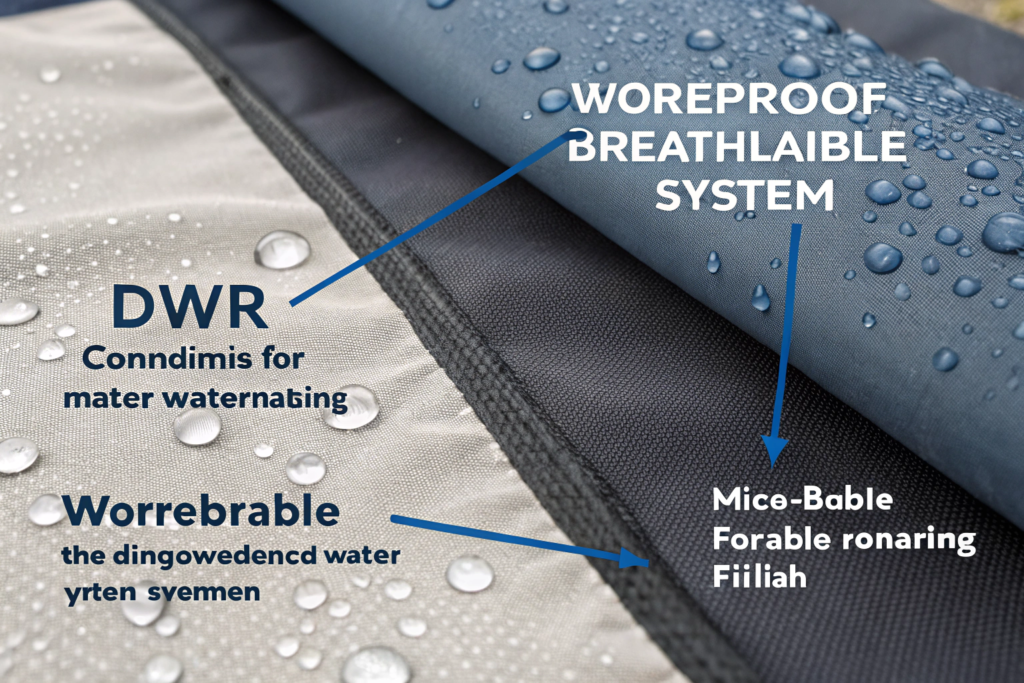
What's the Difference Between a Membrane and a Coating?
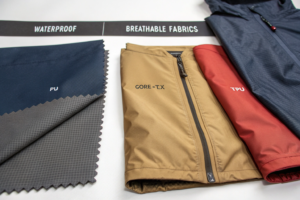
This is a fundamental sourcing question. Membranes (like ePTFE or thin PU films) are typically laminated to the face fabric. They are engineered sheets with billions of microscopic pores per square inch. They offer exceptional, consistent breathability and waterproofness but at a higher cost. Coatings, usually made of polyurethane (PU), are applied as a liquid directly onto the back of the fabric. They can be micro-porous (with tiny holes) or hydrophilic (solid but moisture-absorbing). Coatings are more cost-effective and can offer great waterproofness, but their breathability is often lower and can degrade faster with wear and washing. For high-end mountaineering gear, a laminated membrane is king. For urban rain jackets or budget-friendly lines, a well-formulated PU coating is a smart choice. At Shanghai Fumao, we help clients navigate this decision daily, based on their target price point and performance needs.
Why Does the DWR Finish Matter So Much?
Many brands obsess over the membrane but underestimate the DWR. A failing DWR is the number one reason a premium jacket stops performing. When the outer fabric "wets out," it feels cold, heavy, and breathability drops to near zero—even if the GORE-TEX membrane underneath is perfectly intact. The science of how to maintain and restore DWR coatings on technical apparel is crucial for garment longevity. Modern DWR chemistries are evolving due to environmental regulations. Traditional C8-based DWRs are being phased out in favor of more eco-friendly C6 or PFC-free formulations. While the new ones are better for the planet, they may require more frequent re-treatment. When sourcing, ask your supplier about the DWR's durability, its environmental certification, and whether they offer a re-treatment service or recommended wash-in products. We always include this information in our tech packs at Shanghai Fumao.
What Are the Key Performance Numbers to Look For?
Don't just take a supplier's word that a fabric is "super waterproof." Demand the numbers. These are standardized test results (like ISO 811 for waterproofness and ISO 15496 for breathability) that any reputable factory should provide. They are your objective quality benchmarks. Waterproofness is measured in millimeters of water (mmH2O). It represents the height of a water column the fabric can withstand before leakage. For example, 10,000mm is suitable for heavy rain, while 20,000mm+ is for extreme conditions. Breathability is measured in grams per square meter per 24 hours (g/m²/24h). It indicates how much moisture vapor can pass through. A rating of 10,000g is good for general use; 15,000g+ is for high-exertion activities.
Here’s a quick reference table for common outerwear categories:
| Garment Use Case | Recommended Waterproofness (mmH2O) | Recommended Breathability (g/m²/24h) | Common Fabric Technology |
|---|---|---|---|
| Urban / Commuter Jacket | 5,000 - 10,000 | 5,000 - 10,000 | 2-Layer PU Coating, Entry-Level 2L Laminate |
| Hiking & Trekking Shell | 10,000 - 20,000 | 10,000 - 15,000 | 2.5L or 3L Laminate (ePTFE or PU) |
| Ski & Snowboard Jacket | 15,000 - 30,000 | 10,000 - 20,000 | 3L Laminate, often with insulated backing |
| Mountaineering & Expedition | 20,000+ | 20,000+ | Premium 3L ePTFE Laminate (e.g., GORE-TEX Pro) |
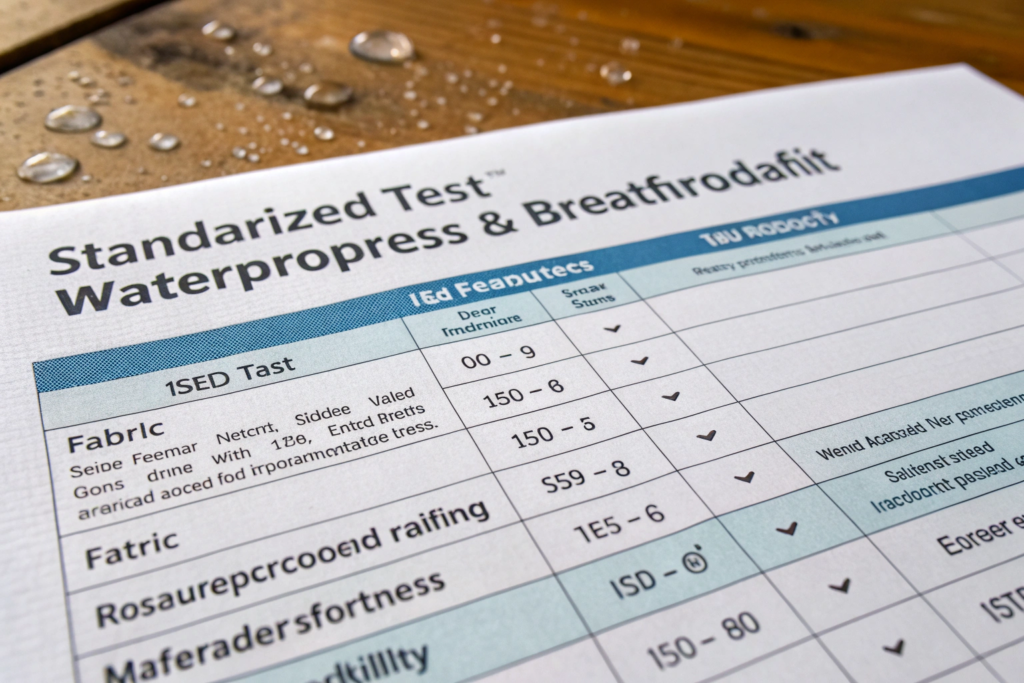
How Do You Test These Numbers in a Real Factory?
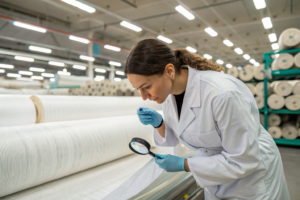
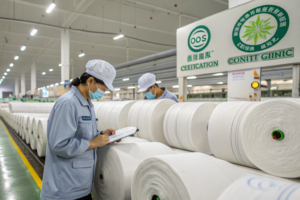
The numbers on paper mean nothing without proper testing. In our CNAS-certified lab, we test every batch. For waterproofness, we use a hydrostatic head tester. We stretch the fabric under a column of water and increase the pressure until three drops penetrate. That pressure is the rating. For breathability, we use a moisture vapor transmission tester (the cup method). We seal the fabric over a cup with a desiccant, place it in a controlled environment, and measure the weight gain over time. (Here's a pro tip: always ask for test reports from an independent lab like SGS or ITS for your bulk order. It's an extra step that builds huge trust). I recall a project in late 2022 where a German ski wear brand had inconsistent breathability data from their previous supplier. We ran comparative tests, identified that the PU coating was being applied unevenly, and adjusted the machinery's temperature and speed. The result? We achieved a consistent 18,000 g/m²/24h breathability rating across their entire 10,000-meter order.
Is Higher Always Better? The Cost-Performance Trade-Off
Not always. A 40,000mm fabric is overkill for a city raincoat and will unnecessarily inflate your cost. More importantly, extreme waterproofness can sometimes come at the expense of breathability or fabric hand-feel. A super-tight membrane might be less air-permeable. The key is "fit for purpose." Discuss the actual end-use with your supplier. A good partner like Shanghai Fumao won't just sell you the most expensive option; we'll help you find the sweet spot that meets your performance needs and keeps your margin healthy. For instance, for a fast-fashion water-resistant jacket (not fully waterproof), a lower-spec but reliable coating is the perfect solution.
Which Fabric Technology is Right for Your Project?
Now that we understand the how and the numbers, let's look at the what. The main technologies break down into a few families, each with pros and cons. The construction also plays a massive role, categorized as 2-layer, 2.5-layer, or 3-layer.
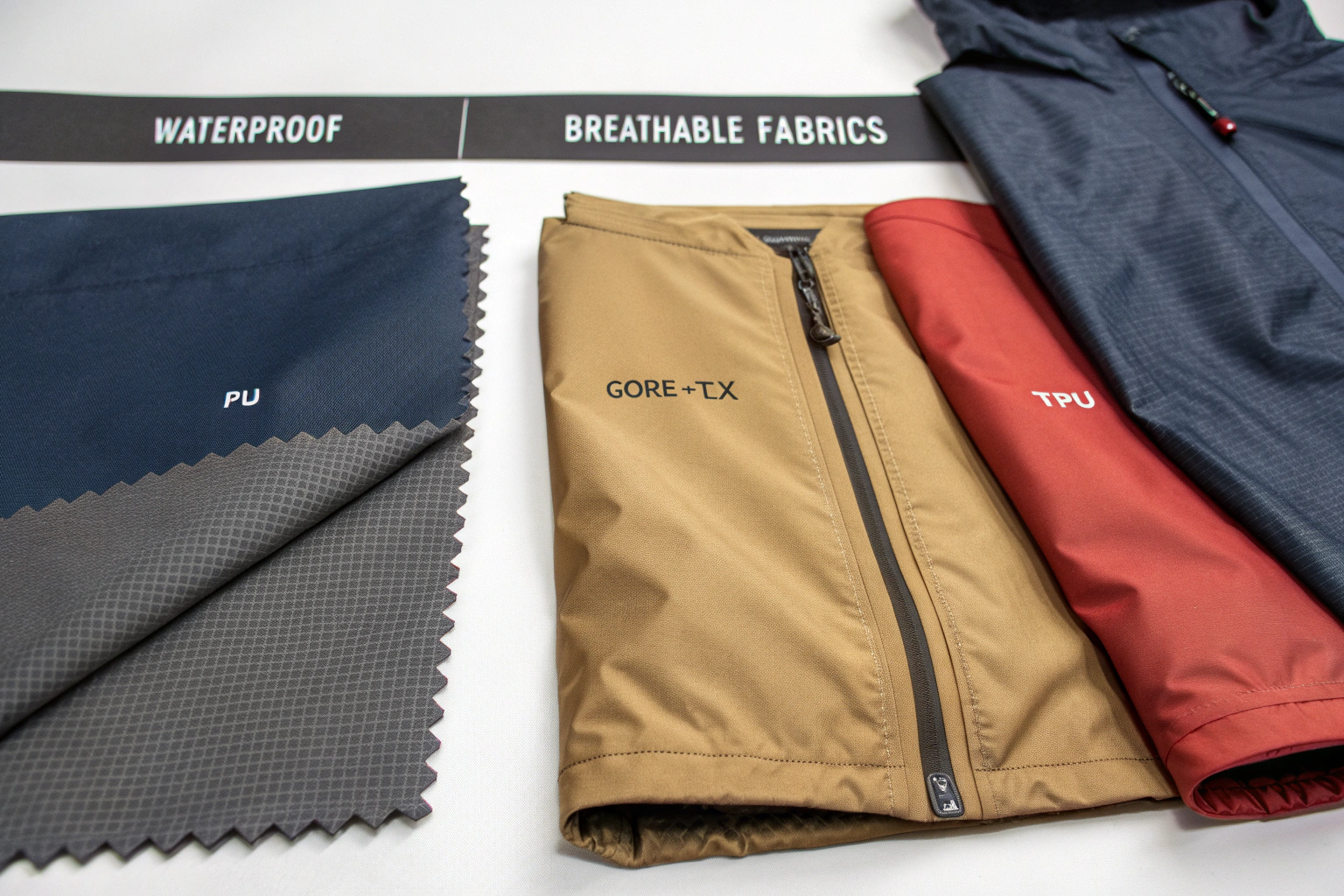
ePTFE Membranes (e.g., GORE-TEX, proprietary equivalents): These are the gold standard. They are expanded Polytetrafluoroethylene—a teflon-like material stretched to create billions of tiny pores. They offer unbeatable, long-lasting breathability and waterproofness. However, they are premium-priced and using the GORE-TEX brand requires passing their strict manufacturing audits. Many mills now produce their own high-quality ePTFE membranes, which can be a more flexible and cost-effective option for brands.
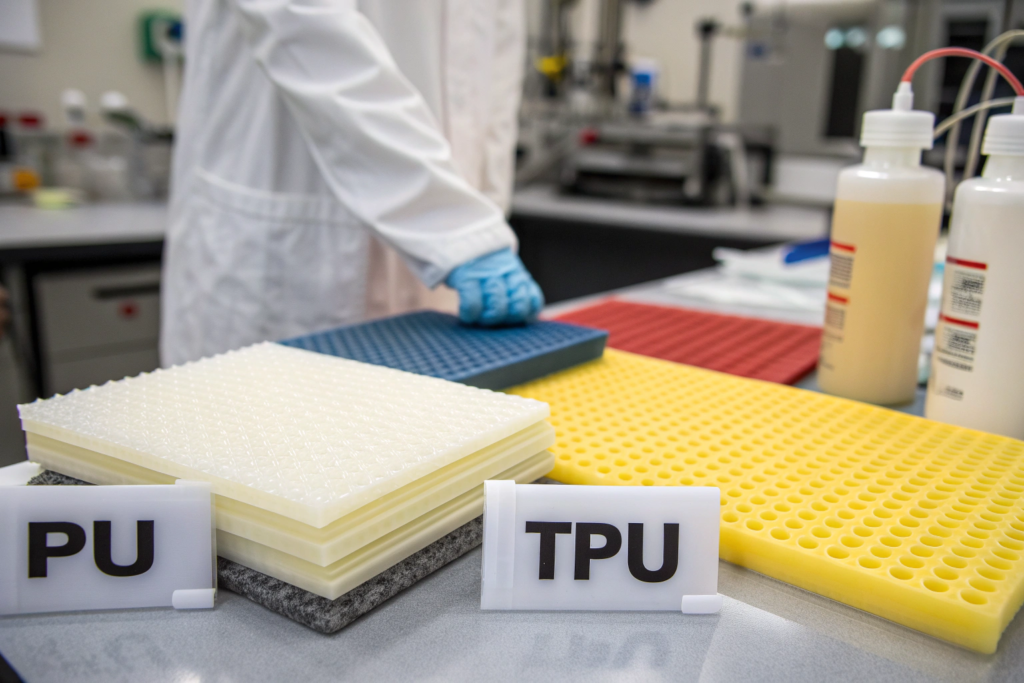
PU (Polyurethane) & TPU (Thermoplastic Polyurethane): These are the workhorses of the industry. PU can be a coating or a micro-porous/hydrophilic membrane. TPU membranes are tougher and more elastic, often used in garments that need a lot of stretch. PU technologies have advanced tremendously and can now offer performance very close to ePTFE at a lower cost. They are also easier to laminate with stretch fabrics. For a deep dive into material science, resources like the ultimate guide to polyurethane coatings for functional textiles can be very enlightening.
2-Layer, 2.5-Layer, or 3-Layer: What's the Difference?
This refers to how the membrane is built into the garment.
- 2-Layer: The membrane is laminated to the face fabric, and a separate loose lining (often mesh) is hung inside the garment. It's durable and easier to repair, but slightly heavier and bulkier. Common in rugged workwear.
- 3-Layer: The membrane is sandwiched and laminated between the face fabric and a lightweight inner scrim (a protective tricot mesh). This creates a single, robust fabric that is lightweight, packable, and requires no separate lining. It's the choice for high-performance gear. It's also the most expensive construction.
- 2.5-Layer: A lighter, more affordable version of 3-layer. Here, a protective print or a very light coating is applied to the back of the membrane instead of a full inner scrim. It results in ultra-lightweight, packable jackets, but the inner protection may not be as durable over many years. Perfect for lightweight hiking shells.
Can You Make Sustainable Waterproof Fabrics?
Absolutely, and this is a huge growth area. The traditional challenge was that the most durable waterproof chemistries were not eco-friendly. This is changing fast. We now offer fabrics made with recycled polyester face fabrics (from PET bottles) laminated with PFC-free DWR and membranes. There are also bio-based PU coatings derived from plants like castor oil. In 2023, we developed a line for a Scandinavian outdoor brand using a bluesign® approved recycled nylon face fabric and a PFC-free DWR. The fabric achieved a 15,000mm waterproof rating and passed all their stringent eco-toxicity tests. It's proof that performance and responsibility can co-exist. Learning about innovations in biodegradable and bio-based waterproof membranes is key for forward-thinking brands.
How to Navigate Production Timelines for Technical Outerwear?
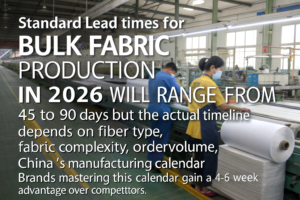
Technical fabric production is not fast fashion. The complexity of lamination, coating, and rigorous testing adds significant time. You must plan for this. The general cycles you mentioned are correct, but for waterproof breathable fabrics, add another 2-3 weeks for the lamination/coating process and mandatory lab testing. So if a standard fabric takes 4 weeks, a laminated one will take 6-7. Planning around Chinese holidays is non-negotiable. For Chinese New Year, we advise clients to have all pre-production—fabrics selected, lab dips approved, and tech packs finalized—at least 6-8 weeks before the shutdown. This lets us start production the day the factories reopen.
A real case: An American startup approached us in August 2023 for a line of waterproof cycling jackets. They wanted delivery by early November for the holiday season. We mapped out the timeline: 1 week for sample development (we nailed the 48-hour sample turnaround for them), 2 weeks for their approval and fabric procurement, 5 weeks for weaving, dyeing, and PU coating, 1 week for testing, and 2 weeks for shipping. It was tight but doable—if they avoided revisions. They finalized everything by early September, and we shipped their order on October 25th. The key was their decisiveness and our integrated control over the dyeing and coating partners.
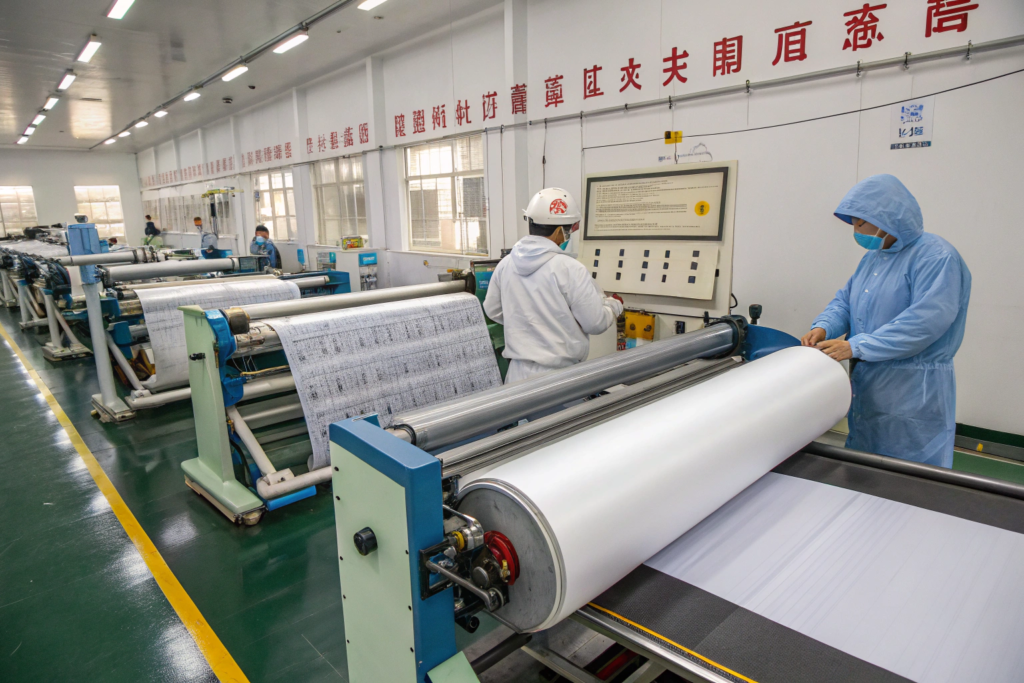
Why is Integrated Supply Chain Control Critical?
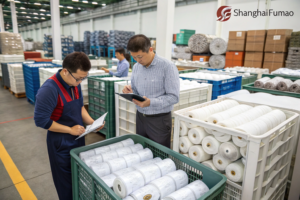
For technical fabrics, letting the weaving, dyeing, and lamination happen at different, unconnected factories is a recipe for delays and quality issues. If the dyehouse sends fabric to a separate laminator, any flaw found after lamination creates a blame game and wasted time. At Shanghai Fumao, our cooperative dyeing and coating factories are in the same industrial park. The fabric moves from one stage to the next seamlessly, with our QC team inspecting at every node. This vertical integration is why we can guarantee a 98% pass rate and faster lead times. It gives us the agility to solve problems on the spot. If a lamination batch shows a bonding issue, our technician is in the coating plant within an hour to adjust the heat or pressure, not sending emails across time zones for a week.
How Can You Leverage Slower Periods for Advantage?
The slower periods (June-July, Nov-Dec post-Golden Week) are golden opportunities for development and smaller, complex orders. Factory capacity opens up. This is the perfect time to work on R&D for your next season's innovative fabric, like developing a custom moisture-wicking and quick-dry lining fabric for athletic wear. The focus isn't on mass throughput, so technicians can spend more time perfecting a new laminate recipe or a custom DWR application. We encourage our clients to use this time for prototyping. The lead times are shorter, and you get more attentive service. It's a strategic way to get ahead of your competitors who only think about production during the peak cycles.
Conclusion
Choosing the best waterproof and breathable fabric is a strategic decision that blends science, application needs, and smart sourcing. It starts with understanding the core technology—the membrane vs. coating, the critical role of DWR, and the meaning behind the mmH2O and g/m²/24h numbers. From there, you match the technology (ePTFE, PU, TPU) and construction (2L, 2.5L, 3L) to your garment's true purpose, avoiding over-engineering and cost overruns. Finally, you navigate the production reality with a partner who has integrated control over the supply chain and can guide you through China's manufacturing calendar.
This knowledge empowers you to move from simply buying fabric to engineering a high-performance product. It turns you from a passive customer into an informed partner in the creation process. You'll be able to ask the right questions, interpret the data, and make decisions that enhance both the quality of your outerwear and the health of your business.
Ready to translate this knowledge into a standout collection? Don't navigate the complex world of technical fabrics alone. Shanghai Fumao is your partner in innovation and reliable execution. From developing custom sustainable membranes to ensuring on-time delivery of bulk laminated fabrics with full certification, we provide the end-to-end solution. Let's discuss how to build the perfect outerwear line for your brand. Contact our Business Director, Elaine, to start the conversation at elaine@fumaoclothing.com.