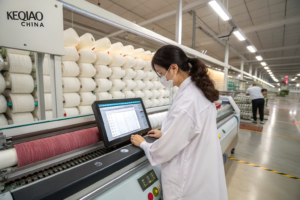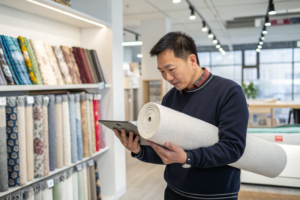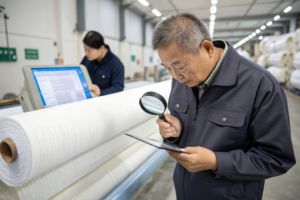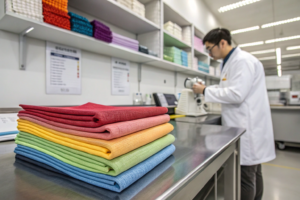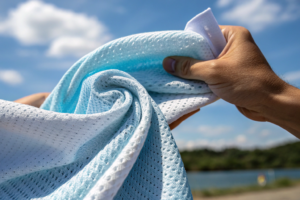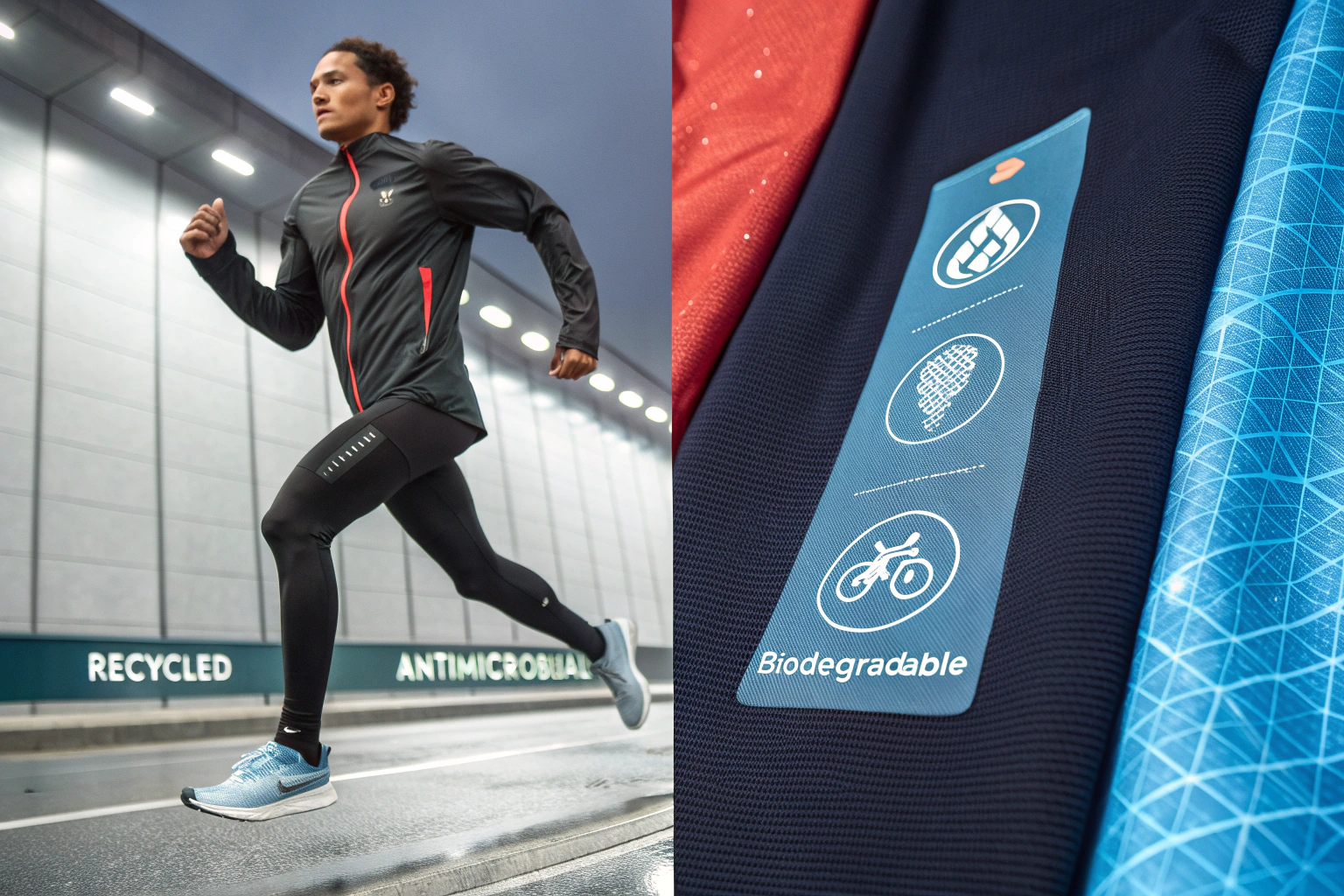
You’re developing your 2025 activewear line. You know “moisture-wicking” is table stakes, but the fabric options are overwhelming. Polyester, nylon, recycled blends, new plant-based fibers—each supplier claims theirs is the best. The wrong choice means returns for discomfort, negative reviews, and a collection that feels outdated before it hits the shelves. In 2025, the best moisture-wicking fabric isn’t just about moving sweat; it’s a holistic performance engine that balances sustainability, durability, next-to-skin feel, and smart innovation. As a developer at Shanghai Fumao who tests hundreds of tech fabric samples yearly, I can tell you the leaders are separating themselves by solving the second-order problems of wicking: odor, wet cling, and environmental impact.
Think of it like car engines. A basic wicking fabric is a reliable four-cylinder—it gets the job done. But 2025 is about hybrid and electric powertrains: systems that not only propel you but also regenerate energy (sustainability), offer instant torque (fast drying), and integrate smart tech (thermoregulation). Your customers now expect this sophisticated performance as standard.
This guide cuts through the marketing hype. I’ll break down the top-performing fabric categories for 2025, backed by our lab data and real-world feedback from brands we supply. We’ll look beyond fiber names to the crucial constructions and finishes that make the difference, and I’ll share what leading brands are quietly specifying for their next big launch.
Is Polyester Still the King of Moisture Wicking in 2025?
The short answer is yes, but its reign is being challenged and it’s evolving dramatically. Polyester’s dominance comes from its inherent hydrophobic (water-repelling) nature and its incredible versatility. By engineering the shape of the polyester filament—creating channels or using a cross-section that pulls moisture along—brands can achieve exceptional wicking performance. However, the “king” in 2025 isn’t virgin polyester; it’s engineered and recycled polyester.
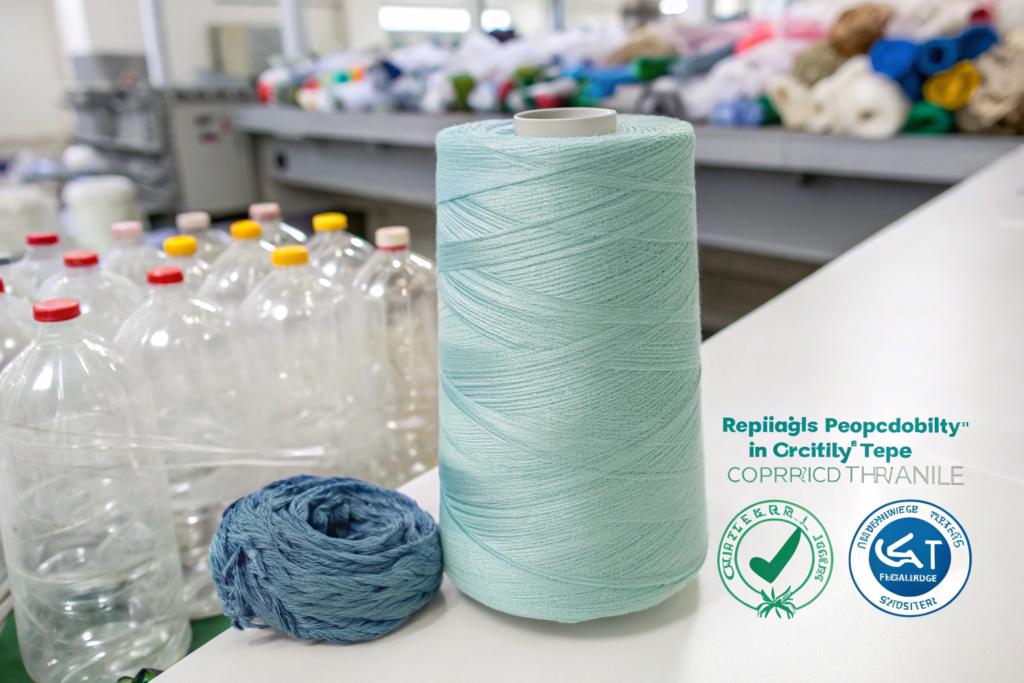
The game-changer is rPET (recycled polyester) made from post-consumer plastic bottles or textile waste. From a pure wicking performance standpoint, high-quality rPET can match virgin polyester when the yarn is well-made. The 2025 advantage is sustainability marketing without sacrificing performance. We’ve seen a 40% year-over-year increase in requests for rPET blends. But beware: not all rPET is equal. Lower-quality recycled yarn can have inconsistent filament strength, affecting durability and pilling. Our advice? Insist on yarn from certified suppliers like Repreve or those with GRS (Global Recycled Standard) certification, and always test for pilling (Martindale) and tensile strength.
What Makes Nylon a Strong Contender for High-End Activewear?
While polyester wicks well, nylon (polyamide) often delivers a superior handfeel—softer, silkier, and more abrasion-resistant. For activities where fabric is constantly rubbing against skin or equipment (like hiking, training, or premium leggings), nylon’s durability is key. In 2025, advanced nylon blends are pushing wicking further by combining it with exceptional recovery and a luxe aesthetic.
The innovation is in bi-component constructions. Imagine a yarn where the core is nylon for strength and elasticity, and the sheath is a treated polyester or a hydrophilic (water-loving) polymer for rapid moisture capture and spread. We’re producing a fabric for a US-based yoga brand using this technology; their testing showed a 15% faster drying time compared to their previous standard nylon. Furthermore, new ECOCIRCLE® or regenerated nylon versions are closing the sustainability gap with polyester. For high-abrasion zones in activewear, understanding the benefits of nylon vs. polyester in sportswear durability is crucial, as detailed in technical fiber analyses.
Are There Any Natural Fibers That Can Compete on Wicking?
Traditionally, no. Cotton is hydrophilic—it absorbs and holds sweat, becoming heavy and cold. However, 2025 sees smart hybrids where natural fibers play a supporting role. Merino wool has natural temperature regulation and odor resistance but lacks the explosive wicking speed for high-intensity sweat. Its place is in base layers for hiking or thermal regulation in variable conditions.
The more interesting development is in Tencel™ Lyocell (especially the Modal variant) made from wood pulp. While not a wicking superstar on its own, when blended with polyester (e.g., 30% Tencel™, 70% rPET), it brings a game-changing coolness, incredible softness, and enhanced moisture absorption that complements polyester’s transport. This creates a more balanced microclimate against the skin, reducing the clammy feel during start-stop activities. It’s a premium blend trending heavily in European wellness-oriented activewear.
What Fabric Construction Delivers the Best Wicking Performance?
The fiber is the fuel, but the construction is the engine. You can have the best yarn, but a poor knit or weave will ruin performance. For activewear, knitted constructions dominate, and the type of knit is critical.
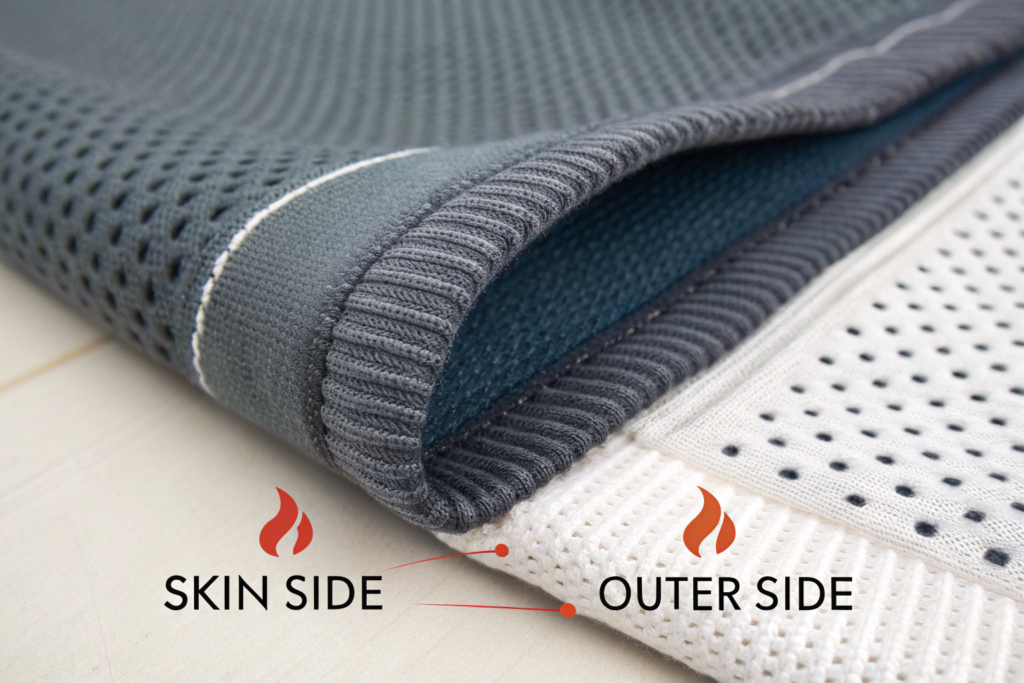
Double-Knit (Interlock) and Warp Knit (Tricot) structures are leading for 2025. Why? They allow for engineered, two-layer fabrics. The inner layer (next to skin) can be a finer, hydrophilic yarn or a specific knit structure designed to quickly grab moisture. The outer layer is often a more open, hydrophobic yarn (like polyester) that then rapidly disperses the moisture over a larger surface area for evaporation. This is called a gradient or differential drying construct. We produce a bestselling fabric for cycling wear using this principle; the inner side uses a textured microfiber polyester for soft moisture grab, and the outer side uses a conjugated yarn for rapid spreading. The result is a perceived dryness even during intense output.
How Important Are Finishes and Treatments, and Do They Last?
Extremely important, but their permanence is the real question. DWR (Durable Water Repellent) finishes are common, but for pure sweat wicking, hydrophilic and antimicrobial finishes are key.
- Hydrophilic Finishes: These chemically treat the synthetic fiber (which is naturally hydrophobic) to make it temporarily water-attracting. This boosts the initial sweat pickup. The challenge is wash durability. Standard finishes can survive 20-30 home washes. 2025 sees more brands investing in polyglycerol-based or covalent bond finishes that claim to last the garment’s lifetime. Always ask for the AATCC Test Method 195 results for liquid moisture management properties and after specified wash cycles.
- Antimicrobial/Odor Control: Sweat leads to bacteria, which leads to odor. Silver ions, zinc nanoparticles, or plant-based antimicrobials (like chitosante) are being built into the fiber itself (solution-dyed or masterbatch additive) rather than just coated on. This method, while more expensive upfront, ensures the odor control lasts 50+ washes. We integrated a natural mint-oil based antimicrobial into a running shirt fabric for a Scandinavian brand, and their consumer surveys reported a 90% satisfaction rate on odor control after 6 months of use.
For reliable information, research wash durability standards for technical textile finishes from organizations like the American Association of Textile Chemists and Colorists (AATCC).
Can “Smart Fabrics” with Enhanced Thermoregulation Be Mainstream in 2025?
“Smart” is transitioning from gimmick to genuine value-add. Phase-change materials (PCMs) that absorb/release heat are still niche due to cost and weight. The more mainstream “smart” wicking for 2025 is adaptive ventilation.
Think of fabrics with laser-perforated micro-pores or engineered mesh zones that expand or open as the body heats up and moves, increasing breathability exactly where it’s needed. This isn’t just a static mesh panel; it’s a structural design integrated into the knit. Another trend is thermochromic dyes that visually signal wicking activity (color change where moisture is moving), adding a cool, interactive element for the consumer. While not affecting core performance, it enhances the perceived tech. These innovations require close collaboration between design and fabric engineering teams.
How Does Sustainability Influence the “Best” Choice in 2025?
In 2025, a fabric cannot be “best” if it’s an environmental disaster. Sustainability is a core performance metric. The leading moisture-wicking fabrics are now evaluated on a full lifecycle: raw material, dyeing process, durability, and end-of-life.
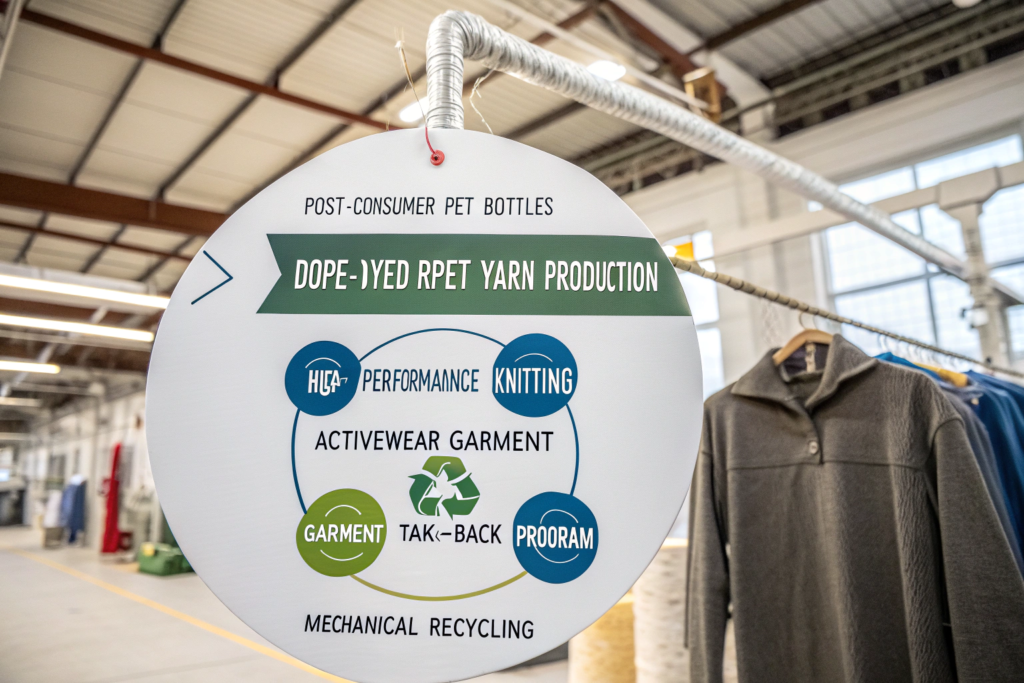
1. The Rise of Dope-Dyed and Solution-Dyed Fibers: This is the single biggest eco-innovation in wicking fabrics. The color pigment is added to the polymer melt before the filament is extruded. This eliminates the traditional, water-intensive dyeing process. The savings are staggering: up to 90% less water, 75% less energy, and no dye effluent. The color is also more fade-resistant. At Shanghai Fumao, our dope-dyed polyester lines are running at full capacity. The wicking performance is identical, and the environmental story is powerful.
2. Biodegradable and Circular Options: New fibers like PLA (Polylactic Acid) from corn starch are entering the market. They offer decent wicking and are compostable under industrial conditions. However, their durability and heat sensitivity (they can’t handle high iron temps) are limitations. A more robust approach is circular design: creating fabrics from mono-materials (100% polyester) that are easier to recycle at end-of-life. Brands are starting to partner with take-back schemes, and a fabric’s recyclability is becoming a selling point.
What Are the Key Testing Standards I Should Ask My Supplier For?
Don’t take claims at face value. Your supplier should provide third-party or accredited in-house lab data. The gold standards are:
| Test Standard | What It Measures | Why It Matters for 2025 |
|---|---|---|
| AATCC 195 | Liquid Moisture Management Properties | Quantifies wetting time, absorption rate, spread speed, and one-way transport capability. The comprehensive scorecard. |
| ISO 11092 | Thermal and Water-Vapor Resistance (Ret) | Measures breathability. A lower Ret value means better vapor (sweat) escape. Crucial for comfort. |
| AATCC 135 | Dimensional Stability in Home Laundering | Ensures the fabric and its wicking properties don’t degrade after repeated washing. |
| AATCC 30 / ISO 20743 | Antimicrobial Activity | Quantifies reduction of bacteria (e.g., S. aureus, K. pneumoniae) for odor control claims. |
A professional supplier like us at Shanghai Fumao will have this CNAS-accredited lab data ready. Asking for it immediately separates serious partners from marketing talk.
How Do I Balance Cost, Performance, and Sustainability?
This is the ultimate challenge. Here’s a pragmatic framework:
- Budget-Friendly & High Performance: Stick with engineered, dope-dyed virgin or rPET in a smart knit construction (like a double-faced knit). This offers the best wicking bang for your buck.
- Premium Feel & Durability: Opt for a rPET/Nylon blend (e.g., 85/15) with a durable antimicrobial treatment. This elevates handfeel and longevity.
- Maximum Sustainability Story: Choose 100% dope-dyed rPET from a certified source, or a Tencel™/rPET blend, and emphasize the water savings and circular potential. This may come at a 10-20% premium.
Always prototype and wear-test. A fabric can ace lab tests but feel wrong on the body. In Q4 2024, we worked with an online fitness brand on a new fabric that tested well but in wearer trials felt “too slick.” We adjusted the yarn texturing on the inner side for more cotton-like friction, solving the issue before bulk production.
Conclusion
There is no single “best” fabric. There is a best fabric for your specific application, brand values, and price point. The 2025 front-runners are:
- Engineered, Dope-Dyed rPET: The all-round champion for balancing performance, cost, and sustainability. It’s the workhorse evolving into a thoroughbred.
- Advanced Nylon or Nylon-Blend Knits: The premium choice for activities demanding extreme durability, abrasion resistance, and a luxe handfeel.
- Tencel™ Lyocell/Modal Blends: The rising star for low-to-medium intensity, lifestyle-activewear where skin feel, cooling, and natural origin are top priorities.
The winning strategy is to layer innovations: start with a sustainable core fiber (rPET, recycled nylon), engineer the knit for directional moisture movement, and apply a durable hydrophilic and antimicrobial finish. Then validate with hard data from accredited tests.
If you’re looking to develop a technically superior, sustainable activewear line for 2025 with a partner who understands this multi-layered approach, let’s connect. At Shanghai Fumao, our R&D team lives in this space, developing next-generation fabrics that perform on the skin, in the lab, and in the market. We can provide you with data-backed samples and production scalability. To discuss your activewear fabric needs, contact our Business Director, Elaine. She’ll link you with our performance textiles specialists. Reach Elaine at: elaine@fumaoclothing.com.