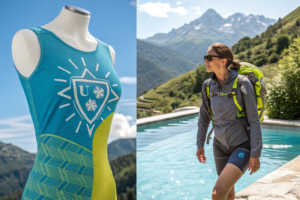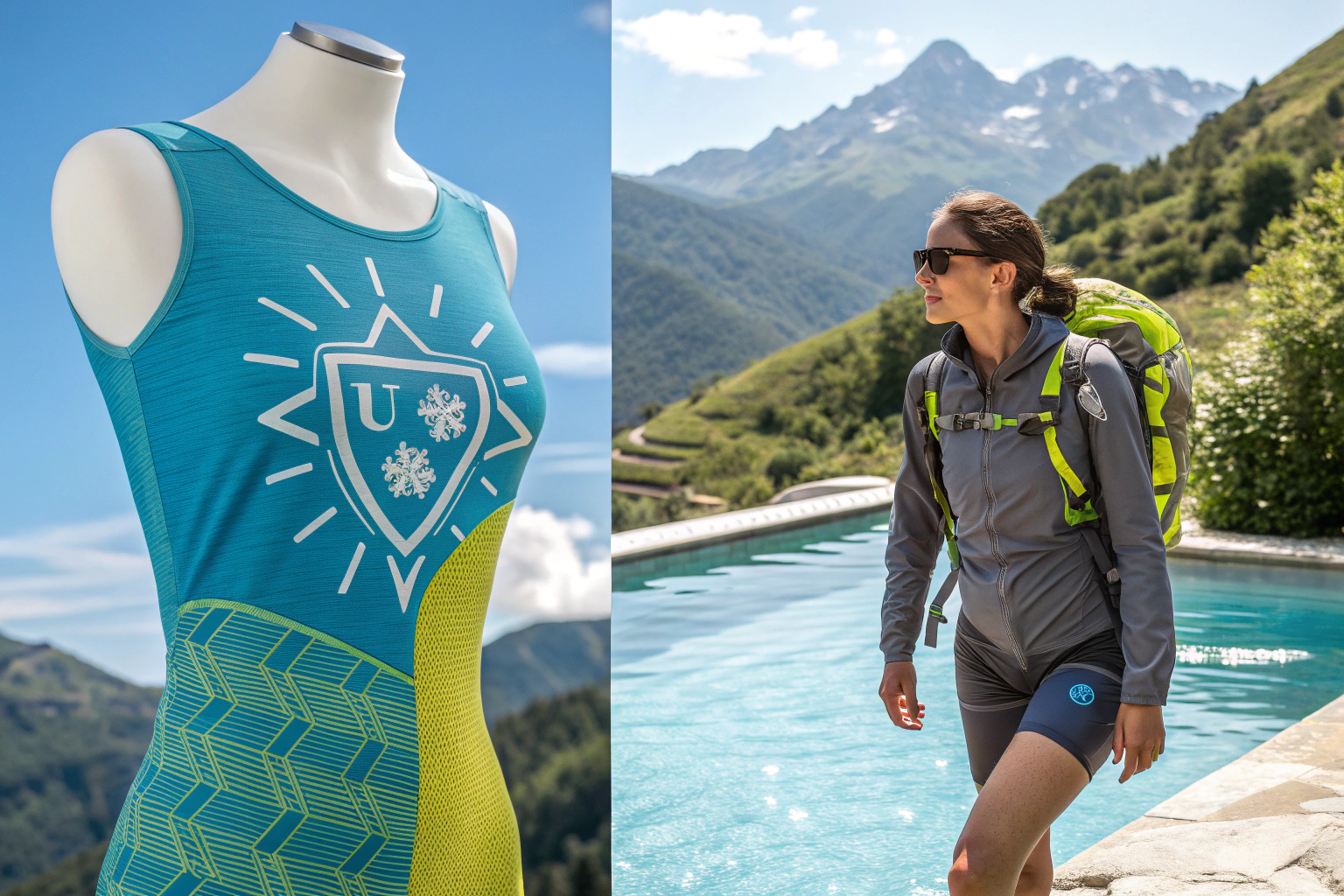
You're designing swimwear for a tropical resort line or sourcing fabric for hiking shirts. You know sun protection is a major selling point—but slapping "UPF 50+" on a tag isn't just about marketing. It's a serious technical claim with legal implications if false. So, how do you actually choose a fabric that will protect your customers from harmful UV rays without compromising on stretch, comfort, or durability? I've seen brands get this wrong, ending up with garments that either fail lab tests or, worse, fail their customers in real sun exposure.
Ultraviolet Protection Factor (UPF) measures how effectively a fabric blocks both UVA and UVB radiation. Unlike SPF for sunscreen, which only measures UVB, UPF is a holistic rating for textiles. The key to high UPF isn't a magical coating; it's primarily engineered into the fabric's construction: fiber chemistry, weave/knit density, weight, color, and any special finishes. A flimsy, white cotton T-shirt might have a UPF of only 5, while a densely knitted dark polyester could exceed UPF 100.
Choosing the right fabric requires balancing protection with the specific demands of the end-use. Swimwear fabric must maintain UPF when wet and stretched, while remaining chlorine-resistant. Outdoor apparel needs breathability, moisture-wicking, and abrasion resistance alongside sun protection. Let's break down the material science so you can source with authority and confidence.
How is UPF (Ultraviolet Protection Factor) Rated in Fabrics?
First, we need to understand the benchmark. UPF testing follows strict standards like AS/NZS 4399:1996 or the newer AATCC 183. A fabric sample is exposed to a UV spectrum lamp in a lab, and a spectrophotometer measures how much UV radiation passes through it. The resulting UPF number indicates the fraction of UV rays blocked. For example, UPF 50 means only 1/50th (2%) of UV radiation reaches the skin.
Here’s the standard categorization:
- UPF 15-24: Good Protection
- UPF 25-39: Very Good Protection
- UPF 40-50+: Excellent Protection (Often labeled as UPF 50+)
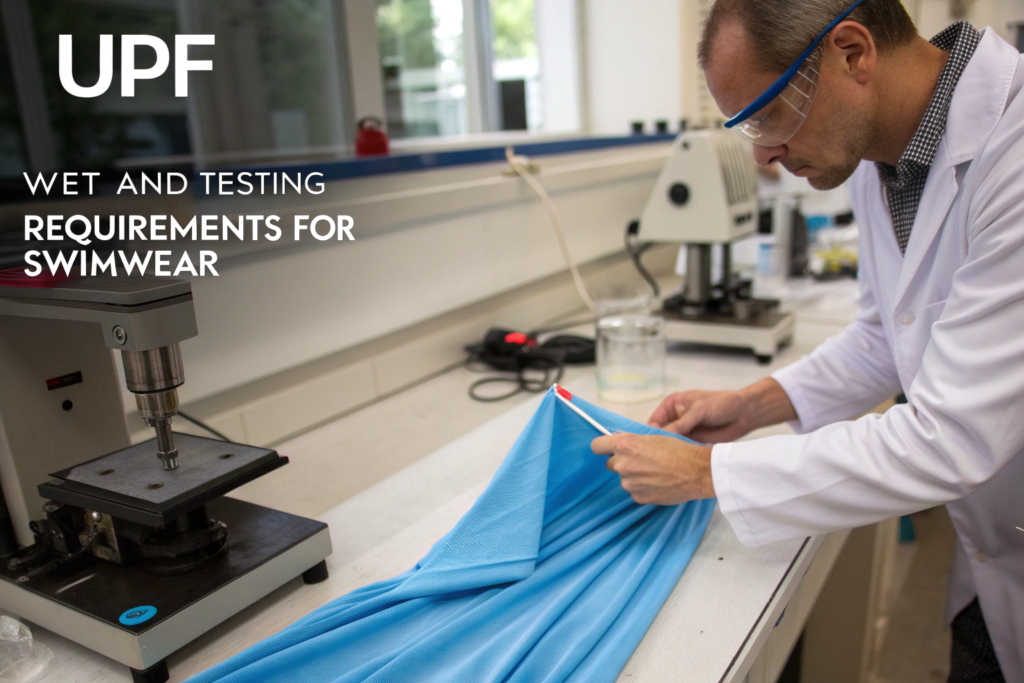
Crucially, for a fabric to be labeled with a specific UPF rating, it must be tested in its conditioned state—which for swimwear means wet and stretched. This is where many fabrics fail. A fabric might test at UPF 50 dry, but when saturated with water, the fibers swell and the fabric tightens against the skin, potentially creating microscopic gaps that let more UV through. Always, always ask your supplier for test reports that specify "tested wet and under tension" for swimwear.
What fabric properties naturally enhance UPF?
High UPF is a function of density and absorption:
- Fiber Type: Synthetic fibers like polyester and nylon have innate UV-absorbing molecular structures. Unbleached, dense cotton or wool also perform well. Lightweight, bleached cotton or rayon offer minimal protection.
- Construction: Tight weaves or knits are fundamental. A loose, open mesh will have low UPF regardless of fiber. Look for high thread count or high needle count per inch.
- Weight (GSM): Generally, heavier fabrics block more UV, but a very dense, lighter fabric can outperform a loose, heavy one.
- Color: Darker and brighter colors absorb more UV radiation than pastels or whites. A black fabric will inherently have a higher UPF than an identical white fabric.
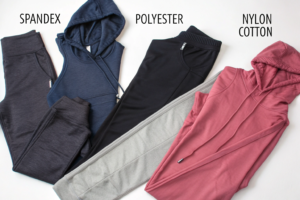
- Stretch: Spandex (Lycra®) itself has poor UPF, but when blended and covered by dense nylon or polyester yarns in a knit, the overall fabric can still achieve high ratings. The knit construction under tension is critical.
Why can't I just rely on a chemical coating?
You can, but with caution. UV-inhibitor finishes are applied to fabrics (especially cotton) to boost UPF. These work by absorbing UV radiation. However, their effectiveness degrades with washing, abrasion, and chlorine exposure. For durable swimwear or performance gear that will be laundered frequently and exposed to harsh elements, a fabric that derives its UPF from its intrinsic fiber and construction is far more reliable. A finish should be considered a supplement, not the primary source of protection.
What are the Best Fabrics for High-Performance Swimwear?
Swimwear fabric is a unique beast. It must excel in the "hostile" conditions of UV, salt, chlorine, sand, and constant stretch and recovery. The gold standard is chlorine-resistant, solution-dyed polyamide (nylon) blended with spandex, engineered into a very dense knit.
- Nylon (Polyamide): Specifically, Nylon 6,6 is renowned for its superior strength, chlorine resistance, and excellent UV absorption. It holds color brilliantly and has a soft hand. It's more expensive than polyester but is the premium choice for performance and longevity.
- Polyester: Also an excellent choice. Modern Recycled Polyester (rPET) performs identically to virgin polyester for UV protection. It's highly chlorine-resistant, colorfast, and often more cost-effective than nylon. The hand can be slightly less soft than premium nylon.
- Spandex (Elastane): Typically makes up 15-22% of the blend to provide the necessary four-way stretch and shape recovery. High-quality, chlorine-resistant spandex (like Lycra® Xtra Life) is critical to prevent the garment from breaking down and becoming baggy.
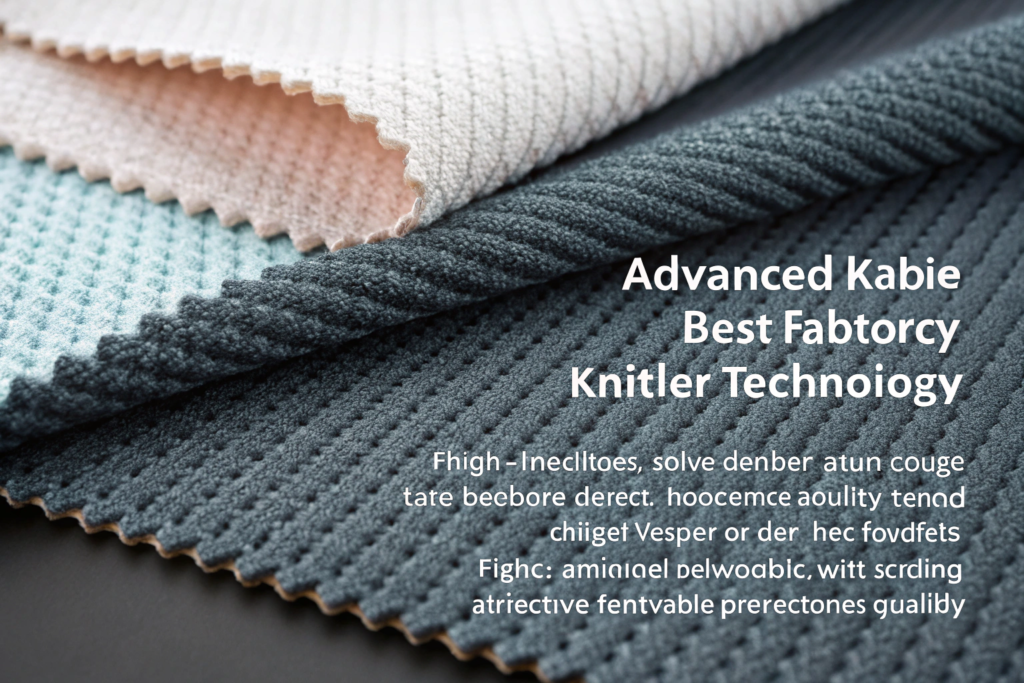
The magic is in the knitting technology. The best fabrics use microfiber or fine-denier yarns knitted at a very high gauge (needles per inch) to create an extremely tight, smooth surface with minimal pores. This density is what maintains UPF when stretched over the body. A double-knit or warp knit construction adds to the stability.
What specific tests should I require for swimwear fabric?
Your supplier must provide comprehensive test reports from an accredited lab (e.g., SGS, Intertek, ITS). Key tests include:
- UPF Rating (AATCC 183): Must be tested wet and under tension.
- Chlorine Resistance (AATCC 162): Measures colorfastness and strength loss after repeated chlorine exposure.
- Colorfastness to Salt Water (AATCC 106) & Light (AATCC 16): For longevity.
- Stretch & Growth/Recovery (ASTM D2594): Ensures the suit retains its shape.
We developed a fabric for a swimwear brand targeting triathletes that had to pass brutal testing: UPF 50+ (wet/stretched), 100-hour chlorine resistance, and <10% permanent growth after 10,000 stretch cycles. This required a custom blend of 78% Nylon 6,6 / 22% Chlorine-Resistant Lycra® in a specific high-density warp knit.
How do prints and dyes affect swimwear UPF?
Solution Dyeing (where pigment is added to the polymer melt before the fiber is extruded) is superior for swimwear. The color is locked into the fiber, making it incredibly resistant to fading from sun, chlorine, and salt. It also contributes to consistent UPF, as the pigment is integral to the fiber. Sublimation printing (for all-over prints) dyes the fabric surface and, on a dense base cloth, does not significantly degrade UPF. However, thin, printed fabrics or fabrics with large, unprinted white areas will have compromised protection in those zones.
What are the Best Fabrics for Outdoor Apparel (Shirts, Jackets, Hats)?
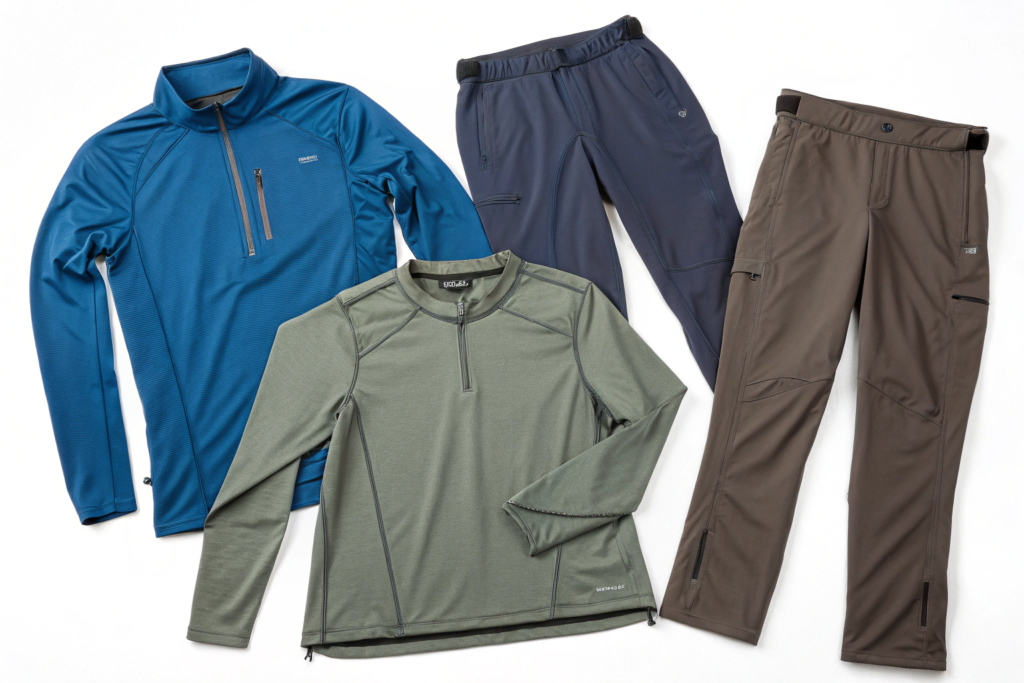
For outdoor gear, the requirements expand: UPF plus breathability, moisture management, quick-dry, and often abrasion resistance. Here, woven fabrics often take the lead, though knits are used for base layers.
- Polyester Weaves and Knits: The undisputed champion. It can be engineered into:
- Microfiber Polyester Woven: Tight, lightweight ripstop or plain weaves that are wind-resistant, breathable, and offer UPF 40-50+. Often treated with a DWR (Durable Water Repellent) finish.
- Polyester Jersey or Interlock Knit: For sun-protective base layer shirts. Moisture-wicking is inherent.
- Nylon Weaves: Used in lightweight hiking shirts and convertible pants. Often blended with spandex for comfort stretch (e.g., 94% Nylon / 6% Spandex). It's softer than some polyesters and very durable.
- Specialty Blends:
- Polyester-Cotton Blends: A 65/35 or 50/50 blend can offer a more natural feel with good UPF (if densely woven) and better moisture absorption than 100% poly. However, it dries slower.
- Wool-Blends (Merino Wool): Naturally UV-resistant, odor-resistant, and temperature-regulating. A lightweight Merino wool knit (e.g., 150 GSM) can have a UPF of 30-50. Ideal for multi-day trekking where laundering is limited.
How does fabric construction differ for shirts vs. jackets?
- For Shirts: Look for lightweight (100-150 GSM), breathable weaves with a smooth feel against the skin. A twill weave is popular as it's durable and drapes well. Mesh panels or eyelet fabrics can be used for ventilation in non-critical zones, as they lower the average UPF.
- For Jackets and Hats: Fabric is often slightly heavier (150-250 GSM) and may be a laminated or coated 2-layer or 3-layer construction with a membrane (e.g., for rain jackets). The UPF of the outer shell is critical. Many high-end membrane fabrics from Gore-Tex etc., have inherent high UPF. For unstructured sun jackets, a simple, tightly woven polyester taffeta is excellent.
A key innovation is phase-change materials or cooling finishes. Some outdoor fabrics now incorporate minerals or treatments that feel cool to the touch and enhance evaporative cooling, pairing perfectly with sun protection for hot-weather performance. This is a major value-add for brands.
What are the Sustainability and Innovation Trends in UV Protective Fabrics?
Consumers now demand protection for both their skin and the planet. The market is rapidly evolving beyond virgin synthetics.
- Recycled Content is Standard: UPF 50+ fabrics made from 100% Recycled Polyester (rPET) or Recycled Nylon (often from fishing nets or pre-consumer waste) perform identically to virgin materials. This is a non-negotiable for most forward-thinking brands. Ensure the fabric has GRS (Global Recycled Standard) certification for traceability.
- Bio-Based and Biodegradable Fibers: Emerging options include UPF fabrics made from PLA (Polylactic Acid from corn) or blended with Tencel™ Lyocell. Their UPF performance is good, and they offer an end-of-life solution, though durability in harsh conditions (like chlorine) may still be under development.
- Mineral-Based UPF Enhancements: Instead of chemical absorbers, some fabrics are embedded with micronized titanium dioxide or zinc oxide (the same physical blockers found in mineral sunscreen). These are inert, non-toxic, and do not degrade with washing, offering a durable physical UV block.
- Smart Textiles: The frontier includes fabrics with UV sensors that change color to indicate exposure levels. While not yet mainstream for apparel, it shows the direction of integration between protection and information.
How do I verify "eco-friendly" UPF claims?
Greenwashing is a risk. Ask your supplier for:
- Third-Party Certifications: GRS for recycled content, OEKO-TEX Standard 100 for harmful substances, bluesign® for sustainable manufacturing.
- Test Reports: Valid UPF test reports from accredited labs.
- Details on Finishes: If a "non-toxic mineral finish" is claimed, ask for its composition and durability test data (e.g., UPF after 50 washes).
We recently developed a line of sun-protective children's wear fabrics that were GRS-certified rPET, OEKO-TEX 100 certified, and used a mineral-based UPF enhancer. The complete, verifiable story became a central pillar of the brand's marketing.
How to Source and Specify UPF Fabrics Correctly?
Sourcing UPF fabric is a technical procurement. Here is your actionable checklist:
1. Define Your Technical Requirements:
- Target UPF Rating: (e.g., UPF 50+)
- Test Condition: For swimwear: Wet & Stretched. For outdoor: Dry (or wet if for surfing tops).
- Key Performance Indicators (KPIs): Chlorine resistance (hours), colorfastness to light/saltwater, shrinkage %, growth/recovery %, breathability (ASTM D737), and weight (GSM).
2. Source from Specialized Suppliers:
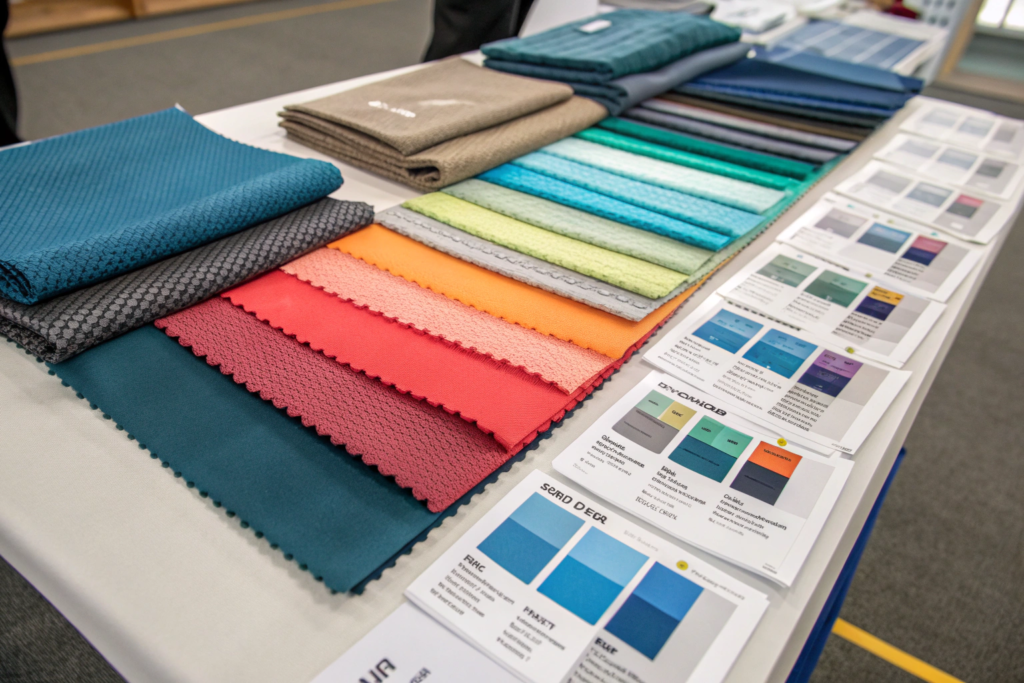
Look for mills or converters that specialize in performance fabrics. Ask for their "library" of UPF-tested fabrics. At Shanghai Fumao, we maintain a curated range of pre-tested UPF swim and outdoor fabrics from trusted mills, saving clients the time and cost of initial testing.
3. Order and Validate Development Samples:
- Swatch: For initial hand feel and color.
- Strike-Off / Sample Yardage (3-5 meters): Have your own lab test this. Do not rely solely on the supplier's generic test report for the fabric class. Send your cut to a recognized lab like SGS or QIMA for independent verification of UPF and other KPIs. This step is your insurance policy.
4. Audit the Bulk Production:
- Pre-Production Sample: Test a cut from the beginning of the production run.
- Specify Testing in Your Purchase Order: State that the bulk shipment must be accompanied by a valid test report from an accredited lab for the specific batch/lot number.
- Consider Third-Party Inspection: For large orders, an inspection company can verify roll length, weight, color consistency, and collect samples for testing.
What are the labeling and legal requirements?
In markets like the USA (regulated by the FTC) and Australia/New Zealand, you cannot make false UPF claims. Your label should state the UPF rating (e.g., "UPF 50+") and a category ("Excellent Protection"). It is highly advisable to include a care instruction that preserves UPF, such as "Wash in cold water. Do not bleach. Line dry. Avoid fabric softeners." Retain all test reports for your records in case of regulatory inquiry.
Conclusion
Selecting the best fabric for UV protection is a deep dive into material science, not a surface-level aesthetic choice. The hierarchy is clear: intrinsic fiber properties and dense construction are the foundation; specialized finishes are a supplement. For swimwear, prioritize chlorine-resistant nylon or polyester in high-density knits, validated wet and stretched. For outdoor gear, leverage the versatility of polyester weaves and knits for the perfect balance of UPF, breathability, and durability.
The future lies in marrying this performance with circularity—through recycled content, mineral-based technologies, and innovative bio-fibers. By sourcing with technical diligence, demanding verified test data, and partnering with expert suppliers, you can build a line that truly protects your customers and builds unwavering trust in your brand.
Ready to source high-performance, certified UPF fabrics with confidence? Contact our Business Director, Elaine, at elaine@fumaoclothing.com to access our portfolio of tested swim and outdoor fabrics and discuss your specific technical requirements. At Shanghai Fumao, we provide the material intelligence you need to create gear that stands up to the sun.