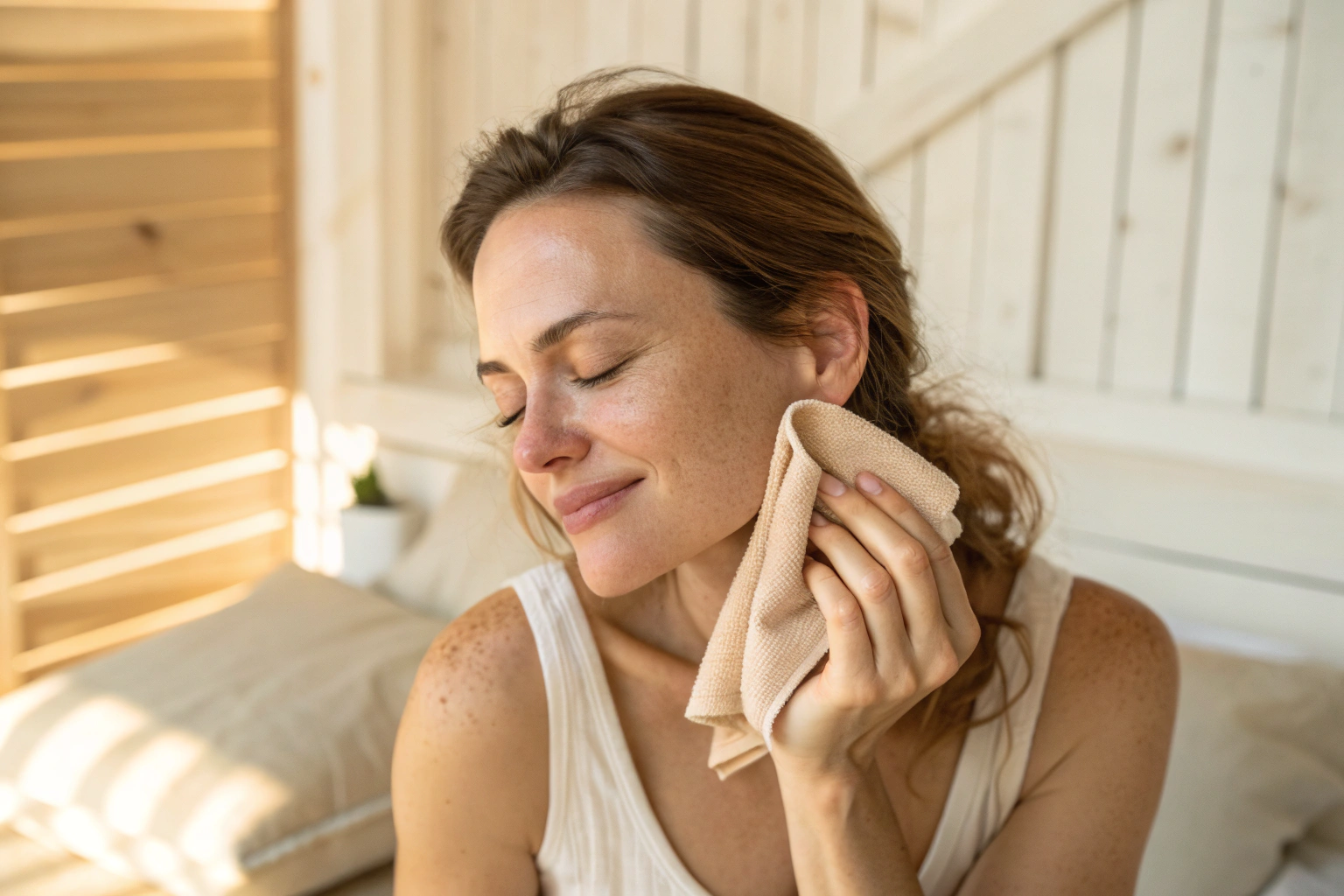
I received an email last year from a buyer named Jennifer. She sources organic cotton baby hats and blankets for a specialty retailer in the US. She was worried. A competitor's product had caused a rash on a baby, and the story went viral on social media. The brand was ruined. Jennifer asked me, "How can I be absolutely sure our fabrics are safe? How do I prove it to my customers?" Her question was not just about quality anymore. It was about safety and trust.
The best fabrics for sensitive skin and allergies are natural, soft, and free from harsh chemical treatments. This includes organic cotton, bamboo viscose, modal, silk, and fine merino wool. These fibers are naturally breathable, hypoallergenic, and gentle. They lack the harsh chemical residues and rough textures found in many synthetic or conventionally processed fabrics that can trigger reactions. At Shanghai Fumao Clothing, we prioritize these materials for clients who serve the sensitive skin market, ensuring every product is as gentle as it is beautiful.
You might think any soft fabric will do. But for someone with sensitive skin, the difference between a comfortable day and an itchy, red nightmare is in the details of the fiber and the finish. Let me walk you through what makes a fabric truly skin-friendly.
What Makes a Fabric Irritating to Sensitive Skin?
To choose the right fabric, you first need to understand what causes the irritation. It is not always the fiber itself. Often, it is what has been added to the fiber or how it has been processed. The culprits are usually hiding in plain sight.
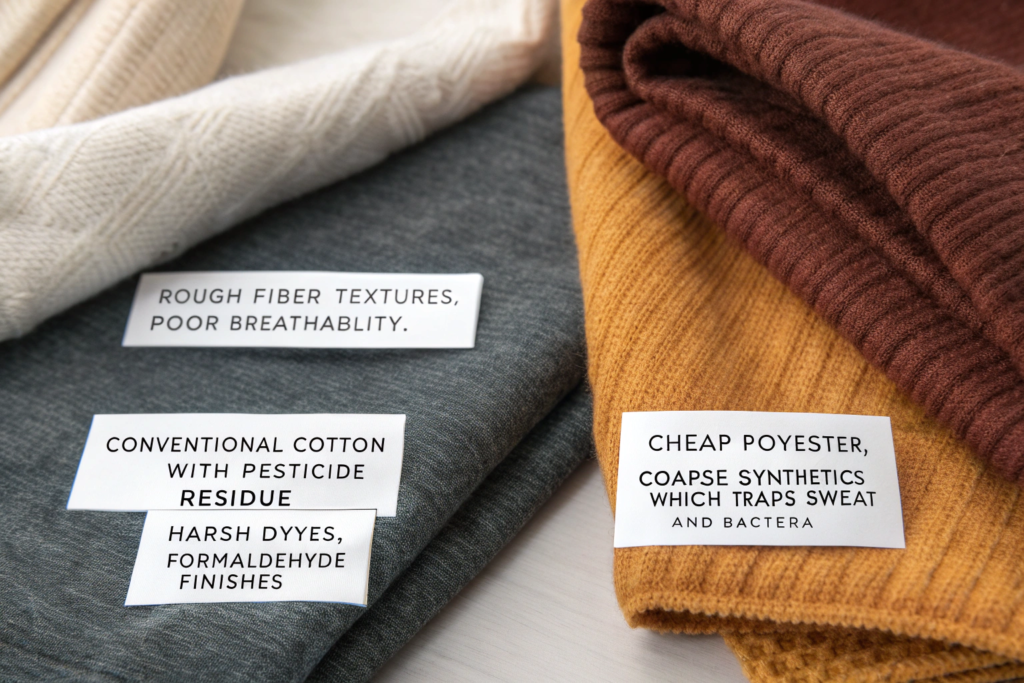
The main causes of skin irritation from fabric are chemical residues, rough fiber textures, and poor breathability. Chemical residues come from pesticides used on conventional cotton, from harsh dyes and bleaches, and from finishes like formaldehyde used to prevent wrinkles. Rough fibers, like low-quality wool or coarse synthetics, physically scratch the skin. Poor breathability, often from cheap polyester, traps sweat and bacteria, leading to itching and rashes. For sensitive skin, you need fabrics that avoid all three of these problems.
Another hidden irritant is the use of optical brighteners. These are chemicals added to make white fabrics look "whiter than white." They can cause contact dermatitis in some people. Similarly, certain disperse dyes used on polyester are known allergens. The fabric itself might be fine, but the dye sitting on its surface is the problem. This is why "hypoallergenic" is not just about the fiber. It is about the entire manufacturing process, from the field to the finished roll of textile for clothing.
How Do Chemical Residues Affect the Skin?
Think of your skin as a sponge. It absorbs things. When you wear a garment, especially in warm weather when you sweat, your pores open. Any chemicals left in the fabric can be absorbed directly into your skin. Pesticide residues from non-organic cotton can cause reactions. Formaldehyde resins, used to make fabrics wrinkle-free, are a common allergen. Even the caustic soda used in processing viscose can cause issues if not washed out thoroughly. This is why certification matters. Standards like OEKO-TEX Standard 100 test for hundreds of harmful substances to ensure the finished product is safe for human skin.
Why Does Fabric Texture Matter So Much?
For someone with sensitive skin, texture is everything. It is the difference between comfort and misery. Fabrics with short, coarse fibers, like low-grade wool, have fiber ends that stick out and poke the skin. This causes a physical irritation called pruritus. Even synthetic fibers, when spun poorly, can have a rough, scratchy surface. The ideal fabrics for sensitive skin have long, smooth fibers that lie flat. Think of the difference between a rough jute rope and a smooth silk ribbon. That is the texture difference we are talking about. A smooth fabric glides over the skin without catching or scratching.
Which Natural Fibers Are Best for Sensitive Skin?
When Jennifer asked me about safe fabrics, I started with nature. Natural fibers have been clothing humans for thousands of years. But not all natural fibers are created equal. The way they are grown and processed makes a huge difference in how they feel on the skin.
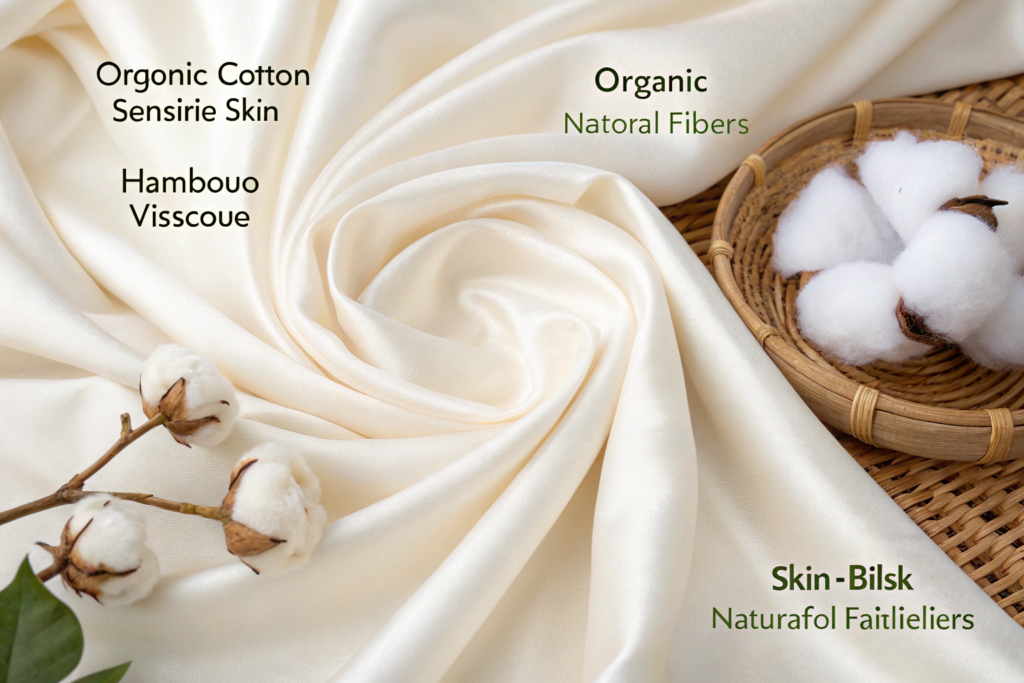
The best natural fibers for sensitive skin are organic cotton, bamboo viscose, and silk. Organic cotton is grown without pesticides and is soft, breathable, and gentle. Bamboo viscose is incredibly soft, almost like cashmere, and has natural antibacterial properties. Silk is a protein fiber that is naturally hypoallergenic and smooth. It does not irritate skin and actually helps regulate temperature. For wool, only choose superfine merino, as its fibers are thin enough to bend rather than prick.
Modal and Tencel (lyocell) are also excellent choices. They are made from beechwood pulp, so they are natural in origin. The manufacturing process for Tencel, in particular, is a closed-loop system that recycles water and solvents, making it an eco-friendly choice. The resulting fiber is incredibly smooth, strong, and breathable. It feels like a dream against the skin and is often recommended for people with eczema or dermatitis. These fabrics are perfect for gentle baby wear and sensitive skin apparel.
Why Is Organic Cotton Better Than Regular Cotton?
Regular cotton is one of the most heavily sprayed crops in the world. It uses large amounts of pesticides and insecticides. These chemicals do not just disappear when the cotton is harvested. Residues can remain in the fiber and end up in your finished garment. Organic cotton is grown without these synthetic pesticides. It is a cleaner, purer fiber. It is also often processed with gentler, safer chemicals. For someone with sensitive skin, this reduction in chemical load can be the difference between a rash and a comfortable day. The cotton itself feels softer too, because the fibers are not damaged by harsh chemicals during processing.
Is Bamboo Fabric Naturally Hypoallergenic?
Bamboo fabric is celebrated for its softness, but we need to be clear. Bamboo viscose is made from bamboo pulp, but the process to turn that pulp into fiber uses chemicals. So, the fabric is not "natural" in the same way organic cotton is. However, the resulting fiber is incredibly smooth and round, with no sharp ends to irritate the skin. It also has natural micro-gaps that provide excellent breathability and moisture wicking. Furthermore, bamboo has a natural antibacterial agent called "bamboo kun," which can survive the manufacturing process. This helps reduce odor-causing bacteria, which is a bonus for sensitive skin prone to infections. It is a top choice for hypoallergenic sheets and loungewear.
What About Synthetic Fabrics for Sensitive Skin?
Many people with sensitive skin are told to avoid synthetics completely. That is generally good advice. But the world of synthetics is huge. Some modern synthetics are actually designed to be skin-friendly. You just have to know what to look for and what to avoid.
Most standard synthetic fabrics like polyester, nylon, and acrylic can be problematic for sensitive skin. They are derived from petroleum and are not breathable. They trap heat and moisture, creating a breeding ground for bacteria and fungi that can cause itching and rashes. However, there are exceptions. Some high-tech synthetic fabrics are engineered with moisture-wicking properties and smoother fibers. These can be suitable for activewear, as long as they are worn for short periods and washed immediately after sweating. For everyday wear, natural fibers are still the safer bet.
The biggest issue with synthetics is their lack of breathability. When sweat cannot evaporate, the skin becomes macerated (soft and wet). This weakens the skin's natural barrier, making it more susceptible to irritation and infection. Additionally, some synthetic dyes, particularly disperse dyes, are known allergens. They can leach out of the fabric when you sweat and cause contact dermatitis. If you must use synthetics for a specific performance garment, look for those labeled as "hypoallergenic" and "dye-free," or those that meet OEKO-TEX standards for sensitive skin.
Can You Wear Polyester If You Have Sensitive Skin?
It is risky. Polyester is the most common synthetic, and it is often the culprit in skin reactions. It does not breathe, so it traps sweat. It can also have a static charge that attracts dust and other allergens. However, not all polyester is the same. Some polyester is now made with finer filaments and special moisture-wicking finishes that make it more comfortable. For people with mild sensitivities, these "performance" polyesters might be okay for short periods. For someone with true eczema or severe allergies, it is best to avoid it entirely and stick to natural, breathable fibers like organic cotton or bamboo.
What Is the Role of Spandex/Elastane in Skin Irritation?
Spandex (also known as elastane or Lycra) is almost always blended with other fibers to give them stretch. For sensitive skin, spandex itself is usually not the main irritant. The problem is that spandex is a synthetic, and it reduces the breathability of the fabric. A cotton-spandex blend will not breathe as well as 100% cotton. This trapped heat and moisture can trigger irritation. Also, spandex is often treated with finishes to make it perform better, and these finishes can be allergens. If you need stretch for a garment, look for blends with a very low percentage of spandex (2-5%) and ensure the fabric has a certification for harmful substances.
How Do Fabric Finishes and Dyes Affect Sensitive Skin?
This is the part of the process that most buyers overlook. They choose a great fiber, like organic cotton. But then the factory treats it with a chemical finish to make it soft or wrinkle-free. Suddenly, the "safe" fabric is not safe anymore. The finish can ruin everything.
Fabric finishes and dyes are a major source of skin irritation. Finishes like formaldehyde-based wrinkle-resistance treatments, anti-static sprays, and even some fabric softeners can leave chemical residues on the fabric. Dyes, especially dark or bright colors, can contain heavy metals or allergenic compounds. For sensitive skin, the safest approach is to choose fabrics that are either undyed (natural color) or dyed with low-impact, fiber-reactive dyes that bond with the fabric and don't sit on the surface. At Shanghai Fumao Clothing, we work with dye houses that specialize in gentle, certified processes for our sensitive skin lines.
Another concern is the use of optical brighteners in white fabrics. These chemicals make white look "brighter" by converting UV light into visible blue light. They are not bound to the fabric and can easily transfer to the skin, especially when you sweat. For people with sensitive skin, this can cause a reaction. If you are sourcing white garments for the sensitive skin market, look for fabrics that are specifically labeled "optical brightener-free." This small detail can make a huge difference in the safety of the final baby blanket or shirt.
What Dyes Are Safest for Sensitive Skin?
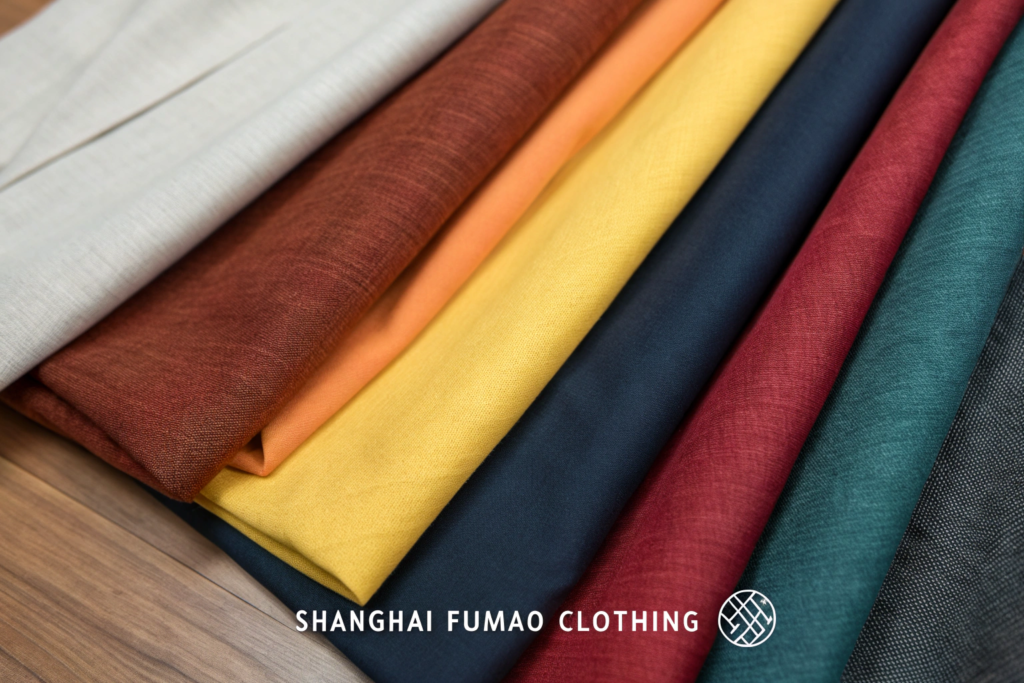
Fiber-reactive dyes are generally considered the safest option for natural fibers like cotton and viscose. These dyes form a chemical bond with the fiber molecule, so they become part of the fabric. They do not sit on the surface where they can rub off onto the skin. They also require less harsh chemicals to fix them to the fabric. For protein fibers like wool and silk, acid dyes are used, and high-quality versions of these are also safe. The most important thing is to look for certifications. A dyehouse that is OEKO-TEX certified has been audited to ensure their processes and dyes do not leave harmful residues.
Should You Avoid All Wrinkle-Resistant Finishes?
For the sensitive skin market, yes, you should generally avoid them. Traditional wrinkle-resistant finishes often use formaldehyde-based resins. Formaldehyde is a known skin irritant and allergen. While there are newer, formaldehyde-free wrinkle-resistant treatments, they are less common and more expensive. The safest route is to choose fabrics that are naturally wrinkle-resistant, like certain Tencel blends or tightly woven cottons, and accept that a little ironing might be needed. For a customer with sensitive skin, the trade-off of a few wrinkles is well worth the comfort and safety.
What Certifications Should You Look For?
You cannot just take a supplier's word that a fabric is safe. You need proof. In the textile industry, proof comes in the form of certifications. These are third-party audits that verify a product meets specific safety and environmental standards. For Jennifer, the buyer worried about baby products, certifications are non-negotiable.
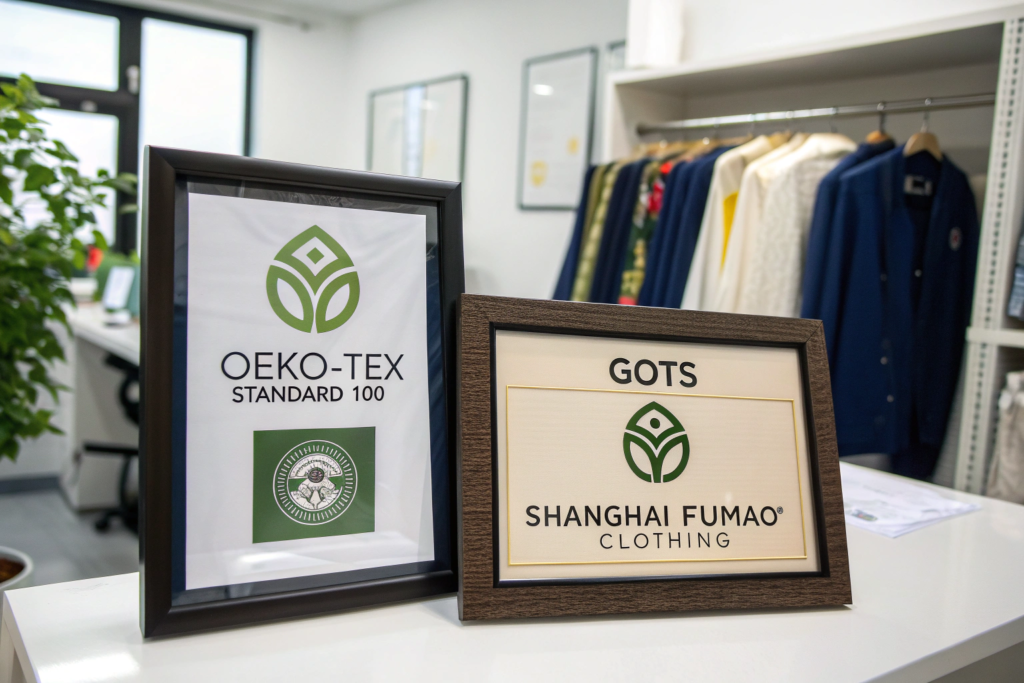
The most important certifications for sensitive skin fabrics are OEKO-TEX Standard 100 and GOTS (Global Organic Textile Standard). OEKO-TEX Standard 100 tests for hundreds of harmful substances, including pesticides, heavy metals, and formaldehyde. It has different product classes, with Class I being for baby products (the strictest). GOTS is the gold standard for organic textiles. It covers the entire supply chain, from the farm to the finished garment, ensuring both organic status and socially responsible manufacturing. At Shanghai Fumao Clothing, we can source and produce to both of these standards.
Other useful certifications include the EU Ecolabel and the Nordic Swan. These are also rigorous, government-backed certifications that indicate low chemical emissions and high environmental standards. For wool, the ZQ certification ensures high animal welfare and environmental practices, which often correlate with a cleaner, safer fiber. When you are sourcing for sensitive skin, do not be shy about asking for these certificates. A reputable supplier will have them ready or will be able to order certified materials for you. It is the only way to be sure.
What Is the Difference Between OEKO-TEX and GOTS?
This is a common question. OEKO-TEX Standard 100 is a product certification. It tests the finished product (the fabric, the thread, the button) for harmful substances. It does not care if the cotton was grown organically. It just tests the final item for safety. GOTS is a much broader, holistic certification. It requires that the fiber is certified organic. It also requires that the entire processing chain, from spinning to dyeing to cutting and sewing, meets strict environmental and social criteria. So, a GOTS-certified garment is both organic and made in a clean, responsible way. An OEKO-TEX-certified garment is safe to wear, but the fiber might be conventional. Both are good. GOTS is just a higher, more comprehensive standard.
How Do You Verify a Supplier's Certification?
Anyone can put a logo on a website. You need to verify. Ask the supplier for their actual certificate. It should have a certificate number and an issuing body, like Control Union or Ecocert for GOTS, or a specific OEKO-TEX institute. You can often look up this number on the certifying body's website to confirm it is valid and active. Also, check the scope of the certificate. Does it cover the specific product you are buying? Does it cover the factory that will make your garments? A certificate for a yarn mill does not cover a dye house. Verification takes a few minutes, but it protects you from fraud and ensures your brand's reputation stays intact.
Conclusion
Sourcing fabric for sensitive skin and allergies is about more than just picking a soft material. It is a commitment to purity and safety at every stage. You must choose fibers that are naturally gentle, like organic cotton, bamboo, and silk. You must avoid harsh chemical finishes and unsafe dyes. And you must demand third-party certifications to prove that your products are as safe as you claim. When you do this right, you are not just selling an accessory. You are offering peace of mind. You are telling your customers that their comfort and health matter.
If you are looking to develop a line of accessories for the sensitive skin market, we are here to help. We understand the materials, the processes, and the certifications required. Please contact our Business Director, Elaine, at elaine@fumaoclothing.com. Let's create products that feel as good as they look, for everyone.