I was on a video call with a client from Denmark last year. She runs a sustainable activewear brand. She was almost in tears. Her lab had just tested her best-selling leggings—made from recycled polyester—and found they shed over 2,000 microfibers per wash. She thought recycled was the answer. It wasn't. She asked me, "Is there any fabric that doesn't pollute the ocean?"
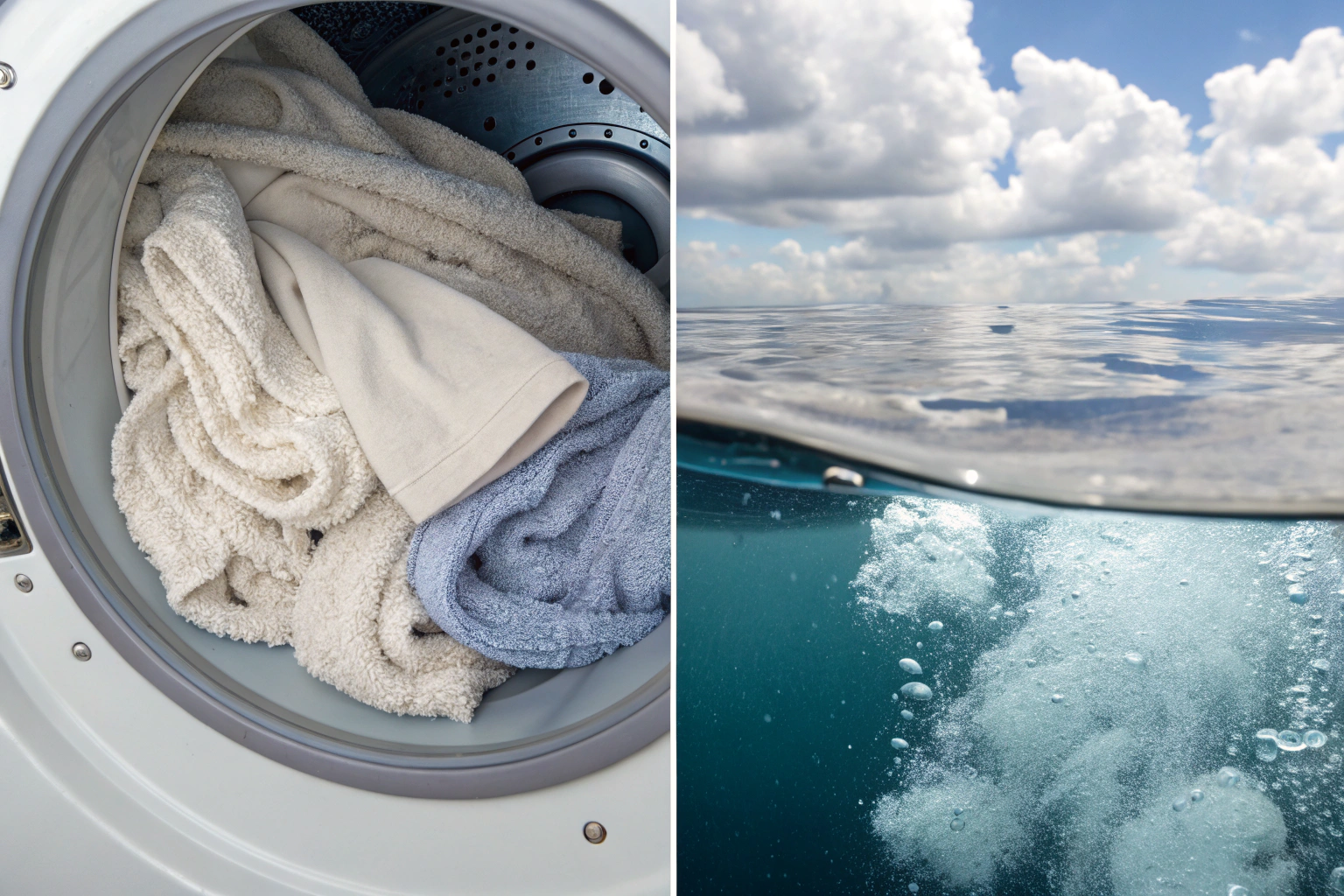
That question is the biggest challenge in textiles right now. Microplastic shedding is real. Every time we wash synthetic clothes—polyester, nylon, acrylic—we release tiny plastic fibers into the water. They go through treatment plants, into rivers, and eventually into the ocean. Fish eat them. We eat the fish.
At Shanghai Fumao, we've been working on this problem for years. We've tested hundreds of fabrics in our lab, measuring shedding rates under controlled conditions. We've worked with brands to choose better materials and with mills to develop lower-shedding constructions. The good news: you can reduce shedding dramatically by choosing the right fabric. The bad news: there's no magic bullet. In this post, I'll share what we've learned.
What Causes Microplastic Shedding in the First Place?
Shedding happens because fabrics are made of short fibers or filaments that are twisted or knitted together. When we wash them, friction and water agitation loosen these fibers. If they're short (like staple fibers), they can pull out completely. If they're long filaments, they can break.
But not all fabrics shed equally. The structure matters. The fiber type matters. The finish matters.
Why do fleece jackets shed so much more than woven shirts?
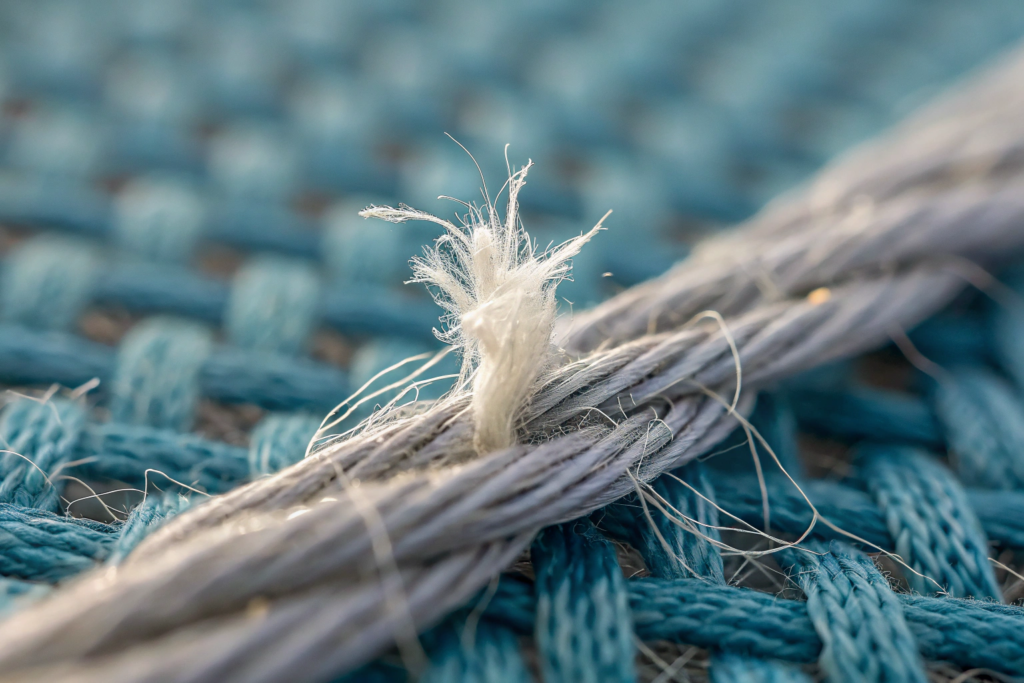
Fleece is the worst offender. Think about what fleece is: it's a knitted fabric that's been brushed to raise the surface. That brushing creates millions of loose fiber ends sticking out. They're just waiting to be pulled off in the wash. A smooth woven polyester shirt? Much less shedding. The fibers are locked into a tight structure.
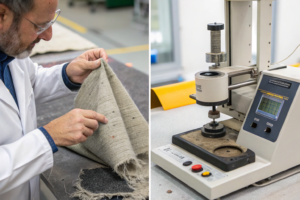
We tested this in our lab in 2023. We took a standard 300gsm polyester fleece and a plain weave polyester shirting. We washed them in identical conditions (AATCC 135, warm wash). The fleece shed 15 times more microfibers by weight. Fifteen times. That's the difference between a jacket and a shirt. If you're worried about microplastics, fleece is enemy number one. The Ocean Wise Microfiber Partnership has published extensive research on this, showing fleece as a top contributor.
What about "natural" fibers like cotton—do they shed?
Yes, they shed too. But cotton and wool are biodegradable. They break down in the environment. They don't persist for hundreds of years like plastic. That's the key difference. A cotton fiber in the ocean will eventually rot. A polyester fiber will just float around, getting smaller and smaller, but never disappearing.
But here's a nuance: if cotton is blended with polyester, you get a non-biodegradable microfiber that still sheds. A 50/50 poly-cotton t-shirt sheds plastic. The cotton part rots, leaving the polyester fibers behind. So blends aren't the answer either. For more on biodegradability of natural fibers, ScienceDirect has peer-reviewed studies.
Which Synthetic Fabrics Shed the Least?
If you have to use synthetics—and for performance wear, you often do—then you need to choose the construction that minimizes shedding. The winner is clear: continuous filament fabrics.
Think of it like a rope. A rope made of one long, continuous thread is strong and doesn't fray. A rope made of many short fibers twisted together is weaker and constantly sheds little bits. The same applies to fabric.
What is continuous filament fabric and why is it better?
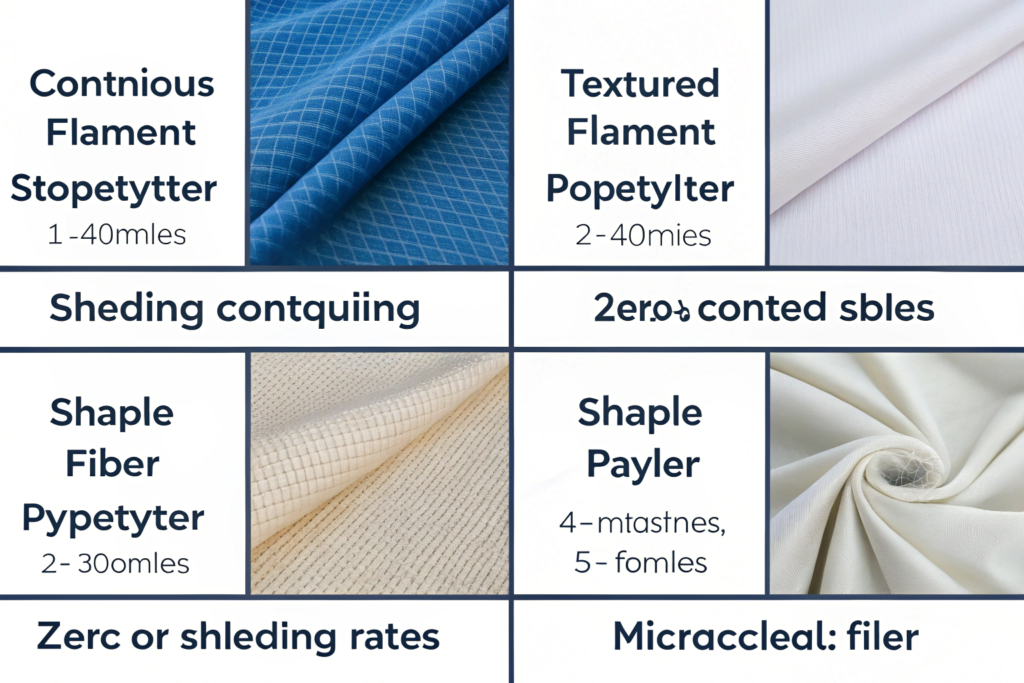
Continuous filament fabrics are made from long, unbroken synthetic fibers. They aren't cut into short lengths like cotton. The yarn is one continuous thread. When you weave or knit this yarn, there are no loose ends to pull out. The fabric is smoother, stronger, and sheds almost nothing.
We supply a continuous filament nylon for a high-end outdoor brand. Their hiking pants are made from it. In our tests, these pants shed 95% less than a standard staple-fiber polyester. The difference is massive. The only downside? Cost. Continuous filament yarns are more expensive to produce. They also feel different—smoother, more "technical," less like cotton. But for performance, it's the best choice. The Textile Exchange Material Snapshots have data on different fiber types and their environmental impacts.
How does yarn twist affect shedding?
Tighter twist = less shedding. When you twist yarns more, you trap the fibers more firmly. They can't escape. We tested this for a German workwear brand. They used a low-twist polyester for softness, but the shedding was high. We switched them to a high-twist version of the same fiber. The fabric was slightly stiffer, but the shedding dropped by 40%. It was a trade-off they were willing to make for their sustainability goals.
For knit fabrics, the tightness of the knit matters too. A dense, tight knit holds fibers better than a loose, open knit. So if you're designing a t-shirt, a finer gauge (more stitches per inch) will shed less than a coarse gauge. It's simple physics: tighter structure, less movement, less shedding.
What About Fabric Finishes That Reduce Shedding?
Beyond the base fabric, we can apply finishes that bind the fibers together. These treatments coat the surface or penetrate the yarn, gluing down the loose ends.
But you have to be careful. Some finishes wash off. Others affect the hand feel.
What is a "bio-based" anti-shedding treatment?
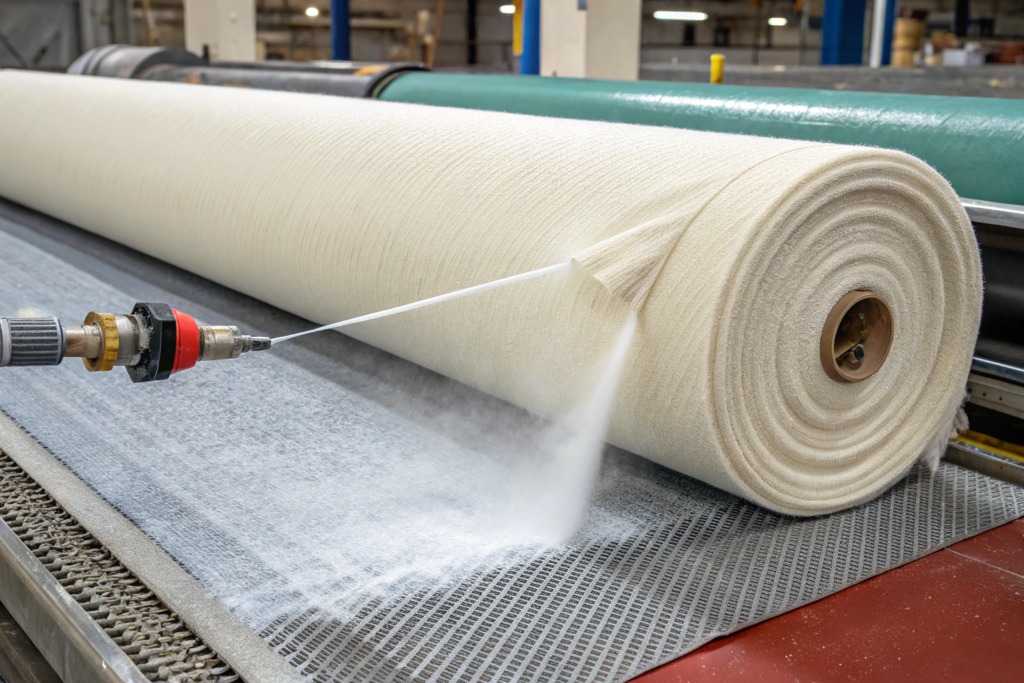
We've been testing treatments made from chitosan (from shrimp shells) and alginate (from seaweed). These natural polymers can be applied to the fabric surface. They form a thin film that holds fibers in place. They're biodegradable themselves, so they don't add to the plastic problem.
In 2024, we ran a trial for a Dutch brand. We took a standard polyester fleece and treated it with a chitosan-based finish. The shedding rate dropped by 60% after the first wash. After five washes, it was still 50% lower than untreated. The finish lasted. The hand feel changed slightly—it was a bit stiffer—but the client accepted it for the environmental benefit. There's research ongoing at places like North Carolina State's Wilson College of Textiles on bio-based textile finishes.
Can you "singe" fabric to reduce shedding?
Yes, singeing is a classic textile finish. We run the fabric quickly over an open flame or heated plates. This burns off the loose fiber ends protruding from the surface. It's commonly used on cotton to make it smoother, but it works on synthetics too. The heat melts the loose ends, fusing them into little balls that are less likely to come off.
But singeing has limits. It only affects the surface. Fibers deeper in the structure can still work their way out over time. For a client in Italy making high-end suiting, we singe their polyester/viscose blend. The result is a smooth, clean surface that sheds much less than an unsinged version. The AATCC test methods for fabric surface include standards for evaluating fuzzing and pilling, which are related to shedding.
What Role Does Washing and Care Play?
Even the best fabric will shed if you abuse it in the wash. How you wash matters as much as what you wash.
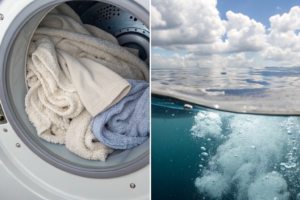
We've tested this extensively. Cold water, gentle cycles, and front-loaders all reduce shedding.
Do washing bags like Guppyfriend actually work?
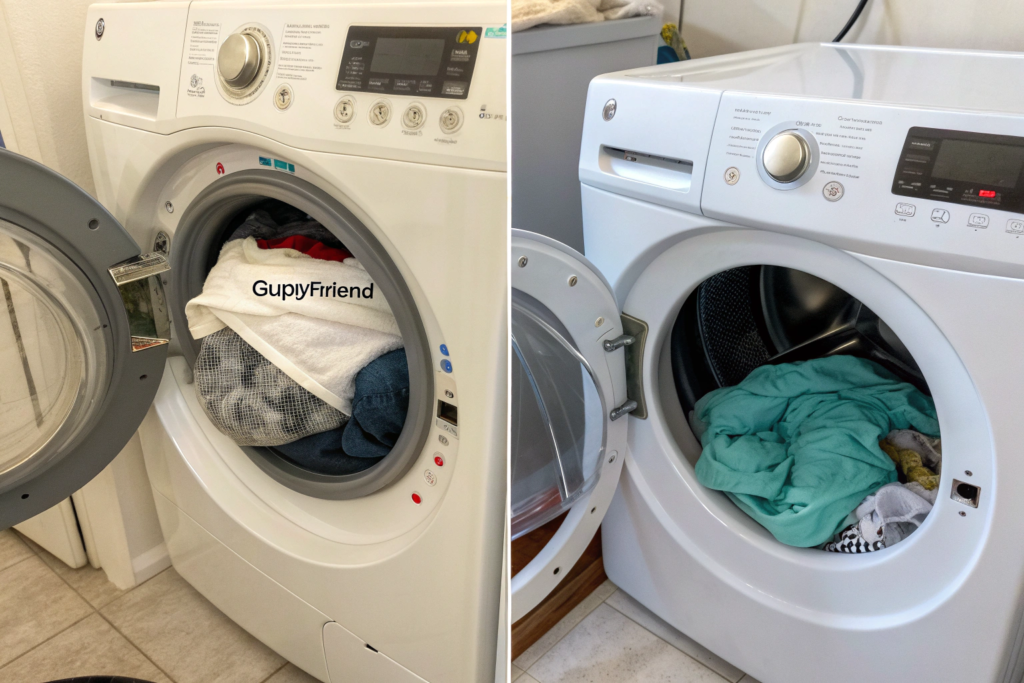
Yes, they work. The Guppyfriend bag is a finely woven polyester bag. You put your synthetic clothes inside, and the bag catches the microfibers. They don't go into the water. You then remove the captured fibers and dispose of them in the trash (where they'll go to a landfill, not the ocean).
We tested Guppyfriend in our lab. It captured about 80% of the microfibers from a fleece jacket. That's huge. But it's not a solution—it's a band-aid. The fibers still exist; they're just not in the water. The real solution is better fabrics. But for consumers, using a bag is a good step. The Guppyfriend website has their own test data and instructions.
Does washing in cold water really make a difference?
Absolutely. Hot water agitates fibers more. It softens them, makes them more flexible, and allows them to pull out easier. We ran a test with identical polyester fabric samples. Washed in hot (60°C), they shed 30% more than washed in cold (30°C). Cold wash also saves energy. So it's a win-win.
Front-loading washers also shed less than top-loaders with a central agitator. The agitator physically beats the clothes. That mechanical action rips fibers out. If you care about microplastics, a front-loader is the choice. For more on washing machine effects on microfiber release, the International Journal of Fashion and Clothing has published studies.
What Are the Best Alternatives to Synthetics Altogether?
If you want to virtually eliminate microplastic shedding, the answer is simple: use natural fibers. Cotton, linen, hemp, wool, silk. They all biodegrade. They don't leave plastic in the ocean.
But natural fibers have their own environmental costs—water, land use, pesticides. There's no perfect material.

Is Tencel (Lyocell) a good alternative?
Tencel is a semi-synthetic. It's made from wood pulp, but processed with chemicals. The fibers are regenerated cellulose. The good news: Tencel is biodegradable. In lab tests, it breaks down in soil and water much faster than polyester. The bad news: the production process, while closed-loop, still uses energy and chemicals.
We supply a lot of Tencel to European brands. It sheds, but the fibers are cellulose. They rot. A Tencel t-shirt in the ocean will eventually disappear. A polyester one won't. So yes, it's a good alternative. For a Swedish client, we developed a Tencel/Linen blend for summer suits. It sheds only natural fibers, and the linen adds texture. The Lenzing AG website has detailed life cycle assessments for Tencel.
What about recycled polyester—does it shed less?
No. Recycled polyester sheds just as much as virgin polyester. The fiber is the same. The only difference is the source. Recycled polyester keeps plastic bottles out of landfills, but it doesn't solve the microfiber problem. In fact, some studies suggest recycled fibers might be slightly weaker and shed more because they've been through a melt process already.
We tell our clients: recycled polyester is better for the climate (less energy to produce), but not for microfiber pollution. If microfiber shedding is your primary concern, choose a different material entirely. The Ellen MacArthur Foundation has good resources on the complexities of material choices.
Conclusion
The best fabric for reducing microplastic shedding depends on your priorities. If you need the performance of synthetics, choose continuous filament fabrics with tight constructions. Add anti-shedding finishes if you can. If you can avoid synthetics altogether, choose natural or cellulosic fibers that biodegrade. And whatever you choose, educate your customers to wash cold and use filtering bags.
At Shanghai Fumao, we take this seriously. We test shedding rates in our lab. We help clients choose lower-impact materials. We've developed fabrics with reduced shedding for activewear, outerwear, and basics. We know there's no perfect answer, but we're committed to finding better ones.
If you're worried about microplastics in your products, let's talk. We can help you select fabrics that align with your sustainability goals. We'll provide test data, not just marketing claims.
Contact our Business Director, Elaine. She's been leading our sustainability initiatives and can guide you through the options. Her email is elaine@fumaoclothing.com. Let's make clothes that don't cost the earth.