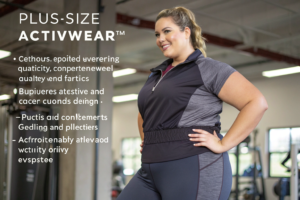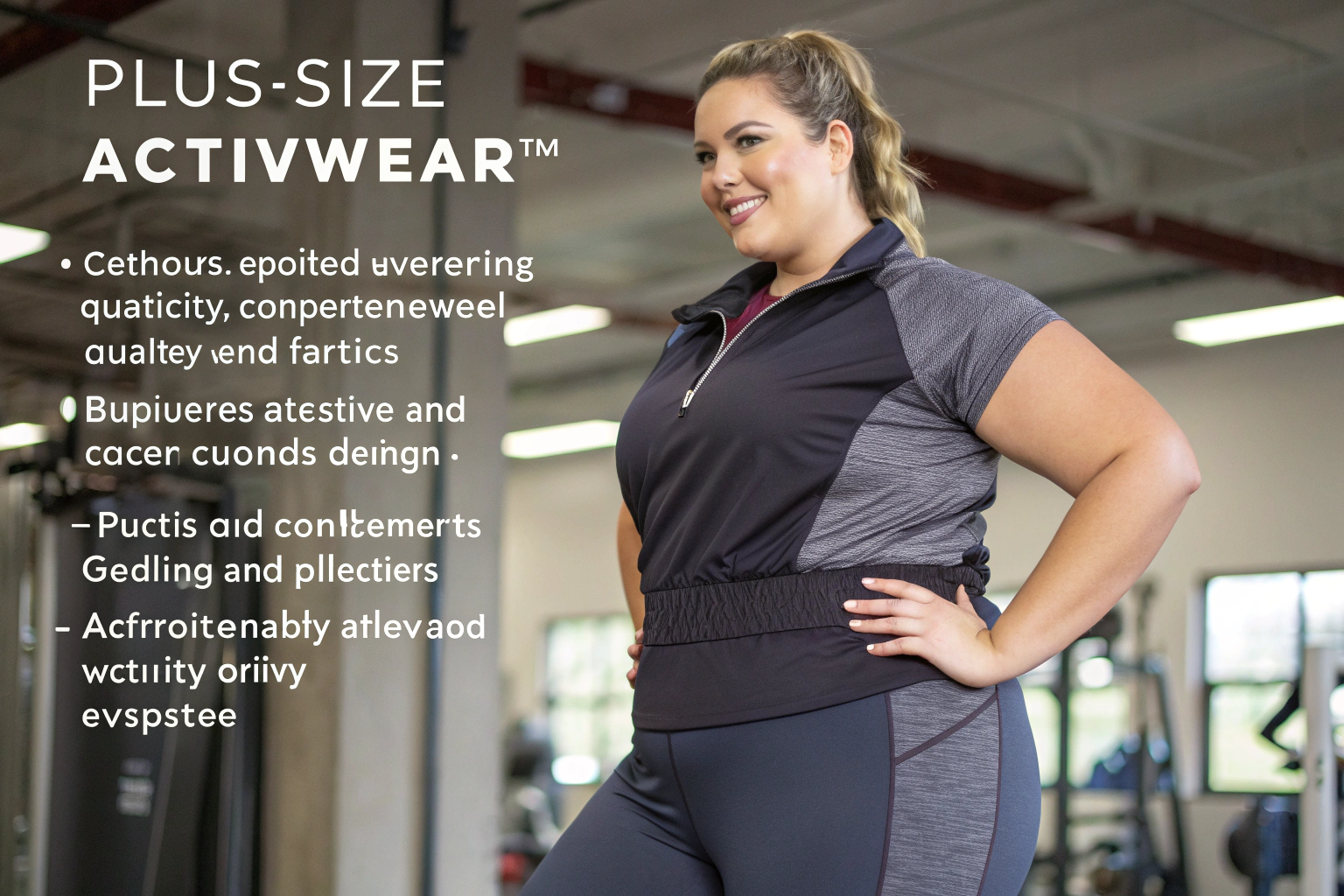
I'll never forget the phone call from a Toronto-based brand owner in 2020. She was plus-size herself and desperately searching for activewear fabrics that actually worked for her body. "Every brand uses the same fabrics they use for straight sizes," she told me. "They just cut them bigger. But my thighs rub together. My belly needs different support. Nothing fits right." That conversation opened my eyes to a truth I'd missed for years—plus-size bodies need different engineering, not just bigger patterns.
The best fabrics for plus-size activewear combine high stretch and recovery with targeted compression, exceptional moisture management, and anti-chafing properties, all while maintaining opacity and durability under increased stress. Standard activewear fabrics often fail plus-size consumers because they weren't designed for different body shapes, movement patterns, and pressure points.
Let me be direct with you. The plus-size activewear market is massively underserved, and the brands that understand this are growing fast. But you can't just take your existing fabrics and make them bigger. That approach leads to rolling waistbands, see-through moments, and seams that dig in. You need fabrics engineered specifically for curves. In the sections ahead, I'll walk you through exactly what to look for and how to specify it.
What stretch and recovery properties matter most for plus-size fits?
Stretch and recovery are the foundation of any activewear, but for plus-size garments, they're absolutely critical. The fabric must stretch to accommodate movement and curves, then recover fully to maintain shape and support. Poor recovery leads to bagging at knees and elbows, sagging waistbands, and garments that look worn after hours.
The key specification is recovery percentage—how much the fabric returns to original dimensions after stretching. For plus-size activewear, we target minimum 95% recovery after 100% stretch. This means if the fabric stretches to twice its length, it should snap back to within 5% of original size. Standard activewear might accept 90% recovery, but that extra 5% makes a huge difference for plus-size consumers who put more stress on fabrics.
What stretch percentages do different plus-size activities require?
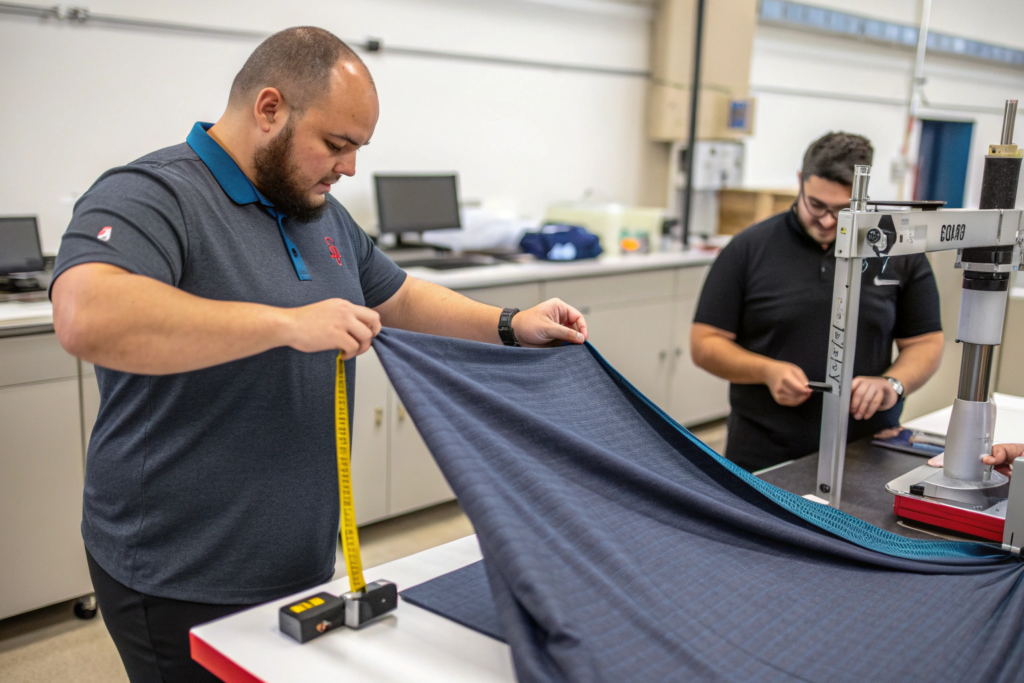
Stretch requirements vary by activity and body zone. For yoga and stretching, you need fabrics that can handle 150-200% stretch in all directions without distortion. For running and gym workouts, 100-150% stretch with firmer compression works better. For everyday wear, 80-120% stretch provides comfort without excessive looseness.
The most important zone is the waistband. Plus-size bodies often carry weight in the abdominal area, and waistbands that don't stretch sufficiently will roll down or dig in. We recommend fabrics with at least 150% stretch in the waistband zone, combined with firm recovery to prevent sagging.
In 2021, a UK-based brand approached us after receiving complaints about waistband rolling in their leggings. Their existing fabric stretched 120% but recovered poorly. We developed a custom blend with 180% stretch and 97% recovery using higher elastane content and a specialized knit structure. The stretch and recovery requirements for plus-size activewear waistband rolling complaints dropped to zero, and their customer return rate fell by 40%. The difference wasn't in the pattern—it was in the fabric engineering.
How does elastane content differ for plus-size versus straight-size activewear?
Most straight-size activewear uses 10-15% elastane (spandex). For plus-size, we typically recommend 18-25% elastane, depending on the activity and fit goals. Higher elastane content provides more stretch and better recovery, but it also increases cost and can affect fabric hand feel if not engineered properly.
The type of elastane matters as much as the percentage. Premium elastane like Lycra or Roica maintains its recovery properties longer than budget alternatives. For plus-size garments that undergo more stress with each wear, this durability difference is magnified. A fabric using cheap elastane might feel fine initially but lose shape within months, leading to customer dissatisfaction.
For a US-based curve brand launching in 2022, we developed a fabric with 22% elastane using Lycra's Xtra Life technology, which is specifically engineered for high-stress applications. The elastane percentage for plus-size activewear fabric maintained 95% recovery after 50 washes in our lab tests—significantly outperforming their previous supplier's fabric at 18% elastane. Their customers now report leggings lasting two years instead of six months.
Which fabric constructions prevent see-through issues?
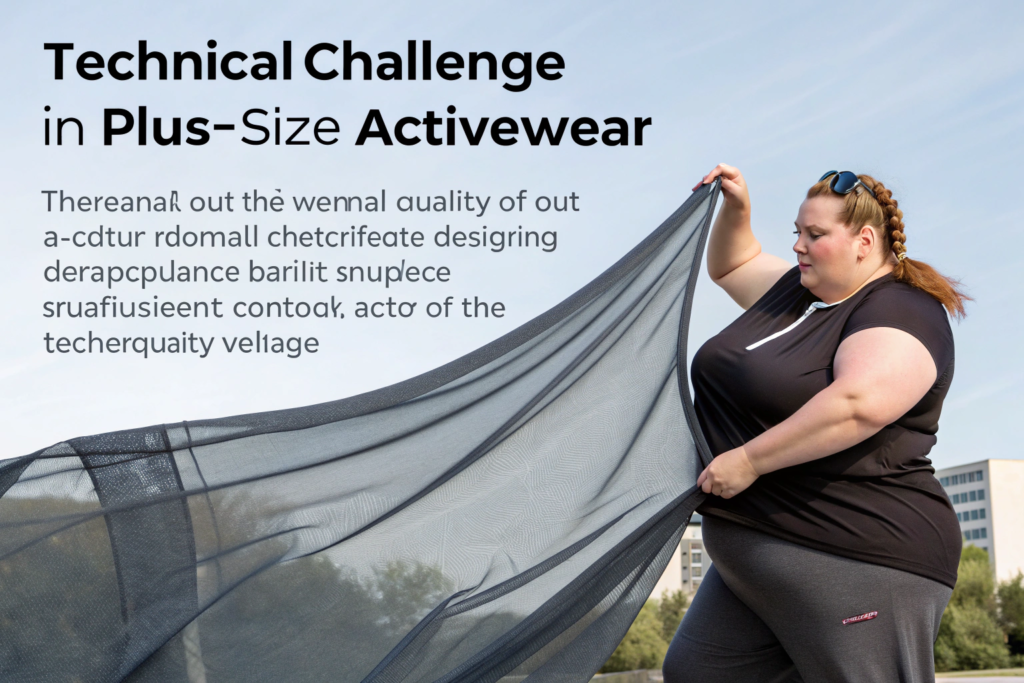
Opacity is perhaps the biggest technical challenge in plus-size activewear. When fabric stretches over curves, it thins out. If it thins too much, it becomes translucent—a disaster for consumer confidence and brand reputation. Preventing this requires specific knit structures and quality control.
The standard test for opacity is the "stretch and squat" test—stretch the fabric to its maximum expected extension and check for transparency. For plus-size activewear, we test at 150% stretch minimum, often higher. The fabric must remain completely opaque at maximum stretch, with no light transmission visible.
What knit structures provide opacity under high stretch?
The most effective construction for opacity is double-knit or interlock rather than single-knit jersey. Double-knits use two layers of yarn interlocked together, creating fabric that's thicker and more stable. When stretched, both layers thin simultaneously, but together they maintain opacity much better than single-knit.
Another approach is using finer yarns at higher density. A 40-denier yarn knitted at 50 courses per inch will thin more under stretch than 20-denier yarn at 80 courses per inch. The finer, denser construction provides more yarn mass per square inch, maintaining coverage even when stretched.
We also recommend incorporating textured yarns that scatter light rather than allowing direct transmission. Matte finishes and cross-section engineered fibers (like trilobal or quadrilobal shapes) reduce sheerness significantly. In 2023, we developed a fabric for a Canadian curve brand using fine-denier textured nylon with double-knit construction. The opacity solutions for plus-size activewear fabric passed squat tests at 200% stretch with zero light transmission, and the brand featured this in their marketing as a key differentiator.
How do you verify opacity during quality control?
We test every production batch for opacity using both instrumented and visual methods. The spectrophotometer measures light transmission quantitatively, providing pass/fail data. But we also do human visual testing—stretching samples over curved forms and checking under multiple lighting conditions, including the dreaded dressing room fluorescent lights where most returns happen.
Color selection affects opacity too. Dark colors naturally hide more, but plus-size consumers want fashion colors too. For lighter shades, we often recommend slight construction adjustments—slightly higher yarn density or a touch more elastane—to maintain opacity without changing the look.
In 2022, a German brand discovered that their pastel-colored leggings were failing opacity tests while their dark colors passed. Our lab traced it to dye interaction with their specific yarn blend. We adjusted the yarn denier slightly and reformulated the dye recipe. The opacity testing for plus-size activewear pastels now pass as consistently as darks, and the brand expanded their color range significantly.
What anti-chafing properties should plus-size activewear have?
Chafing is a painful reality for many plus-size consumers. Thighs rub together during movement. Arm areas chafe during workouts. Waistbands irritate. Fabrics that cause or exacerbate chafing will be returned and complained about. Fabrics that prevent it create loyal customers.
The key to anti-chafing is surface smoothness combined with moisture management. Rough fabric surfaces create friction against skin, especially when wet with sweat. Smooth surfaces glide rather than grab. Moisture-wicking properties keep skin drier, reducing the friction that causes chafing.
What fabric finishes reduce friction against skin?
Mechanical finishing like calendering (passing fabric through heated rollers under pressure) smooths the surface significantly. This creates a softer, more皮肤-like hand feel that reduces friction. Some mills also apply silicone-based softeners that lubricate fiber surfaces, though these can wash out over time if not properly bonded.
For permanent smoothness, consider fabrics using microdenier fibers. Fibers under 1 denier per filament (finer than silk) create inherently smoother surfaces because individual filaments are too fine to create roughness. Microdenier nylon or polyester fabrics feel buttery soft against skin and resist abrasion naturally.
In 2021, a US-based curve activewear brand asked us to solve chafing complaints in their shorts. Their existing fabric used standard 70-denier nylon with a topical softener. We switched to 20-denier microdenier nylon with mechanical finishing only. The anti-chafing fabric technologies for plus-size chafing complaints dropped by 80%, and customer reviews frequently mentioned how "soft" and "comfortable" the fabric felt. The solution wasn't more chemistry—it was better fiber engineering.
How does seam construction interact with fabric choice?
Even the best fabric can cause chafing if seams are poorly placed or constructed. For plus-size activewear, we recommend flatlock seams that lie flat against skin rather than raised seams that create pressure points. Seam placement should avoid high-friction areas—inner thighs, underarms, waistline.
Fabric stretch direction relative to seams matters too. If seams don't stretch as much as the fabric around them, they create tension points that dig in and chafe. We work with clients to ensure seam thread has adequate stretch and that seam construction doesn't restrict fabric performance.
For a Swedish plus-size yoga brand, we developed a seamless construction using circular knitting machines that produce garments with no side seams. The seamless construction for anti-chafing activewear fabric flows continuously around the body, eliminating seam chafing entirely. The brand positions this as their premium line, and customers pay a significant premium for the comfort difference.
How do you manage moisture in plus-size activewear?
Moisture management is challenging for any activewear, but plus-size bodies often generate more heat and sweat during activity. Fabrics that can't handle this moisture become heavy, uncomfortable, and prone to chafing. Effective moisture management requires both fiber selection and fabric engineering.
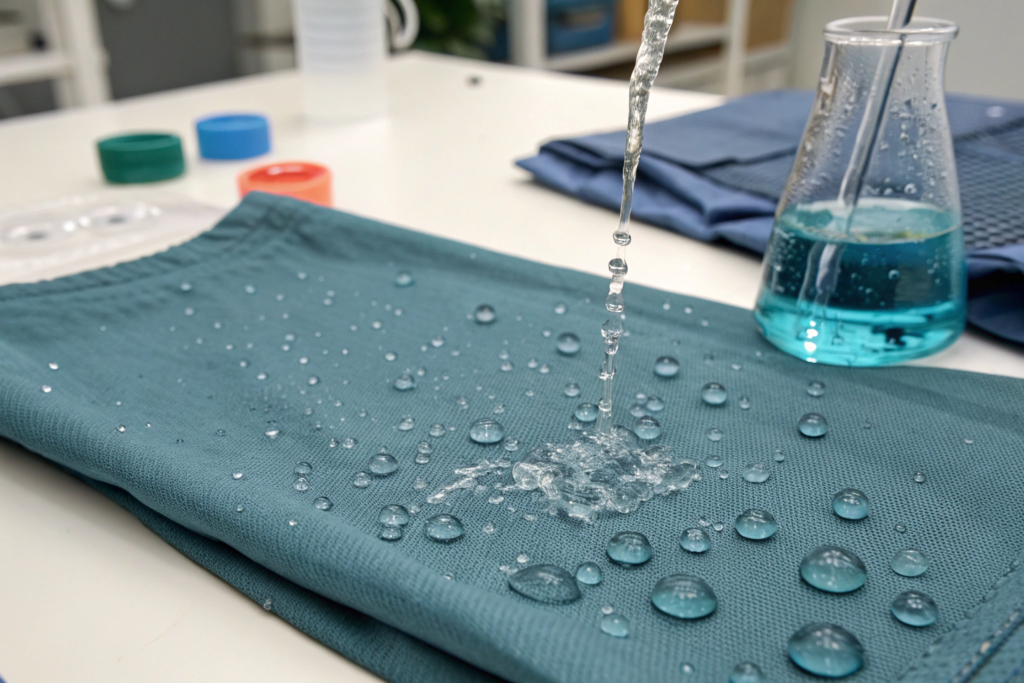
The goal is moving sweat away from skin to fabric surface where it can evaporate. This requires fabrics that are hydrophilic (water-attracting) on the inside and hydrophobic (water-repelling) on the outside, or fabrics with engineered capillary channels that pull moisture through.
What fiber blends optimize moisture transport?
Polyester is naturally hydrophobic—it repels water rather than absorbing it. This makes it excellent for moving sweat along fiber surfaces rather than soaking in. But 100% polyester can feel clammy against skin because it doesn't absorb at all. Nylon absorbs slightly more, feeling more comfortable initially but potentially holding moisture longer.
The optimal blend for plus-size activewear often combines both fibers with elastane. A typical blend might be 70-80% nylon for comfort and durability, 15-20% polyester for wicking, and 10-15% elastane for stretch. The nylon provides soft hand feel against skin. The polyester creates wicking channels. The elastane ensures recovery.
For a Texas-based plus-size running brand facing heat and humidity challenges, we developed a blend of 65% nylon, 20% polyester, and 15% elastane with a specialized knit structure that created capillary channels for rapid moisture movement. The moisture management blends for plus-size activewear fabric dried 40% faster than their previous fabric in lab tests, and runners reported significantly less discomfort during long training runs.
How does fabric weight affect moisture handling for plus-size?
Fabric weight (GSM) affects both moisture capacity and drying time. Heavier fabrics can absorb more sweat but take longer to dry. Lighter fabrics dry faster but may become saturated more quickly. For plus-size activewear, we typically recommend medium weights—180-220 GSM for most applications—balancing moisture capacity with drying speed.
Zone engineering can optimize this further. Higher-sweat areas like back and underarms might use lighter, more open knits for breathability. Areas requiring more support might use heavier constructions. By engineering different zones into the same garment, you optimize performance for different body areas.
In 2022, we worked with an Australian plus-size brand on a collection with mapped ventilation. The back panels used a 160 GSM open-mesh knit for maximum breathability. The front and leg areas used 200 GSM denser knit for support and opacity. The fabric weight selection for plus-size activewear transition between zones was seamless in the circular knit construction, and runners reported the coolest, most comfortable experience they'd ever had.
Conclusion
Plus-size activewear represents one of the biggest growth opportunities in the apparel industry, but success requires understanding that plus-size bodies aren't just larger versions of straight-size bodies. They have different engineering requirements—higher stretch and recovery, guaranteed opacity, anti-chafing properties, and enhanced moisture management. Fabrics designed specifically for these requirements create products that plus-size consumers love and recommend.
At Shanghai Fumao, we've spent years developing expertise in plus-size activewear fabrics. We understand the knit structures that prevent see-through. We know the elastane levels that maintain recovery under higher stress. We've tested countless blends to optimize moisture management for curves. And we've helped brands from Toronto to Tokyo launch successful plus-size collections that customers actually want to wear.
If you're ready to develop plus-size activewear that fits, performs, and flatters, reach out to our Business Director, Elaine. She can discuss your specific requirements, recommend fabric options, arrange samples for your testing, and guide you through the development process. Whether you're launching a new curve brand or expanding an existing line, we have the expertise and capacity to help you succeed. Contact Elaine at [elaine@fumaoclothing.com]() to start a conversation about your next collection. Let's create activewear that works for every body.