You're designing a line of adorable dog sweaters or chic cat bandanas, but then you stop and think: "Will this fabric irritate their skin? Can they move freely in it? What if they chew on it?" Designing for pets isn't just about scaling down human fashion—it's about solving a unique set of functional, safety, and comfort challenges for a non-verbal client. How do you choose materials that are cute, durable, and, above all, truly pet-appropriate?
The best pet fabrics prioritize the animal's well-being above all else. They must be non-irritating, breathable, non-restrictive, durable enough to withstand playful movement (and occasional chewing), and easy to clean. The "cuteness factor" comes second. This requires a fundamental shift in your fabric selection criteria, moving away from purely aesthetic choices to those rooted in animal comfort and safety.
As a supplier to both pet apparel brands and major manufacturers, we at Shanghai Fumao have tested fabrics against the rigors of playful puppies and fastidious felines. The difference between a product that gets five-star reviews and one that gets returned often comes down to the material's technical properties. Let's explore the fabric categories that work—and why.
What are the safest and most comfortable fabrics for pet wear?
When it comes to clothing that sits directly against a pet's skin—sweaters, pajamas, t-shirts—your primary considerations must be breathability, softness, and freedom of movement. Pets can't tell you if a fabric is itchy or too hot; they'll simply scratch, chew, or become lethargic. You have to anticipate their needs through careful material selection.
Natural fibers and high-quality, breathable synthetics dominate this space. The goal is to create a "second skin" that provides comfort without feeling like a constraint.
Why are cotton, jersey, and fleece top choices?
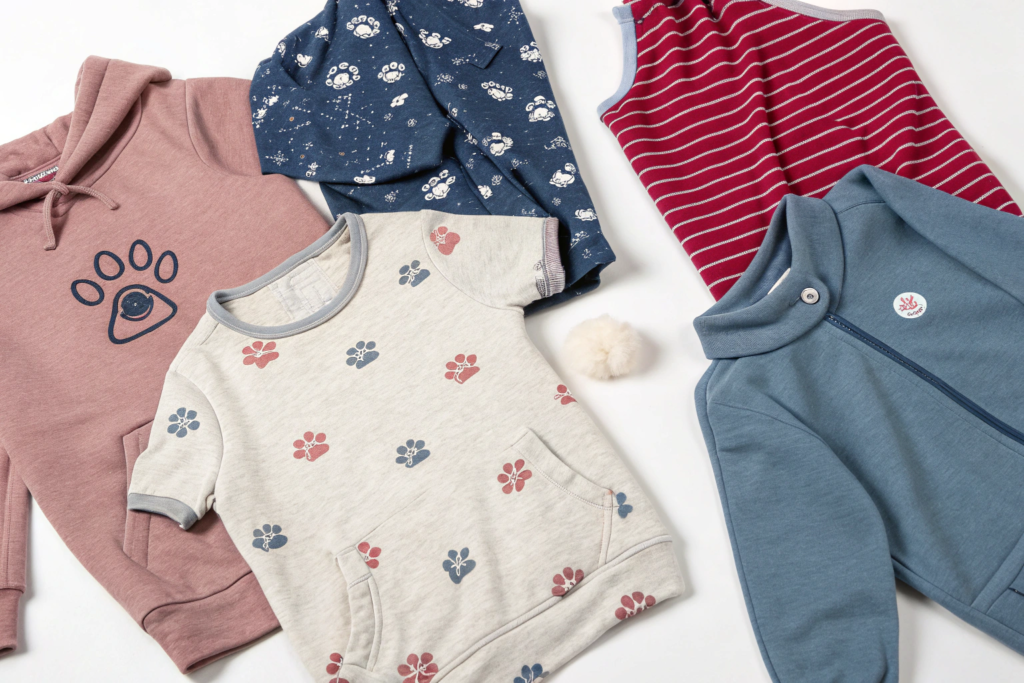
These fabrics form the comfortable core of most pet apparel because they balance softness, breathability, and ease of care.
- Cotton & Cotton Blends: A natural, breathable fiber that is less likely to cause allergic reactions. For active wear, a cotton jersey knit (often with 5-10% spandex/Lycra) provides excellent stretch and recovery, allowing for full range of motion. Look for brushed cotton or interlock knit for an extra-soft hand feel. It's ideal for lightweight shirts, recovery suits post-surgery, and simple bandanas.
- Polyester Fleece & Sherpa: The champions of warmth and coziness. Anti-pill polar fleece is soft, lightweight, quick-drying, and provides great insulation without being overly heavy—perfect for dog sweaters and winter coats. Sherpa (a plush, sheepskin-like fabric) offers superior softness and warmth. A crucial note: always ensure these synthetics are high-quality and breathable to prevent overheating. Cheap, non-breathable polyester can cause a pet to sweat and become uncomfortable.
A practical tip from our clients: for dog sweaters, using a rib knit cuff (made from a cotton/spandex or polyester/spandex blend) at the neck, legs, and waist helps the garment stay in place without being tight or restrictive. The stretch must have excellent recovery to maintain its shape.
What are the risks with wool, faux fur, and decorative trims?
Some attractive materials require extra caution.
- Wool: While warm, it can be itchy for many pets and may felt or shrink if not specially treated. Merino wool is a softer, finer option, but it's expensive and still requires careful washing. Generally, it's a niche choice best left for very specific, high-end items where you can control the fit and care.
- Faux Fur: Great for trim or accents but avoid using it as a primary lining. It can mat easily, trap heat, and if a pet chews it off, the long fibers can pose an ingestion risk. If used, keep it to decorative patches.
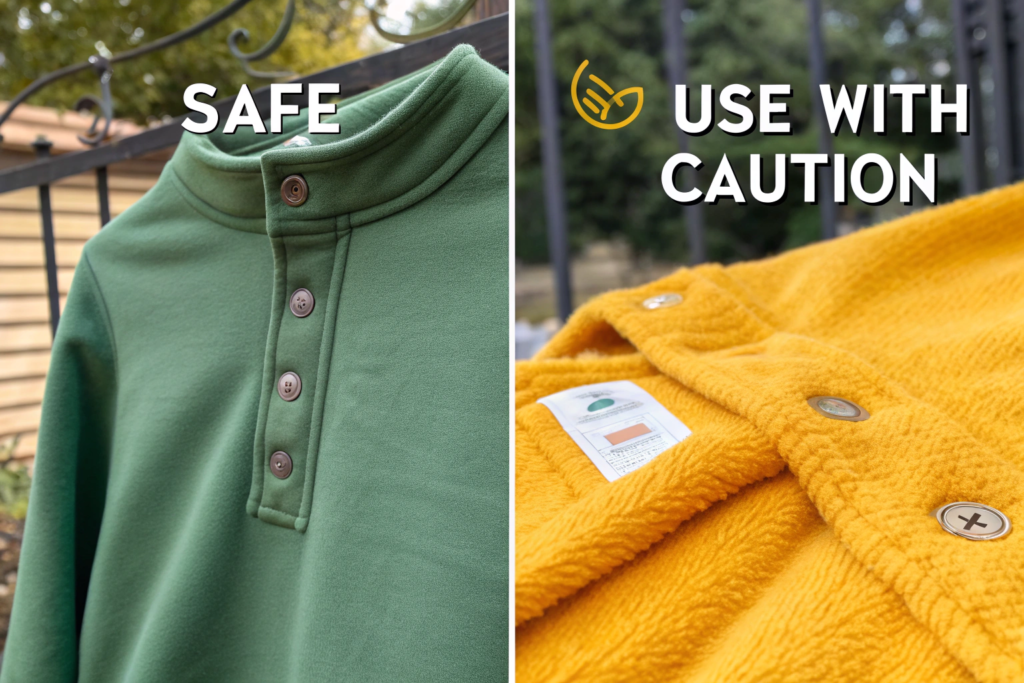
- Sequins, Beads, Buttons: These are major hazards. They can be chewed off and swallowed, leading to intestinal blockage—a veterinary emergency. If you must have decoration, ensure it is securely embroidered or printed on. Avoid any small, detachable components entirely.
The golden rule is: if you wouldn't let a toddler wear it unsupervised (due to choking hazards or irritation), don't put it on a pet.
What fabrics are essential for durable collars, leashes, and harnesses?
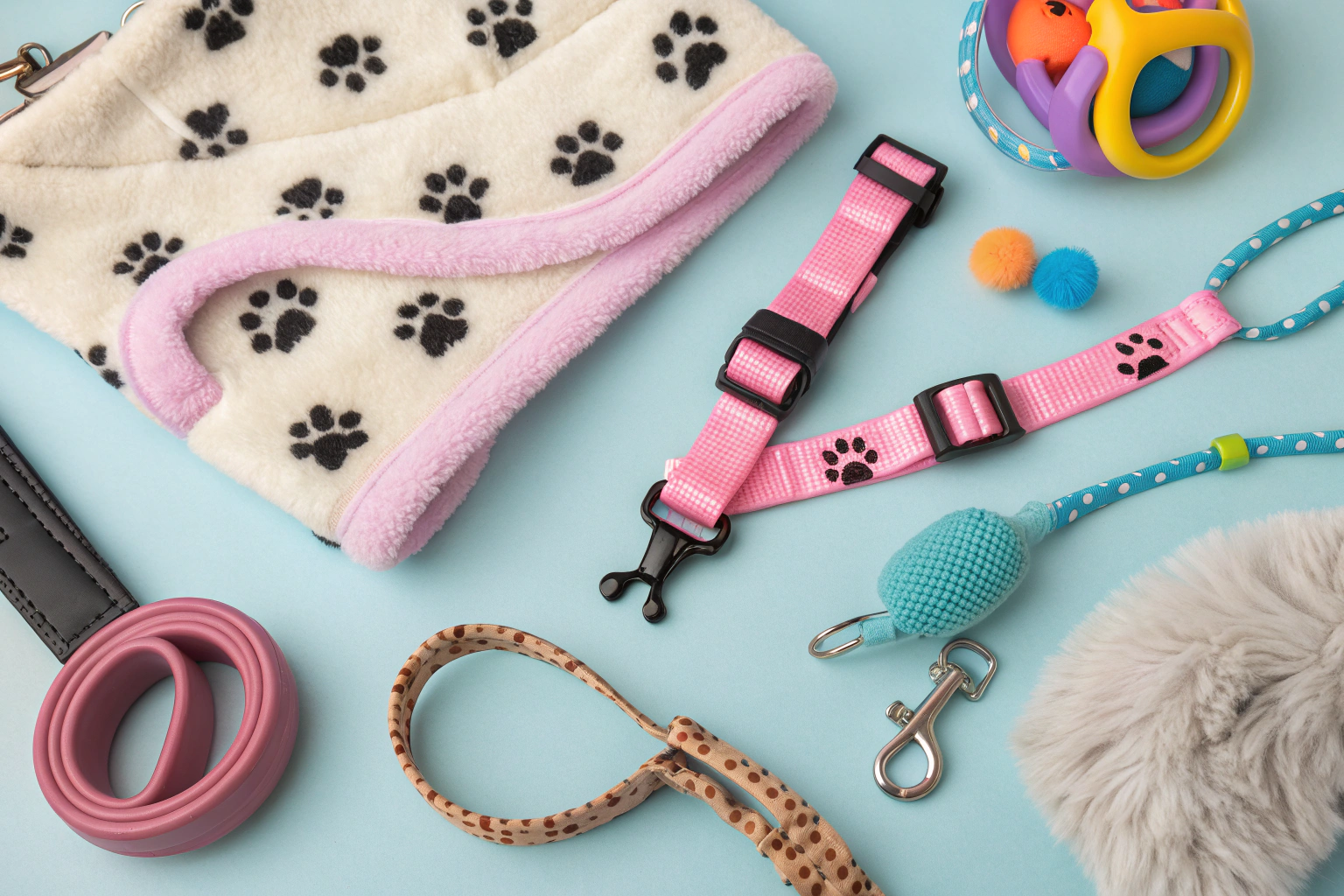
For functional gear that must withstand pulling, chewing, weather, and constant use, fabric requirements shift dramatically from apparel. Here, tensile strength, abrasion resistance, and weatherproofing are king. These items are safety-critical; failure is not an option.
The materials here are often technical webbings, coated fabrics, and heavy-duty hardware. Aesthetic appeal is achieved through color and weave pattern, not delicate textures.
How to choose webbing for collars and leashes?
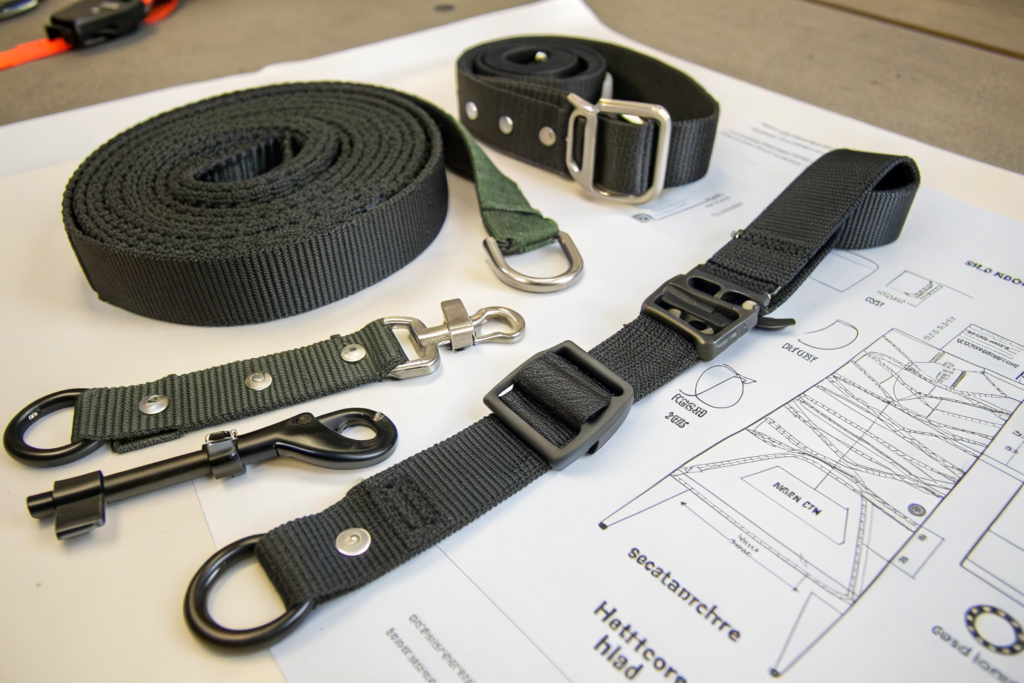
Webbing is the foundation. It's a tightly woven strip of fabric, and its composition defines its performance.
- Nylon Webbing: The most common and highly durable. It has excellent tensile strength and abrasion resistance. It's also somewhat flexible and softens over time. It comes in various widths (e.g., 3/4", 1", 1.5") and types (flat, tubular, seatbelt-style).
- Polypropylene Webbing: Less expensive and floats on water, but it is less UV-resistant and can degrade faster in sunlight. Better for indoor or temporary use.
- Polyester Webbing: Has good strength and is highly UV-resistant, making it excellent for gear that will be used outdoors frequently. It has less stretch than nylon, which can be a pro or con depending on the application.
- Biothane®: A coated webbing (usually polyester core with a TPU/PVC coating) that is completely waterproof, easy to clean, and extremely durable. It's odor-resistant and ideal for messy dogs or water sports. It has a distinct, glossy look.
For a standard dog collar or leash, nylon or polyester webbing with a minimum breaking strength of 500-1000 lbs is typical. Always ask your supplier for break strength test reports.
What about materials for harnesses and durable outerwear?
Harnesses require a combination of comfort and immense strength, often using multiple materials.
- Harness Construction: Often uses a mix of heavy-duty nylon webbing for structural points (like the chest strap) and softer, padded neoprene or mesh panels in areas of contact (like the chest plate or back) to prevent chafing.
- Durable Outerwear (Raincoats, Winter Coats): These need to be waterproof and/or insulated.
- Outer Shell: Look for coated nylon or polyester (e.g., with a PU coating). For breathable waterproofing, fabrics with a laminate like TPU are used.
- Insulation: Thermal fleece or synthetic insulated batting (like PrimaLoft®) that retains warmth when wet is ideal.
- Seam Sealing: For true waterproof claims, seams must be taped or sealed.
In 2023, we developed a reflective trim-integrated nylon webbing for a client making night-time safety leashes. The reflective yarns were woven directly into the webbing, providing 360-degree visibility without adding a separate, potentially chewable strip—a great example of functional fabric innovation for pet safety.
What are the critical safety and compliance considerations?
Pet products, especially those worn or used daily, are subject to a growing body of safety regulations and best practices. Your responsibility extends beyond creating a cute product to ensuring it poses no chemical or physical hazard. This is non-negotiable for reputable brands and is increasingly enforced by major retail platforms.
Your sourcing must include a verification step for material safety. This protects the pet, your brand's reputation, and your legal liability.
Which certifications should you look for (OEKO-TEX, CPSIA)?
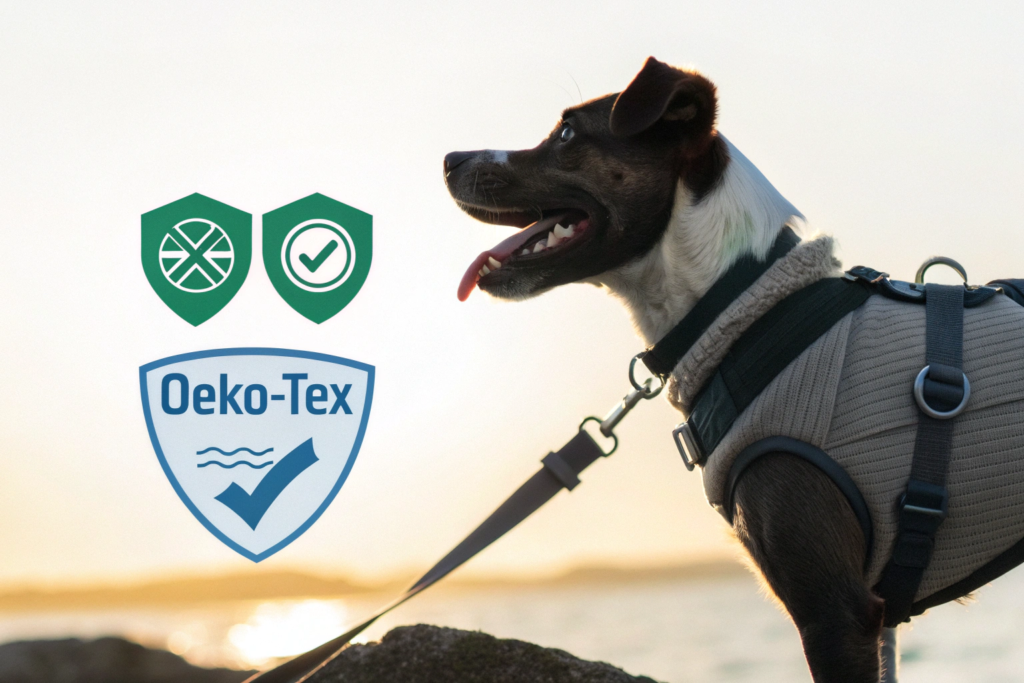
- OEKO-TEX® Standard 100: This is the most important certification for textiles in contact with skin. For pet products, it verifies that the fabric is free from harmful levels of over 100 regulated substances (heavy metals, formaldehyde, pesticides, etc.). Given pets often lick and chew their clothing/gear, this is crucial. Specify Class I (for baby products) or Class II (for articles with direct skin contact) for the highest assurance.
- US CPSIA (Consumer Product Safety Improvement Act): While primarily for children's products, its strict limits on lead and phthalates are an excellent benchmark for pet items, especially toys and items a pet might mouth. Many responsible pet brands voluntarily comply with CPSIA thresholds.
- REACH (EU): Restricts SVHCs (Substances of Very High Concern).
Always request the test report for the specific fabric batch from your supplier. A generic company certificate is not enough.
How to ensure designs are escape-proof and non-restrictive?
Physical design safety is as important as chemical safety.
- Fit is Everything: Patterns must allow for full range of motion. There should be no tightness across the chest, shoulders, or neck. Use stretch fabrics or incorporate gussets in key areas.
- Secure, Yet Quick-Release Closures: Velcro can fail if not high-quality. Zippers should have large, easy-to-grasp pulls and should not snag fur. Buckles should be secure but not overly complex for an owner to operate.
- Escape-Proof Considerations: For clothing, ensure neck and leg openings are snug but not tight, using ribbing or elastic. For harnesses, the design must prevent a dog from backing out. A martingale-style loop or a well-placed belly strap is often necessary.
- No Strangulation Risks: Avoid long, dangling ties or cords on hoods or coats.
A great resource for understanding safe design principles is reviewing guidelines from organizations like the International Association of Animal Behavior Consultants on pet gear safety.
How to source and produce pet fabrics cost-effectively?
The pet market is booming, but it's also competitive. Success requires smart sourcing that balances quality, safety, and cost, especially when starting with smaller volumes. You don't need to compromise on safety to be cost-effective; you need to be strategic in your supplier selection and production planning.
The key is to find suppliers who understand the pet category's specific needs and can work with the lower minimums typical of a niche but growing brand.
Where to find pet-specific fabric suppliers?
- Trade Shows: While not exclusively pet-focused, sections of major textile shows like Première Vision (PV) or Intertextile Shanghai feature suppliers of technical fabrics (fleece, waterproof coatings, webbing) perfect for pet gear. Global Pet Expo also has suppliers showcasing materials.
- Specialized Trim & Webbing Suppliers: Many companies specialize in dog collar webbing, hardware, and accessories. They often have lower MOQs on webbing (sold by the meter) and can provide complete "kit" solutions.
- Fabric Mills with Pet Lines: Some mills, like us at Shanghai Fumao, have developed fabric collections specifically for the pet industry. These are pre-vetted for safety and performance, saving you R&D time. We offer programs with MOQs as low as 300 meters for development.
- Upcycling & Stock Fabrics: For apparel, consider using high-quality stock fabrics (like fleece or jersey) from mills. The MOQ is lower, and you can create unique designs through pattern and trim.
How to manage small runs and sampling?
- Prototype with Swatches: Before committing to yardage, order meter-long samples of your shortlisted fabrics. Make prototypes and test them on real pets (friends' pets, animal models). Check for comfort, movement, and durability.
- Consolidate Your Color Palette: Design your entire collection around a core set of 2-3 fabrics (e.g., one fleece, one jersey, one webbing type). Ordering 500m of one fleece in 5 colors is more efficient and cost-effective than ordering 100m of 5 different fabrics.
- Partner with a Cut-and-Sew Manufacturer Who Understands Pets: The right factory will understand how to grade patterns for different breeds and how to securely attach hardware. Their expertise can prevent costly mistakes in production.
A successful client of ours started with a single, well-designed dog bandana in three prints using our stock cotton lawn. The low MOQ allowed them to test the market. Based on sales, they expanded into matching leashes (using our coordinating webbing) and then into sweaters, building a coordinated brand line step-by-step.
Conclusion
Selecting the best fabrics for pet clothing and accessories is an exercise in empathy and engineering. It begins with prioritizing the animal's physical comfort and safety—choosing soft, breathable, non-restrictive materials like cotton jersey and quality fleece for apparel, and incredibly durable, strong materials like nylon webbing and waterproof coatings for functional gear. This foundation must then be fortified with rigorous safety practices, including OEKO-TEX certification for chemical safety and intelligent design to prevent physical hazards. Finally, navigating the market requires strategic sourcing from specialized suppliers and smart production planning to manage costs while maintaining the high standards the modern pet parent demands.
Ultimately, the most successful pet brands are those that understand their products are not just fashion statements but tools for pet comfort, safety, and enrichment. The right fabric is the silent partner in this mission, working hard so pets can play, rest, and explore in comfort and security.
Ready to create pet products that are as safe and functional as they are fashionable? At Shanghai Fumao, we offer a curated selection of OEKO-TEX certified fabrics, durable technical webbings, and specialized materials perfect for the pet industry. From your first prototype to scaling production, we provide the materials and expertise to help your brand thrive. Contact our Business Director, Elaine, to discuss your pet project: elaine@fumaoclothing.com.