I had a serious conversation last year with a buyer named David. He sources home textiles for a chain of hotels across the US. He was frustrated. A shipment of beautiful curtains had arrived, but they failed the local fire safety test. He had to return the entire order at a huge loss. He told me, "I thought all fabric was fire-retardant. I was wrong. How do I make sure this never happens again?" David's problem is more common than you think. Fire safety is not optional. It is a legal requirement, and getting it wrong is expensive and dangerous.
The best fabrics for fire-retardant curtains and home textiles are inherently fire-resistant fibers like modacrylic, fiberglass, and wool, as well as natural fibers like cotton and polyester that have been treated with durable fire-retardant chemicals. Inherently FR fibers have flame resistance built into their molecular structure. Treated fabrics have a chemical finish applied. The choice depends on the specific safety standards required, the desired aesthetic, and the budget. At Shanghai Fumao Clothing, we guide our clients through this complex landscape, ensuring their home textiles meet all necessary safety regulations.
You might think all curtains are the same. But in commercial spaces like hotels, hospitals, and schools, the rules are strict. Even in homes, many people now want the extra safety of FR fabrics. Let me explain what you need to know to choose the right material for your project.
What Are the Key Fire Safety Standards for Textiles?
Before you even look at fabric, you need to know what standard you are aiming for. Different countries, and even different states, have different rules. A fabric that passes a test in Europe might fail in California. David learned this the hard way. Knowing the target standard is the first step in sourcing.
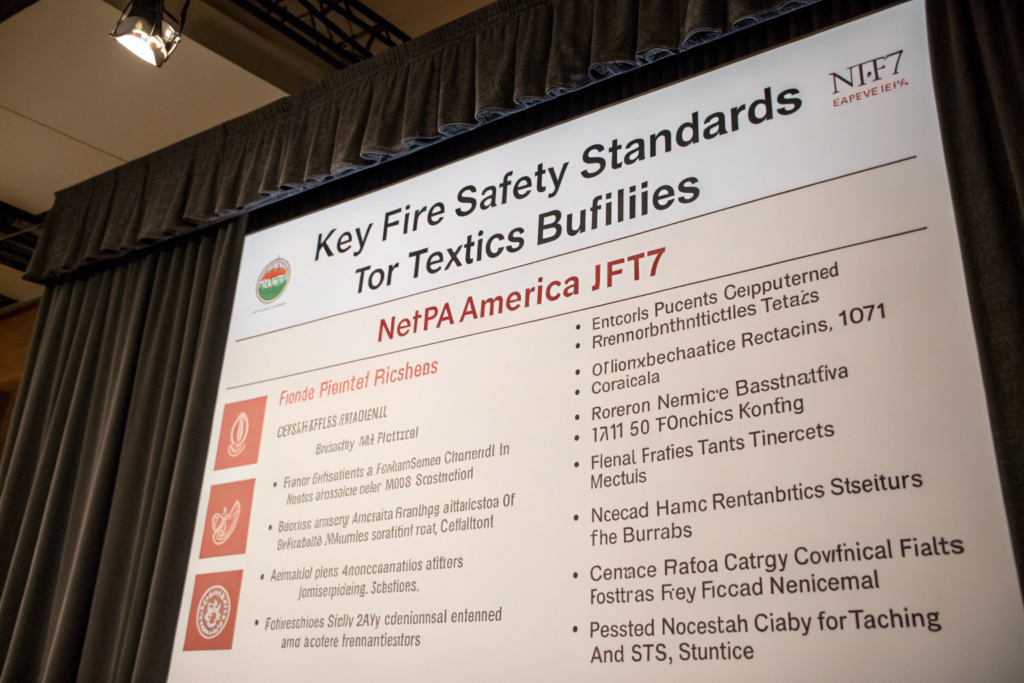
The key fire safety standards for textiles in North America are NFPA 701 and California Technical Bulletin 117 (TB 117). NFPA 701 is a standard for flame-resistant fabrics used in public spaces like theaters and hotels. It tests how a fabric burns when hung vertically. California TB 117 is a standard for upholstered furniture and filling materials, but it also applies to many home textiles. It tests the resistance to smoldering cigarettes and open flames. In Europe, the main standard is EN 13773 for curtains and drapes. At Shanghai Fumao Clothing, we test our FR fabrics to these specific standards to ensure compliance for our clients.
These standards are not just bureaucratic hurdles. They are based on real-world fire scenarios. NFPA 701, for example, simulates a curtain catching fire from a small flame. The test measures how quickly the flame spreads, how far it burns, and whether burning debris falls and could start another fire. TB 117-2013, the updated version, is more performance-based. It requires materials to self-extinguish within a certain time and not melt or drip dangerously. Understanding these tests helps you appreciate why certain fabrics are chosen for safety. It is not just about passing a test. It is about saving lives in a real emergency.
What Is NFPA 701 and When Is It Required?
NFPA 701 is the standard test method for flame propagation of textiles and films. It is typically required for curtains, drapes, and other hanging textiles in public buildings. This includes hotels, theaters, schools, hospitals, and restaurants. The test involves suspending a fabric sample vertically and exposing it to a controlled flame for a specific time. The test measures the char length (how far the fabric burned) and whether any flaming particles drip off. To pass, the fabric must self-extinguish and have a char length below a certain limit. If you are supplying curtains to any commercial client in the US, you should expect NFPA 701 compliance to be a requirement.
What Is California TB 117 and Why Is It Important?
California Technical Bulletin 117 is a flammability standard that has had a huge influence across the United States. Because California's market is so large, many manufacturers make their products to meet TB 117 for the entire country. The original TB 117 (1975) was criticized for leading to the use of harsh chemicals. The updated TB 117-2013 is different. It focuses on the performance of the finished product and the materials inside it. For home textiles like cushions, pillows, and upholstery fabrics, this standard is key. It requires materials to resist ignition from a smoldering cigarette and, in some cases, an open flame. Understanding this standard is essential for anyone sourcing upholstery fabrics or residential drapery for the US market.
What Are Inherently Fire-Retardant Fabrics?
The safest and most durable option for fire resistance is to choose fabrics that are inherently flame-resistant. This means the fiber itself, by its chemical nature, will not support combustion. It is not a coating that can wash off or wear away. It is built into the very structure of the thread.
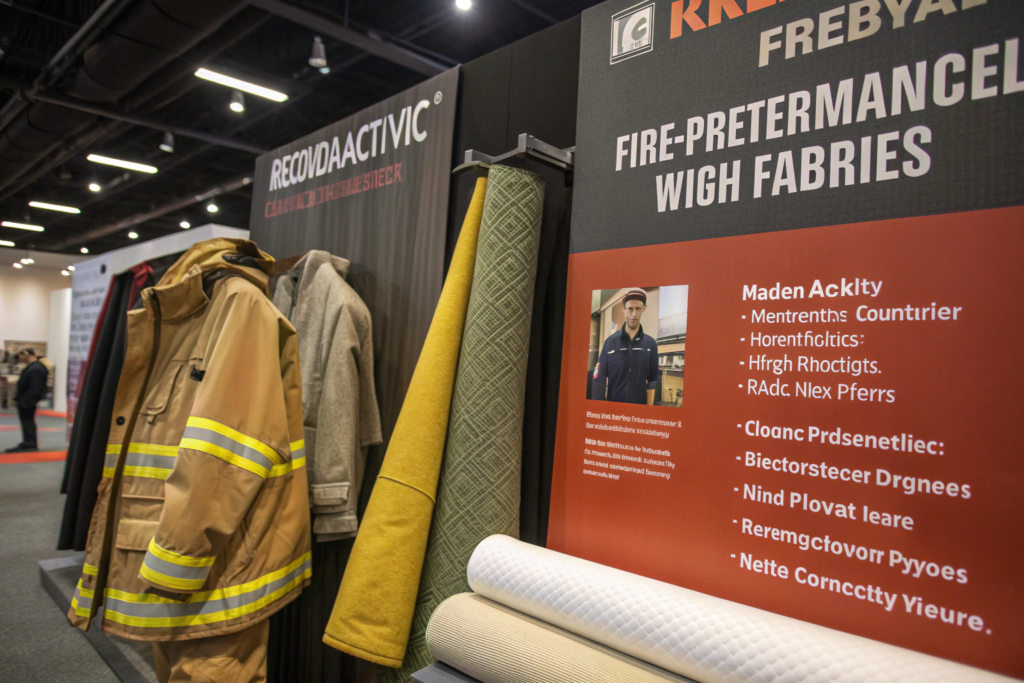
Inherently fire-retardant fabrics include modacrylic, fiberglass, and certain high-performance fibers like Trevira CS and Kevlar. Wool is also naturally flame-resistant due to its high nitrogen and moisture content. Modacrylic is a synthetic fiber that is naturally flame-resistant and is often used in blends for drapery and upholstery. Fiberglass fabrics are completely non-combustible but are stiff and not suitable for all applications. Trevira CS is a brand of polyester that has inherent FR properties built in at the polymer stage. These fabrics offer permanent protection without the need for chemical treatments.
Trevira CS is a particularly popular choice for contract textiles (fabrics for public spaces). It is a polyester fiber that has been modified at the molecular level to be flame-retardant. Fabrics made from Trevira CS are soft, drapable, and available in a wide range of colors and textures. They meet the strictest international standards, including NFPA 701 and many European norms. Because the FR property is inherent, the fabric can be washed and dry-cleaned without losing its protective qualities. This makes it a premium, long-lasting solution for hotels and other high-end commercial spaces.
Why Is Wool Considered Naturally Flame-Resistant?
Wool is a remarkable natural fiber with built-in safety features. It has a high ignition threshold. It needs more heat and oxygen to catch fire than many other fibers. It also has a high nitrogen and moisture content, which helps inhibit combustion. When wool does burn, it tends to self-extinguish. It forms a charred layer that insulates the material underneath and stops the flame from spreading. It also does not melt or drip like many synthetics, which is a major safety hazard in a fire. This makes wool an excellent, safe choice for curtains and upholstery, especially in high-risk environments.
What Is Trevira CS Fabric?
Trevira CS is a branded, inherently flame-retardant polyester fiber. The "CS" stands for "Contract Sector" or "Comfort and Safety." It is manufactured by the Trevira company and is a global standard for safety in textiles. The flame-retardant properties are achieved by incorporating a special additive into the polymer melt before the fiber is extruded. This means every single filament is flame-resistant. Fabrics made from Trevira CS are soft, easy to care for, and can be dyed in a vast spectrum of colors. They are widely used in hotels, cruise ships, theaters, and offices where safety and aesthetics must coexist. It is a premium choice that offers peace of mind.
What Are Treated Fire-Retardant Fabrics?
Inherently FR fabrics are great, but they are not always the right choice for every project. Sometimes you need a specific look or feel that only a different fiber can provide. That is where treated fabrics come in. These are common fibers like cotton or polyester that have been given a fire-retardant finish.
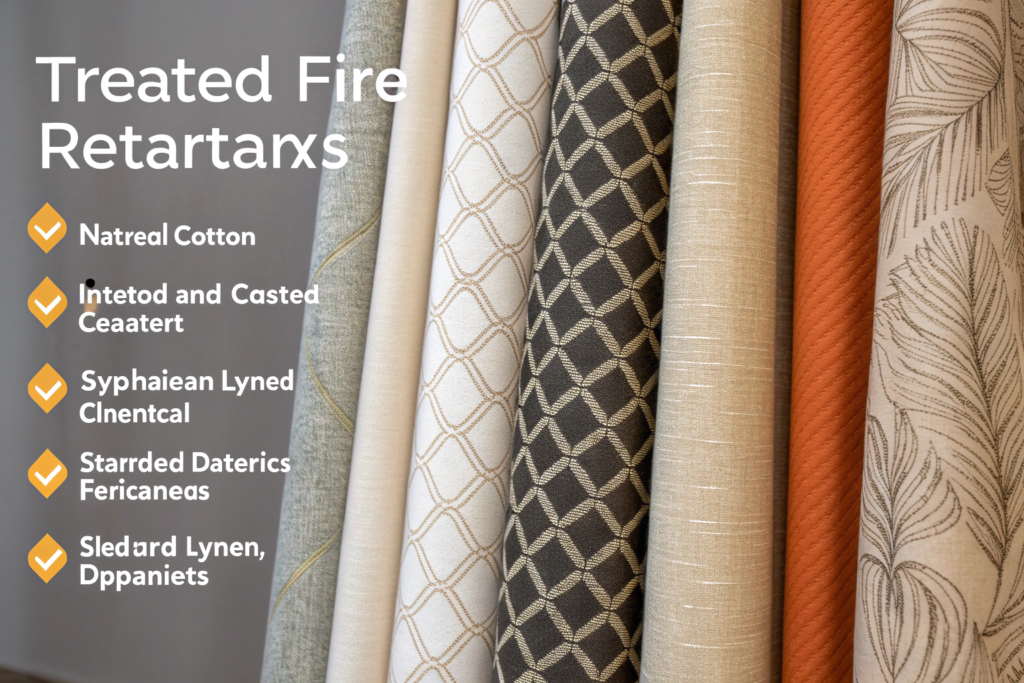
Treated fire-retardant fabrics are natural or synthetic fibers that have been coated or infused with fire-retardant chemicals. This is a common and cost-effective way to make fabrics like cotton, linen, and standard polyester safe for use in curtains and home textiles. The treatment can be applied to the finished fabric (topical) or incorporated during the dyeing process. These fabrics can meet the same safety standards as inherently FR fabrics, but the treatment may wash out over time and may need to be reapplied, depending on the specific chemical used.
There are two main types of treated FR fabrics: durable and non-durable. Durable FR treatments are chemically bonded to the fibers and can withstand multiple washings. They are required for items that will be laundered regularly, like hotel bedspreads or hospital curtains. Non-durable treatments are often used for items that will not be washed, like disposable drapes or temporary event fabrics. It is crucial to know which type you need. If you specify a non-durable FR treatment for a washable curtain, the fire protection will be gone after the first cleaning, creating a serious safety hazard. At Shanghai Fumao Clothing, we always clarify the durability requirements with our clients.
How Long Does a Fire-Retardant Treatment Last?
It depends entirely on the type of treatment. Durable FR treatments are designed to last the lifetime of the fabric, provided they are cared for properly. They can withstand numerous washings and dry cleanings without losing their effectiveness. Non-durable treatments are meant for single-use or items that will not be laundered. They can be degraded by water, dry cleaning, or even high humidity. This is why it is so important to ask your supplier about the durability of the treatment. You need to know the care instructions and the expected lifespan of the FR properties to ensure the fabric remains safe throughout its use. A reputable supplier will have this data from their mill.
Can You Reapply Fire-Retardant Treatment?
For some fabrics, yes. There are after-market fire-retardant sprays and dips available. However, this is generally not recommended for commercial or contract use. It is difficult to ensure an even, effective coating after the fabric has been made into a finished product. The application method may not meet the strict standards required for certification. For items that need to remain compliant with NFPA 701 or TB 117, it is far safer to start with a fabric that has a durable, factory-applied treatment or is inherently FR. Relying on after-market treatment introduces too much risk and uncertainty for professional buyers like David.
How Do You Choose Between Inherent and Treated FR Fabrics?
This is the decision David had to make after his failed shipment. Both options can be safe. Both can be beautiful. But they have different characteristics that matter for different projects. The choice comes down to the specific needs of your client and your product.
Choose inherently FR fabrics when you need maximum durability, washability, and long-term safety. They are ideal for high-use commercial spaces like hotels and hospitals where curtains and textiles will be laundered frequently. Choose treated FR fabrics when you need a specific aesthetic or fiber that is not available as an inherent FR option, or when budget is a primary concern. Treated fabrics can offer the look of natural linen or a specific cotton weave that might not exist in an inherent version. At Shanghai Fumao Clothing, we help clients weigh these factors to make the best choice for their contract textile projects.
Another factor to consider is the environmental impact. Some buyers are concerned about the chemicals used in FR treatments. Inherently FR fibers avoid the need for these topical chemicals. However, the production of synthetic inherent FR fibers has its own environmental footprint. There are also newer, bio-based FR treatments being developed that are more environmentally friendly. The landscape is complex and evolving. It is worth having a conversation with your supplier about the specific chemistry used and any relevant certifications, such as OEKO-TEX, which tests for harmful substances in both inherent and treated fabrics.
What Is Best for Hotel Curtains That Will Be Washed?
For hotel curtains that will be laundered regularly, inherently FR fabrics like Trevira CS or modacrylic blends are the best choice. They offer permanent, durable protection that will not wash out. This is critical for safety and for the hotel's liability. A treated fabric with a non-durable finish would lose its FR properties after the first wash, creating a dangerous situation. Even a durable treated fabric might degrade over multiple washes. Inherent FR fabrics provide peace of mind that the safety is built-in and permanent, no matter how many times the curtains are cleaned. This makes them the standard for the hospitality industry.
What Is Best for Residential Curtains?
For residential use, the requirements are often less strict than for commercial spaces. However, many homeowners are still concerned about safety. For residential curtains, a high-quality treated fabric can be an excellent choice. It offers the safety needed for a home environment at a more accessible price point. You can get the natural look of linen or cotton with an FR finish that meets applicable standards. Just be sure to follow the care instructions. If the curtains are washable, you need a durable treatment. If they will be dry-cleaned only, that also needs to be specified. The key is to match the product to the actual use case of your customer.
What Other Home Textiles Need Fire-Retardant Fabric?
Curtains are the most obvious, but they are not the only home textiles that need to be fire-safe. In commercial settings especially, many soft goods fall under safety regulations. David's hotel project also included bedding, cushions, and even some decorative wall hangings. All of these needed to be considered.
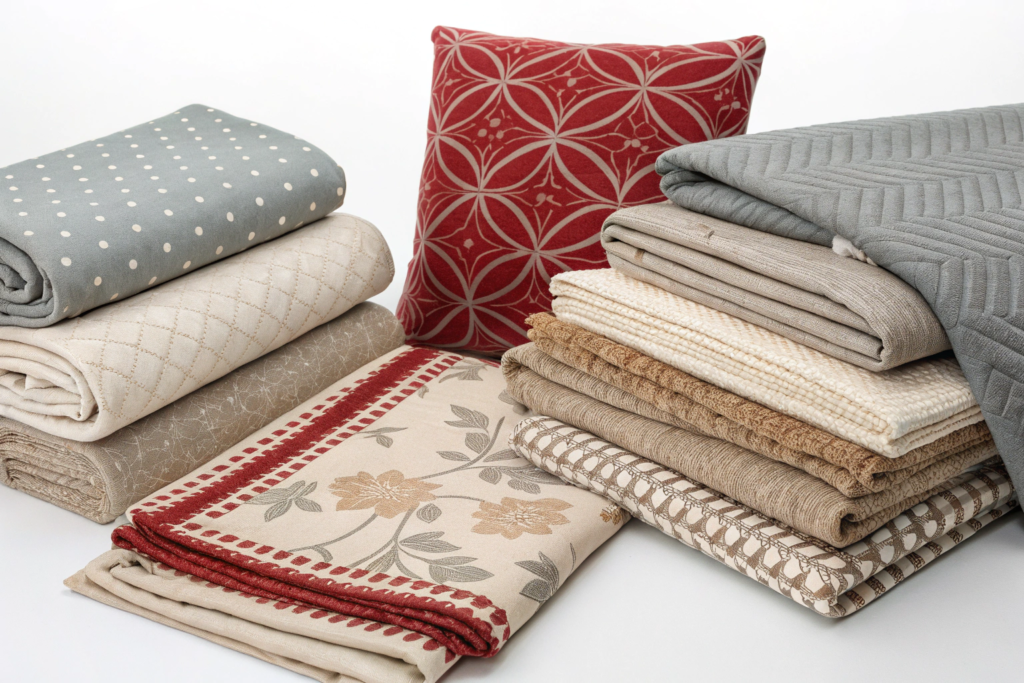
Other home textiles that often require fire-retardant fabric include upholstery for furniture, mattress ticking, bedspreads, pillows, cushions, and even some decorative throws and rugs. In public buildings, regulations often cover any soft furnishing that could contribute to the spread of a fire. Upholstery fabrics must resist ignition from smoldering cigarettes. Mattress fabrics must meet strict standards to prevent fires from starting inside the bedding. At Shanghai Fumao Clothing, we source FR fabrics for a wide range of these home textile applications.
The standards for upholstery are often different from those for curtains. Curtains hang vertically, so the test (like NFPA 701) focuses on vertical flame spread. Upholstery is horizontal, so the tests (like CAL TB 117) focus on smoldering and open-flame ignition on a flat surface. This means the fabric requirements can be different. A fabric that is great for curtains might not perform well in an upholstery test, and vice versa. It is important to source fabric that is specifically certified for its intended end use. A good supplier will provide fabric with the correct certification for the application.
What Standards Apply to Upholstery Fabrics?
In the US, the key standard for upholstery fabrics is California Technical Bulletin 117-2013. This standard has two main parts. The first part tests the fabric's resistance to smoldering ignition from a cigarette. The second part tests its resistance to open-flame ignition, simulating a match or lighter. Fabrics used in public spaces must pass these tests. Many residential upholstery fabrics are also made to meet these standards, even if not legally required, as it is a strong selling point for safety-conscious consumers. When sourcing upholstery fabric, always ask for the TB 117-2013 test report.
What Standards Apply to Mattresses and Bedding?
Mattresses are subject to some of the strictest fire safety regulations in the world. In the US, the federal standard is 16 CFR Part 1632 and 1633. These standards are designed to prevent mattress fires, which can be particularly dangerous because they often occur while people are sleeping. They test the mattress's resistance to both smoldering cigarettes (1632) and open flames (1633). The fabrics used in mattress construction, including the ticking and any flame barriers, must meet these rigorous tests. This is a highly specialized area. Sourcing fabric for mattresses requires working with mills that have deep expertise and certifications in this specific field.
Conclusion
Fire safety in textiles is not an area where you can take chances. The consequences of failure are too high. Whether you are sourcing for a hotel, a hospital, or a private home, you need to understand the standards, the materials, and the certifications. Inherently FR fabrics like modacrylic, Trevira CS, and wool offer permanent, durable protection. Treated fabrics offer flexibility and cost-effectiveness for many applications. The key is to match the fabric to the specific safety standard required for its end use and to ensure any treatments are durable enough for the expected care routine.
If you are sourcing curtains or home textiles and need to navigate the complex world of fire safety, we are here to help. We have the experience and the mill relationships to source fabrics that meet the strictest standards, from NFPA 701 to CAL TB 117. Please contact our Business Director, Elaine, at elaine@fumaoclothing.com. Let's make sure your next project is both beautiful and safe.