As a fabric manufacturer rooted in Keqiao for over 20 years, I’ve seen it all. I’ve watched buyers spend a fortune on a "premium" Italian wool suit only to complain it feels like a sweater in July. I’ve also seen startup founders buy cheap polyester blazers online, only to have them pill after two wears and look completely unprofessional. Finding that perfect balance between year-round comfort, durability, and that sharp, professional look is the holy grail for anyone building a work wardrobe.
The best fabrics for all-season business attire are high-performance wool blends, technical stretch cottons, and innovative synthetic mixes that prioritize breathability, wrinkle resistance, and durability. There is no single "magic" fiber; instead, the magic lies in the blend and the construction. You need fabrics that regulate your body temperature when you rush from a frigid air-conditioned office into the humid summer heat, and fabrics that hold a crease from your morning commute to your evening client dinner.
Think about your own closet for a second. You probably have a suit or a pair of trousers that you reach for constantly because they just work. They never feel too heavy, they don’t look like a crumpled mess after you sit down, and they seem to last for years. That’s not an accident. That’s textile science. In the following sections, I’ll break down the specific weaves, blends, and weights you need to look for, pulling back the curtain on how we actually make these fabrics here in China and what really matters when you’re sourcing them, whether you’re a solo entrepreneur or a buyer for a major brand.
What specific fabric weight (GSM) works best for year-round office wear?
This is the first question I ask every new client, from the European fashion brands to the direct-to-consumer startup owners in the US. They often come in asking for a specific fiber, like "100% wool," but the weight is what truly dictates the seasonality. If you get the grams per square meter (GSM) wrong, the garment will either feel like a winter coat in July or a paper napkin in January.
The sweet spot for all-season business attire is a tightly controlled range between 180 GSM and 250 GSM. This is what we in the industry call the "four-season zone." Below 180 GSM, fabrics start to become too flimsy. They lose their structure, wrinkle easily, and can feel a bit too light for a professional blazer or trouser. Above 250 GSM, you’re entering traditional winter suiting territory. The fabric gets heavier, warmer, and drapes with more weight. For a true year-round garment, 200-230 GSM is our go-to recommendation. Back in 2022, we had a client from a major New York-based brand who was insistent on using a 280gsm fabric for their "year-round" collection. We ran some wear tests and showed them the heat retention data. We convinced them to switch to a 210gsm high-twist wool blend, and their sell-through rates for the "transitional season" increased by over 15%.
How does a 200gsm wool blend compare to a 250gsm for summer wear?
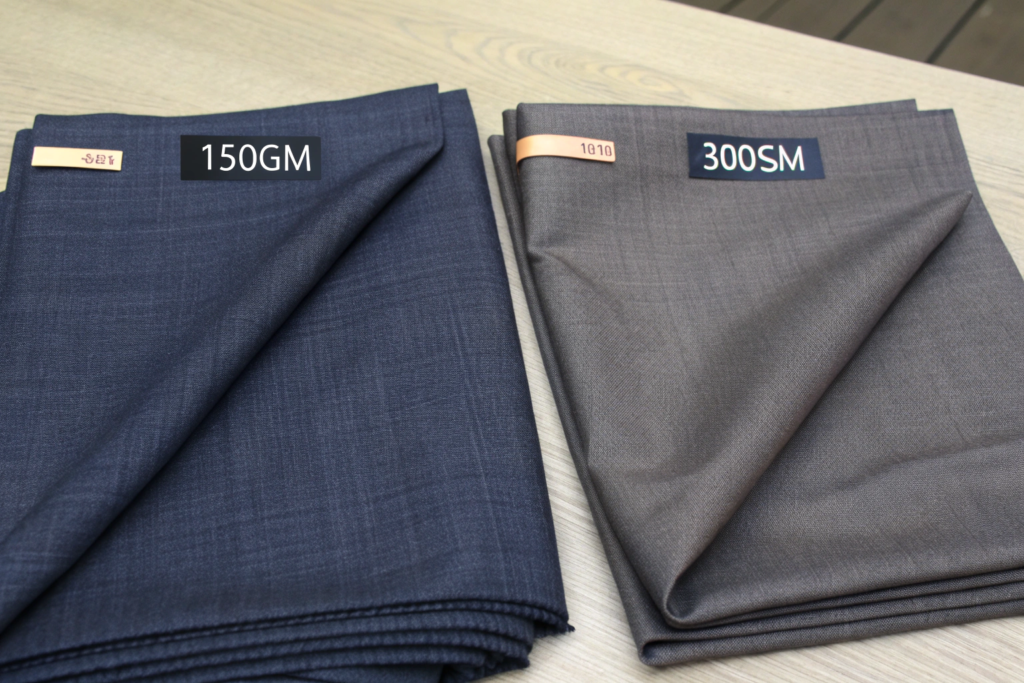
You feel the difference immediately when you pick up the swatch. A 200gsm fabric has a much more open, breathable structure. Think of it like a finely woven basket compared to a solid piece of wood. At Shanghai Fumao, we use specific weave structures, like a high-twist plain weave or a porous hopsack, to enhance this breathability even in a 200-220gsm fabric. The yarns are twisted tighter, which creates microscopic gaps for air to circulate.
A 250gsm fabric, on the other hand, is denser. It’s fantastic for holding warmth and draping heavily, but in a humid summer month like August in NYC, it will feel stifling. For a true all-season garment that needs to perform in both June and January, I’d always steer you towards the lower end of that spectrum and rely on blending. For instance, a how to choose a breathable suiting fabric blend of wool with a touch of lyocell or recycled polyester can make a 210gsm fabric feel cooler and more breathable than a 100% wool 180gsm fabric.
Why is fabric stability more important than just the weight number?
Fabric weight is a great starting point, but stability is what makes a garment look expensive. I’ve handled thousands of meters of fabric where the weight was perfect on paper, but the suit looked terrible after three wears. The culprit is poor fabric construction, often seen in cheaper fabrics with a "loose twist." The yarns shift and the fabric loses its shape.
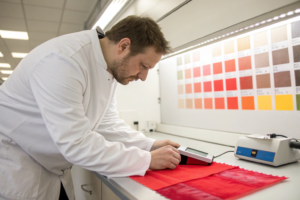
We focus heavily on the twist factor and the finishing process. A high-twist yarn, often used in "fresco" or "tropical" wool weaves, locks the fibers together. This creates a fabric that is incredibly resilient. It can be packed in a suitcase and literally "bounce back" with minimal wrinkles. Our in-house CNAS-accredited lab tests for this. We measure something called "crease recovery." A high-quality all-season suiting should have a recovery angle of over 300 degrees. This kind of technical fabric properties for suiting data is what we share with clients to prove a fabric's worth, not just its weight. We’ve had clients pay a premium for this stability because it directly translates to happier customers and fewer returns.
How can you identify wrinkle-resistant suiting before buying bulk?
This is a pain point I hear from every US buyer, especially after they've been burned by "wrinkle-free" claims that turned out to be marketing fluff. You can’t just trust a label. You need to know the how and the why behind the wrinkle resistance. Is it a chemical finish that will wash off? Or is it engineered into the very structure of the yarn? This distinction saves you from huge logistical headaches and costly returns later.
The first thing I tell people is to look for "permanent" vs. "temporary" solutions. A temporary solution is a topical resin finish. It coats the fibers. It works for a while, but after a few dry cleans, it degrades. The fabric softens and starts to wrinkle again. The permanent solution is using high-twist yarns or blending with inherently resilient fibers like polyester or nylon, but doing it intelligently. We engineer wrinkle resistance from the inside out. For example, in 2023, a German client came to us with a problem: their poly-rayon suiting was getting returned because it wrinkled in transit. We reformulated the blend to a 65% polyester, 30% viscose, 5% elastane mix, but crucially, we used a textured polyester yarn that has a natural spring-back quality. Their complaint rate dropped by 90% overnight.
What’s the real difference between mechanical stretch and adding spandex for comfort?
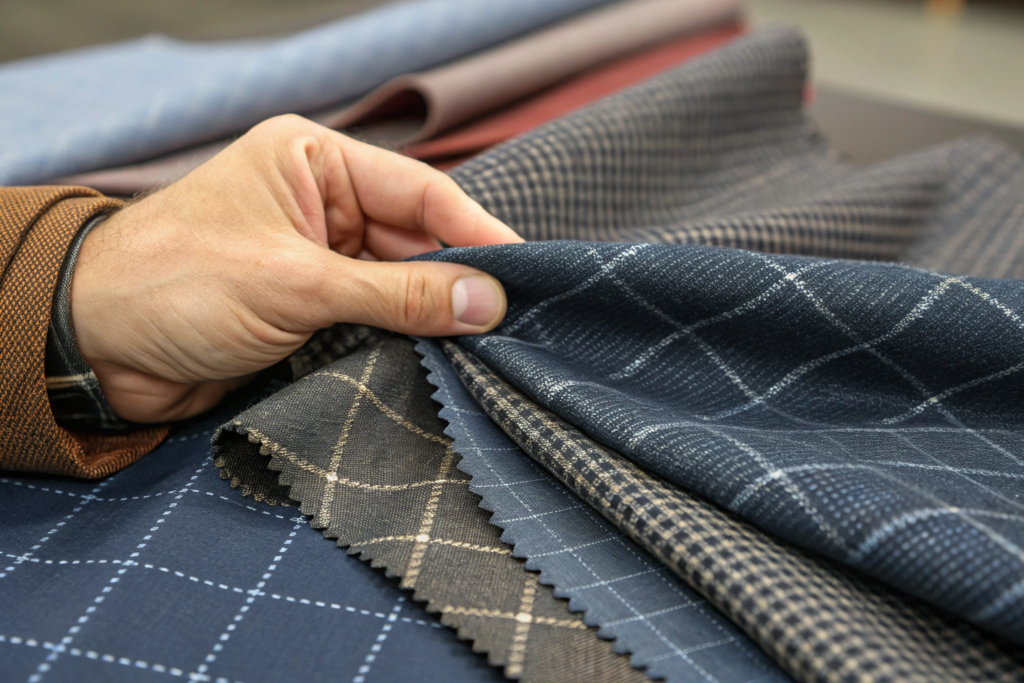
This is a huge point of confusion, even for experienced garment makers. Both give you "stretch," but they feel completely different. Adding spandex (elastane) is the most common method. You get that obvious, rubber-band like stretch. It’s great for recovery, meaning the fabric snaps back into place. But if you add too much, or use a cheap spandex, the fabric can lose its structured, professional look and start to bag out at the knees or elbows.
Then there’s mechanical stretch. This is achieved through the weave itself. Think of a specialized twill or a weave with longer floats. The yarns have room to move and compress within the structure, giving a subtle, inherent give. It feels more natural, more like the fabric is "breathing" with you. At Shanghai Fumao, we often recommend a "comfort stretch" woven fabric for clients who want the ease of movement without the synthetic feel. We developed a fabric for a Canadian athleisure brand entering the suiting market that used this principle. We used a how to source mechanical stretch suiting fabric high-twist wool wrapped around a core of fine nylon. It gave them 15% stretch, all from the construction, and the feedback from their customers was that it felt like "wearing a sport coat that moved like a sweatshirt."
Can a fabric's finishing process guarantee it won't wrinkle?
Yes, but you need to understand which finish. There’s a big difference between a "sanforizing" finish, which controls shrinkage, and an "easy-care" resin finish, which controls wrinkles. A good resin finish, when applied correctly in a controlled environment like our partner finishing plant, can be very effective. But it’s not magic. It’s a chemical cross-linker that bonds to the cellulose fibers (like cotton or viscose) and prevents them from bending as easily, thus reducing wrinkles.
However, a poor-quality resin finish can lead to two major problems: odor and yellowing. We’ve tested fabrics from other mills where the finish wasn't properly cured. The formaldehyde-based resins release that awful fishy smell when the garment gets warm. Or worse, the finish can cause the fabric to yellow over time, especially on lighter colors like sky blue or cream. This is why our QC process involves a "hot storage" test. We put fabric samples in a controlled oven at 50°C for 24 hours to check for quality control in wrinkle resistant fabrics any odor or color change. If it passes that, we know the finish is stable. We’re not just slapping on a chemical; we’re engineering a result.
Which sustainable fabric blends offer the best performance for suits?
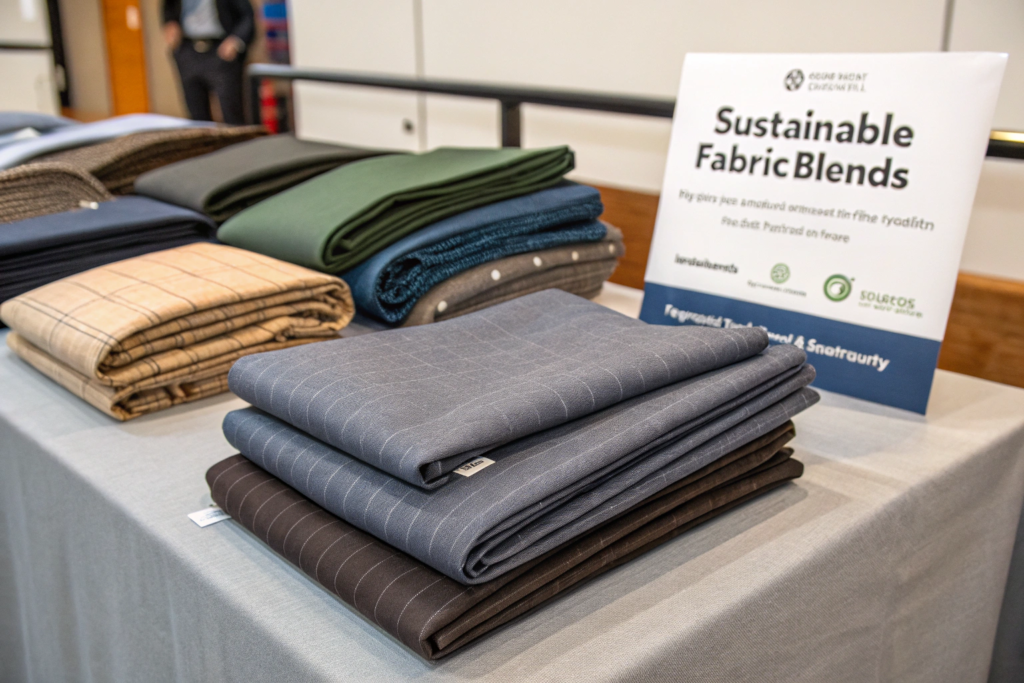
Sustainability isn't just a buzzword for us; it's a manufacturing reality. For years, "eco-friendly" suiting meant burlap-like hemp or flimsy, easily wrinkled linen. Not anymore. Today’s sustainable fabrics, when blended correctly, outperform many traditional options. The key is knowing which sustainable fibers to mix to achieve that crisp, professional hand-feel that business attire demands.
The performance champions in the sustainable suiting category right now are Tencel™ (lyocell), recycled polyester (rPET), and responsible wool. Alone, each has drawbacks. Tencel can be too soft and drapey; it can look like loungewear. Recycled polyester can feel plastic-like if not engineered properly. But when we combine them, we get magic. For a Scandinavian client last year, we developed a suiting fabric made from 50% responsible wool, 35% Tencel, and 15% recycled polyester. The wool gave it the traditional hand-feel and crease recovery, the Tencel added a beautiful drape and incredible moisture management, and the rPET gave it durability and wrinkle resistance. They sold it as their "planet-positive performance suit," and the initial batch of 15,000 meters sold out in four months.
How does recycled polyester compare to virgin polyester in high-end suiting?
I get this question a lot, especially from younger brands who are serious about their environmental impact. The honest answer? In a well-made fabric, you shouldn't be able to tell the difference. The technology for creating recycled polyester (rPET) from plastic bottles or post-industrial waste has advanced massively. It’s not the scratchy, uneven fiber it was ten years ago.
At our mill, we source high-quality rPET chips that are spun into filaments with the exact same consistency as virgin polyester. In fact, for some performance metrics, rPET can be even better. Because the process of recycling and re-extruding can sometimes create a slightly more "amorphous" polymer structure, it can accept dyes more readily and evenly. We did a side-by-side comparison for a Japanese client: a 100% virgin polyester suiting vs. a 100% recycled polyester suiting in the same weave. Color fastness, pilling resistance (4-5 on the Martindale scale), and tensile strength were virtually identical. The only difference was the story they could tell their customers. The key is to work with a mill that understands how to source high-quality recycled polyester fabric and doesn't cut corners by using low-grade, inconsistent recycled materials.
Why is Tencel the "secret weapon" for comfortable, breathable suiting?
I call Tencel a secret weapon because it solves so many problems without shouting about it. If you look at a piece of Tencel fabric, it feels smooth and almost cool to the touch. It's a cellulosic fiber, made from wood pulp, so it breathes like cotton but has a much silkier hand-feel. Its real superpower, though, is moisture management. Tencel fibers are excellent at wicking moisture away from the skin and releasing it into the air. This is why a Tencel-blend suit feels so much more comfortable on a warm day than a 100% synthetic or even a pure cotton one.
We use Tencel extensively in our "BAMSILK" range and our suiting blends. It adds a softness that tempers the scratchiness that some people feel with pure wool. It also takes dye incredibly well, giving fabrics a depth of color that is hard to achieve with cotton. For a US-based online custom tailor, we created a signature suiting fabric that was 70% wool and 30% Tencel. Their feedback was that customers constantly commented on how "soft" and "comfortable" the suits were, without sacrificing the professional look. It’s that combination of breathability and softness that makes Tencel blends for business attire a true all-season winner.
What are the hidden costs of shipping fabric from China that US buyers miss?
This is where experience really pays off. I can give you a great price per yard, but if you don't factor in the hidden costs, your total landed cost can skyrocket. These aren't tricks; they're just parts of the international logistics puzzle that many first-time or even experienced buyers overlook. Knowing them upfront is the difference between a profitable season and a budget blowout.
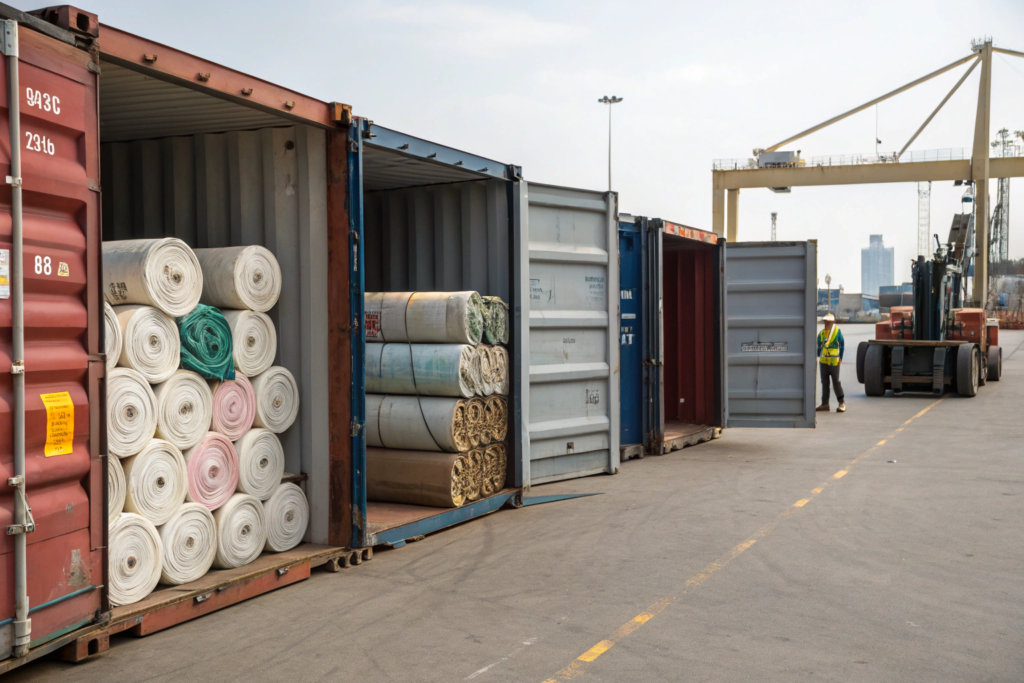
The biggest hidden costs usually fall into three buckets: US tariffs, domestic inland freight in China, and warehousing/demurrage charges at the US port. Tariffs are a moving target. For example, certain woven fabrics of man-made fibers have faced additional Section 301 tariffs. We actively help clients navigate this by providing detailed HTS codes and country of origin certificates. Inland freight is another one. Getting 20 rolls of fabric from our warehouse in Keqiao to the Shanghai port costs money, and if you need it expedited to catch a specific vessel, those trucking fees double. Then, once it arrives in Long Beach or New York, if your customs broker isn't ready, or if the documentation has a tiny error, your container can end up in "examination," incurring hundreds of dollars a day in demurrage.
How do we structure payments to protect both the buyer and the supplier?
This is the trust-building phase of any partnership. For a new client, especially one we find through Alibaba or a trade show, we typically start with 30% TT deposit and 70% TT balance against a copy of the B/L. This protects us because we have the deposit to cover raw materials, and it protects the client because they don't pay the full balance until they know the goods are on the water. For long-term clients, like the European brand I mentioned earlier who plans around CNY, we might offer open account terms, but that’s built on years of trust and flawless payment history.
We also offer L/C at sight for larger orders, which provides security through the banking system. Our strong banking relationships here in Keqiao mean we can handle these transactions smoothly. It’s not just about getting paid; it’s about secure payment methods for importing fabric ensuring the cash flow is there to secure your production slot and buy the yarn. If a buyer tries to push for 100% payment after delivery on a first order, that’s a red flag for us, and for them, a supplier asking for 100% upfront is a major risk. The 30/70 split with B/L copy is the industry standard for a reason.
What specific logistics advantage does Keqiao offer over other Chinese sourcing hubs?
This is where I get to brag about my hometown a little. Keqiao isn't just a random city; it's the "Textile Capital of China." We are not just a cluster of mills; we are a complete ecosystem. For you, the buyer, this translates directly into speed and cost savings. When you source from Shanghai Fumao in Keqiao, your fabric’s journey to the US is faster because of our location and infrastructure.
First, we are only a couple of hours from both the Shanghai and Ningbo ports, two of the busiest and most efficient in the world. That means your fabric can be on a vessel quickly after it leaves our inspection and packaging line. Second, the "Silk Road Keqiao" initiative has invested heavily in overseas warehousing and streamlined customs clearance processes specifically for textiles. We have bonded warehouses and express logistics partners integrated right here. For a client in a hurry, we can move goods from our factory floor to a Shanghai vessel in under 24 hours. This kind of logistics advantages of sourcing from Keqiao integrated supply chain speed is hard to find if you’re sourcing from a standalone factory in a more remote part of China.
Conclusion
Building a professional wardrobe or a clothing brand around "all-season" pieces isn't about finding a mythical fabric. It's about making smart, informed choices on weight, construction, and blend. You need to look beyond the fiber content label and understand the weave, the twist, and the finishing. A 210gsm high-twist wool blend with a touch of Tencel or recycled polyester will outperform a heavy 300gsm pure wool suit nine times out of ten when you're running from a climate-controlled office to a sunny sidewalk. It’s about engineering comfort and durability into the very structure of the cloth.
This is exactly what we do every day at Shanghai Fumao. We're not just selling you fabric by the meter; we're offering you a partnership built on two decades of Keqiao expertise. We understand your pain points—the tariff worries, the logistics timing, the need for quality that you can absolutely trust. We've helped everyone from solo entrepreneur "Ron" types to massive global brands navigate these exact challenges. We handle the entire process: from yarn sourcing and dyeing to weaving, printing, that crucial coating, and finally, packaging and shipping, all with our professional QC team watching every step. We make sure your fabric isn't just good; it's right.
So, if you're tired of guessing games and want a partner who can deliver consistent, high-performance fabric that arrives on time and on budget, let's talk. I invite you to reach out to our Business Director, Elaine, directly. She and her team are ready to help you plan your next collection, work around the holiday schedules, and navigate the logistics to get your product to market. Contact Elaine at [elaine@fumaoclothing.com]() to start a conversation about your specific needs. Let's build something that lasts, together.