If you're sourcing fabrics for kids' clothing, you're navigating a minefield of emotions and regulations. Parents today aren't just looking for cute designs; they're looking for armor. Armor against harsh chemicals, against rough textures, against environmental guilt, and against clothes that fall apart after three washes. I've seen brands lose entire customer bases because a "soft cotton" tee caused a rash, or a "durable" playsuit pilled beyond recognition. Choosing the right sustainable fabric isn't a marketing checkbox; it's a fundamental product safety and integrity decision that can make or break your brand's reputation.
So, what are the best choices? The answer isn't one fabric, but a matrix of priorities ranked in this order: 1. Safety & Skin-Friendliness, 2. Durability & Practicality, 3. Environmental Impact, and 4. Ethical Provenance. The "best" fabric perfectly balances these for the specific garment's use. A diaper-cover fabric needs ultimate softness and moisture control, while a rain jacket needs robust water resistance. Forget "organic" as a blanket answer. You need to think about fiber source, processing chemistry, finishing treatments, and end-of-life. A truly sustainable kids' fabric is safe on day one and kind to the planet on its last day.
This isn't theoretical. With EU and US regulators tightening rules on PFAS, formaldehyde, and heavy metals in children's products, your fabric choice is your first line of legal defense. And with parents swapping notes in online forums, your material story needs to be bulletproof. Let's cut through the greenwashing and look at the real, commercial-ready options that meet the triple demand of moms, regulators, and your bottom line.
Why is GOTS-Certified Organic Cotton the Non-Negotiable Baseline?
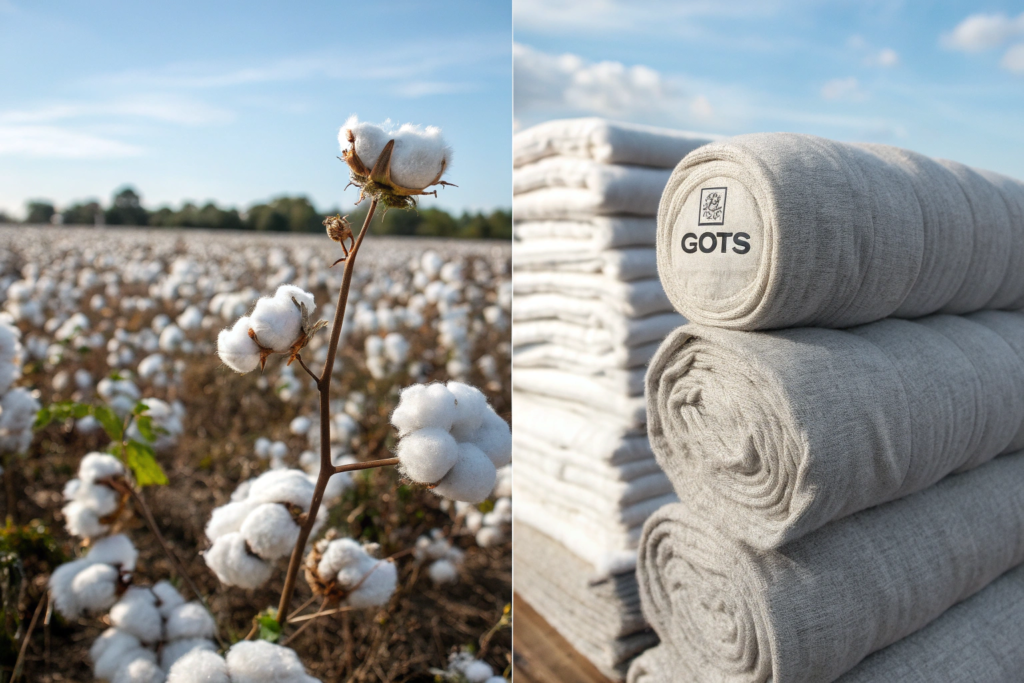
Let's be clear: not all organic cotton is created equal. An "organic cotton" claim without GOTS (Global Organic Textile Standard) certification is almost meaningless for childrenswear. Why? Because GOTS doesn't just certify the cotton was grown without pesticides; it governs the entire processing chain. It bans the most toxic dyes, bleaches, and finishes (like formaldehyde and heavy metals), mandates strict wastewater treatment, and includes social criteria for worker welfare. For a child's garment touching sensitive skin 12 hours a day, this full-chain guarantee is everything.
From a practical standpoint, GOTS organic cotton performs brilliantly. It’s naturally breathable, hypoallergenic, and gets softer with each wash. The key for kids is finding the right knit construction. A single jersey is great for basic tees, but for durability, look for ribbed knits, interlock, or French terry. These are tighter constructions that resist pilling and stretching out of shape. In 2023, we developed a GOTS-certified organic cotton interlock for a Scandinavian brand that was struggling with pilling on their baby bodysuits. By moving from a standard jersey to a higher-grammage interlock, the pilling rating improved from 3 to 4-5 (Martindale test), and customer complaints dropped by over 70%. The cost was 15% higher, but their return rate plummeted and brand loyalty soared.
How Does GOTS Differ from OCS or “Made With Organic” Claims?
This is where many brands get tripped up. You must understand the certification hierarchy:
- GOTS (Gold Standard): Tracks organic content and mandates clean, responsible processing. Allows a "Organic" or "GOTS Organic" label.
- OCS (Organic Content Standard): Only tracks the flow of organic raw material. It does not restrict chemicals used in processing. A fabric can be OCS 100 certified but dyed with toxic, non-approved dyes. It allows a "Contains X% organic material" label.
- “Made With Organic Cotton”: A marketing term with no third-party verification. The garment could contain as little as 5% organic cotton.
For childrenswear, only GOTS provides the comprehensive safety assurance parents are increasingly demanding. When sourcing, your supplier must be able to provide the GOTS Transaction Certificate (TC) for your specific order, traceable back to certified farms. This isn't optional due diligence. For a deeper understanding, Textile Exchange’s standards comparison is an authoritative resource.
What About Blends? Are GOTS Organic Cotton Blends a Good Compromise?
Yes, strategically. Pure organic cotton has limits—it can wrinkle and lacks stretch. Blending it with other sustainable fibers can enhance performance.
- GOTS Organic Cotton + GOTS Organic Wool (5-10%): Adds natural temperature regulation and soft bulk for sweaters and winter wear.
- GOTS Organic Cotton + Tencel™ Lyocell (30-50%): This is a superstar blend for kids. Tencel, made from sustainably sourced wood pulp in a closed-loop process, adds a silky drape, incredible strength when wet (perfect for messy play), and superior moisture-wicking. The blend is softer, more durable, and less prone to wrinkling than 100% cotton.
- GOTS Organic Cotton + Responsible Recycled Polyester: For activewear like leggings or swimwear covers, a small percentage of GRS-certified recycled polyester can add necessary elasticity and quick-dry properties. The key is ensuring the recycled content is also certified and the blend is optimized for end-of-life recyclability.
What Role Do Innovative Cellulosics Like Tencel™ and Modal Play?
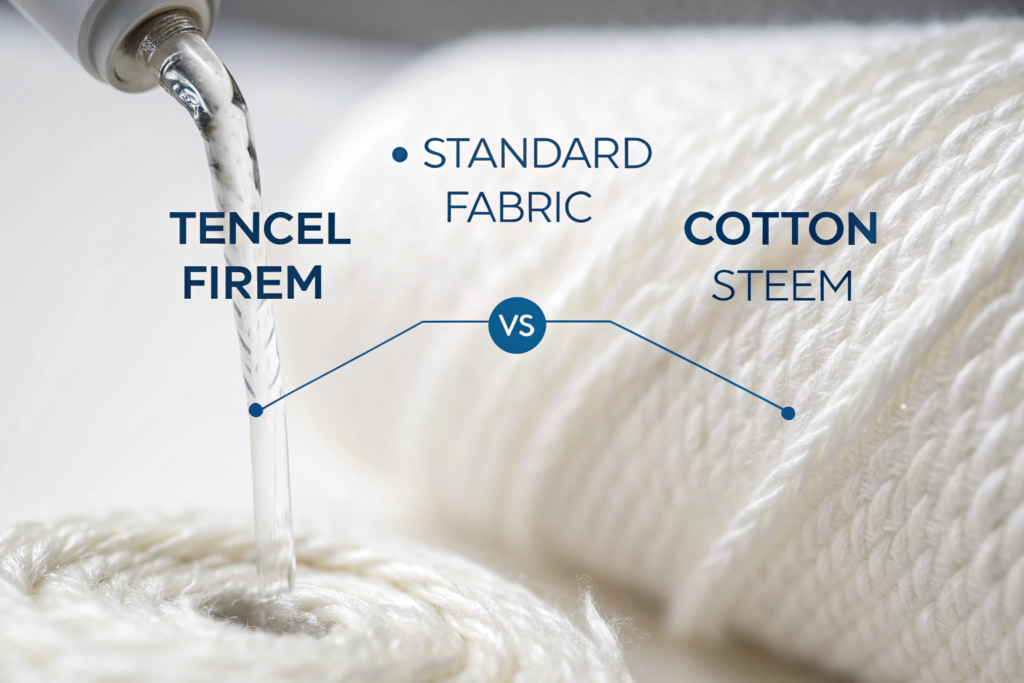
Beyond cotton, plant-based “regenerated cellulosics” are revolutionizing kids' wear. Tencel™ Lyocell (Lenzing's brand) and Modal are made from wood pulp (often from sustainably managed beech or eucalyptus forests). Their environmental superpower is the closed-loop production process, where over 99% of the water and solvents are recycled. This results in a fabric with a vastly lower water and chemical footprint compared to conventional cotton.
For children, Tencel’s functional benefits are unmatched:
- Gentler than Cotton: The fibers are extremely fine and smooth, creating a surface that’s inherently softer and less irritating to sensitive skin.
- Moisture Management Champion: It absorbs moisture 50% faster than cotton and releases it to the surface, keeping skin drier. This is a game-changer for sleepwear, underwear, and hot-weather clothing, reducing prickly heat and discomfort.
- Durability: It has high tensile strength, especially when wet, meaning it withstands vigorous play and frequent washing without tearing or thinning.
We supplied a Tencel™ jersey to a German kids' pajama brand in 2022. Their post-launch survey revealed a 40% reduction in customer complaints about night sweating and skin irritation compared to their previous cotton line. The fabric’s natural anti-bacterial properties also helped control odor between washes—a major plus for busy parents.
Are All Viscose/Rayon Fabrics Suitable for Children?
No. Absolutely not. Conventional viscose/rayon is often produced using a highly polluting, open-loop process with toxic chemicals like carbon disulfide. It has no place in sustainable or sensitive childrenswear. The key is to specify responsible, certified origins.
Always look for:
- Branded Fibers with Certification: Tencel™ (Lyocell) and Lenzing Modal™ are the gold standards, backed by FSC or PEFC forest certification and EU Ecolabel.
- Eco-Certified Viscose: Some producers now offer viscose certified under the EU Ecolabel or the STeP by OEKO-TEX standard, which ensures better environmental and chemical management. However, Tencel’s closed-loop process remains superior.
- Transparency on Source: Ask your supplier for the mill's sustainability report or CanopyStyle audit verification to ensure the wood pulp is not from ancient or endangered forests.
How Do You Ensure the Dyes and Finishes on These Fabrics Are Safe?
The beauty of a fiber can be ruined by toxic processing. This is where finishing certifications are critical. Demand that any Tencel or Modal fabric also carries:
- OEKO-TEX STANDARD 100, Class I: This is the strictest class, specifically for baby and toddler articles (under 36 months). It tests for over 100 harmful substances.
- bluesign® APPROVED: This certifies that every chemical input (dyes, softeners) and the entire production process meets high safety and environmental standards.
A fabric that is Tencel™ + OEKO-TEX Class I + bluesign® is about as safe and sustainable as commercially possible. At Shanghai Fumao, our in-house lab runs pre-emptive tests against these standards for all our kids' wear fabric developments, providing a dossier of compliance for our clients.
When Should You Consider Recycled Polyester or Nylon for Kids?
Synthetic fibers have a bad reputation, but for certain functional kids' items, they are necessary. The key is to choose recycled over virgin and to understand the trade-offs.
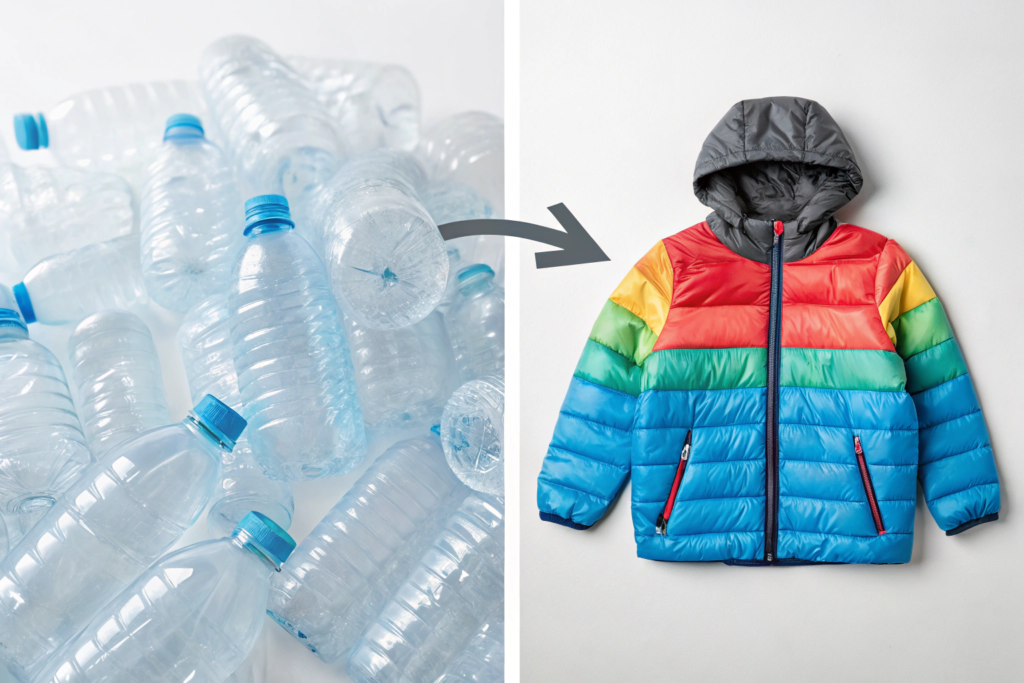
GRS (Global Recycled Standard) certified recycled polyester (rPET) is ideal for:
- Outerwear: Fleece jackets, padded coats, where warmth and lightweight water resistance are needed.
- Swimwear & Activewear: For chlorine/UV resistance and stretch.
- School Bags & Shoes: Where high abrasion resistance is required.
The environmental benefit is clear: rPET diverts plastic bottles from landfills and oceans, and its production uses less energy and water than virgin polyester. However, the microplastic shedding issue is real. rPET still sheds microfibers in the wash. Therefore, its use should be strategic and paired with mitigation.
How Can You Mitigate Microplastic Shedding in Recycled Synthetics?
You can't eliminate it, but you can significantly reduce it. Work with your supplier on these strategies:
- Fabric Construction: Use tightly woven or knitted constructions (like a double-knit) rather than loose fleeces, which shed more.
- Proprietary Yarn & Finishing Technologies: Some mills offer rPET yarns with a coating or structure designed to reduce shedding. Others apply a polyglycerol-based finish during fabric processing that helps bind fibers.
- Consumer Care Labeling: Be proactive. Include care labels advising: “Wash inside-out in a full load on a gentle cycle with a Guppyfriend bag or Cora Ball to capture microfibers.” This turns a problem into an educational opportunity for your brand.
In 2024, we collaborated with an outdoor kids' brand on a rPET fleece. We sourced a specially engineered, high-twist rPET yarn and used a compact knitting machine. Independent testing showed a 60% reduction in microplastic release compared to their previous standard fleece. It cost 20% more, but the brand marketed it as their “OceanGuard” line, and it became their best-selling jacket.
What About Recycled Nylon (ECONYL® etc.)?
Recycled nylon (often from fishing nets or industrial waste) is excellent for high-performance items like swimwear and leggings where durability and elasticity are paramount. It shares the microplastic concern, so the same mitigation strategies apply. Always pair it with OEKO-TEX certification to ensure the recycling and re-polymerization process didn't introduce harmful substances.
What Are the Emerging Stars: Hemp, Linen, and Responsible Wool?
For brands wanting a unique, natural story, these fibers offer compelling benefits.
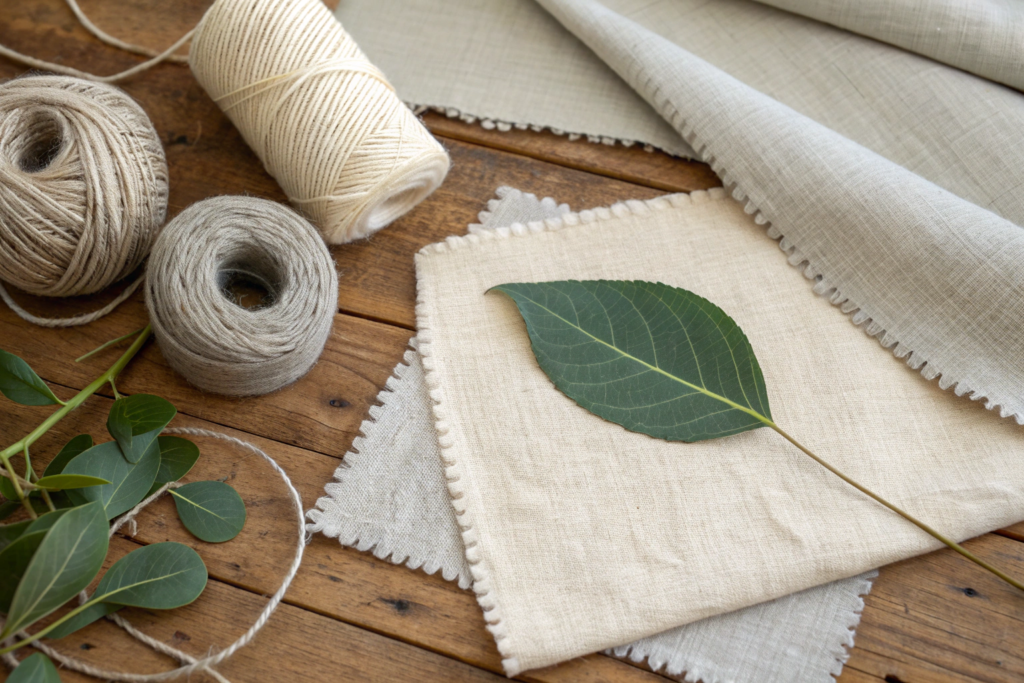
- Organic Hemp: Incredibly durable, naturally anti-bacterial, and UV-resistant. It requires no pesticides and improves soil health. For kids, it’s best in blends (with organic cotton or Tencel) to soften its initial rustic hand-feel. It makes fantastic durable pants, jackets, and hats.
- Organic Linen: Like hemp, it’s very strong, breathable, and biodegradable. It has a beautiful, natural texture. Perfect for summer shirts, dresses, and lightweight layers. It softens beautifully with washing.
- Responsible Wool (RWS/ZQ Merino): For warmth, nothing beats natural wool. RWS-certified wool ensures animal welfare and land management. Superfine Merino wool (18-19 micron) is luxuriously soft, non-itchy, temperature-regulating, and naturally odor-resistant. It’s perfect for premium baby swaddles, winter base layers, and sweaters.
The challenge with these fibers is cost and supply chain maturity. They are often more expensive and have longer lead times. Your sourcing strategy should be to introduce them in capsule collections or hero products where their unique story and performance can justify the price.
How Do You Source These Niche Fibers with Traceability?
Traceability is even more critical here to verify the “responsible” claim.
- Hemp & Linen: Look for GOTS certification for organic hemp/linen or the European Flax® trademark for linen, which guarantees European origin and environmentally friendly cultivation.
- Wool: RWS (Responsible Wool Standard) is the leading certification. ZQ Merino is another robust, grass-fed standard from New Zealand. Demand the transaction certificates.
Building a relationship with a supplier who has direct partnerships with farms or specialized spinners is key. We’ve invested in relationships with certified hemp farms in China and RWS wool brokers to secure a transparent pipeline for our clients who want to explore these fibers.
Conclusion
The best strategy is not to pick one “best” fabric, but to curate a portfolio matched to product categories and price points. Here’s a practical framework:
| Garment Category | Primary Fabric Recommendation | Why? | Key Certifications to Demand |
|---|---|---|---|
| Baby Basics (0-3) | GOTS Organic Cotton (Interlock/Rib) | Ultimate safety, softness, breathability. | GOTS, OEKO-TEX Class I |
| Kids Everyday Tees & Leggings | GOTS Organic Cotton + Tencel™ Blend | Softer, more durable, better moisture-wicking than 100% cotton. | GOTS, OEKO-TEX Class I/II, Tencel™ license |
| Pajamas & Underwear | Tencel™ Modal or Lyocell | Superior moisture management, anti-bacterial, silky soft. | OEKO-TEX Class I, FSC, bluesign® |
| Activewear & Swim | GRS Recycled Polyester/Nylon Blend | Performance, stretch, quick-dry. Mitigate microplastics. | GRS, OEKO-TEX Standard 100 |
| Outerwear (Fleece/Shell) | GRS Recycled Polyester | Warmth, water resistance, recycled content story. | GRS, OEKO-TEX Standard 100 |
| Premium Knitwear | RWS-Certified Superfine Merino Wool | Natural temperature regulation, soft, odor-resistant. | RWS, OEKO-TEX Standard 100 |
| Summer Dresses/Shirts | Organic Linen or Hemp-Cotton Blend | Breathable, durable, unique natural aesthetic. | GOTS (for organic), OEKO-TEX |
Start your sourcing conversation with safety and certification requirements first, then work on performance and cost. A partner like Shanghai Fumao can guide you through this matrix, providing certified options, lab testing, and the transparent documentation you need to build trust with the most discerning customers in the world: parents.
If you're ready to develop a childrenswear line that is genuinely safe, durable, and sustainable from the fiber up, let's connect. We specialize in building compliant, high-performance fabric pipelines for leading kids' brands. Contact our Business Director, Elaine, to start crafting your responsible collection. Reach her at: elaine@fumaoclothing.com. Let's make clothing you'd be proud to put on your own child.