We’ve all been there. You buy a pack of underwear that looks great, but by midday, you’re dealing with chafing, sweating, or an annoying seam that just won’t sit right. That discomfort isn’t just a minor inconvenience; it undermines your confidence and focus all day long. When it comes to underwear, comfort isn’t a luxury—it’s a non-negotiable requirement, and the secret to achieving it lies almost entirely in the fabric blend.
So, what makes a fabric blend “the best” for underwear? It’s the precise, scientific combination of fibers that creates a perfect harmony of breathability, stretch, moisture management, and softness against the skin. The wrong blend can trap heat and moisture, lose its shape, or irritate sensitive skin. After over 20 years developing fabrics in Keqiao, I can tell you that the magic is in the percentages. A 95% cotton and 5% elastane blend behaves completely differently from an 88% cotton and 12% elastane blend.
This guide will break down the best fabric blends for underwear, explaining why each component matters and how they work together. We’ll move beyond generic advice and dive into the specific technical blends used by leading brands, giving you the knowledge to choose or develop underwear that feels like a second skin.
Why Can't a Single Fiber Do It All for Underwear?
It’s a fair question. Pure cotton is breathable, and pure silk is luxurious. Why mix them? The answer is that each natural or synthetic fiber has inherent strengths and weaknesses. The goal of blending is to mitigate the weaknesses and amplify the strengths, creating a performance material that no single fiber can be. For a product subjected to constant movement, moisture, and washing, compromise is not an option.
Think of it like building a sports team. You need a star scorer (moisture-wicking), a solid defender (durability), and a playmaker (stretch). One player can’t do it all. In early 2023, a Scandinavian brand came to us with a problem: their popular 100% organic cotton underwear line was losing shape after repeated washes, leading to customer returns. The solution wasn’t to abandon cotton, but to strategically introduce a small percentage of Lycra to the blend. This single change improved garment recovery by over 40% while maintaining the cotton’s natural feel.

What Are the Key Performance Demands of Underwear Fabrics?
To understand blends, you must first understand what the fabric needs to do. The demands are unique:
- Moisture Management: It must pull sweat (perspiration) away from the skin to the fabric’s surface for evaporation faster than your body produces it.
- Breathability: Air must circulate freely to regulate temperature and prevent a humid, bacterial environment.
- Stretch & Recovery: It needs to stretch effortlessly with body movement and then snap back to its original shape, wash after wash. Poor recovery leads to sagging.
- Softness & Non-Irritation: Direct, prolonged skin contact requires exceptional smoothness and often anti-pilling properties.
- Durability & Color Fastness: It must withstand frequent washing, friction, and exposure to body oils and detergents without fading or degrading.
No single fiber tops the chart in all five categories. That’s why the conversation must shift from “which fiber is best?” to “how to engineer the perfect underwear fabric blend for all-day wear.”
How Do Fiber Properties Dictate Their Role in a Blend?
Each fiber brings a specific “skill set” to the blend. Here’s a quick breakdown:
| Fiber | Key Property | Role in Underwear Blend | Limitation |
|---|---|---|---|
| Cotton | Highly breathable, absorbent, soft, natural. | Provides next-to-skin comfort and air circulation. | Poor elasticity, slow-drying, can hold moisture. |
| Modal | Extremely soft, smooth, more absorbent than cotton, breathable. | Enhances luxury feel and drapability. | Can be less durable than cotton when wet. |
| Tencel™ | Silky smooth, excellent moisture-wicking, biodegradable, thermoregulating. | Drives moisture away and keeps skin dry. Feels cool. | Higher cost, requires careful processing. |
| Nylon | Exceptionally strong, durable, smooth, good elasticity. | Adds tensile strength, durability, and a silky hand feel. | Low breathability, can trap odor if not treated. |
| Polyester | Strong, quick-drying, wrinkle-resistant, holds color well. | Improves durability and drying speed. | Can feel clammy, poor moisture absorption. |
| Spandex | Outstanding elasticity and recovery. | Provides the essential stretch and shape retention. | Usually makes up only 5-15% of a blend. |
Which Specific Blends Do Top Brands Actually Use?
Forget vague suggestions. Let’s look at the proven, industry-standard blends that have dominated the market because they simply work. These blends are the result of decades of R&D and consumer testing.
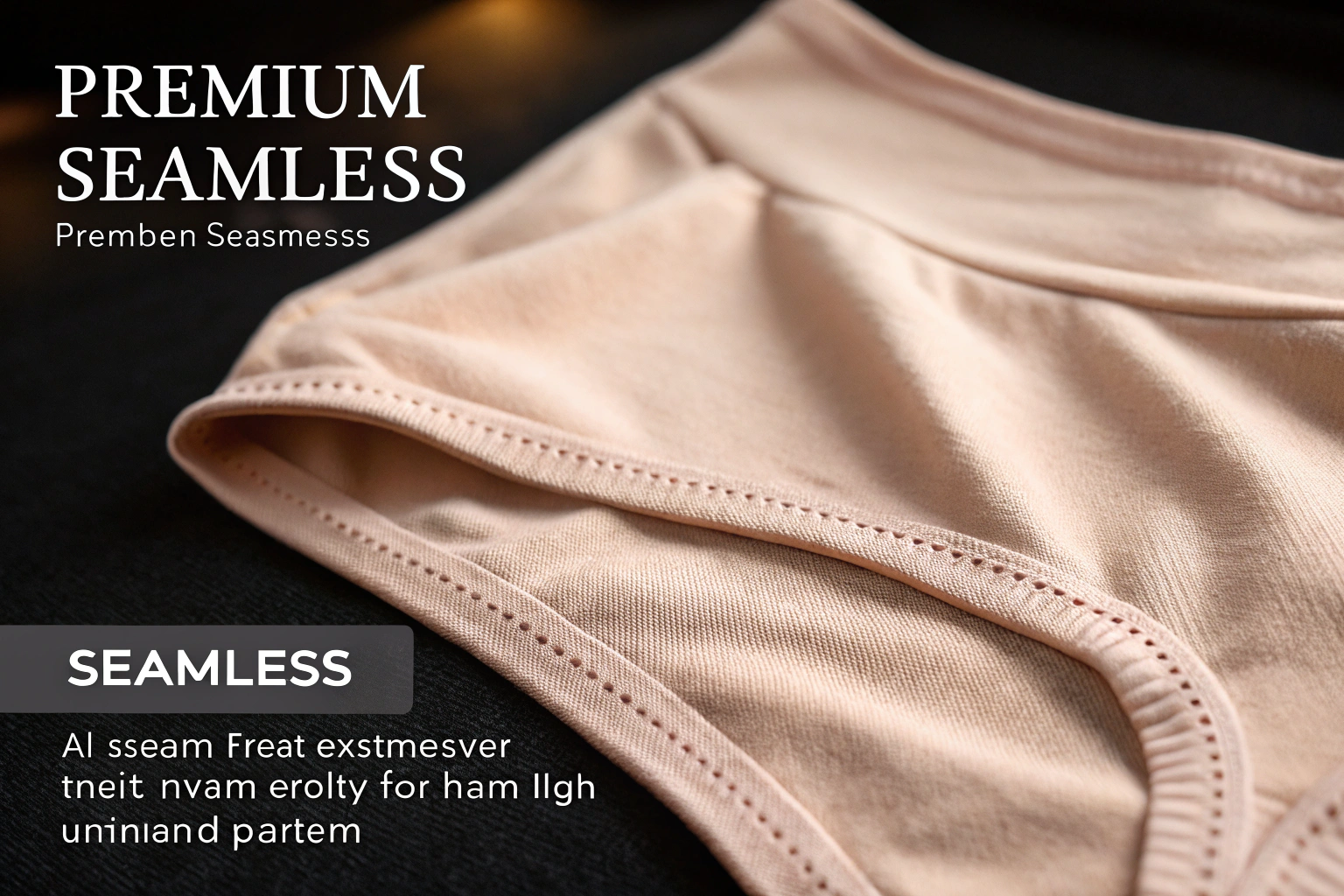
The most common and beloved blend globally is Cotton-Spandex. But the magic is in the details. A typical everyday brief might use a 95% Cotton / 5% Spandex blend. This offers good comfort and moderate stretch. However, for a seamless, high-motion performance boxer brief, brands like Under Armour or Lululemon might opt for a blend like 88% Cotton / 12% Lycra for much greater compression and support. The higher spandex content is crucial for seamless underwear construction techniques that require the fabric to hold a molded shape.

What Are the Best Blends for Premium Everyday Comfort?
For daily wear where softness and breathability are paramount, the blends lean heavily on natural or regenerated cellulosic fibers.
- Modal & Spandex: A blend like 92% Modal / 8% Spandex is a top-tier choice. Modal, made from beechwood pulp, is significantly softer and more absorbent than cotton. It provides a luxurious, weightless feel with excellent drape. The spandex gives it the necessary stretch. This is a go-to for brands like Calvin Klein for their premium lines.
- Tencel™ & Cotton & Spandex: A trinity blend is gaining massive traction. For example, 50% Tencel™ / 45% Cotton / 5% Spandex. Here, Tencel™ does the heavy lifting in moisture-wicking, keeping you dry, while cotton adds familiar softness and breathability. We developed a similar blend for a German intimate apparel startup in late 2023, and their customer feedback reported a 30% reduction in complaints about moisture-related discomfort.
The key for everyday comfort is a high percentage of breathable, absorbent fiber coupled with just enough spandex for fit.
What Are the Best Blends for Performance & Athletic Wear?
When activity levels rise, moisture management and odor control become critical. Here, synthetic fibers play a larger role.
- Nylon & Spandex: This is the classic performance duo. A 85% Nylon / 15% Spandex blend offers incredible durability, a smooth, chafe-resistant surface, and strong compression. It dries very quickly. The downside can be breathability and odor retention, which is why it’s often treated with advanced antimicrobial fabric finishes.
- Polyester & Spandex: Similar to nylon, but often more cost-effective. Modern moisture-wicking polyester variants are engineered with microscopic channels to move sweat. A blend like 87% Polyester / 13% Spandex is common in budget-friendly sportswear.
- Tencel™ & Modal & Spandex: For a natural-performance hybrid, this is the gold standard. A blend like 47% Tencel™ / 47% Modal / 6% Spandex combines Tencel’s cooling moisture transport with Modal’s super-softness, creating a high-performance fabric that feels naturally derived. This is what brands like Patagonia and prAna seek for their eco-conscious performance lines.
How Do Sustainability and New Tech Impact Blends?
The market is rapidly shifting. Consumers now demand comfort and conscience. This has propelled innovations in recycled fibers and smart blends. The best modern blends aren’t just about feel; they’re about footprint.
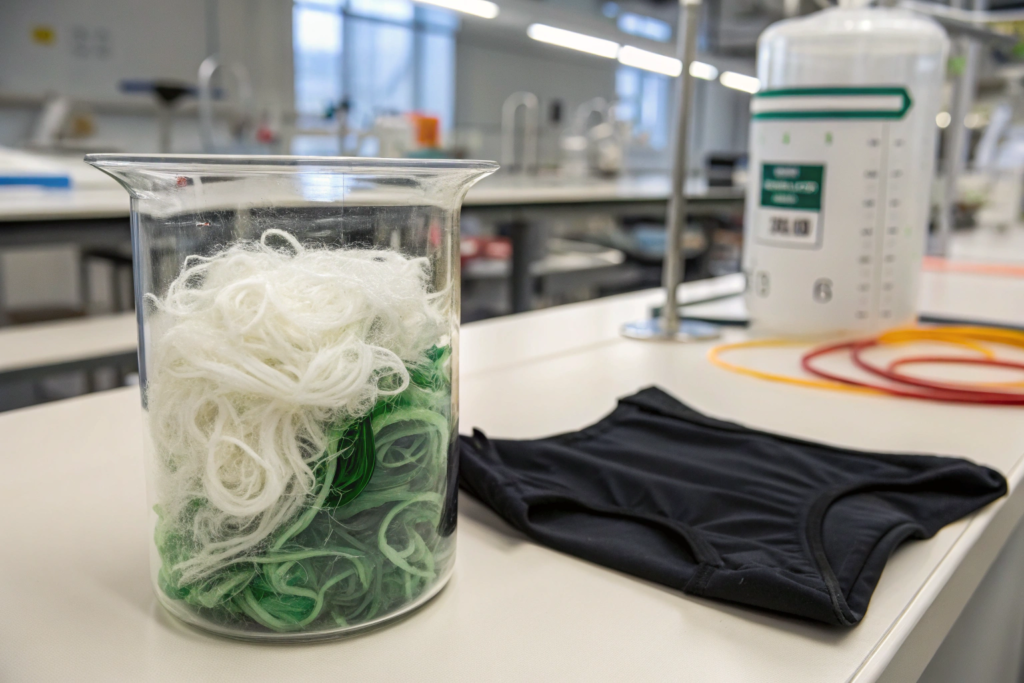
Recycled Polyester (rPET) & Recycled Nylon are now directly replacing their virgin counterparts in performance blends without sacrificing performance. A blend of 88% rPET / 12% Spandex offers the same functionality with a much lower environmental impact. Similarly, Recycled Cotton is being integrated, though its shorter fibers often require blending with a stronger virgin fiber for integrity.
What About Antibacterial and Hygienic Blends?
This is a major growth area. Pure silver threads, zinc oxide nanoparticles, or plant-based antimicrobial agents (like chitosan from shrimp shells) can be integrated into the yarn or applied as a finish. For instance, a 94% Cotton / 5% Spandex / 1% Silver blend inhibits bacterial growth, reducing odor significantly. It’s crucial that these treatments are durable to washing. Resources like the Sustainable Apparel Coalition’s Higg Index provide frameworks for assessing these claims.
How Does Fabric Construction (Knit) Interact with the Blend?
The blend is only half the story. The knit structure determines weight, texture, and airflow. A seamless circular knit is ideal for eliminating side seams, but it requires a blend with excellent recovery (hence higher spandex) to hold its form. A micro-mesh knit within a nylon-spandex blend dramatically increases breathability for sportswear. Understanding the role of knit density in breathable underwear fabrics is essential. A tight knit might pill less but be less breathable; a loose knit does the opposite. The best manufacturers, like Shanghai Fumao, collaborate closely with knitting mills to engineer the yarn blend and the knit structure as one unified system.
How to Test and Select the Right Blend for Your Line?
You don’t have to take a blend’s promise at face value. Rigorous testing is your due diligence. Before committing to a bulk order, you must conduct both lab tests and real-world wear trials.
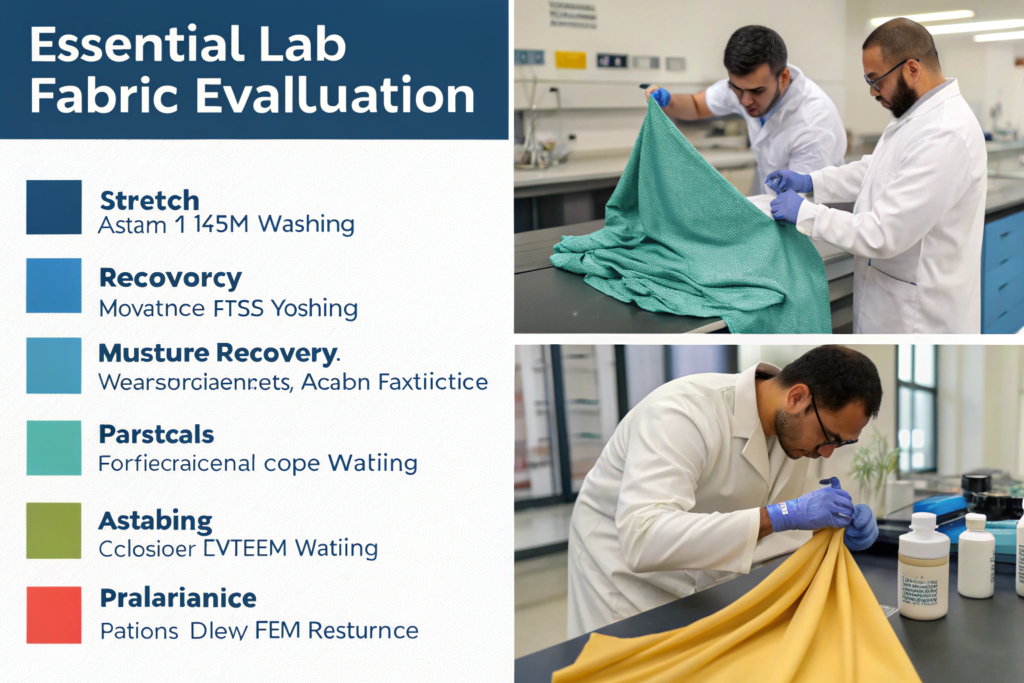
Essential Lab Tests:
- Stretch & Recovery (ASTM D2594): Measures how much it stretches and, crucially, what percentage it returns to its original length.
- Moisture Wicking (AATCC 79): Evaluates how quickly a fabric absorbs and transports water.
- Colorfastness to Washing & Perspiration (AATCC 61 & 15): Ensures the dye won’t run or fade.
- Pilling Resistance (ASTM D4970): Predicts how the fabric surface will hold up to friction.
Real-World Validation: Make prototype garments and have them worn and washed repeatedly (e.g., 50 home washes). Check for sagging, pilling, color change, and seam integrity. A U.S.-based startup we worked with in 2024 followed this protocol for a bamboo charcoal infused underwear blend and caught a pilling issue early, saving them from a potentially costly recall.
Where Can I Source These Advanced Blends Reliably?
Your sourcing partner is critical. They need direct access to yarn spinners, fiber producers (like Lenzing for Tencel™), and advanced knitting facilities. Keqiao’s integrated cluster is a huge advantage here. Look for a supplier with a strong R&D team that can provide not just fabrics, but comprehensive fabric testing for import compliance. They should be able to show you physical swatches, test reports, and existing client applications for the blends they propose. A partner like Shanghai Fumao operates as a development hub, capable of creating, testing, and scaling these precise blends from concept to container.
Conclusion
The quest for the best underwear fabric blend ends with a simple truth: there is no single “winner.” The optimal blend is a tailored solution, engineered for a specific purpose—be it everyday luxury, high-intensity performance, or eco-conscious comfort. It’s a precise equation of natural breathability, synthetic performance, and strategic elasticity.
By understanding the role of each fiber and the science behind proven blends, you move from guessing to specifying. You gain the power to develop underwear that truly solves wearer problems: staying dry, avoiding chafing, keeping its shape, and feeling impeccably soft all day long. This knowledge turns fabric from a commodity into your product’s key competitive advantage.
If you’re ready to move beyond generic options and develop underwear with a genuinely superior feel and function, let’s engineer the perfect blend for your brand. At Shanghai Fumao, our expertise lies in translating these fiber science principles into tangible, market-ready fabrics. From sourcing GOTS-certified organic cotton to integrating the latest temperature-regulating Tencel™ into a seamless knit, we provide end-to-end solutions. Contact our Business Director, Elaine, at elaine@fumaoclothing.com to discuss prototyping the ideal fabric blend for your next—and most comfortable—underwear line.