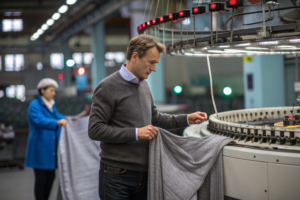
You're juggling five different email chains. The weaver in one province says the greige goods are ready. The dye house in another province says they can't fit you in until next Thursday. The printer is asking for a file format you don't have. The embroidery shop wants to know who is responsible for shipping the cut pieces. And the freight forwarder is demanding the packing list right now or they'll roll your container. You started this process thinking you were being smart by "sourcing direct" and "cutting out the middleman." Instead, you've become an unpaid project manager for a supply chain you can't see and don't control.
This is the hidden cost of the multi-vendor approach. On paper, it looks cheaper. You get a weaving quote from Mill A, a dyeing quote from Mill B, and a finishing quote from Mill C. You add them up, and it's $0.80 less per yard than the "one-stop shop" quote. You pat yourself on the back. But that spreadsheet doesn't include the line item for Your Time. It doesn't include the Coordination Risk. It doesn't include the Blame Game that happens when the color is off and Mill A blames Mill B's greige and Mill B blames Mill A's dyeing.
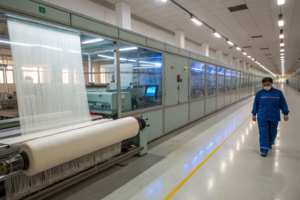
I'm Jack, and I run Shanghai Fumao. We built our entire company around the opposite philosophy. We are a Vertical Manufacturer. We don't just sell fabric; we manage the entire transformation from yarn to packed roll under one roof (or with tightly integrated, exclusive partners we treat as our own roof). I've watched clients drive themselves crazy trying to be the quarterback of a team that doesn't even speak the same language. I'm going to walk you through why consolidating your production with a single, capable manufacturer isn't just convenient—it's a strategic advantage that directly impacts your Quality, Cost, and Sanity.
How Does a Vertical Manufacturer Reduce Hidden Coordination Costs?
The biggest lie in global sourcing is that "Free on Board" (FOB) price is the real price. The real price includes the Transaction Costs of managing the supply chain. Every time you have to send an email to clarify a spec, every time you have to make a phone call to chase a delivery date, every time you have to pay for a swatch to be couriered from one factory to another for color approval—that's a cost. And it's a cost that never shows up on the initial quote.
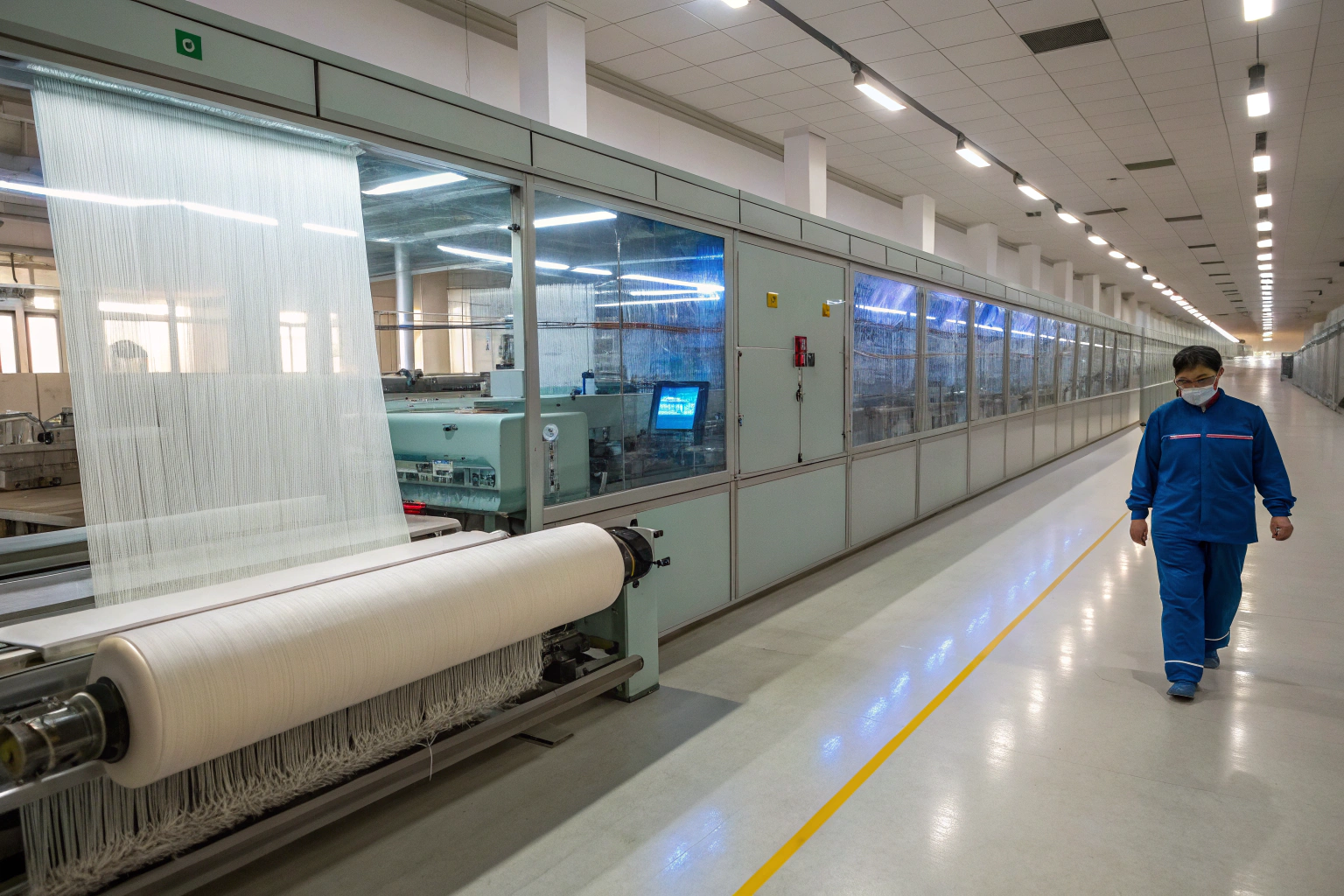
When you work with a single manufacturer like Shanghai Fumao, these transaction costs collapse. Why? Because the communication happens internally, in the local dialect, between people who have worked together for years. The weaver doesn't email the dyer. The production manager walks 50 feet across the factory floor and says, "Lao Wang, the greige for PO #4567 is coming off the loom now. Is your kettle ready?" That 30-second conversation replaces a 48-hour email chain with a dozen people CC'd.
This internal coordination creates Velocity. It's the speed at which information and materials move through the system. A multi-vendor chain has the velocity of city traffic at rush hour—stop and go, unpredictable delays. A vertical manufacturer has the velocity of a high-speed train on a dedicated track—scheduled, reliable, and fast.
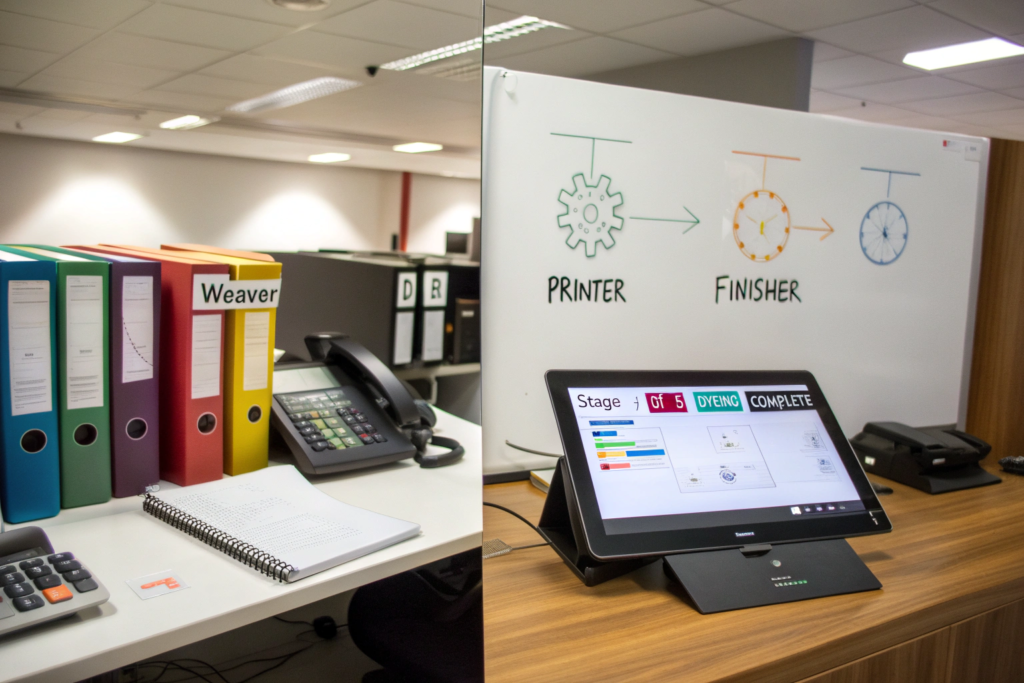
What Is the True Cost of "Sourcing Direct" from Separate Mills?
Let's put real numbers to this based on a project we see often at Shanghai Fumao. A buyer wants 5,000 yards of custom-printed viscose twill. They source the greige weaving from a mill in Jiangsu. They source the printing from a digital print house in Keqiao.
The Multi-Vendor Cost Breakdown (Hidden Costs):
- Greige Transport: Trucking the greige rolls 200km from Jiangsu to Keqiao. Cost: $180.
- Incoming QC at Printer: The printer doesn't trust the weaver's yardage count or defect marking. They spend 4 hours re-inspecting 5,000 yards at $15/hour labor. Cost: $60.
- Shade Issue Resolution: The print color on the viscose doesn't match the lab dip on cotton. Weaver blames printer. Printer blames weaver's fabric prep. You spend 3 days on WhatsApp and WeChat trying to mediate. Cost of Your Time: Priceless.
- Excess Inventory: The weaver produced 5,300 yards to cover potential defects. You only need 5,000. You now own 300 yards of custom greige fabric you can't use. Cost: $450.
- Freight Consolidation: You have to pay a forwarder to pick up from the printer and bring to a warehouse for consolidation. Cost: $150.
Total Hidden Costs: $840 minimum, plus the stress and the week of lost time.
At Shanghai Fumao, that entire process happens inside one workflow. The greige goes from our weaving floor to our printing floor on a forklift. The QC team uses a unified standard. The excess greige goes back into our stock for the next order. The $840 in hidden costs? Gone. That's why our "higher" price per yard is often Cheaper Landed than the sum of the separate parts. You can read more about this dynamic in articles discussing the hidden costs of managing a fragmented textile supply chain and how vertical integration reduces lead times and improves quality control.
Who Takes Responsibility When Something Goes Wrong?
This is the million-dollar question. In a multi-vendor chain, the answer is always: "Not me." The fabric comes out with streaky dye lines. The weaver says, "The greige was perfect. It's the dyer's uneven tension." The dyer says, "No, it's the weaver's mixed yarn counts." You are stuck in the middle with a $15,000 problem and no one willing to own it.
When you work with a single manufacturer, there is One Throat to Choke. (That's a crude industry expression, but it's accurate.) There is one entity responsible for the final product. If the color is off, we can't blame the weaver—we are the weaver. We have to fix it.
At Shanghai Fumao, we have an internal Root Cause Analysis (RCA) process. When a defect occurs, we don't point fingers at departments. We pull the batch records from weaving, the time-temperature graphs from dyeing, and the tension logs from finishing. We find the process failure and correct it. The client never has to be involved in this internal investigation. They just get a solution—a credit, a re-run, or a discount—from a single point of contact.
This accountability is worth a premium. It's an insurance policy against the "Blame Game" that eats up your time and erodes your margin. (Here's a hard truth: If you are working with a trading company that doesn't own any of the assets, they have less control than you do. They are just a fancy email forwarder. They can't fix a problem on a machine they don't own.)
Why Is Color Consistency Easier with a Single Integrated Supplier?
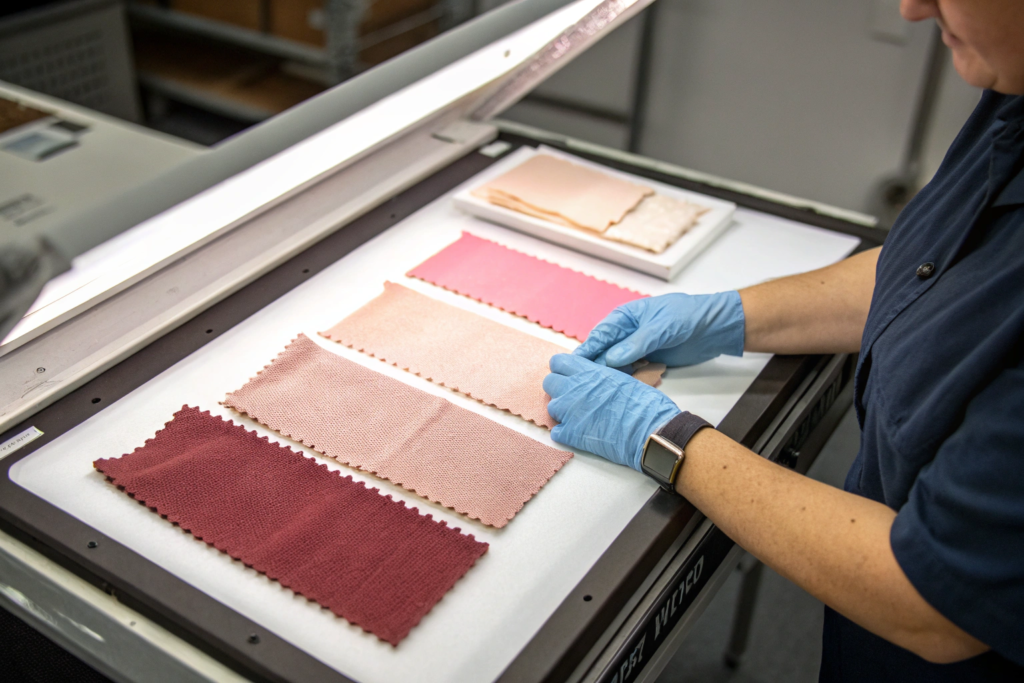
Color matching is the bane of every apparel designer's existence. You spend weeks perfecting the lab dip for your main fabric. It's a beautiful, nuanced sage green. Then you order matching rib trim from Supplier B and matching zipper tape from Supplier C. When everything arrives, the rib looks like mint chocolate chip and the zipper looks like olive drab. They don't match. And they never will, because three different dye houses used three different water sources, three different dye lots, and three different interpretations of "Sage."
This is the Metamerism Trap on steroids. When you consolidate with a single manufacturer, you consolidate the Color Management System. The same spectrophotometer that read the master standard for the body fabric reads the standard for the trim. The same technician, using the same dye recipes from the same supplier, formulates the color for all components.
At Shanghai Fumao, we take this a step further. We maintain a Master Color Library for our ongoing clients. If you come back next season and say, "I want that same Navy from Fall '25," we don't start from scratch. We pull the archived recipe, the archived lab dip, and the archived bulk production data. We know exactly what that color looks like on your specific fabric construction. We can match it with 95% accuracy on the first lab dip. A new supplier would need 3-4 rounds of submissions to get close.
How Does Water Chemistry Affect Dye Lot Consistency?
This is the invisible variable that drives designers insane. You approve a lab dip from a mill in one city. The bulk fabric comes from a different dye house 50 miles away. The color is "close, but not right." Why? Water.
Textile dyeing is aqueous chemistry. The pH, the hardness (calcium and magnesium ions), and the iron content of the water all affect how the dye molecule bonds to the fiber. A dye house using hard well water will get a duller, slightly yellower shade than a dye house using reverse osmosis filtered city water, even with the exact same dye recipe.
When you work with a single, integrated manufacturer, the water source is consistent. At Shanghai Fumao, all our wet processing partners use water from the same municipal treatment system, further polished by on-site filtration. We monitor the Total Dissolved Solids (TDS) daily. This is the kind of obsessive detail that you don't see, but you do see the result: your Spring '26 collection has the same "Ocean Blue" across the swim fabric, the cover-up, and the drawstring. That's brand integrity. That's what sells. You can dive into the chemistry of this by reading how water quality parameters affect textile dyeing consistency and shade reproducibility.
Can You Really Trust "Dyed to Match" from Different Vendors?
In a word: No. "Dyed to Match" (DTM) is a promise that is almost impossible to keep across different factories. It requires a level of coordination and technical alignment that simply doesn't exist in the open market.
Here's the scenario. You send a swatch of your approved body fabric to the rib trim supplier. They put it in their spectrophotometer. The machine spits out a recipe. They dye a sample. They mail it to you. You hold it against the body fabric under your office lights. It looks okay. You approve it. Then bulk arrives. Under the fluorescent lights of your cutting room, the rib looks a shade too pink.
What happened? Metamerism. The match worked under one light source but failed under another. The only way to truly DTM across vendors is to use the exact same dyestuff from the exact same manufacturer (e.g., Huntsmith or Archroma) and the exact same substrate preparation. This is standard practice inside a vertical manufacturer. We buy dyestuffs in bulk for the whole facility. We don't have to guess what the other guy used.
At Shanghai Fumao, when a client needs matching rib or lining, we don't "dye to match" a swatch. We Co-Dye. We put the body fabric sample and the trim fabric sample in the same dye pot at the same time. If they match coming out of that pot, they will match for life. This is a level of control you only get with integration.
How Does Single Sourcing Improve Lead Time and Reliability?
Time is the one resource you can't buy more of. In fashion, a week late is a season missed. When you spread your production across multiple vendors, you introduce Queue Times and Transit Times between each step. These "White Spaces" in the production calendar are where lead times expand and deadlines die.
Let's map out a typical multi-vendor timeline for 5,000 yards of printed fabric:
- Weaving (Mill A): 14 days production. 3 days waiting for truck. 1 day transit.
- Dyeing/Finishing (Mill B): 2 days waiting in receiving queue. 10 days processing. 2 days waiting for truck.
- Printing (Mill C): 3 days waiting in pre-treatment queue. 7 days processing. 2 days packing.
- Total Transit/Wait Time: 11 days of nothing happening.
In a vertically integrated facility like Shanghai Fumao, those 11 days of white space disappear. The fabric moves from weaving to dyeing on an internal schedule. The dye machine is pre-booked to coincide with the weaving completion. The printer is pre-flighted with the artwork while the fabric is still in the dye bath.
This Concurrent Workflow is the secret to our 48-hour sample development and quick bulk delivery. We aren't just working faster. We're working smarter, eliminating the gaps where time is wasted. For a buyer, this reliability means you can promise a delivery date to your customers and actually keep it. That trust is the foundation of a sustainable brand.
What Happens When One Supplier in the Chain Has a Delay?
In a multi-vendor chain, a delay at one step cascades into a disaster at the next step. If the weaver is 5 days late, the dyer has already filled that machine slot with another client's order. You go to the back of the queue. Your 5-day delay becomes a 15-day delay. And if that delay pushes you past a Chinese holiday? Forget it. You're now 30 days late.
This is the Bullwhip Effect in supply chains. Small disruptions upstream create massive disruptions downstream. As a single buyer, you have zero leverage to fix this. The dyer doesn't care about your 5,000 yards when they have a 50,000-yard order from a local brand waiting.
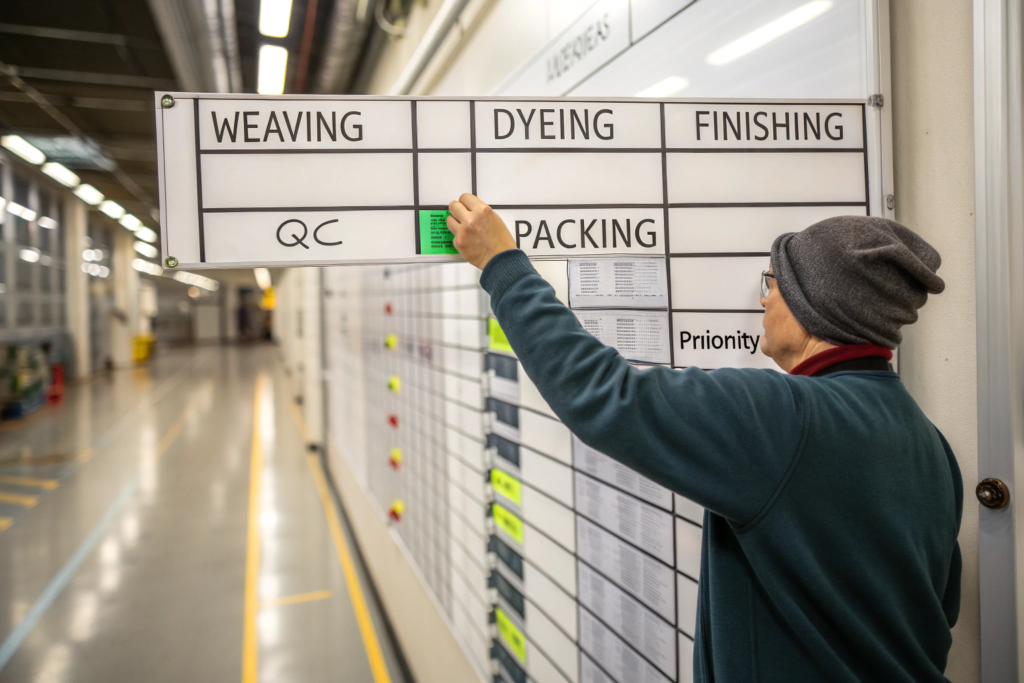
In a vertical operation, the Production Manager sees the whole board. If the weaving is 2 days behind because of a yarn delay, the Dyeing Manager is notified immediately. They can shift a different internal job to fill that kettle slot, and then slide your job into the next available slot without losing your place in the overall schedule. They can also add a Weekend Shift or Overtime to catch up, because the profit from the entire job accrues to the same company. There's no inter-company billing or finger-pointing. Just a unified team solving a problem.
At Shanghai Fumao, our ERP system (Enterprise Resource Planning) gives us this Helicopter View of production. We can see the bottleneck before it happens and re-route resources. This is the kind of operational agility that a fragmented supply chain simply cannot replicate. You can learn more about this by reading how the bullwhip effect disrupts apparel supply chains and how vertical integration mitigates it and the benefits of ERP systems in textile manufacturing for real-time scheduling.
How Does a Single Manufacturer Handle Rush Orders?
This is where the relationship pays off in spades. You're a loyal client of a single manufacturer. You get a surprise re-order from a major department store. You need 1,000 yards of your best-selling fabric in 14 days, not the usual 30. You call your single point of contact.
Because you have a History and a Relationship, that contact can walk onto the floor and say, "This is for Client X. They are a good partner. What can we do?" We can look at the greige inventory. If we have the yarn in stock, we can weave it in 3 days. We can find a "Hot Slot" in the dye schedule—maybe a small gap between two large runs. We can run it on overtime.
Try doing that with three different vendors. Vendor A (Weaver) says, "Sure, I can weave fast, but it costs 30% more." Vendor B (Dyer) says, "I'm booked solid for two weeks. No exceptions." Vendor C (Printer) says, "I don't have the file loaded." Your rush order is dead on arrival.
At Shanghai Fumao, we don't promise miracles, but we promise Maximum Effort for our partners. We know that helping you capitalize on a hot trend builds your business, which builds our business. It's a virtuous cycle. That's the benefit of a partnership over a transaction.
What Long-Term Strategic Advantages Come from a Partnership Model?
Beyond the day-to-day efficiencies of cost and time, there is a deeper, more valuable layer to the single-manufacturer relationship: Strategic Alignment. When you stop hopping from supplier to supplier chasing the lowest penny, you start building an Extension of Your Own Brand.
A transactional supplier sees your order as a one-time event. They have no incentive to invest in understanding your aesthetic, your fit preferences, or your sustainability goals. A long-term partner sees your order as a chapter in a long book. They start to anticipate your needs. They know that you hate a shiny finish on cotton, so they don't even show you those options. They know you are moving toward sustainable packaging, so they proactively source recycled poly bags for your shipments.
At Shanghai Fumao, we have clients who have been with us for over a decade. We've watched their brands grow from a single Etsy shop to a multi-million dollar e-commerce presence. And because we've been there the whole time, we have an Institutional Memory of their product. That memory is an asset you can't buy on Alibaba. It's earned over years of successful collaboration.

Can a Single Supplier Support Your Sustainability and Compliance Goals?
Absolutely. In fact, it's almost impossible to have a credible sustainability program with a fragmented supply chain. How do you trace the organic cotton from the field to the finished garment if it passed through four different factories, each with its own (or no) record-keeping?
A single, integrated manufacturer provides Chain of Custody documentation. We can provide a single Transaction Certificate for GOTS or GRS that covers the entire process from yarn spinning to final packing. This is the documentation you need for customs clearance and for the hangtag on your garment.
Furthermore, compliance audits (social and environmental) are a massive undertaking. Auditing four different factories costs four times as much and takes four times the time. Auditing one integrated facility provides a comprehensive view of the entire production lifecycle. At Shanghai Fumao, our CNAS lab and our compliance records are open to our partners. We invest in green technology—like our ¥550M commitment to recycled fabrics—precisely because we know our long-term partners demand it. This investment is only justified by the volume and stability of a long-term relationship. You can explore this further by reading the Global Recycled Standard (GRS) certification requirements for chain of custody and how vertical integration facilitates transparency in sustainable fashion supply chains.
How Does a True Partner Help You Innovate?
This is the fun part. When a manufacturer knows your brand's DNA, they can bring you Proactive Innovation. They don't just wait for you to send a spec. They say, "Hey, we just developed a new biodegradable coating that would be perfect for your rainwear line. Want to test it?"
This happens because we are running a development lab, not just a production line. Our 20+ R&D experts are constantly working on new blends, new finishes, and new techniques. When we see a new development that aligns with a client's specific niche—say, a lightweight recycled nylon for a travel brand—we reach out to them first. They get a competitive advantage before the fabric hits the open market.
This kind of partnership transforms the manufacturer from a cost center to a Value Creator. We're not just making what you designed last season. We're helping you design what's next. That is the ultimate benefit of working with a single, capable manufacturer. It's not about convenience. It's about building a Competitive Moat around your brand through superior product, faster speed, and unbreakable trust.
Conclusion
The choice between a single manufacturer and a patchwork of suppliers is really a choice between two different business models. One model is based on Cost Per Yard. It looks good on a spreadsheet in the short term. It's a model of constant negotiation, constant fire-fighting, and constant risk. The other model is based on Total Landed Value. It accounts for your time, your quality consistency, your speed to market, and your peace of mind.
Working with a single, integrated manufacturer like Shanghai Fumao is about moving from Managing Vendors to Cultivating a Partnership. It's about having one number to call when there's a problem, one team that knows your standards, and one company whose success is tied to your success. We've spent twenty years building the infrastructure in Keqiao to be that partner for brands around the world.
If you're tired of being the middleman in your own supply chain, and you want to experience the velocity and clarity that comes from a true partnership, let's talk. We can walk you through our facility, show you how the flow works, and discuss how we can consolidate your sourcing into a single, reliable pipeline. Reach out to our Business Director, Elaine. She can give you a clear picture of what working with one partner can do for your brand's efficiency and growth. You can email her at elaine@fumaoclothing.com. Let's build something great together, without the chaos.