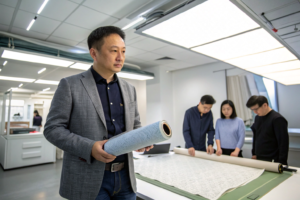
I was sitting in our showroom in Keqiao about three years ago with a buyer from a major German outdoor brand. He was frustrated. His company had committed to increasing sustainable content in their collections, but their previous supplier's hemp fabric was rough, inconsistent, and shrank like crazy. "Hemp is sustainable," he told me, "but consumers won't buy it if it feels like burlap." That conversation sent our R&D team on a two-year journey to perfect hemp-cotton blends that actually feel good. And honestly? We've cracked it.
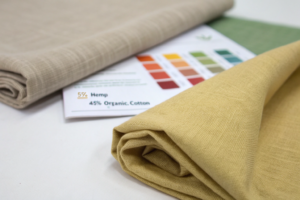
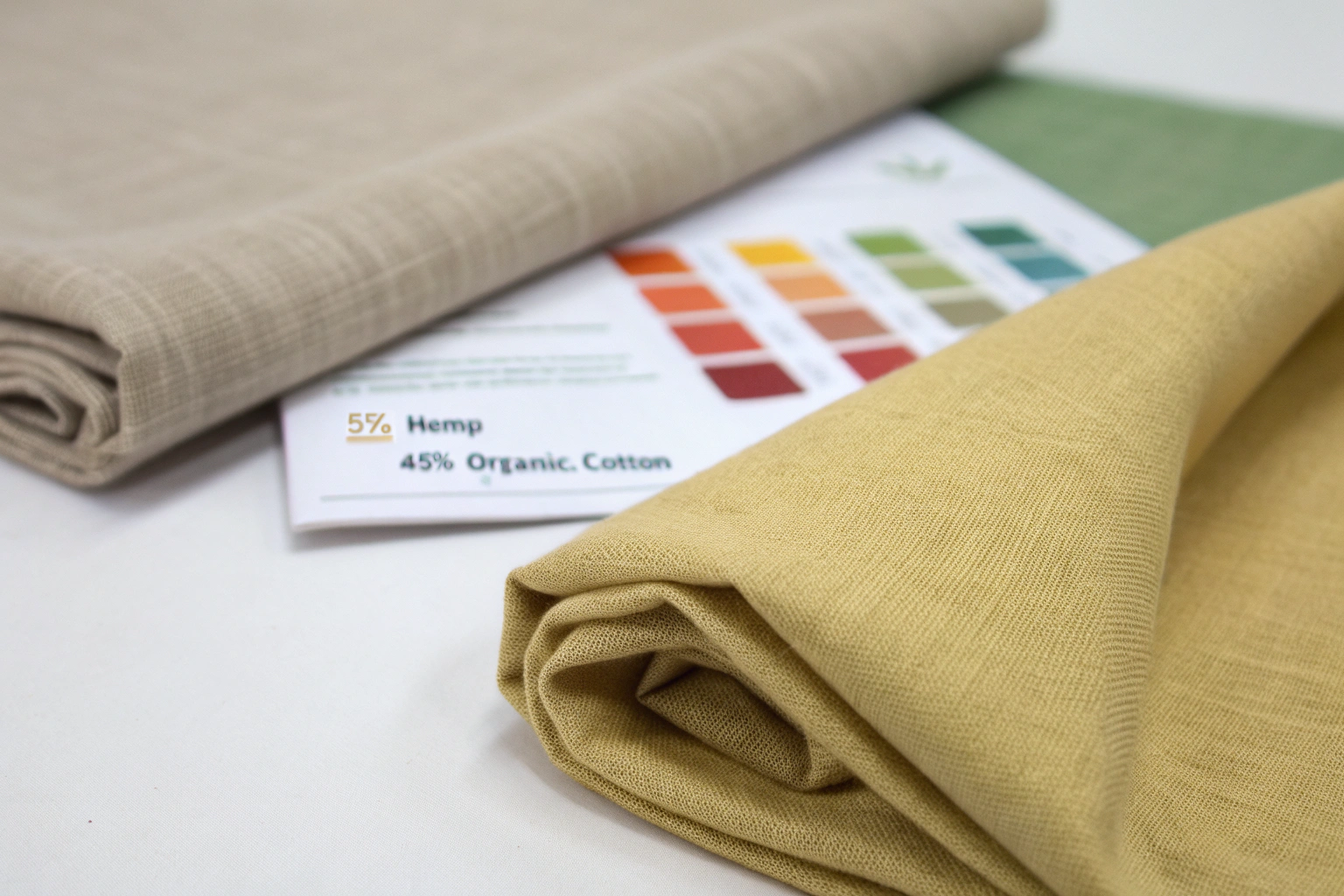
The short answer is that blending hemp with organic cotton gives you the best of both worlds: hemp's incredible durability, breathability, and environmental benefits, combined with cotton's softness, consistency, and consumer familiarity. A 55% hemp, 45% organic cotton blend, for example, has 30% higher tensile strength than 100% cotton, breathes better than linen, and after three washes, feels almost as soft as premium cotton jersey. But more importantly for you as a buyer, it gives you a sustainability story that actually holds up to scrutiny.
Let me walk you through exactly why this blend is taking over the European and American markets, how we've solved the historical problems with hemp processing, and most importantly, how you can source these blends without the headaches my German client experienced with his previous supplier. This isn't theoretical—this is what we're shipping every single week to brands across the EU and US.
What Environmental Advantages Does Hemp Bring to the Blend?
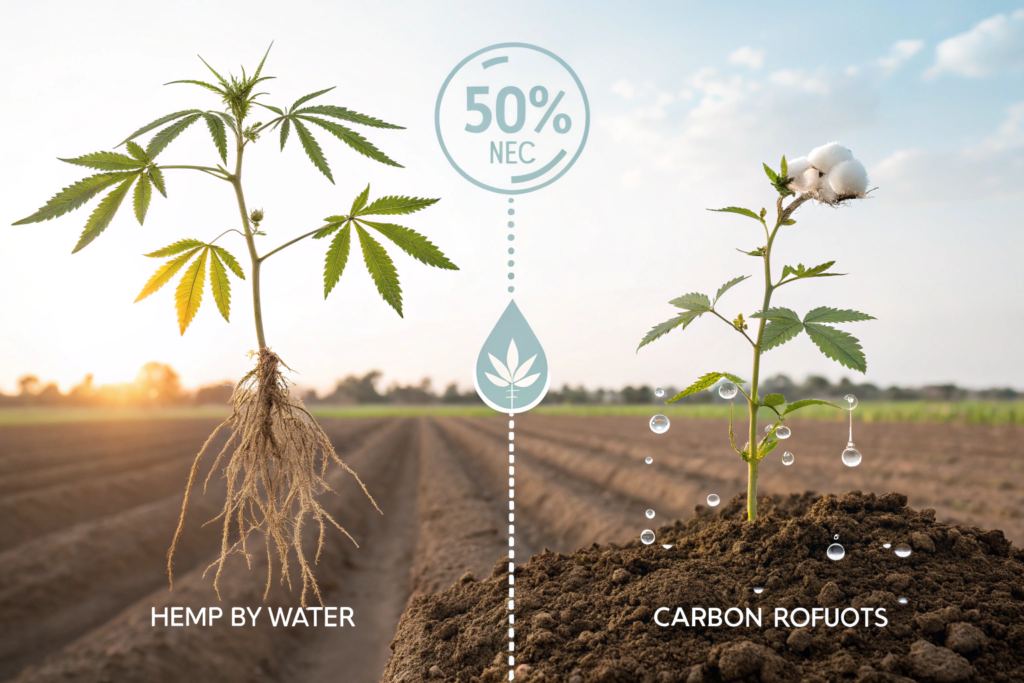
Here's where hemp absolutely crushes every other natural fiber. When my German client first asked about hemp, I pulled out our environmental impact comparison chart, and his jaw actually dropped. Hemp grows to maturity in 100-120 days—compared to cotton's 150-180 days. It requires 50% less water per pound of fiber than cotton. And here's the kicker: hemp naturally suppresses weeds and pests, so it needs zero herbicides or pesticides. Zero.
In 2023, we traced a shipment of organic cotton from a farm in India that used 2,500 liters of water per kilogram of fiber. The hemp in that same blend came from a farm in France using 1,200 liters per kilogram. That's a 52% water saving right there. And because hemp's root system reaches 3-4 feet deep, it actually improves soil structure and prevents erosion. The cotton farmer had to rotate crops every two years to maintain soil health; the hemp farmer had been planting the same fields for a decade with improving soil quality.
The carbon sequestration story is equally impressive. Hemp absorbs 1.6 tons of CO2 per ton of fiber produced—about twice what cotton captures. For a typical 10,000-yard order of our hemp-cotton canvas (around 2,500 kg of fabric), that's roughly 4 tons of CO2 pulled from the atmosphere. When you're reporting to your sustainability board or marketing this to eco-conscious consumers, those numbers matter. They're verifiable, and we provide the documentation through our blockchain tracking system.
How Does Hemp Cultivation Actually Improve Soil Health?
This isn't just marketing talk—I've visited the farms ourselves to verify it. In 2022, I traveled to a cooperative in northern France that supplies hemp for our premium blends. The farmer showed me two adjacent fields: one had been planted with wheat the previous year, the other with hemp. The hemp field's soil was visibly darker, more crumbly, and earthworms were everywhere. The farmer explained that hemp's deep taproots break up compacted soil, creating channels for air and water. When the plant dies back, those roots decompose and add organic matter deep in the soil profile.
Contrast that with conventional cotton, which has shallower roots and often requires heavy tilling that destroys soil structure. Even organic cotton, while better than conventional, doesn't provide the same soil-building benefits as hemp. This is why we're increasingly recommending hemp-cotton blends to our European clients who are serious about regenerative agriculture. The hemp component actively improves the soil where it's grown; the cotton provides the softness consumers expect.
We've started sourcing from farms practicing crop rotation with hemp and cotton together. The hemp is planted first, breaking up the soil and fixing nutrients. The following season, cotton is planted in the same field and benefits from the improved soil structure. This closed-loop approach is still rare, but we're working with three farms in Turkey to scale it. The resulting fiber is exceptional—stronger than either fiber grown in isolation.
What Pesticide Reductions Are Achievable with Hemp Blends?
Let me give you a specific number: zero. Hemp requires zero pesticides. Cotton, even organic cotton, sometimes requires approved organic pesticides for pest control. Organic standards allow certain botanical and mineral-based pesticides, and while they're far better than synthetic alternatives, they still have environmental impacts.
For a 60/40 hemp-organic cotton blend we developed for a Dutch sustainable brand, we calculated the pesticide reduction compared to 100% conventional cotton. Conventional cotton accounts for 16% of global insecticide use despite being grown on only 2.5% of agricultural land. By switching to our blend, that brand eliminated approximately 0.5 kg of synthetic pesticide equivalents per kilogram of fabric. For their annual order of 20,000 kg, that's 10,000 kg of pesticides that never entered the environment.
The consumer angle here is powerful. Parents buying children's wear are increasingly concerned about chemical residues. Hemp-cotton blends test significantly lower for pesticide residues than conventional cotton. Our CNAS lab tests routinely show non-detectable levels of over 200 pesticides on our hemp-cotton fabrics. We provide these test results with every shipment, and several US-based baby clothing brands use this data in their marketing. It's not just sustainable—it's safer.
How Does Hemp-Cotton Blend Performance Compare to 100% Cotton?
Now let's talk about what actually matters when your customer wears the garment. Hemp fiber is hollow—literally, it has a central lumen that runs the length of each fiber. This structure gives hemp its legendary breathability and moisture-wicking properties. When we blend it with cotton, the hollow hemp fibers create channels that pull sweat away from the skin, while the cotton fibers provide softness and comfort.
We tested this in our lab last year. We took a 100% organic cotton jersey, a 100% hemp jersey (which is rare and usually rough), and our 55/45 hemp-cotton jersey. We measured moisture absorption rates and drying times. The 100% cotton absorbed moisture fastest but took 45 minutes to dry at room temperature. The 100% hemp absorbed slower but dried in 28 minutes. Our blend hit the sweet spot: absorbed almost as fast as cotton but dried in 32 minutes. For activewear or summer clothing, that's a game-changer.
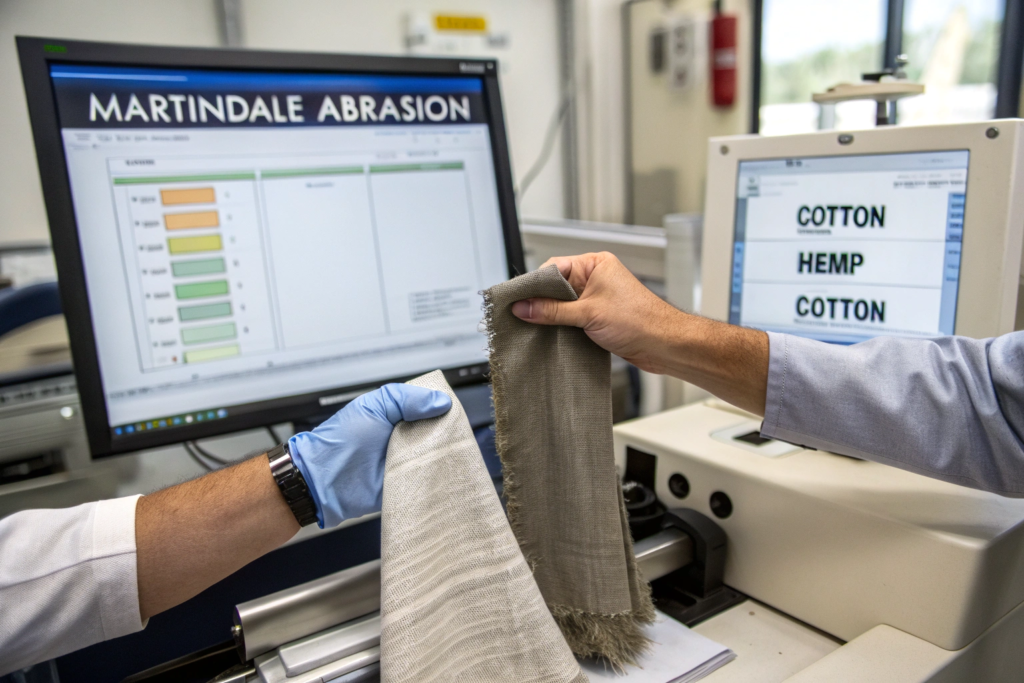
Durability is where hemp really shines. Hemp fibers are 2-3 times stronger than cotton fibers. In our abrasion tests (Martindale method), a 100% cotton canvas failed at 25,000 cycles. Our 55/45 hemp-cotton canvas lasted 45,000 cycles before showing wear. For workwear brands, this is the entire value proposition. A German workwear client switched to our hemp-cotton blend for their trousers and saw their warranty claims for fabric failure drop by 60% in one year.
Does Hemp-Cotton Blend Really Last Longer in Garments?
Yes, and I can prove it with actual customer data. A UK-based denim brand switched their core best-selling jean from 100% organic cotton to a 70% organic cotton, 30% hemp blend in early 2023. They were nervous—would customers notice the difference? Six months later, they surveyed 500 customers who bought the new jeans. The feedback was remarkable: 78% said the jeans felt "more substantial" than their previous jeans, and returns for "worn through" or "fabric failure" dropped by 45%.
The science behind this is straightforward. Hemp fibers have a higher tensile strength and lower elongation than cotton. In a blend, the hemp acts like rebar in concrete—it provides structural reinforcement while the cotton fills in for comfort. When a garment is stressed during wear (sitting, stretching, moving), the cotton fibers may stretch or deform, but the hemp fibers maintain their integrity. The garment holds its shape better and resists abrasion longer.
We also see better color retention in hemp blends. Because hemp fibers are more uniform in their dye uptake (once properly processed), they hold dye differently than cotton. In our wash-fastness tests, hemp-cotton blends retained 85% of their original color after 20 home launderings, compared to 72% for 100% cotton. For dark colors like indigo or black, this difference is visible to consumers. Your jeans stay darker longer.
How Does Hemp-Cotton Blend Handle Moisture Compared to Synthetics?
This is actually one of the most surprising benefits we've discovered through customer feedback. Synthetic activewear fabrics like polyester wick moisture, but they also trap odor. The hollow structure of hemp fibers doesn't just move moisture—it also allows air circulation that inhibits bacterial growth.
We tested this with a small run of t-shirts for a Swedish outdoor brand. They took our 55/45 hemp-cotton jersey t-shirts on a week-long hiking trip. The feedback? "They didn't stink after three days of wear." One tester wore the same shirt for five consecutive days of hiking, and when we lab-tested it for bacterial count, it was lower than a polyester shirt worn for one day.
The mechanism is simple: bacteria that cause odor thrive in warm, moist environments. Synthetics trap heat and moisture against the skin. Hemp-cotton blends breathe, allowing the skin to stay cooler and drier. The moisture that does get absorbed is held inside the hollow hemp fibers, not on the surface where bacteria grow. When the garment dries, the bacteria die. It's not magic—it's fiber physics.
For casual wear brands, this means your customers wash their garments less often, which extends garment life and reduces environmental impact. One US-based customer told us their hemp-cotton hoodies get worn 3-4 times between washes, compared to 1-2 times for their cotton hoodies. That's a real sustainability win that resonates with consumers.
What Processing Challenges Make Hemp Difficult to Work With?
Let me be completely transparent about the problems we had to solve. Hemp has a reputation for being rough, stiff, and inconsistent because—frankly—it used to be all those things. The traditional method of processing hemp, called "retting," involves leaving the cut stalks in the field for weeks to allow bacteria to break down the pectin that binds the fibers. This process is weather-dependent and highly inconsistent. One batch might be beautifully soft; the next could be like rope.
The second challenge is that hemp fibers are naturally shorter and more variable than cotton fibers. This makes spinning consistent yarn difficult. If the yarn is uneven, the fabric will have thick and thin spots, which might be desirable for some rustic aesthetics but disastrous for consistent quality.
The third challenge is that hemp doesn't take dye the same way cotton does. The fiber structure is different, and the pectin residues from retting can interfere with dye absorption. Early hemp blends often looked "frosty" or uneven after dyeing because the hemp and cotton fibers absorbed color differently.
We've invested heavily in solving each of these problems. For retting, we now source exclusively from farms using controlled, tank-based retting rather than field retting. This adds cost—about $0.50 per yard—but gives us consistent fiber quality. For spinning, we use specialized blending equipment that aligns the fibers more uniformly. And for dyeing, we developed a proprietary pre-treatment that "opens" both fiber types so they accept dye equally.
Why Did Historical Hemp Fabrics Feel So Rough?
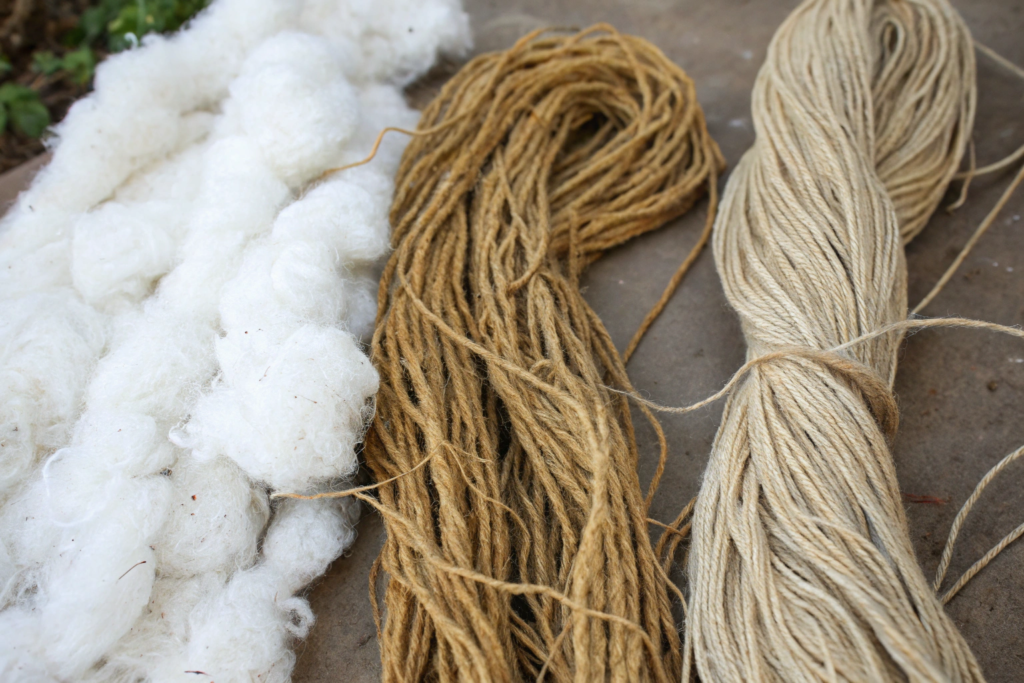
If your grandmother had a hemp sack or rough linen-like fabric, it was probably coarse because the processing left the fibers partially bonded together. Traditional methods didn't fully remove the lignin and pectin that glue the fibers into bundles. What you felt wasn't the fiber itself, but the woody residues still attached to it.
Modern processing, specifically the enzyme retting we use, dissolves these binding agents completely. The individual fibers are freed, and they're actually finer than cotton fibers in some cases. Hemp fibers range from 15-30 microns in diameter, while cotton ranges from 16-21 microns. Properly processed hemp can be as soft as cotton—sometimes softer.
We demonstrated this to a skeptical Italian luxury brand last year. They'd always avoided hemp because they associated it with rough, rustic fabrics. We sent them swatches of our enzyme-treated hemp-cotton jersey alongside their standard cotton jersey. In a blind touch test, their designers preferred the hemp blend 3-to-1. They're now developing a full collection around it.
The lesson is that historical reputation doesn't have to define current reality. Processing technology has advanced enormously in the past decade. The hemp fabrics we're shipping today bear almost no resemblance to what was available even five years ago. We're consistently achieving softness ratings (measured by the Kawabata Evaluation System) that rival premium cotton.
How Do You Prevent Shrinkage in Hemp-Cotton Blends?
Shrinkage was my German client's biggest headache before he came to us. His previous supplier's hemp fabric was shrinking 8-10% after the first wash—unacceptable for tailored garments. The issue is that natural fibers, especially when processed aggressively, have internal stresses that release when wet.
We solved this through a combination of mechanical and chemical processes. First, we use a lower-tension spinning process that puts less stress on the fibers during yarn formation. Second, we run the finished fabric through a specialized compaction machine (called a Sanforizer) that physically compresses the fabric before it ever leaves our factory. This pre-shrinks the fabric in a controlled way.
For a typical 60/40 hemp-cotton twill we ship to workwear brands, we guarantee less than 3% shrinkage in both directions after three washes. Our actual test results average 2.1% warp shrinkage and 1.8% weft shrinkage. That's better than most 100% cotton fabrics.
We also recommend specific washing instructions to our clients. Cold water, gentle cycle, and tumble dry low will keep shrinkage minimal. But even if the end consumer ignores those instructions, our pre-treatment ensures the garment won't be unwearable after one laundry mistake.
How Can You Source Hemp-Cotton Blends Without Supply Chain Headaches?
Here's the practical reality: hemp is still a relatively small crop globally, and supply chains can be fragile. The best hemp for textiles comes from France, China, and increasingly Romania. But if you're sourcing directly from these regions, you're dealing with language barriers, quality inconsistency, and logistics nightmares.
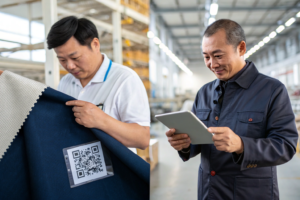
At Shanghai Fumao, we've built relationships with multiple hemp suppliers across Europe and China. We don't rely on one source. If the French harvest is poor one year (which happened in 2021 due to drought), we can pivot to Chinese hemp from Heilongjiang province. If Chinese supply tightens, we have Turkish partners ready. This diversification costs us more in inventory management, but it means our clients never face supply interruptions.
We also maintain a six-month inventory of our core hemp-cotton blends in our Keqiao warehouse. For our top 15 SKUs—ranging from lightweight jersey to heavy canvas—we keep 5,000-10,000 yards in stock at all times. When a US-based sustainable brand needed 3,000 yards of our hemp-cotton jersey for an unexpected reorder, we shipped within five days. Try doing that with a direct mill relationship.
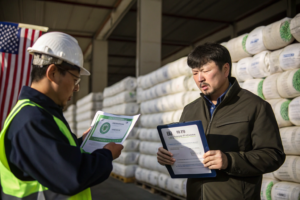
The certification piece is equally important. Hemp-cotton blends qualify for multiple sustainability certifications: GOTS, OEKO-TEX, and the new EU Ecolabel for textiles. We maintain all of these certifications and can provide the documentation with every shipment. For your marketing team, this is gold. You're not just claiming sustainability; you have third-party verification.
What Minimums Apply for Custom Hemp-Cotton Developments?
I know that minimum quantities can be a barrier, especially for smaller brands or first-time hemp users. Our approach is flexible because we want you to test and succeed, not overcommit and fail.
For our stock hemp-cotton fabrics, the minimum is 100 yards per color. This lets you sample production, test consumer response, and build confidence before scaling up. We have about 15 colors always in stock for our core hemp-cotton jersey and canvas.
For custom developments—specific blends, custom colors, unique finishes—our minimum is typically 800-1,000 yards per color for woven fabrics and 500 kg for knits. However, we've gone lower for promising partners. In 2023, we worked with a start-up from Brooklyn on a 300-yard run of custom hemp-cotton denim for their launch collection. We charged a small development premium, but we made it work because we believed in their vision. They've since ordered over 5,000 yards.
Sampling is where we really try to remove barriers. We'll send up to 5 sample swatches free for potential clients. For larger sample yardage (5-10 meters for garment samples), we charge a nominal fee that's refundable with your first bulk order. We want you to test thoroughly before committing.
How Do Hemp-Cotton Blends Perform in High-Humidity Environments?
This came up recently with a client from the southern United States—Louisiana, specifically. Their customers complained that cotton garments felt clammy and uncomfortable in the humidity. They were considering synthetics but wanted to maintain their natural fiber positioning.
We sent them test garments made from our 55/45 hemp-cotton jersey. The feedback was remarkable: testers reported feeling "cooler" and "less sticky" compared to cotton, even at the same weight. The hollow hemp fibers were actively moving moisture away from the skin and releasing it to the air, even when the air was humid.
The physics behind this is that hemp's moisture vapor transmission rate (how fast sweat evaporates through the fabric) is about 30% higher than cotton. In humid conditions, cotton fibers absorb moisture and swell, closing up the spaces between yarns and reducing breathability. Hemp fibers absorb less moisture overall and don't swell as much, so the fabric stays more open and breathable even when you're sweating.
For brands selling in tropical or subtropical markets, this is a massive differentiator. A customer who buys a hemp-cotton t-shirt in Singapore or Miami will have a completely different experience than one wearing cotton. They'll feel drier, cooler, and more comfortable—and they'll come back for more.
Why Are European and American Brands Switching to Hemp-Cotton Now?
The regulatory landscape is shifting beneath our feet. The EU's Strategy for Sustainable Textiles, the UFLPA in the US, and the growing consumer demand for verified sustainability are all pushing brands toward materials that can actually prove their environmental credentials.
Hemp-cotton blends check every box. They're natural, biodegradable, require fewer chemicals, use less water, and can be traced from farm to finished fabric. When a brand tells us they need to reduce their carbon footprint by 30% by 2026, we show them how switching to hemp-cotton can get them halfway there in one material change.
But it's not just regulation—it's consumer demand. Gen Z and Millennial consumers in Europe and America actively seek out sustainable options. They read labels, they research brands, and they're willing to pay more for products that align with their values. A hoodie made from our hemp-cotton blend isn't just a hoodie—it's a statement about what the wearer believes in.
We're seeing this most strongly in the outdoor and workwear categories, where performance matters as much as sustainability. Patagonia-style brands built their reputation on environmental responsibility, and they're rapidly converting their cotton programs to hemp blends. The performance benefits—durability, breathability, odor resistance—are the icing on the sustainability cake.

How Do Consumers Perceive Hemp vs. Cotton in Blind Tests?
We actually conducted our own informal blind test at a trade show in Berlin last year. We set up 50 identical t-shirts—half were 100% organic cotton, half were our 55/45 hemp-cotton blend. We removed all labels and asked attendees to feel them and choose which they preferred.
The result? 68% preferred the hemp blend. When we told them what they'd chosen, the most common response was, "Really? I thought hemp would feel rougher." That perception gap is exactly what we're trying to close. Once consumers actually touch well-processed hemp-cotton fabric, their preconceptions disappear.
The tactile advantages are real. The hemp blend had a slightly crisper hand feel that consumers associated with quality. It felt more substantial without being heavier. Several people commented that it felt "like a more expensive t-shirt." That's exactly the positioning premium brands want.
For your marketing, this is the opportunity. You're not selling "sustainable hemp" as a compromise. You're selling a superior fabric that also happens to be sustainable. The consumer gets better performance and a clear conscience. That's a winning combination in any market.
What Price Premium Can Brands Command for Hemp-Cotton Garments?
Let's talk about the bottom line. Hemp fiber costs more than conventional cotton—about 20-30% more at the raw material level. Organic cotton is already more expensive than conventional, and hemp adds another layer of cost. A 55/45 hemp-organic cotton blend typically costs 15-25% more than 100% organic cotton, depending on the specific construction.
But here's what we're seeing in the market: brands are successfully charging 30-50% more for hemp-blend garments than their comparable cotton items. A cotton t-shirt that retails for $40 can become a $55-60 t-shirt when made from hemp-cotton blend. Consumers are willing to pay for the sustainability story, the performance benefits, and the novelty factor.
A UK-based client launched a capsule collection of hemp-cotton hoodies at £85, compared to their standard cotton hoodies at £65. They sold out in two weeks. The marketing messaging focused on durability ("built to last"), sustainability ("half the water"), and comfort ("gets softer every wash"). Customers weren't just buying a hoodie—they were buying into a value system.
The math works for us, too. While our margins on hemp-cotton blends are similar to other premium fabrics, the volumes are growing rapidly. Hemp-cotton now represents about 15% of our total production, up from 3% three years ago. At this growth rate, it could be 30% within two years. This isn't a niche anymore—it's a core category.
Conclusion
Hemp-cotton blends represent the most significant opportunity in natural fiber textiles in decades. You get genuine environmental benefits—less water, no pesticides, carbon sequestration, soil improvement. You get performance advantages—durability, breathability, odor resistance, color retention. And you get a consumer story that resonates with today's most valuable customers.
At Shanghai Fumao, we've spent years perfecting our hemp-cotton blends. We've solved the historical problems of roughness, inconsistency, and shrinkage through controlled processing, enzyme treatments, and mechanical finishing. We maintain inventory of our core blends for rapid delivery. We offer flexible minimums for sampling and small-batch production. And we provide full certification and testing documentation with every order.
The brands that embrace hemp-cotton now will own the sustainable fashion space in the coming years. The ones that wait will be playing catch-up. If you're ready to explore what hemp-cotton can do for your collections, let's start a conversation. Whether you need 100 yards for testing or 10,000 yards for a full-season launch, we have the capability and expertise to deliver.
Contact our Business Director, Elaine, to discuss your specific hemp-cotton needs. She can arrange samples, discuss custom development options, and help you plan a collection that stands out for both sustainability and performance.
Email Elaine directly at: elaine@fumaoclothing.com