You want to go green and tap into the growing demand for sustainable textiles in Europe. But not all “recycled polyester” is the same—and failing to meet EU standards can lead to customs delays, fines, or lost trust. What exactly makes recycled polyester fabric EU-compliant?
EU-compliant recycled polyester fabrics meet strict labeling, traceability, and performance criteria under EU Regulation No 1007/2011, GRS certification, and the EU Sustainable Product Initiative. They must be verifiable, durable, and traceable to post-consumer or post-industrial plastic waste.
Here’s everything U.S. and European buyers need to know to meet sustainability expectations and regulatory requirements.
What are the characteristics of recycled polyester fabric?
Not all recycled polyester is built the same. Some feel like plastic, others rival high-end virgin yarns. What makes it stand out?
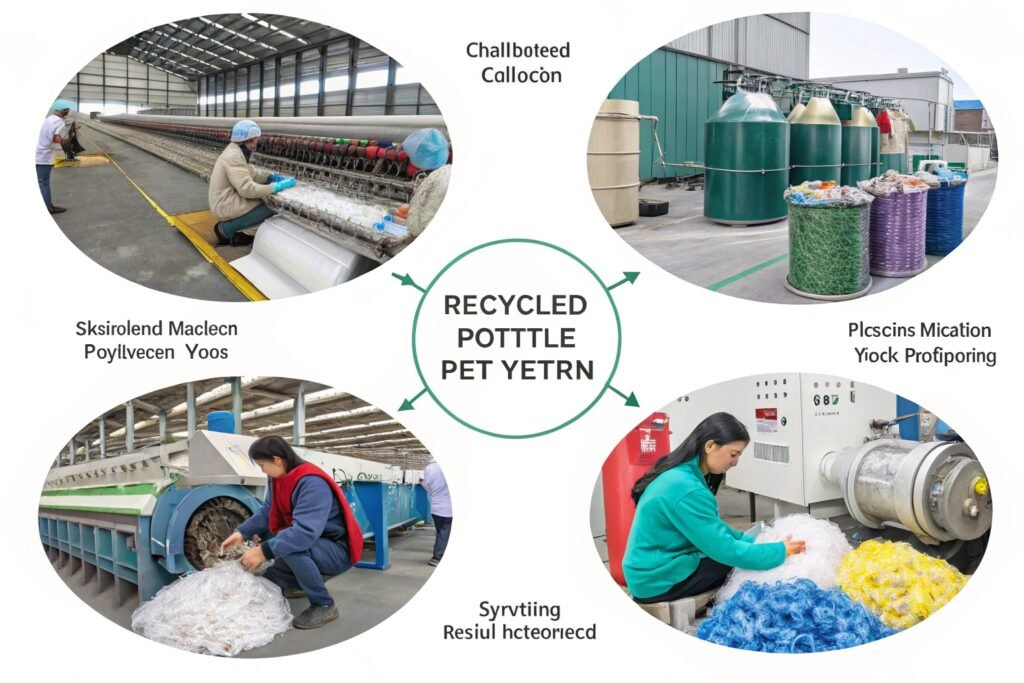
Recycled polyester (rPET) is made from melted plastic waste, mainly PET bottles. It offers high strength, color retention, and durability while reducing carbon emissions by 30–60% compared to virgin polyester. EU-compliant rPET also includes traceability and zero-toxicity guarantees.
What are the key fabric properties?
| Property | Recycled Polyester (rPET) |
|---|---|
| Origin | PET bottles or textiles |
| Texture | Smooth or brushed |
| Elasticity | Low (can be blended) |
| Moisture-wicking | Moderate to high |
| UV Resistance | Yes, with treatment |
| Dye Hold | Strong, requires pre-treatment |
| Shrinkage | Low |
We produce rPET blends with spandex or Tencel™ for enhanced performance in activewear and casual lines.
Why does fabric origin matter?
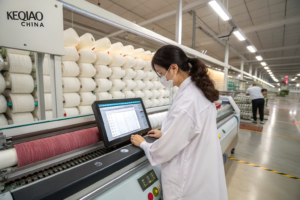
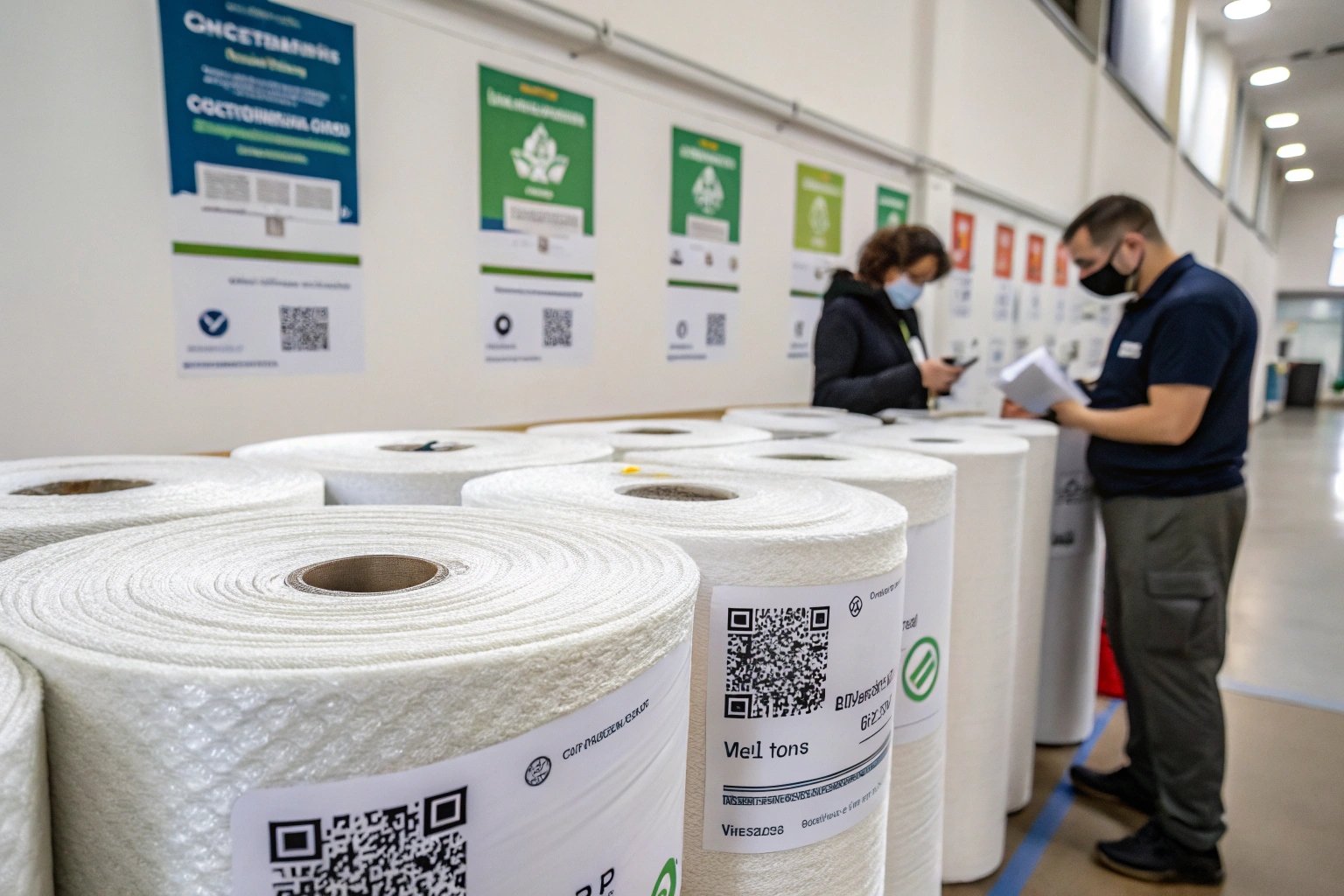
EU buyers now demand full traceability—from bottle to bolt. Our yarn suppliers are GRS-certified and integrated into our CNAS testing protocols, allowing QR verification of material origin for each roll of fabric.
What is the EU regulation No 1007 2011?
You may see it in spec sheets, but what does this regulation really mean for your fabric orders?
EU Regulation No 1007/2011 covers textile labeling and fiber composition. For recycled polyester, it mandates that labels reflect exact percentages, the fiber source, and any recycled content. Products must use standardized terms and avoid misleading claims.
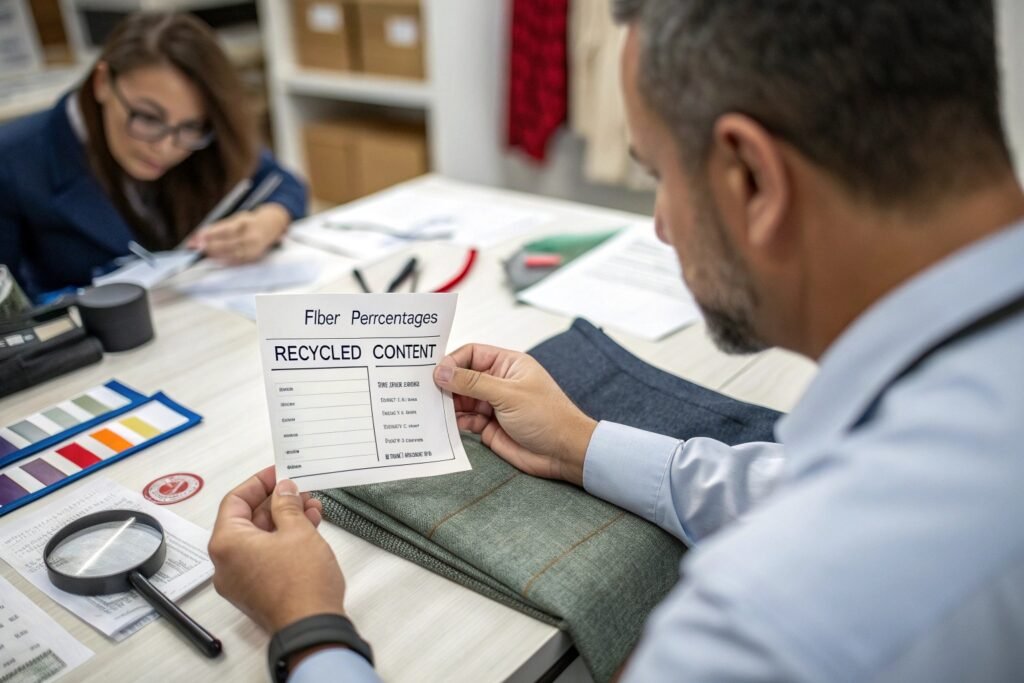
What’s required under this regulation?
- Clear fiber labeling (e.g., “85% recycled polyester”)
- Mandatory language: must use “recycled” for post-consumer or post-industrial source
- No vague terms like “eco” or “green polyester” allowed
- Multi-lingual labels for EU markets
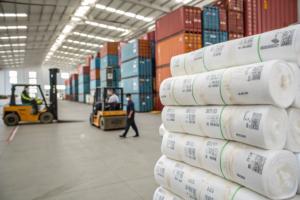
We label every roll of recycled fabric with EU-compliant stickers and documentation. This protects your shipment from clearance rejections or mislabeling penalties.
What if I blend rPET with other fibers?
The regulation still applies. We print digital tech sheets stating:
- Blend percentages
- Recycled content origin
- GRS ID and certification expiration
These documents are attached digitally and physically with the shipment.
What is 100% recycled polyester fabric?
100% recycled sounds ideal—but does it really mean the entire fabric is sustainable? What qualifies?
100% recycled polyester fabric is made entirely from recycled PET material, usually plastic bottles. It contains no virgin polyester and must be traceable, non-toxic, and certified by a recognized body like GRS or OEKO-TEX for EU compliance.
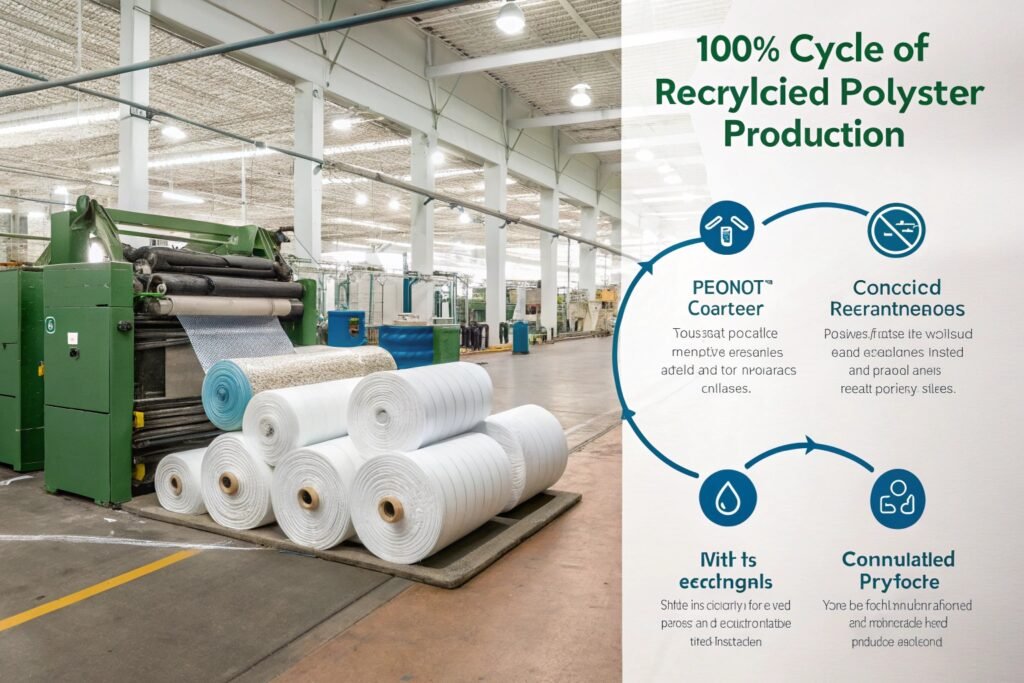
What are the practical uses of 100% rPET?
| Application | Common Fabric Types |
|---|---|
| Sportswear | Interlock, mesh, pique |
| Outerwear linings | Taffeta, pongee |
| Fashion apparel | Satin, georgette |
| Bags & accessories | Canvas, oxford cloth |
| Home textiles | Curtain sheers, pillow shells |
Fumao provides over 150 variations of 100% rPET fabrics, many available in stock. MOQ starts at 100 meters.
What about limitations?
- 100% rPET may feel stiff without blending
- Adding spandex or viscose improves drape
- Color fastness and stretch are tested under CNAS lab protocols
We run each lot through SGS and ITS testing to validate results and issue compliance reports for every client shipment.
What are the performance requirements for textiles input on EU sustainable design criteria for textiles?
Beyond labeling, the EU is pushing design requirements too. So even if a fabric is recycled, how do you prove it performs well enough?
The EU’s Sustainable Product Initiative requires recycled polyester fabrics to meet performance standards in durability, washability, colorfastness, and lifecycle emissions. These are tied to the proposed Ecodesign for Sustainable Products Regulation (ESPR) and upcoming Digital Product Passports.

What must your fabric pass to enter Europe?
| Metric | Standard Required (Example) |
|---|---|
| Tear strength | ISO 13937-2 |
| Colorfastness to washing | ISO 105-C06 (Grade 4+) |
| Dimensional stability | ISO 5077 (±3%) |
| Abrasion resistance | ISO 12947 |
| No harmful substances | OEKO-TEX® Standard 100 |
Fumao ensures all performance criteria are pre-tested and included in our spec sheet. We offer custom test runs for your product applications—from babywear to workwear.
What’s the role of the Digital Product Passport?
Set to roll out in the EU by 2026, this digital label will include:
- Fabric origin
- Material certifications
- Lifecycle data
- End-of-life recyclability
We’re already working with clients to prepare metadata for QR-based tracking in their finished garments.
Conclusion
EU-compliant recycled polyester isn’t just about recycled content—it’s about traceability, durability, and meeting evolving European standards. At Fumao, we help brands stay compliant, agile, and future-ready by offering certified, lab-tested rPET fabrics with clear documentation and fast turnaround. Green sourcing shouldn’t slow you down.