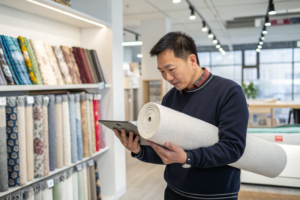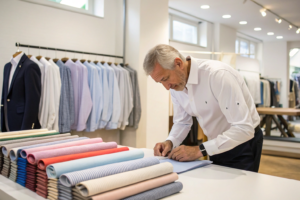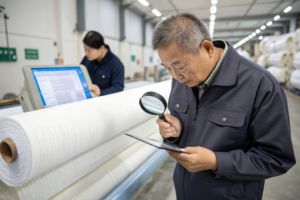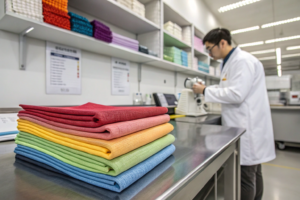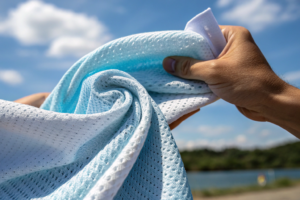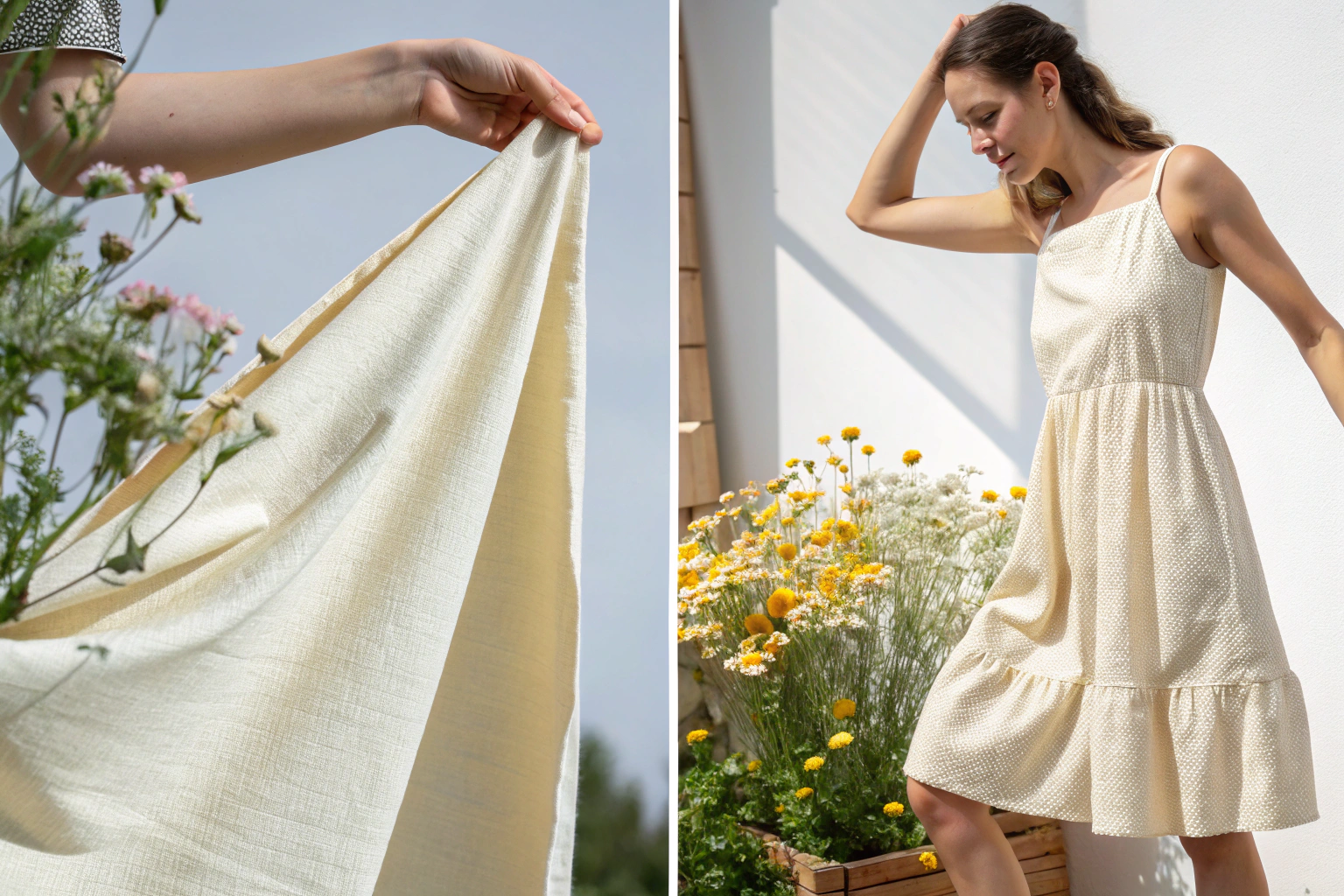
I’ve been in this game for over 20 years, right here in Keqiao, and if there’s one question I get asked every single spring, it’s this one. A buyer from New York, a startup owner from London, or a designer from Sydney emails me, usually in a bit of a panic. They have this amazing design for a summer dress, but they’re stuck on the very first, most basic decision: should they make it in a knitted fabric or a woven one? They see the samples, they feel the difference, but translating that feel to a final garment that sells well and keeps customers happy? That’s the tricky part.
Let’s cut through the confusion. For summer 2026, the ‘best’ fabric isn’t about a single winner. It’s about matching the fabric’s construction to the dress’s purpose, the latest trends in sustainability, and the real-world demands of your supply chain. Knit fabrics, like our premium jersey, offer comfort and stretch, perfect for casual, body-hugging silhouettes. Woven fabrics, like our sustainable Tencel twills, provide structure and a crisp finish, ideal for more tailored pieces. The right choice directly impacts your production timelines, your quality control, and ultimately, your customer's satisfaction.
But here’s what most articles won’t tell you. The decision goes way beyond just ‘comfort vs. structure.’ We have to talk about how these fabrics behave during production, especially when you’re sourcing from China. We need to talk about the hidden costs of finishing, the lead times for specific weaves versus knits, and how to navigate the 2026 sustainability regulations coming out of the EU and the US. I’m going to break this down using real examples from our factory floor at Shanghai Fumao, so you can make a decision that’s not just good for your design, but great for your bottom line.
How Do Fabric Structures Impact Summer Dress Silhouettes for 2026 Trends?
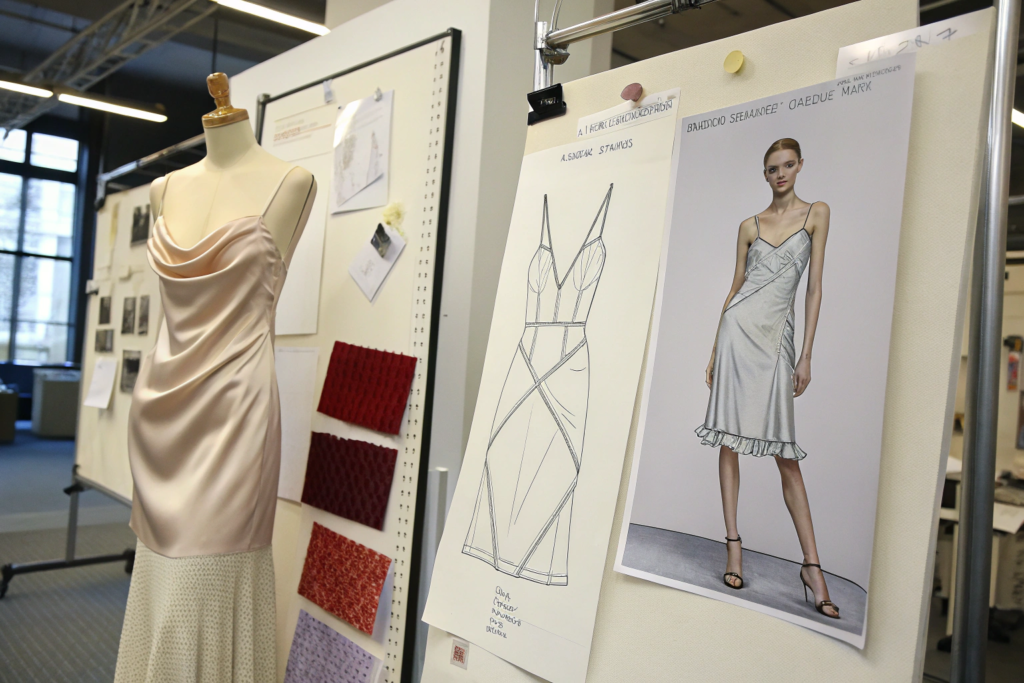
The first thing my clients ask is always about the look. “Can I get that drapey, effortless look with a woven?” or “Will this knit hold that sharp, architectural shape I want?” The answer isn’t always a simple yes or no. It comes down to the fundamental way the fabric is constructed. Think of it like building a house: you can use bricks (woven) or you can use flexible steel frames (knit). Both create a structure, but they behave very differently.
For 2026, we’re seeing a huge push towards “conscious comfort.” Designers want garments that feel amazing but also have a defined purpose. This is where understanding the grain and the give of your fabric becomes non-negotiable. A woven fabric, like our Egyptian cotton poplin, has a stable, rigid structure because the yarns are interlaced at right angles. This gives you that clean, crisp look perfect for a button-down shirt dress or an A-line skirt. It holds its shape. On the other hand, a knit fabric, like our bamboo jersey, is made from interlocking loops. This gives it inherent stretch and recovery, making it ideal for that body-hugging slip dress or a flowy maxi with a soft drape.
Here’s a practical example from a 2024 order we handled for a Munich-based contemporary brand. They came to us with a stunning design for a summer dress that had a very fitted bodice but a flared, pleated skirt. Initially, they wanted the entire dress in a single fabric—a mid-weight linen blend. I had to stop them. (Here’s where my 20 years of experience kicks in). Using a woven linen for the fitted bodice would have resulted in a garment with no give, making it uncomfortable and prone to ripping at the seams. We proposed a hybrid solution: a stable, custom-dyed organic cotton woven for the pleated skirt, and a matching organic cotton jersey knit for the bodice. The result? A dress that fit like a glove, moved with the body, and looked sharp. They sold out their entire production run in three weeks.
Can a Knit Fabric Really Provide Enough Structure for a Tailored Summer Dress Look?
This is the million-dollar question. The short answer is yes, but you need to know what you’re asking for. You can’t just grab any t-shirt jersey and expect it to hold a tailored shape. It will sag and look sloppy. For a tailored look with a knit, you need to look at specific constructions. Ponte di Roma, for instance, is a double-knit fabric that is much heavier and has a stable, almost woven-like hand feel. It holds its shape beautifully and is fantastic for structured sheath dresses or blazers, even in summer if you choose a breathable fiber like a Tencel blend.
Another technique we use a lot at Shanghai Fumao is playing with the weight and the fiber content. A tightly constructed interlock knit in a compact merino wool or a fine-gauge organic cotton can absolutely create a polished, structured look. The key is the fabric's "memory." We test this extensively in our CNAS-certified lab. We put the fabric through a series of stretching and recovery tests to see how well it returns to its original shape. For a tailored knit dress, you need a recovery rate of over 95% to prevent bagging at the elbows and knees. This is data we provide to every client because it’s essential for their pattern makers.
What Are the Best Woven Fabrics for Achieving a Flowy and Breezy Summer Silhouette?
While wovens are known for structure, they aren’t all stiff and rigid. The secret lies in the weave and the fiber. A plain weave in a stiff cotton can be board-like, but a satin weave in a fine viscose will be liquid and drapey. For that breezy, ethereal summer dress, you want to look at fabrics like:
- Viscose Challis: This is a classic for a reason. It’s a plain weave but made from fine, twisted viscose yarns, giving it a super soft, fluid drape. It’s perfect for maxi dresses and boho styles.
- Tencel Twill: Tencel fibers are inherently soft and drape well. When woven into a twill construction, you get a fabric that has a beautiful, subtle texture and a fluid movement, but with more durability than a plain viscose. It’s our top recommendation for eco-conscious designers.
- Silk Habotai: If the budget allows, this is the queen of flow. This lightweight, plain-weave silk is incredibly smooth and drapey. We source our silks directly from trusted partners in the region, ensuring the highest grade for a flawless finish.
- Linen Blends: 100% linen can be crisp and wrinkly (which some love!). But a linen/viscose blend gives you the best of both worlds: the texture and breathability of linen with the soft drape of viscose.
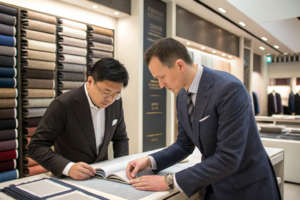
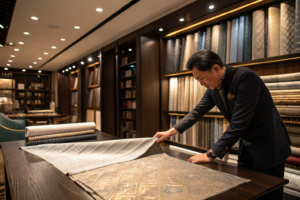
Just last month, a designer from a major Swedish fast-fashion brand came to us looking for a flowy woven for their summer 2026 collection. We weren’t just showing them our standard stock. We brought them into our development center and showed them three new variations of a Tencel-linen blend we were working on, each with a different weave density. We let them feel the difference between a slightly crisper version for more structure and an ultra-soft, more open weave for maximum flow. That’s the kind of collaboration we live for.
How Can I Navigate Chinese Production Schedules to Hit My Summer 2026 Launch Deadlines?
Timing is everything in fashion. You can have the most beautiful dress design in the world, but if it arrives in your warehouse in August instead of May, you’ve missed the summer season. I’ve seen promising brands drown because they didn’t account for the nuances of the Chinese production calendar. It’s not just about lead times; it’s about the rhythm of the year here. At Shanghai Fumao, our production planning is a year-round cycle, and our best clients plan their orders around our peaks and valleys.
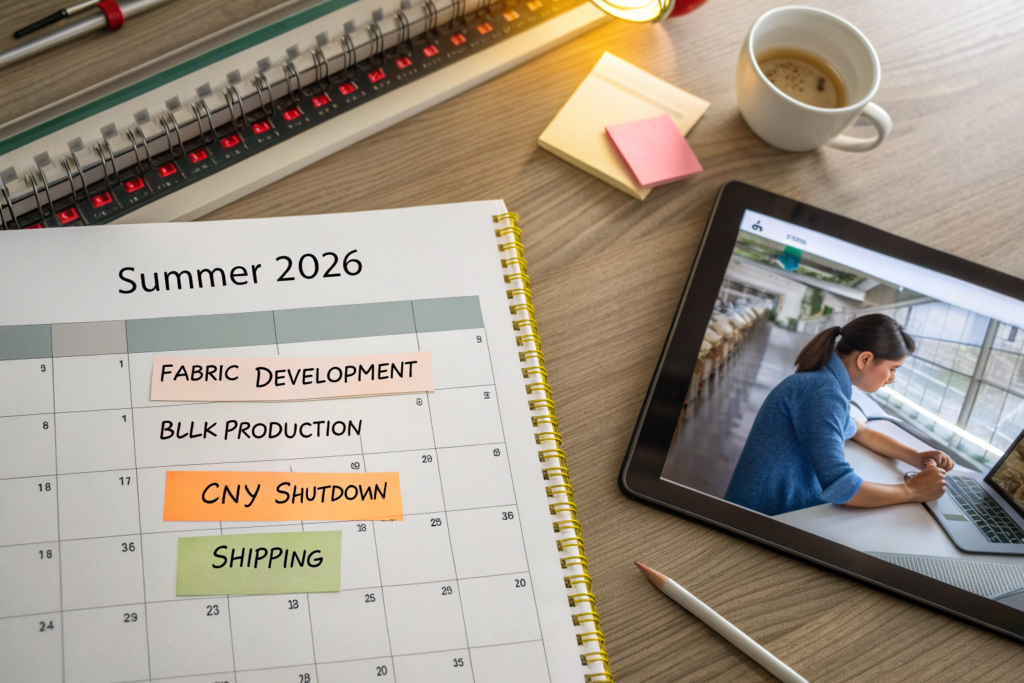
You mentioned the example of the European brand planning six weeks before Chinese New Year. That is exactly the kind of smart planning I’m talking about. Let’s break down the 2026 calendar. Chinese New Year will fall in February 2026. This means most factories, including our weaving and dyeing partners, will shut down for 3-4 weeks. Production essentially freezes. The key is to have all your pre-production samples approved and your fabric in the greige (unfinished) stage before the holiday. We advise clients to have their purchase orders finalized and deposits paid by mid-December 2025. This way, we can queue up their yarn and schedule weaving for immediately after the holiday rush in March.
Then you have the peak seasons: March to May and August to October. During these months, everyone is pushing to get goods out. Dyeing houses get backed up, and shipping space becomes a premium. If you place a rush order in April, expecting delivery in June, you’re going to be disappointed. You’re competing with every other brand for the same resources. However, if you plan your production for the slower periods—June to July, or November to December—you can often negotiate better prices and secure faster turnaround times because the factories aren’t at full capacity. It’s a strategic dance.
What Are the Realistic Lead Times for Knitted vs. Woven Fabrics from China?
This is where a lot of online guides get it wrong. They give you generic 30-60 day lead times. The reality is much more specific and depends heavily on the fabric construction and the finishing required. Here’s a realistic breakdown based on our operations at Shanghai Fumao:
| Fabric Type | Sample Development | Bulk Production (from order to ex-factory) | Key Considerations |
|---|---|---|---|
| Basic Knits (Jersey, Rib) | 3-5 days | 25-35 days | Dyeing is fast. Key bottleneck is often yarn availability. Circular knitting machines are generally faster to set up. |
| Novelty Knits (Jacquard, Raschel) | 10-20 days | 40-55 days | Programming the knitting machines takes time. We need to create a digital pattern and run trials. Yarn preparation is more complex. |
| Basic Wovens (Poplin, Plain Satin) | 5-7 days | 35-45 days | Weaving is inherently slower than knitting. The main delay is often in the greige goods preparation and the warping process. |
| Complex Wovens (Jacquard, Dobby) | 15-25 days | 50-70 days | This is the longest lead time. Creating the jacquard card or dobby pattern is an art. We often run multiple sampling rounds to get the pattern and hand feel perfect. |
These timelines are for standard dyeing and finishing. If you add special processes like our eco-friendly enzyme washes, peaching, or a complex coating for water resistance, you can add another 7-14 days. We always build this into our project plans for clients.
How Do I Use China’s Slower Production Periods to My Advantage for Summer Stock?
The slower periods—June-July and November-December—are your secret weapons. Most brands are frantic during the peak seasons, but the smart ones use the lulls to get ahead. Last November, a client from Toronto contacted us. Their summer 2025 collection had been a nightmare of late deliveries the previous year. They wanted to get ahead of the curve. We worked with them to pre-produce 60% of their core summer styles—simple viscose jersey dresses and tops—during that November-December window.
Here’s what that did for them:
- Faster Turnaround: Our knitting and dyeing partners weren't busy, so their order moved to the front of the line. We shipped it in early January.
- Cost Savings: Because we could schedule production without disrupting peak-time rushes, we were able to offer them a slight discount on our finishing costs. It wasn't massive, but on a bulk order, every cent counts.
- Stress-Free CNY: Their goods were already on a ship before the Chinese New Year shutdown even started. They didn't have to worry about a thing.
- Early Market Entry: They had their summer stock in their warehouse by February, allowing them to do early-bird promotions and fulfill pre-orders seamlessly.
It’s about shifting your mindset from reactive to proactive. Instead of waiting for the demand to hit, you anticipate it. Use the industry’s downtime to build your inventory. Your future self (and your operations manager) will thank you.
What Are the Hidden Quality Control Differences Between Knits and Wovens?
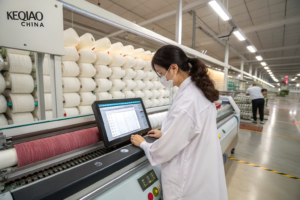
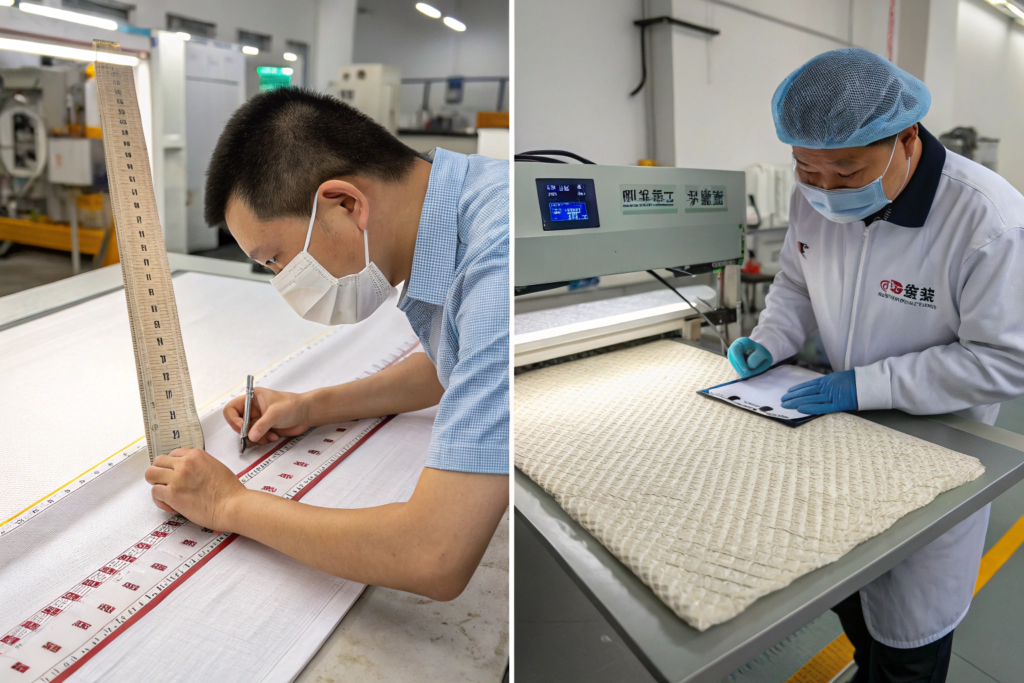
You’ve got your design, you’ve timed your production perfectly, the fabric is in your warehouse. Then the complaints start. The dress stretched out after one wear. The seams puckered after the first wash. The color faded unevenly. These aren’t design flaws; they’re quality control failures that stem from not understanding the inherent properties of your chosen fabric. In our CNAS-accredited testing center at Shanghai Fumao, we see these issues every day, and they are almost always preventable.
The fundamental difference lies in stability. Wovens are dimensionally stable along the grainline. Their weakness is the bias (the 45-degree angle), where they have the most stretch. Knits, by their nature, are unstable; they have stretch in multiple directions. This means the QC checklist for a knit dress is completely different from one for a woven dress. For a woven, we’re obsessively checking for skewness (the weft yarns are not perpendicular to the warp) and tight construction. For a knit, we’re living and dying by the shrinkage test and the spirality test.
Take shrinkage, for example. A standard cotton woven might shrink 3-5%. A standard cotton jersey can shrink 5-10% if it’s not properly compacted during finishing. If your pattern maker doesn't account for that, your beautifully designed dress becomes a child's top after the first wash. We use our lab to run simulated wash tests (AATCC or ISO standards) on every single production lot. We give our clients a QR code with real-time access to that data, so they know exactly how the garment will behave.
How Can I Prevent Seam Puckering and Distortion in Summer Dress Fabrics?
Seam puckering is the bane of every garment maker’s existence. It looks cheap and ruins the line of a dress. The cause is often a mismatch between the fabric and the sewing thread or the stitch type. For wovens, puckering usually happens when the sewing thread tension is too high, pulling the rigid fabric inwards. For knits, puckering can happen when the fabric is stretched during sewing and then relaxes, causing the seam to ripple.
Here’s how we tackle this for our clients at the factory level:
- For Wovens: We recommend using finer, high-quality polyester or cotton-wrapped polyester threads that have a bit of give. We also advise on using a longer stitch length (8-10 stitches per inch) to reduce the amount of thread compressing the fabric. We recently helped a client from Brazil who was having terrible puckering on their linen-cotton shirting dresses. We switched their thread from a standard Gral to a finer, lubricated thread and adjusted the pressure on their sewing machine foot. The puckering vanished.
- For Knits: The golden rule is never to use a standard lockstitch on a seam that needs to stretch. You must use a stretch stitch, like a narrow zigzag or a coverstitch. We also emphasize the importance of a ball-point needle. A sharp needle will cut through knit yarns, creating holes and weakening the fabric, leading to runs. A ball-point needle pushes the yarns aside, preserving the fabric’s integrity. It’s a tiny detail, but it makes all the difference. You can find great resources on proper needle selection on forums like The Cutting Room (a great community for sewists and small brands) and in the technical bulletins from thread manufacturers like American & Efird.
What Specific Certifications Should I Look for in Knit and Woven Fabrics for 2026?
Certifications are no longer a “nice-to-have”; they are becoming a license to operate, especially for the European and US markets. By 2026, regulations around green claims and supply chain transparency will be even stricter. When you source from us, we don’t just tell you a fabric is sustainable; we prove it with a chain of custody.
For knits, the most common certifications we handle are for organic cotton (GOTS or OCS) and recycled synthetics (GRS). A GOTS certification, for instance, isn't just about the fiber. It covers the entire supply chain, from the field to the dyehouse, ensuring social and environmental responsibility throughout. If you’re sourcing a recycled polyester jersey for a sporty summer dress, you need a GRS certificate to prove the recycled content and that the production adhered to strict chemical and social criteria. We provide these certificates for every certified order we ship.
For wovens, we see a high demand for OEKO-TEX Standard 100, which tests for harmful substances. Almost all of our shirting and dress fabrics are OEKO-TEX certified. But for 2026, the focus is shifting to biodegradability and circularity. We’re getting more requests for Cradle to Cradle Certified materials. For example, a high-end Italian client we work with now requires all their pure linen and Tencel wovens to come with proof of compostability. We’ve been working with our fiber suppliers to ensure we can provide that level of certification. It’s a complex area, and I recommend checking the official standards on sites like Textile Exchange for the most up-to-date information on certification protocols.
How Do Tariffs and Logistics Affect My Fabric Choice for US-Bound Summer Dresses?
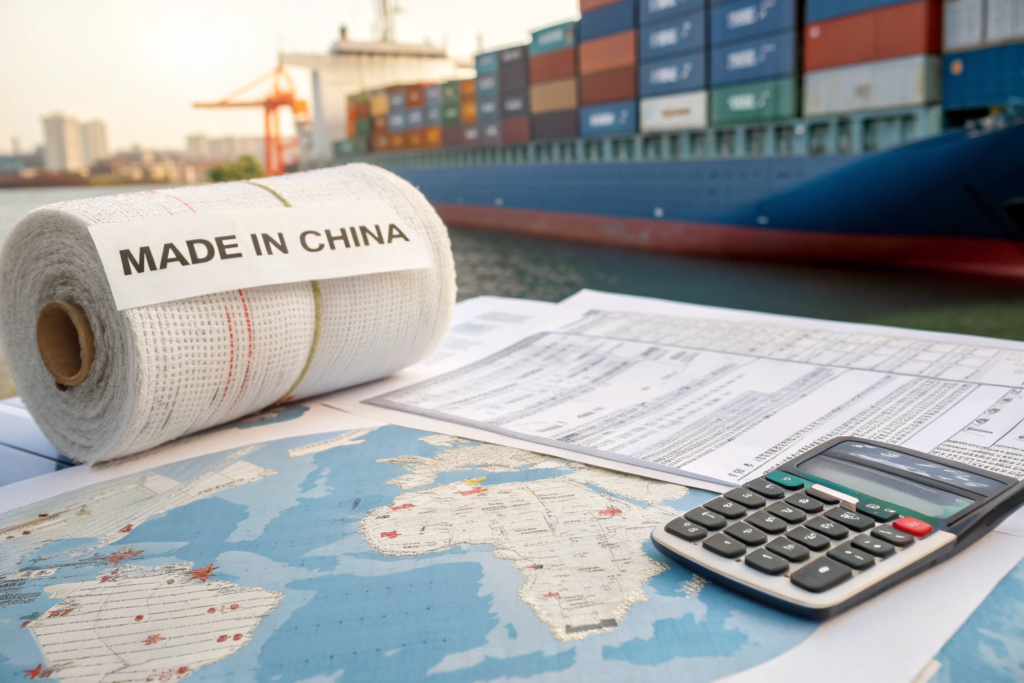
Let’s talk money. Specifically, the money that gets eaten up by logistics and tariffs. Many new designers think the fabric cost is the final cost. It’s not. The way your fabric is constructed—its weight, its roll-up size, its finished form—directly impacts your shipping costs and your exposure to US tariffs. At Shanghai Fumao, we don’t just sell fabric; we help you navigate this complex landscape to ensure your landed cost is as competitive as possible.
First, consider the US tariff codes (HTSUS). The classification of your fabric can significantly affect the duty rate you pay. A knitted fabric and a woven fabric of the same fiber composition can fall under different chapters of the Harmonized Tariff Schedule, often with different duty rates. For example, certain synthetic knit fabrics might have a higher duty rate than their woven counterparts, or vice versa. We always advise our US clients to share their intended HTS code with us before we finalize the order. We can sometimes suggest a slight modification to the fabric construction—like adjusting the weight or blend—that might qualify it for a more favorable tariff classification. (I have to emphasize, we are not customs brokers, but we’ve been doing this long enough to know where the pitfalls are).
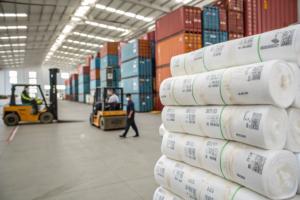
Secondly, think about shipping. Summer dresses are lightweight, which is good, but the fabric is often bulky. A bulky, lofty knit will take up more space in a container than a flat, tightly rolled woven. That means you might pay more in freight for the same number of yards if you choose a thick terry knit over a fine poplin. We help clients optimize their fabric for sea freight, discussing roll lengths and packing methods to maximize container utilization. It’s these small logistical efficiencies that protect your margins.
Is It True That Fabrics Sourced from China Are Heavily Affected by US Tariffs?
This is a major pain point, and I want to address it head-on. The situation is constantly changing, and there’s a lot of misinformation out there. The short answer is: not all fabrics are affected equally, and there are smart ways to mitigate the impact. The Section 301 tariffs target specific lists of Chinese goods. Many fabrics, especially commodity synthetics, have been on these lists. However, the exclusion process has been dynamic, with certain products being excluded and reinstated over the years.
Here’s the reality from our perspective at Shanghai Fumao. We have seen orders for some basic polyester fabrics dip because of tariff uncertainty. But our business in higher-value, specialized fabrics—like our eco-friendly Tencel blends, our GOTS-certified organic cottons, and our intricate jacquards—has continued to grow with US clients. Why? Because these aren't commodities. They are value-added products where the quality and development capability outweigh the tariff cost.
Furthermore, we’ve proactively diversified our supply chain to offer solutions. We have strong partnerships with mills in Vietnam and Bangladesh. If a US client is facing prohibitive tariffs on a specific woven fabric made in China, we can often work with our partner mills in Southeast Asia to produce a comparable fabric, using yarns that might still come from China but qualifying for better duty treatment under different rules of origin. It’s a complex puzzle, but having a partner with a regional footprint makes solving it possible.
What's the Best Way to Ship Fabric for Summer Dresses to Ensure It Arrives on Time and on Budget?
The best way depends entirely on your order volume and your timeline. There is no one-size-fits-all answer. But having moved millions of yards of fabric over two decades, I can give you the pros and cons of each based on your situation.
- Sea Freight (Full Container Load - FCL): This is your most cost-effective option for bulk orders (typically over 10,000 yards, depending on fabric weight). You get a dedicated container, and it’s the safest in terms of minimizing handling. The transit time from Shanghai to the US West Coast is typically 15-20 days. You need to plan for this, as it’s slower. We handle all the documentation, from the packing list to the bill of lading.
- Sea Freight (Less than Container Load - LCL): Good for smaller bulk orders (say, 2,000 to 8,000 yards). You share a container with other shipments. It’s cheaper than air but slower than FCL, and there’s a slightly higher risk of delays or damage due to consolidation. We always ensure our LCL shipments are packed in robust, sealed cartons or on secure pallets.
- Air Freight: This is for urgent orders, re-stocks, or very high-value, low-volume items. It’s expensive, costing 3-5 times more than sea freight. But when a client from a major LA-based brand ran out of a best-selling summer style in May 2024, we air-shipped 500 yards of the specific viscose challis they needed. They got it in 5 days and kept their sales going. It saved their season.
- Air Freight (Economy/Consolidated): A good middle ground. Your goods are consolidated with others onto a pallet, and you pay a lower rate than express air freight. Transit times are longer (7-12 days) but much faster than sea. It’s perfect for sample runs or small collections.
Our logistics team manages all of this. We provide real-time tracking and handle all the export customs clearance. We’ve built strong relationships with major carriers to secure space even during peak seasons, a benefit we pass directly to you. You don't have to worry about the container ship once it leaves our port.
Conclusion
Choosing between a knitted or woven fabric for your summer 2026 dress collection is far more than a simple aesthetic preference. It’s a strategic decision that impacts everything from the garment’s silhouette and fit to your production timeline, quality control measures, and final landed cost. As we’ve explored, knits offer unparalleled comfort and drape for relaxed silhouettes, while wovens provide the structure and crispness for more tailored pieces. The key is to match the fabric's inherent properties to the design’s purpose and to navigate the realities of global production with foresight and expert guidance.
At Shanghai Fumao, we don't just supply fabric; we partner with you to turn your creative vision into a commercial success. With over two decades of experience rooted in Keqiao’s textile hub, a fully integrated supply chain from yarn to finished roll, and a CNAS-accredited lab ensuring every meter meets the highest international standards, we are your one-stop solution. We understand the nuances of the Chinese production calendar, the complexities of US tariffs, and the importance of verifiable sustainability certifications.
Whether you’re a seasoned buyer from a global brand or an entrepreneur launching your first collection, navigating these choices can be daunting. You don't have to do it alone. Let's co-create value for your next project.
Contact our Business Director, Elaine, today to discuss your summer 2026 needs. She and her team are ready to provide the expert guidance and seamless service that will bring your designs to life, on time and on budget. Email her directly at: elaine@fumaoclothing.com.