You've approved the sample. The price is right. The production timeline looks good. But have you asked the most critical question: is your supplier using materials that are independently certified as safe? Many buyers assume that meeting basic legal standards is enough, but in today's market, that's a risky assumption that could expose your brand to recalls, lawsuits, and reputational damage.
The truth is, unless your apparel supplier provides verifiable, third-party safety certifications like OEKO-TEX® STANDARD 100 or GOTS, you cannot be certain your products are free from harmful levels of regulated and unregulated substances. Working with a certified partner like Shanghai Fumao shifts this burden from your internal due diligence to a trusted, audited system, ensuring material safety from fiber to finished garment.
Let's explore why this question is non-negotiable and how you can verify the answer, protecting your business at every stage.
What Are Certified Safe Materials and Why Are They Non-Negotiable?
When we talk about "safe materials," we're not just referring to fabric that doesn't tear easily. We're talking about chemical safety—the invisible risks hidden in dyes, prints, finishes, and accessories that can pose serious health risks to consumers and legal risks to your brand.
Certified safe materials are textiles and components that have been tested and verified by independent, accredited organizations against a strict set of criteria for harmful substances. Certifications like OEKO-TEX® STANDARD 100 are non-negotiable for responsible sourcing because they provide scientific, objective proof of safety that goes beyond a supplier's self-declaration, safeguarding your brand in an era of intense consumer scrutiny.
The gap between "compliant" and "certified" is vast. Many countries have different legal thresholds, and some hazardous substances aren't regulated at all. Certification fills this gap globally.
How do material safety certifications like OEKO-TEX® differ from basic compliance?
Basic compliance means adhering to the minimum legal requirements of a specific country, like the U.S. CPSIA. These laws are reactive and often lag behind scientific research. In contrast, a proactive standard like OEKO-TEX® is updated annually by scientific experts and includes both regulated substances (setting stricter limits) and unregulated but harmful ones (like allergenic dye residues). For example, a shirt might be legally compliant in the U.S. but could still contain trace chemicals that cause skin irritation for sensitive individuals. Certification is your proactive shield against these hidden risks.
What are the direct business risks of sourcing uncertified materials?
The risks are tangible and costly. Firstly, batch rejection at port: customs authorities or your own third-party lab test could fail a shipment due to substance overruns. Last year, we helped a California-based brand pivot to our production after their previous, non-certified supplier had a entire container of children's sleepwear held at LAX due to formaldehyde levels. The financial loss, including missed holiday sales, exceeded $80,000. Secondly, consumer trust erosion: a single social media scandal about "toxic pajamas" can destroy a brand's reputation built over years. Certified materials are your best defense.
How to Verify Your Supplier's Safety Certifications: A Step-by-Step Guide
Seeing a certification logo on a website or brochure is not verification. It's the starting point. To truly manage your risk, you must conduct active, thorough verification. This process separates credible partners from those making empty claims.
Verifying certifications involves three key steps: 1) Requesting the official, current certificate from the supplier; 2) Using the unique certificate number to check its status and scope in the certifier's public database; 3) Confirming that the certification explicitly covers the product types and factory lines you are using. This due diligence is as crucial as auditing their quality control processes.
Let's break down what you should ask for and how to interpret it. A genuine supplier will welcome this transparency.
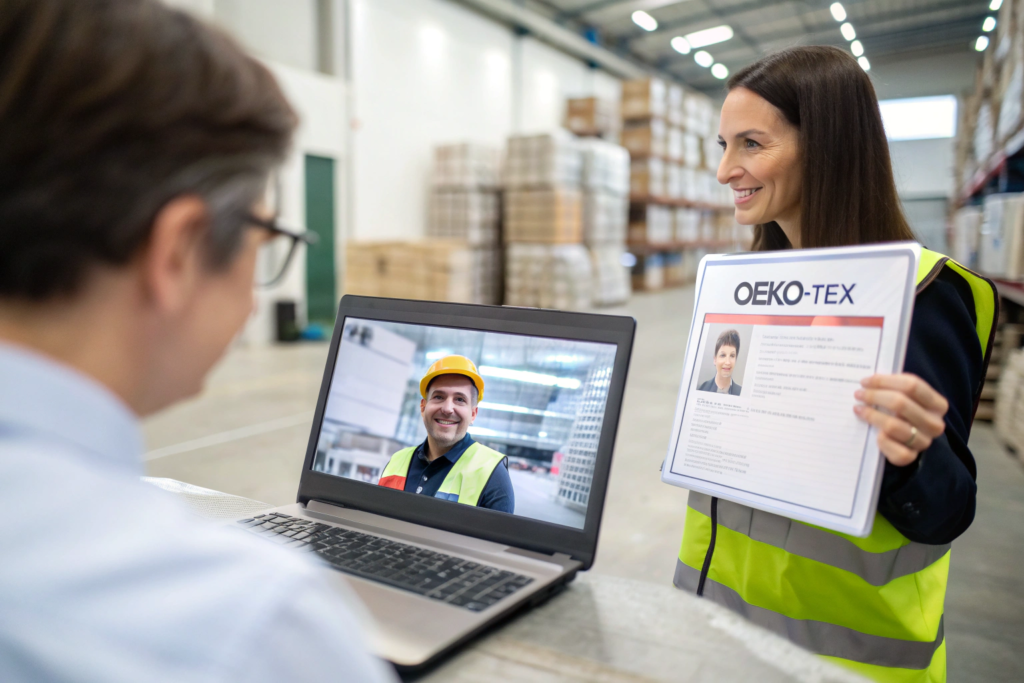
What specific documents should I request from my supplier?
Do not settle for a generic company certificate. You must request:
- Product-Specific Certificate: This links the certificate number to the exact article you are ordering (e.g., "Men's Organic Cotton Jersey T-Shirt").
- Test Report Summary: While the full report is technical, a summary shows the key substances tested and the pass/fail results.
- Scope of Certification Document: This confirms which production sites and processes are covered. A supplier might have certification for their knitting facility but not their dyeing unit, creating a critical gap.
At Shanghai Fumao, we provide a compliance dossier for each client, which includes all these documents linked to their specific order, streamlining the process we've perfected over years of serving demanding U.S. brands.
How do I use online databases to check certification validity?
Every major certification has a free public database. For OEKO-TEX®, it's the OEKO-TEX® Buying Guide. For GOTS, it's the GOTS Public Database. Go to the website, enter the certificate number provided by your supplier. You will see:
- Certificate Holder: Is it the actual factory you are using, or a trading middleman?
- Validity Period: Is the certificate current and active?
- Product Scope: Does the listed product description match what you are buying?
If any detail doesn't match, it's a major red flag. We encourage all potential partners to verify our Shanghai Fumao certificates in real-time during our introductory calls.
The Hidden Cost Savings of Sourcing from Certified Suppliers
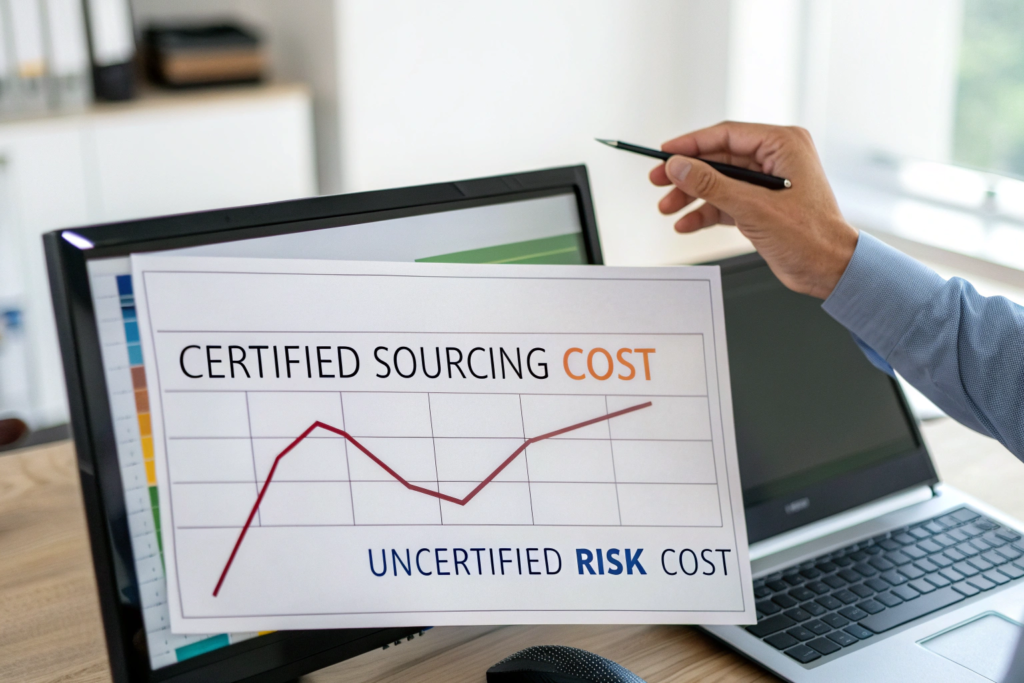
The initial price quote from a non-certified supplier often looks attractive. This perceived savings is a classic trap. The total cost of ownership (TCO) when sourcing uncertified materials is frequently much higher due to hidden risks that inevitably turn into real costs.
Sourcing from certified suppliers like Shanghai Fumao leads to significant hidden cost savings by virtually eliminating the expenses associated with product failures, supply chain disruptions, and brand damage mitigation. The premium for certified production is a fixed, predictable cost, while the potential losses from an uncertified source are variable and potentially catastrophic.
Consider certification as insurance. You pay a known premium to avoid a potentially ruinous loss. Let's compare the cost structures.
| Cost Category | Certified Supplier (e.g., Shanghai Fumao) | Non-Certified Supplier |
|---|---|---|
| Upfront Product Cost | Slightly higher (incorporates testing & system costs) | Often lower (may cut corners on material sourcing) |
| Compliance & Testing Cost | Included in price (certification covers it) | Additional cost for 3rd party lab tests (you bear cost/risk) |
| Risk of Rejection/Loss | Extremely Low (insured by certification) | High (you bear 100% of financial loss) |
| Brand Reputation Risk | Managed and Mitigated | Entirely carried by your brand |
| Supply Chain Predictability | High (systematic process control) | Low (prone to unexpected stoppages) |
How does certification prevent costly delays and supply chain disruption?
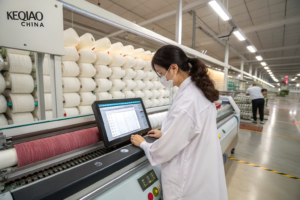
A certified supply chain is a controlled and documented one. From the source of the yarn to the final wash, every input is checked against a restricted substances list (RSL). This control prevents batch contamination that can halt a production line. In early 2023, a sportswear client came to us because their previous supplier had to scrap three weeks of production when a batch of black dye was found to contain unauthorized azo chemicals. The delay caused them to miss a key launch window. With our certified system, such mid-production surprises are engineered out, ensuring on-time delivery becomes the rule, not the exception.
Can certification reduce my long-term liability and insurance costs?
Absolutely. Demonstrating that you have exercised due diligence by partnering with certified manufacturers strengthens your legal position in the event of a consumer claim. It shows a court or regulator that you took reasonable steps to ensure product safety. Furthermore, some business liability insurers look favorably on such risk-mitigating practices, which can potentially influence premiums. It transforms your supply chain management from a cost center into a value and risk-management center.
What If My Current Supplier Isn't Certified? Your Action Plan.
Discovering your current supplier lacks credible safety certifications can be unsettling. However, this is a critical moment for proactive brand management. You have a clear path forward to mitigate risk and upgrade your supply chain integrity.
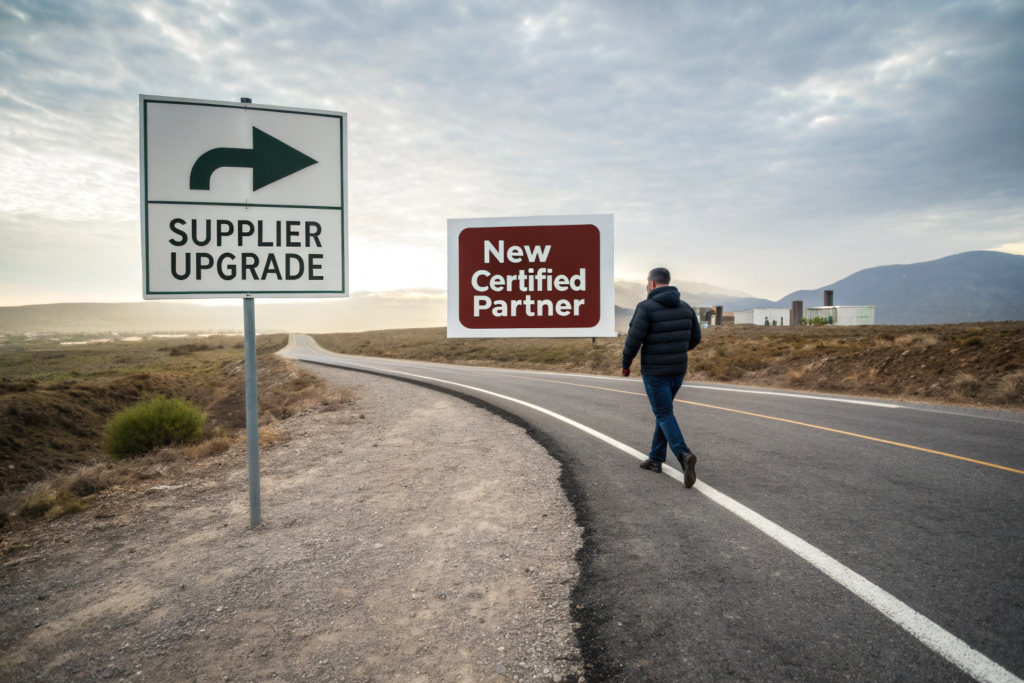
If your current supplier isn't certified, you have two responsible options: 1) Work with them to achieve certification for your product line, which requires commitment, time, and investment from them, or 2) Transition your production to an already-certified and experienced manufacturer like Shanghai Fumao, which offers a faster, lower-risk path to securing your product safety and brand reputation.
Both options require action. The choice depends on your supplier's capability and your timeline.
How can I guide my current supplier toward certification?
Initiate a frank conversation. Present the business case: certification is a competitive advantage that will help them (and you) secure more business from quality-conscious brands. Ask direct questions:
- "Are you familiar with OEKO-TEX® STANDARD 100 certification?"
- "Are your key fabric and trim suppliers already certified? This is often a prerequisite."
- "Are you willing to undergo the audit and testing process? What is the expected timeline and cost?"
Be prepared for this to be a long process (6-12 months). If they are not committed or their upstream supply chain is not ready, the path will be blocked.
What should I look for when transitioning to a new, certified supplier?
When making a switch, certification is your baseline filter. Beyond that, evaluate:
- Proven Experience with Your Product Type: Do they have active certificates for items like your activewear or knits?
- Transparency and Communication: Do they readily share certificates and test reports?
- Full-Package Capability: Can they manage the entire process from certified fabric sourcing to finished garment, ensuring integrity throughout?
We at Shanghai Fumao specialize in being this turnkey solution. For instance, when an eco-conscious brand from Portland needed to urgently move production from a non-compliant vendor, we onboarded them in 45 days. We leveraged our library of pre-certified fabrics, and their first certified shipment arrived on schedule, allowing them to confidently label their products with the OEKO-TEX® logo that season.
Conclusion
Asking "Is my apparel supplier using certified safe materials?" is the most important quality check you can perform. It transcends aesthetics and stitch quality, reaching the core of product integrity and brand liability. In today's market, where consumers and retailers demand proof of safety, independent certification is not an optional luxury; it's a fundamental requirement for sustainable, low-risk business.
Certifications like OEKO-TEX® provide the verified safety net that your brand deserves. They transform uncertainty into confidence and potential liability into a marketable asset. The cost of certification is minimal compared to the cost of a single failed shipment or a tarnished reputation.
Don't leave material safety to chance. If you are reevaluating your supply chain's safety standards, partner with a manufacturer built on verified foundations. At Shanghai Fumao, our commitment to certified production is integral to our full-package manufacturing service. We ensure every garment meets the highest safety standards from concept to delivery. Contact our Business Director, Elaine, to receive our compliance portfolio and discuss how we can make certified safety the new standard for your brand. Email her today: elaine@fumaoclothing.com.