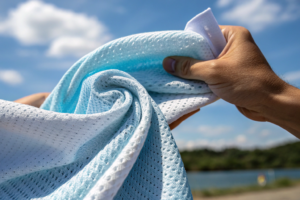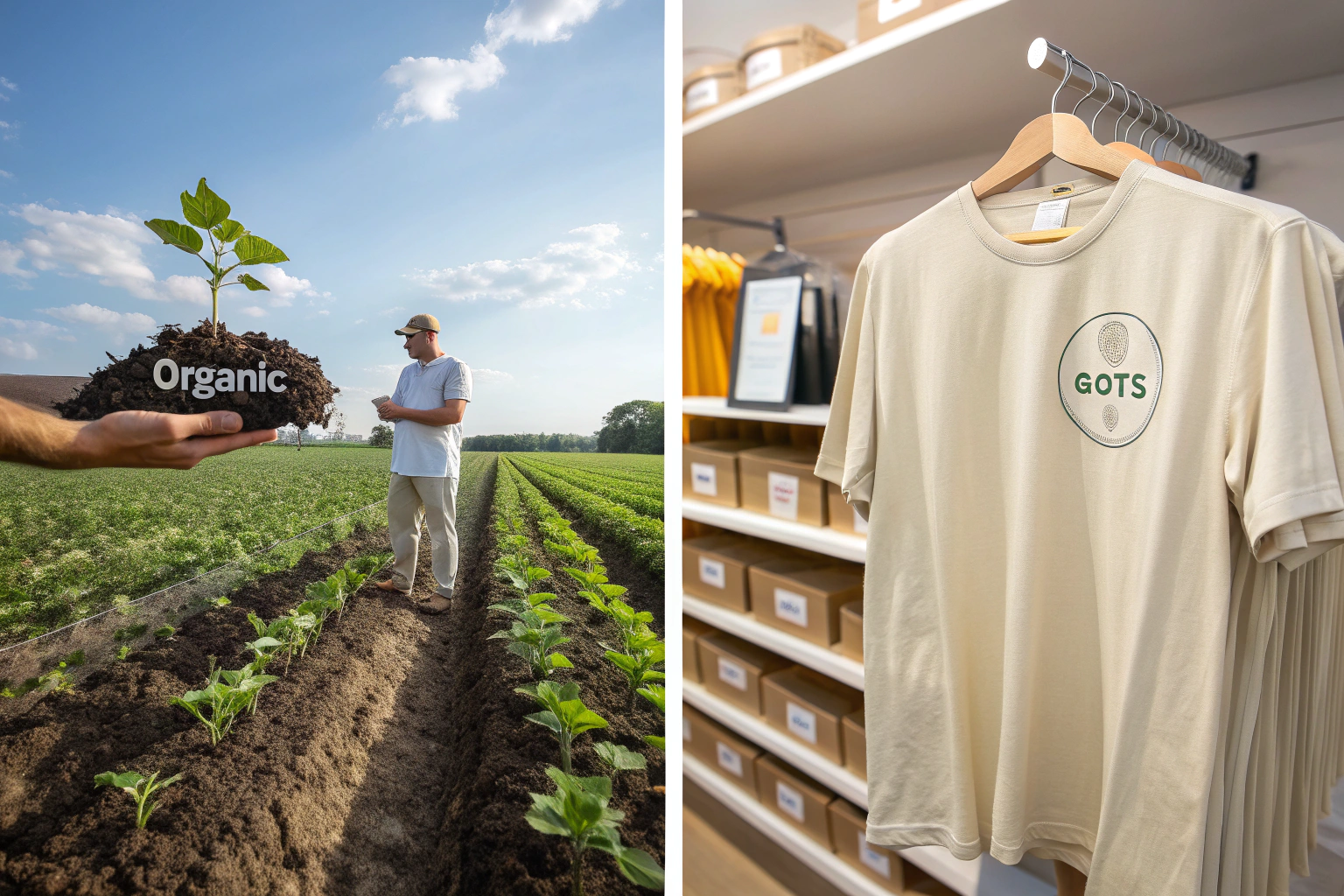
You’re sitting with your cost sheet, staring at the numbers. Organic cotton fabric is coming in 25-50% higher than conventional. Your gut says it’s the right thing to do for your brand’s story and the planet, but your budget spreadsheet is screaming. Is this premium just a marketing cost, or does it translate into real, tangible value that customers will pay for and that will protect your business in the long run? From where I stand in Keqiao, sourcing and producing fabrics for global brands every day, the answer isn’t a simple yes or no. It’s a strategic calculation.
Think of it this way: conventional cotton is like fast food—cheap, readily available, but with hidden long-term costs to health and environment. Organic cotton is like investing in a well-sourced, nutritious meal. The upfront price is higher, but the quality, the story, and the lack of negative side effects deliver a different kind of value. The real question is: does your brand’s health, and your customer’s values, demand that higher-quality “diet”?
Let’s move beyond the fluffy marketing. I’ll break down the true costs, the hidden risks you avoid, and the concrete business advantages of going organic. I’ll share exactly what happens in the fields and factories, and how brands like yours are making the numbers work—not just for the planet, but for their profit margins.
What Makes Organic Cotton More Expensive Than Regular Cotton?
The price gap isn’t arbitrary; it’s baked into every step of a more complex, regulated, and slower process. It’s the cost of replacing industrial shortcuts with manual labor and natural methods. When you buy conventional cotton, you’re paying for efficiency. When you buy organic, you’re paying for stewardship.
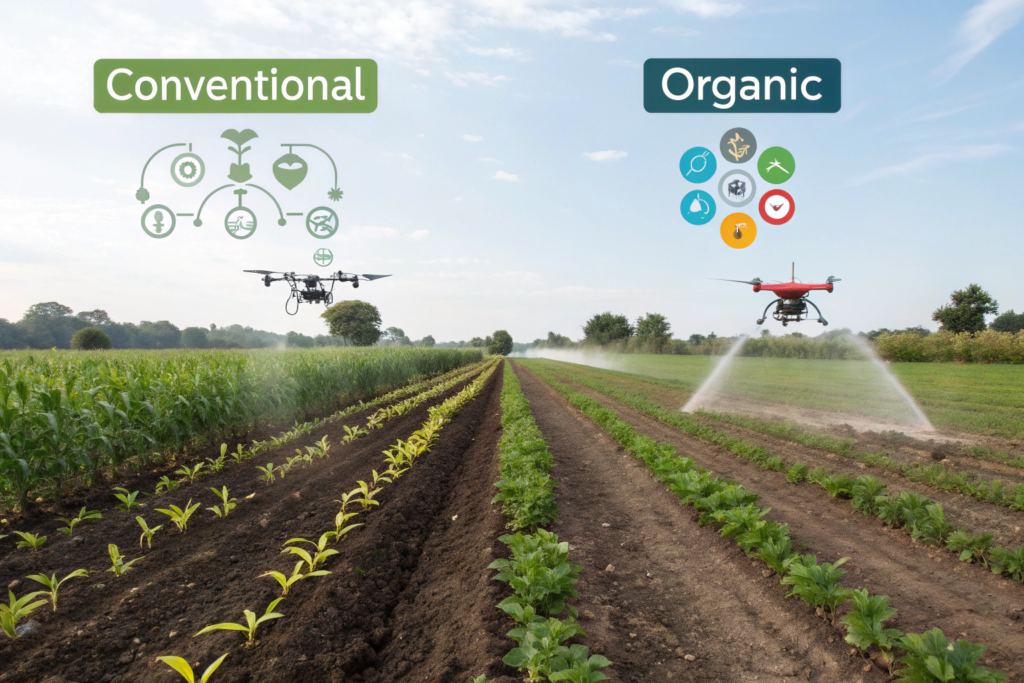
First, the farming itself. Conventional cotton is one of the world’s thirstiest and most pesticide-intensive crops. Organic farming bans synthetic pesticides and GMO seeds. This means farmers must use crop rotation to naturally fix nitrogen in the soil and disrupt pest cycles, which reduces the land’s yield for cotton each season. Weeding is done by hand or with specialized machinery, not with herbicides. This requires more labor—a major cost driver. A 2023 report we commissioned from a farm co-op in Xinjiang showed organic methods required nearly 3x the manual labor days per hectare compared to conventional.
Are the Higher Costs Only in Farming, or Do They Follow the Fabric?
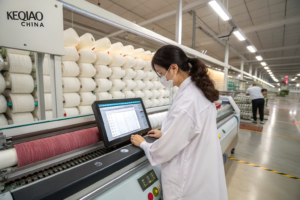
The costs absolutely follow the thread—literally. The supply chain for certified organic cotton must remain “identity preserved.” This means from the gin to the spinning mill, to our weaving and dyeing facilities at Shanghai Fumao, the organic fiber must be kept physically separate from conventional batches. This requires dedicated production lines, extra cleaning of machinery between runs, and meticulous paperwork tracking at every stage.
For example, in our partner spinning mill, running a batch of GOTS-certified organic yarn means shutting down the line for a full 8-hour shift just for cleaning before we can start. That’s lost production time. Then, the dyes and auxiliaries used in wet processing (dyeing and finishing) must meet the strict GOTS or OCS (Organic Content Standard) criteria, banning toxic heavy metals, formaldehyde, and certain surfactants. These approved chemicals are often 15-30% more expensive. (Here’s a secret: they’re also often safer for our factory workers, which is something we care deeply about). You can dive deeper into understanding the true cost breakdown of organic textile production through resources like the Textile Exchange's Material Snapshots.
Can I Trust That My “Organic” Fabric Is Truly Organic?
This is the million-dollar question and the core reason for certification costs. The word “organic” alone on a hangtag is worthless. You need the backbone of third-party verification. The gold standard is GOTS (Global Organic Textile Standard). It doesn’t just certify the raw cotton; it certifies the entire processing chain, including social and environmental criteria at the factory level.
When you source GOTS-certified fabric from a certified supplier like us, you’re paying for that unbroken chain of custody. An auditor from a body like Control Union or OEKO-TEX inspects the farms, checks our purchase records for organic cotton bales, verifies our chemical inventory, and reviews our waste water treatment. This rigorous, annual audit is a cost that gets factored in. But it’s your guarantee. For a smaller brand, conducting your own supply chain audit is impossible. GOTS does it for you. Learning how to verify GOTS certification for imported fabrics is a critical skill, and industry forums like The Sustainable Fashion Forum often discuss best practices.
What Are the Tangible Benefits That Justify the Price?
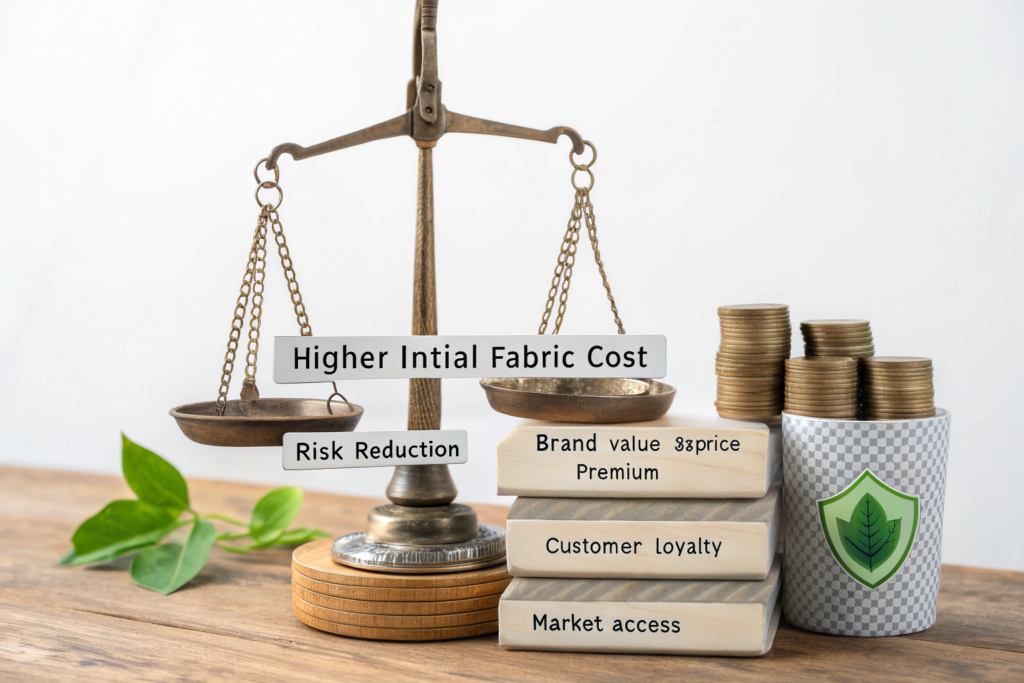
The benefits move beyond feeling good into the realm of risk mitigation, product quality, and market positioning. It’s not just an expense; it’s an investment in your brand’s resilience.
1. Reduced Chemical Liability Risk: Conventional cotton carries a “chemical shadow.” Residues from pesticides (like glyphosate) and processing chemicals (like APEOs) can remain in the fabric at trace levels. While often within legal limits, these are increasingly scrutinized by eco-labels and conscious consumers in markets like the EU. In 2023, a European brand client of ours faced a product recall because a routine spot-check by German authorities found a banned amine in their conventional cotton denim—it traced back to a contaminated dye. The cost of the recall dwarfed the premium they would have paid for organic, GOTS-certified denim from the start. Organic cotton, processed to GOTS standards, virtually eliminates this risk.
2. Market Access and Premium Positioning: Organic is your ticket to certain high-value market segments. Many major European retailers now have mandatory sustainable material quotas for their suppliers. If you want to sell to them, organic cotton is a straightforward way to check that box. Furthermore, it allows you to command a higher price point. Consumers are willing to pay more, but they demand proof. The GOTS logo is that proof. It transforms your garment from a commodity into a story of integrity.
Does Organic Cotton Actually Result in a Better Quality Fabric?
This is where hands-on experience counts. The answer is: it can, but it depends on the spinner and weaver. Because organic cotton farming often avoids the harsh chemical treatments that can damage fibers during growth, the staple length (the length of the individual cotton fibers) can be better preserved. Longer staples generally mean stronger, smoother, and more lustrous yarns.
However, if the organic cotton is poorly ginned or spun by a mill without expertise, you can end up with a coarse fabric. That’s why partnering with a supplier who understands premium organic cotton spinning and weaving techniques is crucial. We work with spinners who use slower, gentler processes to maintain fiber integrity. For a Swedish minimalist brand in 2024, we developed a 40S single jersey knit from GOTS organic cotton. The client’s feedback was that the handfeel was “noticeably plumper and softer” than their previous conventional pima cotton of the same spec, leading to a 15% reduction in customer returns due to “quality” issues. The fabric’s performance became a key part of their product description.
How Does It Impact My Brand Story and Customer Loyalty?
In today’s market, your fabric is your content. Organic cotton provides an authentic, traceable, and emotionally resonant story. It’s not a vague claim about “sustainability”; it’s a specific story about soil health, farmer welfare, and clean processing.
When you share this story—perhaps even showing the certificate ID on your website that traces the fabric back to the farm group—you build immense trust. This trust converts into loyalty. Customers who buy into your values are less price-sensitive and more likely to become repeat buyers and brand advocates. They’re not just buying a t-shirt; they’re buying into an ecosystem they believe in. Exploring consumer psychology and willingness to pay for sustainable fashion through reports from McKinsey's State of Fashion can provide solid data to back this strategy.
When Might Organic Cotton NOT Be the Right Choice?
Let’s be brutally honest. Organic cotton isn’t a magic bullet for every product or brand. Its higher cost can be a real barrier, and sometimes the benefits don’t align with the product’s purpose.
It might not be the right choice if:
- Your Price Point is Ultra-Competitive: If you’re competing in the fast-fashion, high-volume, low-margin segment (think $5 t-shirts), the math is incredibly challenging. The consumer in that segment is predominantly driven by price, not values.
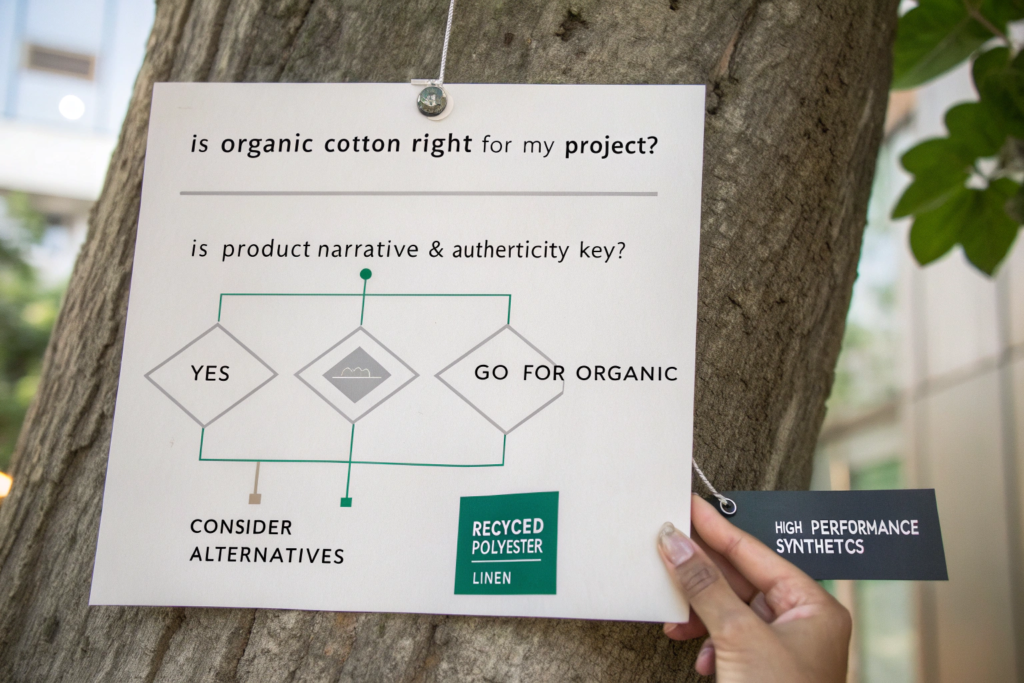
- Your Product Requires Specific High-Tech Performance: Pure organic cotton is natural and breathable, but it lacks the inherent performance of synthetics. If you need extreme moisture-wicking, durability, or stretch for athletic wear, a recycled polyester or a Tencel™ blend might be a more impactful sustainable choice. You’re better off investing the premium in a performance-driven eco-fabric.
- You Cannot Achieve Full Traceability: If you’re just starting and can only afford to use a small percentage of organic cotton in a blend without certification, the story becomes weak and can be seen as “greenwashing.” It’s better to be transparent about using conventional cotton while improving other areas (like packaging or factory conditions) than to make a vague organic claim.
Are There Cheaper “Eco-Friendly” Alternatives to Organic Cotton?
Absolutely, and they can be brilliant strategic choices. The sustainable fabric world is bigger than organic cotton. For many applications, these alternatives offer a better balance of cost, performance, and environmental benefit.
- Recycled Cotton: Made from post-industrial or post-consumer textile waste. It’s often cheaper than organic cotton and has a fantastic recycled story. However, the fiber length is shorter after recycling, which can affect strength and smoothness. It’s great for canvas, denim, or jersey where a slightly “rustic” handfeel is desirable.
- Conventional Linen or Hemp: These are naturally low-impact fibers. They require far less water and pesticides than conventional cotton to grow. They are often price-competitive with mid-range conventional cotton and offer a unique, durable texture and natural aesthetic.
- Better Cotton Initiative (BCI) Cotton: This is not organic. It’s a program that trains farmers to use water, pesticides, and fertilizers more efficiently. It’s a step toward sustainability from conventional cotton, at a much smaller price premium. It’s a pragmatic choice for brands beginning their sustainability journey. Understanding the differences between GOTS, OCS, and BCI cotton certifications is essential, and guides from Common Objective can be very helpful.
How Can I Minimize the Cost Impact if I Choose Organic?
Strategy is key. You don’t have to convert your entire line overnight. Here’s what smart brands do:
- Start with a Hero Product: Launch one best-selling item (like a classic crewneck tee or a robe) in organic cotton. Concentrate your marketing story on it. This limits financial risk while building your sustainable credentials.
- Optimize Design for Efficiency: Work with your manufacturer on yield. Simple, classic designs that minimize fabric waste during cutting can offset some of the material cost. At Shanghai Fumao, our pattern efficiency experts helped a French brand reduce fabric waste by 8% on their organic cotton jersey line, effectively bringing their cost-per-unit closer to their target.
- Order in Smart Volumes: The price per meter drops significantly with larger orders. Collaborate with other small brands for a fabric pooling order, or plan your inventory carefully to commit to larger minimums on your core colors. We offer tiered pricing that makes organic cotton much more accessible at volume.
How Do I Source Authentic Organic Cotton Fabric Reliably?
Sourcing is where good intentions can fall apart. The market is rife with fraud—conventional cotton being sold as “organic.” Your due diligence is non-negotiable.
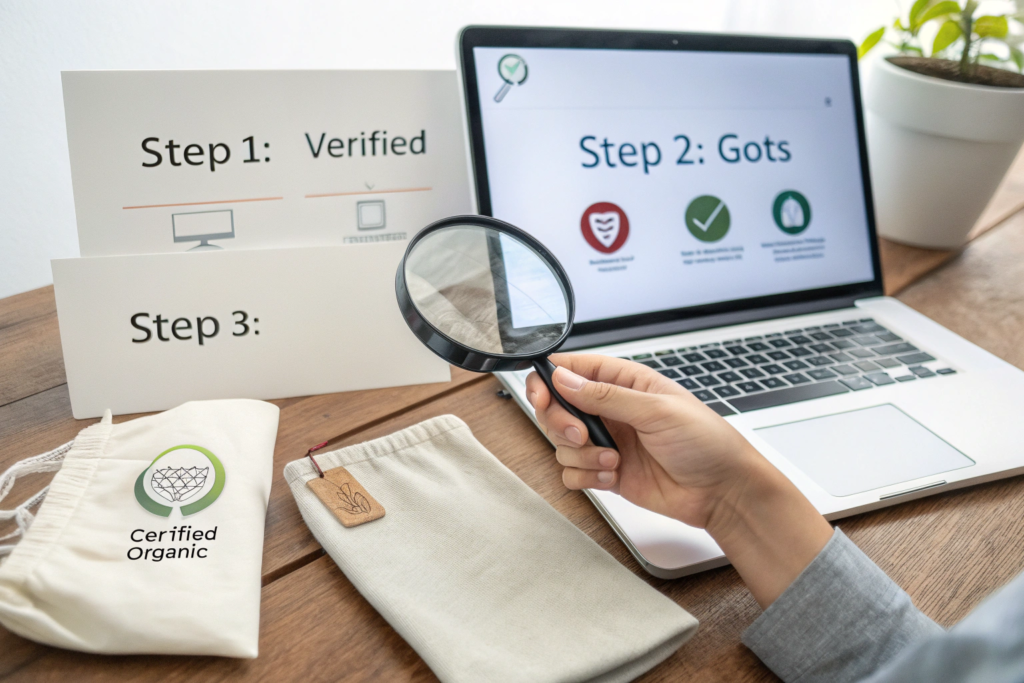
Step 1: Demand Certification, Not Promises. From your first inquiry, ask for the supplier’s GOTS or OCS transaction certificate. This proves they are licensed to deal in certified organic textiles. Then, for your specific order, you are entitled to receive a GOTS scope certificate that lists your fabric lot and traces it back up the chain.
Step 2: Audit the Supply Chain (Virtually or Physically). A reputable supplier will have nothing to hide. We regularly host virtual factory tours for overseas clients, showing them our certified organic fabric storage, the GOTS-approved chemical stock, and even the audit reports. Ask for details about their spinning and dyeing partners. Transparency is the hallmark of legitimacy.
Step 3: Start with a Test Order. Never commit to a large bulk order first. Order a few hundred meters for sampling and production. Send a cut of that fabric to an independent lab like SGS or Eurofins for a pesticide residue test. This final verification gives you peace of mind and establishes a baseline of trust with your new supplier.
What Questions Should I Ask a Potential Organic Fabric Supplier?
Come prepared. Your questions separate the serious partners from the opportunists.
- “Can you provide your valid GOTS/OCS supplier certificate?”
- “What is the origin of the organic cotton fiber (e.g., India, Turkey, USA), and can you share the farm group’s certificate?”
- “Which certified dyeing and finishing mills do you work with for organic processing?”
- “What is the typical lead time for GOTS-certified fabric versus your conventional equivalent?”
- “Can you assist with the certification documentation for our finished garments?” (This is a value-added service we provide at Shanghai Fumao).
Asking these questions shows you’re a knowledgeable buyer and will quickly filter out suppliers who can’t deliver the real thing. For a comprehensive list, look at key supplier vetting questions for sourcing sustainable fabrics compiled by industry networks.
What Hidden Logistics or Timing Factors Should I Plan For?
Plan for longer lead times. The identity-preserved supply chain is less flexible. If the certified spinning mill is at capacity, you can’t just shift the order to another non-certified mill. This requires more careful production planning.
Also, factor in certification time for your own final product if you want to use the GOTS label. The process of getting your garment certified as a “GOTS-made product” involves submitting your design, supplier invoices, and labels for approval, which can add a few weeks. Building a realistic timeline for developing a certified organic clothing line is critical, and experienced suppliers should help you map this out from day one.
Conclusion
So, is organic cotton fabric worth the higher price for your clothing line? The answer is a strategic “it depends.” It is unequivocally worth it if your brand is built on authenticity, transparency, and quality; if you are targeting a values-driven consumer willing to pay for integrity; and if you want to mitigate long-term regulatory and reputational risks associated with chemical use. The premium buys you more than fiber—it buys you a verifiable story, a cleaner conscience, and a position in a growing, resilient market segment.
However, if your primary battlefield is ultra-low price, or if your product’s function demands synthetic performance, there are other, perhaps more suitable, sustainable avenues to explore, like recycled materials or BCI cotton.
The key is to make an informed decision, not an ideological one. Calculate the cost against the tangible benefits of risk reduction, market access, and brand equity. Start small, verify everything, and partner with a supplier who treats certification as a core responsibility, not a marketing add-on.
If you’re ready to explore how authentic, certified organic cotton can integrate into your line with clear cost-benefit analysis and reliable supply, let’s have a practical conversation. At Shanghai Fumao, we guide brands through this exact journey—from navigating certifications to achieving the right balance of quality, cost, and impact. We can provide you with certified samples, transparent pricing, and the peace of mind that comes with a fully traceable supply chain. To discuss your specific needs, reach out to our Business Director, Elaine. She can connect you with our sustainable textiles specialists. Contact Elaine at: elaine@fumaoclothing.com.