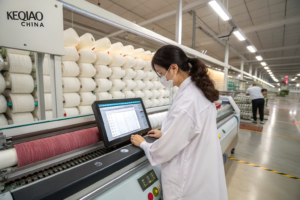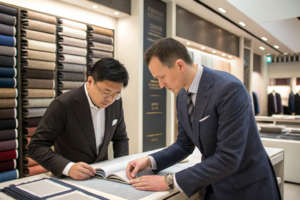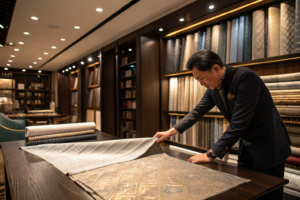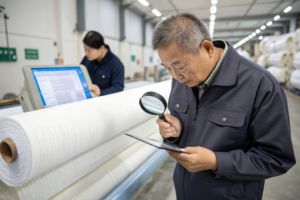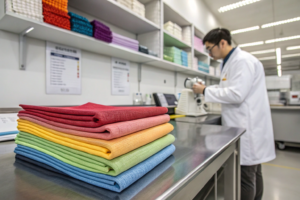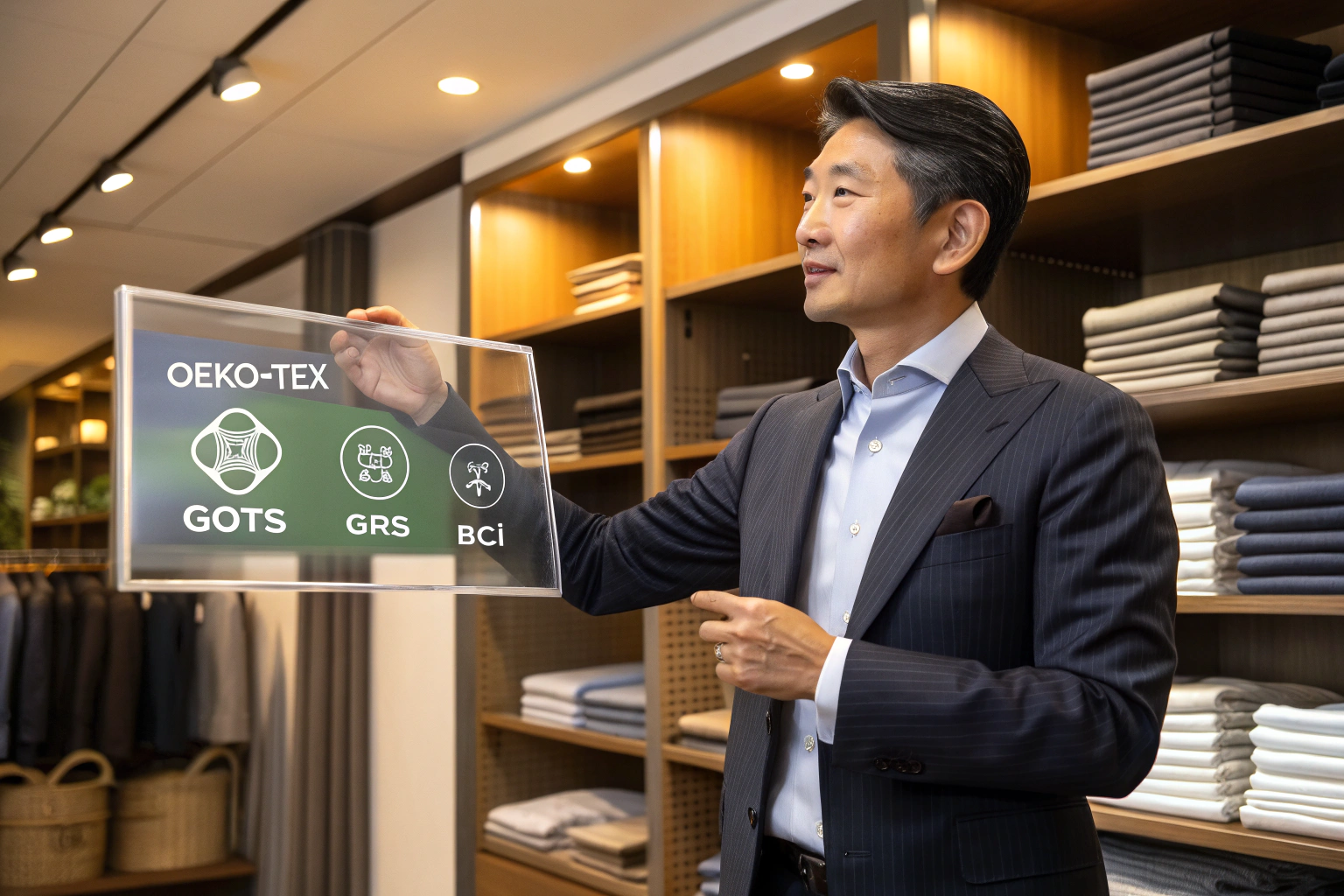
Let me give you a real answer from the factory floor, not a textbook definition. I've stood in our Keqiao warehouse with importers from Los Angeles to Leipzig, all holding fabric swatches. The question I hear most, right after price and lead time, is: “Is it OEKO-TEX certified?” For many, it’s the only certificate they know by name. It’s become the universal shorthand for “safe fabric.” But is it the most important one? That’s like asking if a hammer is the most important tool for building a house. For driving nails, absolutely. For sawing wood or tightening screws? Not so much.
The short, honest answer is: OEKO-TEX Standard 100 is arguably the most important product safety certificate for clothing importers, but it is not a silver bullet. It is a critical, non-negotiable piece of a much larger compliance and ethics puzzle. If your product fails an OEKO-TEX test, it can be stopped at customs or pulled from shelves. However, if you only have OEKO-TEX, you might still fall short on labor laws, environmental impact, or fiber integrity claims. Think of OEKO-TEX as your product’s “health certificate”—it verifies the final item is free from harmful levels of toxic substances for its intended use. It doesn’t tell you if the cotton was grown organically, if the workers were paid fairly, or if the factory recycled its wastewater.
So, what makes a certificate “most important”? It depends entirely on your brand’s values, your target market’s regulations, and your customers’ expectations. In this article, we’ll cut through the certification clutter. We’ll map OEKO-TEX against other major standards to show you where it’s indispensable, where it needs backup, and how savvy importers use a layered certification strategy to build unshakable trust and smooth their entire supply chain.
Why is OEKO-TEX Standard 100 the universal safety benchmark?
OEKO-TEX Standard 100’s dominance isn’t an accident. It was one of the first independent, consumer-facing textile safety labels, launching in 1992. Its genius lies in its clear, practical focus: Does this final product contain harmful substances above safe limits? It tests for over 350 regulated and unregulated chemicals—from formaldehyde and heavy metals to pesticide residues and allergenic dyes—based on the product’s human ecological impact. Its four product classes (from Class I for babies to Class IV for home textiles) make intuitive sense to everyone, from regulators to retail buyers. This practical clarity has made it the default “must-have” for major brands, especially in Europe.
But its importance goes beyond marketing. From a pure import risk perspective, it’s your first line of defense. In 2023, we had a client, a mid-sized German streetwear brand, who sourced a trendy printed fabric from a non-certified supplier. The prints were fantastic, the price was right. But their first shipment was flagged at Hamburg port for random testing. The lab found traces of azo dyes that could release carcinogenic amines. The entire container was held for weeks, incurring massive demurrage fees, and was eventually rejected. The cost nearly bankrupted them. They came to Shanghai Fumao for their next collection. Our OEKO-TEX certified fabrics, with batch-specific test reports in hand, sailed through customs without a hitch. The certificate acted as a universally recognized passport for their goods.
How does OEKO-TEX directly mitigate an importer's top risks?
For an importer, risk equals cost and delay. OEKO-TEX directly mitigates three core risks:
- Regulatory Non-Compliance Risk: Laws like REACH (EU), CPSIA (USA), and Proposition 65 (California) are complex and ever-changing. OEKO-TEX standards are updated annually, often pre-empting new regulations. By certifying your product, you effectively outsource the technical monitoring of these legal limits to the OEKO-TEX association. This is a massive administrative and legal burden lifted off your team.
- Product Recall & Liability Risk: Imagine a customer gets a skin rash from a new shirt, or a watchdog NGO tests your kids’ pajamas and finds lead. The cost of a recall, destroyed inventory, legal fees, and brand damage is astronomical. The OEKO-TEX label is your documented proof of due diligence. It shows you took reasonable steps to ensure product safety, which is a powerful shield in liability cases.
- Supply Chain Opacity Risk: Many importers, especially smaller brands, cannot audit every chemical process in a distant factory. OEKO-TEX certification requires the entire production chain—from yarn to finished fabric—to be transparent and audited. When you buy from a certified supplier like us, you’re buying into that controlled system. It’s a proxy for supply chain integrity.
Where does OEKO-TEX fall short for a modern importer?
It’s crucial to know its limits. OEKO-TEX Standard 100 is a product safety standard. It does not certify:
- Organic Fiber Content: A fabric can be made from conventionally grown cotton drenched in pesticides and still pass OEKO-TEX if the residual pesticides on the final fabric are below the limit. For a true organic claim, you need GOTS (Global Organic Textile Standard).
- Social or Labor Conditions: The certificate says nothing about fair wages, safe working conditions, or the absence of child labor. For that, you need social audits like SMETA, BSCI, or Fair Trade.
- Environmental Management: It doesn’t mandate water recycling, energy reduction, or chemical management at the factory level. The separate OEKO-TEX STeP certification covers this, or you can look to GRS (Global Recycled Standard) for environmental claims on recycled content.
- Durability or Quality: A fabric can be chemically safe but fall apart after three washes. OEKO-TEX doesn’t test for pilling, shrinkage, or colorfastness to washing. That’s where our in-house CNAS lab physical testing comes in.
How does OEKO-TEX compare to GOTS, GRS, and BCI?
No single certificate covers everything. The “most important” one is the combination that aligns with your brand story and complies with your market. Let’s put them side-by-side.
| Certificate | Primary Focus | What it Guarantees | Key Limitation | Best For... |
|---|---|---|---|---|
| OEKO-TEX Standard 100 | Product Safety | The final article is free from harmful levels of toxic substances. | Doesn't address organic content, labor, or broad environmental impact. | All importers, especially for babywear, underwear, and products in strict markets (EU, US). |
| GOTS (Global Organic Textile Standard) | Organic Integrity & Processing | At least 70-95% certified organic fibers; strict environmental and social criteria throughout processing. | Very specific to organic fibers (cotton, wool, etc.). Can be costly and complex for blends. | Brands built on an authentic, premium organic story. |
| GRS (Global Recycled Standard) | Recycled Content & Chain of Custody | Verified post-consumer or post-industrial recycled material content (20%-100%); environmental and social requirements. | Focuses on recycled input, not necessarily the chemical safety of the final product. | Brands using recycled polyester, nylon, or cotton for sustainability claims. |
| BCI (Better Cotton Initiative) | Sustainable Farming Practices | Cotton is grown with better water, pesticide, and labor practice management at farm level. | A mass-balance system, not physically traceable to the final product. A farm-level standard. | Large-volume brands seeking to improve the baseline sustainability of their cotton sourcing. |
The smartest importers we work with use a “certification stack.” For example, a UK-based eco-lingerie brand we partnered with in 2024 required fabric that was both GOTS certified organic cotton (for fiber integrity) and OEKO-TEX Standard 100 Class II (for skin-safety proof). This dual requirement filtered out suppliers who couldn’t manage a fully transparent, dual-compliant supply chain. It positioned their brand powerfully at a higher price point.
Can OEKO-TEX STeP replace a full social audit?
This is a common point of confusion. OEKO-TEX STeP (Sustainable Textile & Leather Production) is a fantastic factory-level certification for environmental performance and socially responsible workplaces. It assesses areas like chemical management, energy efficiency, and worker health & safety. It’s a strong signal of a professional factory. However, for many large retailers, it is not a direct replacement for dedicated social compliance audits like SMETA or BSCI, which dive deeper into labor standards, working hours, and freedom of association. Many factories, including our partner mills, pursue both. For an importer, a STeP-certified factory significantly de-risks your supply chain from an operational and environmental standpoint, but you may still need a specific social audit report if your end-buyer (like a major supermarket or brand) requires it.
How do regional regulations influence which certificate is "most important"?
Geography is destiny in importing. Your primary market dictates your compliance priorities.
- European Union: Here, OEKO-TEX is king for safety, closely followed by GOTS for organic. The EU’s aggressive Green Deal and Ecodesign for Sustainable Products Regulation (ESPR) are making environmental footprints and digital product passports crucial. OEKO-TEX STANDARD 100 is a ready-made component for this.
- United States: While federal safety laws (CPSIA) are key, the market is more driven by brand and retailer requirements. Major retailers (e.g., Walmart, Target) have their own extensive compliance manuals, which invariably require OEKO-TEX or equivalent testing. California’s Prop 65 also makes chemical safety paramount.
- Australia & New Zealand: They have strong organic consumer markets, making GOTS highly influential alongside OEKO-TEX.
For an importer, aligning your certificates with your biggest market’s landscape isn’t just good practice—it’s business survival. At Shanghai Fumao, we guide clients through this maze daily, helping them choose the right certification mix for their target shelves.
What are the hidden costs and challenges of relying solely on OEKO-TEX?
Choosing only OEKO-TEX can seem like the simplest, most cost-effective path. But this simplicity can mask hidden long-term costs and create blind spots. The most obvious risk is complacency. You might think, “My fabric is OEKO-TEX certified, so my supply chain is responsible.” This leaves you vulnerable on other fronts that are increasingly important to consumers and investors.
Consider the environmental angle. A fabric made from 100% virgin polyester can be OEKO-TEX certified—it’s chemically safe to wear. But today’s conscious consumers and ESG (Environmental, Social, and Governance) investors are scrutinizing carbon footprints and fossil-fuel dependency. If a competitor launches a similar product made from OEKO-TEX certified recycled polyester (rPET), they capture the sustainability narrative while matching your safety claim. You’re left playing catch-up. The hidden cost is lost market share and a weaker brand story.
Does OEKO-TEX certification guarantee overall product quality?
Absolutely not. This is a critical misconception. OEKO-TEX tests for harmful substances. It does not test for:
- Colorfastness to washing or rubbing: Will the color bleed or fade?
- Dimensional stability (shrinkage): Will the garment change size after laundering?
- Pilling resistance: Will the fabric develop little balls of fiber?
- Tensile or tear strength: Is the fabric durable?
I learned this lesson early on. In 2022, a startup client was thrilled to find a low-cost OEKO-TEX certified jersey. They made thousands of t-shirts. The shirts were perfectly safe, but they shrank unevenly by over 8% after the first wash, leading to a flood of returns and negative reviews. The OEKO-TEX label didn’t protect them from this. Now, we always advise clients to request a full suite of physical tests alongside chemical certification. Our quality control protocol includes both, because true quality is a combination of safety and performance.
How can over-reliance create supply chain vulnerability?
Putting all your eggs in the OEKO-TEX basket can make your supply chain rigid. You might be tied to suppliers who are excellent at chemical management but weak in other areas, like innovation, agility, or social responsibility. If a new regulation or consumer trend emerges (e.g., a sudden demand for banana fiber or a crackdown on microfiber pollution), a supplier focused only on basic OEKO-TEX compliance may not have the R&D depth or adaptable systems to pivot with you. Partnering with a supplier that holds multiple certifications (like our facilities with OEKO-TEX, GRS, and BSCI scope) inherently means you’re working with a more sophisticated, resilient, and future-ready partner. This reduces your long-term vulnerability to market shifts.
How should importers build a layered certification strategy?
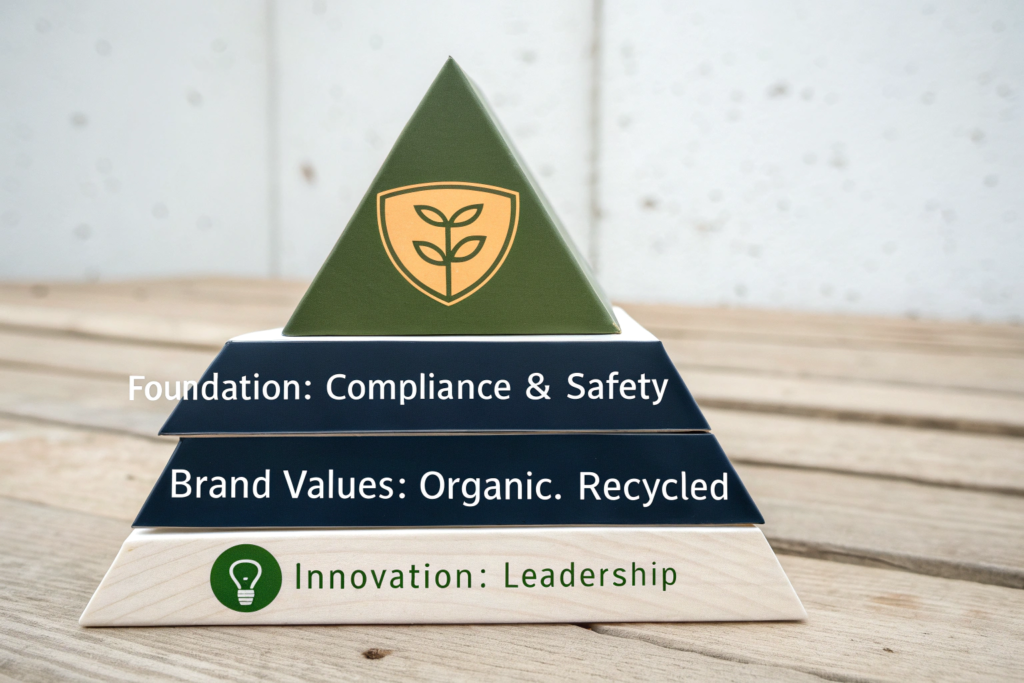
The goal isn’t to collect logos like stickers. It’s to build a defensible, marketable, and efficient supply chain. Your certification strategy should be a pyramid, with a broad base of non-negotiable compliance, a middle layer of brand-aligned values, and a pinnacle of unique innovation.
Layer 1: The Foundation (Compliance & Risk Mitigation)
This is non-negotiable. For almost every clothing importer, this includes:
- OEKO-TEX Standard 100: For product safety and smooth customs clearance.
- Basic Social Audit (e.g., SMETA/BSCI): To ensure ethical production and meet retailer requirements.
This layer is about avoiding negatives—recalls, embargoes, scandals.
Layer 2: The Brand Layer (Values & Market Positioning)
This is where you align certificates with your brand story.
- For an “Organic” Brand: GOTS is essential.
- For a “Recycled/ Circular” Brand: GRS is core.
- For a “Transparent & Well-Made” Brand: Factory-level certifications like OEKO-TEX STeP or specific quality benchmarks add depth.
This layer is about building a positive, differentiated identity.
Layer 3: The Innovation Pinnacle (Leadership & Future-Proofing)
This is for competitive advantage. Examples include:
- Specific Fiber Certifications: Like Tencel™ with botanic origin, or Repreve® recycled fiber traceability.
- Biodegradability Certificates: For products designed for a circular end-of-life.
- Carbon Footprint Verification: Measured and verified per product.
This is what makes your brand a leader, not just a follower.
A Danish workwear brand we’ve supplied since 2023 exemplifies this. Their foundation is OEKO-TEX for safety and BSCI for ethics. Their brand layer is GRS for using recycled materials. Their innovation pinnacle is investing with us in developing PFAS-free durable water repellent (DWR) finishes—a cutting-edge solution ahead of upcoming EU bans. Their certificates tell a complete and compelling story.
How do you verify certificates and avoid greenwashing?
A certificate is only as good as its verification. Always:
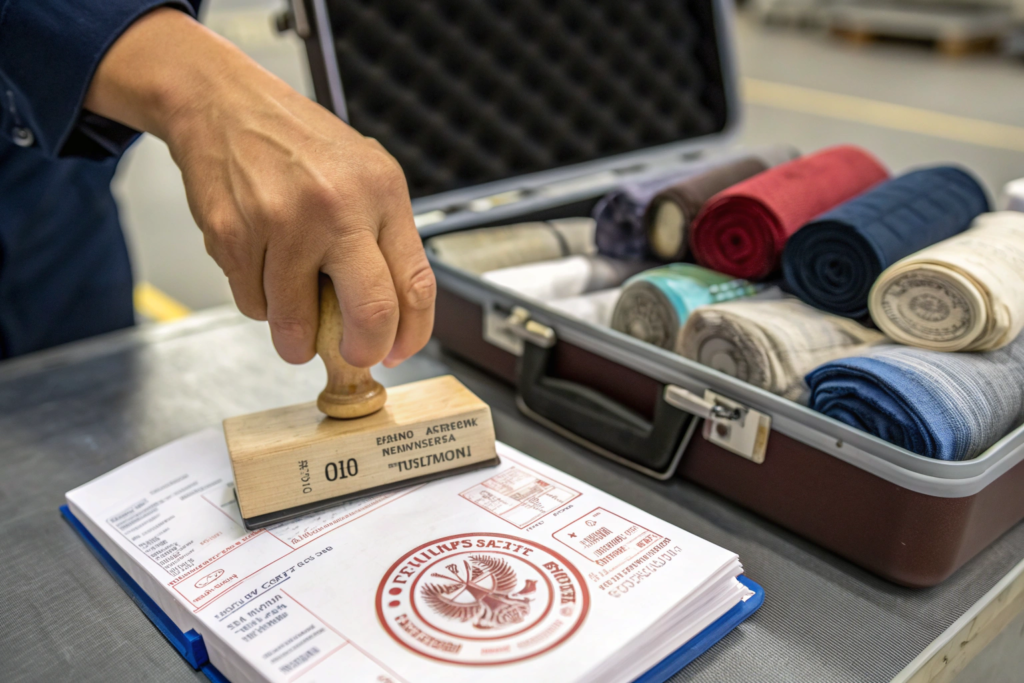
- Ask for the Official License/Report: Request the PDF from the supplier. Check the license number, valid date, product scope, and certified company name. It should match your supplier.
- Verify Online: Use the public databases on OEKO-TEX, GOTS, and GRS websites. Enter the license number to confirm its active status and scope.
- Request Batch-Specific Test Reports: For OEKO-TEX, the bulk goods must be tested. Ask for the test report for your specific production lot, not just a generic certificate.
- Audit if Possible: For high-volume or strategic partnerships, consider a third-party audit or visit the factory yourself. Seeing the CNAS-accredited lab testing procedures at a partner’s facility, as we regularly show our clients, builds immense trust.
This due diligence protects you from suppliers who buy one certificate for a sample product but don’t apply the standards to all production.
What is the role of a supplier partner in executing this strategy?
You cannot build this pyramid alone. Your fabric supplier is your most critical partner in certification execution. The right partner doesn’t just sell you certified fabric; they act as your compliance co-pilot. They should:
- Proactively Advise: “You want GOTS organic cotton for babywear? You’ll also need OEKO-TEX Class I for the European market.”
- Provide Integrated Testing: Offer in-house or streamlined access to both chemical and physical testing, saving you time and money.
- Maintain Traceability: Have systems like our QR code tracking to provide evidence for every claim.
- Invest in Future Standards: A good supplier, like Shanghai Fumao, is already investing in R&D for upcoming regulations (like EU microplastic rules), keeping you ahead of the curve.
Your supplier’s certification portfolio and expertise are a direct extension of your own brand’s integrity.
Conclusion
So, is OEKO-TEX the most important certificate for clothing importers? For ensuring the fundamental, non-negotiable aspect of product safety and regulatory compliance, yes, it is irreplaceable. It is the cornerstone of any responsible sourcing strategy. Ignoring it is an unacceptable risk.
However, the word “most important” implies a singular focus, and that is where the danger lies. In today’s market, trust is built on multiple dimensions: safety, ethics, sustainability, and quality. Therefore, the most important strategy is to use OEKO-TEX as your foundational pillar and then deliberately layer on additional certifications—like GOTS, GRS, or STeP—that reflect your brand’s unique values and your customers’ evolving expectations.
This layered approach does more than just cover your bases. It transforms your supply chain from a cost center into a source of brand equity and competitive advantage. It turns compliance from a headache into a headline. It allows you to speak with authentic confidence to your customers, your retailers, and your investors.
Building this kind of robust, certified supply chain requires the right partner. At Shanghai Fumao, we don’t just supply fabrics; we build the trust your brand is made of. With over 20 years in Keqiao, we guide importers through the complex certification landscape every day, offering integrated solutions from OEKO-TEX safety to GRS recycling and beyond. Let’s discuss how to build your certification pyramid. Contact our Business Director, Elaine, at elaine@fumaoclothing.com to start building a supply chain that’s not just safe, but truly significant.