You see the word “sustainable” everywhere in fashion. Recycled materials, organic fibers, carbon-neutral shipping. But what about the invisible chemistry that makes your clothes soft, colorful, or wrinkle-free? If a shirt is made from organic cotton but dyed with chemicals harmful to aquatic life or finished with substances that irritate skin, can it truly be called sustainable? This is the critical, often overlooked intersection where product safety meets environmental responsibility. The OEKO-TEX Standard 100, particularly its Grade 2 (Product Class II) certification, isn’t just a safety standard—it’s a foundational pillar for responsible and credible sustainable apparel production.
The short answer is yes, OEKO-TEX Standard 100 Grade 2 is fundamentally better for building a legitimate sustainable apparel brand. It provides the non-negotiable human-ecological safety verification that must underpin any environmental claim. Sustainability is a three-legged stool: environmental impact, social equity, and product safety/health. A brand focused only on the first two is unstable. OEKO-TEX Standard 100 certifies the third leg, ensuring that the product itself does not harm the end-user or the workers handling it during production through restricted substances. It’s the "do no harm" principle made measurable.
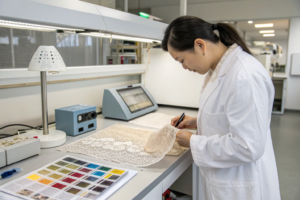
Think of it this way: sourcing GOTS-certified organic cotton is a fantastic environmental and social choice. But if that cotton is then dyed in a facility using unregulated, toxic dyes and finished with formaldehyde, you’ve undermined the entire ethical premise. The final product may be "organic" but not "safe." This is a real risk we see. A European brand came to Shanghai Fumao in 2023 with a line of "sustainable" linen dresses. They had the fiber story right, but customer complaints about skin irritation were mounting. Their fabric had a basic chemical compliance report, but no OEKO-TEX certification. We reproduced the fabric with OEKO-TEX Class II compliant dyes and finishes. The complaints stopped, and they could finally market the line with full integrity. The certification completed their sustainability story.
How Does OEKO-TEX Class II Directly Support Environmental Goals?
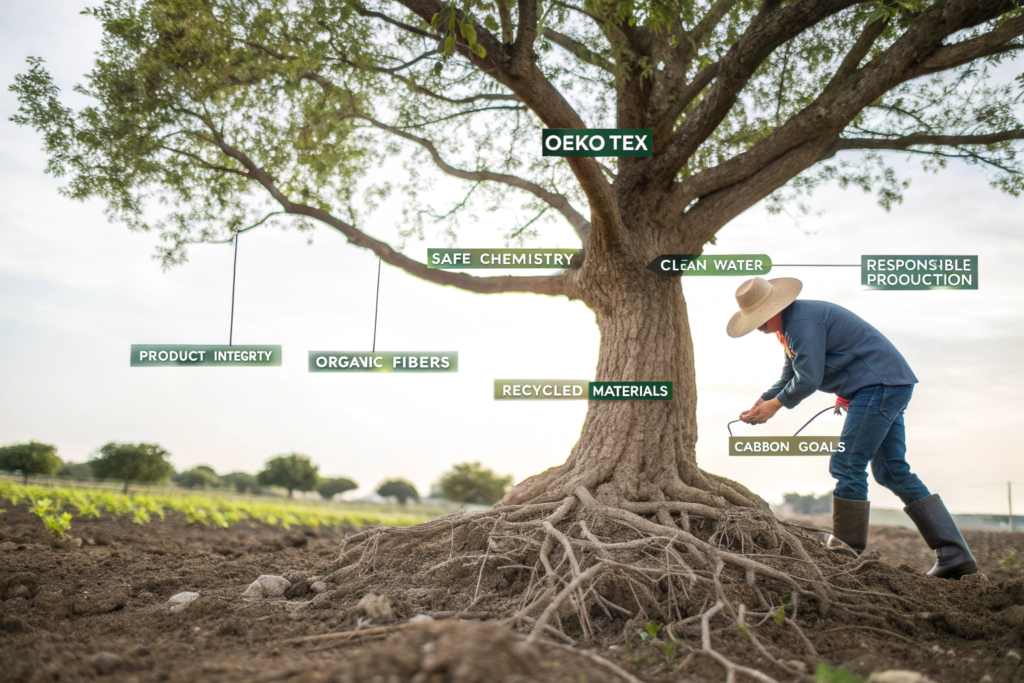
While OEKO-TEX Standard 100 is primarily a human-ecology standard (focused on product safety), its requirements create powerful indirect environmental benefits by mandating cleaner chemistry and responsible manufacturing processes. It acts as a forcing function for greener production upstream.
The certification’s restricted substance list (RSL) includes numerous chemicals known to be toxic to aquatic life, persistent in the environment, or bioaccumulative. By requiring manufacturers to eliminate or severely limit these substances, OEKO-TEX directly reduces the toxic effluent from dyeing and finishing mills. For example, the standard strictly limits alkylphenol ethoxylates (APEOs), which are toxic to fish and can disrupt hormones, and heavy metals like antimony and cadmium. When a mill must comply to keep its certification for clients like us, it is compelled to source alternative, often more environmentally benign, chemicals.
Does OEKO-TEX Certification Reduce Water Pollution from Dye Houses?
Indirectly but significantly, yes. To achieve and maintain OEKO-TEX certification, dye houses must have a high degree of chemical control and process consistency. This often goes hand-in-hand with better wastewater management practices. While OEKO-TEX doesn’t certify wastewater directly, its sister standard, OEKO-TEX STeP (Sustainable Textile Production), does, and many responsible manufacturers pursue both.
The chemical restrictions in Standard 100 mean that certified mills are not using the most notorious, cheap-but-dirty chemicals. For instance, to avoid banned allergenic disperse dyes, mills invest in higher-quality, more color-fast dyes that may also have better fixation rates, meaning less dye is washed out into the water. Our partnership dye houses, which produce our OEKO-TEX Class II fabrics, are annually audited. Their shift to compliant chemistry has been part of a broader modernization, including investments in water-saving equipment and effluent pre-treatment. When you choose an OEKO-TEX certified fabric from Shanghai Fumao, you are indirectly supporting a supply chain tier that is pushed towards cleaner production. This aligns with the goals of initiatives like ZDHC (Zero Discharge of Hazardous Chemicals), creating a synergistic effect for brands committed to reducing toxic chemical use in apparel manufacturing.
How Does It Encourage Longer Product Lifespan, a Key Sustainability Tenet?
Durability is sustainability. A garment that fades, pills, or deteriorates quickly is destined for landfill. Several OEKO-TEX test parameters directly contribute to product longevity and quality, which supports a circular economy model.
- Colorfastness: Tests to washing, perspiration, and rubbing ensure colors stay vibrant longer, maintaining the garment's aesthetic value.
- Dimensional Stability (Shrinkage): Ensures the garment keeps its fit after washing.
- Pilling Resistance: While not always a mandatory test for all articles, it is a key quality parameter that certified mills often monitor to meet brand expectations.
We apply this thinking to our product development. For a US-based outdoor brand focused on durability, we developed a recycled polyester fabric that needed to pass OEKO-TEX Class II for safety and exceed industry norms for colorfastness to UV and abrasion. Our in-house lab worked on the finish formulation to achieve both goals. The resulting fabric not only earned its safety certificate but also helped the brand promote a "built-to-last" message, reducing the perceived need for frequent replacement. This is where safety certification actively supports a product longevity strategy in fashion.
Why is OEKO-TEX Class II Critical for Brand Credibility and Greenwashing Defense?
The market is saturated with vague claims like “eco-friendly” and “non-toxic.” Consumers and regulators are increasingly skeptical. In this environment, a third-party, independent certification like OEKO-TEX Standard 100 is a brand’s most powerful defense against accusations of greenwashing. It provides a specific, verifiable, and internationally recognized claim: that the product is free from harmful substances.
Without this, a brand’s sustainability story is built on sand. You can talk about recycled bottles or organic farms, but if a consumer or journalist finds that your product contains traces of a regulated heavy metal or an allergenic dye, the entire narrative collapses. OEKO-TEX certification is the verified proof point that allows you to talk about your material’s safety with confidence. It translates intention into evidence.
How Does It Provide a Verifiable Chain of Custody for Safety Claims?
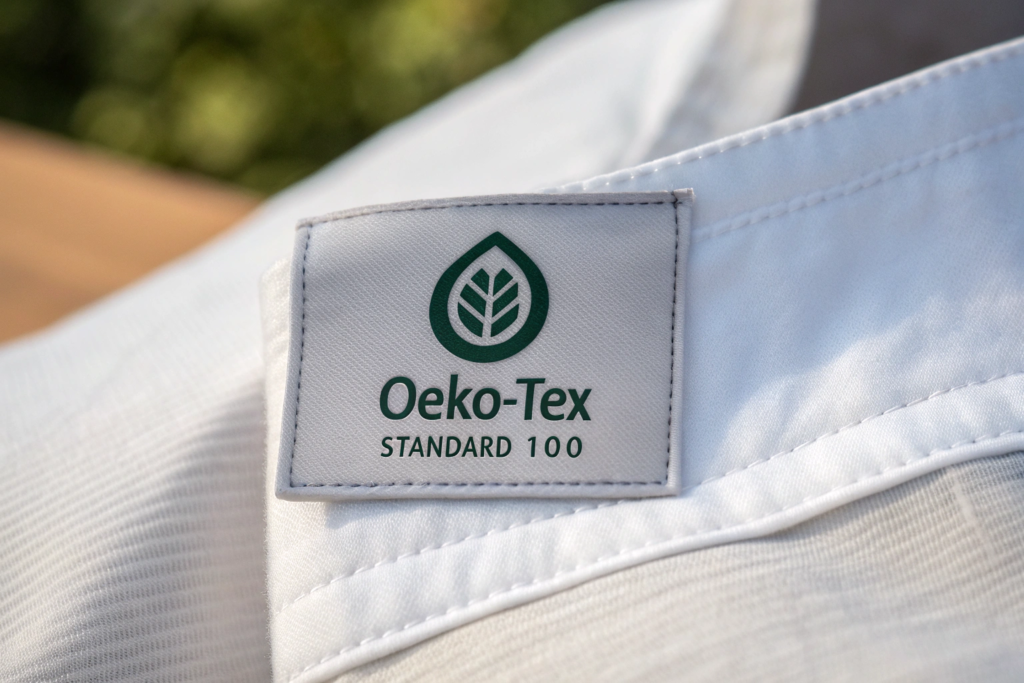
Unlike a self-declaration, an OEKO-TEX certificate has teeth. Each certificate has a unique number issued by an independent institute (like TESTEX or Hohenstein). This number can be verified online by anyone on the issuing institute’s website. It shows the certified company (e.g., Shanghai Fumao), the product article, the applicable standard, and its validity period.
This traceability is crucial. For a brand, it means you are not just making a claim—you are providing a pathway for verification. Retailers like Amazon or Zalando, who are cracking down on unsubstantiated claims, recognize and respect this. When we supply fabric, we provide the certificate details. Our brand clients then use this in their own technical files and, when they become licensees, on their hangtags. This creates an unbroken, auditable chain from our production to the store shelf. It turns a marketing claim into a legally defensible product compliance statement.
Can a Product Be OEKO-TEX Certified But Not Sustainable?
This is a vital distinction. Yes, absolutely. OEKO-TEX Standard 100 certifies product safety, not overall environmental sustainability. A fabric made from 100% virgin polyester from non-renewable resources, with a high carbon footprint, can be OEKO-TEX certified if it passes the chemical safety tests.
Therefore, OEKO-TEX Class II should be viewed as a necessary complement to, not a replacement for, broader sustainability certifications. The most credible products carry multiple certifications: e.g., GOTS (organic + social + some chemical safety) + OEKO-TEX Standard 100 (comprehensive chemical safety) or GRS (recycled content) + OEKO-TEX. At Fumao, we specialize in these hybrid solutions. Our best-selling “Eco-Jersey” for the European market is made from GRS-certified recycled polyester and is also OEKO-TEX Standard 100 Class II certified. This gives brands two powerful, specific stories: recycled content and verified safety. Understanding the difference between material and chemical certifications is key to building a robust sustainability portfolio.
What Are the Practical Implementation Challenges for Sustainable Brands?
For a brand committed to sustainability, integrating OEKO-TEX certification into the supply chain presents specific hurdles beyond cost. The primary challenge is component traceability—ensuring that every part of the garment, not just the main fabric, is compliant. A sustainable brand might source beautiful OEKO-TEX certified organic cotton, but then use conventional elastic, polyester sewing thread, or a plastisol print that contains phthalates. This breaks the certification for the final garment.
Another challenge is cost versus scale. The certification fees and potential cost of compliant chemicals can be proportionally higher for small-batch, sustainable productions. Brands must weigh this against the value of credibility and market access. Furthermore, there’s the knowledge gap—understanding the different product classes and ensuring the right one is used (e.g., Class I for babies, Class II for adult wear).
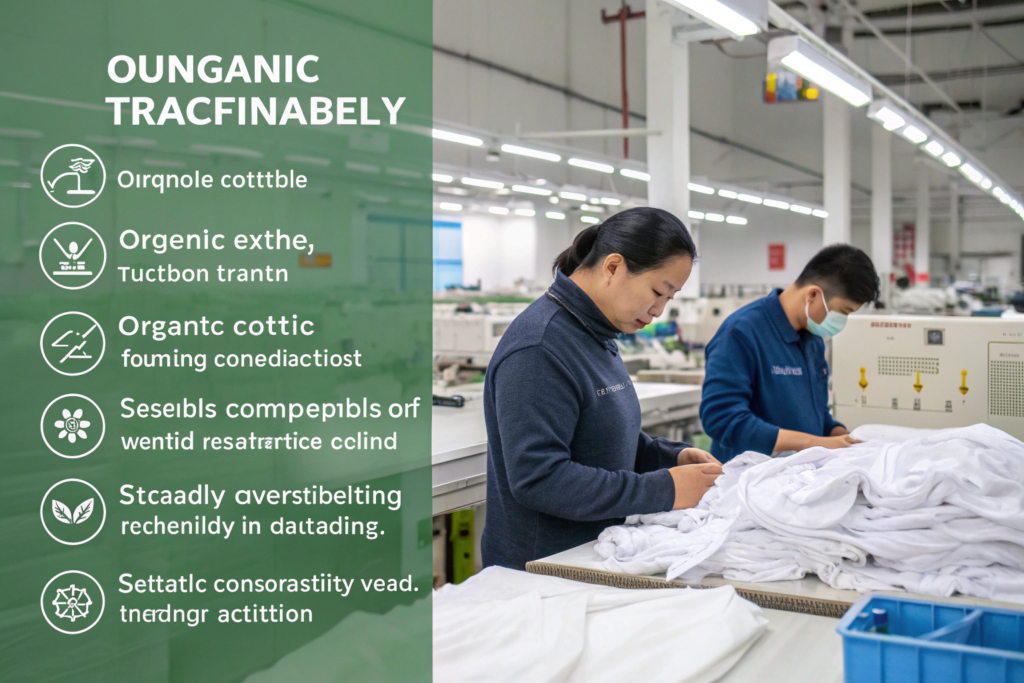
How Does Fumao Solve the “Sustainable Trim” Sourcing Problem?
We close this gap by curating a network of certified component suppliers. For our sustainable fabric collections (like organic cotton or recycled blends), we have pre-vetted sources for:
- OEKO-TEX certified sewing threads (organic cotton or recycled polyester).
- Natural rubber elastic or elastic made with compliant synthetic materials.
- Label makers who use water-based or OEKO-TEX certified inks.
We provide this as a value-added service. For a Canadian sustainable athleisure brand, we supplied OEKO-TEX Class II certified recycled polyester fabric and connected them with a supplier for certified thread and labels. We provided a consolidated dossier of all certificates, making their final garment certification process seamless. This holistic sourcing support is essential for brands that lack the volume or network to vet every small component supplier themselves. It’s part of how we enable true end-to-end responsible apparel manufacturing.
Is Certification Feasible for Small-Batch and Custom Designs?
Yes, but the approach must be strategic. The key is article-based certification. When we develop a new sustainable fabric (e.g., a Tencel™-hemp blend), we often certify the base article in a range of standard colors. This initial investment covers that fabric for all future clients.
For custom colors or small batches, we use two methods:
- Certificate Extension: If a new color uses the same dye chemistry as an already-certified color, we can apply for an extension, which is faster and cheaper than a new certification.
- Batch Testing: For very small, one-off orders, we can arrange for batch-specific testing to verify compliance, though this doesn’t grant the full certificate.
We advise our sustainable startup clients to begin with our already-certified standard articles to control costs and complexity. As their volume grows, we can then invest in certifying custom developments. This phased approach makes credible safety achievable from day one. Resources like the Fashion Revolution Fanzine often discuss balancing ethics with practicality, and our model is designed for this balance.
How Does Fumao Integrate OEKO-TEX with Other Sustainability Certifications?
For us, OEKO-TEX Standard 100 is not a standalone program; it’s the chemical safety module in our broader sustainability platform. We build fabrics where multiple certifications intersect, creating a multiplier effect for brand trust.
Our integrated approach follows this logic:
- Start with the Fiber: Source raw materials with recognized credentials (BCI Cotton, GOTS Organic Cotton, GRS Recycled Polyester).
- Apply Safe Chemistry: Process these fibers using OEKO-TEX compliant dyes and finishes in facilities that may also have STeP or other environmental management certifications.
- Verify the Output: The final fabric carries both the material content certification (e.g., GRS) and the product safety certification (OEKO-TEX).
For example, our “Circular Knit” is a popular fabric for conscious brands. It has:
- GRS Certification: Confirming 50%+ post-consumer recycled polyester content.
- OEKO-TEX Standard 100 Class II: Confirming safety from harmful substances.
This dual certification tells a complete story: “Made from recycled materials and guaranteed safe for your skin.” We provide the full audit trail for both, making it easy for brands to communicate and substantiate their claims. This synergy is the future of credible sustainable textiles.
Conclusion
OEKO-TEX Standard 100 Grade 2 (Product Class II) is not merely “better” for sustainable apparel production—it is an essential component of it. True sustainability cannot exist without product safety. This certification provides the rigorous, third-party verification that the chemical footprint of a garment is responsible, protecting both the end-consumer and the integrity of the brand’s environmental claims. It bridges the gap between material sourcing and human health, completing the sustainability circle.
While it does not address carbon emissions or water use directly, it drives cleaner chemistry and supports product durability, contributing to a more responsible lifecycle. In an era of scrutiny and greenwashing, it offers brands a credible, defensible foundation upon which to build their entire sustainability narrative.
Ultimately, the most responsible choice is a holistic one. Partner with a supplier who understands that sustainability is multi-faceted. At Shanghai Fumao, we engineer fabrics that meet this complex standard—combining certified sustainable materials with verified OEKO-TEX safety. Let us help you build a collection that is genuinely responsible, from the source to the skin. For a partnership that grounds your sustainable vision in verifiable safety, contact our Business Director, Elaine, at elaine@fumaoclothing.com. Build trust, not just trends.