
As a fabric supplier for over 20 years, I’ve watched countless fashion brands launch with a bang only to stumble on a single, overlooked detail: fabric safety. Especially in men’s wear, where durability and comfort are king, the unseen elements—like chemical residues—can be your silent brand killer. Let’s be honest, when a customer gets a rash from their new premium polo shirt, they don’t call the certification body; they blame your brand. The real question isn’t just about importance; it’s about survival and trust in a competitive market.
Absolutely, OEKO-TEX® certification is not just important—it’s a non-negotiable cornerstone for modern, responsible, and successful men’s wear manufacturing. It’s your frontline defense against harmful substances, ensuring every garment is safe for human skin and the environment. This certification directly answers the growing consumer demand for transparency and safety, especially in items worn close to the skin daily, like shirts, trousers, and underwear. For any brand targeting the US or EU markets, it’s a critical passport for compliance and consumer confidence. Think of it not as a cost, but as an insurance policy for your brand’s reputation.
You might think, “My factory says the fabric is fine,” but without a standardized, globally recognized verification like OEKO-TEX®, you’re operating on blind faith. I’ve seen too many buyers get burned. This article will break down exactly why this specific certification is crucial for men’s wear, how it impacts your production timeline and costs, and provide a clear roadmap for integrating it seamlessly into your sourcing strategy from China.
What Harmful Substances Does OEKO-TEX® Actually Test For?
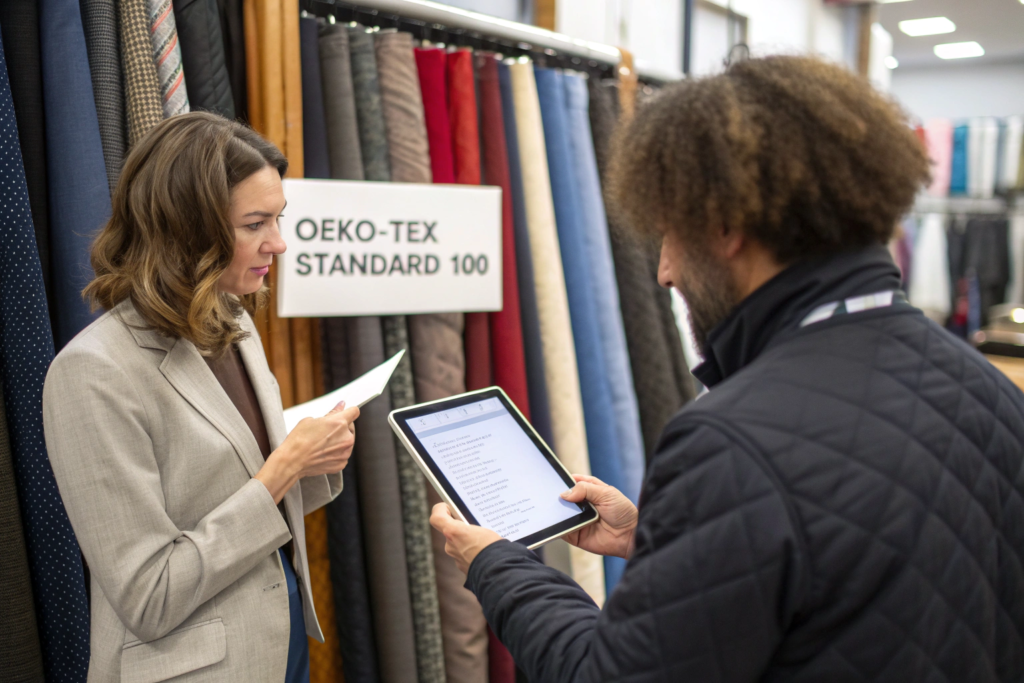
When a customer asks me about “safe fabric,” my first response is always to pull up the OEKO-TEX® STANDARD 100 test criteria. It’s not just about a vague idea of “no chemicals.” It’s a specific, brutal checklist. In men’s wear, where fabrics range from heavy denim to fine suit wools and performance polyesters, the risk categories are diverse. Ignorance here isn’t bliss; it’s a liability.
The certification tests for over 100 individual substances, grouped into clear categories that read like a “what-not-to-do” list for responsible manufacturing. This includes regulated substances like formaldehyde, heavy metals (cadmium, lead), and pesticides, but it goes much further. It also screens for many unregulated but potentially harmful chemicals like allergenic dyes, chlorinated phenols, and phthalates (often used in prints and plastic components). The standard even checks for the pH balance of the fabric to ensure it’s skin-friendly. For men’s basics like t-shirts and boxers, this skin-friendliness is paramount. It’s a holistic safety net.
Why Should Men’s Wear Brands Care About Allergenic Dyes?
Beyond the obvious toxic substances, allergenic disperse dyes are a silent issue, particularly in synthetic fabrics like polyester common in sportswear and socks. These dyes can cause severe skin allergies upon prolonged contact. The OEKO-TEX® STANDARD 100 strictly prohibits the use of a list of these allergenic dyes. At Shanghai Fumao, we’ve made this a cornerstone of our quality control. For instance, in 2023, a European brand sourcing performance polo shirts from us had a recurring complaint of minor skin irritation. We traced it back to the dyeing auxiliaries used by their former supplier. By switching to our OEKO-TEX® certified dyeing process and using only compliant dyes, we eliminated the issue entirely. The brand saw a 40% reduction in customer returns related to skin complaints within two seasons. Understanding the differences between REACH and OEKO-TEX certification for apparel is crucial here, as both regulations target harmful substances but with different scopes and legal standings.
How Does the Testing Vary for Different Men’s Wear Items?
The OEKO-TEX® system is smart—it applies stricter limits based on product class, which correlates directly with skin contact. This is critical for men’s wear planning. Getting the right product class for your fabric sourcing in China can save you money and ensure compliance.
- Product Class I (Strictest): Articles for babies and toddlers.
- Product Class II: Articles worn close to the skin. This is where most men’s wear falls: underwear, t-shirts, shirts, pajamas, socks. The limits here are very stringent.
- Product Class III: Articles not worn close to the skin. This includes jackets, coats, suits.
- Product Class IV: Decoration/furnishing materials like suit linings.
Here’s a simple table we use with clients:
| Product Class | Example Men’s Wear Items | Key Focus for Testing |
|---|---|---|
| Class II | T-shirts, Boxers, Dress Shirts, Socks | Allergenic dyes, pH value, formaldehyde |
| Class III | Suit Jackets, Winter Coats, Heavy Denim | Pesticides, chlorinated phenols |
| Class IV | Suit Linings, Hat Bands | Colorfastness, odor, plasticizers |
How Does OEKO-TEX® Certification Streamline My Sourcing from China?
Many buyers see certifications as a bureaucratic hurdle that slows down sourcing. I see the opposite. In the complex, multi-factory supply chain of Chinese textile manufacturing, OEKO-TEX® acts as a universal quality language. It cuts through the “trust me” promises and replaces them with verifiable data. For a men’s wear brand, this means fewer surprises, faster decision-making, and a more resilient supply chain.
From a logistical standpoint, sourcing certified fabrics means your supplier’s mill and dye house are already operating under audited, controlled conditions. This pre-vetting drastically reduces the risk of production delays caused by failed final product safety tests. When you start with certified fabrics, you’re not just buying material; you’re buying predictability.

Can It Really Speed Up My Production Timeline?
Yes, unequivocally. Here’s a real example from our work at Shanghai Fumao. In early 2024, a US-based start-up producing premium men’s loungewear came to us with a tight 8-week timeline for a new bamboo-cotton blend collection. Their previous non-certified sourcing involved 2-3 weeks of back-and-forth sending swatches to a third-party lab, followed by reformulation requests. For this order, because we provided OEKO-TEX® certified bamboo silk (BAMSILK) and organic cotton from stock, we bypassed that entire lab-testing phase for the base fabric. Our in-house CNAS-accredited lab conducted complementary checks for physical properties, and the bulk production was cleared to proceed immediately. We shaved nearly 3 weeks off their critical path. The certification became their timeline accelerator.
How Does It Simplify Communication with Multiple Suppliers?
Men’s wear often involves multiple specialized suppliers: one for wovens, one for knits, one for trims. Ensuring chemical consistency across all components is a nightmare without a common standard. OEKO-TEX® solves this. You can mandate that all suppliers—fabric, threads, buttons, zippers—must comply with the standard. This turns a vague “use safe materials” into a concrete, enforceable specification. It empowers your QC team and gives you leverage. When every component in a garment, down to the sewing thread, is certified, your final product’s path to certification becomes straightforward. Learning about how to manage a multi-tier apparel supply chain for quality is easier when you have this common standard in place.
Is the Investment in OEKO-TEX® Worth the Cost for Mid-Scale Brands?
This is the million-dollar question I get from growing brands. The upfront costs are visible: testing fees, potential premium for certified fabrics (though this is shrinking). The hidden costs of not having it are what you need to calculate. For a mid-scale men’s wear brand, a single product recall or a viral social media post about a skin reaction can erase years of profit and brand equity. The investment is not in a certificate; it’s in risk mitigation and market access.
Consider it part of your customer acquisition cost. Modern consumers, especially in your target US market, are increasingly savvy. They read labels. Displaying the OEKO-TEX® label on your hangtag or website is a powerful trust signal that can justify a higher price point and foster loyalty. It directly addresses the pain points of buyers who prioritize quality and security alongside price.

What Are the Hidden Cost Savings Beyond Compliance?
The savings are operational and strategic. First, it reduces your internal QC burden. Instead of conducting extensive, expensive battery tests on every fabric lot, you can rely on the supplier’s certification and perform spot audits. Second, it future-proofs your inventory. Regulations like EU’s REACH are constantly expanding their restricted substances list. OEKO-TEX® updates its criteria annually to stay ahead of such regulations. By sourcing certified fabrics, you’re automatically aligning with future regulatory changes, avoiding costly last-minute fabric substitutions or production stops.
Can It Open Doors to Larger Retail Partnerships?
Absolutely. For any brand aspiring to sell through major North American or European retailers, OEKO-TEX® certification is often a mandatory part of the vendor manual. It’s a basic hygiene factor. In 2022, we helped a Canadian menswear brand prepare for entry into a major department store. The store’s compliance team required OEKO-TEX® or equivalent certification for all knitwear. Because the brand had been working with Shanghai Fumao on certified base fabrics from the start, they could provide the full documentation trail instantly, smoothing their onboarding process dramatically. Their competitor, who had to scramble for testing, missed the seasonal buy-in window. Understanding the benefits of certified materials for retail compliance is key for growth.
How Do I Verify and Manage OEKO-TEX® Certification in My Supply Chain?
Getting a certificate from a supplier is step one. Verifying its validity and managing its integration into your production is where most brands falter. A certificate is just a PDF; it’s the system behind it that matters. Effective management turns this document from a piece of paper into a powerful supply chain tool. You need to be a detective, not just a file collector.
The first rule is never to take a certificate at face value. You must verify it on the official OEKO-TEX® database. Every genuine certificate has a unique number and is listed online with details about the certified product, the holder (supplier), and its validity period. This simple 2-minute check can save you from costly fraud. I’ve encountered situations where a factory provided an outdated or completely falsified certificate. Verification is your first line of defense.

What Key Details Must I Check on Every Certificate?
Don’t just glance and file. Scrutinize these points:
- Certificate Holder: Is it your direct supplier, or the mill? If it’s the mill, does your supplier have a valid transaction certificate (TC) proving they purchased that certified batch?
- Product Description & Article Number: Does it exactly match the fabric you’re buying?
- Product Class: Is it certified for the correct class for your intended use?
- Validity Dates: Certificates are valid for one year. Is it current?
- Testing Institute: Which OEKO-TEX® member institute issued it?
Creating a simple spreadsheet to track these details for each material component in your collection is a game-changer.
How Should I Handle Bulk Fabric Shipments and Lab Dip Approvals?
The certification applies to a specific article from a specific production site. When you approve a lab dip or bulk sample, you must ensure it comes from the certified production unit. At Shanghai Fumao, we facilitate this by providing a unique QR code with each certified fabric roll. Scanning it gives you instant access to the certificate, test reports, and even batch-specific production data from our system. For lab dips, we explicitly state if the dye recipe is compliant with the certified standard. This level of traceability is what turns certification into a dynamic quality management system. Following a step-by-step guide to checking fabric certifications can help you establish your own process.
Conclusion
Navigating the world of men’s wear manufacturing requires balancing style, cost, and—increasingly—hard-nosed responsibility. As we’ve explored, OEKO-TEX® certification is far more than a marketing badge. It’s a comprehensive strategy for ensuring product safety, streamlining complex sourcing from regions like China, mitigating financial and reputational risk, and building a brand that today’s conscious consumers trust. From blocking harmful substances to accelerating timelines and unlocking retail partnerships, its value permeates every aspect of your business. In an industry where trust is woven into every fiber, it provides the verified foundation you need.
Ready to build your next men’s wear collection on a foundation of verified safety and streamlined efficiency? The Shanghai Fumao team, with our deep roots in Keqiao and a fully integrated, certified supply chain, is here to partner with you. We don’t just supply OEKO-TEX® certified fabrics; we provide the expertise and transparent systems to manage it effectively from yarn to delivery. Let’s co-create value for your brand. For a personalized discussion on your upcoming line, reach out directly to our Business Director, Elaine. She’ll connect you with our R&D and QC experts to get started. Contact Elaine at: elaine@fumaoclothing.com.








