Ron, let me cut straight to what's keeping you up at night. You've got a brilliant kids wear line ready for the U.S. market, but the compliance maze has you second-guessing every decision. Is that CMIA certificate just nice-to-have paperwork, or is it the legal gatekeeper that determines whether your shipment gets sold or seized? Having navigated thousands of shipments from Keqiao to Kansas City over 20 years, I can give you the unvarnished truth: the answer isn't a simple yes or no - it's a "depends on" that could save your business or sink it.
Here's the reality check: CMIA certification itself is not a U.S. government-mandated requirement. But - and this is the critical "but" - it's the most widely recognized industry standard that proves compliance with what IS absolutely mandatory: the U.S. Consumer Product Safety Commission (CPSC) regulations under the Flammable Fabrics Act (FFA), specifically 16 CFR Part 1610 for general apparel and 16 CFR Parts 1615 & 1616 for children's sleepwear. Think of CMIA as the gold-star test report that tells Customs and retailers you've done your homework correctly. Without equivalent testing documentation, your kids wear shipment is legally vulnerable to holds, fines, or destruction. At Shanghai Fumao, we've seen too many importers learn this lesson the hard way when their "compliant" shipments got stuck at port because they misunderstood these distinctions.
The mandatory part isn't the CMIA logo on a certificate; it's proving your garments meet the specific flammability standards for their category. For children's sleepwear (sizes 0-14), this means passing the rigorous vertical flame test. For other kids wear, it means meeting general apparel flammability requirements. CMIA certification is simply the most credible way to document this proof. Whether you work with a CMIA-accredited lab or another CPSC-recognized testing body, the testing must happen, and the documentation must be impeccable. Your choice comes down to risk tolerance: industry-respected CMIA certification versus potentially less recognized alternatives.
The Legal Landscape: What U.S. Regulations Actually Require
Before we dive deeper into CMIA's role, you need to understand the actual laws you're dealing with. The U.S. regulatory framework for children's apparel is specific, unforgiving, and enforced aggressively by both CPSC and Customs. Getting this wrong isn't just about delays - it's about legal liability that could cripple your business.

Which Kids Wear Categories Have Non-Negotiable Testing Requirements?
The regulations draw clear lines based on garment type and size. Here's the breakdown that determines whether testing is absolutely mandatory for your shipment:
Category 1: Children's Sleepwear (Sizes 0-14) - STRICT REQUIREMENT
This is the most regulated category. If your garment is marketed as or suitable for sleeping (pajamas, nightgowns, robes) for children up to size 14, it MUST comply with 16 CFR Parts 1615 (sizes 0-6X) and 1616 (sizes 7-14). The requirements are specific:
- Must pass the vertical flame test (fabric must self-extinguish quickly)
- Must maintain flame resistance through 50 washings
- Must have permanent labeling stating flame resistance
- Testing must be done by an accredited third-party laboratory
Category 2: General Wearing Apparel (All Sizes) - MODERATE REQUIREMENT
All clothing sold in the U.S. must meet the general flammability standard under 16 CFR Part 1610. This includes:
- Daywear, dresses, shirts, pants
- Testing via the 45-degree angle method
- Fabrics classified as Class 1 (normal flammability) are acceptable
- Class 3 (rapid and intense burning) fabrics are banned
Category 3: Tight-Fitting Sleepwear - DIFFERENT STANDARD
Sleepwear designed to be skin-tight has less stringent requirements but still needs documentation proving it meets the specific criteria for tight-fitting garments.
I'll give you a real example from last year. A client imported what they thought were "loungewear sets" for kids - loose pants and tops. They skipped proper testing, calling them "daywear." CPSC disagreed, determining the marketing images showed children in bed, making them sleepwear. The result? A full recall and $85,000 in penalties. The line between categories is finer than you think. For accurate classification guidance, the CPSC's official guide to children's sleepwear regulations is essential reading.
What Documentation Must Accompany Your Kids Wear Shipment?
Compliance isn't just about passing tests - it's about proving it with the right paperwork. Here's what Customs and retailers will demand:
Mandatory Documentation:
-
Children's Product Certificate (CPC): Required for all products designed for children 12 and under. Must include:
- Description of product
- Reference to each applicable safety rule
- Contact information for importer and testing lab
- Date and place of manufacturing
- Date and place of testing
-
Test Reports: From a CPSC-accepted laboratory, demonstrating compliance with applicable standards.
-
Tracking Labels: Permanent marks on product with identifying information.
The CMIA Advantage: A CMIA test report typically provides all data needed for the CPC in a format widely recognized and respected. This reduces questions and delays.
At Shanghai Fumao, we've developed a Documentation Package System for our kids wear clients. When we produced flame-resistant pajama fabric for a Texas-based retailer in Q3 2023, we provided:
- CMIA test reports for the finished fabric
- Lab dip approvals showing color consistency
- Production records proving batch uniformity
- Pre-filled CPC templates for their completion
Their shipment cleared Houston port in 36 hours while a competitor's similar shipment (with generic test reports) was held for 21 days for verification. The difference? Recognizable, credible documentation. To avoid documentation pitfalls, many importers find value in checklists for apparel import compliance documentation.
The Business Reality: Why "Mandatory" Means More Than Legal Minimums
Here's where many importers make their biggest mistake. They ask "What's the bare minimum I can get away with?" instead of "What protects my business completely?" In today's retail environment, what's "mandatory" extends far beyond government regulations to include marketplace requirements, retailer policies, and consumer expectations.
How Do Major Retailers' Requirements Exceed Government Standards?
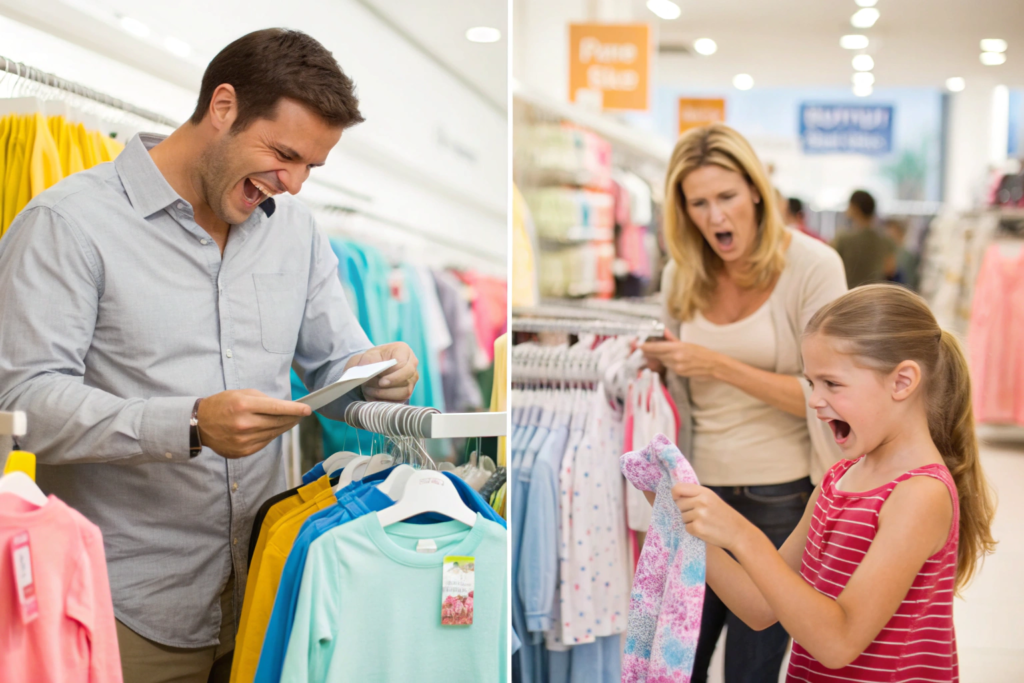
The big players - Walmart, Target, Amazon, Carter's - all have compliance programs that often go beyond CPSC requirements. They're protecting their brand reputation, and they expect you to protect theirs too.
Typical Retailer Requirements Include:
- Testing by specific accredited labs (often including CMIA-recognized facilities)
- Unannounced factory audits
- Additional safety tests beyond flammability (lead, phthalates, etc.)
- Specific labeling and packaging requirements
- Regular submission of test reports
Consider this real comparison from our experience:
| Requirement | CPSC Minimum | Typical Major Retailer Standard |
|---|---|---|
| Testing Frequency | Periodic | Every style, every color, every production run |
| Lab Accreditation | CPSC-recognized | Specific approved list (often includes CMIA labs) |
| Documentation Review | Upon request or complaint | Pre-shipment submission required |
| Factory Audit | Not required | Annual unannounced audits mandatory |
A case study: In early 2024, we worked with a brand supplying a major department store. Their previous supplier provided CPSC-compliant test reports, but the retailer rejected them because they weren't from their approved lab list (which included CMIA-accredited facilities). We reproduced the fabrics, tested through the retailer's preferred CMIA lab, and secured approval within 2 weeks. The "minimum" wasn't enough for market access. Understanding major retailers' compliance expectations for children's products is crucial for market success.
What Are the Real Costs of Non-Compliance?
Let's talk numbers. The penalty for misunderstanding "mandatory" isn't just a rejected shipment - it's financial devastation.
Immediate Costs:
- Customs holds: $150-$500 per day storage fees
- Testing while in hold: $800-$2,000 per style
- Refusal and destruction costs: $5,000-$15,000 per container
- CPSC fines: Up to $100,000 per violation, up to $15 million for related violations
Long-Term Costs:
- Retailer chargebacks for non-compliant goods
- Lost shelf space and future orders
- Brand reputation damage
- Increased insurance premiums
- Legal defense costs
I witnessed a devastating example in late 2023. An importer saved $3,000 by skipping third-party testing on 8,000 units of children's robes. When CPSC random testing caught them, the total cost exceeded $280,000 including fines, destruction, legal fees, and lost contracts. Their business never recovered. That's why at Shanghai Fumao, we're obsessive about compliance - we've seen the alternative. For calculating true compliance costs, tools like the Fashion Compliance Calculator can be eye-opening.
Navigating the Gray Areas: When Certification Gets Complicated
Not all kids wear fits neatly into regulated categories. What about those trendy "hybrid" items? The pajamas that look like daywear? The robes marketed for "lounging"? This is where importers get into trouble, and where understanding the nuances becomes critical.

How Is "Sleepwear" Defined Versus "Daywear"?
CPSC looks at multiple factors, not just your marketing claims. They consider:
- Marketing and Representation: How do you describe it? Where is it displayed?
- Design and Construction: Does it resemble traditional sleepwear?
- Fabric Characteristics: Is it a fabric commonly used for sleep?
- Consumer Perception: How would a reasonable consumer view it?
We helped a client navigate this exact issue last spring. They designed a "family matching lounge set" in soft bamboo knit. The adult version was clearly daywear, but the children's version risked being classified as sleepwear due to the fabric's characteristics. Our solution:
- We upgraded to a slightly heavier weight bamboo blend
- Added contrasting trim not typical in sleepwear
- Developed specific marketing language emphasizing "daytime comfort"
- Still conducted sleepwear-level testing for safety, but marketed as daywear
Result? Successful import with no challenges. Sometimes the safest approach is to meet the higher standard regardless of classification. This is especially true when working with fabrics that blur the line between loungewear and sleepwear.
What About Multi-Function Garments and Accessories?
The complexity increases with items like:
- Sleep sacks for infants
- Swaddles and receiving blankets
- Robes and dressing gowns
- Costumes marketed for sleepovers
Here's our practical approach at Shanghai Fumao:
For Ambiguous Items:
- Assume the stricter classification until proven otherwise
- Test to the higher standard during development
- Document the decision process thoroughly
- Consult with compliance experts before finalizing
We maintain a database of CPSC determination letters and previous decisions to guide our clients. For instance, we know that:
- Infant sleep sacks are regulated as sleepwear
- Receiving blankets are considered bedding, not apparel
- Costumes are daywear unless specifically marketed for sleeping
This knowledge comes from painful experience. In 2022, a client insisted their "fairy tale robes" were costumes. CPSC determined they were sleepwear based on fabric and marketing. The $40,000 lesson? When in doubt, test and document as if it's sleepwear.
The Smart Importer's Checklist: Beyond "Is It Mandatory?"
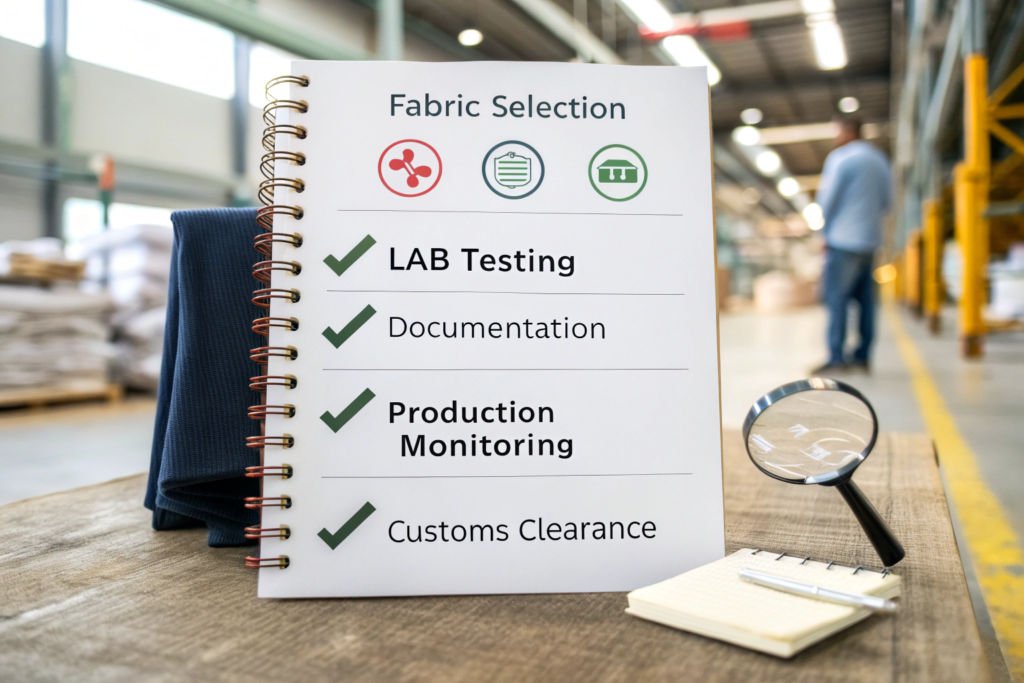
Instead of asking the minimum question, successful importers ask "How do I ensure smooth market entry and protect my brand?" Here's the actionable checklist we developed with our most successful U.S. clients.
What Due Diligence Should You Perform Before Ordering?
Step 1: Product Classification Analysis
- Determine exact regulatory category before design finalization
- Document your classification rationale with evidence
- Consider testing to the higher standard if borderline
Step 2: Supplier Verification
- Audit potential suppliers' compliance track record
- Verify their testing laboratory relationships
- Review their documentation systems
Step 3: Testing Protocol Establishment
- Select CPSC-accepted laboratory (CMIA labs preferred)
- Determine testing scope: fabric + construction + trims
- Plan for production testing, not just pre-production
At Shanghai Fumao, we offer a Pre-compliance Assessment for new kids wear clients. Before they place an order, we:
- Analyze their designs against CPSC guidelines
- Recommend fabric choices based on compliance history
- Provide testing cost estimates and timelines
- Identify potential compliance risks
This service saved a startup client $22,000 in potential redesign costs when we identified that their chosen lace trim would never pass sleepwear standards. Early knowledge is power. Many importers find due diligence frameworks for international manufacturing partners invaluable.
How Should You Structure Your Production Timeline Around Compliance?
Compliance isn't an afterthought - it's integrated into the schedule. Here's how successful importers build their timelines:
| Phase | Activity | Time Buffer | Critical Actions |
|---|---|---|---|
| Design & Development | Fabric selection, prototyping | 3-4 weeks | Initial compliance assessment, lab dip testing |
| Pre-Production | Sample making, fit approval | 2-3 weeks | Prototype testing, CPC preparation |
| Production | Bulk manufacturing | 4-6 weeks | In-process testing, batch documentation |
| Shipping & Clearance | Logistics, customs | 2-3 weeks | Documentation finalization, customs broker briefing |
Key Insight: The biggest mistake is waiting until production is complete to think about testing. By then, failure means remaking everything.
Our most successful client example: A Chicago-based brand plans backward from their store delivery date. They build in:
- 6 weeks for fabric development and testing
- 4 weeks for production with intermediate testing
- 2 weeks for final certification and documentation
- 3 weeks for shipping and customs clearance
This disciplined approach has given them 100% clearance success over 3 years. They use CMIA testing not because it's minimally mandatory, but because it's maximally reliable. Their philosophy? "The cost of proper compliance is built into our pricing. The cost of failure isn't."
Conclusion
The question "Is CMIA certification mandatory for kids wear import?" misses the larger point. The real question is: "What level of due diligence and documentation protects my investment, ensures market access, and builds consumer trust?"
While CMIA certification itself isn't government-mandated, the standards it represents absolutely are. And in today's retail environment, where major retailers set requirements above government minimums and consumers increasingly demand transparency, CMIA-level testing has become de facto mandatory for serious market players.
At Shanghai Fumao, we've built our kids wear specialization on this understanding. We don't help clients meet minimum requirements - we help them exceed expectations. From our CNAS-accredited in-house testing to our documentation systems that streamline customs clearance, we treat compliance as integral to quality, not separate from it.
The most successful importers we work with have shifted their mindset. They don't see compliance as a cost center but as a brand protection strategy. They use their commitment to rigorous testing as a marketing advantage, building trust with retailers and parents alike. In an industry where one safety failure can destroy years of brand building, this isn't just prudent - it's essential for survival.
Your approach to kids wear compliance will define your brand's reputation and longevity in the U.S. market. Will you aim for the minimum and hope for the best, or build excellence into your foundation from the first sketch?
Ready to develop a kids wear line with compliance excellence built in from concept to delivery? Contact our Business Director, Elaine, at elaine@fumaoclothing.com to discuss how we can partner to ensure your products not only meet requirements but set new standards for safety and quality.