If you're a fashion brand making sustainability claims, you face intense scrutiny. Consumers and critics alike are quick to point out greenwashing. You need materials that deliver real impact, not just good PR. Among cotton certifications, "BCI" (Better Cotton Initiative) is everywhere. But is it truly a force for good, or is it just industry window dressing?
For fashion brands committed to real sustainability, BCI represents a critical and pragmatic step forward. It is not a perfect, closed-loop system like organic cotton, but its power lies in scale and continuous improvement. BCI focuses on making global cotton cultivation significantly better—reducing water and pesticide use, improving soil health, and safeguarding farmer livelihoods—thereby addressing the massive environmental footprint of conventional cotton at a volume that can actually shift the industry.
Let's be clear: "Better" is a relative term. BCI is not the final destination of sustainable cotton, but it is arguably the most important and scalable vehicle for getting there. It works with millions of farmers, not just a few thousand. In 2023, BCI accounted for over 20% of global cotton production. That scale creates a real-world impact that niche certifications cannot match. A mid-sized contemporary brand we work with at Shanghai Fumao switched 70% of their cotton volume to BCI over three years. This move allowed them to credibly report a measurable reduction in the estimated water and chemical footprint of their collection to their investors, a move that was verified by their third-party ESG auditors and strengthened their position with eco-conscious retailers.
The debate between "better" and "best" is academic if "best" (like 100% organic) cannot scale to meet global demand. BCI's mission is to make the conventional cotton that dominates the market less harmful. Here’s how that mission translates into tangible benefits and where the honest critiques lie.
How Does BCI Drive Measurable Environmental Improvement at Scale?
The core of BCI's model is farmer training. It equips farmers with knowledge to grow cotton more efficiently, directly targeting the biggest environmental pain points: water stress and chemical pollution.
BCI farmers learn and implement the "Better Cotton Principles and Criteria," which are focused on verifiable reductions. They adopt water measurement techniques, switch to drip irrigation, and learn to identify pests versus beneficial insects to reduce pesticide sprays. The results are documented. According to the latest BCI Annual Report, BCI farmers used an average of 10% less water and 17% fewer synthetic pesticides than comparison farmers. For a fashion brand, this means that by sourcing BCI, you are directly contributing to a quantifiable decrease in the environmental impact of your raw material. It's a data-driven choice. When we source BCI cotton for a client's t-shirt line at Shanghai Fumao, we can provide the chain of custody documentation that links their order back to these improved farming practices, giving them a concrete story beyond "green."

What Are the Key Environmental Metrics BCI Improves?
| Impact Area | Conventional Practice | BCI Improved Practice | Result |
|---|---|---|---|
| Water Use | Flood irrigation, no measurement. | Scheduled, measured irrigation (e.g., drip). | Reduced water consumption & stress. |
| Soil Health | Monocropping, synthetic fertilizer overuse. | Crop rotation, organic matter management. | Healthier, more resilient soil. |
| Pesticide Use | Calendar-based spraying. | Integrated Pest Management (IPM), scouting. | Fewer chemical applications, safer for farmers & ecosystems. |
| Biodiversity | Chemical-heavy, hostile to non-crop life. | Reduced chemicals, habitat preservation. | Improved farm biodiversity. |
How Does This Compare to Organic?
Organic cotton is fantastic but has limitations: lower yields, higher land-use pressure, and it represents less than 1% of global production. BCI's strength is its ability to improve the remaining 99%. They are complementary, not competing, strategies in the sustainable fashion toolkit.
Does BCI Meaningfully Address Social and Economic Sustainability?
True sustainability must be social and economic, not just environmental. A system that saves water but bankrupts farmers is not sustainable. BCI's model is built on improving farmer profitability and well-being.
By teaching efficiency, BCI helps farmers lower their input costs (less water, fewer chemicals) and often improve their yields and fiber quality, leading to higher income. Furthermore, BCI training includes modules on decent work—forbidding child labor, promoting safe working conditions, and encouraging fair negotiation. This creates a more resilient and ethical foundation for the entire supply chain. For a fashion brand, this means your sustainability story includes social equity. We witnessed this with a supplier mill in India. After their source farms joined BCI, the consistency and quality of the raw cotton improved, reducing waste at the mill. The farmers reported a 15% increase in net profit per hectare. Our brand client was able to communicate this holistic "better livelihoods" aspect in their annual impact report.

What Are the Critiques of BCI's Social Impact?
Critics rightly point out that BCI is a Mass Balance system, not physically traceable like Organic. This means BCI cotton is mixed with conventional cotton in the supply chain. The social and environmental benefits are created at the farm level and attributed proportionally to the end product. While this enables scale, it does not guarantee that every fiber in a "BCI" product came from a BCI farm. The impact is collective, not product-specific.
How Can Brands Address This Transparency Gap?
Brands must be honest about the Mass Balance model. The value is in financing and supporting better farming practices overall, not in claiming purity for a single garment. Partner with manufacturers like Shanghai Fumao who can provide Transaction Certificates and explain the model clearly to your customers, fostering educated trust rather than perfect traceability.
Is BCI a Credible Tool for Brands to Avoid Greenwashing?
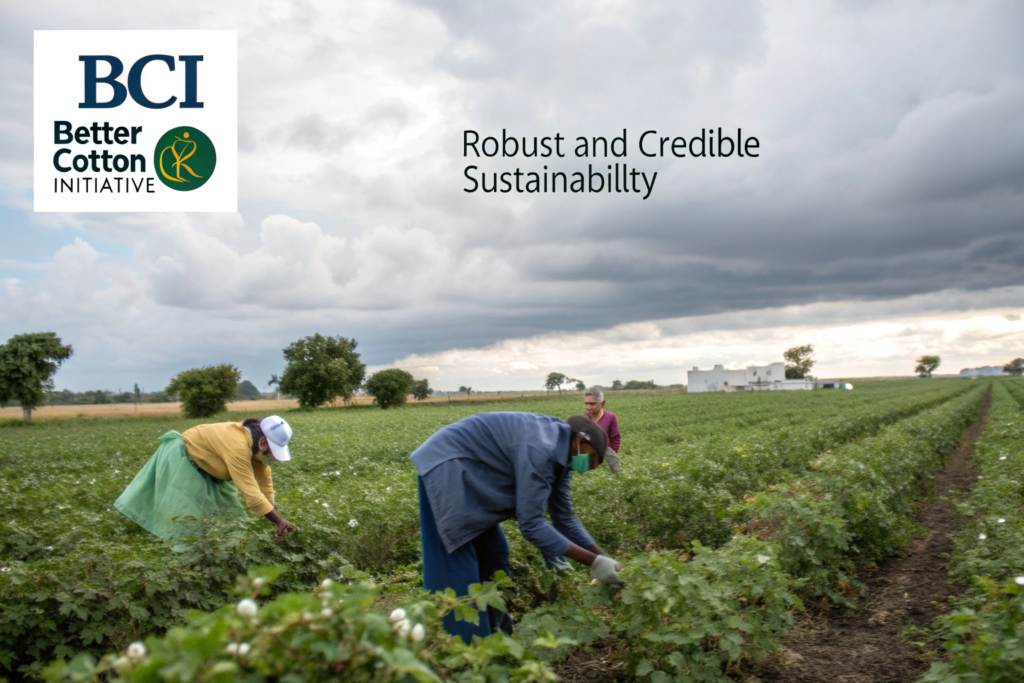
In an era of skepticism, credibility is everything. BCI, as a global multi-stakeholder non-profit, offers a more robust and credible claim than self-declared "sustainable" cotton.
BCI is governed by a diverse group including NGOs (like WWF), retailers, brands, and farmer representatives. This structure provides checks and balances. Its claims are backed by annual reporting and third-party verification of a sample of farms. For a brand, using BCI cotton shifts the burden of proof from your marketing department to an established institution. It is a recognized standard that journalists and savvy consumers can independently research. When a prominent eco-blog questioned a brand's "conscious" collection, the brand's ability to point to their BCI procurement data and the initiative's public reporting defused the criticism significantly. It showed a commitment to a system, not just a slogan.
What Are the Limits of BCI's Credibility?
BCI is not without controversy. Some environmental groups argue its standards are not strict enough and that the Mass Balance system lacks transparency. The most credible stance for a brand is to acknowledge BCI as a major step in the right direction and part of a longer journey. Pair BCI sourcing with other actions: investing in organic, using recycled cotton, and designing for durability.
How Does BCI Fit into Broader ESG Frameworks?
For brands reporting under frameworks like the Global Reporting Initiative (GRI) or facing regulations like the EU's Corporate Sustainability Reporting Directive (CSRD), BCI provides a standardized metric for sustainable cotton sourcing. It is a key performance indicator (KPI) that demonstrates progress on responsible sourcing goals to stakeholders.
What Is the Future of BCI and Sustainable Cotton?
The cotton landscape is evolving. BCI itself is not static; it is raising its standards and exploring ways to increase traceability.
The future will likely see a convergence of standards. BCI is piloting projects in areas like soil carbon measurement and exploring enhanced traceability models. For forward-thinking brands, engaging with BCI now means you are part of shaping this evolution. It's a dynamic system you can influence. More importantly, the demand for BCI cotton from major brands is what funds farmer training and accelerates improvement. Your sourcing decision is an investment in R&D for a better industry. A progressive outdoor brand we partner with uses a portfolio approach: BCI for their high-volume basics, organic for their signature line, and recycled cotton for blend innovations. This diversified strategy manages risk and supports multiple pathways to sustainability.

Should Brands Use "BCI" or "Better Cotton" on Labels?
Be precise. Use the official BCI logo and language ("Made with Better Cotton") in accordance with their licensing rules. Avoid vague terms like "BCI Cotton" as a fiber name. Educate your consumer on what it means: "Sourcing Better Cotton supports farmers in using water more efficiently and caring for their soil."
What's the Next Step After BCI?
BCI is a foundation. The next step is to layer on additional certifications for specific needs: OEKO-TEX for chemical safety, GRS for recycled content, and Fairtrade for deeper social equity. This creates a comprehensive sustainability matrix for your products.
Conclusion
So, is BCI good cotton actually better for sustainable fashion? The evidence says yes—if "better" is understood as significantly improved rather than perfect. It is the most powerful large-scale tool available to reduce the environmental and social harm of the world's most popular natural fiber. It provides brands with a credible, scalable, and measurable way to make a substantial positive impact.
Choosing BCI is a vote for pragmatic, incremental progress over purist inaction. It acknowledges the complexity of global supply chains and works to improve them from within. For brands that are serious about moving the needle on sustainability, partnering with BCI-aligned manufacturers like Shanghai Fumao is one of the most effective strategic decisions you can make.
Ready to integrate credible, scalable sustainability into your fashion line? Let Shanghai Fumao guide your transition to Better Cotton. Contact our Business Director, Elaine, to build a sourcing strategy that balances impact, quality, and commercial reality: elaine@fumaoclothing.com.