If you're sourcing apparel for the North American market, you're facing a perfect storm. Consumers want sustainability, retailers are setting strict eco-goals, and your competitors are already rebranding their collections. The pressure is on to find a credible, scalable solution that doesn't break the bank or the supply chain. Every week, I speak with buyers from the US and Canada who are asking the same urgent question: Is switching to BCI cotton a strategic necessity now, or just another passing trend we can wait out?
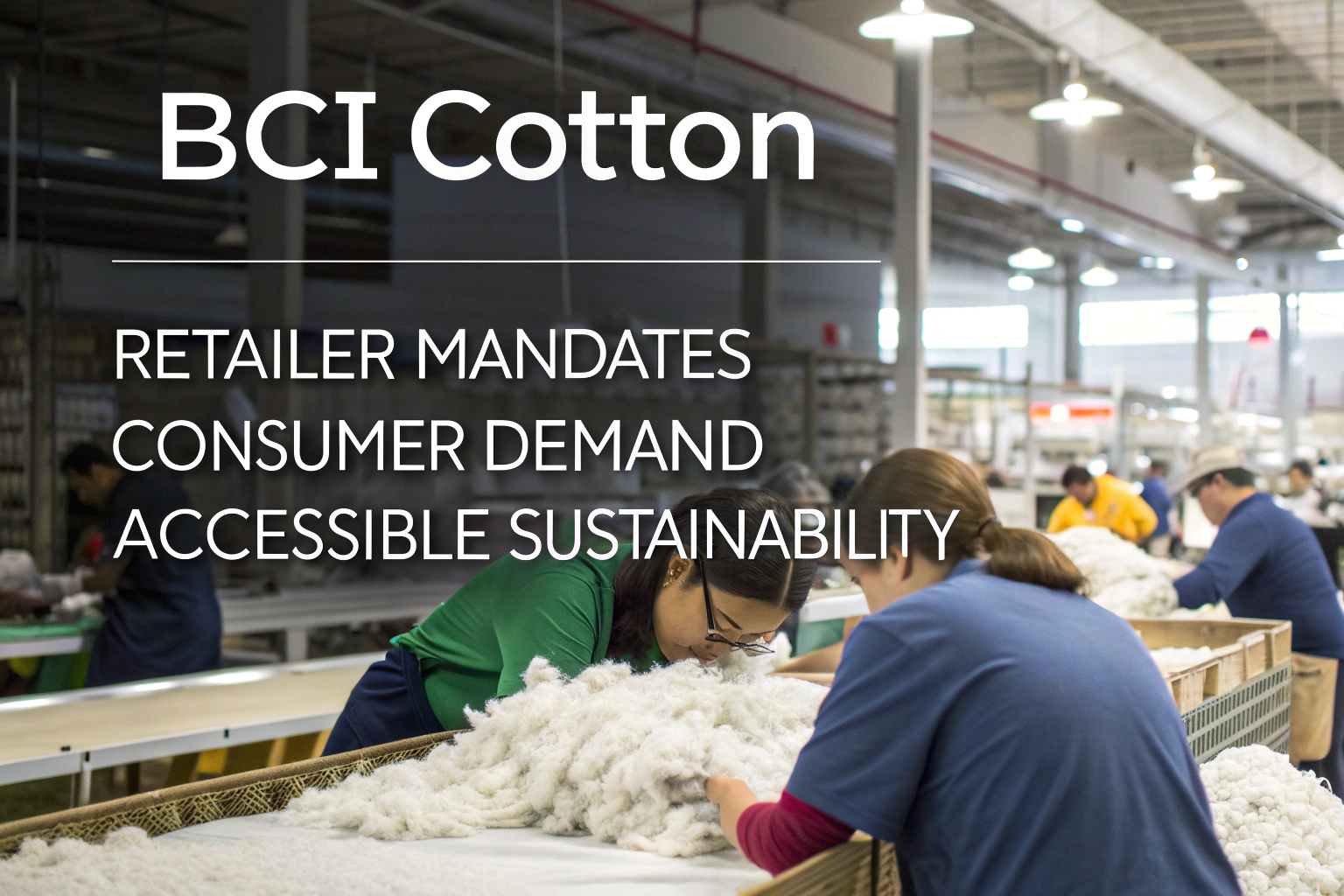
For forward-thinking North American apparel brands, BCI cotton is rapidly transitioning from a niche option to a baseline industry standard, driven by retailer mandates, consumer demand for accessible sustainability, and the need for a scalable, traceable fiber source. While not yet universal, its adoption by mass-market giants and its position as a pragmatic compromise between conventional and organic cotton make it the dominant sustainable cotton benchmark for the market. Brands not actively planning for its integration risk falling behind in both sourcing flexibility and market credibility.
The conversation in Keqiao's factories has shifted. Two years ago, BCI was a "nice-to-have" for a few forward-thinking brands. Today, it's a line item in our capacity planning. Let me walk you through why this shift is happening so fast and what it practically means for your sourcing decisions, timelines, and bottom line.
Why Are Major US Retailers Mandating BCI Cotton?
Walk into the sourcing office of any major retailer, and you'll see their sustainability roadmap plastered on the wall. These aren't vague aspirations; they are hard targets with deadlines, and BCI cotton is a key vehicle to hit them. It's becoming the default language for sustainable cotton sourcing at scale.

What's Driving Walmart, Target, and Gap's BCI Commitments?
The driver is threefold: risk management, consumer expectations, and investor pressure. For mega-retailers, the risk isn't just a bad PR story about cotton farming; it's the systemic risk of a supply chain they can't defend to shareholders. BCI provides a structured, auditable system. When Walmart commits to sourcing "more sustainably grown cotton" (with BCI as a primary pathway), it's not just about ethics—it's about securing future supply and ensuring thousands of suppliers are moving in the same direction. This trickles down with immense force. In 2023, a major US value-fashion chain (a Walmart supplier) came to us with a sudden requirement: 70% of their cotton knit fabrics had to be BCI-certified for Fall 2024. Their lead time? Just 8 months. Because we at Shanghai Fumao had already onboarded BCI spinning partners, we could meet this demand, while competitors who saw BCI as optional scrambled.
How Do These Mandates Filter Down to Brand Level?
You might not sell directly to these giants, but their standards are reshaping the entire landscape. Fabric mills and garment factories are investing in BCI certification to stay on these retailers' vendor lists. This creates a de facto infrastructure. As a brand, even if you sell through your own DTC channel, tapping into this pre-vetted, BCI-compliant supply network is becoming easier and often more cost-effective than building a separate conventional one. You're essentially riding the wave of investment made by larger players. The key is to find a fabric supplier, like us, who is already deeply embedded in this system, not one who is just starting to figure it out.
Is BCI the "Gateway" to Sustainable Sourcing for Mid-Market Brands?
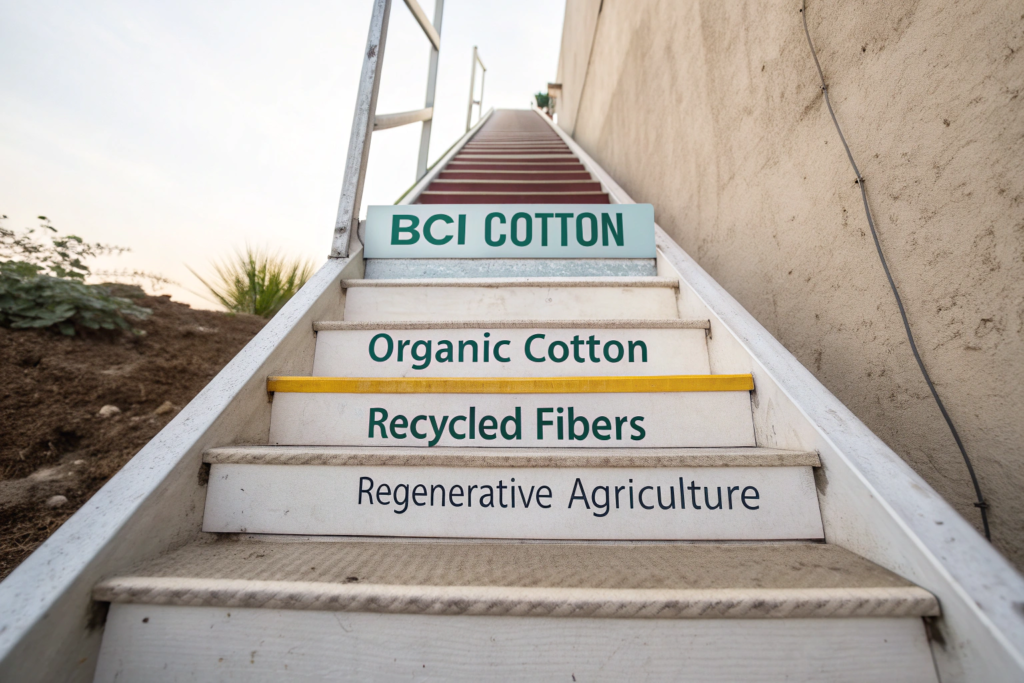
For brands that can't yet justify the price and complexity of 100% organic or recycled collections, BCI offers a critical first step. It's the sustainable fiber that operates at the scale and speed the North American fashion calendar demands.
How Does BCI Compare on Cost and Availability to Organic?
This is the core calculation. Organic cotton currently faces limited global acreage, higher price premiums (often 20-50%+), and longer lead times for securing certified yarn. For a Canadian activewear brand we worked with in March 2024, launching their first sustainable line, the choice was stark: a small, expensive organic capsule collection or a broader BCI-based line that could be priced accessibly. They chose BCI for 80% of the line. The result? They achieved their sustainability marketing goal, saw a 15% sales uplift on those items versus their conventional counterparts, and managed their fabric development budget effectively. BCI was the scalable entry point.
Can BCI Sourcing Be Managed with Existing Lead Times?
Yes, but it requires proactive planning. The cotton isn't the bottleneck; the certified production slot at a quality mill is. During peak seasons (Mar-May, Aug-Oct), demand for BCI-capacity soars. A brand that waits until the last minute will face premiums and delays. The smart approach is what we call "BCI-forward planning." For example, a Seattle-based outdoor brand we partner with now places their BCI fabric orders for Spring/Summer in the preceding June-July slowdown period. This secures better pricing from spinners and guarantees our production capacity. It turns a potential constraint into a scheduling advantage. We guide all our clients through this seasonal planning to optimize their production scheduling.
What Are the Practical Hurdles for Brands Switching to BCI?
The path isn't without bumps. Switching to any certified material introduces new variables into a complex system. Understanding these hurdles is the first step to overcoming them smoothly.

How Does Traceability Documentation Impact Logistics?
The Mass Balance system requires a Transaction Certificate (TC) for each shipment. For a brand new to this, the paperwork can seem daunting. The risk isn't in getting the certificate—your supplier should handle that—but in ensuring it's correctly linked to the correct shipment, PO, and invoice for your own records. An inefficient supplier can delay shipments if their documentation process is slow. At Shanghai Fumao, we streamlined this by generating TCs digitally the moment fabric passes our final inspection, and we pack the printed copy with the shipment documents. For one of our Los Angeles-based streetwear clients, this meant their warehouse and compliance team could easily reconcile goods with certificates, speeding up their own intake process. It’s a hidden efficiency many don't consider.
Is There a Risk of "Greenwashing" Backlash?
This is a real concern. Savvy consumers and NGOs are watching. Simply putting a BCI label on a product without telling a genuine story is risky. The key is transparent communication: "We're using BCI cotton as part of our journey to improve sustainability, which helps farmers use less water and pesticides." Avoid overstating it. BCI is a better standard, not a perfect one. Your fabric supplier should be able to provide you with clear, simple explainers about what BCI does and doesn't mean, which you can use for your marketing and customer education. This transparency builds trust far more than vague claims.
How is BCI Shaping Fabric Innovation and Development?
The rise of BCI isn't just about swapping one yarn for another. It's catalyzing innovation further down the supply chain, as mills develop finishes and blends that enhance the value proposition of certified base fabrics.

Are BCI Blends with Recycled Fibers Becoming Popular?
Absolutely, and this is a major trend for North America. We're seeing strong demand for blends like "BCI cotton + recycled polyester." This combination tackles two material sustainability goals at once. In our CNAS-certified lab, we've optimized these blends for performance wear. For instance, we developed a 60% BCI cotton / 40% rPET jersey that offers the soft handfeel of cotton with enhanced durability and moisture management. A Texas-based workwear brand adopted this fabric in Q4 2023 for a line of hybrid work-leisure pants, and it became their top-selling new item. The blend also often comes at a more accessible price point than 100% organic cotton, making it commercially smart. Learning about the benefits and challenges of cotton and recycled polyester blends is crucial for product developers.
How Do Finishes Like Biopolishing Enhance BCI Fabrics?
Using BCI cotton is the first step; making the final fabric perform better is the next. Applying a biopolishing finish (an enzymatic wash) to BCI cotton fabrics is a game-changer. It reduces pilling, improves color brightness, and creates a softer, smoother handfeel. This directly addresses a key consumer complaint about cotton garments and elevates the perceived quality of the final product. When you can market a T-shirt as "made with better cotton, finished for long-lasting softness and less pilling," you have a powerful, tangible story. We recommend this finish as a standard for most BCI cotton knits, as the marginal cost increase is easily justified by the enhanced durability and customer satisfaction. This kind of value-add is where a technical partner like us makes a real difference.
Conclusion
So, is BCI cotton the new standard for North American apparel brands? The evidence points overwhelmingly to "yes." It may not be the only standard, but it has emerged as the most pragmatic, scalable, and widely accepted benchmark for sustainable cotton in the mass market. It's the bridge between conventional practices and more aspirational, niche alternatives.
The brands that will win aren't those seeing BCI as just a compliance checkbox, but those leveraging it as a strategic tool. It's a tool for securing supply chain access, future-proofing against retailer mandates, building a credible sustainability narrative, and tapping into a wave of fabric innovation. The transition requires planning, a knowledgeable partner, and clear communication, but the path is now well-trodden.
If your brand is navigating this shift and needs a partner who understands both the technical requirements of BCI fabrics and the commercial realities of the North American market, let's talk. We help brands from Vancouver to Miami make this transition smoothly, optimizing for cost, quality, and timing. Reach out to our Business Director, Elaine, at elaine@fumaoclothing.com to discuss how Shanghai Fumao can be your strategic partner in integrating BCI cotton into your next successful collection.