I'll be honest with you: when European buyers first started asking me about Cradle-to-Cradle certification around 2018, I thought it was just another eco-label. We already had Oeko-Tex, GOTS, Bluesign—how many certifications could one fabric need? Then a Dutch denim brand sent me their Cradle-to-Cradle requirements, and I realized this was different. This wasn't just about testing finished fabric for harmful chemicals. This was about rethinking everything: where our yarn comes from, how our dye house treats water, what happens to our fabric scraps, even the cardboard tubes we ship on. It felt overwhelming. But here's what I've learned after guiding six different fabric lines through Cradle-to-Cradle certification: it's absolutely worth the effort, and the process gets easier once you understand the framework.
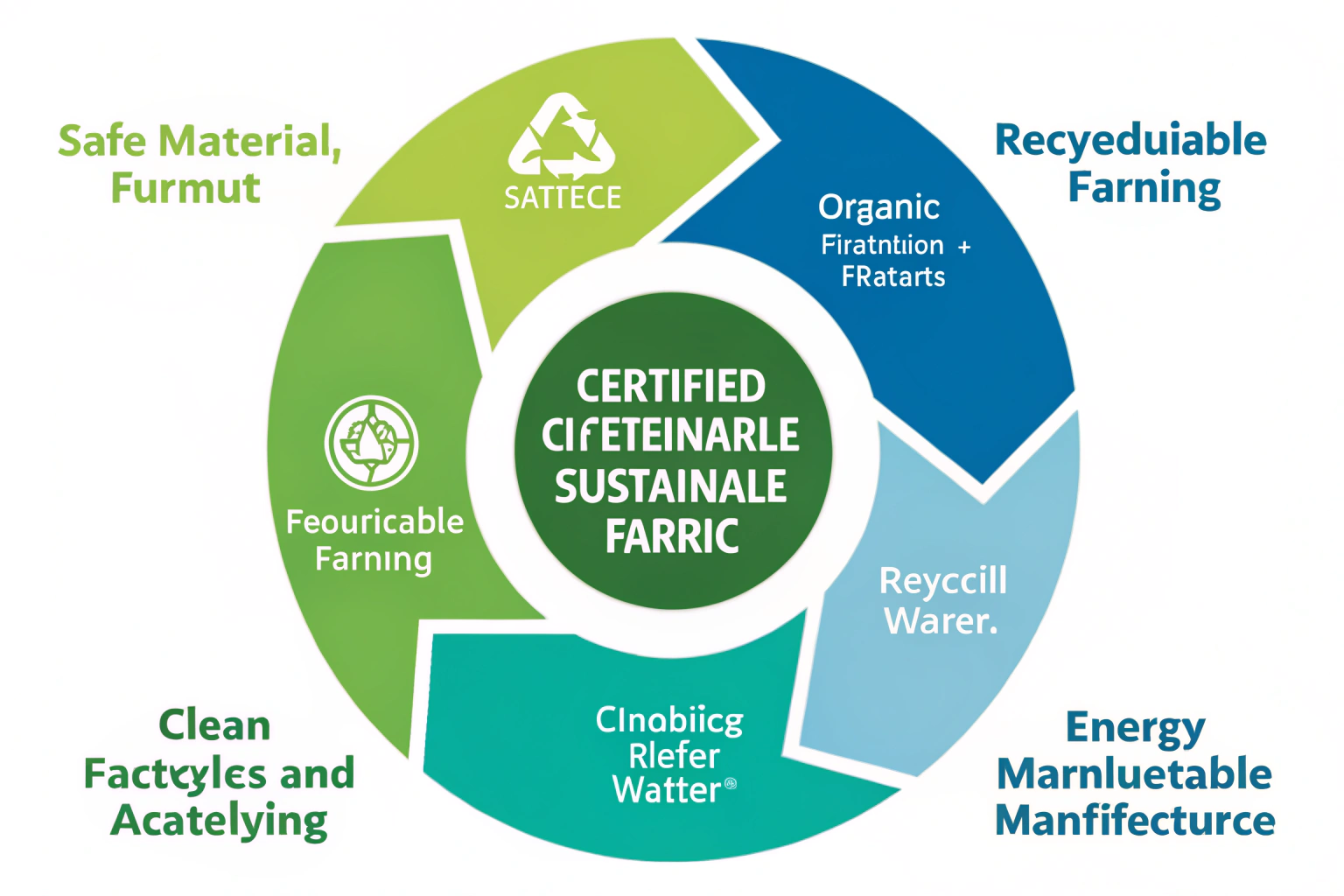
Cradle-to-Cradle Certified is the world's most advanced product standard for safe, circular materials. Unlike single-attribute certifications that only look at one thing (like organic fiber content or chemical restrictions), Cradle-to-Cradle evaluates products across five categories: Material Health, Material Reutilization, Renewable Energy & Carbon Management, Water Stewardship, and Social Fairness. Products are rated from Basic to Platinum in each category, with an overall certification level.
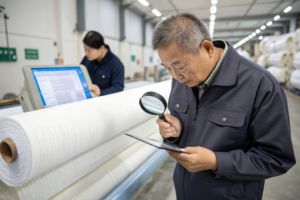
For fabric suppliers like us at Shanghai Fumao, pursuing Cradle-to-Cradle certification means opening our entire operation to scrutiny. It means tracing every fiber back to its source. It means proving our dye house isn't just treating wastewater, but actually returning it to the environment cleaner than when we took it out. It means documenting worker wages and safety protocols. It's a lot. But for brands targeting the EU market—especially Scandinavia, Germany, and the Netherlands—Cradle-to-Cradle is becoming a non-negotiable requirement. And for forward-thinking US brands, it's a powerful differentiator.
What Does Cradle-to-Cradle Certification Actually Mean for Fabric?
The biggest misunderstanding I encounter is that Cradle-to-Cradle is just another "green" certificate you slap on a hangtag. It's not. It's a design framework and a continuous improvement roadmap. When you work with a certified fabric, you're not just buying material—you're buying into a philosophy about how products should be made and what should happen to them at the end of their life.
How is Cradle-to-Cradle different from GOTS or Oeko-Tex?
Let me break this down using real examples from our production floor. Oeko-Tex Standard 100 tests the finished fabric for harmful substances. It's a safety check—important, but limited. If your fabric passes, you know it won't release dangerous chemicals when someone wears it. You don't know anything about how it was made or what happens when it's thrown away.
GOTS goes further. It requires organic fiber content AND restricts inputs AND sets social criteria. But GOTS is primarily focused on natural fibers and the organic supply chain. It's excellent for cotton, wool, and linen, but less relevant for synthetics or blends.
Cradle-to-Cradle looks at everything. For our recycled polyester fabric that achieved Silver certification in 2022, we had to document:
Material Health: Every chemical used in production—from spin finishes to dyes to finishing agents—had to be assessed for human and environmental toxicity. We worked with a toxicologist to review 47 different input chemicals, reformulating our dye recipe three times to eliminate problematic substances.
Material Reutilization: We had to prove the fabric could be safely recycled at end-of-life. For our polyester, this meant ensuring no contaminants that would poison the recycling stream. We worked with a recycling partner to actually test the fabric in their depolymerization process.
Renewable Energy: We had to measure our electricity use and document progress toward renewable sources. Our weaving factory now runs on 40% solar power, which we had to verify with utility bills and certificates.
Water Stewardship: Beyond just testing effluent, we had to map our entire water catchment and prove we're returning water to the local watershed at equivalent or better quality than when we took it out.
Social Fairness: We underwent a third-party social audit covering wages, working hours, health and safety, and freedom of association.
The difference is scope. Oeko-Tex asks "Is this fabric safe?" GOTS asks "Was this organic cotton made responsibly?" Cradle-to-Cradle asks "Is this product part of a truly sustainable system?" It's a higher bar, but it's also more meaningful.
Can a fabric be Cradle-to-Cradle certified if it contains synthetics?
Yes, absolutely, and this is where Cradle-to-Cradle gets really interesting. Many sustainability certifications struggle with synthetics because they focus on biodegradability. Cradle-to-Cradle recognizes two different nutrient cycles: biological and technical.
Biological nutrients are materials that can safely biodegrade and return to the earth. Think organic cotton, wool, linen. These fabrics, when properly designed, can be composted at end-of-life.
Technical nutrients are materials designed to circulate in closed-loop industrial systems. Think polyester that can be depolymerized and re-spun into new polyester, or nylon that can be chemically recycled indefinitely. These fabrics should never go to landfill—they should be captured and remanufactured.
For a Swedish activewear brand in 2023, we developed a Cradle-to-Cradle Silver fabric using 100% recycled polyester from post-consumer bottles. The material health assessment required us to verify that no contaminants from the bottle recycling process remained in the fiber. The material reutilization assessment required us to prove the fabric could be recycled again—that the dyes and finishes wouldn't contaminate future recycling loops. We worked with a chemical recycler to test a small batch, achieving 98% recovery yield. The brand launched their collection as "Circular Activewear" and positioned it as fully recyclable through their take-back program.
The key insight: synthetics aren't automatically bad in a Cradle-to-Cradle framework. The question is whether they're designed for circularity. A polyester fabric designed to be infinitely recycled is actually more aligned with Cradle-to-Cradle principles than a "natural" fabric blended with non-recyclable components.
How Do I Start the Cradle-to-Cradle Process with a Fabric Supplier?
Starting feels overwhelming. I remember staring at the Cradle-to-Cradle requirements document—87 pages—and wondering where to even begin. The certification body requires product assessments, supply chain mapping, chemical inventories, and facility audits. But the process becomes manageable when you break it down into phases and work with a supplier who's done it before.
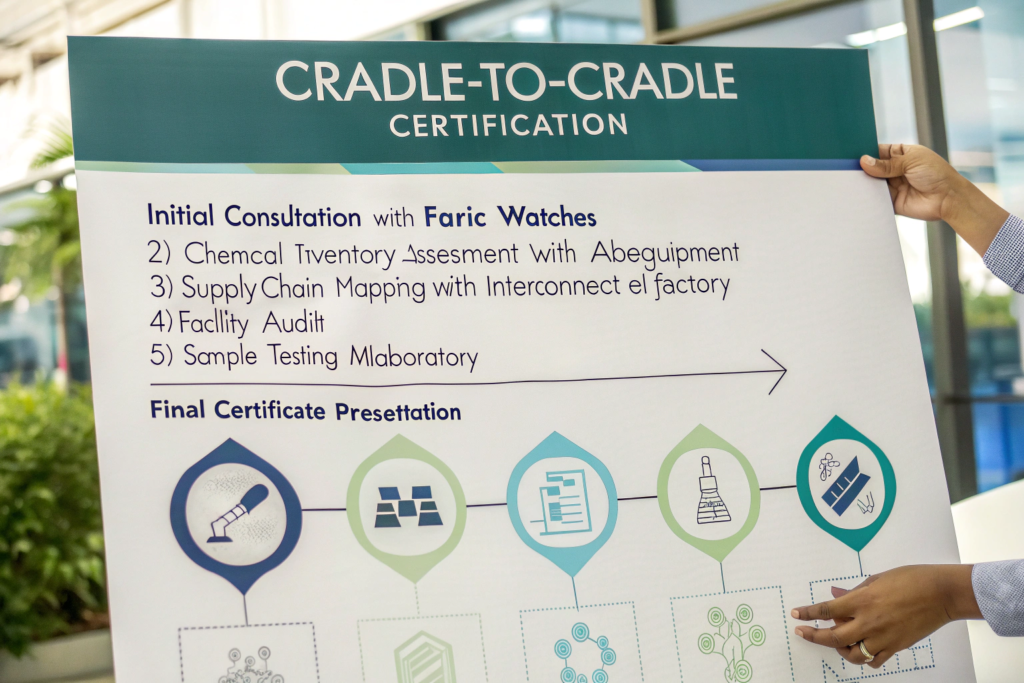
What information should I gather before approaching a supplier?
Preparation saves months of back-and-forth. Before you even email a supplier, you need clarity on your goals and your product.
First, decide your target certification level. Cradle-to-Cradle offers Basic, Bronze, Silver, Gold, and Platinum. Basic requires 100% of materials assessed and no banned chemicals. Bronze adds requirements for material reutilization and progress in other categories. Silver requires optimized material health (all inputs assessed and optimized), defined recycling pathways, and significant progress in energy, water, and social categories. Gold and Platinum are extremely demanding and rare in textiles.
For most brands starting out, Silver is a realistic and respected target. It signals genuine commitment without requiring the near-impossible perfection of Gold.
Second, define your product clearly. What fiber composition? What weight? What color? What finishes? The more specific you are, the more accurately a supplier can quote and plan. "Organic cotton jersey" isn't specific enough. "180gsm 100% GOTS organic cotton jersey in five seasonal colors with no optical brighteners and softener finish" gives us something to work with.
Third, gather your existing sustainability documentation. If you already have GOTS certificates for your cotton, Oeko-Tex for your dyes, or Bluesign for your mill, these provide a head start. Cradle-to-Cradle recognizes other certifications as evidence, though additional documentation is usually required.
Fourth, be realistic about timing. Our first Cradle-to-Cradle certification took 14 months from initial discussion to certificate in hand. We've gotten faster—our most recent took 8 months—but this isn't a quick process. Plan accordingly.
When a Danish家居品牌 approached us in early 2023 about Cradle-to-Cradle certified linen for bedding, they came with all this preparation done. They knew they wanted Silver. They had their fiber composition specified. They had their GOTS-certified linen source identified. They had a timeline that gave us 10 months. Because they were prepared, we moved straight to sampling rather than spending months on discovery. Their fabric certified in 9 months and launched on schedule for their spring collection.
How do I verify a supplier's Cradle-to-Cradle claims?
Unfortunately, greenwashing happens. I've seen suppliers claim "Cradle-to-Cradle inspired" or "following Cradle-to-Cradle principles" without any actual certification. The only claims you should trust are backed by the official Cradle-to-Cradle Products Innovation Institute certification.
Here's how to verify:
Request the certificate. Every certified product receives a formal certificate with the product name, certification level, validity dates, and unique ID number. It should match the specific fabric you're ordering, not just "similar" fabrics.
Check the public database. The Cradle-to-Cradle Institute maintains a public directory of all certified products. Search for the supplier name and product description. If it's not listed, it's not certified.
Ask about scope. Some suppliers certify their facility or their process, not the specific fabric. "Our mill is Cradle-to-Cradle certified" is different from "this fabric is Cradle-to-Cradle certified." Mill certification means the facility meets certain standards, but individual products still need their own assessment.
Verify the level. Bronze, Silver, Gold—each requires different achievements. A Bronze fabric has done the minimum. A Silver fabric has genuinely optimized material health and circularity. Know what you're paying for.
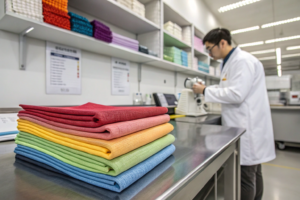
Request supporting documentation. For our certified fabrics, we provide clients with our Material Health Certificate (listing all assessed chemicals), our Material Reutilization score, and our facility audit summaries. If a supplier hesitates to share this level of detail, that's a red flag.
A US activewear brand learned this lesson in 2022. They found a "Cradle-to-Cradle certified" recycled nylon supplier at a trade show, ordered 10,000 yards based on the claim, and discovered during their own marketing review that the certification had expired two years earlier. The supplier hadn't renewed. The fabric was technically identical, but they couldn't make the claim legally. They had to relabel everything as "made with recycled materials" instead of the premium positioning they'd planned. Verification prevents these expensive surprises.
What Are the Costs and Timelines for Cradle-to-Cradle Fabric Development?
Money talks, and Cradle-to-Cradle certification costs real money. Between assessment fees, consultant support, lab testing, and production adjustments, developing a certified fabric requires investment. But the brands doing it successfully treat this as product development cost, not overhead. They build it into their pricing and use certification to justify premium positioning.
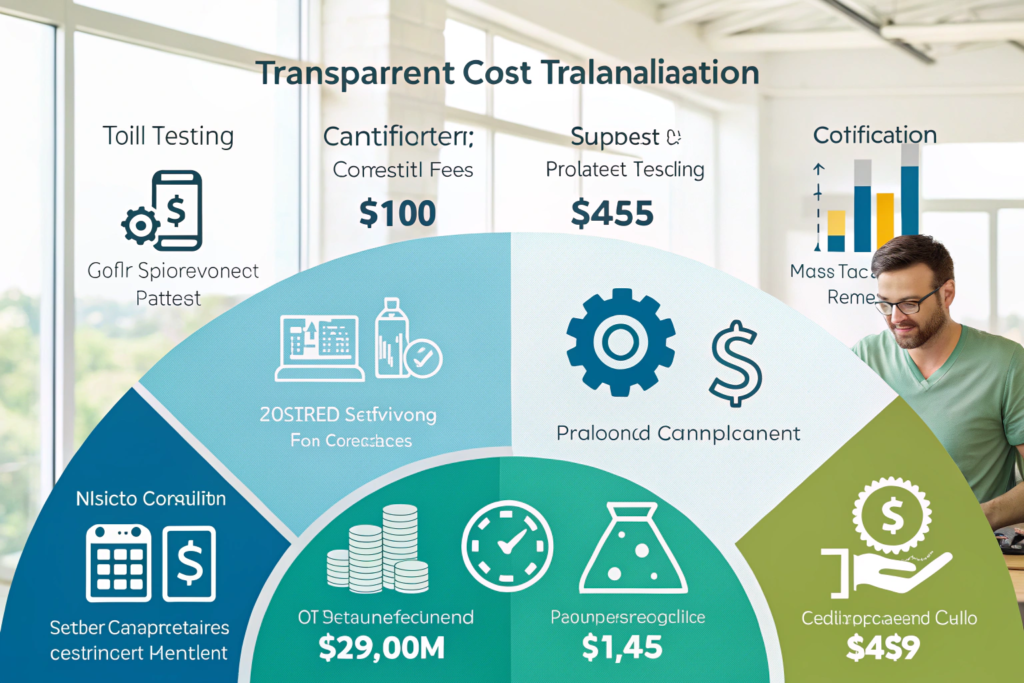
What's the realistic budget for developing a certified fabric?
Let me share actual numbers from recent projects. These are real costs, though they vary based on fabric complexity and starting point.
Certification fees paid to the Cradle-to-Cradle Institute range from $3,000 to $10,000 depending on company size and certification level. This covers the formal assessment and certificate issuance.
Consultant support: Most first-time suppliers work with accredited consultants who guide the process. We paid $15,000 for consultant support on our first certification—money well spent to avoid mistakes. Subsequent certifications cost less as our internal expertise grew.
Lab testing: Material Health assessment requires chemical analysis of every input. We spent about $8,000 on testing for a single fabric, identifying and eliminating two problematic chemicals that required reformulating our dye recipe.
Production adjustments: Sometimes achieving certification requires process changes. For our recycled polyester, we had to install additional filtration in our dye house to ensure no cross-contamination with non-certified production. That capital investment was $25,000, spread across multiple certified products.
Sampling: Plan for multiple sample rounds. Our first attempt at a certified wool blend failed Material Health because of a spinning lubricant. We had to source different yarn and re-sample. That added $3,000 and six weeks.
Total investment for a first certified fabric: $40,000-60,000 spread across 8-14 months. Subsequent fabrics using the same supply chain and similar chemistry cost significantly less—maybe $10,000-15,000 each.
A Japanese luxury brand approached us in 2023 wanting a certified silk fabric. Silk is notoriously difficult because of the weight of sericin removal and traditional dyeing methods. We quoted $55,000 for development with a 12-month timeline. They hesitated, then came back three months later after another supplier quoted $35,000 and delivered nothing usable. We're now six months into development, on track, and they've already pre-sold the collection to three European retailers based on the certification story. The investment is paying off.
How long does certification take for different fabric types?
Timelines vary dramatically based on fabric complexity and starting data.
Simple fabrics (100% organic cotton, no finishes, simple dyes): 6-8 months. The supply chain is straightforward, material health assessment is manageable, and recycling pathways are well-established.
Moderate complexity (cotton-polyester blends, basic finishes): 8-12 months. Blends require more material health work because each component must be assessed. Finishes add complexity because they're often proprietary.
High complexity (elaborate blends, multiple finishes, technical performance requirements): 12-18 months. Our most complex certification involved a wool-nylon-elastane blend with water-repellent finish. Each component required separate assessment. The water repellent had to be reformulated twice to eliminate problematic PFAS chemicals. The elastane supplier had to provide full disclosure of their chemistry—which took four months of negotiation.
Recycled content adds time but is ultimately worth it. Recycled materials require documentation of the recycling process and verification that no contaminants were introduced during recycling. For our recycled nylon project, we spent three months just validating the source material's chain of custody.
The fastest certification we've managed was 5 months—a 100% organic cotton fabric using previously certified yarn and dyes, with no finishes, going for Bronze level. The client had done their homework, the supply chain was already documented, and we were simply updating an existing certification with new colorways.
The slowest was 22 months—a complex wool blend where the yarn supplier changed their spin finish halfway through development, requiring us to restart the material health assessment. Flexibility and patience are essential.
How Do I Market Cradle-to-Cradle Certified Fabrics to My Customers?
Certification only creates value if your customers understand and care about it. I've seen brands invest heavily in certification then fail to communicate it effectively. The story matters as much as the achievement. Cradle-to-Cradle gives you a rich, multi-dimensional story—use it.
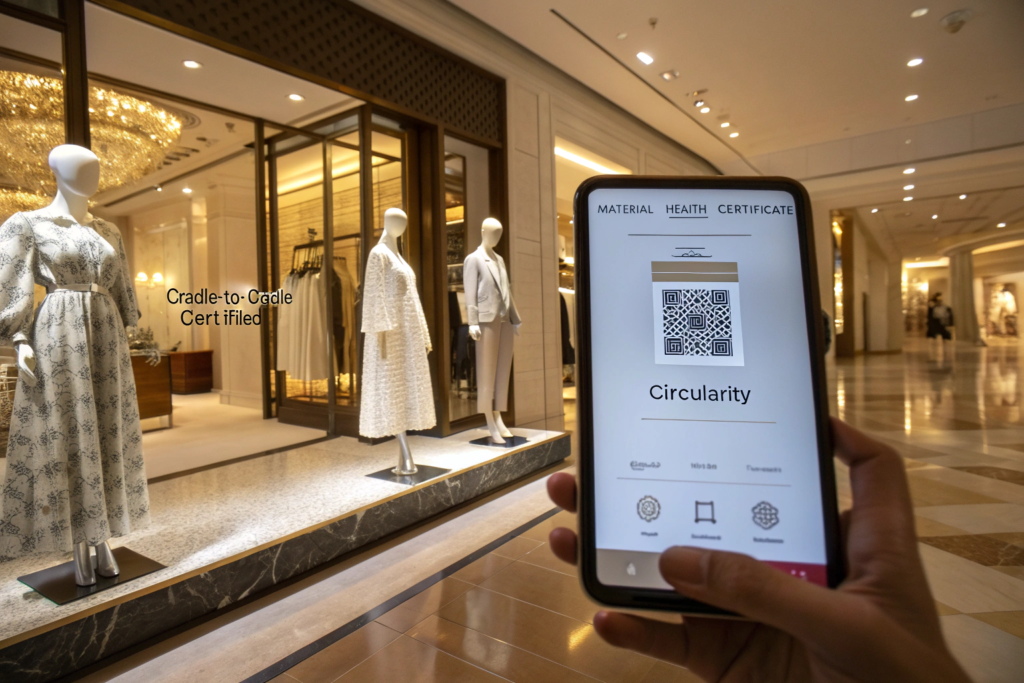
What claims can I legally make about certified fabrics?
The Cradle-to-Cradle Institute has specific guidelines for marketing claims. Follow them precisely—they're enforced.
If your fabric is Certified Bronze, you can say "Cradle-to-Cradle Certified Bronze" and describe what Bronze means: all materials assessed, no banned chemicals, progress toward circularity.
If your fabric is Certified Silver, you can say "Cradle-to-Cradle Certified Silver" and highlight material health optimization and defined recycling pathways.
What you cannot say: "100% circular" or "fully sustainable" or "zero impact." Cradle-to-Cradle is about continuous improvement, not perfection. Your marketing should reflect that.
You must include the certification level and the valid certification date. Claims without dates are misleading because certifications expire (typically after two years, requiring renewal).
You can link to your public certificate or create a custom landing page with your certification details. Many brands scan a QR code on hangtags that takes customers to their certification documentation—powerful transparency.
For a German outdoor brand using our certified recycled polyester, we helped them create a "Material Passport" for each garment. The passport showed the certification level, the material health assessment summary, and instructions for end-of-life return. Customers could scan the care label and see exactly what was in their jacket and how to recycle it. This level of transparency built significant brand loyalty.
How do I explain the value to non-expert customers?
Don't lead with the technical details. Lead with the benefit.
"Made in a factory that treats workers fairly and returns water cleaner than we found it" resonates more than "Water Stewardship category achievement level Silver."
"Designed to be recycled into new fabric at the end of its life" resonates more than "Material Reutilization optimization score 80."
"Made with ingredients screened for safety—like food for your skin" resonates more than "Material Health assessment completed with no red list chemicals."
The Cradle-to-Cradle logo itself carries weight with informed consumers. Use it prominently. But supplement it with plain-language explanations.
For a Dutch sleepwear brand, we developed hangtag copy that read: "This fabric is Cradle-to-Cradle Certified Silver. That means: every chemical was screened for safety, the factory uses renewable energy, and when you're done with these pajamas, you can return them to be recycled into new fabric." Simple, clear, meaningful.
They also included a small card showing the five Cradle-to-Cradle categories with checkmarks indicating their achievement level. Customers could see at a glance that Silver meant real achievement across all categories. The collection sold out in pre-order.
The journey to Cradle-to-Cradle certification isn't easy. It requires patience, investment, and a willingness to open your supply chain to scrutiny. But every client who's gone through it with us has come out the other side with better products, stronger supplier relationships, and more compelling stories to tell their customers.
At Shanghai Fumao, we've now certified eight different fabric families across cotton, polyester, nylon, and blends. We've learned what works and what doesn't. We've built relationships with consultants, labs, and recycling partners who make the process smoother. And we've developed internal systems that let us certify new fabrics faster and more affordably than our first attempts.
The brands winning in today's market aren't the ones with perfect sustainability credentials—there's no such thing. They're the ones being honest about their journey, transparent about their progress, and genuine about their commitment. Cradle-to-Cradle gives you a framework for that honesty.
Conclusion
Working with a supplier on Cradle-to-Cradle certified fabrics requires commitment, patience, and investment. You need to understand the five categories: Material Health, Material Reutilization, Renewable Energy, Water Stewardship, and Social Fairness. You need to prepare thoroughly before approaching suppliers, gathering specifications and setting realistic timeline expectations. You need to verify claims through official certificates and public databases. You need to budget realistically—$40,000-60,000 for a first certified fabric—and plan for 8-14 months of development. And you need to market your certification effectively, translating technical achievements into customer benefits.
But the rewards justify the effort. Certified fabrics differentiate your products in crowded markets. They prepare your business for increasingly strict European regulations. They build trust with conscious consumers. And they connect you with suppliers who are genuinely committed to improvement, not just cheap production.
If you're ready to explore Cradle-to-Cradle certification for your next collection, I invite you to reach out to us at Shanghai Fumao. We've guided brands from first conversations through final certification, and we can help you navigate the process efficiently. Contact our Business Director, Elaine, directly at elaine@fumaoclothing.com. Tell her about your product vision, your target markets, and your sustainability goals. She'll connect you with our certified products team, and we'll help you determine whether Cradle-to-Cradle makes sense for your brand and how to pursue it effectively.
Because the future of textiles isn't just about what we make—it's about how we make it, and what happens after. Let's build that future together.