I've been in this industry for over 20 years, and I've seen more quality disasters than I can count. A shipment arrives. The fabric looks fine at first glance. Then you start cutting. The shrinkage is wrong. The color is off. The fabric stretches inconsistently. By the time you realize the problem, your production line is stopped, your deadlines are slipping, and your customer is waiting.
Here's what I've learned from two decades of producing knitted fabrics in Keqiao. Verifying quality isn't about trusting a supplier's word. It's about having a system—from sample testing to production inspection to pre-shipment verification—that catches issues before they become your problems. A good supplier welcomes this process. A bad supplier avoids it.
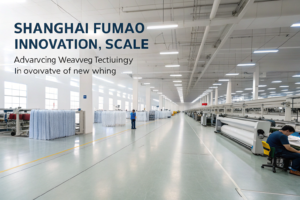
At Shanghai Fumao, we provide QR code tracking and full test data on every batch. We know what quality verification looks like from the supplier side. This guide walks you through exactly how to verify the quality of knitted fabric from Chinese suppliers, whether you're working with us or any other manufacturer.
What Should You Test Before You Place an Order?
Before you commit to a production order, you need to verify that the supplier can deliver what they promise. The sampling phase is your best opportunity to catch problems early.
How Do You Evaluate a Knitted Fabric Sample?
A sample tells you a lot if you know what to look for. Don't just look at the color and feel the hand. Dig deeper.
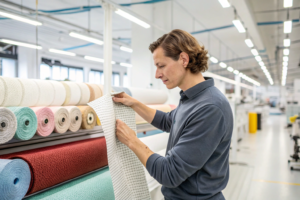
Start with the basics. Check the weight against your specification. A sample that's lighter or heavier than specified will change how your garment fits and performs. Use a GSM cutter and scale if you have one. If not, ask the supplier to provide the weight data. A good supplier will have this information readily available.
Check the shrinkage. Wash the sample according to the care instructions you'll use for production. Measure before and after. For knitted fabrics, shrinkage should typically be under 5% in both length and width. Some knits can shrink more. What matters is that it's consistent and that you know what it will be.
Check the colorfastness. Wash the sample with a white cloth. Does the dye bleed? Rub the fabric with a white cloth when dry. Does the color transfer? Poor colorfastness will ruin other garments in the wash and frustrate your customers.
Check the stretch and recovery. Stretch the fabric in both directions. Does it return to its original shape? For garments that need to hold their fit, recovery matters as much as stretch.
A US client sent us a sample from their previous supplier. The fabric looked fine. We tested it in our lab. The shrinkage was 8% in length and 6% in width. Their pattern was designed for 3% shrinkage. That meant every garment would be two sizes smaller after the first wash. They had no idea because they had never tested. We produced a new sample with controlled shrinkage. They switched their entire line to us.
What Lab Tests Should You Request Before Production?
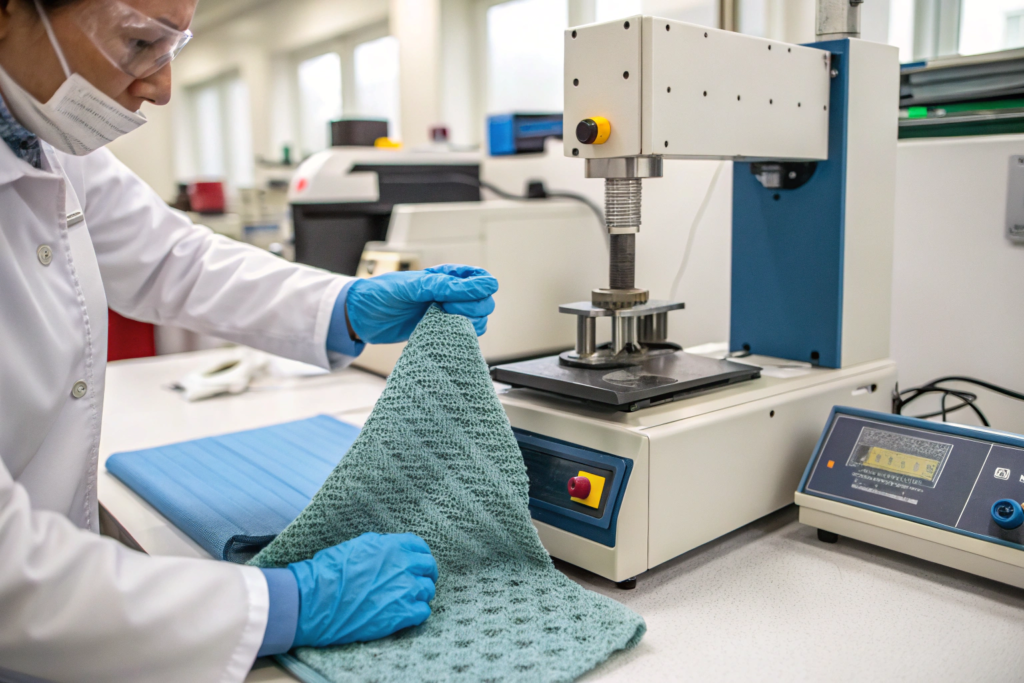
Beyond basic hand evaluation, you need lab data. A good supplier can provide test results from their own lab or from a third party.
Ask for composition verification. The fabric should be exactly what the supplier claims. 95% cotton, 5% spandex should be 95% cotton, 5% spandex. Not 90% cotton, 5% spandex, and 5% something else. Composition affects performance, care requirements, and durability.
Ask for shrinkage data. The supplier should be able to tell you the expected shrinkage after the first wash and after multiple washes. This data should come from actual testing, not guessing.
Ask for colorfastness ratings. The supplier should test for wash fastness, light fastness, and rub fastness. The ratings should meet your requirements for the intended use of the garment.
Ask for strength data. Tensile strength and tear strength tell you how durable the fabric will be. For activewear or children's wear, these numbers matter.
A European client requires a full test report from our lab before they approve any fabric for production. They want to see shrinkage, colorfastness, composition, and strength data. We provide it from our CNAS-accredited lab. They've caught issues with other suppliers who couldn't provide the data. With us, they know what they're getting before we start production.
How Do You Match the Sample to Production?
The sample is one thing. Production is another. You need to ensure that what you approved in the sample is what you receive in bulk.
Ask for a production strike-off. Before the full order runs, the supplier should produce a small batch from the actual production line. This uses the same yarn, the same dye lot, the same finishing process. Approve this before the full order runs.
Keep a sealed sample. When you approve a sample, keep it sealed in a bag. When production arrives, compare it to that sealed sample. Color can drift. Hand feel can change. A sealed sample gives you a reference.
Ask for in-process photos. A supplier who sends photos during production gives you confidence that things are on track. We send clients photos of their fabric on the knitting machines, in the dye bath, and at inspection.
A UK client had a disaster with a previous supplier. The sample was perfect. The production shipment was completely different color and weight. The supplier claimed the sample was "special." Now they require a production strike-off from us for every new fabric. It takes an extra week, but they've never had a mismatch since.
What Should You Verify During Production?
Once production starts, you need visibility into what's happening. A supplier who keeps you in the dark during production is a supplier who has something to hide.
How Do You Monitor In-Process Quality?
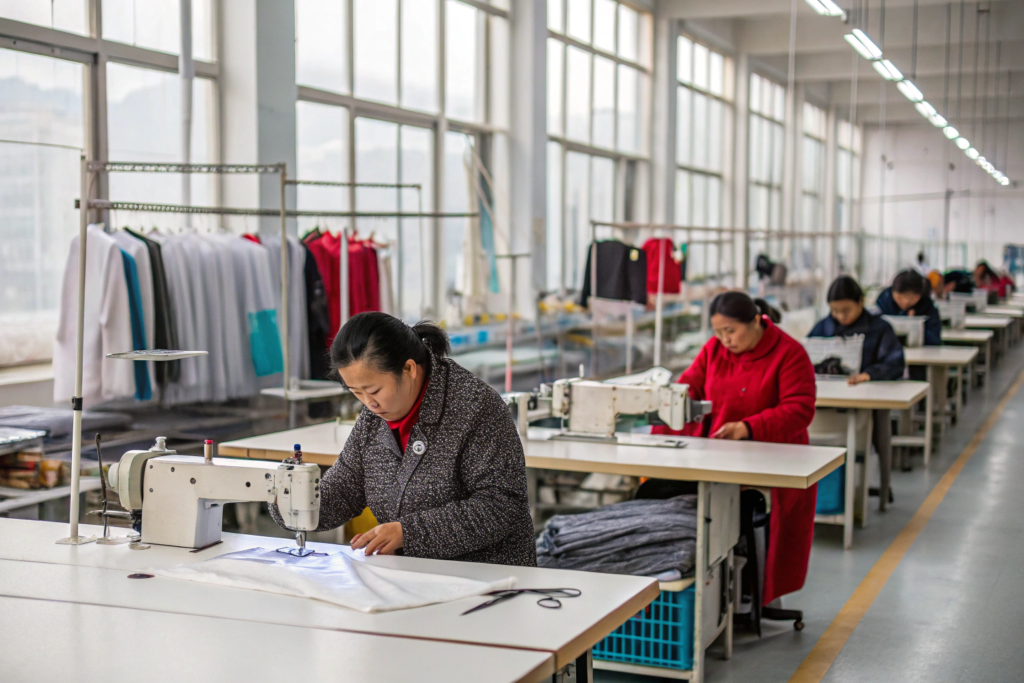
In-process inspection catches problems before they become thousands of meters of defective fabric.
Ask about the supplier's in-process checks. A good supplier checks fabric as it comes off the knitting machines. They look for holes, dropped stitches, inconsistent tension, and other defects that can be caught early.
Ask about dye lot consistency. For large orders, the fabric may be dyed in multiple lots. Each lot should be tested for color match against the standard. Ask to see the dye lot test results.
Ask about finishing consistency. The finishing process affects shrinkage, hand feel, and appearance. Ask how the supplier controls finishing parameters like temperature, speed, and chemical concentrations.
We have in-process checkpoints at every stage. Our QC team checks greige fabric before it goes to dyeing. They check after dyeing. They check after finishing. They catch issues before they compound.
A Canadian client had a supplier who didn't do in-process checks. The supplier ran the entire order before inspecting. When they finally looked, they found a tension issue that affected 30% of the fabric. The client had to wait for a re-run. Now they ask all potential suppliers about their in-process inspection system before placing orders.
What Should You Ask for in Production Updates?
Regular updates keep you informed and let you spot potential problems early.
Ask for production photos at key milestones. The fabric on the knitting machines. The fabric in the dyeing process. The finished rolls on the inspection table. Photos don't lie.
Ask for shipment of a pre-production sample. Before the full order is packed and shipped, the supplier should send you a sample from the actual production run. Approve this before the rest of the order ships.
Ask for a pre-shipment inspection report. A good supplier inspects every roll before it ships. They should provide a report showing the inspection results.
A US client requires weekly photo updates from every supplier. They want to see their fabric at each stage. When a supplier can't provide photos, they get nervous. With us, they get photos every week without asking. We send them because we want them to see what's happening.
How Do You Handle Quality Issues That Arise During Production?
Even with the best systems, issues can arise. How a supplier handles them tells you everything about their reliability.
If an issue is caught early, the supplier should stop production and fix the root cause. They should inform you immediately, not after they've already run thousands of meters.
The supplier should propose a corrective action plan. What caused the issue? How will it be fixed? What will be done to prevent recurrence?
The supplier should offer a fair resolution. If defective fabric is produced, they should take responsibility. That might mean re-running the affected quantity, discounting the order, or absorbing the cost of the defect.
We had a run of fabric where a tension issue caused uneven dye uptake. We caught it after the first 500 meters. We stopped production. We called the client. We explained the issue. We re-ran the affected quantity. The client received their full order on time, with no defective fabric. They appreciated the transparency and the speed of resolution. That client is still with us.
What Should You Inspect Before Shipment?
The pre-shipment inspection is your last chance to catch issues before fabric leaves the supplier's facility. Once it's on a container ship, fixing problems becomes much harder.
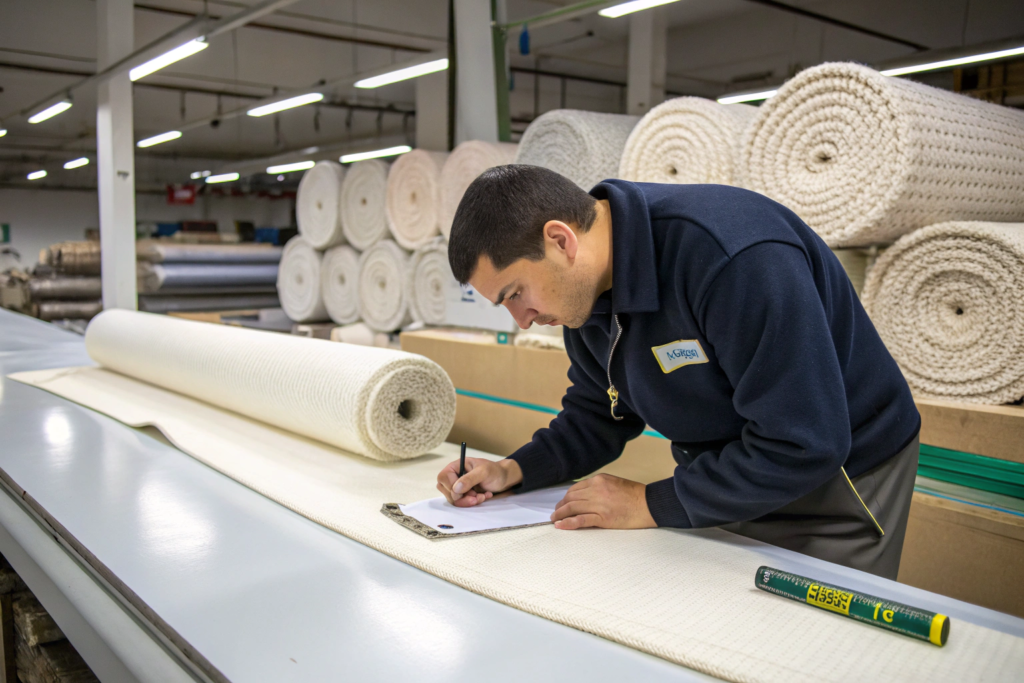
How Does the Four-Point System Work for Knits?
The four-point system is the industry standard for fabric inspection. It assigns points to defects based on size and severity. A roll passes or fails based on the total points per 100 square yards.
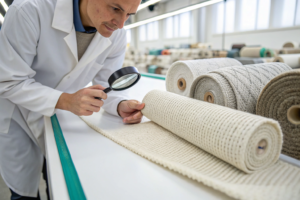
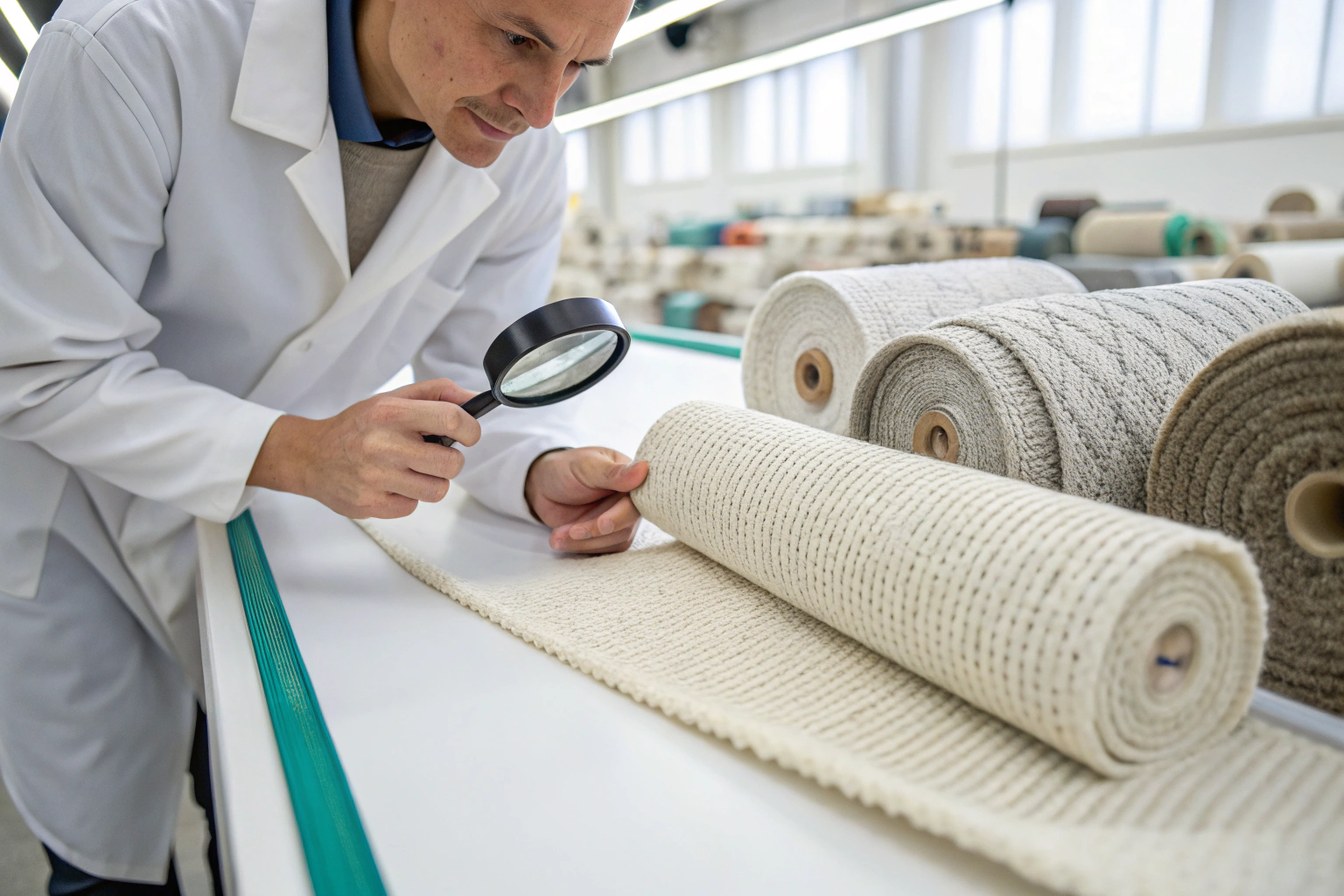
Defects in knits differ from defects in wovens. In knits, look for holes, dropped stitches, press-offs, and uneven tension. Look for color variation within the roll and between rolls. Look for skewing or twisting.
The acceptable point level depends on your quality standards. A basic t-shirt might accept 20 points per 100 square yards. A premium garment might require 10 points or less. Discuss your standard with the supplier before production.
We inspect every roll of knitted fabric using the four-point system. Our inspectors are trained to identify the defects that matter in garment production. They know that a small hole near the edge might be acceptable if it can be cut around, but a hole in the center of the roll is a reject.
A European client rejected a shipment from another supplier because the inspection report showed 30 points per 100 square yards. The supplier had never shared an inspection report before. The client had no idea the quality was so poor. Now they require a four-point inspection report from every supplier before shipment.
What Defects Are Common in Knitted Fabrics?
Knowing what to look for helps you ask the right questions.
Holes are the most obvious defect. They can come from broken needles, yarn issues, or machine problems. A hole in the middle of a roll is almost always a reject.
Dropped stitches create runs in the fabric. These can open up during garment cutting and sewing. Small dropped stitches near the edge might be acceptable. Larger ones are not.
Barre is a visual defect where stripes or bands appear across the fabric. It's caused by uneven yarn tension or inconsistent dye uptake. Barre can ruin the appearance of solid-colored garments.
Skewing or twisting happens when the fabric is not square. This causes garments to twist on the body. Skewing is measured as a percentage. Acceptable levels vary by application.
We keep a library of defect photos and descriptions. When a client asks about quality, we can show them exactly what we're looking for and what we accept.
How Do You Use Third-Party Inspection Services?
For large orders or new suppliers, third-party inspection adds an extra layer of verification.
Companies like SGS and Bureau Veritas offer inspection services in China. They'll send an inspector to the supplier's facility to inspect the fabric before shipment. The inspector works for you, not the supplier.
Third-party inspection costs money, but it can be worth it for high-value orders or when you're establishing a new supplier relationship. The report gives you an independent assessment of the fabric quality.
We work with third-party inspectors regularly. When a client requests an inspection, we accommodate the inspector's schedule and provide access to the fabric. A good supplier welcomes this scrutiny.
A US client uses third-party inspection for every order from any new supplier. They've caught quality issues with two different suppliers before shipment. The cost of the inspection was tiny compared to the cost of receiving defective fabric.
What Systems Should You Put in Place for Ongoing Quality?
Quality verification isn't a one-time event. It's an ongoing process that requires systems on both sides.
How Do You Track Quality Across Orders?
If you're ordering regularly from a supplier, you need to track quality over time.
Keep a log of inspection results for each order. Note the pass rates, the types of defects, and any issues that arose. This data helps you spot trends.
Track shrinkage test results. If shrinkage is creeping up over time, something has changed in the supplier's process. Catch it early.
Track color consistency. If you're ordering the same color across multiple orders, are the shades matching? Color drift over time can be a problem.
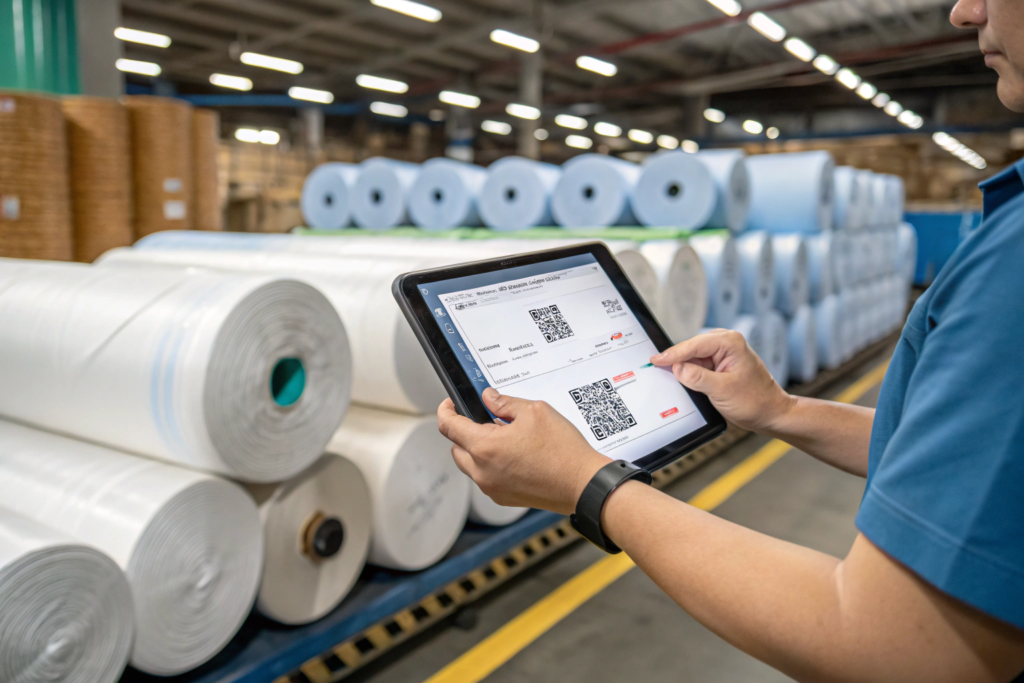
We provide QR code tracking on every batch. Scan the code and you get the test data for that specific order. You can track quality over time by scanning codes from different orders. That data is always available.
How Do You Communicate Quality Issues to Suppliers?
When quality issues arise, how you communicate matters.
Be specific. Don't say "the quality is bad." Say "the shrinkage on this order was 6% when our specification is 3%. The affected rolls are numbers 12 through 25."
Provide evidence. Send photos of the defects. Send test results. A good supplier will want to see the evidence so they can understand and fix the problem.
Set a timeline for resolution. Agree on when the issue will be investigated, when corrective action will be implemented, and when you'll see improvement.
A UK client had a shrinkage issue on an order. They sent us photos, test results, and the affected roll numbers. We traced the issue to a finishing machine that had drifted out of calibration. We fixed the machine, re-ran the affected fabric, and added a new check to our finishing process. The client appreciated the detailed response. We've had no shrinkage issues since.
How Do You Build a Quality-Focused Partnership?
The best quality systems are built on partnership, not confrontation.
Share your quality standards upfront. A supplier who knows what you expect can build those standards into their process.
Be consistent. Changing your quality requirements order to order creates confusion. Keep your standards stable.
Pay fairly. A supplier who is squeezed on price will eventually cut corners on quality. Pay a fair price and expect fair quality.
A US client has been with us for five years. Their quality standards are clear and consistent. They pay on time, every time. They don't nickel-and-dime us on price. In return, we prioritize their orders, maintain extra inventory for them, and invest in equipment that serves their needs. That's a partnership.
Conclusion
Verifying the quality of knitted fabric from Chinese suppliers requires a system that starts before the order and continues through production and shipment. Test samples thoroughly before you commit. Request lab data that verifies composition, shrinkage, colorfastness, and strength. Monitor production through photos, in-process checks, and pre-shipment samples. Inspect every roll before it ships, either with your own system or through third-party services. Track quality across orders and communicate clearly when issues arise.
A good supplier will welcome this process. They'll provide test data without hesitation. They'll send production photos and inspection reports. They'll work with third-party inspectors. They'll communicate openly about issues and resolve them fairly.
At Shanghai Fumao, we've built our reputation on quality. Our CNAS-accredited testing center provides verifiable test data on every batch. Our four-point inspection system catches defects before they ship. Our QR code tracking gives you real-time access to test results. We don't just claim to make quality fabric. We prove it.
If you're sourcing knitted fabric from China, don't leave quality to chance. Put systems in place. Ask for the data. Inspect the fabric. And work with suppliers who understand that quality is the foundation of a successful partnership.
We're ready to show you what quality looks like.
Contact our Business Director, Elaine, to discuss your quality requirements.
Email: elaine@fumaoclothing.com