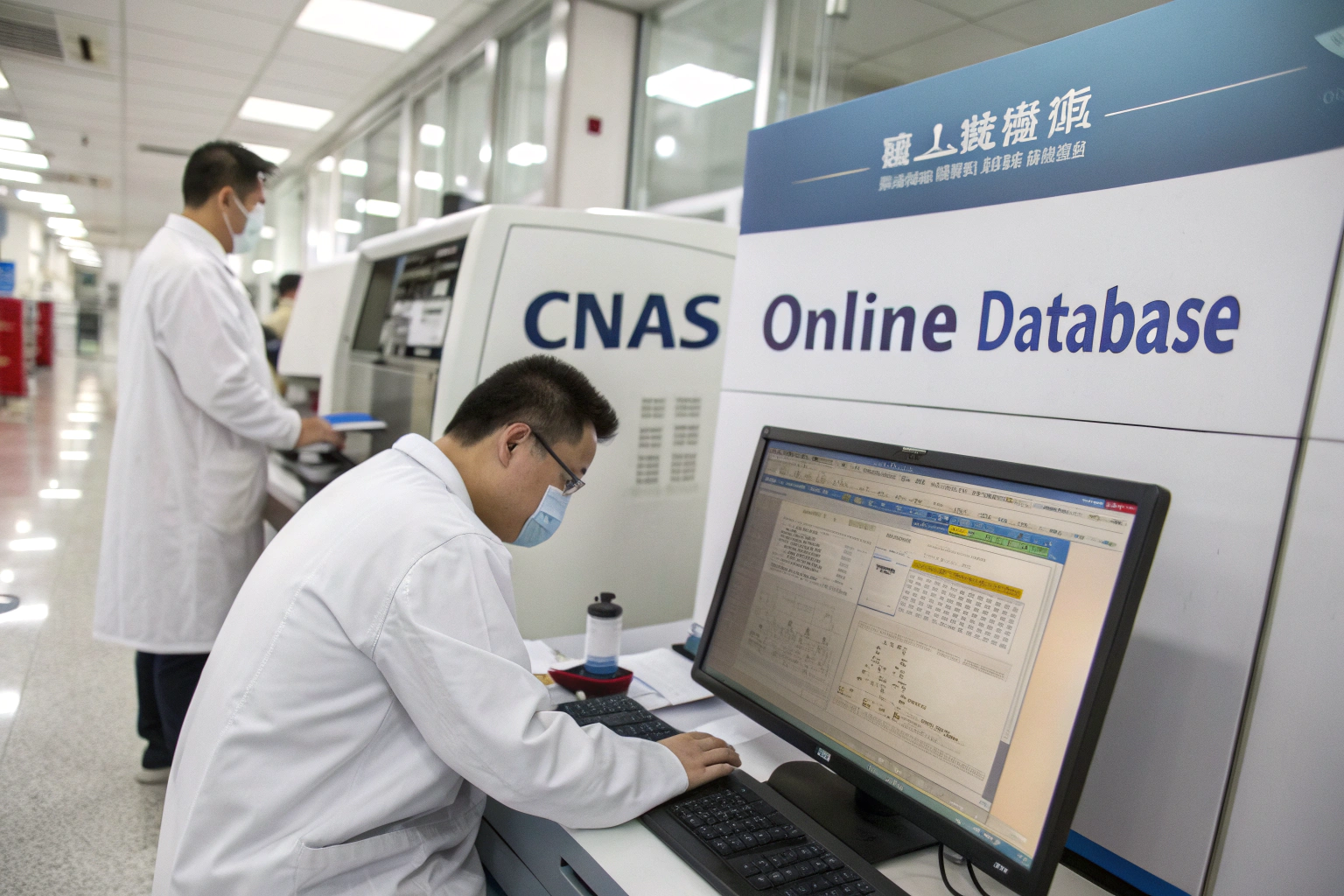
In the complex world of global textile sourcing, a supplier's claim of in-house "CNAS-certified lab" capability is a powerful signal of quality commitment. But in an industry where trust must be verified, such claims can range from a fully accredited, world-class testing facility to a glorified quality control room with a few scales. Relying on an unverified claim can lead to catastrophic outcomes—shipments rejected at port due to failed compliance tests, safety recalls, and irreversible brand damage. So, how do you, as a professional buyer, cut through the marketing noise and confirm the authenticity and scope of a CNAS accreditation?
Verifying a CNAS-certified lab requires a multi-step forensic approach that moves beyond checking a certificate. You must confirm the accreditation is current, covers the specific tests you require, and is operated with integrity by the supplier. This involves checking the official CNAS online database, scrutinizing the scope of accreditation, conducting a virtual or on-site audit of the lab's procedures, and cross-referencing internal test reports with third-party results. True verification is about validating the system, not just the paper.
Let's dismantle this process. We'll go from basic certificate checks to advanced due diligence tactics that will give you the confidence to distinguish between a true quality partner and a supplier using technical jargon as a sales tactic.
What is CNAS and why is its certification a gold standard?
First, understand what you're verifying. CNAS stands for the China National Accreditation Service for Conformity Assessment. It is the sole national accreditation body in China authorized by the government, and it is a full member of the International Laboratory Accreditation Cooperation (ILAC) and the International Accreditation Forum (IAF). This means its accreditations are internationally recognized.
A CNAS accreditation for a laboratory (often marked with the ILAC-MRA logo) signifies that the lab operates under a rigorous international standard—ISO/IEC 17025. This standard assesses the lab's technical competence, impartiality, and consistent operational quality. It covers everything from personnel training and equipment calibration to test methods and environmental controls. For you, a legitimate CNAS-accredited in-house lab means the supplier has invested significantly in building a systematic, traceable, and scientifically robust internal quality control system. It’s a strong indicator of their commitment to producing compliant, consistent products.

How does CNAS differ from common supplier "quality control" claims?
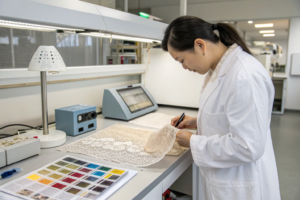
Many suppliers will say they have "strict QC" or an "internal testing lab." These are vague terms. A room with a color light box, a Martindale abrasion tester, and a few graduated cylinders does not constitute a CNAS-certified lab. The critical difference is systematic competence versus having equipment. CNAS accreditation validates the entire system: Are the technicians qualified and regularly assessed? Is each piece of equipment calibrated traceably to national standards? Are the testing methods standardized and validated? Are results reviewed independently? For example, at Shanghai Fumao, achieving CNAS accreditation for our lab was a 14-month process involving overhauling our document control, installing environmental monitors, and sending our lead technicians for official training. It’s an operational philosophy, not just a procurement decision.
What are the immediate red flags in a CNAS claim?
Be alert to these warning signs:
- Vague Language: "We work with a CNAS lab" or "Our group has a CNAS lab." This often means their specific factory or trading company does NOT have the accreditation.
- No Certificate Number Provided: A legitimate supplier will proudly share their CNAS accreditation certificate number (e.g., L1234).
- Outdated Certificate: Accreditation is valid for a cycle (often 3-4 years) and requires surveillance audits. An expired certificate is invalid.
- Scope Mismatch: The most common pitfall. The lab may be accredited for testing "cotton fiber content" but not for the critical "formaldehyde content" or "azo dyes" that you require for EU compliance. The certificate lists the exact accredited testing items.
The official CNAS website's English portal is your primary tool for starting the verification.
How to perform the official CNAS database verification?
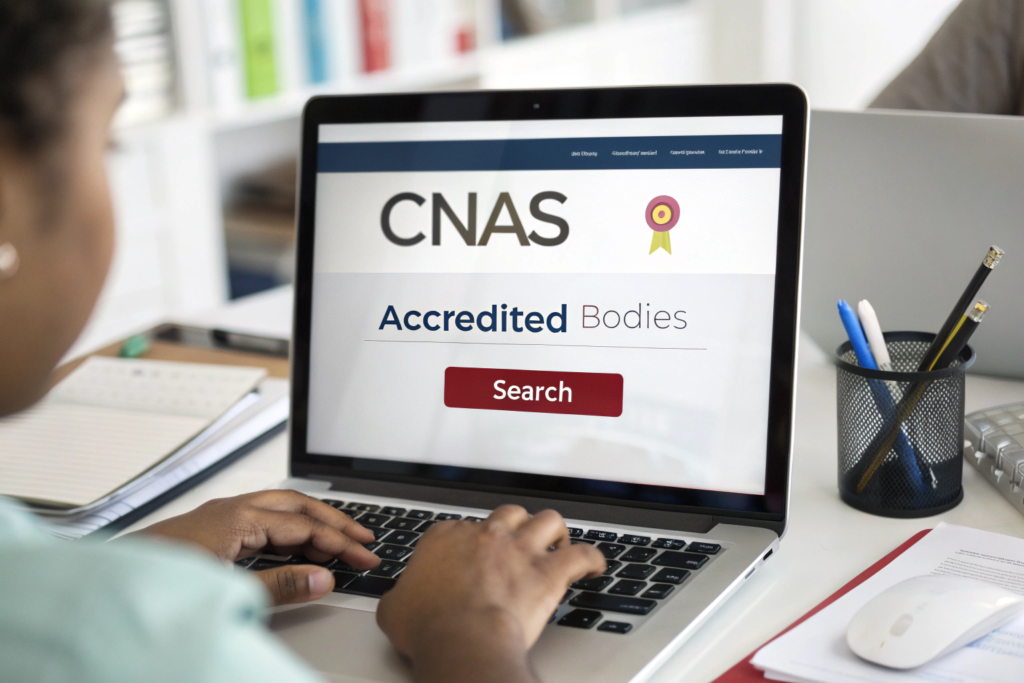
This is your non-negotiable first step. The CNAS maintains an online public directory of all accredited bodies. You must use it.
- Get the Exact Details: Ask your supplier contact for a clear copy of their current CNAS accreditation certificate. From it, note the:
- Accreditation Number: (e.g., LXXXX)
- Full Legal Name of the Accredited Entity: This must match the company you are contracting with. If the certificate is under "XXX Group Co., Ltd." but you are dealing with "XXX Trading Co., Ltd.," it's a red flag.
- Date of Issue and Expiry.
- Access the Database: Go to the CNAS website. Navigate to the "Accredited Bodies" or "Search" section. There is an English interface.
- Execute the Search: Input the accreditation number or the legal name. The search result will confirm the status (valid, suspended, withdrawn) and provide a link to the official Scope of Accreditation.
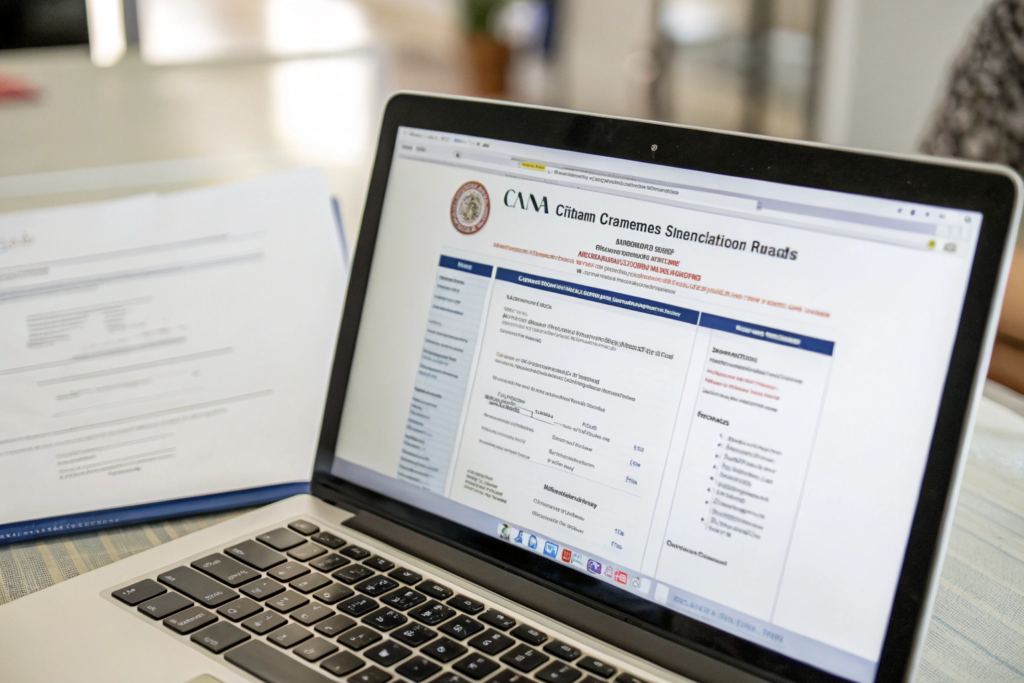
- Analyze the Scope: This PDF is the most important document. It lists every single test method (by Chinese GB standard, ISO, AATCC, etc.) the lab is authorized to perform. Use Ctrl+F to search for the specific tests you need: e.g., "GB 18401" (China's basic safety standard), "ISO 105-E04" (colorfastness to perspiration), "ASTM D5034" (fabric breaking strength).
What if the company name doesn't appear in the database?
This is a major red flag. Do not proceed with the audit until this is resolved. Politely inform your supplier that you cannot find their entity and ask them to clarify. Possible (but not always acceptable) explanations:
- The lab belongs to a parent company. Ask for a formal authorization letter from the parent company stating that the trading/subsidiary company you are dealing with has full and official access to use the lab's services and that all reports for your orders will be generated under the parent company's CNAS accreditation. Verify this parent company's accreditation separately.
- The certificate is fake. Unfortunately, this happens. If they cannot provide a plausible explanation and a valid database link, walk away.
In 2023, a potential client from Australia came to us after a bad experience. Their previous "supplier" had provided a forged CNAS certificate. The client only discovered the truth when their goods were held at Australian customs for failing mandatory safety tests that the "CNAS lab" had supposedly passed. The loss was six figures.
How to decode the "Scope of Accreditation" document?
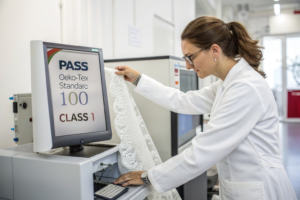
The scope can be technical. Focus on two columns: the "Test Object/Discipline" (e.g., Textiles and Textile Products) and the "Test Standard/Method & Code of Test". Ensure the Chinese GB standards listed have equivalency to the international standards you require. For instance, GB 18401 includes formaldehyde, pH, and azo dyes. If you need OEKO-TEX® STANDARD 100 testing, note that while CNAS doesn't accredit for "OEKO-TEX®" as a brand, it does accredit for the underlying test methods (e.g., ISO, GB, DIN). A competent lab with a broad scope will cover most of these. For a deeper understanding of standard equivalency, resources like comparative charts of international textile testing standards can be helpful.
What questions to ask during a virtual or on-site lab audit?
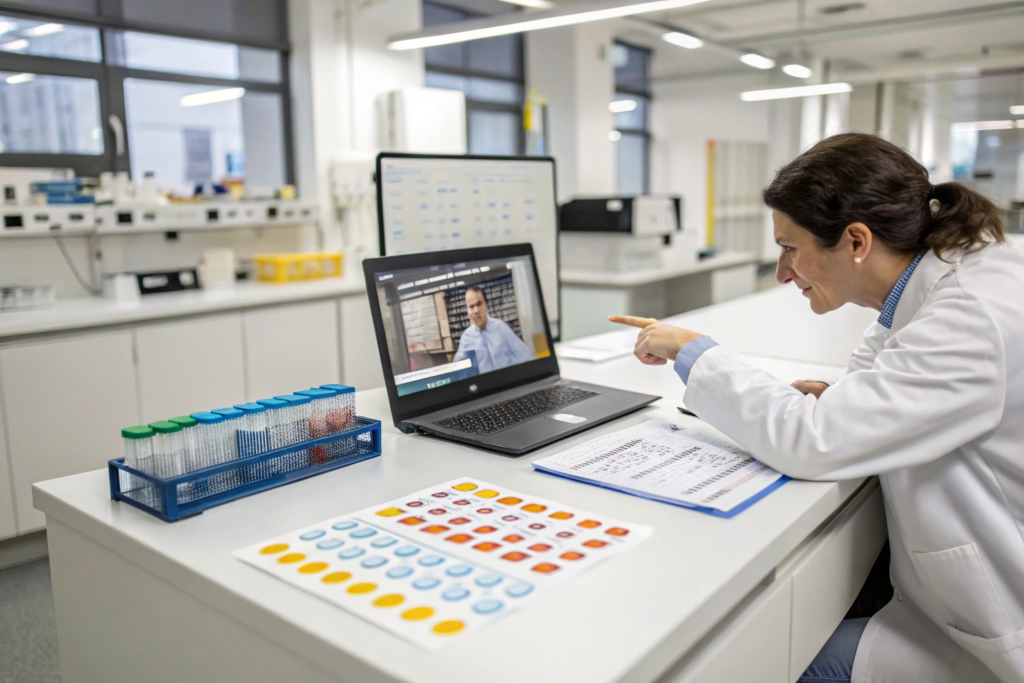
Database verification proves the certificate exists. An audit proves the lab functions as advertised. A virtual audit (via video call) is a practical minimum; an on-site visit is ideal for strategic partners.
Your goal is to assess competence and impartiality. Prepare a checklist of questions for the lab manager or lead technician, not just the salesperson.
Personnel & Training:
- "Can you show me the qualification certificates of your lead technicians and lab manager?"
- "What is your training procedure for new technicians, and how do you ensure their ongoing competence?"
- "Who has the authority to sign and release test reports? Are they independent from the production and sales departments?" (This checks for impartiality).
Equipment & Calibration:
- "Can you show me the calibration certificates for the key equipment we will use, such as the spectrophotometer (color matching) or the gas chromatograph-mass spectrometer (GC-MS for chemical analysis)? Are they calibrated by a CNAS-accredited calibration provider?"
- "What is your equipment maintenance schedule? Can I see the log for this machine?" (Point to a specific device).
Process & Samples:
- "Walk me through your sample logging and tracking process. How do you ensure the sample I send is the one tested, and how is chain of custody maintained?"
- "For a failing test result, what is your procedure? Is the production department notified immediately, and is a retest allowed? What's the policy?" (A good lab will have a strict "non-conformance" procedure that doesn't allow production to pressure for a change in results).
What physical evidence should you request to see?
During a video audit, ask them to show you, in real-time:
- The lab's environmental monitor showing real-time temperature and humidity readings (critical for physical tests).
- The unique identification tags on samples currently in testing.
- A few calibration stickers on equipment with visible expiry dates.
- The master list of controlled documents and standards (they should have the latest version of each test standard).
In our own lab audits for clients, we proactively show these. For instance, we demonstrate how each fabric sample gets a QR code upon entry, tracking it through every machine and technician until the final report is generated. This level of transparency builds immense trust.
How to assess the lab's independence from production pressure?
This is crucial. The lab must be a gatekeeper, not a rubber stamp. Ask: "To whom does the lab manager report?" If the answer is "Production Director" or "Factory General Manager," there's a potential conflict of interest. Ideally, they should report to a Quality Director or directly to top management independent of production KPIs. Ask: "Can you share an example in the last six months where the lab stopped a shipment due to a failing test? What was the non-conformance, and how was it resolved?" Their answer will tell you everything. Industry discussions on platforms like Quality Inspection.org regarding factory lab audits often emphasize this point of organizational independence.
How to conduct a practical test to validate the lab's competence?
The ultimate verification is a "blind test." This involves sending identical fabric samples to both the supplier's CNAS lab and an internationally recognized third-party lab (like SGS, ITS, or BV) and comparing the results.
- Prepare the Sample: Cut a single piece of fabric into multiple identical samples. This is critical—you are testing the lab, not fabric variation.
- Create a Blind Test: Label the samples with a neutral code. Send one set to the supplier, asking for a full test report on your required parameters (e.g., colorfastness, composition, pH, formaldehyde). Do not tell them it's a verification test; frame it as a "pre-production check for a potential new order."
- Send to a Third-Party: Simultaneously, send another identical sample to your chosen third-party lab for the same tests.
- Compare the Reports: When both reports return, compare the results. Allow for minor, acceptable deviations within the test method's margin of error (which the lab should be able to explain). Significant discrepancies, especially on pass/fail criteria (e.g., formaldehyde reading of 18 mg/kg vs. 78 mg/kg), are a major red flag indicating either incompetence or data manipulation.
What are acceptable deviations in test results?
No two tests are perfectly identical due to equipment, environmental, and human factors. Reputable standards define repeatability and reproducibility limits. For example, a colorfastness to washing rating might differ by half a grade (e.g., 4 vs. 4-5) between two competent labs. A pH reading might differ by 0.2-0.3. However, a composition result should be very close (e.g., 65% polyester, 35% cotton vs. 64%/36%). A formaldehyde result that is close to a legal limit (e.g., 73 mg/kg vs. 75 mg/kg limit) requires extreme scrutiny. If in doubt, consult with your third-party lab on the typical variance for that specific test.
What if the supplier's lab fails the blind test?
Confront the findings professionally but firmly. Share the third-party report and ask for an explanation. A responsible supplier will initiate a root-cause analysis: they may find a calibration error, a technician mistake, or a problem with their testing standard version. Their response to failure is more telling than the failure itself. Do they get defensive, or do they launch an investigation and share corrective actions with you? In 2022, we conducted such a blind test for a major German retailer. Our internal CNAS lab results matched the SGS results within the margin of error across 12 parameters. This validation exercise became a cornerstone of our approved supplier status with them and led to a 30% increase in order volume. For complex chemical tests, understanding the principles and variability of textile testing is key to interpreting results.
Conclusion
Verifying a "CNAS-certified lab" claim is a systematic process that moves from document checking to operational auditing and practical competency testing. It requires diligence, but it is a non-negotiable investment in supply chain integrity. By mastering the use of the official CNAS database, learning to audit the lab's systems and independence, and validating results through blind testing, you transform a supplier's quality claim from a marketing point into a verified, reliable pillar of your sourcing strategy.
This process does more than mitigate risk—it identifies true partners. A supplier that transparently passes this scrutiny demonstrates a fundamental commitment to quality that will pay dividends in product consistency, compliance safety, and long-term business resilience.
Don't let a glossy certificate be the end of your due diligence. Turn it into the beginning of a deeper partnership. At Shanghai Fumao, our CNAS-accredited lab is an open book. We encourage our clients to verify our accreditation (CNAS L13516), schedule virtual lab tours, and even propose blind tests. We believe this transparency is the foundation of trust. If you are looking for a fabric supplier whose quality claims are backed by verifiable, systematic competence, let's connect. Contact our Business Director Elaine to arrange a technical discussion and a virtual tour of our facilities: elaine@fumaoclothing.com.