I was sitting in my office in Keqiao three years ago when a client from Chicago called me. He had found a supplier on Alibaba. The price was good. The samples looked fine. But something felt off. He asked me if I knew the company. I searched my memory. Nothing came up. He asked if I could check on the ground. I drove to the address they had listed. It was a residential building. No factory. No office. Just a mailbox.
He dodged a bullet. But not every buyer has someone in China who can drive across town to check an address. That’s when I started recommending LinkedIn to my clients. It sounds simple. But LinkedIn has become one of the most powerful tools for verifying supplier reputation. I’ve been on LinkedIn for over a decade. I’ve seen how legitimate suppliers use it to build credibility—and how fake suppliers avoid it.
I’m going to walk you through exactly how to use LinkedIn to verify a fabric supplier’s reputation. This is the process I’ve taught to dozens of buyers over the past few years. It’s not foolproof, but it will catch 90% of the red flags.
What Should a Legitimate Supplier’s LinkedIn Profile Look Like?
When I talk to buyers about LinkedIn, I tell them to look at three things. A legitimate supplier will have a complete company page. They’ll have real employees with real profiles. And they’ll have a history of activity. Let me break down each one.
How Do You Verify the Company Page?
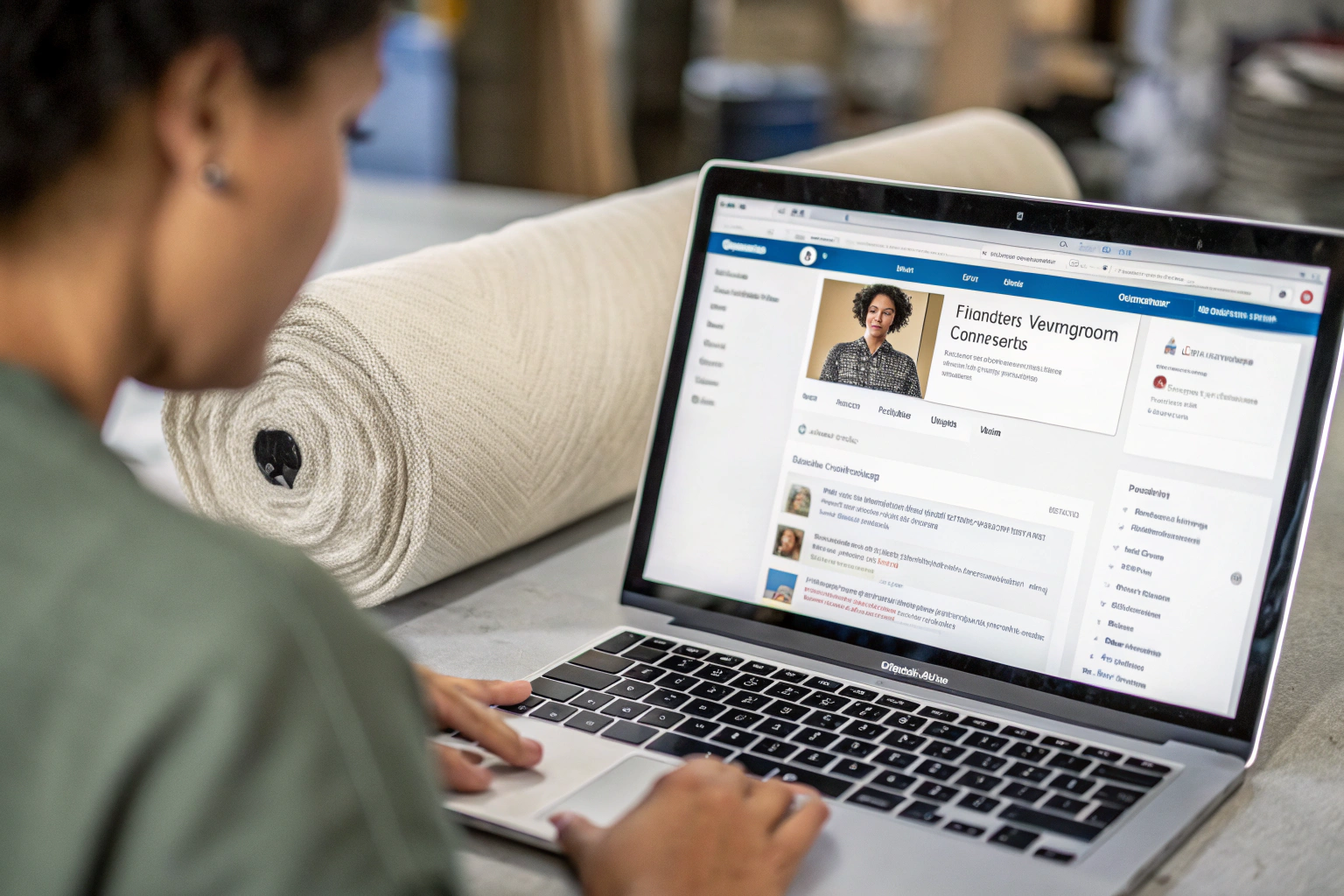
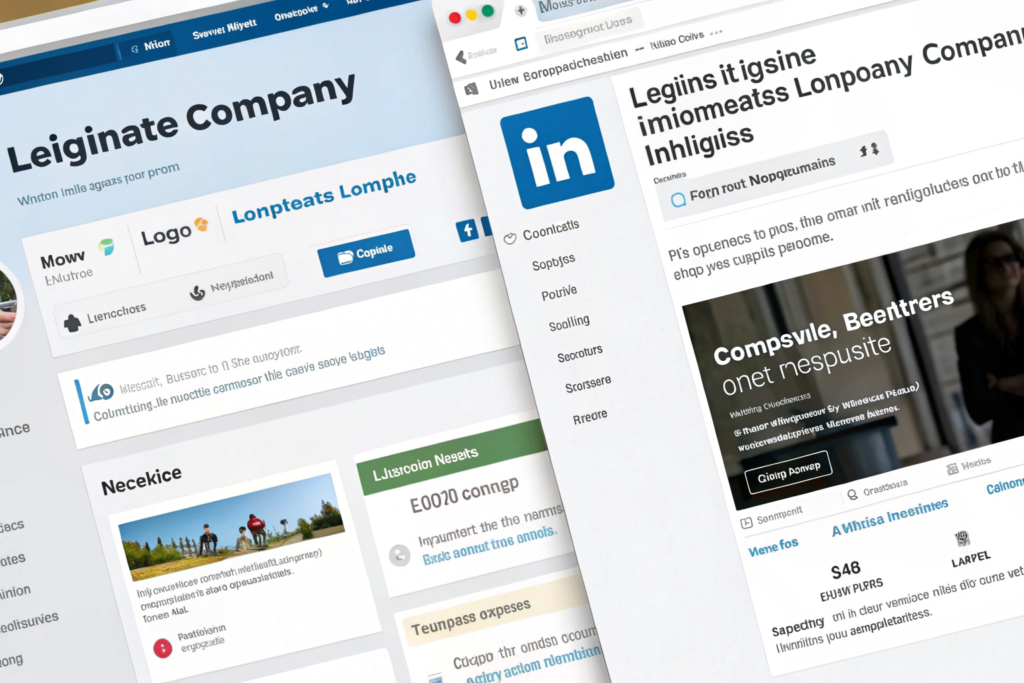
The company page is the starting point. A real fabric supplier will have a complete page.
Look for the company name. Does it match the name they gave you? I’ve seen suppliers with one name on their quote and a different name on LinkedIn. That’s a red flag.
Look for the location. A legitimate textile supplier in Keqiao will list Keqiao, Shaoxing, or Zhejiang. If they claim to be a manufacturer but their LinkedIn location is a residential address or a different city, ask questions.
Look for the company size. We have 40+ employees listed on our LinkedIn page. A legitimate manufacturer will have a realistic employee count. If they claim to be a large factory but have three employees on LinkedIn, something doesn’t add up.
Look for the founding date. A company that’s been around for 10 or 20 years will have that on their page. A brand new company isn’t necessarily a problem, but it means you need to do more digging.
In 2024, a client from Germany showed me a supplier he was considering. The LinkedIn company page had no logo, no banner, no employees, and no posts. The location was listed as “China.” That was it. I told him to move on. He later found out from another buyer that the company was a trading operation that had changed names three times.
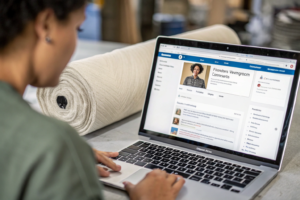
For a guide to LinkedIn company pages, there’s a resource on how to evaluate a supplier’s LinkedIn presence . It’s from LinkedIn’s own resources and covers what to look for.
What Should You Look for in Employee Profiles?
This is where LinkedIn gets really useful. A legitimate supplier will have real employees on LinkedIn. Their profiles will show their roles, their experience, and their connections.
I tell clients to look for specific roles. A weaving factory should have production managers, quality control managers, sales staff. If the only employees listed are salespeople, the company might be a trading company posing as a manufacturer.
Look for profile completeness. A real professional has a photo, a job history, and recommendations. If the only employees listed have no photos and no history, those might be fake profiles.
Look for length of employment. If the sales manager has been with the company for 5 years, that’s a good sign. If every employee has been there for less than a year, there might be high turnover or the profiles might be new.
In 2023, a client from the US was vetting a supplier. He found the company page. It looked fine. Then he looked at the employees. The “production manager” had a profile that listed no previous textile experience. The “quality control manager” had a profile that was created three weeks ago. The client asked the supplier for a factory visit. They refused. He walked away.
If you’re working with a supplier, ask for the LinkedIn profiles of your contacts. A real salesperson will have a profile that shows their history in the industry. If they can’t share it, or if it’s empty, that’s a red flag.
How Can You Assess a Supplier’s Industry Standing Through LinkedIn?
LinkedIn isn’t just about profiles. It’s about networks and reputation. The way a supplier engages with the industry tells you a lot about how they operate.
What Does Their Content Say About Their Operations?
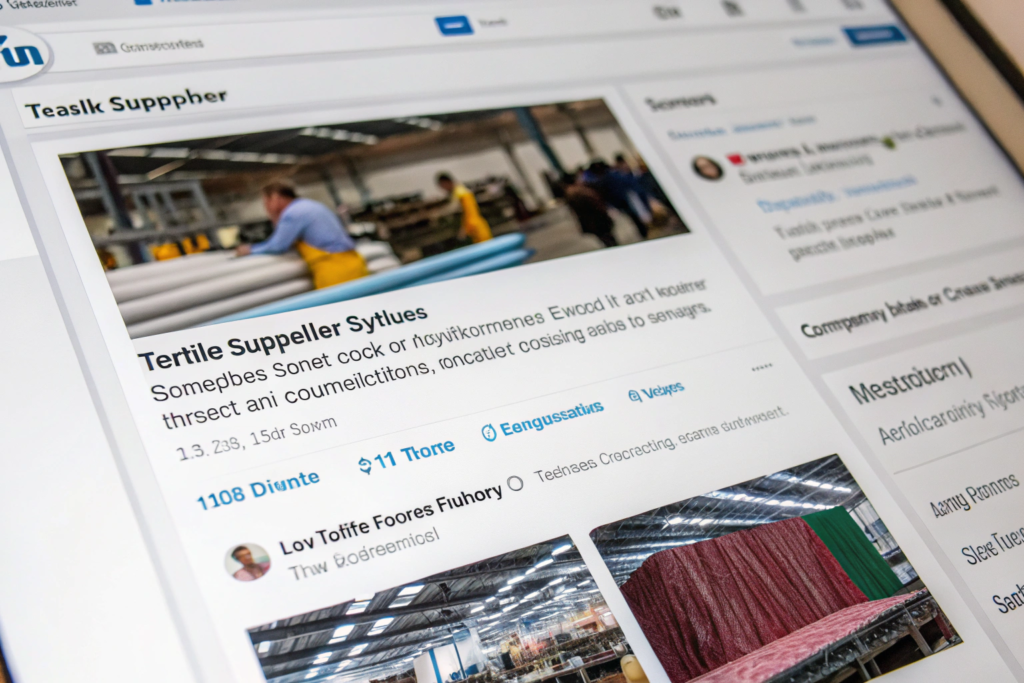
A legitimate supplier posts about their work. Not every day, but consistently. They share photos of their factory, their machinery, their finished products. They comment on industry news. They engage with clients.
I post photos of our looms, our dyehouse, our QC process. Not because I’m bragging. Because I want clients to see how we work. A supplier who has nothing to show might have nothing to show.
Look for factory photos. Are they real? Can you see the machinery, the workers, the environment? I’ve seen suppliers post stock photos of “factories” that are clearly from a different industry. Reverse image search is your friend here.
Look for engagement. When a supplier posts, do people comment? Do other industry professionals engage? A supplier with 5,000 followers and zero engagement is probably buying followers.
In 2022, a client from Australia was considering a supplier. He looked at their LinkedIn. They had 10,000 followers. Every post had zero likes and zero comments. He checked the follower list. Most of the profiles were obviously fake—no photos, no jobs, random names. He passed.
How Do You Check Connections and Recommendations?
Connections matter. A legitimate supplier will be connected to other legitimate players in the industry. Yarn suppliers, dyehouses, logistics providers, clients.
I tell clients to look at who follows the supplier. Are they followed by other textile companies? By industry associations? By known brands? If their only followers are random individuals, that’s a red flag.
Look for recommendations. On LinkedIn, people can recommend companies. Read them. Are they detailed? Do they mention specific projects? Vague recommendations like “great company” without specifics might be fake.
In 2024, a client from the UK found a supplier on LinkedIn. The company had five recommendations. All of them were from accounts that had no profile photos and no work history. All of them used the same language: “professional service,” “good quality,” “fast delivery.” The client asked the supplier for references. They couldn’t provide any. He moved on.
If a supplier has genuine recommendations, you can sometimes contact the people who wrote them. Ask if they’re willing to share their experience. Most legitimate suppliers will be happy to connect you.
For a guide to using LinkedIn for supplier verification, there’s a resource on how to spot fake LinkedIn profiles and companies . It covers common red flags.
What Red Flags Should You Look for on LinkedIn?
I’ve developed a mental checklist over the years. When I look at a supplier’s LinkedIn, these are the things that make me pause. If you see these, dig deeper.
How Do You Spot Fake or Inflated Credentials?
This is common. Suppliers claim to be manufacturers when they’re really traders. They claim to have certifications they don’t have. LinkedIn can help you catch this.
Check the job titles. A real manufacturer will have production roles. If everyone in the company is a “sales manager” or “export manager,” they might not have production staff.
Check the certifications. If they claim to be GOTS certified, look for the certification body on their LinkedIn. Some suppliers post photos of their certificates. If they don’t, ask for the certificate number and verify it on the official database.
Check the employee count. If a supplier claims to have a 200-person factory but only three employees on LinkedIn, ask yourself why no one else is on the platform. In China, many factory workers aren’t on LinkedIn. But key staff—sales, management, QC—should be.
In 2023, a client from Sweden was talking to a supplier who claimed to have 500 employees and a 50,000 square meter factory. The client looked on LinkedIn. The company had one employee listed. The CEO. Who had no profile photo. The client asked for a video call inside the factory. The supplier made excuses. He found another source.
What’s the Importance of Account Age and Activity?
A legitimate supplier has a history on LinkedIn. A new account isn’t necessarily bad—companies do start new pages. But combined with other red flags, it matters.
I look at when the account was created. LinkedIn shows this on the company page. If the account is three months old but the company claims to have been in business for 15 years, ask why they only joined LinkedIn recently.
I look at posting frequency. A legitimate supplier posts consistently, even if it’s just a few times a month. If the account was created three years ago but has no posts until last week, that’s suspicious.
In 2024, a client from Canada found a supplier with a company page that was created in 2023. The company claimed to have been manufacturing since 2010. The page had no posts, no employees, no activity. The client asked for a factory visit. The supplier sent him a Google Maps pin. When he looked at the street view, it was a residential building. He didn’t place the order.
How Do You Use LinkedIn to Build a Relationship Before Ordering?
Verification is one thing. But LinkedIn is also a tool for building relationships. I’ve connected with many of my clients on LinkedIn before they ever placed an order. It’s a way to see how a supplier works before you commit.
What Questions Should You Ask on LinkedIn Before Ordering?
Once you’ve verified the basics, use LinkedIn to ask questions. It’s a public platform, so legitimate suppliers will be happy to engage.
I recommend asking:
- “Can you share photos of your current production?”
- “What certifications do you hold, and can I verify them?”
- “Who are some of your long-term clients?”
- “Can you connect me with one of your yarn suppliers for a reference?”
In 2023, a client from New York asked me these questions on LinkedIn before he placed his first order. I sent him photos of our looms running his fabric. I sent him our GOTS certificate number so he could verify it. I connected him with a client in the UK who had been buying from us for five years. He placed his order. We’re still working together.
If a supplier hesitates to answer these questions on LinkedIn, ask yourself why. A legitimate supplier has nothing to hide.
How Can You Use LinkedIn to Verify Client References?
This is a powerful technique. A supplier will give you client references. Use LinkedIn to verify them.
Look up the reference’s company on LinkedIn. Does it exist? Is it a real business? If the reference is from a “fashion brand” that has no LinkedIn presence, that’s a red flag.
Look at the connection between the supplier and the reference. Are they connected on LinkedIn? Do they engage with each other’s content? A genuine client relationship will show up.
In 2024, a client from the UK was given a reference from a supplier. The reference was from a “designer” who had a LinkedIn profile with no photo, no history, and no connections to anyone in the textile industry. The client asked the supplier for another reference. They couldn’t provide one. He didn’t place the order.
If you get a reference, reach out to them on LinkedIn. Ask about their experience. Most people are willing to share if they had a good—or bad—experience.
Conclusion
LinkedIn isn’t a replacement for due diligence. But it’s one of the best free tools available for verifying a fabric supplier’s reputation. A legitimate supplier has a complete company page, real employees with real profiles, a history of activity, and genuine industry connections. A fake supplier has none of these things.
At Shanghai Fumao , we’ve built our LinkedIn presence over more than a decade. You’ll find our company page with our location, our employee count, our founding date. You’ll see our team members with their real profiles, their experience, their connections. You’ll see photos of our looms, our dyehouse, our QC process. You’ll see engagement from clients, from yarn suppliers, from industry professionals. You’ll see recommendations that are detailed and specific.
I’m on LinkedIn personally. I post about what we’re making, what we’re learning, what’s happening in the industry. I connect with clients. I answer questions. I don’t do it for marketing. I do it because transparency is the only way to build trust across continents.
If you’re considering a fabric supplier, spend 30 minutes on LinkedIn. Look at their page. Look at their people. Look at their posts. If it all adds up, reach out. If it doesn’t, keep looking. Your supply chain is too important to trust to a blank profile.
If you’re looking for a supplier you can verify, connect with us on LinkedIn. My business director, Elaine, manages our LinkedIn presence. She can answer your questions, share photos of your fabric in production, and connect you with clients who’ve worked with us. Or reach out directly.
Contact Elaine directly: elaine@fumaoclothing.com
Tell her you found us through LinkedIn. She’ll show you what a transparent supplier looks like.