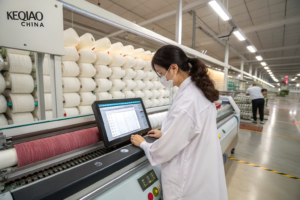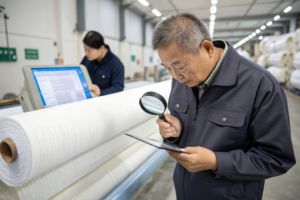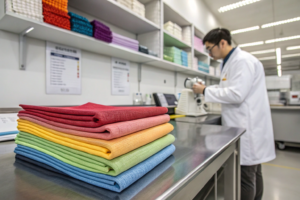
I've been in the textile industry for over 20 years, and I've watched the sourcing game change completely. When I started, finding a good manufacturer meant flying to China, walking the fabric markets in Keqiao, and hoping you stumbled into the right factory. Now, everyone thinks the answer is Alibaba. And sure, Alibaba is useful. But here's what most buyers don't realize: the best manufacturers—the ones who deliver consistent quality, fair prices, and reliable service—are often hiding in plain sight on Google.
Let me tell you something that might surprise you. The hidden gem manufacturers you're looking for rarely spend money on Alibaba gold supplier memberships or expensive trade show booths. They're ranking on Google for specific, technical search terms that most buyers don't know how to find. They're getting found by the buyers who know what to look for and where to look.
At Shanghai Fumao, we've built our reputation by being visible to the right buyers through the right channels. But I've also watched countless clients struggle with the opposite problem—finding suppliers who are legitimate but under the radar. This guide comes from my perspective on both sides of that equation. I'll show you exactly how to use Google to uncover the suppliers who will become your long-term partners.
What Search Terms Actually Find Real Manufacturers?
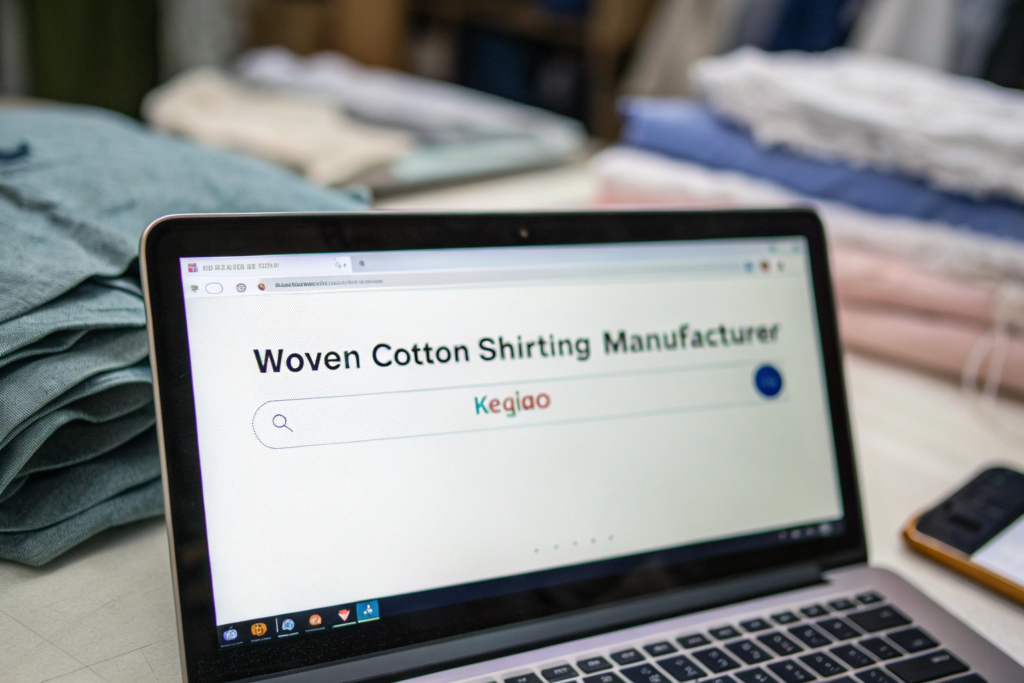
Most buyers start their search wrong. They type "fabric manufacturer China" into Google and then complain when they get 50 million results. That's not searching. That's fishing with dynamite. You need to think like a manufacturer to find a manufacturer.
Why Do Generic Search Terms Lead You to Middlemen?
Here's the reality of the textile industry in places like Keqiao. The real manufacturers—the ones with weaving machines, dyeing lines, and their own QC teams—are usually not spending money on broad keywords like "fabric supplier." Why would they? Those keywords are expensive, and they attract tire-kickers, not serious buyers.
The middlemen, on the other hand, love those broad terms. They build websites around "one-stop solution" and "global sourcing" because they don't have to prove they own factories. They can look big without being big.
I've had clients come to me after months of frustration with suppliers they found through generic searches. One US buyer told me she went through three "manufacturers" before she realized none of them actually owned a knitting machine. They were all trading companies reselling from the same pool of factories. She was paying a markup for nothing.
To find real manufacturers, you need to search for what manufacturers actually are. We call ourselves "woven fabric mills" or "knitting factories" or "dyeing and finishing plants." Those terms don't sound as polished as "textile solutions provider," but they're what we actually are.
What Are the Specific Location-Based Keywords That Work?
Geography is your friend here. China's textile industry is concentrated in specific clusters. Keqiao is the world's largest textile market. Guangzhou is huge for denim and knits. Wujiang is famous for polyester. Shengze is the silk capital. If you know where the fabric comes from, you can search for manufacturers there.
Here are search terms that work:
- "Knitted fabric factory Keqiao"
- "Jersey manufacturer Guangzhou"
- "Denim mill Wujiang"
- "Organic cotton weaver Shengze"
- "Interlock producer Shaoxing" (Shaoxing is the city that includes Keqiao)
When you add a location, Google filters out the general trading companies. A company that claims to be a "global textile leader" but can't tell you where their factory is? Probably a middleman. A company that's actually in Keqiao? They'll have a Keqiao address, and they'll be proud to show it.
In 2023, a British streetwear brand found us through a search for "recycled polyester interlock manufacturer Keqiao." That's specific. That's targeted. They knew what they wanted and where to look for it. When they visited our facility, they told me they had eliminated 20 other suppliers before finding us. They had been burned before by companies that claimed to be in Keqiao but were actually offices in Shanghai with no production. The location keyword saved them months of wasted time.
How Can Technical Specifications Narrow Your Search?
This is where you separate the real experts from the generalists. Real manufacturers specialize. We don't make everything. We're excellent at certain things—woven fabrics, knits, specific finishing processes. The best suppliers are usually the ones who are great at one thing, not mediocre at everything.
So search for your specific needs. If you need a 200 GSM cotton interlock with moisture-wicking finish, search for that. "200 GSM cotton interlock moisture wicking manufacturer." A trading company might still show up, but the factories that actually make that specific product will be in the results.
If you need GOTS-certified organic jersey, search for "GOTS certified organic jersey mill China." The certification is a filter. Only real manufacturers go through the hassle of getting GOTS certification. It's expensive. It requires audits. Trading companies rarely bother.
A Canadian children's wear buyer told me her secret. She searches for the specific testing standard she needs. "OEKO-TEX Class I baby fabric manufacturer." That's the highest standard for children's products. Only factories with proper lab equipment and quality systems can meet that consistently. She found us through that exact search in early 2024. We passed her audit, and now we produce all her baby knits.
How Do You Verify What You Find on Google?
Finding a supplier on Google is just the beginning. The real work is verifying that what they claim is actually true. I've seen too many buyers get excited about a website that looks professional, only to discover later that the factory doesn't exist or the capabilities are exaggerated.

What Documents Should You Ask to See?
A legitimate manufacturer will have documents. Not just pretty marketing materials, but real business records. Here's what I recommend asking for before you go any further.
First, ask for their business license. In China, every company has a business license that shows their registered address and business scope. If the address is a residential building or a shared office space, that's a red flag. If their business scope doesn't include manufacturing, that's another red flag.
Second, ask for their factory photos. Not the staged ones on their website—current photos. Ask for a photo of their knitting floor with today's newspaper visible. It sounds old-school, but it works. A real factory can snap that photo in five minutes. A middleman will make excuses.
Third, ask for their export records. A legitimate manufacturer who exports regularly will have records. You can even search import records in your own country to see if they show up. In the US, you can search customs import data. If a company claims to have been exporting for years but has no record, something's off.
I had a client from Australia who asked for our utility bills. He wanted to see our electricity consumption to verify that we were actually running a factory. That's thorough. And honestly, I respected it. We sent him our last six months of electricity bills. The consumption matched a factory of our size. He placed a test order and has been with us for three years.
How Can Google Maps and Street View Help?
This is a tool that most buyers completely overlook. Google Maps is free, and it tells you a lot about a supplier.
Take the address from their website. Plug it into Google Maps. Switch to satellite view. What do you see? A factory building with trucks, loading docks, and organized yards? Or an office building in a commercial district?
Then use Street View if it's available. Look at the surrounding area. Is it an industrial zone with other factories? Are there textile-related businesses nearby? In Keqiao, you'll see rolls of fabric being loaded onto trucks, warehouses, and other textile companies. It's a neighborhood that smells like yarn and dye. If the Street View shows a residential building or a generic office tower, that supplier is probably not a factory.
A buyer from Texas told me she uses this method to vet every potential supplier before she even emails them. She found one company that claimed to have a "large manufacturing facility" but the satellite view showed a small office above a restaurant. She eliminated them immediately. That saved her from what would have been a wasted conversation.
What's the Value of a Factory Visit or Video Call?
Google verification can only take you so far. Eventually, you need to see the operation for yourself. A video call is the minimum. A factory visit is better.
During the pandemic, we did video calls with dozens of clients who couldn't travel. We'd walk them through our knitting floor, show them our dyeing machines, let them see our lab. A legitimate supplier will do this without hesitation. A middleman will find reasons why they can't show you the factory.
When you do the video call, ask to see specific things. "Can you show me the batch of interlock that's running right now?" "Can I see your QC inspection station?" "Can you show me where you store your yarn?" These are the details that matter.
In 2022, a European brand did a video call with us that lasted over two hours. They asked to see everything—our yarn storage, our dyeing lab, our testing equipment, our shipping area. We walked them through every department. At the end, their sourcing manager said, "We've never had a supplier who could show us this much." That transparency built trust. They placed their first order that week.
What Red Flags Should You Watch For in Online Research?
Not every supplier who looks good on Google is good. There are patterns, warning signs that repeat over and over. Once you know what to look for, you can spot the bad actors before you waste your time.
Why Are Vague Addresses a Warning Sign?
A real manufacturer has a real address. Not a district. Not a city. A specific street, building number, floor, and unit.
If a website lists only "Guangzhou, China" or "Keqiao District, Shaoxing" without a specific address, that's a problem. They're hiding something. Maybe they're a trading company operating out of a small office. Maybe they're using a virtual address. Maybe they're not even in China.
A real manufacturer wants you to know where they are. We want you to visit. We want you to see our operation. Our address is on our website, our business cards, our email signatures. We have nothing to hide.
I had a client who was considering a supplier whose address was just "Keqiao Textile Market, 3rd Floor." That's a market stall. There are thousands of small traders in the Keqiao market. Some are legitimate, but many are just resellers. This client wanted a manufacturer, not a reseller. She eliminated that supplier and found us instead.
How Do You Spot Stock Photos and Fake Factory Images?
This is a common trick. A supplier's website is full of beautiful photos of modern factories, gleaming machines, and happy workers in white coats. You look at the photos and think, "Wow, this is impressive."
Then you look closer. The same photo appears on three different suppliers' websites. Or the photo is from a machinery manufacturer's catalog, not from the supplier's actual factory. Or the photo was taken in Vietnam but the supplier claims to be in China.
You can use Google's reverse image search to check. Take one of their factory photos and search for it. If it shows up on stock photo sites or other supplier websites, that's a red flag. A real manufacturer uses their own photos.
A US buyer told me she found a supplier whose website had beautiful photos of a knitting factory. She did a reverse image search and found the same photos on a German machinery company's website. The supplier had just copied images from a machine manufacturer. She confronted them, and they admitted they didn't have their own factory photos. She walked away.
What Does an Unusually Low Price Indicate?
Here's a truth that never changes: if the price seems too good to be true, it is. Real fabric manufacturing has real costs. Yarn costs money. Dyeing costs money. Labor costs money. Testing costs money. If a supplier's price is 30% lower than everyone else's, they're cutting corners somewhere.
Where do they cut? Maybe they're using cheaper, shorter-staple cotton that pills. Maybe they're skipping finishing steps that control shrinkage. Maybe they're using unqualified labor. Maybe they're just a trading company who will disappear when something goes wrong.
I'm not saying you should always pay the highest price. But you should understand what you're getting for your money. Ask for cost breakdowns. Ask about yarn quality. Ask about finishing processes. A supplier who can explain why their price is what it is—that's a supplier who knows their business.
A French luxury brand came to us after a disaster with a supplier who offered "incredible prices" on silk-blend knits. The fabric fell apart after three washes. We analyzed it and found they had used a cheap viscose instead of the real silk they claimed. The brand had to pull the collection. They learned that the cheapest price is often the most expensive in the long run.
How Do You Build a Relationship After Finding a Supplier?
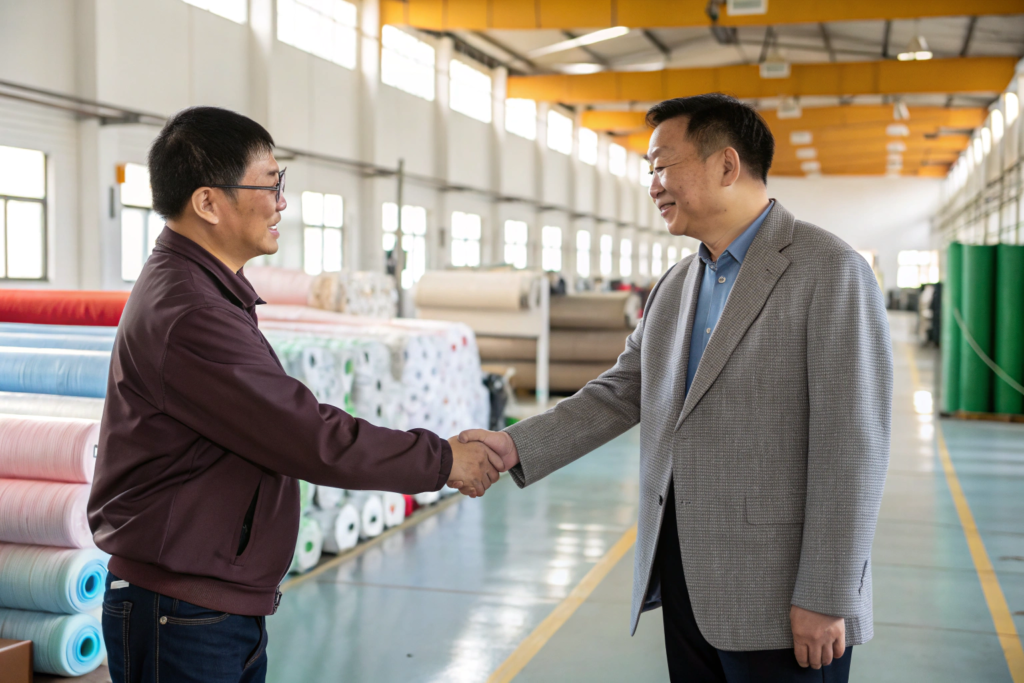
Finding the right supplier on Google is an achievement. But that's just the start. The real value comes from building a relationship that lasts. Here's how to go from a Google search to a long-term partnership.
How Should You Structure Your First Order?
When you find a supplier who passes your vetting, start small. Don't commit to a 50,000-meter order on your first try. Start with a sample order. Then a small production run. Then gradually scale up.
This approach protects you. If something goes wrong, your exposure is limited. And it allows you to test the supplier's quality, communication, and reliability without betting the farm.
In our first order with a major UK high-street brand, we started with 2,000 meters of a single color. They tested it thoroughly in their own facility. They washed it. They stretched it. They checked shrinkage. They were satisfied. The next order was 10,000 meters. Now we do hundreds of thousands of meters for them every year.
Start small. Prove the relationship. Then grow together.
What Communication Systems Work Best?
Time zones are a challenge. Language can be a barrier. But good communication systems solve these problems.
We use a shared project management tool with many of our clients. They can see order status, test results, shipping updates in real time. We have regular video calls. We respond to emails within 24 hours, usually much faster.
Set expectations early. How often will you communicate? Who is the point of contact on each side? What's the escalation path if something goes wrong? A supplier who is organized about communication is organized about production.
One of our US clients insists on a weekly video call every Monday morning their time (Monday evening our time). We review every open order, every pending sample, every quality issue. It's a discipline, but it works. We've never had a major misunderstanding with them because we talk too often for problems to fester.
Why Does Mutual Investment Matter?
The best supplier relationships are partnerships. That means both sides invest.
We invest in our clients by keeping safety stock of their commonly used fabrics, by prioritizing their orders during peak seasons, by sharing our market intelligence on yarn prices and trends. Our clients invest in us by paying on time, by sharing their forecast so we can plan capacity, by treating us as partners rather than vendors.
In 2023, a Canadian client had a major production crisis when their primary supplier in Vietnam shut down unexpectedly. We had capacity because they had shared their forecast with us six months earlier. We were able to ramp up production and cover their needs. They were grateful. And they continue to be one of our most loyal clients because we invested in their success.
When you find a good supplier, invest in the relationship. Visit them. Get to know their team. Understand their capabilities and constraints. The relationship will pay dividends when you need it most.
Conclusion
Google is an incredibly powerful tool for finding hidden gem fabric manufacturers, but only if you know how to use it. The key is to search like a manufacturer, not like a consumer. Use specific, technical terms. Add location keywords. Search for the certifications and capabilities you actually need. Then verify what you find with documents, maps, video calls, and careful scrutiny.
Watch for the red flags—vague addresses, stock photos, prices that are too low. And when you find a supplier who passes your tests, start small. Build the relationship gradually. Communicate clearly. Invest in each other's success.
At Shanghai Fumao, we've been in this industry for over 20 years. We know what it takes to be a good partner. We own our weaving factory, our dyeing operations, our printing and embroidery facilities. We have a CNAS-accredited lab. We provide QR code tracking on every batch. We've built our reputation on transparency, quality, and reliability.
But I'll tell you something else. The best clients we have are the ones who found us through their own research. They came prepared. They asked the right questions. They verified our capabilities. They started with a small order and proved the relationship. Those clients are our partners for life.
If you're looking for a fabric manufacturer who values quality and partnership as much as you do, I invite you to reach out. Our team can help you find the right fabrics for your next collection, whether you need sustainable cottons, high-performance knits, or something completely custom. We don't just sell fabric. We build brands.
Contact our Business Director, Elaine, to discuss your sourcing needs.
Email: elaine@fumaoclothing.com