I'll never forget the panic in an email from a New York fashion brand in 2019. They had received 5,000 finished hoodies from their cut-and-sew contractor, but they were all too small. The contractor had cut the fabric, sewed it, and then washed the garments. The fabric shrank, and the hoodies were now a full size smaller than spec. The brand had to relabel every single piece as a "small" instead of a "medium" and lost thousands in revenue. The root cause? Nobody checked the shrinkage rate before cutting.
Shrinkage is the silent killer in garment production. If you don't account for it, your perfectly graded patterns turn into garbage. The good news is, shrinkage is predictable. It follows the laws of physics and chemistry. At Shanghai Fumao, we test shrinkage on every single batch we produce—whether it's a 100-yard sample or a 50,000-yard bulk order. We run the AATCC 135 test (that's the standard for dimensional changes in home laundering) and we give our clients the raw data.
But understanding the numbers is only half the battle. You also need to know how to fix it. Can you pre-shrink the fabric before it goes to the cutter? Yes. Does it cost extra? Yes. Is it worth it? Absolutely, if you're making fitted garments.
In this post, I'm going to break down exactly what causes shrinkage, how to read a test report, and the real-world methods we use in our mills to control it. This isn't textbook theory—this is what we do on the factory floor every day.
What Actually Causes Fabric to Shrink in the First Place?
Shrinkage isn't magic. It's physics. When we weave or knit fabric, we hold the yarns under extreme tension. The warp threads are stretched tight on the beam, and the weft is pulled tight during insertion. This tension gets "locked in" to the fabric structure. When you add water, heat, and agitation, those tensions release, and the yarns try to return to their natural, relaxed state. They get shorter and fatter.
But tension release isn't the only factor. There's also swelling. Natural fibers like cotton absorb water and swell radially (get thicker). This swelling forces the yarns to bend more around each other in the weave, pulling the whole structure tighter and shorter.
Why do cotton and linen shrink more than polyester?
It comes down to water absorption. Cotton can absorb up to 27% of its weight in water. Polyester? Less than 1%. That swelling we talked about is massive in cotton. The fibers balloon, which increases the crimp (the waviness) of the yarn in the fabric. More crimp equals a shorter, denser fabric. We see shrinkage rates of 3-5% on plain weave cotton. On a heavy cotton twill, it can hit 8% in the length. Polyester, because it doesn't swell, might only shrink 1-2%, and that's mostly just from the relaxation of mechanical tension. For a deep dive into fiber morphology and water absorption, ScienceDirect has peer-reviewed articles on the topic. We also see this in our own testing: a 100% linen fabric we shipped to a UK client last year showed 6% shrinkage in the warp after one wash. We had to adjust our finishing to mechanically pre-shrink it on the stenter frame.
What role does weave tightness play in shrinkage?
A loose weave has room to move. The yarns can shift and compact easily, which can actually lead to more shrinkage because there's space to collapse. A tight weave is already packed tight with yarn, so there's less physical space for it to shrink into. Think of it like a crowd of people. A loose crowd (loose weave) can pack together much tighter if they're pushed (washed). A packed crowd (tight weave) can't get any tighter. We proved this in 2022 when we ran tests on two poplin fabrics—same yarn, same finishing, but one woven at 120 threads per inch and one at 100 threads per inch. The tighter 120 TPI fabric shrank 2.5%. The looser 100 TPI fabric shrank 4.2%. So if you're designing a fitted shirt, a tighter weave gives you more dimensional stability. There's a good explanation of fabric cover factor and shrinkage on textile school sites.
How Do You Accurately Test Shrinkage Before Production?
You can't guess shrinkage. You have to measure it. And you have to measure it the same way your customer's laundry room will treat it. That means following a strict testing protocol. We use AATCC 135 for woven fabrics and AATCC 150 for garments, but the principle is the same: measure, wash, dry, measure again.
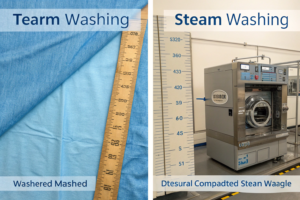
We mark three points in the warp direction and three in the weft, usually 18 inches apart. After washing and drying in a controlled cycle (we pick the cycle based on the end use—cold gentle for delicates, hot cotton for workwear), we remeasure. The difference, divided by the original length, is the shrinkage percentage.
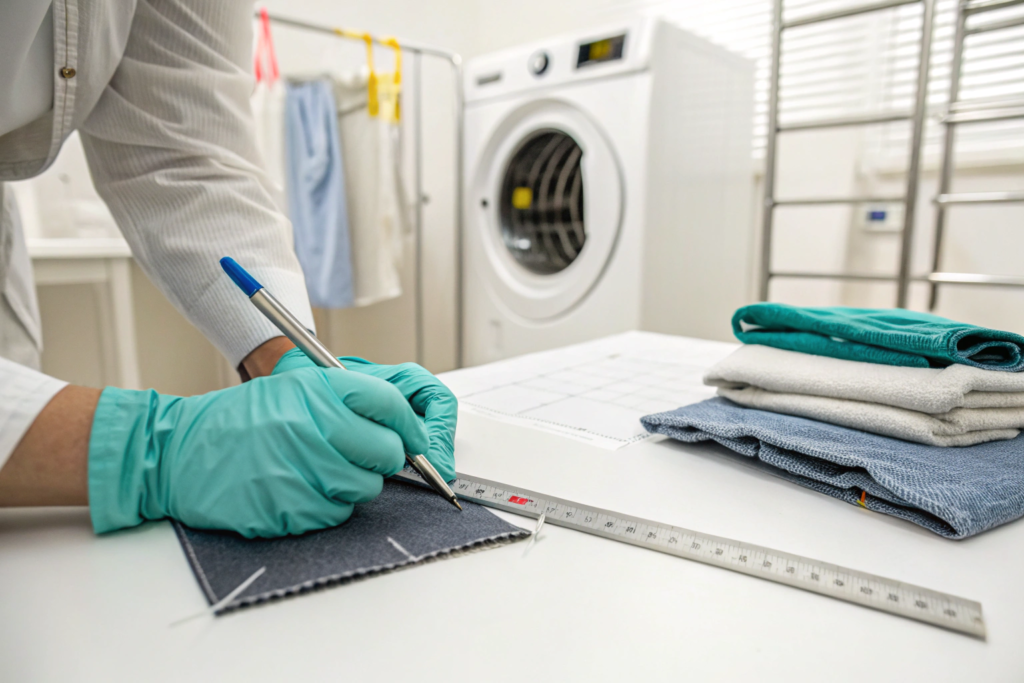
Why do we use multiple wash cycles in our testing?
Because one wash doesn't tell the whole story. Most shrinkage happens in the first wash, but some fabrics "grow" or continue to shrink over multiple cycles. We have a standard procedure for our denim clients: we run a 5-wash test. The first wash might show 5% shrinkage. The second wash adds another 1%. By the fifth wash, it's stable. If we only gave them the first wash data, they'd cut the jeans too big after the first home laundry, and the customer would complain the jeans are baggy after a few wears. For a Japanese client specializing in selvedge denim, we actually provide a "shrinkage curve" showing the rate after 1, 3, and 5 washes. It helps them build the right "post-shrink" fit. You can see the AATCC 135 testing procedure summary on the AATCC website for the official parameters.
What's the difference between warp and weft shrinkage?
Almost always, warp shrinkage (lengthwise) is higher than weft shrinkage (widthwise). Why? Because the warp yarns are under higher tension during weaving. They are stretched for miles on the beam. The weft yarns are inserted with much less tension. So when you wash the fabric, the warp has more stress to relax, so it contracts more. We see this constantly. A client from Canada sent us a beautiful linen blend last month. Our test showed 5.5% warp shrinkage and only 1.8% weft shrinkage. If their pattern maker assumed 2% shrinkage in both directions, the garment would come out of the wash looking completely distorted—too short, but the right width. We flag this in every lab report. For pattern makers, this asymmetry is critical. There's a good discussion on differential shrinkage on Fibre2Fashion that explains how to adjust patterns.
What Are the Real Methods for Pre-Shrinking Fabric?
Testing tells you the problem. Pre-shrinking is the solution. But "pre-shrinking" doesn't mean washing every yard of fabric like a t-shirt. That would be too slow and expensive. Instead, we use mechanical and chemical methods on the finishing range to force the relaxation to happen before the fabric is cut.
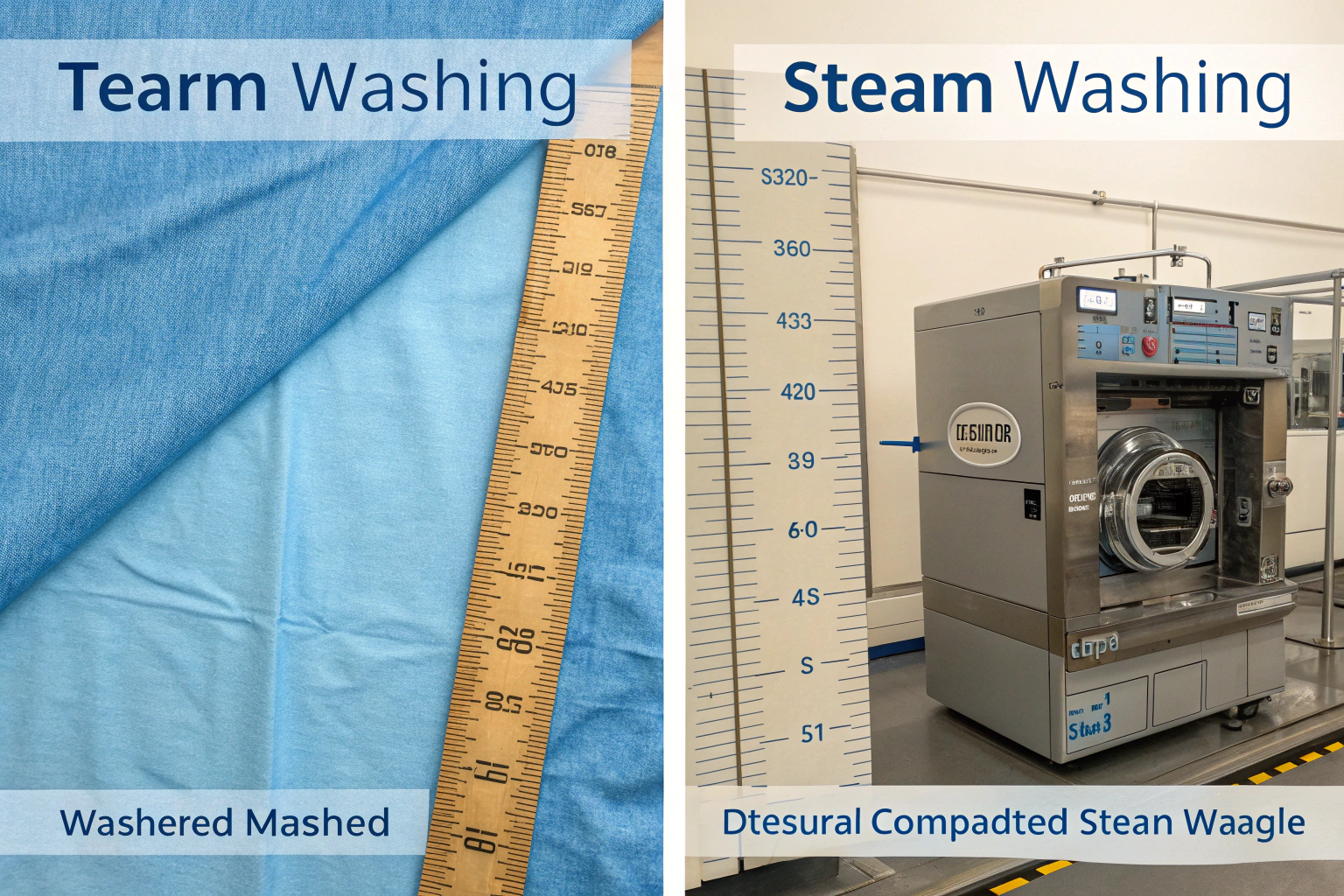
The most common machine for this is a compactor (for knits) or a Sanforizer (for wovens). It's a brand name, like Kleenex, but Sanforized® is the standard. The machine uses a heated rubber blanket and steam to physically compress the fabric lengthwise.
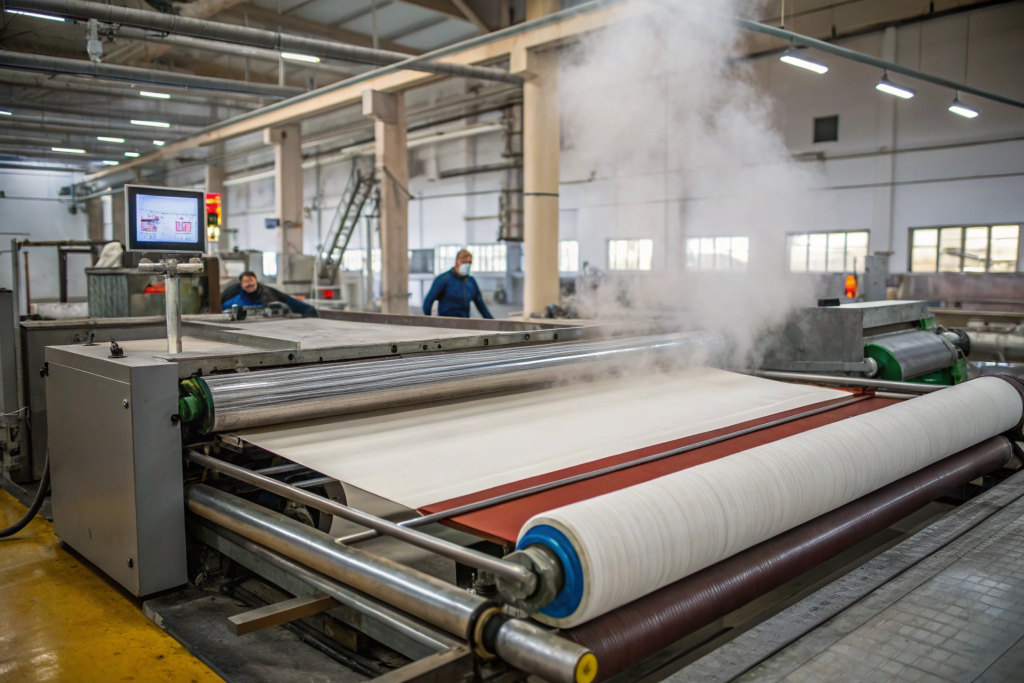
How does a Sanforizing machine actually work?
The fabric enters the machine, we hit it with steam to relax the fibers, and then it passes over a stretched rubber blanket. As the blanket relaxes, it "pushes" the fabric back, compressing the length. Think of it like this: you have a rope. If you push the ends toward the middle, it gets shorter and thicker. That's what the Sanforizer does to your fabric—it mechanically shortens it. By the time it leaves the machine, it's already been "shrunk." We can control the amount of compression. If our lab test shows the fabric wants to shrink 5%, we'll set the Sanforizer to compress it by 4.5-5%. Then, when the garment maker washes it, there's almost no change. We Sanforized a heavy cotton twill for a US workwear brand last year. The untreated fabric shrank 6%. The Sanforized batch? Less than 1%. It costs about $0.15 per yard extra, but it saves them from returns. The Sanforized® trademark standards are strictly monitored, and we have to submit regular test reports to keep the license.
Can we pre-shrink knits without distorting the tubular form?
Knit shrinkage is trickier because knits are stretchy. You can't just compress them; you risk distorting the course and wale lines. For tubular knits (like t-shirt fabric in a tube), we use a compactor with a spreading mechanism. It runs the fabric over a heated blade that pushes the loops together. We also use overfeeding. "Overfeed" means we feed the fabric into the stenter frame faster than the pins are moving. This creates a slight bunching or relaxation. We had a client from Australia making premium t-shirts from 100% combed cotton jersey. Our first bulk run had 4% shrinkage, which was too high for their "preshrunk" claim. We increased the overfeed on the stenter by 8% and reduced the tension in the winder. The next batch tested at 1.8% shrinkage. It was a simple fix, but it required knowing the machine. For more on knit fabric compaction, equipment manufacturers like Tubetex have detailed explanations.
How Do Finishing Chemicals Affect Shrinkage Control?
Sometimes, mechanical force isn't enough. Especially with cellulosic fibers like rayon or linen that really want to swell, we use resin finishes. These are chemicals that cross-link the cellulose molecules, making them less able to absorb water and swell. It's like giving the fibers a permanent "press" that resists water entry.
But there's a downside. Resin finishes can reduce the tear strength of the fabric by 15-20%. They also can release formaldehyde, though we use low-formaldehyde or formaldehyde-free resins for our EU clients.
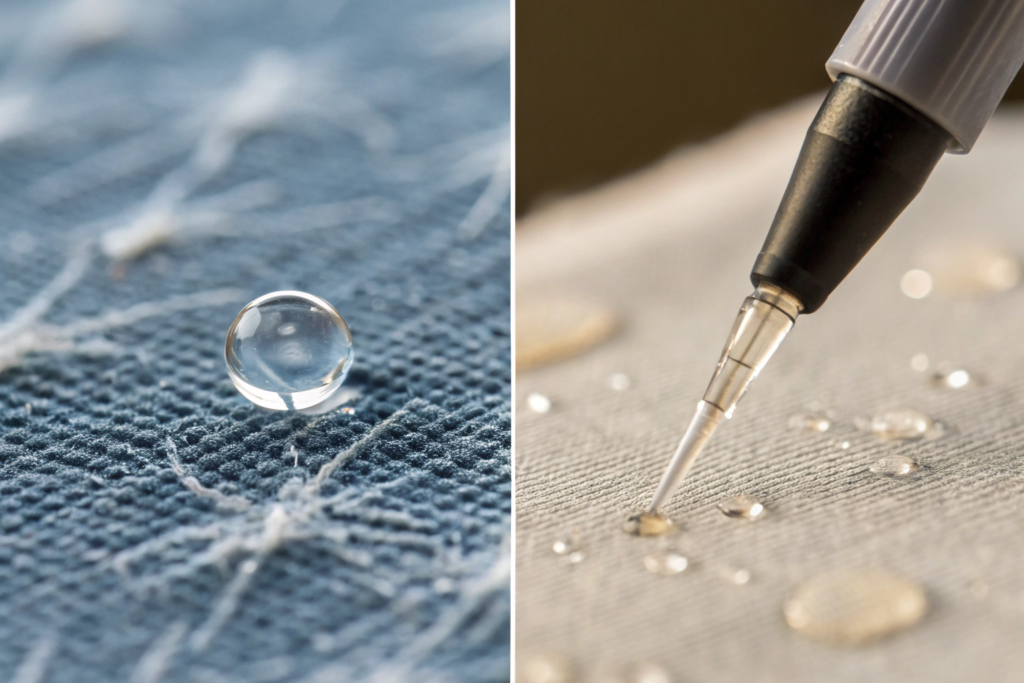
When should you use a resin finish vs. mechanical pre-shrinkage?
If you need really low shrinkage (under 3%) on a fabric made from rayon or Tencel, you almost have to use resin. Mechanical methods alone can't stop the swelling of those fibers. For a Swedish lingerie brand making rayon sleepwear, we had to apply a resin finish to get the shrinkage down to 3% from an initial 7%. Without it, the camisoles would have been unwearable after one wash. For cotton, mechanical Sanforizing is usually enough to get to 1-2%. The choice also depends on the end use. If the garment is going to be heavily laundered, like hotel sheets, a resin finish helps maintain the size. If it's a fashion item that might be dry-cleaned, mechanical is fine. We always run a "tear strength before and after" test when using resins. We've had batches where the resin dropped the strength too low, and we had to re-finish with a softer, weaker resin. There's good data on resin finishing effects on cotton in materials science journals.
Does "pre-shrunk" on a label mean it won't shrink at all?
No, and this is a point of confusion. "Pre-shrunk" is not a guarantee of zero shrinkage. In the US, the FTC (Federal Trade Commission) doesn't have a strict definition, but in the industry, it usually means the residual shrinkage is less than 3%. For example, a "Sanforized" label means the fabric will not shrink more than 1% in length or width, according to the trademark's standards. But even that 1% can be a problem for a perfectly fitted dress shirt. We always tell our clients: "Pre-shrunk" means we've done our best, but always buy a sample yard and wash it yourself before you cut the whole order. For a Canadian workwear brand, we provided a "shrinkage certificate" with every batch, guaranteeing less than 2% residual shrinkage. That gave them the confidence to cut 50,000 units. You can read the FTC's guidelines on textile labeling for the legal requirements.
Conclusion
Understanding fabric shrinkage is about controlling the unexpected. It's about knowing that your beautiful, expensive fabric is going to change shape the moment it hits water, and doing something about it before your customer does. We've seen too many brands lose money because they skipped the shrinkage test or assumed the mill had already done the work.
At Shanghai Fumao, shrinkage testing isn't an afterthought. It's step one. Every roll we produce gets a batch number, and every batch gets a shrinkage report. We can Sanforize your wovens, compact your knits, and apply resin finishes to your rayons. We give you the data so your pattern makers can grade accurately.
If you're tired of guessing how your fabric will behave after the first wash, let's fix that. Whether you're making workwear that needs to hold its size, or fashion garments that need to fit perfectly, we can help you spec the right fabric with the right pre-treatment.
Contact our Business Director, Elaine, to discuss your next project. She can walk you through our testing protocols and help you choose the right shrinkage control method for your fabric and your budget. Her email is elaine@fumaoclothing.com. Let's make sure your garments fit the first time, and every time.