I still remember the call from a client in Melbourne about six years ago. He was a menswear buyer, and he had just received a shipment of 8,000 meters of what was supposed to be premium cotton jersey for his t-shirt line. The fabric looked beautiful. The hand feel was perfect. But after his factory cut and sewed the first 500 units, they washed a sample. The surface looked like a peach orchard in bloom. Pills everywhere. The whole shipment was basically unusable.
That was my wake-up call. I realized that for a lot of my clients, especially those buying from overseas, pilling is one of those hidden risks that doesn't show up until it's too late. You can't see it in a small hand sample. You can't feel it when you touch the roll. It only appears after washing and wearing. And by then, your garments are already in production, or worse, in your customer's hands.
I've spent the years since that Melbourne call making sure none of my clients ever have to make that same painful phone call. We've built our quality control system around catching pilling issues before they ever leave our factory. In this article, I'm going to walk you through exactly how we test for pilling resistance, what the numbers mean, and how you can protect yourself when importing knitted fabrics from China. At Shanghai Fumao, we believe that understanding the test is the first step to trusting the fabric.
What Causes Pilling in Knitted Fabrics Anyway?
Before we talk about testing, you need to understand what you're testing for. Pilling isn't just a random defect. It's a predictable outcome of certain fiber characteristics, yarn constructions, and fabric structures. When you understand the causes, you can ask the right questions before you even place an order.
Why Do Some Knits Pill More Than Others?
The short answer is fiber length. Longer fibers pill less. Think of it like hair. Long, smooth hair doesn't tangle as easily as short, fuzzy hair. In fabrics, the fibers that stick out from the yarn surface are the ones that get tangled together during wear and washing. When those tangled fibers form little balls on the surface, that's pilling.
Polyester is notorious for pilling because it's strong and doesn't break easily. The pills form, but they don't fall off. Cotton, on the other hand, is weaker. Cotton fibers will break before they form a tight pill, so cotton fabrics often just fuzz rather than forming hard balls. Blends can be tricky. A cotton-polyester blend combines the pilling tendency of polyester with the surface fuzz of cotton. You get the worst of both worlds if the yarn isn't constructed properly.
I learned this lesson with a client from New York about three years ago. She wanted a cotton-polyester jersey for a line of affordable basics. She found a supplier offering a great price. The sample looked fine. But when we tested it in our lab, the pilling result was a 2 on the Martindale scale. That's not good. We asked the supplier about their yarn source. They were using a short-staple, open-end spun polyester. The fibers were short and loose. We suggested switching to a ring-spun, longer-staple polyester. The cost went up a bit, but the pilling result jumped to a 4. She made the switch. Her garments still look good after 20 washes. That's the difference fiber length makes. For a deeper dive into fiber properties and their impact on pilling, this textile science blog has a detailed breakdown of how staple length affects yarn quality and fabric performance.
How Does Yarn Twist and Fabric Structure Affect Pilling?
Fiber length is only half the story. The way the yarn is twisted matters just as much. A tightly twisted yarn holds fibers in place. It's like a tightly braided rope—nothing sticks out. A loosely twisted yarn is fuzzy. Those protruding fibers are just waiting to tangle.
Knitted fabric structure also plays a role. A loose, open knit has more surface area for fibers to migrate and tangle. A tight, compact knit holds everything together. Think of a loose mesh knit versus a dense jersey. The mesh will pill faster because the fibers have room to move.
We had a project last year with a sportswear brand in Germany. They wanted a lightweight, breathable knit for running tops. The initial design was a loose, open structure using a low-twist yarn. Beautiful drape. But our lab tests showed a pilling rating of 1.5. That's basically guaranteed to pill after one wash. We went back to the drawing board. We kept the same fiber composition but switched to a higher-twist yarn and tightened the knit structure slightly. The fabric lost a tiny bit of that airy feel, but the pilling rating went to 3.5. We sent the client both versions. They chose the more durable one. They told us later that their customers praised the tops for staying looking new after months of use. That's the value of understanding the technical trade-offs. If you want to see how different knit structures are constructed, this knitting industry forum has a visual guide to common weft knit structures and their properties.
What Are the Standard Tests for Pilling Resistance?
Now let's get into the practical stuff. If you're importing knitted fabric, you need to know what tests to ask for and what the results actually mean. There are a few standard methods used globally. The most common is the Martindale test. But there's also the pilling box test and the random tumble test. Each one simulates different types of wear.
How Does the Martindale Test Work and What Do the Numbers Mean?
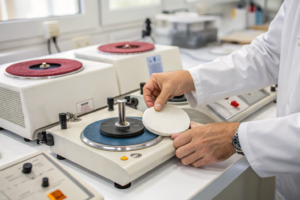
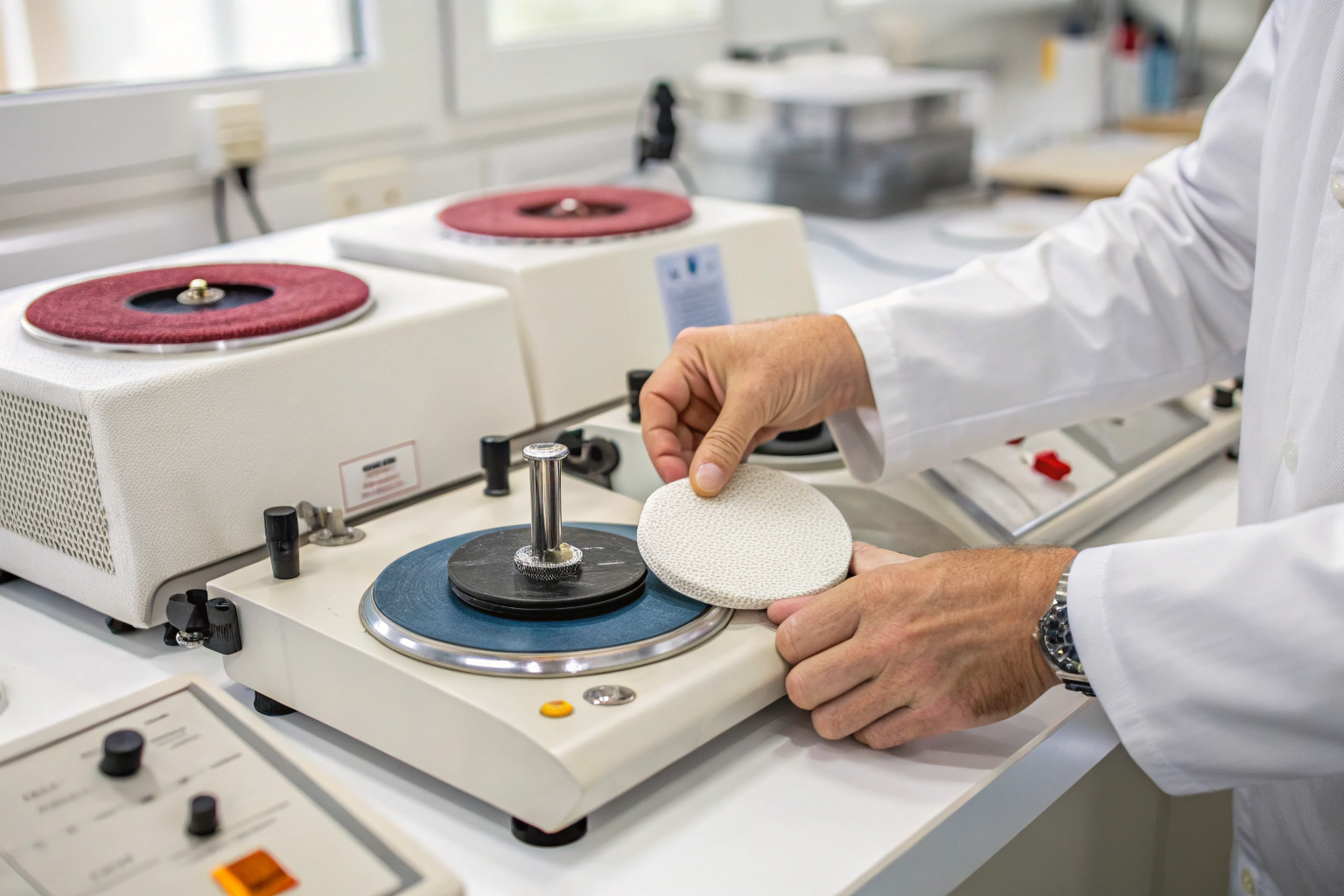
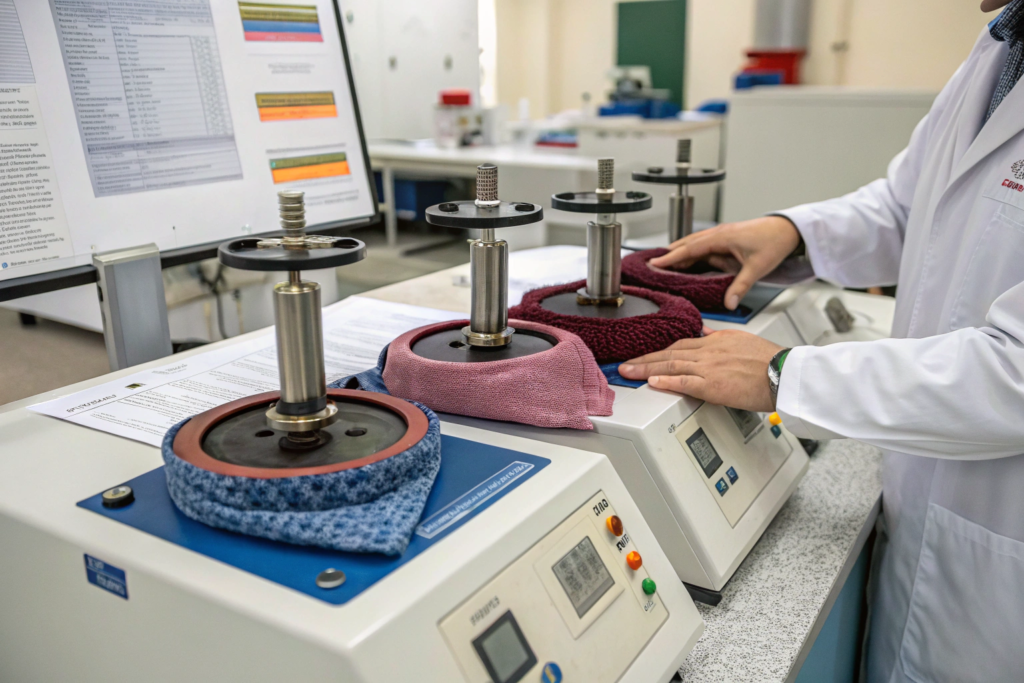
The Martindale test is the industry standard for woven and knitted fabrics. We use it in our CNAS-accredited lab for almost every knit order. Here's how it works. We cut a circular sample of your fabric and mount it on a testing station. Then we rub it against a standard abrasive fabric in a figure-eight motion. After a set number of cycles—usually 2,000, 5,000, or 7,000—we visually compare the sample to a set of standard photos. The fabric gets a rating from 1 to 5.
A rating of 5 means no change. The fabric looks exactly the same as before testing. That's the gold standard. A rating of 4 means slight surface fuzzing but no pills. That's acceptable for most apparel. A rating of 3 means moderate pilling. You'll see visible pills, but they're small and scattered. For fast fashion or low-end basics, this might pass. A rating of 2 means severe pilling. The fabric is covered in pills. This is a reject for almost any application. A rating of 1 is a complete mess. The surface is completely covered with large, dense pills.
I had a client in London who was importing a bamboo viscose knit for a line of loungewear. They didn't specify a pilling standard. The supplier sent them a fabric that tested at 2.5. When the garments hit the market, the reviews were brutal. Customers complained that the fabric looked worn after one wash. The client lost money on that season. Now, when they work with us, they specify a minimum Martindale rating of 3.5 for all their knits. We test every batch and provide the results. They have zero pilling complaints now. For a detailed explanation of the Martindale test procedure and the rating scale, this guide from a textile testing laboratory walks through the full Martindale pilling test method.
When Should You Use the Pilling Box or Random Tumble Test?
The Martindale test is great for simulating normal wear, like a shirt rubbing against a jacket. But different garments face different types of abrasion. That's where the other tests come in.
The pilling box test is used for heavier fabrics like sweaters and cardigans. We put the fabric sample in a lined wooden box with cork walls. The box rotates, tumbling the fabric against the cork. This simulates the kind of surface abrasion a sweater gets when you wear it under a coat or when it rubs against itself. We use this test a lot for our wool and wool-blend knits.
The random tumble test is another option. This one is used for fabrics that will face a lot of random, multidirectional abrasion, like athletic wear. We put the fabric in a chamber with a rotating impeller and some standard abrasive material. The fabric tumbles randomly, simulating the kind of friction you get during sports or heavy activity.
Last year, we worked with a cycling apparel brand in Colorado. They needed a fleece-lined knit for winter cycling jerseys. The fabric would face constant rubbing from the bike seat, from the rider's arms, from the backpack. We recommended the random tumble test instead of Martindale. The first sample tested poorly. We went back and adjusted the yarn twist and added a small percentage of elastane to help the fibers recover. The second sample passed with a rating of 4. The client was happy. They told us that their winter jerseys held up better than any previous season. For a comparison of these different testing methods, this industry article explains when to use Martindale vs. pilling box vs. random tumble testing.
How Can You Prevent Pilling Problems Before They Happen?
Testing is essential, but the best testing is the kind that prevents problems, not just catches them. Over the years, we've developed a few strategies that help our clients avoid pilling issues entirely. It starts with the right specifications and ends with a rigorous sampling process.
What Specifications Should You Include in Your Fabric Contract?
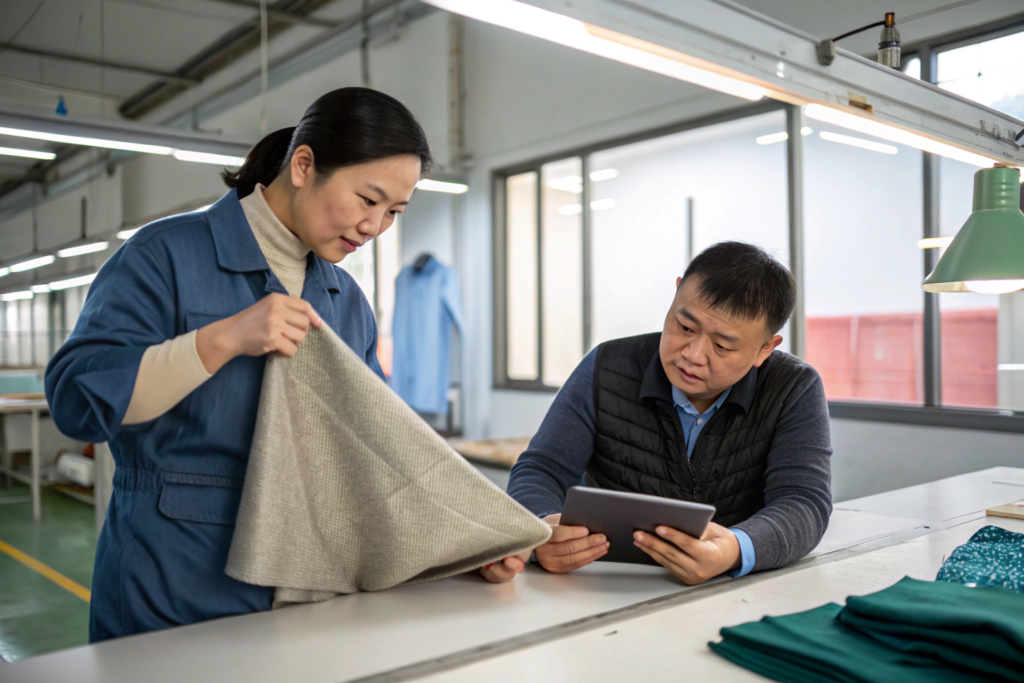
If you're sourcing knitted fabric from China, your contract needs to include pilling requirements. Don't assume the supplier will use the right standard or the right test method. Spell it out.
Here's what we recommend our clients include. First, specify the test method. "Martindale test according to ISO 12945-2" or "ASTM D3512 for random tumble." Second, specify the number of cycles. For Martindale, 2,000 cycles is standard for light wear. 5,000 cycles is for heavier wear. 7,000 cycles is for high-durability applications like workwear or outdoor gear. Third, specify the minimum acceptable rating. For most apparel, we recommend 3.5 or 4.
I'll share a real example. A client from a sustainable denim brand in Sweden wanted to add a knitted sweatshirt to their line. They sent us a detailed specification sheet that included "Martindale pilling test at 5,000 cycles, minimum rating 4." That was clear. That was testable. When we ran our pre-production sample, it tested at 3.5. That wasn't good enough for them. We went back to our knitting mill and adjusted the yarn tension. The next sample tested at 4. They approved it. When the bulk order came, we tested again. Still a 4. Their sweatshirts launched with zero pilling issues. That clear specification saved them from a potential disaster. If you're writing a fabric specification sheet, this sourcing guide offers a template for including quality testing requirements in your supplier contract.
How Should You Test Samples Before Committing to Bulk Production?
This is where a lot of buyers go wrong. They approve a small hand sample without testing it. Or they test a sample that's been specially prepared and doesn't represent the bulk production.
Our process is simple. First, we send a lab dip or a strike-off. This confirms color. Then, we produce a pre-production sample on the actual production machines. This is the key step. This sample uses the same yarns, the same machine settings, the same finishing processes as the bulk order. We test this sample thoroughly. For pilling, we run the full test and send you the results. If it fails, we fix it before we ever start the bulk run.
I learned this lesson the hard way about ten years ago. A client from a US outdoor brand wanted a fleece fabric. We sent them a beautiful sample. They approved it. We ran the bulk order. When the bulk arrived, they tested it and found pilling issues. We were confused. The sample was fine. What happened? We investigated. The sample had been made on a slower, more precise machine. The bulk was run on a faster machine to meet the timeline. The faster machine created a slightly looser fabric structure. The pills appeared.
Now, we never do that. We run the pre-production sample on the exact same machine that will run the bulk. We test it. We get client approval on the tested fabric. Only then do we run the bulk. This process adds a week to the timeline, but it eliminates the risk of a failed bulk order. That week is worth it. For a step-by-step guide on how to manage the sampling phase to ensure quality, this blog from a sourcing agency has a helpful article on pre-production sample approval best practices.
How Do You Verify Pilling Resistance on Incoming Shipments?
Okay, you've done your homework. You've specified the test. You've approved the pre-production sample. The fabric arrives at your warehouse or factory. Now what? You need to verify that what you received is what you approved. This final step is crucial. I've seen too many clients trust the supplier and skip this, only to find problems later.
What Should Your Incoming Inspection Include?
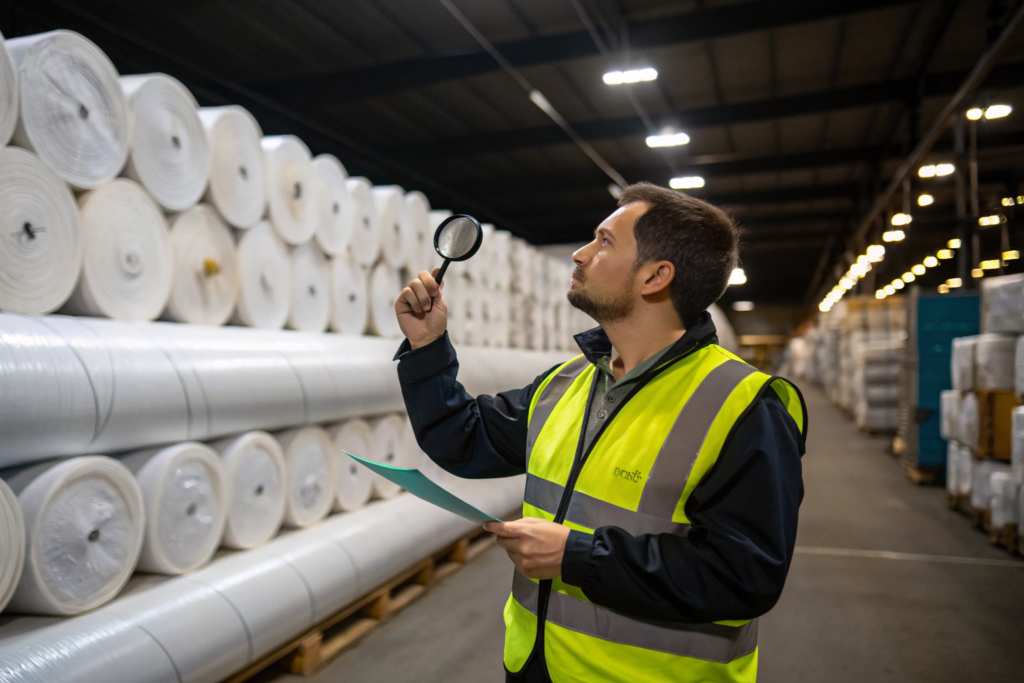
Your incoming inspection should be a scaled-down version of the pre-production testing. You don't need to test every roll. But you should pull samples from multiple rolls, especially if the shipment is large.
We recommend pulling one sample from every 10 to 20 rolls, depending on the order size. For a 1,000-meter order, that might be 5 to 10 samples. Send these samples to a lab for testing. If you don't have an in-house lab, use a third-party testing facility like SGS or ITS. The cost is minimal compared to the cost of a rejected garment order.
Test for the same parameters you specified in your contract. For pilling, run the same Martindale or random tumble test at the same cycle count. If the results match your pre-production sample, you're good to go. If they don't, you have a problem to address with your supplier immediately.
A client from a French children's wear brand does this religiously. They order about 50,000 meters of cotton jersey from us every year. Every shipment, they pull samples and send them to an independent lab in Paris. They've been doing this for three years. In that time, they've never had a pilling complaint from their customers. Their rejection rate on incoming fabric is under 1%. That's because they verify. They don't assume. For a detailed checklist of what to include in your incoming fabric inspection, this article from a textile quality control consultant provides a comprehensive fabric inspection guide.
How Do You Handle a Failed Incoming Inspection?
This is the scenario nobody wants. But if you've followed the process, you're in a strong position. You have a contract that specified the test method and the minimum rating. You have a pre-production sample that passed the test. Now the bulk shipment has failed. What do you do?
First, document everything. Take photos of the failed test samples. Get the lab report. Then contact your supplier immediately. Don't wait. Show them the evidence. A good supplier will work with you to find a solution. That might mean a discount, a replacement order, or splitting the shipment and using the acceptable rolls for certain applications.
I'll tell you a story about a client in Italy. He ordered a high-end wool knit from us. We did all the right steps. Pre-production sample passed. But when the bulk arrived, he tested it and got a rating of 3. We were confused. We retested our retained samples from the same production run. They tested at 4.5. What happened? We discovered that his factory had over-washed the fabric during garment processing. The excessive washing loosened the fiber structure. The fabric wasn't the problem; the processing was. Because we had clear documentation and retained samples, we could prove that the raw fabric was fine. We worked with his factory to adjust their washing process. The next batch was perfect.
This is why documentation matters. Without the pre-production sample results and the retained bulk samples, we would have been pointing fingers. With the data, we could solve the problem together. That's the value of a rigorous testing process. It protects both parties. For advice on how to handle quality disputes with suppliers, this sourcing forum has a thread where professionals share their experiences with resolving fabric quality issues.
Conclusion
Pilling is one of those hidden defects that can destroy a garment's reputation. It doesn't show up on the roll. It doesn't show up on the cutting table. It shows up in your customer's closet, after they've paid for your product. By then, it's too late. The return request is already in their inbox.
But pilling is also predictable. It's testable. And it's preventable. The key is understanding what causes it—fiber length, yarn twist, fabric structure—and then using the right tests to verify that your fabric meets your standards. The Martindale test, the pilling box test, the random tumble test—these aren't just academic exercises. They're your insurance policy against bad batches.
I've learned over 20 years that the suppliers who take pilling seriously are the ones who take quality seriously. They're the ones who ask you about your end use. They're the ones who run pre-production samples on the actual production machines. They're the ones who provide you with test data, not just promises. At Shanghai Fumao, we've built our reputation on this. We test every knit order. We provide the results. We stand behind them.
If you're importing knitted fabrics, I urge you to make pilling testing a non-negotiable part of your process. Put it in your contract. Test your pre-production samples. Verify your incoming shipments. It takes a little more time. It costs a little more money. But compared to the cost of a failed collection, a damaged reputation, and lost customers, it's the best investment you can make.
If you're ready to work with a supplier who takes quality testing as seriously as you do, let's talk. We have the lab, the experience, and the commitment to make sure your knits perform exactly as promised.
Contact our Business Director, Elaine, to discuss your next knit order.
Email: elaine@fumaoclothing.com
Let's make sure your pilling problems stay in the lab, not on your customers' clothes.