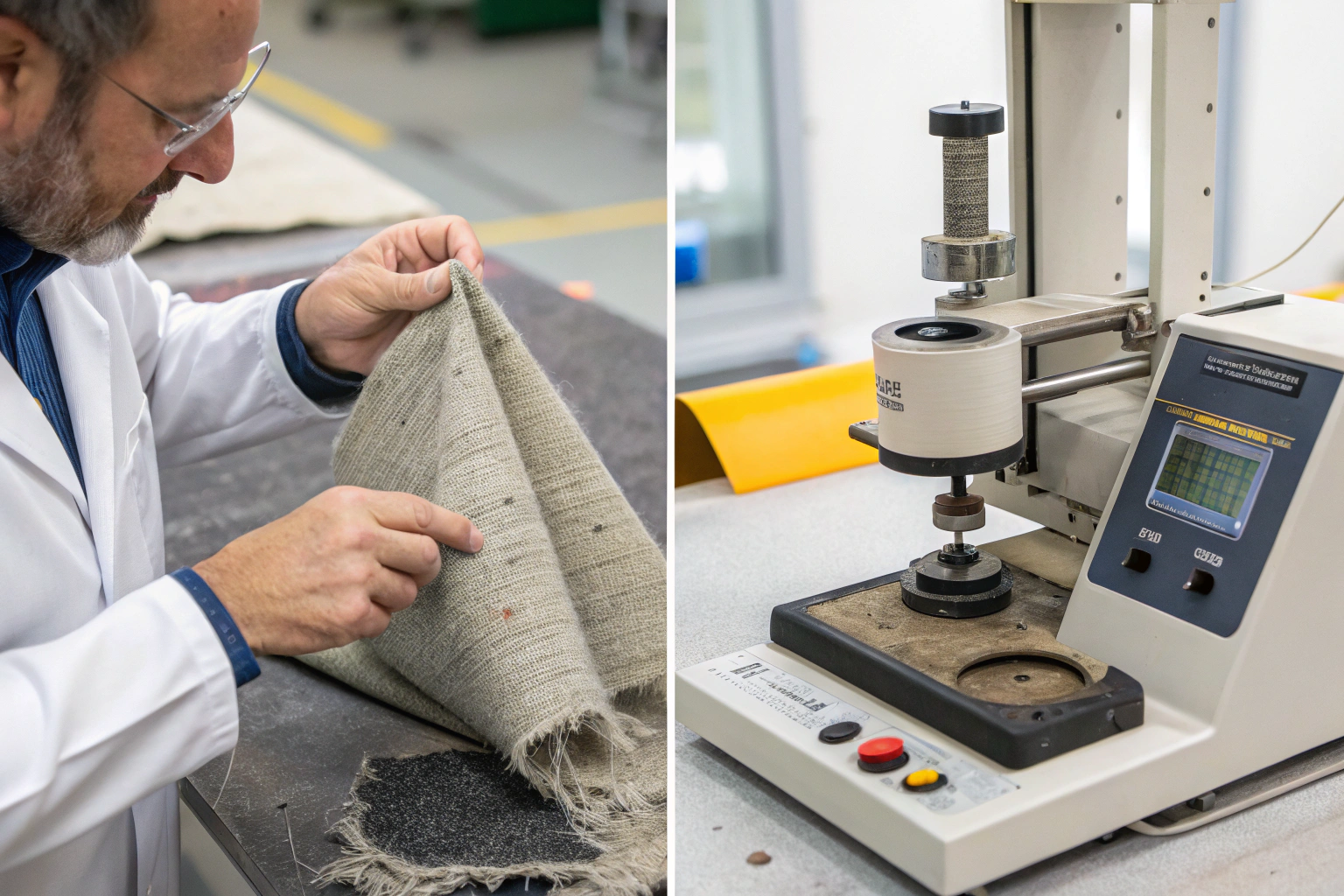
Last month, a potential buyer from Boston emailed me in a panic. He had just received samples of a beautiful cotton-lyocell blend for a summer dress collection, but after rubbing the fabric between his fingers for just ten seconds, it started to fuzz up like a worn-out sweater. He asked me, "Ron, is this normal?" I told him straight: It’s not normal if you’re planning to sell it to customers who expect quality. That little fuzz ball is the first sign of failure, and it’s the reason we spend over ¥500,000 a year running our in-house CNAS-accredited lab.
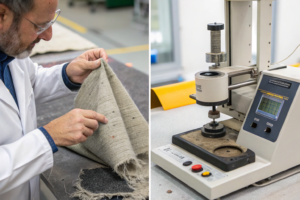
To test fabric for pilling, abrasion, and tear strength, we use standardized mechanical methods like the Martindale tester and the Elmendorf tear tester. For pilling, we rub fabric against itself or an abrasive medium for a set number of cycles (like 2,000 cycles) and then visually grade the surface fuzzing from 5 (no change) to 1 (severe pilling). For abrasion, we run the fabric until a thread breaks or a hole appears, recording the cycle count. For tear strength, we measure the force required to propagate a tear started by a precise cut in the fabric sample. These aren't just lab exercises; they simulate real-world use—a jacket rubbing against a car seat or a shirt catching on a corner of a desk.
I’ve been in this industry for over two decades here in Keqiao, and I’ve seen too many good designs fail because someone skipped these tests. They look at a fabric, it feels soft, the color is right, and they think, "Ship it." Then, three months later, they’re dealing with returns and angry emails. These three tests—pilling, abrasion, and tear strength—are the holy trinity of durability. If you master these, you master customer satisfaction. Let’s break down exactly how we do it at Shanghai Fumao, and how you can apply these standards to your own sourcing.
What Is the Standard Test Method for Fabric Pilling?
I remember a specific case in 2022 with a German outdoor brand. They sent us a high-tenacity nylon for a backpack line. In the hand, it felt bulletproof. But after our standard pilling test, we saw micro-fibrils forming on the surface—tiny, almost invisible fuzz. The client’s developer said, "We can't see that." I told him, "Give it six months of rubbing against a commuter's wool coat, and you will see it." We ended up adjusting the yarn twist and heat-setting process to solve it before production.
The standard test for pilling is defined by ISO 12945 (often using the Martindale or ICI pilling box method) and ASTM D4970. In our lab, we primarily use the Martindale method for woven fabrics. We cut four specimens, mount them on the tester, and rub them against the same fabric or a standard wool abradant under a specific pressure (usually 12 kPa) for a prescribed number of cycles—commonly 125, 500, 1,000, 2,000, 5,000, and 7,000 cycles for different grades. After the cycles are complete, we remove the samples and evaluate them in a light cabinet against standard photographs. We rate pilling from 5 (no surface change) to 1 (very severe pilling covering the whole surface).
But here's the thing: the machine is only half the story. The real skill comes in the interpretation. For example, a fabric might show pilling after 2,000 cycles but if those pills rub off quickly (which we call "loss of mass"), it might actually look better in the long run than a fabric that pills less but holds onto those pills. We also use the Random Tumble Pilling Method (ASTM D3512) for certain fabrics like fleece or knits, where we put samples into a cork-lined box with a bit of lint and tumble them. We then compare the samples to actual garments that have been worn for six months. We keep a "wardrobe archive" of worn clothing to make our lab ratings more realistic. If you’re sourcing for a high-abrasion area like elbows or knees, always ask your supplier for pilling grades at higher cycles, not just the standard 2,000. Check out this detailed breakdown of the ASTM pilling test procedures from a textile testing forum or learn more about why fabric pilling happens and how to prevent it during the yarn manufacturing stage.
How Many Rubs on a Martindale Tester Is Good for Upholstery?
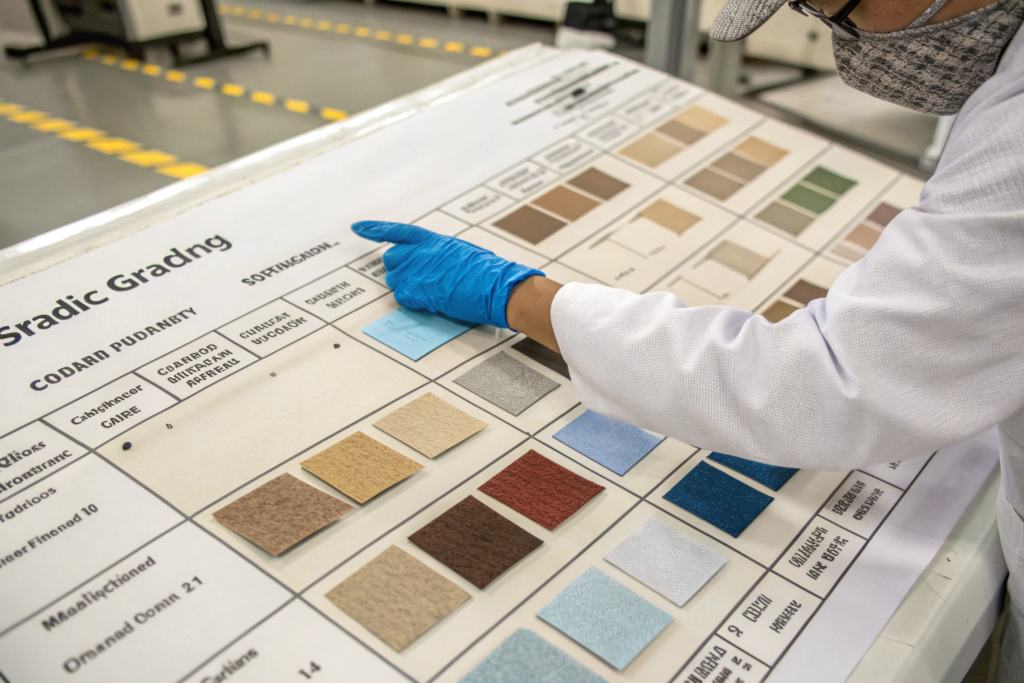
For upholstery, the "Martindale rubs" number is your gospel. You’ll see numbers like 20,000, 40,000, or even 100,000 rubs. For a standard domestic sofa, 15,000 to 20,000 rubs is usually considered durable. For commercial office use, you want at least 30,000 to 40,000 rubs. But for heavy-duty public transport like buses or trains, you need fabrics exceeding 50,000 rubs. At Shanghai Fumao, we recently tested a heavy-duty polyester velvet for a New York hotel renovation that hit 75,000 rubs with no visual wear. We use the Martindale method where the fabric is rubbed in a figure-eight motion against a standard abradant. We don't just run it until failure; we inspect every 5,000 cycles to check for changes in appearance. A common mistake buyers make is thinking a higher rub count always means better quality. Not true. A fabric with 100,000 rubs can feel like cardboard. It's about balancing durability with the intended touch and feel. For a deeper dive into Martindale classifications, this contract furniture supplier’s guide explains the classes very well.
How to Visually Grade Fabric Pilling After Testing?
This is where subjectivity tries to creep in. We fight that with a strict ISO 12945-2:2020 grading scale and a controlled viewing cabinet with D65 daylight illumination. We take the tested samples and lay them next to an untested reference sample. We grade them on a scale of 1 to 5, using half-point increments. Grade 5 means no change. Grade 4 means slight surface fuzzing. Grade 3 means moderate fuzzing or isolated pills. Grade 2 is distinct pilling. Grade 1 is severe pilling that changes the surface appearance dramatically. We have three technicians grade each sample independently, and if there’s a discrepancy of more than half a grade, we all sit down and re-evaluate together. I can't stress this enough: consistent lighting is key. I’ve been in supplier warehouses where they grade under a yellow fluorescent bulb, and it hides all the pilling. Insist on a standardized viewing environment. You can read more about the specifics of the ISO pilling visual grading standards at the International Organization for Standardization website, but also see how a third-party lab like SGS explains the process to their clients for a real-world commercial perspective.
How Is Fabric Abrasion Resistance Tested?
A few years ago, a sportswear brand from the UK sent us a complaint. Their best-selling yoga leggings were developing a shiny, thin spot on the inner thighs after just a few months. They thought it was a dye problem. We asked them to send back a failed pair. We put the thin spot under our microscope and saw the individual fibers had been worn away. It wasn't a dye issue; it was an abrasion issue. The fabric wasn't durable enough for the friction of skin-on-fabric during exercise.
Abrasion resistance testing measures how well fabric can withstand surface wear and rubbing. The primary standard we use is ISO 12947 (again, using the Martindale tester) or ASTM D4966. Unlike pilling testing, where we stop at a set cycle to check for fuzz, abrasion testing often runs the fabric to its breaking point. We run the test until either a thread breaks or a hole appears. The result is the number of cycles the fabric endured before failure. For example, a heavy-duty workwear fabric might not fail until 50,000 cycles, while a delicate silk charmeuse might fail at just 500 cycles.
There are different types of abrasion, and we have to match the test to the end-use. Flat abrasion (Martindale) is good for most areas. Flex abrasion (like the Stoll Flex test, ASTM D3885) is for areas that bend, like elbows and knees. Edge abrasion is for collars and cuffs. For the yoga leggings, we ran a flat abrasion test on the original fabric, and it failed at 8,000 cycles. We then sourced a new yarn from our partner mill—a nylon 66 with a modified cross-section—and developed a tighter, more compact weave. The new fabric passed 25,000 cycles with no failure. We also use a Taber Abraser (ASTM D3884) for coated fabrics, where we spin the sample under weighted abrasive wheels. I always tell our clients: if you’re making backpacks that will sit on concrete, you need a Taber test. For a great explanation of the different abrasion testing methods, this textile technology blog breaks down the science behind friction and wear. Also, understanding the difference between nylon 6 and nylon 66 for durability can really impact your fabric sourcing decisions.
How Does Fabric Construction Affect Abrasion Resistance?
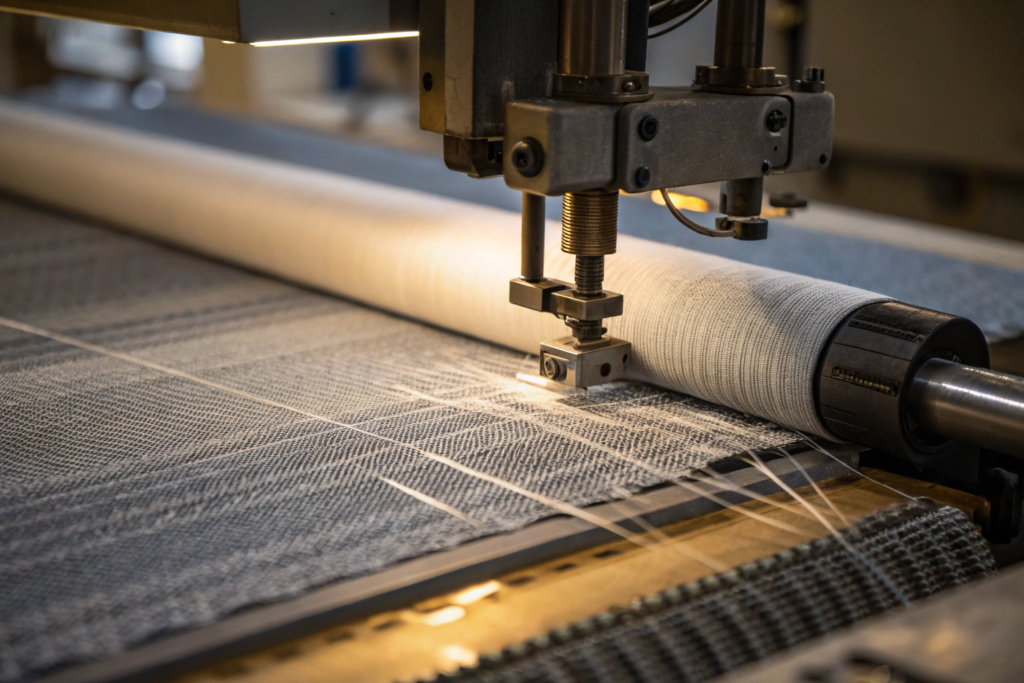
It's not just about the fiber. The weave, the yarn count, and the finishing all play huge roles. A tightly woven fabric with a high thread count generally has better abrasion resistance because the fibers are more compact and harder to displace. For example, a plain weave is usually more abrasion-resistant than a satin weave of the same fiber because it has more interlace points, locking the yarns in place. Yarn twist is critical too. High-twist yarns are more compact and less likely to abrade than soft, low-twist yarns. We once had a client who wanted a super-soft, "peached" finish for a jacket. That peaching process literally stands the fibers up on the surface, making them more susceptible to abrasion. We had to balance their desire for that soft hand by using a higher-twist base yarn, so even when the surface fibers wore down, the structural integrity remained. The finishing chemicals also matter; some softeners can actually lubricate the fibers, allowing them to slip and break more easily under abrasion. If you're deep into fabric construction, this textile engineering handbook entry on fabric geometry is a goldmine of information.
What Is the Wyzenbeek Test vs. Martindale Test?
You’ll often hear these two names, especially in the US furniture market. The Wyzenbeek method (ASTM D4157) is more common in North America, while Martindale (ISO 12947) is the standard in Europe and the rest of the world. The main difference is the motion. Wyzenbeek rubs a cotton duck fabric back and forth in a straight line over the test fabric. Martindale rubs in a figure-eight pattern, which is more complex and arguably simulates real-world wear better. The results aren't directly comparable. A fabric that passes 15,000 Wyzenbeek "double rubs" might be equivalent to 20,000 or 30,000 Martindale cycles. There's no universal conversion formula, and any supplier who gives you one is oversimplifying. When you’re sourcing for a global market, it's smart to specify which test you want. If you're shipping sofas to both the US and Europe, ask for both tests. At Shanghai Fumao, we have both machines and can run whichever our client needs. This comparison chart from a textile testing equipment manufacturer shows the machine differences. And here's a discussion on a furniture industry forum about the Wyzenbeek vs Martindale debate.
How to Accurately Measure Fabric Tear Strength?
Last year, we had a client from Australia manufacturing canvas tents. He called me, frustrated. Their tents were failing at the seams during high winds, not at the seams themselves, but right next to the stitching. The fabric was tearing. He had done all the strength tests on the raw fabric, but he hadn't tested the tear strength after the sewing process, where the needle holes create weak points. We had to backtrack and figure out where the process was failing.
Tear strength measures the force required to continue a tear in a fabric after an initial cut has been made. The most common method is the Elmendorf tear test (ASTM D1424 / ISO 13937-1) . We use a falling pendulum device. We cut a specific size specimen, make a precise slit in it, and then clamp it. We release the pendulum, which swings down and tears the fabric. The machine measures the force, in Newtons or grams-force, needed to tear the fabric. A higher number means a stronger, more tear-resistant fabric. For the tent client, we found the original fabric had an Elmendorf tear strength of 50 Newtons in the warp direction, but after sewing, the needle damage reduced it to 30 Newtons.
Another key method is the Tongue Tear test (ASTM D2261 / ISO 13937-2) , often done on a tensile testing machine (like an Instron). For this, we cut a slit in the fabric to create two "tongues," clamp one tongue in the top jaw and the other in the bottom jaw, and pull them apart. This is better for fabrics that are very stretchy or have a lot of give, like knits. We measure the peak force during the tear. A crucial factor is the fabric's weave. In a ripstop fabric, the thicker, stronger ripstop yarns actually stop the tear from propagating, so you see a very jagged tear path and a high force reading. With the tent fabric, we recommended a different needle type and a slightly looser weave construction to allow the yarns to "give" rather than break when the needle pierced them. We also applied a specialized silicone finish that lubricated the yarns, reducing the friction during tear. If you want to see the detailed procedure for the ASTM D1424 Elmendorf test from an official standards body, it's a bit dry but essential. And for a more practical take, this quality control blog post about troubleshooting tear failures offers real-world advice.
What Is the Difference Between Tear Strength and Tensile Strength?
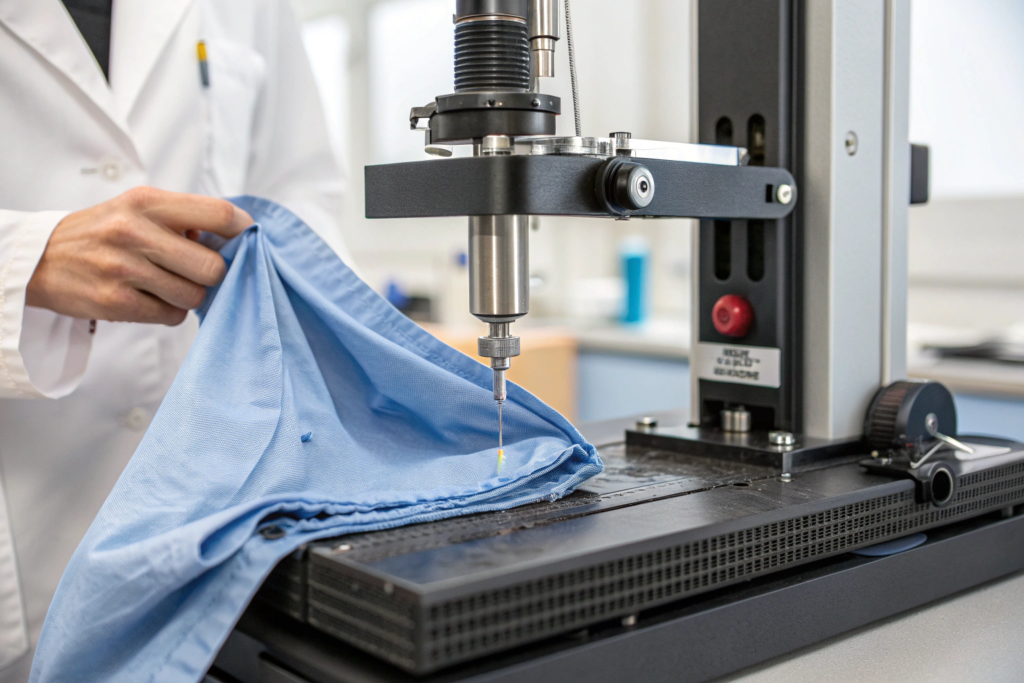
This is one of the most common points of confusion I see. Tensile strength (ASTM D5034 / ISO 13934-1) measures the force needed to pull a fabric apart, like stretching a piece of elastic until it snaps. It’s about the fabric's resistance to a straight, even pull. Tear strength, as we discussed, measures resistance to a tear that's already started. Think of it like this: tensile strength is how hard you have to pull on a rope to break it. Tear strength is how hard you have to pull on a rope that already has a small cut in it to make that cut bigger. For a product like a parachute, you need both. High tensile strength ensures it can handle the weight, and high tear strength ensures that if a small tear starts from a snag, it won't immediately rip the whole chute apart. In our lab, we test both. We have one client who makes luxury canvas bags, and they require a tensile strength of 800N but a tear strength of only 30N. That’s a huge disparity, and it means their fabric is stiff and hard to pull apart, but once a cut is started, it rips easily. We're working with them to re-engineer the weave to balance it out. This comparison article on a materials science site explains the physics behind it well. Also, see how a major brand like Patagonia talks about these properties in their material specifications for a real-world application.
How to Interpret Elmendorf Tear Strength Results (N or gf)?
We usually report Elmendorf results in Newtons (N) , but you'll also see grams-force (gf) , especially in older US data. 1 Newton is approximately 101.97 grams-force. So, a result of 50N is about 5,100 gf. But what do these numbers mean for your product? For a lightweight blouse fabric, a tear strength of 5N to 10N is usually acceptable. For a standard shirting fabric, we aim for 15N to 25N. For a lightweight down jacket shell, we need at least 20N to 30N to prevent the down from escaping through a tear. For heavy-duty workwear, canvas, or upholstery, we often need 40N or more. It's also critical to test both the warp (lengthwise) and weft (crosswise) directions. Some fabrics are much stronger in one direction than the other, and if that weak direction aligns with a high-stress area in a garment, you're headed for trouble. We recently tested a beautiful stretch denim for a client. The weft tear strength was fantastic at 35N, but the warp was only 12N. We realized the warp yarns were a fine, low-twist cotton that just snapped. We recommended a slight increase in the warp yarn twist and a change in the weaving pattern, which brought the warp strength up to 28N without changing the hand feel too drastically. For more information on interpreting fabric test data, this textile testing glossary from a UK lab is very handy. And if you want to see typical tear strength values for different fabric types, this database of fabric properties is a great reference.
How to Plan Production Around Chinese Manufacturing Peak Seasons?
I've been in this business long enough to see the cycle repeat every single year. In February, after Chinese New Year, everyone is scrambling, asking for samples they needed yesterday. By June, the orders slow down, and then in August, the panic starts again for the fall/winter collections. I had a client from Sweden who, for three years straight, would place his big orders in late September and then be shocked when delivery took eight weeks instead of the usual four. He never connected it to the fact that September is one of our busiest months.
In China, our manufacturing rhythm has two distinct peak production periods: March to May and August to October. During these times, factories in Keqiao are running at 100% capacity, sometimes even 110%. This demand naturally adds 1 to 2 weeks to standard production timelines. Then we have the major holiday shutdowns: Chinese New Year (CNY) , which is a 3 to 4 week near-total shutdown of the entire supply chain, and Golden Week in early October, which adds another week of disruption. Understanding this ebb and flow is the secret to a smooth, on-time production schedule.
Smart buyers don't fight this cycle; they dance with it. They know that if they need fabric for a spring collection launching in March, they can't be ordering in January. That's a recipe for disaster. The slower periods—June to July and November to December—are our breathing room. During these months, we have more machine time, our QC teams can do more detailed inspections, and we can often offer faster turnarounds because we're not juggling 50 urgent orders at once. A few years ago, a very organized French brand started planning their entire year around our CNY shutdown. They would complete all their lab dips, strike-offs, and pre-production samples by mid-December. They'd have their orders finalized and deposit paid before the holiday started. The moment we reopened in late February, their order was the first on the production floor. They consistently shaved 3 weeks off their lead time compared to their competitors who waited until March to start. This guide to Chinese manufacturing holidays from a sourcing platform is essential reading for any buyer. And here's a blog post by a supply chain consultant on navigating the "Golden Week" slowdown that offers some practical checklists.
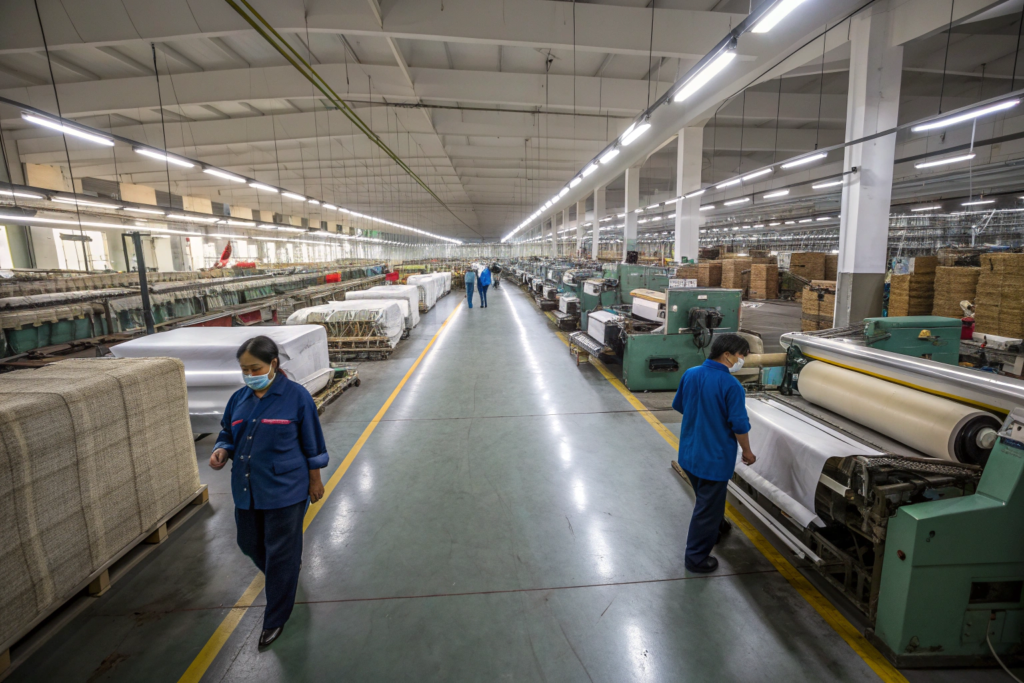
Why Is Chinese New Year a 4-Week Shutdown, Not Just a Week?
This is a question I get from every new client. It's not just the public holiday itself, which is officially about a week. The reality is that China's manufacturing workforce is a migrant workforce. Millions of workers from places like Anhui, Sichuan, and Henan provinces travel back to their home villages for the New Year. This is often the only time all year they see their families. The shutdown starts about a week before the actual holiday as people begin their journeys. Then, after the holiday, it takes another one to two weeks for everyone to travel back and for the factories to ramp up operations again. It's a massive logistical ballet of people. We can't just flip a switch and be at full capacity on the first day back. We have to re-onboard workers, recalibrate machines that have been sitting idle, and re-establish the supply chain for our raw materials, like yarn and chemicals, which also shut down. I always advise my clients to treat the entire period from the last week of January to the end of February as a blackout period. You can find a more detailed explanation of the logistics of the CNY migration and its impact on industry in this economic report.
How to Calculate Lead Times for Orders Placed in Peak Season?
If you absolutely must order during a peak period (March-May or August-October), you have to build in buffers. Here's my rule of thumb, based on our operations at Shanghai Fumao. Let's say you're placing a standard order for 5,000 meters of custom-dyed fabric. In a slow month, I'd quote you 25-30 days from deposit to shipment. In a peak month, I'm going to quote you 40-45 days, minimum. And that's assuming everything goes perfectly. I also recommend adding a 10-day "air buffer" on top of that for any unexpected delays in shipping or port congestion. The key is to have a detailed production schedule with your supplier. Don't just accept a "45 days" quote. Ask for a breakdown: "How many days for yarn procurement? How many days for weaving? How many for dyeing? How many for finishing and QC?" This shows the supplier you know what you're doing, and it holds them accountable. If they tell you yarn procurement is 10 days, you can check in on day 9. For a real-world look at calculating lead times, this importer's handbook chapter on production timelines is excellent. And here's a link to a free shipping container tracking tool I use constantly to monitor real-time port congestion and vessel schedules.
Conclusion
So, testing for pilling, abrasion, and tear strength isn't just about passing a lab report. It's about protecting your brand's reputation. It's about making sure that the jacket you designed, the dress you dreamed up, or the pants you sourced actually perform for the person who pays for them. It’s a combination of standardized science—the Martindale cycles, the Elmendorf Newtons, the visual grading under D65 light—and practical, real-world experience. We combine that science with our deep understanding of China's production rhythms. We know when to push for speed and when to advise patience. We know how a small change in yarn twist can turn a failing fabric into a market leader.
At Shanghai Fumao, we don't just sell fabric off a roll. We sit down with you, look at your tech packs, and ask the tough questions: Where will this garment be worn? How will it be cleaned? What's the real-world abuse it will face? Then we build a testing and production plan around those answers, leveraging our in-house CNAS-accredited lab and our 20+ years of manufacturing experience right here in Keqiao. We help you navigate the busy seasons and take advantage of the slow ones, ensuring your timelines are met and your quality standards are exceeded.
If you're tired of guessing about fabric quality or if you have a new collection that demands the highest durability, let's talk. Get in touch with our Business Director, Elaine. She and her team are ready to walk you through our process, from initial lab dips to final QR-code-tracked inspections. You can reach her directly at elaine@fumaoclothing.com. Let's co-create something that lasts.