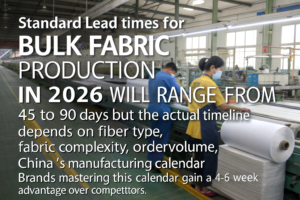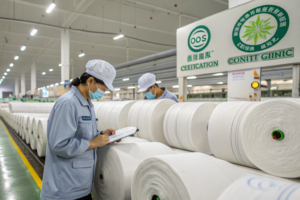
Starting your own clothing line is thrilling, but let me tell you from my 20 years in Keqiao—the fabric is where dreams meet reality, and where most new brands stumble. You might have brilliant designs, but if your fabric is wrong, everything falls apart. Sourcing from China isn't just about finding the cheapest supplier; it's about finding a strategic partner who understands quality, timeline, and your vision. I've seen too many startups burn through capital on fabric that pills, shrinks, or arrives too late for production.
So, how do you start a clothing line by sourcing fabrics from China successfully? You need a clear, step-by-step plan that covers defining your fabric needs, finding and vetting reliable suppliers, mastering sampling and negotiation, and navigating logistics and quality control. The key is treating fabric sourcing not as a one-time purchase, but as building a foundational relationship for your brand. At Shanghai Fumao, we've partnered with over 100 startups, and the successful ones always share this mindset.
This guide will walk you through the exact process we recommend to our clients, blending insider industry knowledge with practical, actionable steps. You'll learn how to communicate like a pro with factories, avoid costly mistakes, and leverage China's textile ecosystem to your advantage. Forget the guesswork; let's build your line on a solid foundation.
How to define your fabric specifications clearly?
Before you search for "fabric supplier China," you must know exactly what you're looking for. Vague requests like "soft fabric" or "nice dress material" will get you nowhere—or worse, the wrong product. Clear specs are your blueprint and your shield against misunderstandings. For a recent client launching a sustainable activewear line, we spent two weeks just finalizing their tech pack, which included details down to the recycled polyester filament denier and the required Oeko-Tex Standard 100 certification. That upfront clarity saved them months of back-and-forth.
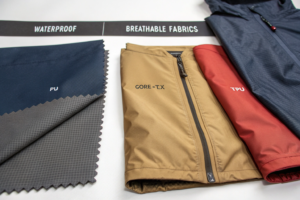
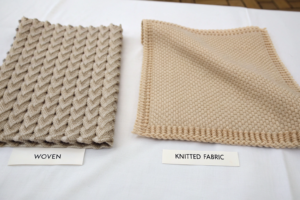
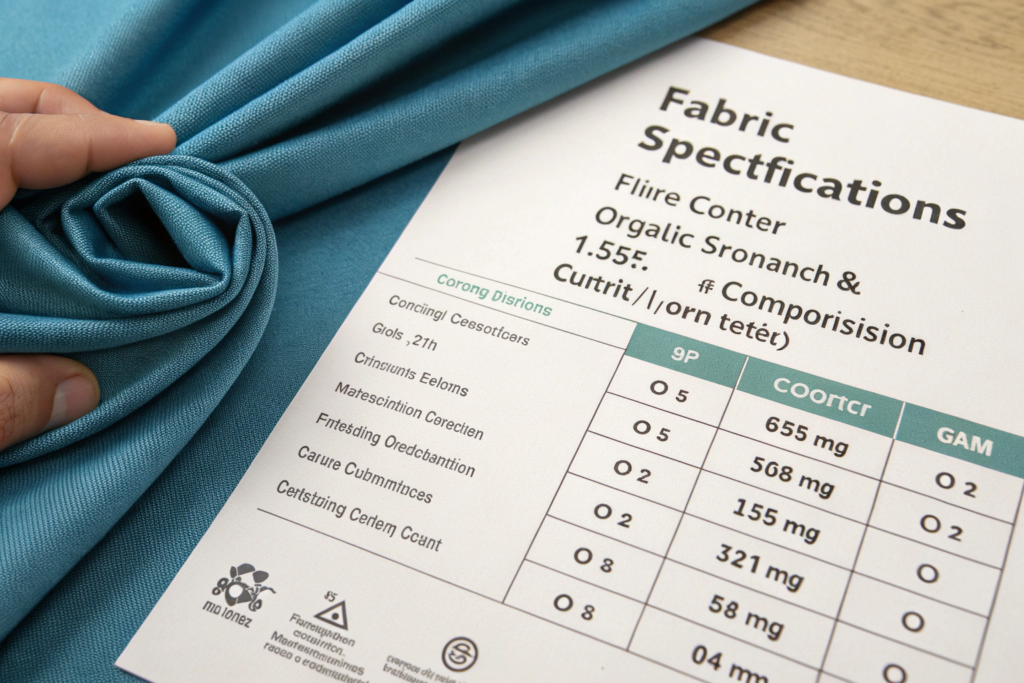
Your fabric specifications should cover five core areas: Fiber Content & Composition (e.g., 95% Organic Cotton, 5% Spandex), Fabric Construction (e.g., 2x2 Rib Knit, 180GSM), Width (in cm or inches), Key Performance Parameters (like weight/GSM, stretch percentage, pilling resistance), and Finish & Certifications (e.g., enzyme wash, GOTS certified). Don't forget the hand feel—this subjective quality is crucial. Bring a physical sample of a fabric you love as a reference point. This is your single most powerful communication tool.
What essential details belong in a fabric tech pack?
A tech pack for fabric isn't as complex as for a garment, but it's just as critical. It should be a single document (PDF/Excel) containing:
- Visual Reference: High-quality photos of your inspiration or similar fabrics.
- Detailed Spec Table: This is the core. Use a table like this:
| Parameter | Requirement | Tolerance | Test Method |
|---|---|---|---|
| Composition | 92% Recycled Polyester, 8% Spandex | ±1.5% | AATCC 20A |
| Weight (GSM) | 240 g/m² | ±10 g/m² | ISO 3801 |
| Width | 150 cm (finished) | +1 cm / -0 cm | - |
| Stretch (Warp) | 30% minimum | - | ASTM D2594 |
| Colorfastness to Washing | 4+ (Grade) | - | AATCC 61-2A |
- Lab Dip & Strike-Off Requirements: Specify how many color submissions you expect.
- Required Certificates: List all, e.g., "Must provide valid GOTS Transaction Certificate for this lot."
- Packaging Details: How should the fabric be rolled? Polybagged? Labeled?
A well-built tech pack signals professionalism. For resources on building one, platforms like Techpacker's guide to creating a production-ready tech pack offer great templates.
How to communicate hand feel and aesthetic without physical samples?
This is a classic challenge. Use descriptive, industry-standard terms. Instead of "soft," specify "peach-skin hand feel" or "brushed back for a fleecy interior." Reference well-known fabrics: "We want a drape similar to a viscose challis but with more body." Provide video clips—a short clip of you rubbing, stretching, and draping a reference fabric is incredibly useful. Mention the end-use: "This fabric is for relaxed-fit, heavyweight summer shorts, so it needs structure but must be breathable." In my experience, the brands that succeed are those who learn the language. Engaging with communities on The Fashion District Forum's fabric discussion threads can help you hone this vocabulary.
Where to find and vet reliable Chinese fabric suppliers?
The search is overwhelming—Alibaba has thousands of listings. The goal isn't to find the most suppliers, but the right one. A reliable supplier is a partner who will grow with you, problem-solve with you, and ensure your quality is consistent from your first 100-meter order to your 10,000-meter re-order. I've seen a promising LA-based streetwear brand almost collapse because their first "supplier" was actually a trading company that disappeared after shipping a batch of mis-dyed jersey, leaving them with no recourse.
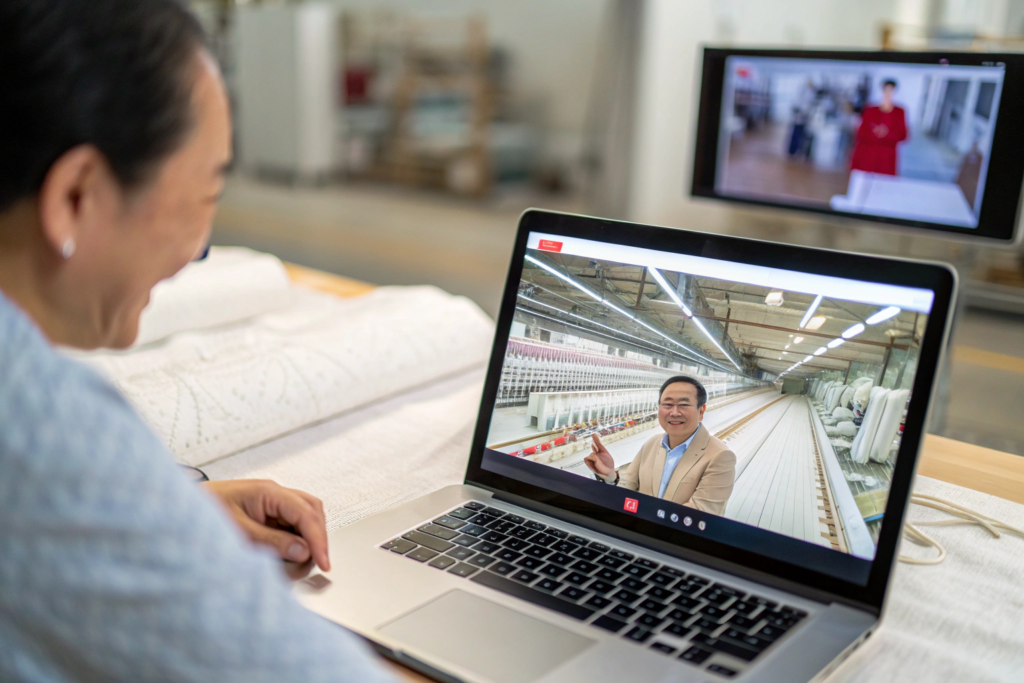
Focus on three main channels: B2B Platforms (Alibaba, Made-in-China—look for "Verified Suppliers" or "Gold Members" with transaction records), Industry Trade Shows (the best for building relationships; Intertextile Shanghai is a must-visit), and Professional Sourcing Agents or Referrals (networks from other designers). Once you have a list, vetting is key. You must go beyond the website. Always, always request a factory audit report or conduct a video tour. Ask for existing client references in your region and check them.
What are the red flags in a supplier's communication?
Poor communication before an order is a guaranteed disaster after payment. Major red flags include:
- Vagueness on Capability: If they say "yes, we can do everything" without asking detailed questions, they're likely a middleman.
- Unwillingness to Provide Proof: Hesitation to share factory photos, videos, or certifications.
- Pressure Tactics: "This price is only valid for today." Quality suppliers are busy but professional, not desperate.
- Lack of Technical Knowledge: They can't answer specific questions about shrinkage control, dyeing methods, or minimums for custom development.
- No Clear QC Process: They can't describe their inspection system (like the 4-point system we use at Shanghai Fumao).
A green flag? A supplier who asks more questions than you do. Last year, a startup from Berlin sent us a complex tech pack for a biodegradable blend. Our first reply wasn't a quote, but a list of 8 technical questions about their wash care labels and intended sewing machinery. That conversation built the trust that led to a successful long-term partnership.
How to verify supplier certifications and factory capabilities?
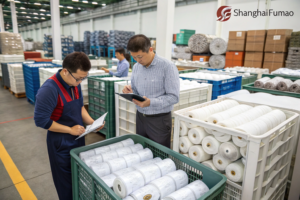
Don't just take a scanned certificate at face value. For certifications like GOTS or Oeko-Tex, note the license number and certified entity name. You can often verify these directly on the certifying body's website (e.g., the Oeko-Tex certification database). For factory audits (like BSCI, Sedex), request the full report or at least a summary with valid dates. The most direct way is the video tour. Ask them to walk you through specific departments: the weaving/knitting section, the dyeing lab, and crucially, the in-house QC and testing area. A supplier with their own lab, like our CNAS-accredited facility, invests in quality. For insights on what to look for during a virtual audit, Just-Style's articles on responsible sourcing provide excellent checklists.
How to navigate sampling, costing, and MOQ negotiations?
This is where the deal gets real. Sampling separates talkers from doers. Negotiation isn't just about hammering down price; it's about structuring a fair agreement that ensures quality and manages your cash flow as a startup. Remember, the cheapest sample or price often leads to the most expensive mistakes. A Canadian client once chose a supplier offering a sample at 30% lower cost than ours. The bulk order arrived with inconsistent dyeing, causing a 40% garment rejection rate—a loss far greater than the initial "savings."
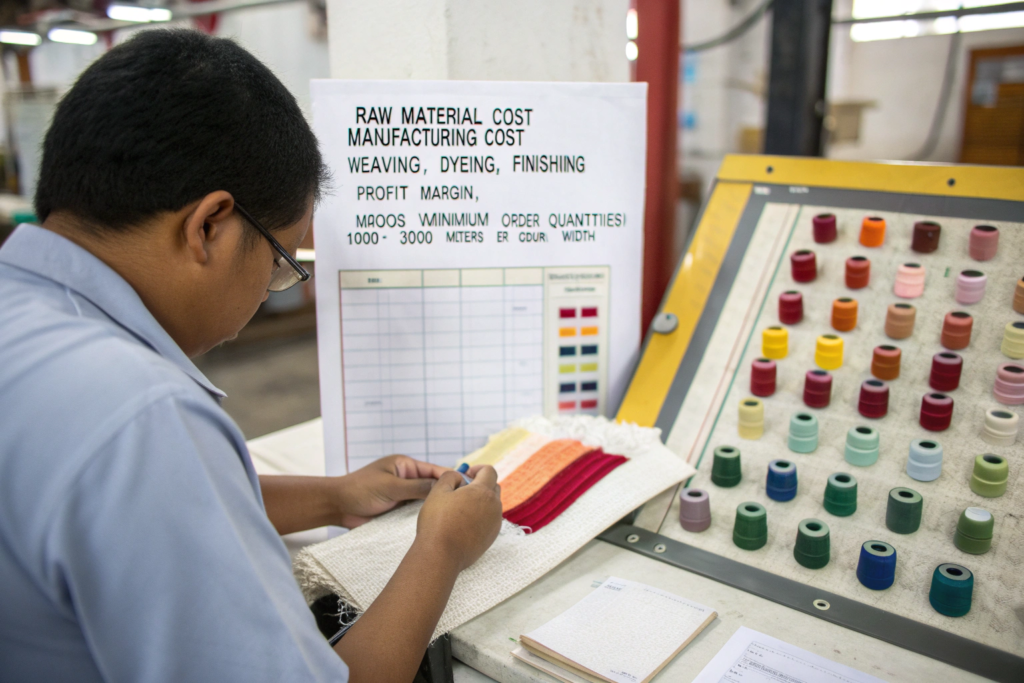
The sampling process should be methodical: Lab Dip (color approval on small yarn swatches) -> Handloom Sample (small fabric piece to approve construction/feel) -> Bulk Production Sample (from the actual production line, for final confirmation). For costing, understand the breakdown: raw material cost + manufacturing cost (weaving, dyeing, finishing) + profit margin + logistics. MOQs (Minimum Order Quantities) are the biggest hurdle for startups. A typical MOQ for a custom fabric can be 1000-3000 meters per color/width.
What should you test during the fabric sampling stage?
Sampling is your chance to test, not just look. Go beyond aesthetics. Conduct or request tests that match your garment's use:
- Wash Test: Wash and dry the sample 3-5 times. Check for shrinkage, color bleeding, and change in hand feel.
- Stretch & Recovery Test: Stretch the fabric in both directions. Does it snap back or sag?
- Pilling Test: Rub the fabric against itself vigorously. Does it ball up?
- Colorfastness to Light: If for outdoor wear, this is critical.
We provide a mini test report with every development sample. For a New York swimwear brand, our sample report flagged a potential chlorine resistance issue in their chosen nylon blend. We co-developed a special finishing treatment, which later became their unique selling point. You don't need a full lab; learn the basic at-home fabric testing methods for fashion startups shared by many independent designers online.
How to negotiate MOQ and payment terms as a startup?
Be transparent and strategic. Instead of just asking "What's your MOQ?", explain your business: "We are a startup with a confirmed order for 500 units. Our fabric requirement is 800 meters. Can we run this as our first order with a planned repeat in 60 days?" This shows you're serious. Strategies to lower MOQs include:
- Color Consolidation: Choose standard black or white as one of your colors; their MOQ is often lower.
- Width Flexibility: Ask if they can produce your design on a standard width they run frequently.
- Join a Waitlist: Ask if you can be added to a production run for a similar fabric they are making for another client.
For payment terms, the standard is 30% deposit, 70% before shipment. As a new client, you'll likely need to accept this. After building trust, you can negotiate milestones (e.g., 30% deposit, 40% after bulk fabric approval, 30% before shipment). Always use secure payment methods like Alibaba Trade Assurance or bank transfer to a verified company account. Never use Western Union. For deeper negotiation tactics, reading Sourcing Journal's coverage of supplier relationships can offer valuable perspectives.
How to manage quality control and shipping logistics?
You've approved the sample, paid the deposit, and production is running. Now, the most critical phase begins: ensuring the bulk order matches the sample and arrives on time. This is not the time to be hands-off. Proactive quality control and clear logistics planning are what separate professionals from amateurs. (Here's a truth many learn too late: the factory's default shipping method is almost never the most optimal or cost-effective for you.)
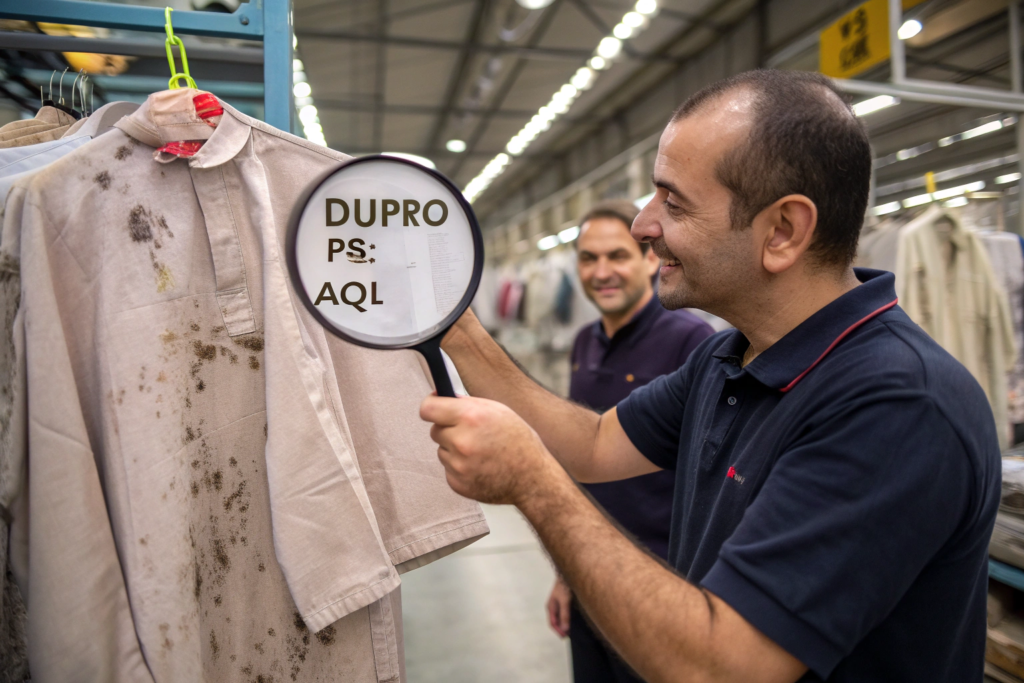
Quality Control (QC) should happen at two key stages: during production (DUPRO) and before shipment (Pre-Shipment Inspection or PSI). DUPRO involves checking the first pieces off the production line. PSI involves inspecting a statistically significant sample of the finished, packaged goods. For logistics, you must decide on Incoterms—this defines who is responsible and pays for what during shipping. Common terms are FOB (Free On Board, you arrange main shipping) and EXW (Ex Works, you handle everything from the factory gate). Your choice affects cost, control, and complexity.
What is an AQL inspection and how does it protect your order?
AQL (Acceptable Quality Level) is the industry standard for PSI. It's a statistical method that determines how many pieces to check and how many defects are allowable. For fabric, it's often applied per roll. For example, an AQL of 2.5 for major defects is common in apparel. This means if the inspector finds more than a calculated number of major defects (like holes, stains) in the sampled rolls, the entire batch fails inspection. You should specify the AQL level in your purchase contract. We conduct AQL-based PSI for all our clients as part of our service. For a Parisian boutique brand, our PSI caught a recurring weaving flaw in 3 out of 20 rolls of their luxury linen. We quarantined those rolls immediately and had them re-woven, ensuring their high-end reputation remained intact. You can learn to interpret AQL inspection reports for imported goods through various supply chain management blogs.
How to choose between FOB, EXW, and other shipping terms?
Your choice impacts your total landed cost and workload.
- EXW (Ex Works): You pay and manage everything from the factory door. You need your own freight forwarder in China. Maximum control, maximum complexity. Not recommended for first-time importers.
- FOB (Free On Board): The most common and balanced. Your supplier is responsible for delivering the goods to the port and loading them onto the ship/plane. You pay for and manage the main international freight and destination import clearance. This is a great starting point.
- CIF (Cost, Insurance & Freight): Supplier arranges and pays for freight and insurance to your destination port. Simpler for you, but you have less control over freight costs and carrier choice.
For startups, FOB is often the best choice. Partner with a reputable freight forwarder recommended by your network or supplier. They handle the complex logistics from China to your door. Always get shipping insurance—it's a small cost for major peace of mind. To understand the full cost implications, use online Incoterms 2020 calculators and explanation tools to model different scenarios.
Conclusion
Starting a clothing line by sourcing fabrics from China is a marathon of detailed preparation, not a sprint to find the lowest price. It's about building a partnership based on clear communication, verified trust, and shared standards. The process—from defining your specs with unwavering clarity to managing the final inspection—is what transforms a creative idea into a viable, reputable product. Remember, your fabric supplier should feel like an extension of your own team.
The brands that thrive are those that invest time in this foundational relationship. They see their supplier not as a vendor, but as a critical resource for quality, innovation, and market intelligence. At Shanghai Fumao, we're built to be that partner. From small-batch custom development to ensuring every meter passes our stringent 4-point inspection, we provide the stability and expertise startups need to grow confidently. If you're ready to move from concept to collection with a fabric partner who understands your challenges, let's connect. Reach out to our Business Director, Elaine, to discuss how we can support your specific fabric needs and help you build a stronger, more reliable supply chain from the ground up. Email her at: elaine@fumaoclothing.com.