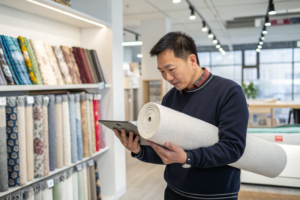
I still remember visiting a potential supplier about fifteen years ago, early in my career. The sales manager showed me to their showroom, pulled out a binder of beautiful jacquard samples, and promised the world. The patterns were stunning. The prices were competitive. I was impressed. Then I asked to see the factory floor. He hesitated. When we finally walked onto the production floor, I saw the problem. They had exactly two jacquard looms. Both were old. Both were running at half speed. One had a broken thread that no one had noticed. The "complex patterns" they were selling were samples from years ago, woven on machines they no longer had.
That experience taught me something that has guided my work ever since: beautiful samples don't mean a factory can produce complex patterns at scale. The real capability is in the machines, the people, and the processes behind the samples. I've spent the last two decades building relationships with mills that can actually deliver on complex woven patterns, and I've learned exactly what to look for.
At Shanghai Fumao, we work with a network of specialized weaving mills that have invested heavily in jacquard and dobby technology. We know which factories can handle the hard stuff—the multi-color jacquards, the high-density satins, the structured matelassé. In this article, I'm going to share what I've learned about spotting a factory that can truly handle complex woven patterns, so you never end up with a beautiful sample and a failed bulk order.
What Machines Should a Factory Have for Complex Patterns?
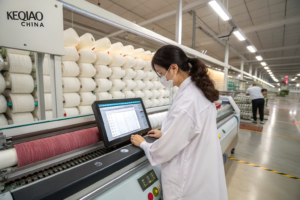
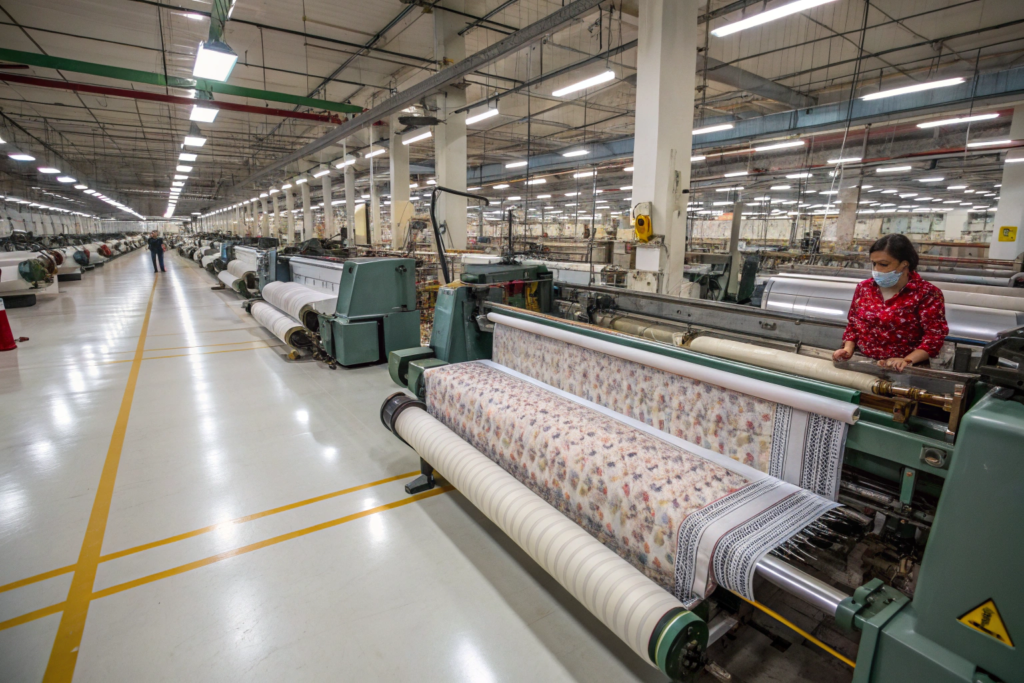
The machine is the foundation. You can't weave a complex pattern on a basic loom. It's like trying to print a high-resolution photo on a dot matrix printer. The technology matters. When I visit a factory, the first thing I look at is their machine park. The types of looms they have, the number of hooks, the age of the equipment—all of it tells a story.
What Is the Difference Between Dobby and Jacquard Looms?
This is the first question to ask. A dobby loom can create small, repeating geometric patterns. Think of a simple herringbone, a small honeycomb, or a basic pique. The dobby mechanism controls a limited number of warp threads—usually up to a few hundred. It's perfect for subtle textures and repeating designs.
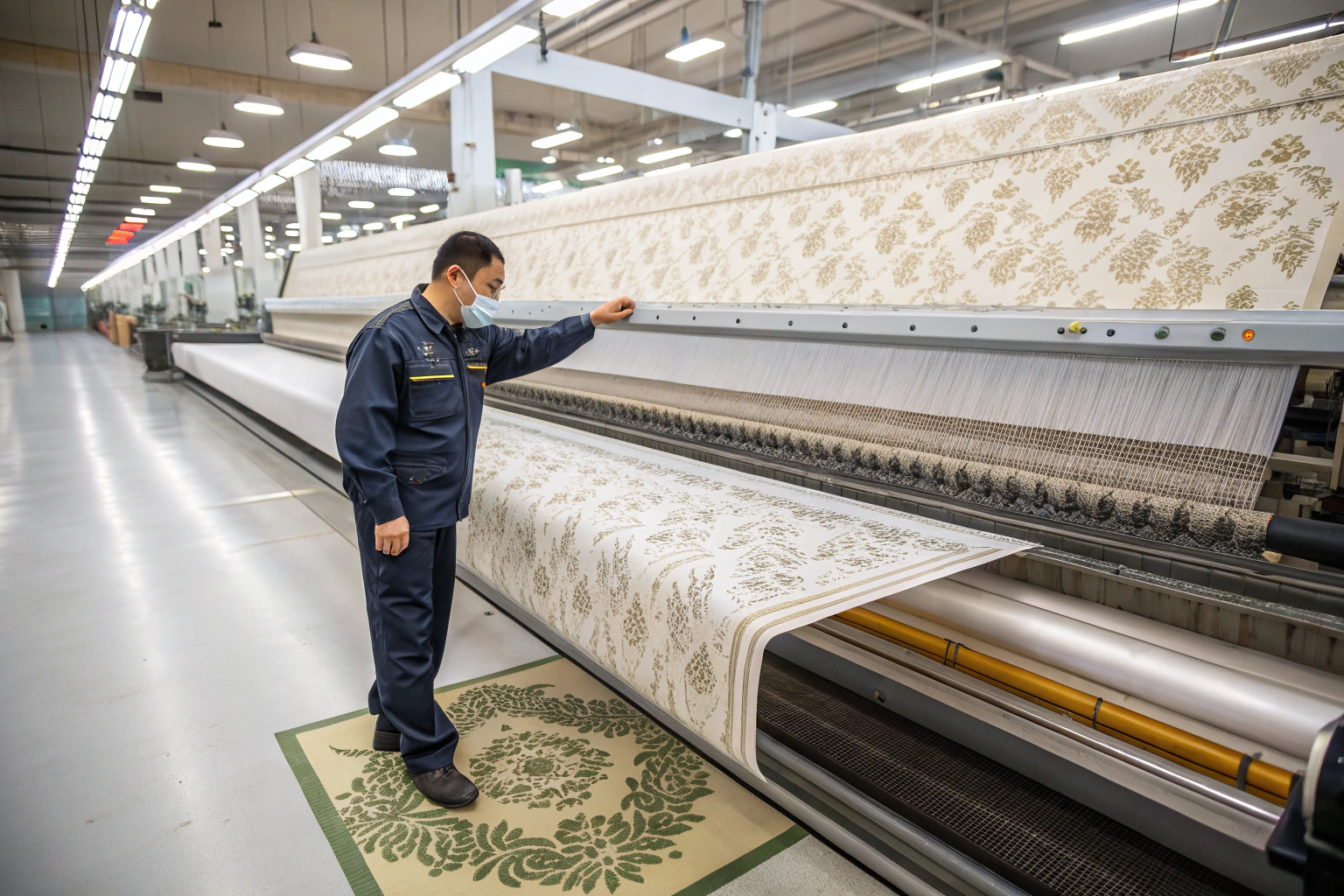
A jacquard loom is a different beast. It can control every single warp thread independently. The number of hooks—the individual controls—can be in the thousands. A modern electronic jacquard can have 12,000 hooks or more. This allows for unlimited pattern complexity. You can weave a floral design that looks like embroidery. You can weave a portrait. You can weave a pattern that never repeats across the entire width of the fabric.
I worked with a client from a luxury upholstery brand in Italy about four years ago. They wanted a fabric with a large-scale, non-repeating floral pattern for a line of high-end sofas. The pattern was so complex that it required a 10,000-hook jacquard. We had to find a mill that had that specific machine. The first supplier we approached had only 2,000-hook jacquards. They said they could "make it work." We knew they couldn't. We found a mill with the right machine. The fabric was perfect. The client sold out of that sofa line in three months. For a technical comparison of dobby and jacquard weaving, this textile engineering article explains the capabilities and limitations of each loom type.
How Do You Evaluate a Factory's Machine Park?
A factory can have jacquard looms, but not all jacquard looms are equal. You need to look at the number of hooks, the brand, and the age. A 2,000-hook jacquard from the 1990s is a very different machine from a 12,000-hook electronic jacquard from a top manufacturer like Stäubli or Bonas.
When I evaluate a factory for complex patterns, I ask to see the machine specifications. How many jacquard looms do they have? What's the hook count? When were they installed? What's the maintenance schedule? A factory that invests in new machines and maintains them well is a factory that cares about quality.
I remember a visit to a mill in Suzhou about three years ago. They had fifty jacquard looms, all Stäubli machines installed within the last five years. The floor was spotless. Each machine had a maintenance log hanging on it. The technicians were trained on the latest software for creating weave files. That factory became one of our key partners. They handle our most complex jacquard orders. They've never missed a deadline, and their quality is consistent.
If a factory hesitates to show you their machine floor or can't tell you their hook count, that's a red flag. A serious complex-pattern factory will be proud of their equipment. For a guide on what to look for during a factory visit, this sourcing blog offers a checklist for evaluating weaving mills.
What Skills Should the Design and Technical Team Have?
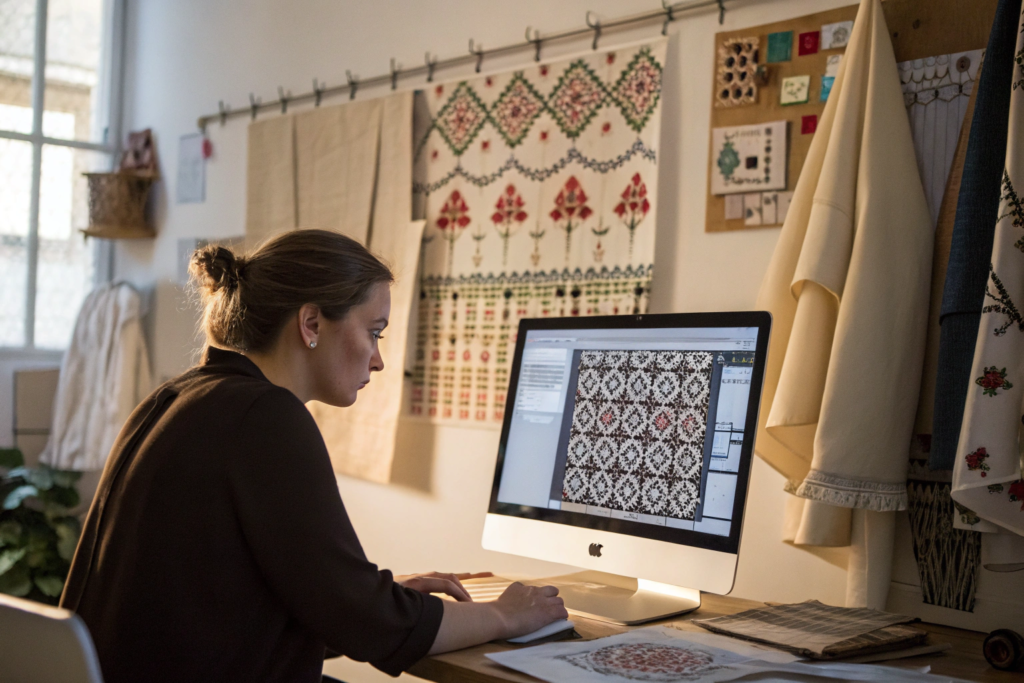
Machines are important, but machines are useless without skilled people to run them. Complex patterns require a team that understands both design and engineering. The person creating the weave file needs to know how to translate a digital image into a structure that will weave correctly. The technician setting up the loom needs to understand yarn tensions, warp preparation, and finishing. A factory without this expertise will struggle.
What Should You Ask About the Design Process?
The first thing to understand is how the factory creates weave files. Do they have in-house designers, or do they outsource? What software do they use? Can they work from your artwork, or do they need you to provide a specific file format?
A factory that does complex patterns seriously will have a dedicated design team. They'll have software like NedGraphics or AVA CAD. They'll be able to take your artwork—a photo, a sketch, a vector file—and convert it into a weave file. They'll understand how to adjust the pattern for different yarn types and different loom settings.
I had a client from a high-end fashion brand in Paris who wanted a fabric with a very specific photographic pattern. The pattern was a black-and-white image of a city skyline. The factory we worked with had an in-house design team that spent two weeks optimizing the weave file. They had to adjust the contrast, simplify some areas where the pattern was too dense, and add reinforcement where the weave structure was too loose. The final fabric was stunning. The client told me that other suppliers had refused the project because they didn't have the design capability. The factory's design team was the difference between a "no" and a "wow."
If you're evaluating a factory, ask to see examples of their design work. Ask about their process for translating artwork into weave files. Ask how many designers they have on staff. A factory that can't answer these questions probably can't handle complex patterns. For a discussion of the technical skills required for jacquard design, this textile design blog has an article on the art of weave file creation.
How Do You Assess the Technical Support Team?
Beyond the design team, you need a strong technical team that can set up the looms correctly and troubleshoot problems. Complex patterns are finicky. The yarn tensions need to be precise. The warp preparation needs to be perfect. A small mistake in setup can ruin thousands of meters.
When I'm evaluating a factory, I ask to meet the technical manager. I ask about their experience with complex patterns. How long have they been running jacquard looms? What's their process for setting up a new pattern? How do they handle issues like broken threads or tension variations?
I remember a project where we were weaving a complex matelassé for a bedding brand in the US. The pattern was a large-scale damask with very fine details. The first factory we tried had beautiful samples but couldn't get the bulk production right. The technical team didn't understand how to adjust the loom for the specific yarn we were using. We moved the order to a different factory with a more experienced technical team. They ran the entire 20,000-meter order with less than 1% defect rate. The difference was the people.
Ask the factory about their defect rate on complex patterns. Ask about their training program for technicians. A factory that invests in training and retains experienced staff is a factory you can trust. For advice on evaluating technical capabilities, this manufacturing guide offers tips for assessing factory expertise.
What Quality Control Processes Are Essential for Complex Patterns?
Complex patterns demand rigorous quality control. A plain weave fabric can have a few broken threads and still be usable. A complex jacquard with a broken thread? The pattern is ruined. The QC process needs to be designed to catch issues early, before thousands of meters are produced.
How Should a Factory Inspect Complex Patterns During Production?
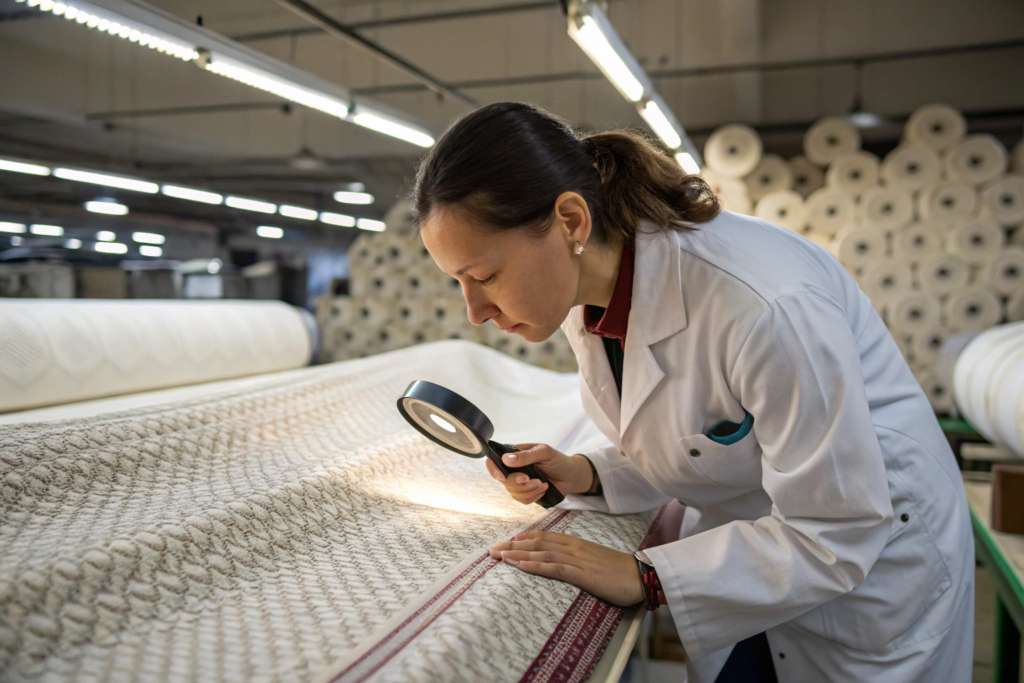
The first line of defense is in-process inspection. A good factory will have technicians walking the floor, checking each loom regularly. They'll look for broken threads, tension variations, and pattern alignment issues. They'll have a system for stopping production immediately if a defect is found.
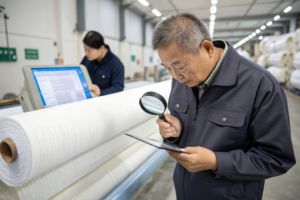
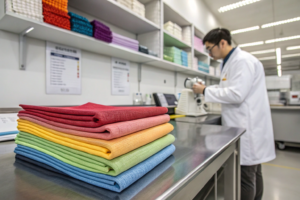
The second line is the final inspection. Every roll of complex pattern fabric should be inspected on a machine that allows the inspector to see the full width of the fabric under good lighting. The inspector should be trained to spot pattern defects—misalignments, missing threads, color variations, weave density issues.
I visited a factory in Zhejiang last year that had an impressive QC system for jacquard. Every loom had a sensor that detected broken threads and stopped the machine automatically. The technicians carried tablets that showed the pattern file for each loom. They could compare the actual fabric to the digital file in real time. The final inspection station had a camera system that scanned the entire fabric width and flagged any deviations from the standard. The defect rate on their jacquard production was under 0.5%.
When you're evaluating a factory, ask to see their QC process. Ask how they handle defects. Ask what their acceptable defect rate is. A factory that can't give you clear answers probably doesn't have a reliable QC system. For a detailed guide to QC for complex weaves, this textile quality article explains inspection methods for jacquard and dobby fabrics.
What Should Be Included in the Quality Agreement?
Before you place an order for a complex pattern, you need a quality agreement that spells out exactly what is acceptable and what isn't. This should include the inspection standard—usually the 4-point system. It should include the acceptable defect rate. It should include the process for handling defects.
The 4-point system is the industry standard for fabric inspection. Each defect is assigned a point value based on its size. A total of points per 100 square yards determines whether the roll is first quality, second quality, or reject. For complex patterns, you should specify a lower acceptable point count than for simple fabrics. A defect that would be minor in a plain weave can ruin a jacquard.
We had a client from a luxury bedding brand in the UK who insisted on a zero-defect policy for their jacquard sheeting. Every roll had to be first quality with no visible defects. We built that into our quality agreement. We set up a special inspection station just for their orders. The QC team knew that any roll with a single visible defect would be rejected. The client paid a premium for this level of quality, but they got exactly what they wanted. Their sheets are some of the most expensive on the market, and they have almost no returns.
Your quality agreement should also specify what happens when defects are found. Who pays for replacement fabric? Who pays for shipping? A clear agreement prevents disputes later. For a template of a fabric quality agreement, this sourcing resource offers a sample contract for textile purchases.
How Do You Test a Factory Before Placing a Large Order?
You've found a factory with the right machines, the right people, and the right QC process. Now you need to test them before you commit to a large order. The best way to test is with a small, representative order that includes the same complexity as your main project.
What Should a Trial Order Include?
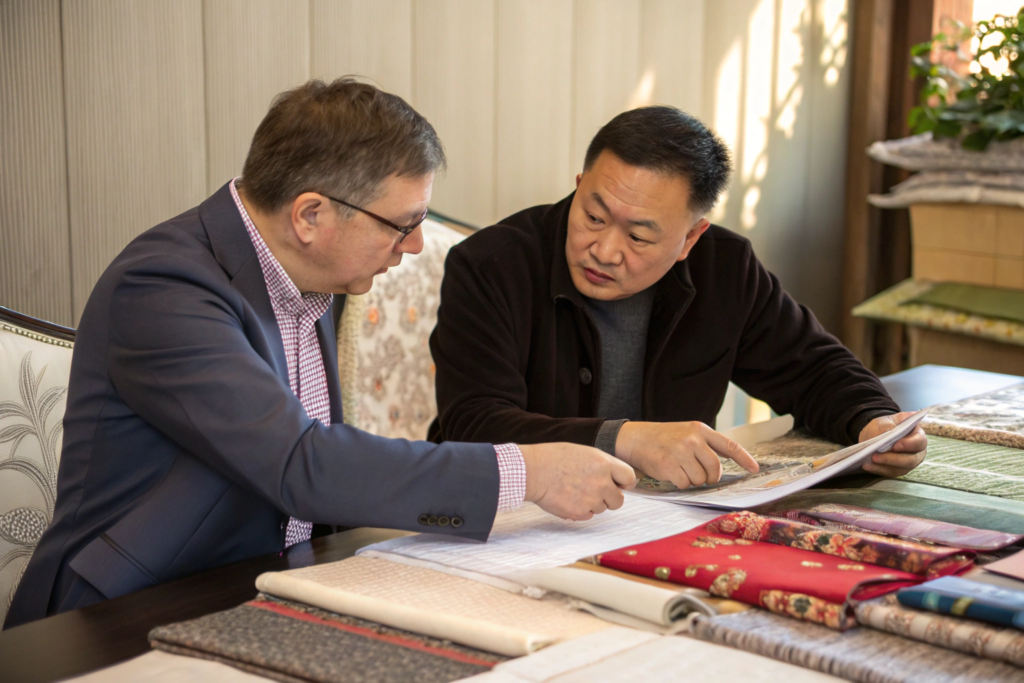
Your trial order should be a smaller version of your real order. If your main order will be a 10,000-meter jacquard with six colors, your trial should be 500 to 1,000 meters of the same pattern, the same yarns, the same finishing. This tests the factory's ability to scale the process.
The trial should include the full production process. Not just weaving, but also yarn sourcing, warping, dyeing if needed, and finishing. It should be run on the same machines that will run the bulk. The trial should be inspected using the same QC standards.
I had a client from a sportswear brand in Germany who wanted to produce a complex jacquard for a line of high-end training gear. The pattern was a gradient that required very precise yarn placement. Instead of ordering 15,000 meters directly, they ordered a 500-meter trial. The first trial failed. The gradient wasn't smooth. We worked with the factory to adjust the weave file and the yarn tensions. The second trial was perfect. We ran the bulk 15,000 meters with no issues. If the client had gone straight to bulk, they would have had a disaster. The trial cost them about 5% of the total order value but saved them from a potential 100% loss.
A trial order also tests the factory's communication. Do they keep you updated? Do they send production swatches? Do they meet the timeline? These are all signals of how they will handle your larger orders. For advice on structuring trial orders, this sourcing guide offers a framework for test orders with new suppliers.
What Metrics Should You Track During the Trial?
Track everything. The timeline—did they meet their promised shipping date? The quality—what was the defect rate? The communication—did they send updates when promised? The sample approval process—how many rounds did it take to get the color and pattern right?
Create a scorecard for the trial. Rate the factory on each metric. Use this scorecard to decide whether to proceed with the bulk order. If the trial scores well, you can move forward with confidence. If it scores poorly, you've saved yourself from a much bigger problem.
I remember a client from a home textile brand in Canada who ran trials with three different factories for a complex damask pattern. One factory had the best price but failed the trial. The pattern alignment was off. The second factory had mediocre communication but passed the trial. The third factory had a higher price but excellent communication and a perfect trial. The client chose the third factory. The bulk order went smoothly. The client told me that the trial cost them about 10% of what they would have lost if they had chosen the cheap factory and gotten a bad bulk order.
Don't skip the trial. It's the best insurance you can buy. For a detailed checklist of what to evaluate during a trial order, this quality control blog has a trial order evaluation template.
Conclusion
Finding a factory that can handle complex woven patterns is not easy. It requires looking beyond the samples and digging into the real capabilities. The machines matter. A factory needs the right looms—jacquards with enough hooks for your pattern, maintained properly and running efficiently. The people matter. A factory needs designers who can translate your artwork into weave files and technicians who can set up the looms correctly. The quality control matters. A factory needs a rigorous system for catching defects early, inspecting every roll, and holding to a clear quality standard.
And most importantly, testing matters. A trial order is the only way to know if a factory can deliver on your complex pattern at scale. It's an investment in your supply chain. It costs a little time and a little money upfront, but it saves you from the much larger cost of a failed bulk order.
I've been in this industry for over twenty years. I've worked with factories that can do amazing things with complex patterns—jacquards that look like paintings, dobby weaves that feel like sculpture, matelassé that adds dimension to simple garments. I've also worked with factories that promised the world and delivered nothing. The difference is always in the fundamentals: machines, people, QC, and testing.
At Shanghai Fumao, we've built relationships with the mills that do this work well. We know which factories have the 12,000-hook jacquards. We know which ones have the design teams that can turn a photograph into a weave file. We know which ones have the QC systems that catch defects before they become problems. We use that knowledge to serve our clients, matching each project with the right factory for the job.
If you're looking to produce a complex woven pattern—whether it's a jacquard for a luxury garment, a dobby for a technical fabric, or a matelassé for home textiles—I invite you to work with us. We'll help you evaluate the options. We'll run the trial. We'll make sure your complex pattern turns into beautiful fabric, not a costly mistake.
Contact our Business Director, Elaine, to discuss your complex weave project.
Email: elaine@fumaoclothing.com
Let's make your pattern a reality, not a problem.