Alright, let’s talk lace sourcing for 2025. If you’re reading this, you’re likely dealing with pressure from both consumers demanding eco-friendly products and your own company’s sustainability goals. You know the market wants beautiful lace, but the traditional production methods can be resource-heavy. You’re probably asking: "Where do I even start to find lace that doesn’t compromise on ethics or aesthetics?" The good news is, the supply chain is evolving fast.
Sourcing sustainable or recycled lace in 2025 is absolutely feasible, but it requires a strategic shift from traditional procurement. The key lies in understanding the new fiber technologies, identifying certified suppliers within specialized textile clusters, and planning your timeline around critical industry cycles to secure both quality and reliability. It’s no longer just about finding a supplier; it’s about partnering with a vertically integrated expert who can navigate the complexities of green manufacturing from yarn to finish.
The landscape has changed. What was a niche request a few years ago is now a mainstream requirement. Brands that figure this out now will lock in supply chain resilience and market advantage. But to get it right, you need to dive into the specifics of what makes lace "sustainable," where to find it, and how to manage the production process without surprises. Let’s break it down.
What Exactly is "Sustainable Lace" in Today's Market?
Gone are the days when "sustainable" was a vague marketing term. For lace in 2025, it’s a concrete set of criteria. At its core, sustainable lace minimizes environmental impact at every stage—from the origin of the fiber to the energy used in its production and the chemicals applied in dyeing and finishing. This means you, as a buyer, need to look beyond the surface beauty and ask for proof.
The definition hinges on two main pillars: material origin and production ethics. Material origin focuses on what the lace is made from—think recycled polyester (rPET) regenerated from post-consumer plastic bottles, organic cotton grown without harmful pesticides, or even innovative regenerated cellulose fibers like Tencel™ derived from sustainably managed wood pulp. Production ethics cover how the lace is made: using low-impact, OEKO-TEX certified dyes, implementing water recycling systems in dyehouses, and ensuring fair labor practices. For a deep dive into evolving global standards, the Textile Exchange's annual Material Change Index is an indispensable resource for brands.

Is Recycled Polyester Lace Truly a Viable Option for High-End Fashion?
Absolutely, and it's becoming the norm rather than the exception. The skepticism around recycled polyester (rPET) lace feeling "cheap" or "plastic-like" is outdated. Advanced filament technologies now produce rPET yarns that are incredibly fine, soft, and with excellent dye affinity, making them perfect for delicate, luxurious lace. The key is the source material and the spinning process.
We recently developed a collection of rPET laces for a prominent French lingerie brand in Q3 2023. Their challenge was finding a lace that met their stringent sensorial requirements for comfort while achieving a 50% recycled content mandate. We sourced GRS (Global Recycled Standard)-certified rPET chips and worked with our specialist knitting mill to adjust the tension and heat settings during the Raschel knitting process. The result was a lace with a matte, soft-touch finish and excellent drape—the client’s blind touch tests couldn’t distinguish it from virgin polyester lace. Moreover, understanding the lifecycle assessment of recycled versus virgin polyester clearly shows the carbon footprint reduction, a critical data point for your ESG reporting.
How Do Certifications Like GOTS and GRS Impact Lace Sourcing and Cost?
Think of certifications as your risk mitigation toolkit. They are non-negotiable for verifying claims. GOTS (Global Organic Textile Standard) is the gold standard for organic fibers, covering the entire production chain with strict environmental and social criteria. GRS (Global Recycled Standard) tracks the recycled content through a chain of custody. Yes, they add cost—typically a 8-15% premium depending on the complexity of the audit and supply chain.
However, this cost is an investment in brand integrity and supply chain transparency. It prevents greenwashing accusations. For instance, a U.S. activewear brand we partnered with in early 2024 required GRS-certified recycled nylon lace for their new line. Our certification allowed us to provide full transaction certificates (TCs), giving them the verified documentation needed for their marketing. Without it, their claims would be hollow. The cost was factored into their final MSRP, and consumer reception was overwhelmingly positive, proving the market's willingness to pay for verified sustainability. For a practical guide on navigating these certifications, the Sustainable Apparel Coalition's Higg Index materials module offers valuable benchmarking tools.
Where are the Best Clusters for Sourcing Sustainable Lace in 2025?
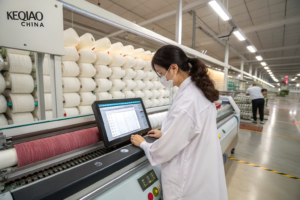
Location is strategy. While lace production exists globally, the most competitive and innovative clusters for sustainable lace in 2025 are concentrated in Asia, with China's Keqiao district and specific regions in India leading the charge. These hubs offer the complete ecosystem: from specialty yarn suppliers of recycled/organic fibers to mills with the latest electronic Jacquard and Raschel machines capable of intricate sustainable designs, and finishing houses with advanced water-treatment facilities.
Keqiao, where Shanghai Fumao is rooted, is unparalleled. It's not just a marketplace; it's the world's largest textile ecosystem. For sustainable lace, this means you have access to niche suppliers who only produce organic cotton yarns, dyehouses that specialize in low-liquid-ratio dyeing, and printing factories using digital methods that reduce water waste by over 90%. The clustering effect drives innovation and cost-efficiency. You can literally walk from one specialized vendor to another, streamlining development. This integrated network is why we can promise a 48-hour sampling turnaround even for complex sustainable lace constructions.
Why is Vertical Integration Critical for Sourcing Complex Sustainable Lace?
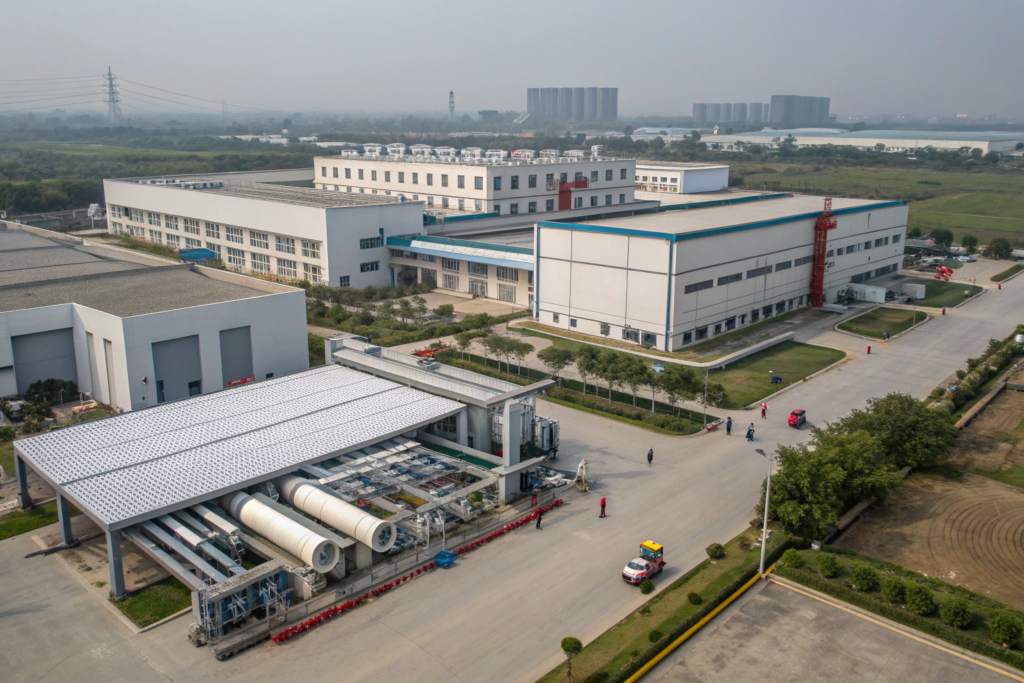
Because sustainability is a chain, and it's only as strong as its weakest link. Vertical integration—controlling or having deeply collaborative partnerships across weaving/knitting, dyeing, printing, and finishing—is what separates true partners from middlemen. For a fabric as delicate as lace, a misstep in any single process can ruin the entire sustainability promise and the fabric itself.
Let me give you a real example. In June 2023, a German fashion house approached us with a concept for a zero-waste lace. The design used a revolutionary biodegradable polymer blend. The challenge wasn't just knitting it; it was ensuring the dyeing temperature didn't compromise the fiber's integrity and that the softening agent used was also eco-friendly. Because we manage the process from yarn sourcing through our cooperative dyeing and finishing units, our R&D team could run simultaneous tests at each stage. We adjusted the dyeing cycle to a lower temperature and longer time and sourced a plant-based softener. The result was a success, whereas a fragmented supply chain would have seen endless buck-passing and failure. This level of coordination is essential for tackling the challenges of dyeing recycled polyester fabrics, which often require specific pH and temperature controls.
How Can I Vet a Sustainable Lace Supplier's True Capabilities?
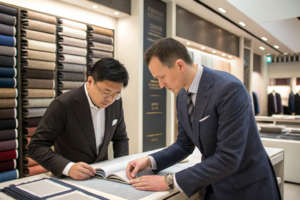
Due diligence is everything. Move beyond glossy brochures and ask for concrete evidence. Here’s a quick checklist we recommend to our clients:
| Verification Point | What to Ask For | What It Tells You |
|---|---|---|
| Material Traceability | Transaction Certificates (TCs) for GRS, GOTS, etc., for a recent bulk order. | Proof of certified material volume and supply chain integrity. |
| Production Audit | Recent third-party audit reports (e.g., SEDEX, BSCI) of the key factories. | Commitment to social and environmental standards on the ground. |
| Technical Capability | Request a custom sample based on your tech pack with a tight deadline. | Tests their R&D agility, sample quality, and communication efficiency. |
| Environmental Data | Water usage per kg of fabric, energy source mix, wastewater treatment reports. | Quantifiable proof of their "green" operations, not just talk. |
A potential client from Los Angeles used this list in late 2023. They asked for the wastewater pH reports from our dyeing partner—a request that caught many suppliers off guard, but we provided it immediately. That transparency secured a 2-year contract for their entire lace trim supply. It showed we had nothing to hide. Furthermore, engaging with communities like the materials forum on Reddit's r/ethicalfashion can provide unfiltered peer reviews and experiences with different suppliers.
What are the Real Timelines and Costs for Sourcing in 2025?
This is where realistic planning separates successful orders from logistical nightmares. Sourcing sustainable lace often adds 1-3 weeks to standard lead times. Why? The certified yarns might have longer procurement cycles, and low-impact dyeing/finishing processes can be more time-consuming. The cost premium is real—anywhere from 10% to 30% above conventional lace, driven by raw material costs, certification fees, and specialized, often slower, production processes.
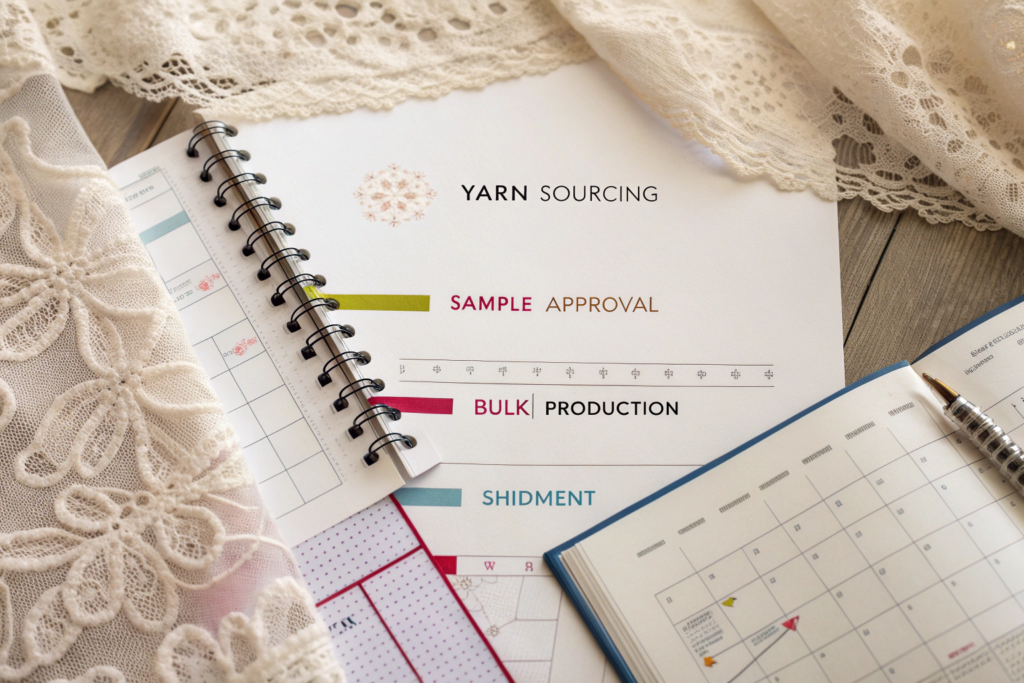
You must factor in the industry's seasonal rhythms. The peak production periods (Mar-May, Aug-Oct) are even more congested for sustainable lines. Planning your pre-production (lab dips, strike-offs, sample approvals) at least 6-8 weeks before these peaks is crucial. A savvy European brand we work with now finalizes all their sustainable lace development for Chinese New Year production by early December, ensuring their orders are first in line when factories reopen in February. This planning gave them a 4-week market lead over competitors.
How Do Chinese Holidays Like Chinese New Year Specifically Impact Sustainable Sourcing?
Chinese New Year (CNY) is the single biggest disruptor, causing a complete 3-4 week shutdown. For sustainable sourcing, the impact is magnified. If your certified organic cotton yarn isn't delivered to the lace mill before the holiday, your entire production schedule slides by a month or more, as everyone in the chain restarts simultaneously.
The strategy is to complete pre-production 6 weeks before the CNY shutdown. That means your lab dips, strike-offs, and handloom samples are approved, and your bulk yarn is physically in the mill's warehouse before the holiday begins. We enforce this with all our clients at Shanghai Fumao. For a Canadian outdoor brand in January 2024, we had their GRS-certified recycled nylon yarns for technical lace trims delivered and inspected by January 10th, weeks before the break. When the factory reopened, production started immediately, and their shipment sailed on schedule in mid-March. Missing that deadline would have delayed their crucial spring season launch.
Can I Actually Get Faster Lead Times During China's "Slower" Periods?
Yes, this is your secret weapon for agility. The periods of June-July and November-December are traditionally slower in the Chinese textile calendar. Factories are eager for orders, and production queues shorten. This is the ideal time to place orders for more experimental, sustainable lace projects or to replenish best-selling items.
We encourage our clients to use these windows for development. In November 2023, an Australian startup used this window to develop a small-batch, customized lace from organic silk and recycled metallic threads—a complex order that would have been deprioritized during peak season. They got unprecedented attention from the mill's top technicians, faster sampling iterations, and a bulk delivery that was 2 weeks faster than the quoted peak-season timeline. It’s about working with the industry's cycle, not against it. Leveraging these periods effectively requires understanding the best practices for communicating with overseas clothing manufacturers to ensure clarity and efficiency when speed is of the essence.
What Are the Biggest Pitfalls to Avoid When Starting?
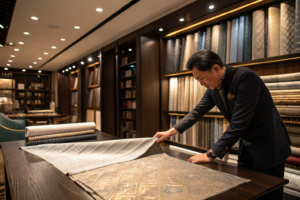
The path to sustainable lace is filled with potential missteps. The most common one is prioritizing price over verification, leading to greenwashing. Another is underestimating the importance of thorough, physical pre-production samples for a fabric as detail-oriented as lace. A digital image cannot show the hand-feel, stretch, or true color of a sustainable lace, especially when new fiber blends are used.
A pitfall we see often is brands not allocating enough time for testing. Sustainable fibers can react differently in washing, dyeing, and wear. You must budget for multiple pre-production sample rounds and rigorous physical testing—colorfastness, shrinkage, pilling, and for lace specifically, seam slippage and tensile strength. Skipping this to save 2 weeks can result in a bulk order failure.
How Do I Navigate Tariffs and Logistics for U.S. Imports of Sustainable Fabrics?
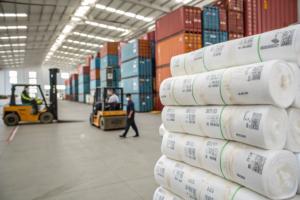
This is a major pain point, but with strategy, it's manageable. Sustainable lace, like most textiles, is subject to standard U.S. tariffs. The key is accurate HS code classification and utilizing bonded manufacturing zones if applicable. We operate within Keqiao's comprehensive export ecosystem, which includes integrated logistics partners who handle everything from carton packing to customs clearance under one roof, ensuring no documentation errors that cause delays.
For a client in New York importing our recycled polyester lace, we advised a shipment consolidation strategy. Instead of shipping multiple small lots, they consolidated orders to fill a full container (FCL), which is not only more cost-effective but also reduces the risk of inspections and delays compared to less-than-container-load (LCL) shipments. We provided all the necessary certification documents pre-emptively to their customs broker. Planning logistics is as crucial as planning production; understanding the intricacies of customs clearance for textile imports can save significant time and money.
Why is In-Person Inspection or a Reliable Local QC Partner Non-Negotiable?
Because final random inspection (FRI) is your last line of defense. No amount of trust replaces a physical check. For lace, this means checking for consistency in pattern alignment, dye lot uniformity, the absence of holes or runs, and the correct width and GSM. Sustainable processes can introduce new variables—a plant-based softener might affect the hand-feel batch to batch.
If you can't be there, partner with a firm that has on-the-ground presence. We have had clients, like a UK-based e-commerce brand, who relied solely on our Shanghai Fumao professional QC team. Before shipment of their organic cotton lace order in August 2023, our team conducted an AQL 2.5 inspection, catching a minor but critical dye streak issue in 3 out of 50 rolls. The mill re-dyed those rolls immediately, preventing a potential 100% rejection by the client. That's the value of eyes on the ground. For brands new to sourcing, resources like the quality control guidelines on Supplier Wiki offer a solid foundation for understanding inspection standards.
Conclusion
Sourcing sustainable or recycled lace in 2025 is a detailed but highly rewarding journey. It demands a clear understanding of certifications, a strategic choice of supply chain clusters, meticulous timeline planning around industry cycles, and rigorous quality verification. The shift from conventional to sustainable sourcing isn't just an ethical choice; it's a business imperative for future-proofing your brand, building consumer trust, and ensuring long-term supply chain stability.
The complexity is real, but you don't have to navigate it alone. Success comes from partnering with a supplier that embodies transparency, vertical integration, and a deep commitment to innovation—a partner that acts as an extension of your own team.
If you're ready to translate your 2025 sustainable lace vision into a tangible, high-quality, and reliably delivered product, let's start a conversation. We, at Shanghai Fumao, live and breathe this every day from the heart of the world's textile hub. We can guide you from fiber selection to final shipment, ensuring your lace is not only beautiful but also authentically sustainable. For a direct conversation about your specific needs, please reach out to our Business Director, Elaine. She and her team are experts in turning sustainable concepts into commercial realities. You can contact her at: elaine@fumaoclothing.com.