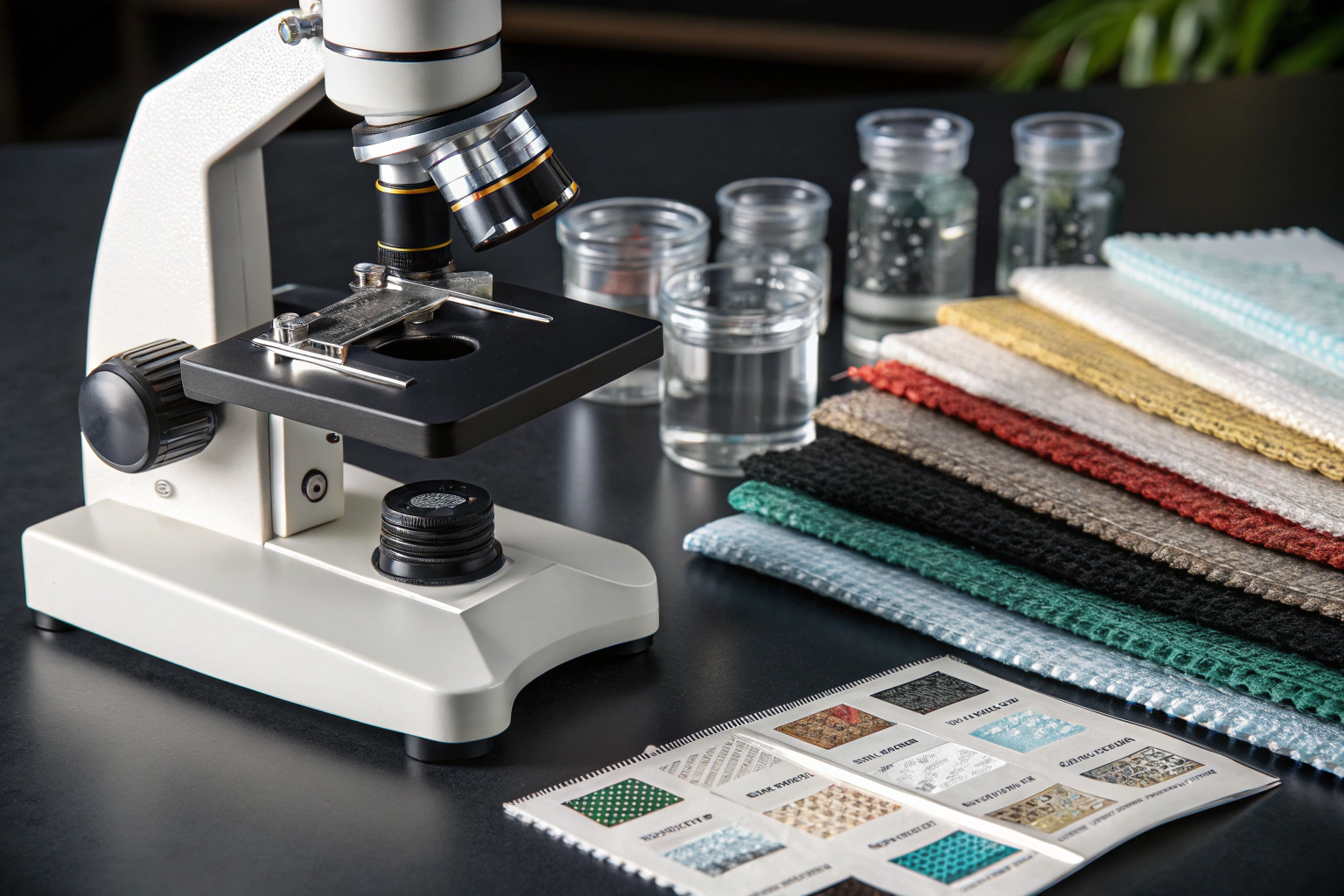
Last year, I received a distraught phone call from a buyer at a major outdoor brand in Canada. She had just read a devastating report about microplastic pollution in the Arctic. The report specifically named synthetic clothing as a major source. Her entire spring line was 90% recycled polyester. She was proud of it. But now she was lying awake at night wondering if her beautiful, eco-friendly jackets were silently poisoning the planet. She asked me, "Is there any fabric I can use that won't shed plastic? Or am I just stuck with this problem?"
The difficult truth is that if you use any synthetic fiber—polyester, nylon, acrylic, spandex—your fabric will shed microplastics. It's an inherent characteristic of plastic fibers breaking off during washing and wearing. But the encouraging news is that not all fabrics shed equally. Innovative fabric technologies, from specialized yarn structures to advanced finishes and even new fiber chemistries, can dramatically reduce the amount of shedding—by 50%, 80%, or even more. The goal isn't to find a "zero-shed" fabric (that doesn't exist yet for synthetics), but to source fabrics engineered for minimal shedding while maintaining the performance your activewear or outerwear demands.
But here's the reality check I give every brand that calls me about this. The market for "low-shed" fabrics is still young and full of claims that aren't always backed by data. I've seen suppliers slap a "eco-friendly" label on a standard polyester and call it low-shed. I've been in this industry in Keqiao for over 20 years, and I've learned that you can't trust a marketing claim without test data. You need to understand the science of why fibers shed, what construction techniques actually work, and how to verify a supplier's claims with real testing. Let me walk you through exactly how to navigate this emerging landscape.
What Actually Causes Synthetic Fabrics to Shed Microplastics?
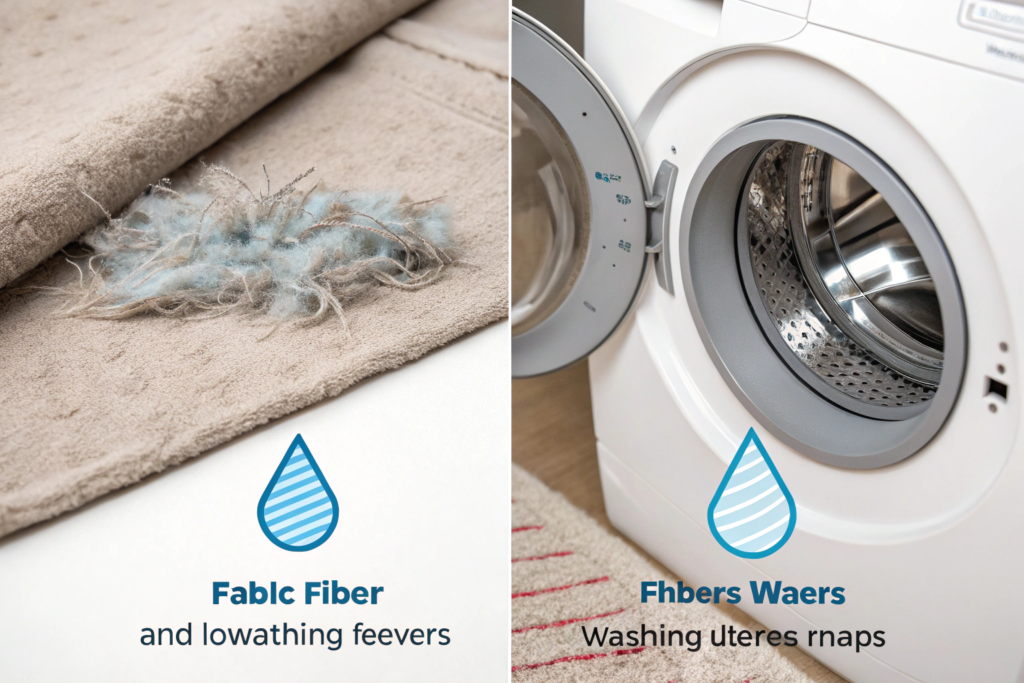
Before you can solve a problem, you have to understand it. Microplastic shedding isn't random. It's a result of mechanical stress. Every time you wash a synthetic garment, the fibers rub against each other, against the drum of the washing machine, and against other clothes. This friction breaks loose tiny fiber fragments—microplastics—that are small enough to go through wastewater treatment filters and end up in rivers and oceans.
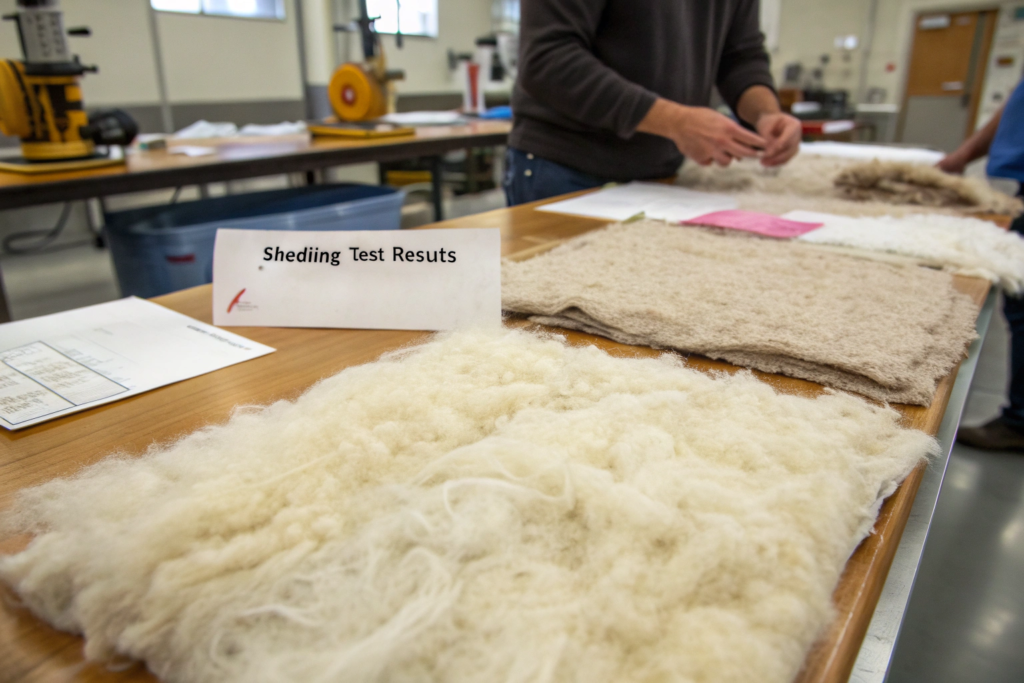
I learned this lesson in a very hands-on way about five years ago. We were developing a new line of high-pile fleece for a client in Scandinavia. The first samples felt amazing—super soft and fluffy. But when we did our initial shedding tests, the results were horrifying. The fabric was losing thousands of fibers per wash. The problem was the construction. The fluffy surface was created by "raising" loops of fiber, which left countless fiber ends exposed and ready to break off. We had to go back to the drawing board and completely rethink how we built that fleece.
Why do some fabrics shed more than others, even if they're the same fiber?
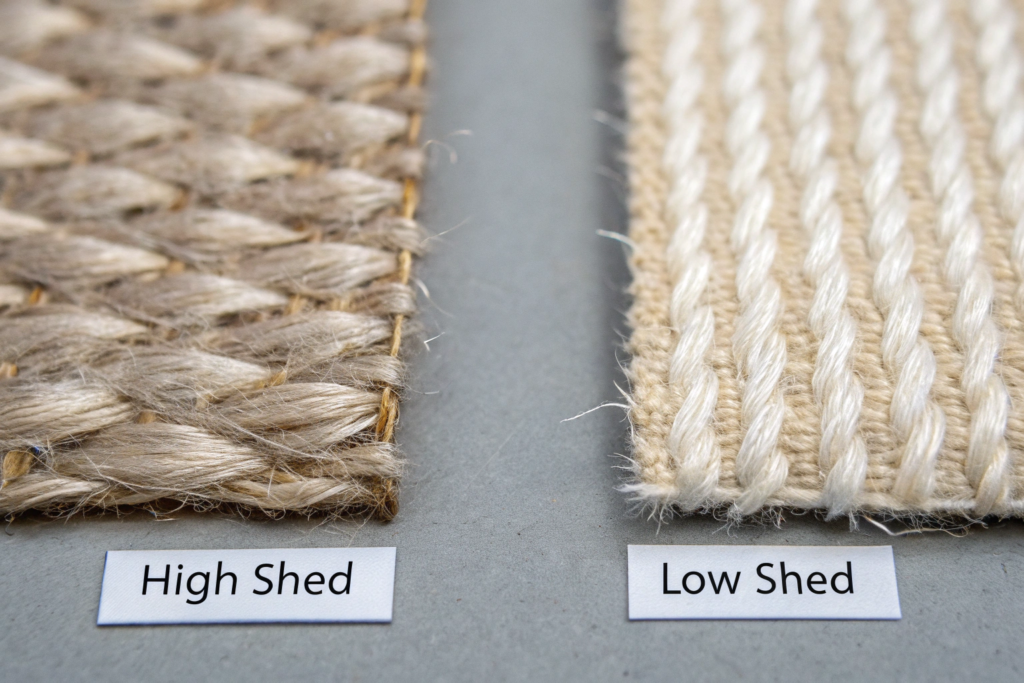
The fiber type is only one piece of the puzzle. The bigger factors are yarn construction and fabric structure. A fabric made from short, staple-spun yarns (like a typical cottony-soft polyester) will shed much more than a fabric made from continuous filament yarns (like a smooth, silky performance fabric). Think of it this way: a staple-spun yarn is like a rope made of thousands of short hairs twisted together. Those hair ends are always ready to escape. A continuous filament yarn is like a single, long, smooth strand. There are no ends to pull out.
We demonstrated this to a client from a US activewear brand in 2023. They were considering two different fabrics for a new legging. Both were 100% recycled polyester. One was a staple-spun yarn with a soft, brushed handfeel. The other was a textured filament yarn with a smoother surface. We ran our standard shedding test (more on that later). The staple-spun fabric shed over 300 milligrams of fiber per wash. The filament fabric shed less than 50 milligrams. Same fiber, drastically different performance. (This research paper from the University of Leeds explains the impact of yarn type on microplastic shedding in detail.)
Does fabric age affect how much it sheds?
Yes, and this is a critical point that's often overlooked. New fabrics tend to shed the most in the first few washes. This is the "break-in" period where loose fibers and surface fuzz are washed away. After 5-10 washes, the shedding rate typically stabilizes at a much lower level. However, as a garment ages and the fibers weaken from repeated wear and washing, shedding can increase again.
We did a long-term study with a German outdoor brand on their best-selling hiking shirt. We tested shedding after 1 wash, after 10 washes, and after 50 washes. The first wash shed a lot—about 200 milligrams. By wash 10, it was down to 80 milligrams. By wash 50, it had crept back up to 120 milligrams as the fibers began to degrade. This tells us that durability is a key factor in long-term shedding. A fabric that lasts longer and maintains its fiber integrity will shed less over its entire lifetime. (The Microfibre Consortium's research library has excellent data on the lifecycle of shedding.)
What Fabric Construction Techniques Actually Reduce Shedding?
Now we get to the practical part. If you're a brand sourcing fabric, you have levers you can pull. You can specify certain constructions that are proven to shed less. This isn't about magic materials; it's about intelligent engineering. And the best part is that these techniques can be applied to recycled synthetics, bio-based synthetics, and even some natural-synthetic blends.
I've spent the last three years working closely with our weaving and knitting teams to develop a library of "low-shed" constructions. We've tested hundreds of variations. The results are clear: you can dramatically reduce shedding without sacrificing handfeel or performance, but it requires precision and a willingness to move away from standard, off-the-shelf fabrics.
How does "filament yarn" technology reduce shedding compared to "staple yarn"?
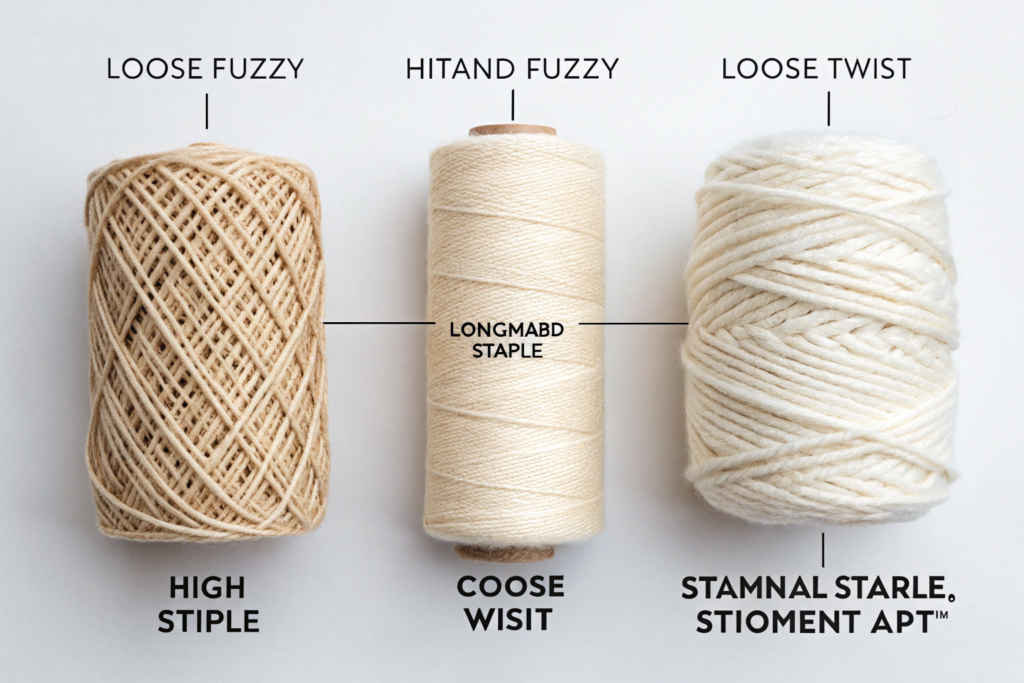
As I mentioned earlier, this is the single biggest factor. Filament yarns are made of continuous strands of fiber that run the entire length of the yarn. There are no ends to pull out. Staple yarns are made of short fibers twisted together, creating countless ends that can be released.
For performance activewear, where a smooth, silky handfeel is often desired, filament yarns are already the standard. But for categories where a softer, more cotton-like feel is wanted—like loungewear or casual t-shirts—brands often default to staple-spun yarns. The innovation here is in creating "textured filament" yarns that mimic the softness and bulk of staple yarns without the shedding. These yarns are passed through a texturizing process that creates loops and crimps in the filament, giving it a fuller, softer handfeel, but without creating those vulnerable fiber ends. We developed a textured filament recycled polyester for a Dutch loungewear brand in 2024. It had the soft, cozy feel they wanted, but our shedding tests showed it shed 70% less than their previous staple-spun fabric. (This article from a textile engineering site explains filament vs. staple yarns in depth.)
Can "high-twist" yarns or "compact spinning" make a difference?
Absolutely. If you must use staple yarns for a certain aesthetic or handfeel, the way you spin them matters enormously. High-twist yarns are twisted more tightly, which holds the short fibers together more securely and makes it harder for them to escape. The trade-off is that high-twist yarns can feel harder and less soft.
Compact spinning is an even more advanced technique. It's a modification of the ring spinning process that uses air currents to condense the fibers before twisting, creating a yarn that is much smoother and has far fewer protruding fibers. We invested in compact spinning frames specifically for our eco-lines in 2021. For a client from a French children's wear brand who wanted a soft, cotton-like feel but was terrified of microplastics, we developed a compact-spun recycled polyester. The fabric was soft, durable, and our tests showed it shed 50% less than a conventionally spun version. It cost about 5% more, but for a premium children's line, it was a no-brainer. (The International Textile Manufacturers Federation has resources on compact spinning technology.)
What Role Do Finishes and Fabric Treatments Play?
It's not just about the yarn and the weave. What you do to the fabric after it's made can have a massive impact on shedding. Finishes can bind fibers together, smooth the surface, and create a barrier that prevents fiber ends from escaping. However, you have to be careful—some finishes themselves can be environmental problems.
I remember a project with a US-based outdoor brand in 2022. They had a fleece jacket that they loved, but it shed like crazy. We couldn't change the yarn because the fluffy handfeel was core to the product's identity. So we looked at finishing. We experimented with different types of "shearing" (cutting the surface fibers to a uniform length) and "singeing" (burning off protruding fibers with a gas flame). Then we applied a specialized "anti-pilling" finish that bound the surface fibers together. The combination reduced shedding by over 60% while maintaining the desired softness. It added a step to the production process, but it saved the product.
What is "bio-polishing" and can it help with microplastics?
Bio-polishing is an enzymatic treatment, usually used on cellulosic fibers like cotton and Tencel, but it can be adapted for some synthetics. It uses enzymes to gently eat away protruding fibers and surface fuzz, leaving a much smoother, cleaner surface. For synthetic fabrics, similar effects can be achieved with chemical or mechanical treatments.
We tested a bio-polishing equivalent on a polyester microfiber fabric for a Japanese activewear client in 2023. The untreated fabric had a slightly fuzzy surface. After treatment, it was noticeably smoother and shinier. More importantly, our shedding tests showed a 35% reduction in fiber loss. The treatment essentially "pre-sheds" the loose fibers in a controlled factory environment, where they can be captured and disposed of properly, rather than in the consumer's washing machine. (This technical paper explains the mechanics of bio-polishing and surface finishing.)
Do "anti-shedding" coatings work, and are they environmentally safe?
This is a mixed bag. There are coatings designed to bind fibers together and prevent shedding. Some are based on acrylic polymers or other synthetic binders. They can be effective, but they introduce another chemical into the fabric lifecycle, which can complicate recycling and potentially cause other environmental issues.
We are cautious with coatings. We only recommend them when absolutely necessary, and we always look for options that are GOTS approved or at least ZDHC compliant (meaning they meet strict standards for biodegradability and toxicity). For a client from a German workwear brand who needed extreme durability and low shedding for industrial laundering, we used a very thin, water-based acrylic coating. It reduced shedding by over 80%, and the coating itself was designed to be benign. But for most consumer apparel, we try to solve shedding through yarn and fabric construction first, before resorting to coatings. (The ZDHC Gateway is a great resource for finding safer chemical alternatives.)
How Can I Test and Verify a Fabric's Microplastic Shedding Rate?
This is the most important section for you as a buyer. You cannot rely on supplier claims. You need data. And you need to understand how that data is generated. There is currently no single, globally mandated standard for measuring microplastic shedding, but there are well-established testing protocols that reputable labs use. If a supplier can't provide test data from a recognized lab following a recognized method, be very skeptical.
We invested in our own in-house testing capability for microplastic shedding in 2022, using a modified version of the AATCC TM212 test method. We also work with third-party labs like Hohenstein and Ocean Wise to validate our results. When a client asks about shedding, we don't just say "our fabric is low-shed." We show them a graph with numbers. That's the level of transparency you should demand.
What is the "AATCC TM212" test and why should I care?
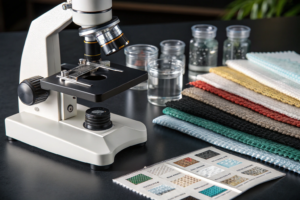
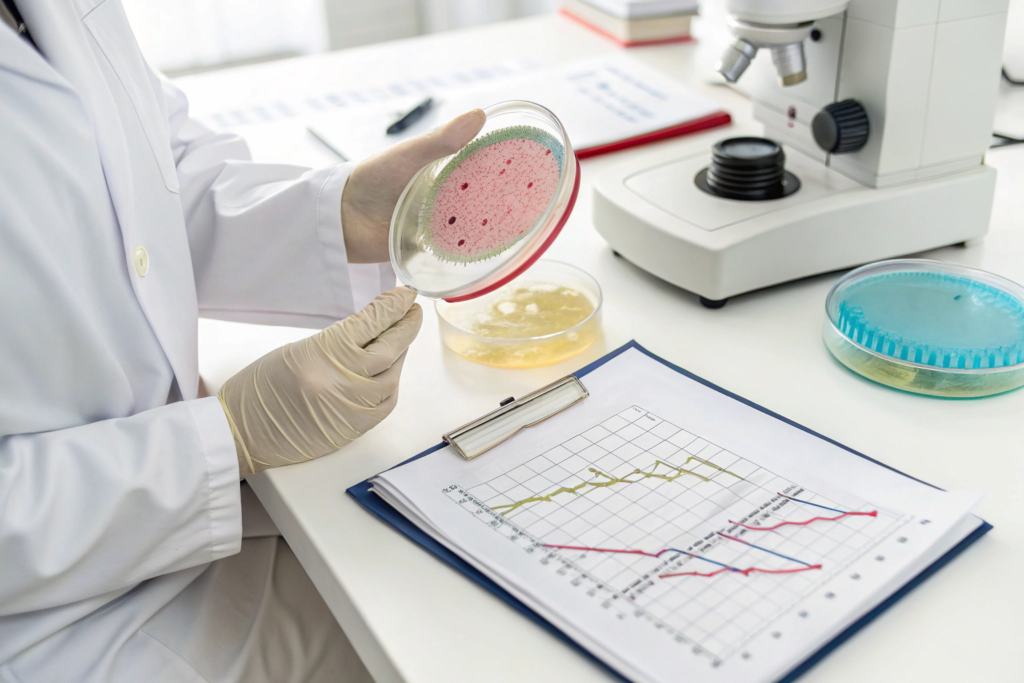
AATCC TM212 is a test method specifically designed to quantify fiber fragment release from textile fabrics during simulated home laundering. It's becoming the industry standard. The test involves washing fabric samples in a controlled laboratory washing machine, filtering the wastewater to capture the released fibers, and then weighing or counting them.
When we test a fabric for a client, we follow this method precisely. We run multiple samples, we control for water temperature and detergent type, and we report the results in milligrams of fiber released per kilogram of fabric, or number of fibers per wash. This gives you an objective, comparable number. We recently tested two similar-looking fleece fabrics for a UK-based brand. One released 420 mg/kg, the other released 120 mg/kg. The client could make an informed decision based on real data. (You can purchase the AATCC TM212 standard from the AATCC website.)
Are there certifications for low-shed fabrics I should look for?
Yes, they are emerging. The most prominent right now is the Ocean Wise "Microfiber Partnership" program. They have a certification for products that meet their criteria for low shedding. They test fabrics using a rigorous, standardized protocol and only approve those that fall below a certain threshold.
We worked with a Canadian brand in 2024 to get one of our recycled nylon fabrics certified by Ocean Wise. The process took several months and required multiple rounds of testing, but the certification became a powerful marketing tool for them. They could put a special hangtag on their garments that said "Approved by Ocean Wise for low microfiber shedding." It gave their customers confidence. (The Ocean Wise Microfiber Partnership website has details on the certification process.) There are other programs emerging, so ask your supplier if they have any third-party certifications for shedding.
What Are the Most Promising Innovations in Low-Shed Fibers?
The future is bright. While we can reduce shedding through construction and finishing, the ultimate solution may come from new fiber technologies. Scientists and fiber manufacturers are working on next-generation materials that are inherently less prone to shedding, or even biodegradable if they do escape.
I attended a textile innovation summit in Shanghai in late 2023 where I saw some of these technologies firsthand. One company was showing a new polyester variant with a modified cross-section that was much smoother and less likely to break. Another was demonstrating a bio-based nylon that was designed to be biodegradable in marine environments. These aren't science fiction; they are starting to become commercially available, though often at a premium price.
Can "bio-based" synthetics like PLA or bio-nylon solve the shedding problem?
They address a different part of the problem. Bio-based synthetics are made from renewable resources (like corn or castor oil) instead of petroleum, which lowers their carbon footprint. But they are still plastics. They still shed microplastics. PLA, for example, is a polyester made from plant sugars. It will shed PLA fibers, which are still plastic and may persist in the environment.
However, some bio-based synthetics are being engineered for biodegradability. There are new polyamides (nylons) that are designed to break down in specific environments, like industrial compost or even marine water, under the right conditions. This is a game-changer. If a fiber is biodegradable, even if it sheds, it won't persist for centuries. We are currently trialing a biodegradable bio-nylon for a European luxury activewear client. The initial tests are promising, but we are still evaluating its durability and performance. (The nova-Institute's report on bio-based polymers is an excellent resource.)
Is there a future for "fiberless" or "film-based" textiles to eliminate shedding?
This is a fascinating area of research. Instead of making a fabric from woven or knitted fibers, some innovators are exploring "film-based" textiles—essentially, thin, perforated plastic sheets that mimic the properties of fabric without having individual fibers to shed. Think of it like a very advanced, fabric-like version of Tyvek.
These materials are still in early development and are not yet widely available for apparel. They face challenges with breathability, drape, and handfeel. But the concept is compelling: if there are no fibers, there is nothing to shed. A company called Natural Fiber Welding is doing interesting work in this area, creating materials that blur the line between fibers and films. It's a space to watch closely for the future of truly zero-shed synthetics. (You can read about Natural Fiber Welding's innovations on their website.)
Conclusion
So, how do you source innovative fabrics that reduce microplastic shedding? You start by understanding the science: shedding is driven by fiber ends, friction, and construction. You prioritize fabrics made from continuous filament yarns over staple-spun yarns wherever possible. You explore high-twist and compact-spun constructions if you need a softer handfeel. You investigate surface finishes like singeing, shearing, and bio-polishing to smooth the fabric and pre-shed loose fibers. You demand data, not marketing claims, asking for test results from recognized methods like AATCC TM212 or certifications like Ocean Wise. And you keep an eye on the horizon for next-generation innovations like biodegradable bio-synthetics and even film-based textiles. The goal isn't perfection overnight; it's continuous improvement, making better choices with every collection.
This is exactly the kind of informed, data-driven partnership we offer at Shanghai Fumao. We don't just sell fabric; we help you navigate the complex landscape of material innovation. With over 20 years of experience in Keqiao, our own in-house shedding testing capability, and strong relationships with innovative yarn spinners and finishers, we can help you develop fabrics that are both high-performance and low-impact. We can run the tests, analyze the data, and guide you toward the best solutions for your specific products. If you're ready to tackle the microplastic challenge head-on and build a cleaner future for your brand, please reach out to our Business Director, Elaine. She can discuss your needs, share our test results, and help you plan your next low-shed collection. Email her directly at elaine@fumaoclothing.com. Let's create fabrics that are better for your customers and better for the planet.