I run a textile group in Keqiao, China, and I speak to buyers every day who want interiors that feel premium, pass automotive tests, and hit sustainability targets without shocking the budget. Many ask for hemp bio-composites, but they stall when they face lab specs, resin choices, and customs codes. I know that pain, because I used to make the same mistakes when I scaled our first hemp program for North America.
The short answer is clear: define the OEM test map first, then lock fiber/resin formulation with pilot tooling, then build a dual-track supply plan that covers color/handfeel and compliance at the same time. If you do that with a factory that controls weaving, dyeing, coating, printing, and packing in one place, you remove 80% of the delays and half the hidden cost.
I will show you how I source hemp bio-composite interior textiles for door panels, headliners, seat backs, and trims. I will also share our checklist, our mistakes, and what actually moves lead time from months to weeks. If you want a partner who can ship to the U.S. on schedule and who can pass flammability and VOC tests, then read on and use this playbook.
What Are Hemp Bio-Composites for Car Interiors?
I meet many teams who love the story of hemp but worry about consistency. They get confused between a woven hemp fabric and a structural bio-composite layup. They also wonder if natural fibers can meet flammability, abrasion, and VOC rules. The problem grows when marketing promises get ahead of lab data. I solve this by starting with definitions and test frameworks.
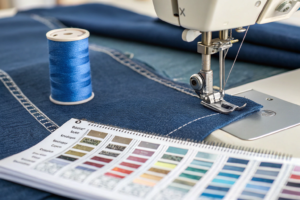
Hemp bio-composites for interiors are layered systems that use bast hemp fibers as reinforcement with a binder (often bio-based or low-VOC resin) to create stable panels or skins, usually laminated with a decorative textile. In practice, we combine sliver or nonwoven mats with woven or knit face fabrics. Then we finish with coatings for abrasion, stain, and UV.
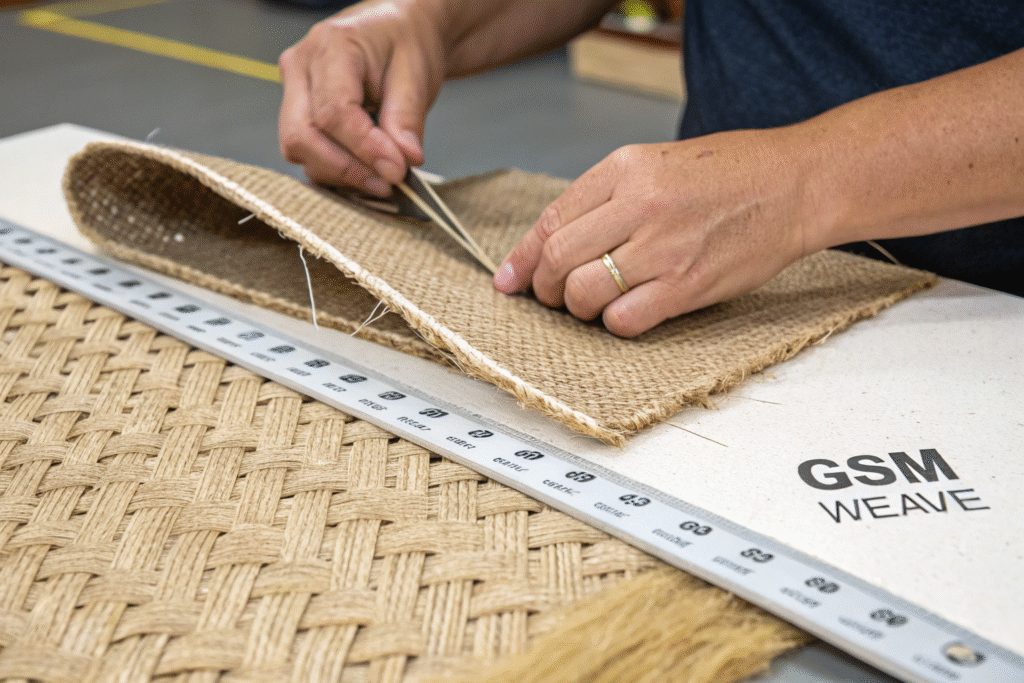
When we design for an OEM, we write the standard map first: flammability (FMVSS 302), odor and VOC, abrasion, lightfastness, and color. We pick the process after we fix the targets. This keeps us honest and avoids rework. It also lets us compare hemp to flax, kenaf, or rPET on the same scorecard.
Do Standards Define “Automotive-Grade” Hemp?
Buyers ask this first. I answer with test names, not adjectives. For flammability in the U.S., the anchor is FMVSS 302 and, in many programs, the equivalent ISO 3795. You also need the textile test family for abrasion and strength. We use grab strength and tear (ASTM D5034 and D1424) and lightfastness (AATCC 16). We align chemical compliance with REACH and ZDHC MRSL, and we add VOC/odor because cabins must be clean. See the official flammability rule at FMVSS 302 on the U.S. code site and the related ISO page for ISO 3795 to align expectations. For chemical limits and dye stuff, I check REACH and the ZDHC MRSL in every RFQ.
External references: FMVSS 302 regulation, ISO 3795 page
Are Bio-Composites Only “Green,” Or Are They Strong?
I like data. Properly aligned bast fibers give good specific stiffness. We tailor strength with weave structure, areal weight, and resin content. We use woven hemp as the A-surface or a thin nonwoven mat as core reinforcement. We validate mechanicals and thickness tolerance before color. If your team wants a literature start point on biocomposites, review engineering surveys from reputable sources, and for auto-specific performance descriptors, refer to SAE’s catalog to select test practices for interior trim.
External references: Biocomposite overview, SAE Standards Catalog
Hemp Fabric Specs OEMs Require in 2025
Sourcing stalls when specs are vague. I change that by putting all targets in one sheet. I add GSM bands for each part, resin ratio windows, and finish options. I include mandatory tests and the optional “nice to have.” This gives sales, R&D, and QC the same compass. It also lowers sampling loops.
For 2025 programs, I shortlist four spec pillars: (1) safety and compliance (flammability and chemicals), (2) durability (abrasion, pilling, scratch), (3) appearance (color fastness, UV, grain), and (4) emissions (odor/VOC). I set pass/fail and a stretch target. Then I sign it with the buyer before we run the pilot lamination.

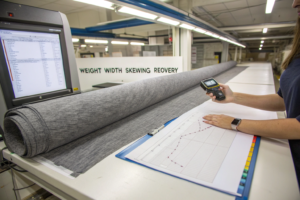
To keep everyone aligned, I tie each spec to a test method and a lab partner. We run most tests in our CNAS-accredited center, and we cross-check at third parties like SGS or Intertek for programs that need an external stamp. I also map the chemical side to REACH and ZDHC MRSL.
Which Tests Decide Go/No-Go for Interior Fabrics?
The fast way to kill risk is to hit the big five: flammability, abrasion, colorfastness, tensile/tear, and emissions. I publish the methods on the quote so buyers know exactly what “pass” means. For independent verification, I use global TIC leaders who understand automotive. When a buyer wants brand labels like OEKO-TEX for components, we align early.
External references: SGS textile testing, Intertek textiles
How Do I Set Chemical Compliance for Hemp Programs?
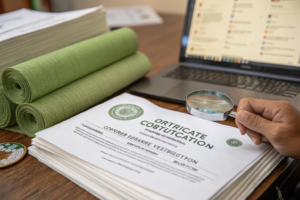
I build a chemical checklist: REACH SVHC, APEO, formaldehyde, heavy metals, and solvent residues. I reference ZDHC MRSL for input chemistry control. For eco-claims, some brands add OEKO-TEX certifications for end products, and some U.S. buyers evaluate BioPreferred for biobased content messaging. We document dyestuff and auxiliaries and upload our declarations with QR codes.
External references: REACH regulation, ZDHC MRSL
Sourcing Workflow from China to the U.S.
The biggest loss in biocomposite sourcing is rework. Teams pick pretty fabrics, then learn the color cannot survive the resin bake or the lamination nip. Others ignore HS codes until customs stops the cargo. I avoid this by running a gated workflow with samples that mimic production.
My workflow has seven gates: fiber selection, weaving and GSM confirmation, lab pre-screen, lamination pilot, color and texture freeze, compliance verification, and pre-shipment audit. I add a U.S. import worksheet with HS codes and tariff notes. I also plan the sailing schedule with buffers for random holds.
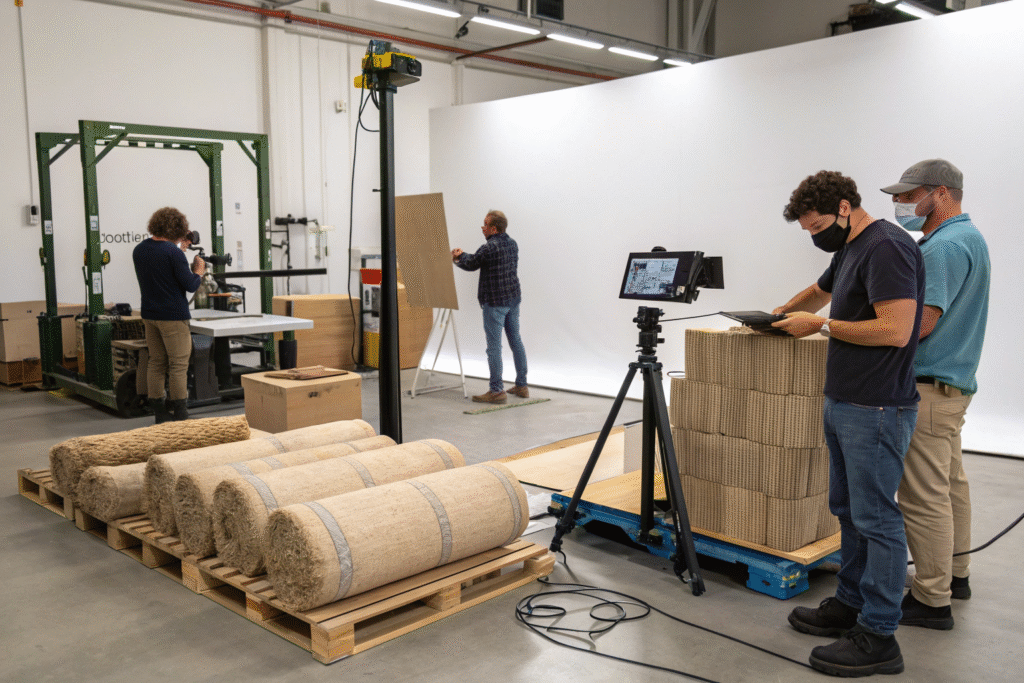
I run everything inside Keqiao so I can fix a miss quickly. We own weaving, we run cooperative dyeing and coating, and we control printing, embroidery, and inspection. We use QR codes to track rolls and record test data (composition, shrinkage, colorfastness). That gives our buyers a live view of each lot.
What Paperwork Do I Need Before I Book a Vessel?
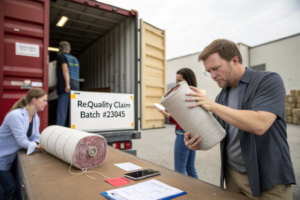
I prepare the HS code for the textile and for the composite assembly, because parts can fall under different lines. I align the commercial invoice, packing list, and certificate of origin. I keep a copy of the flammability test report for the part. For U.S. entry, I watch Section 301 duties on Chinese origin goods and confirm the latest rates on the official site. For trade terms, I set Incoterms early to split risk and cost clearly.
External references: U.S. HTS search, U.S. Section 301 duties
How Do I Plan Lead Time and Vessel Space?
I check port pairs and transit times directly with carriers. I also share the likely holiday windows with buyers in Q4 and Q1. When cargo is hot, we switch to fast transit loops or split bookings. If you need to compare sailings, use carrier tools and book early in peak season.
External references: Maersk schedules, Incoterms 2020 overview
Cost, Tariffs, and Logistics for Hemp Textiles
Cost talk often happens too late. Natural fibers can save weight, but they can add steps in finishing. Freight shifts also change the landed cost. When a buyer only chases unit price, the project slips at the lab gate. I fix this with a landed cost model that connects resin choice, finishing steps, and duty.
My rule is simple: price the specification, not the buzzword. I quote the exact test map, finishing, and resin ratio. I include color approvals, pilot lamination, and two rounds of re-dip. I also add a tariff note. Then I give the sailing plan with lead-time ranges, not promises, because weather and port traffic move.

We update duty and regulatory screens when rules change. For U.S. programs, we monitor TSCA for chemical inventory status and state rules like Prop 65 for warning triggers. We confirm VOC lists with your OEM. We keep the documents ready because audits can happen without notice.
Which Regulations Affect Landed Cost in the U.S.?
Federal flammability rules are design constraints, but they also shape testing spend. Chemical programs increase documentation cost. If your resin or additives are on the TSCA Inventory, compliance is easier; if not, there can be PMN implications. In California, Prop 65 drives labeling decisions for some substances.
External references: EPA TSCA Inventory, California Prop 65
How Do I Budget for Eco-Labels and VOC Testing?
Eco-labels like OEKO-TEX add fees but help brand messaging. GREENGUARD evaluates emissions for indoor air quality; some automotive teams reference it for guidance even when not mandatory. You should align label scope with your real parts. Do not overbuy certificates.
External references: OEKO-TEX official, UL GREENGUARD
Conclusion
Sourcing hemp bio-composite automotive interior textiles is not guesswork. It is a repeatable process that starts with a standards map, passes through disciplined material engineering, and ends with smart logistics. When you lock tests first, tune weave and resin second, and plan tariffs and sailings early, you cut waste and gain speed. This is how my team in Keqiao ships premium-looking, compliant parts on time.
If you want to co-create an interior program that is beautiful, durable, and audit-ready, talk to us at Shanghai Fumao. We will build your specification, run pilots, and ship with confidence. Contact our Business Director Elaine at elaine@fumaoclothing.com to kick off your hemp interior project today.